
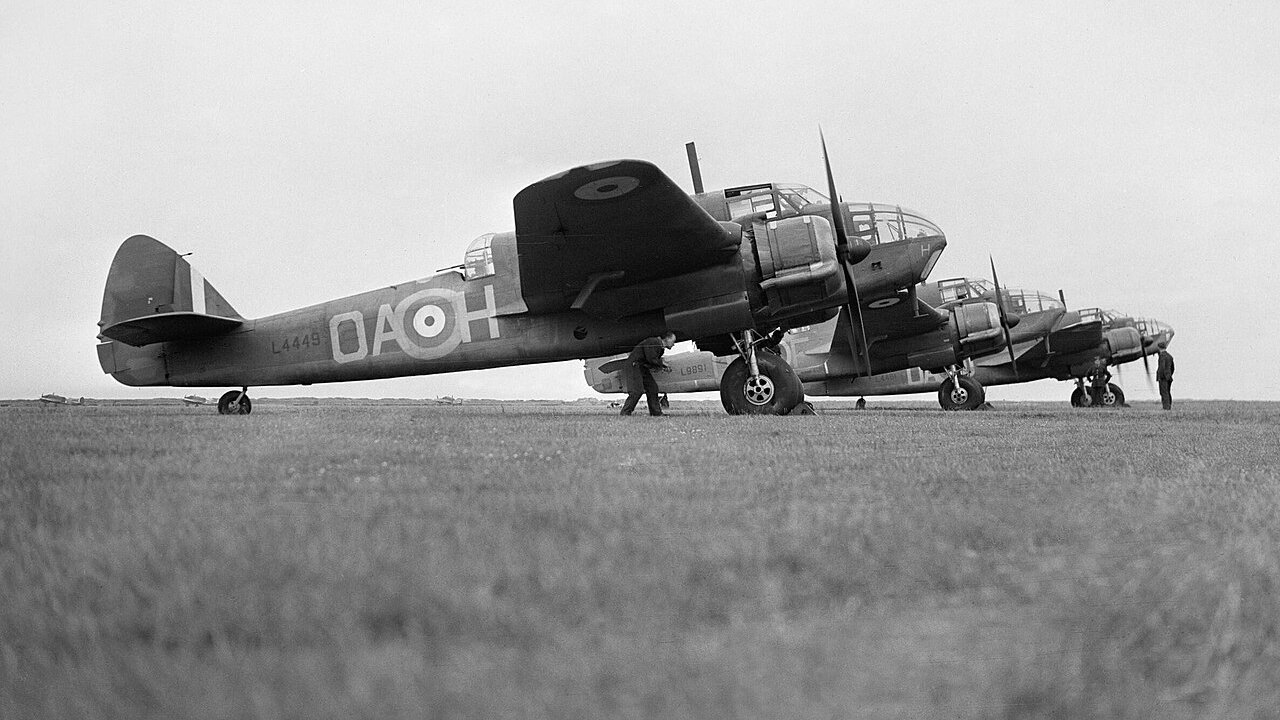
It was still dark at St Eval in Cornwall when Flying Officer Kenneth Campbell lifted his Bristol Beaufort off a waterlogged airfield on 6 April 1941. Under the fuselage hung a single torpedo. Ahead, across the Channel, lay Brest, the German battlecruiser Gneisenau, and some of the most heavily defended water in occupied Europe.
Campbell was 23, a Cambridge chemistry graduate from the Ayrshire coast. He and his three crewmates did not come home, and for months nobody in Britain knew exactly what they had done. When the story finally arrived, by way of French Resistance contacts and German prisoners, it earned him a posthumous Victoria Cross and turned an unglamorous Coastal Command workhorse into a legend.
This is the story of the Bristol Beaufort torpedo bomber, an aircraft that asked its crews to fly low, straight and steady into the guns, and that went on to fight from besieged Malta and, in far greater numbers than most people realise, from Australia.
Quick Facts
- Type: Twin-engined, four-crew torpedo bomber and general reconnaissance aircraft designed by the Bristol Aeroplane Company; first flight 15 October 1938
- RAF service: Coastal Command’s standard torpedo bomber in the early war years; No. 22 Squadron received the first aircraft in late 1939 and opened operations with minelaying in April 1940
- Engines: Bristol Taurus radials in British-built aircraft; Pratt & Whitney R-1830 Twin Wasps in Australian-built aircraft
- Brest, 6 April 1941: Flying Officer Kenneth Campbell’s crew torpedoed the battlecruiser Gneisenau in harbour; all four airmen were killed
- Victoria Cross: Awarded to Campbell posthumously, published in The London Gazette on 13 March 1942
- Malta: On 15 June 1942 a Malta-based Beaufort of No. 217 Squadron torpedoed the Italian heavy cruiser Trento, which the submarine HMS Umbra then sank
- Australia: 700 Beauforts were built by the Department of Aircraft Production between 1941 and 1944, with final assembly at Fishermans Bend in Melbourne and Mascot in Sydney
A Torpedo Bomber Built for a Grim Job
The Beaufort grew out of an Air Ministry requirement for a coastal aircraft that could carry a torpedo, bombs or mines, with a crew of four: pilot, navigator, wireless operator and gunner. Bristol drew on its Blenheim light bomber for the design, and the result could carry a single 18-inch torpedo or up to 2,000lb of bombs.
Its Bristol Taurus sleeve-valve engines gave trouble from the start. They ran hot and delayed the first flight until 15 October 1938, and more problems grounded the operational fleet for a time in 1940 until fixes were made. No. 22 Squadron began taking deliveries in late 1939 and flew its first Beaufort operations in April 1940, laying mines off the enemy coast.
For roughly three years the Beaufort was Coastal Command’s standard torpedo bomber, and the job was as dangerous as any in the RAF. To launch a torpedo that would run true, a pilot had to hold a low, straight and steady approach to the target, the one flight path that also suited every gunner aboard the ship and around it.
Brest, 6 April 1941
By spring 1941 the battlecruisers Scharnhorst and Gneisenau were sitting in Brest after a raiding cruise in the Atlantic, a standing threat to every convoy. Bombers had attacked them repeatedly. Coastal Command decided to try torpedoes, and No. 22 Squadron sent a detachment of Beauforts from its home at North Coates in Lincolnshire to St Eval in Cornwall, closer to the target.
The plan for the dawn of 6 April called for six aircraft: bomb-carrying Beauforts to go in first, with torpedo aircraft following. Almost nothing went to plan. Heavy overnight rain turned St Eval into a swamp and kept the bombers on the ground, and the torpedo aircraft lost each other in mist and rain over the sea. In the end, Campbell’s Beaufort, serial N1016 and coded OA-X, was the only one to make an attack.
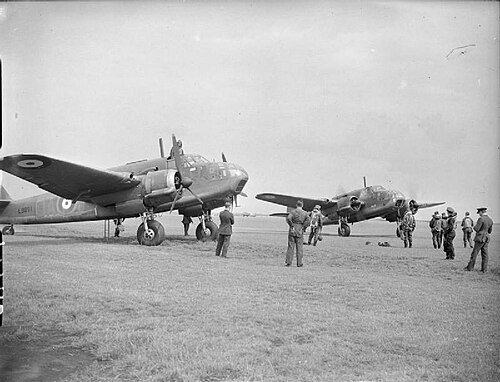
With him were three men: Sergeant James Scott of the Royal Canadian Air Force, his observer and navigator; Sergeant William Mulliss, wireless operator; and Flight Sergeant Ralph Hillman, wireless operator and air gunner. The Gneisenau had just been moved out of dry dock and was moored against the quay on the north shore of the harbour, behind a stone mole, with flak batteries on the high ground behind her and anti-aircraft ships anchored in front.
Campbell came in at wave-top height, crossed the mole and dropped his torpedo at point-blank range. It hit the battlecruiser aft on the starboard side. Seconds later the Beaufort, turning away towards the rising ground, was hit by the defences and crashed into the harbour. All four men were killed.
“Valour of the Highest Order”
No British eyes saw the attack. What London eventually learned came from French Resistance members working in the Brest docks and from captured German naval personnel. It was enough. On 13 March 1942, almost a year after his death, The London Gazette published Campbell’s Victoria Cross citation, and it is one of the most vivid in the RAF’s history.
The “this” in the citation’s first line is the grimmest part: the Air Ministry noted that even an aircraft that got through the defences would find it almost impossible to avoid crashing into the rising ground beyond the harbour after a low-level attack. Campbell, it says, knew that before he took off.
The Germans recovered the bodies and buried the four airmen with full military honours. They lie together in the Commonwealth plot at Brest (Kerfautras) Cemetery. One widely repeated account holds that Scott, the navigator, was found in the pilot’s seat, suggesting Campbell had already been hit before the crash, though that detail cannot be confirmed from the official record.
What One Torpedo Achieved
The torpedo did real damage. The Gneisenau took on water and had to go straight back into dry dock for repairs to her stern and starboard propeller shaft. A few nights later, RAF bombers hit her again while she sat in the dock, killing dozens of her crew and stretching the repair work out by months.
She did not put to sea again until February 1942, when she and the Scharnhorst ran up the English Channel to Germany in the Channel Dash. Beauforts flew against them that day too, alongside the Fleet Air Arm’s Swordfish biplanes, without stopping them. But for most of 1941 one of Germany’s most dangerous surface raiders was out of the Atlantic war, and a single Beaufort crew had done much of that work.
Campbell’s parents were left with a Victoria Cross and a short citation. The Commonwealth War Graves Commission records him simply as the son of James and Jane Campbell of Stevenston, Ayrshire, a Cambridge graduate, aged 23.
Malta: Hunting Convoys From a Besieged Island
In 1942 the Beaufort’s war moved south. Malta sat astride the Axis supply route to North Africa, and torpedo bombers flying from the island could reach the convoys carrying fuel and supplies to Rommel’s army. No. 39 Squadron flew Beauforts from Luqa, and in June 1942 No. 217 Squadron, whose aircraft had been heading for Ceylon, was diverted to Malta and thrown into the fight.
On 15 June, during the battles around the Harpoon and Vigorous convoys, Flying Officer Arthur Aldridge of No. 217 Squadron made a lone dawn attack on the Italian fleet and put a torpedo into the heavy cruiser Trento. Disabled and burning, she was finished off hours later by the British submarine HMS Umbra, and according to Italian accounts only around half of her crew of more than 1,100 were rescued.
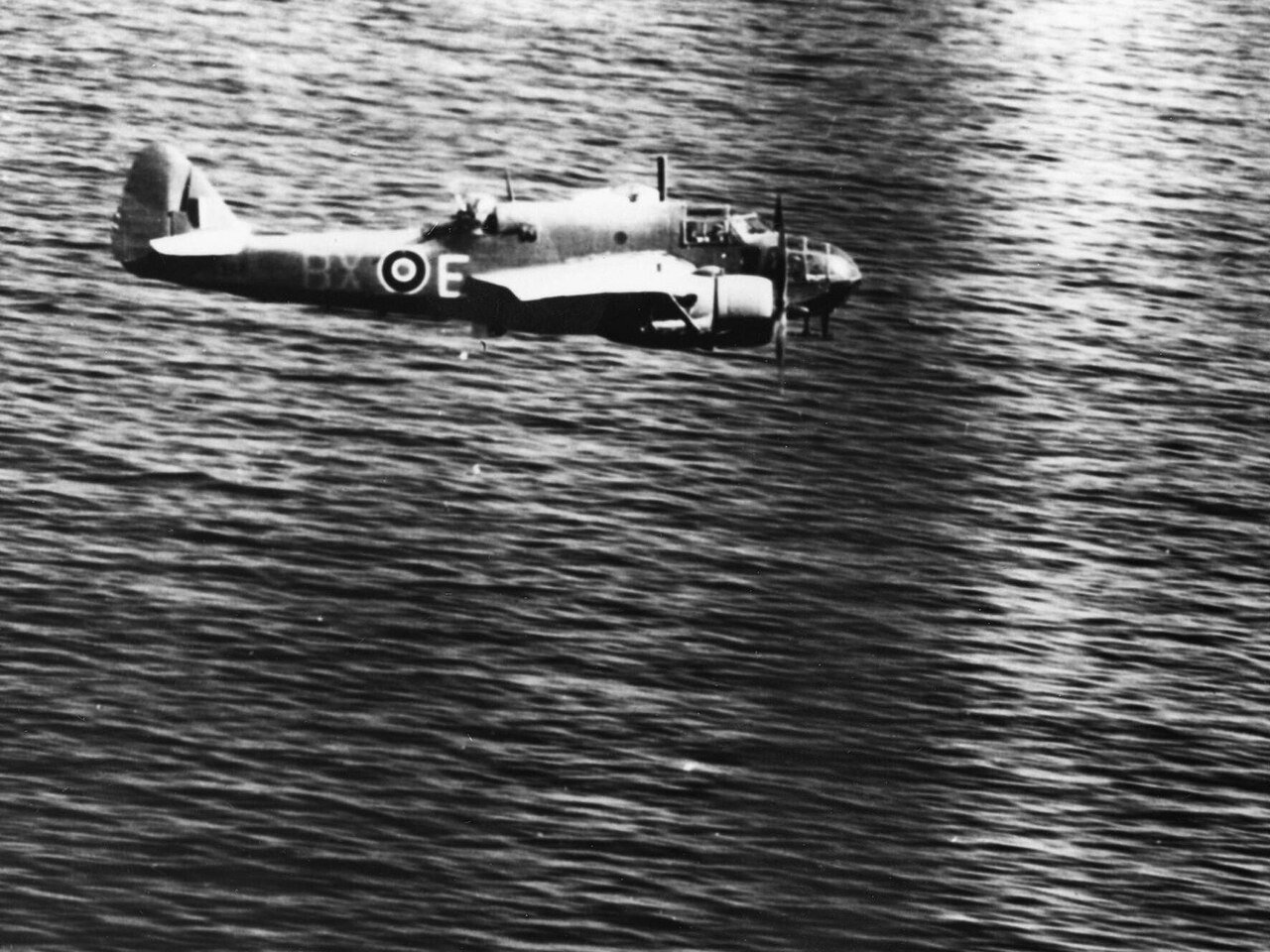
The cost was heavy. Malta’s aircrews flew on short rations, fell sick and attacked escorted convoys covered by Axis fighters, and squadrons lost crews week after week. From 1943, the RAF’s anti-shipping strikes increasingly passed to the Beaufighter, a heavier and faster Bristol type that borrowed heavily from the Beaufort and has a story of its own.
Australia Builds Its Own
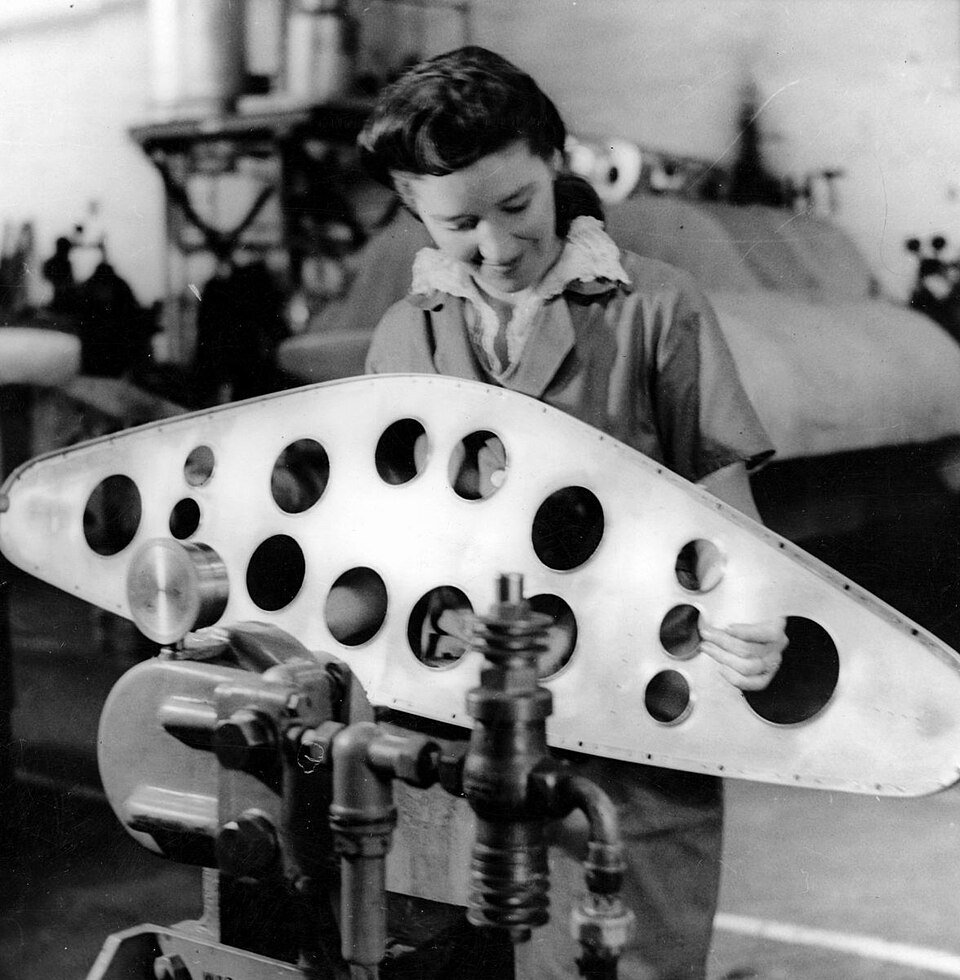
The biggest Beaufort story of all may be Australian. In 1939, with its front line made up of obsolete types, Australia decided to build the Beaufort at home. The original idea was to assemble aircraft from British components, but once Britain was fighting for its life, that supply dried up and Australia had to make almost everything itself, swapping the Taurus for the American Pratt & Whitney Twin Wasp.
The Department of Aircraft Production built 700 Beauforts between 1941 and August 1944, with final assembly at Fishermans Bend in Melbourne and Mascot in Sydney and major sections made in state railway workshops. Each aircraft needed some 39,000 parts. Estimates of the workforce range from about 24,000 to nearly 30,000 people, roughly a third of them women.
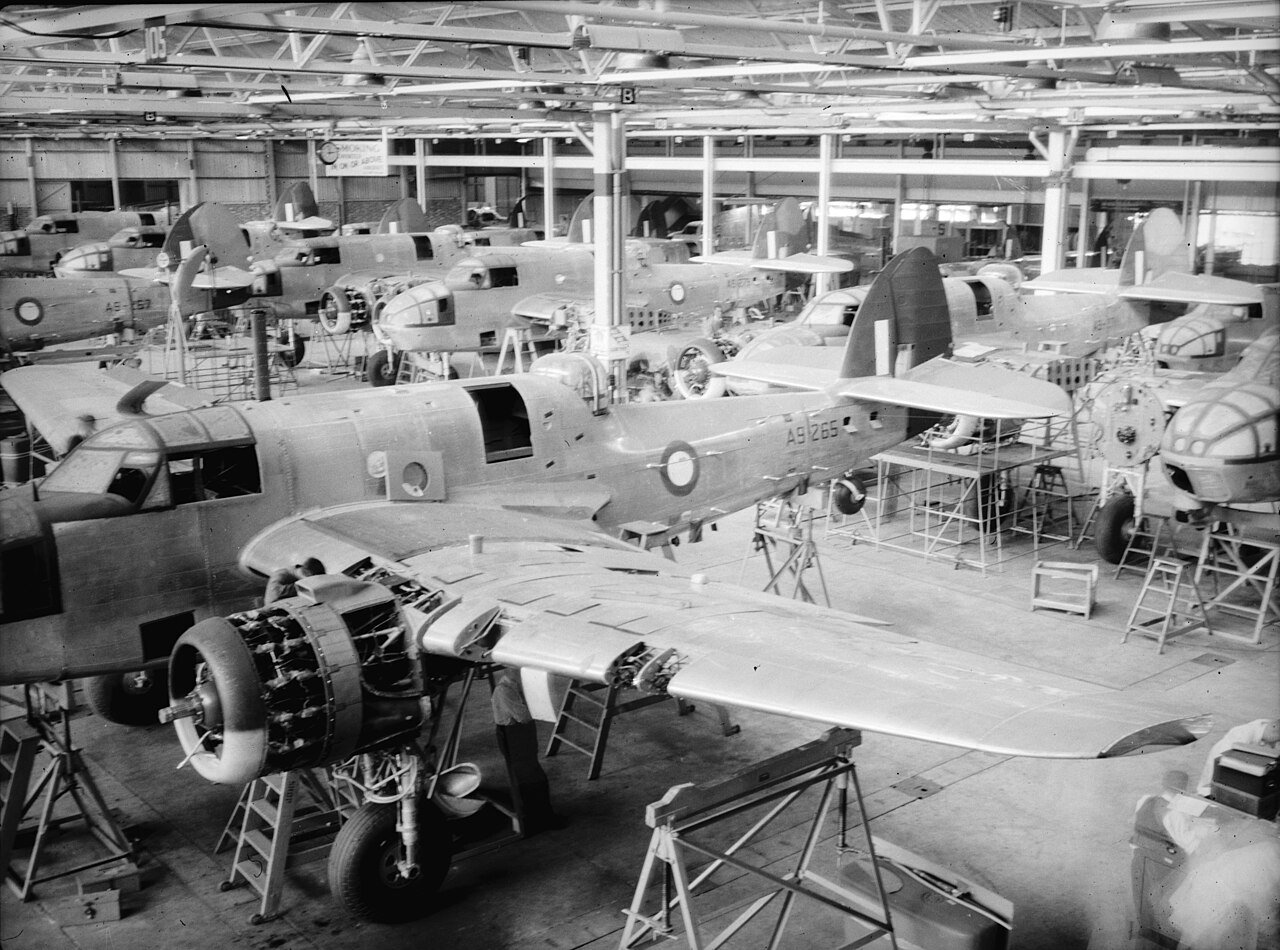
Air Vice-Marshal Kym Osley, a long-time supporter of the Beaufort veterans, put the scale of that gamble in plain terms at the last reunion of the RAAF’s Beaufort squadrons, held at Melbourne’s Shrine of Remembrance.
The Workhorse of the Pacific
Australian Beauforts flew coastal patrols and convoy escorts from late 1941, and from late 1942 squadrons in New Guinea were bombing Japanese bases, attacking shipping, supporting troops on the ground and flying reconnaissance. Accounts of the number of RAAF squadrons that flew the type range from about 19 frontline units to more than 30 squadrons and units in all.
Torpedoes were not their strongest suit. When eight Beauforts of No. 100 Squadron RAAF opened the Battle of the Bismarck Sea with a torpedo attack on 3 March 1943, they scored no hits, and the convoy was destroyed by low-level bombing instead. It was No. 100 Squadron’s last torpedo mission, and the RAAF’s Beauforts fought on chiefly as bombers until the end of the war.
The human cost was steep there as well. Speaking at the same reunion, Beaufort historian Tony Clark said 505 RAAF personnel who served in Beaufort squadrons lost their lives, 96 of them in training in Gippsland. From a stone mole in Brest to the airstrips of New Guinea, the Beaufort asked a great deal of the young men who flew it, and Kenneth Campbell’s lone run at the Gneisenau remains the clearest picture of what that meant.
Sources: The London Gazette (13 March 1942), Royal Air Force Museum, Commonwealth War Graves Commission, Aircrew Remembered, Victoria Cross Online, TracesOfWar, MaritimeQuest, Warfare History Network, KBismarck.com, Difesa Online, Shrine of Remembrance, Melbourne, ADF-Serials, Pacific Wrecks, Australian War Memorial, History of War, Classic Warbirds, Warbirds Resource Group.
Header photo: Royal Air Force official photographer B. J. Daventry (IWM CH 644), public domain, via Wikimedia Commons
0 Comments