
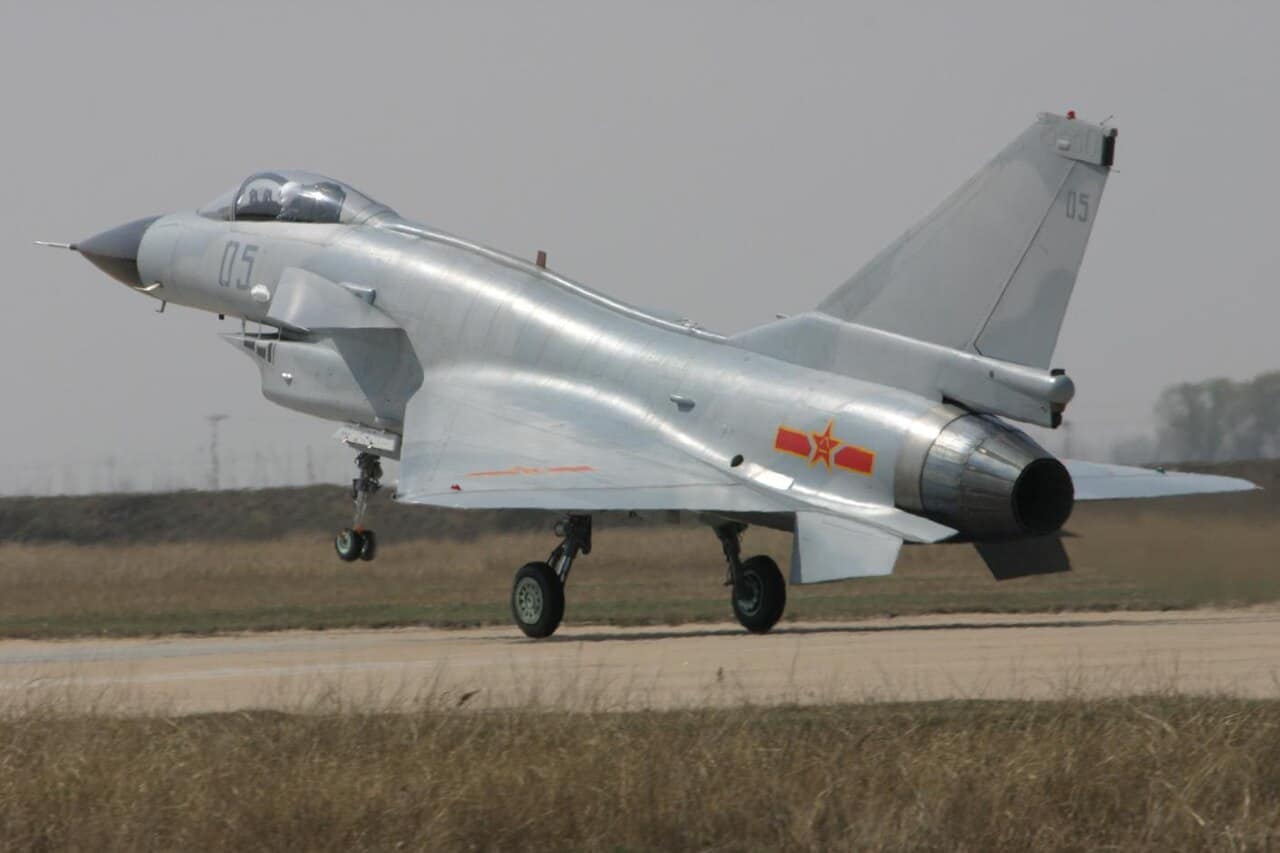
For months it was a rumour with photographs attached: Uzbekistan, a country whose air force has flown Soviet and Russian hardware since the day it existed, had quietly bought Chinese fighters. Then Uzbek state television settled it. In a long broadcast marking the 35th anniversary of the country’s independence, in the final days of August 2026, there they were — Chengdu J-10CEs on an Uzbek runway, taxiing past the cameras.
With that footage, Uzbekistan became the second export customer for China’s J-10CE after Pakistan, and the first anywhere in Central Asia. In a region Moscow has treated as its own arms market for three decades, that is a significant thing to broadcast on national television.
Was: Uzbekistan publicly confirmed it operates the Chengdu J-10CE
How: State television footage aired around the 35th anniversary of independence, late August 2026
Seen: At least six aircraft, reportedly at Karshi-Khanabad (“K2”) air base
Status: Second export customer for the J-10CE, after Pakistan — and the first in Central Asia
Reported order: Up to 24 aircraft, never officially confirmed by Beijing or Tashkent
Bedeutung: A Russian-equipped air force buying Chinese
Confirmed by the evening news
This is how a lot of modern defence news breaks: not in a press release, but in a state broadcaster’s montage. Reporting on the footage described at least six aircraft, shown on the runway, flying in formation and being welcomed with the traditional water-cannon salute given to new arrivals. Coverage placed the jets at Karshi-Khanabad in the Kashkadarya region — the base widely known as “K2,” which American forces used in the early 2000s to support operations in Afghanistan before being asked to leave in 2005.
Chinese fighters now flying from a base that once hosted the US Air Force is the kind of detail that writes its own headline.
What the numbers are — and are not
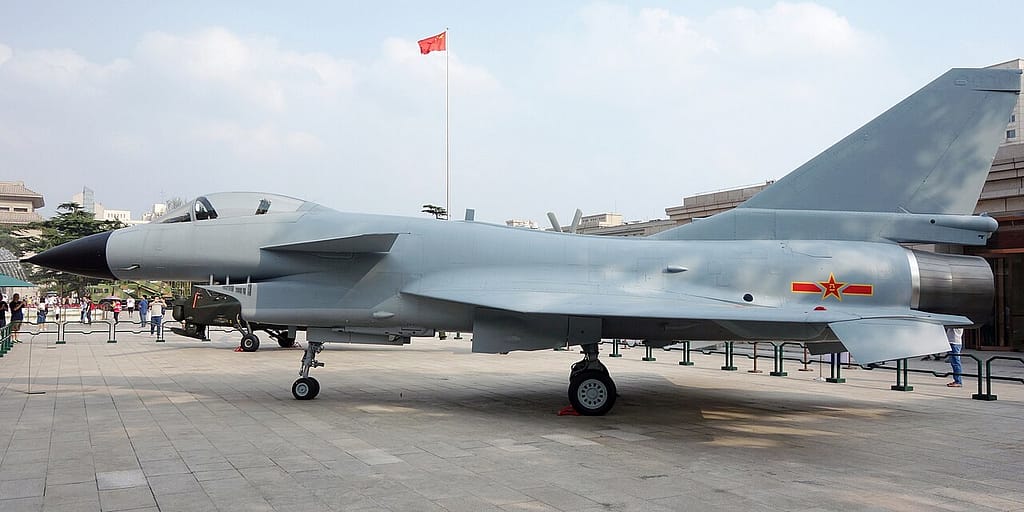
Here caution is needed, because a lot of the reporting runs ahead of what has actually been confirmed. What the footage supports is that Uzbekistan has the aircraft and is flying them. Earlier reports suggested an order of around 24 J-10CEs, but neither Beijing nor Tashkent has publicly confirmed a contract, a quantity, a price or a delivery schedule. Analysts counting airframes in the broadcast arrived at roughly six so far.
The J-10CE is the export version of the Chengdu J-10C, a single-engine, delta-canard multirole fighter built by Chengdu Aircraft Industry Group, part of the state aerospace giant AVIC. In Pakistani service it is paired with the PL-15E long-range air-to-air missile, and its combat reputation — contested and heavily politicised — has become one of Beijing’s better sales arguments.
A quiet loss for Moscow
The strategic point is not really about the aeroplane. Uzbekistan’s air force has been built on MiGs and Sukhois for its entire existence, and Russia has long treated Central Asia as a captive customer. Choosing a Chinese fighter as the centrepiece of an air-force modernisation — and then showing it off on independence day — is a statement about where Tashkent thinks its options now lie.
It also fits a pattern we have been tracking all year. Pakistan flies the J-10CE. Bangladesh has signed for it. Algeria has turned to Chinese fighters and airborne radar after six decades of Russian equipment. Russia’s war in Ukraine has squeezed its export capacity and its reputation at exactly the moment Chinese manufacturers have modern airframes to sell and no shortage of production capacity. The J-10CE keeps turning up in air forces that used to be a Russian preserve.
One broadcast, six jets, no official contract announcement — and a fairly clear signal about the direction of the Central Asian arms market.
Sources: Uzbek state television broadcast (O’zbekiston 24); The Aviationist; South China Morning Post; Defence Blog; Militarnyi.


0 Kommentare