
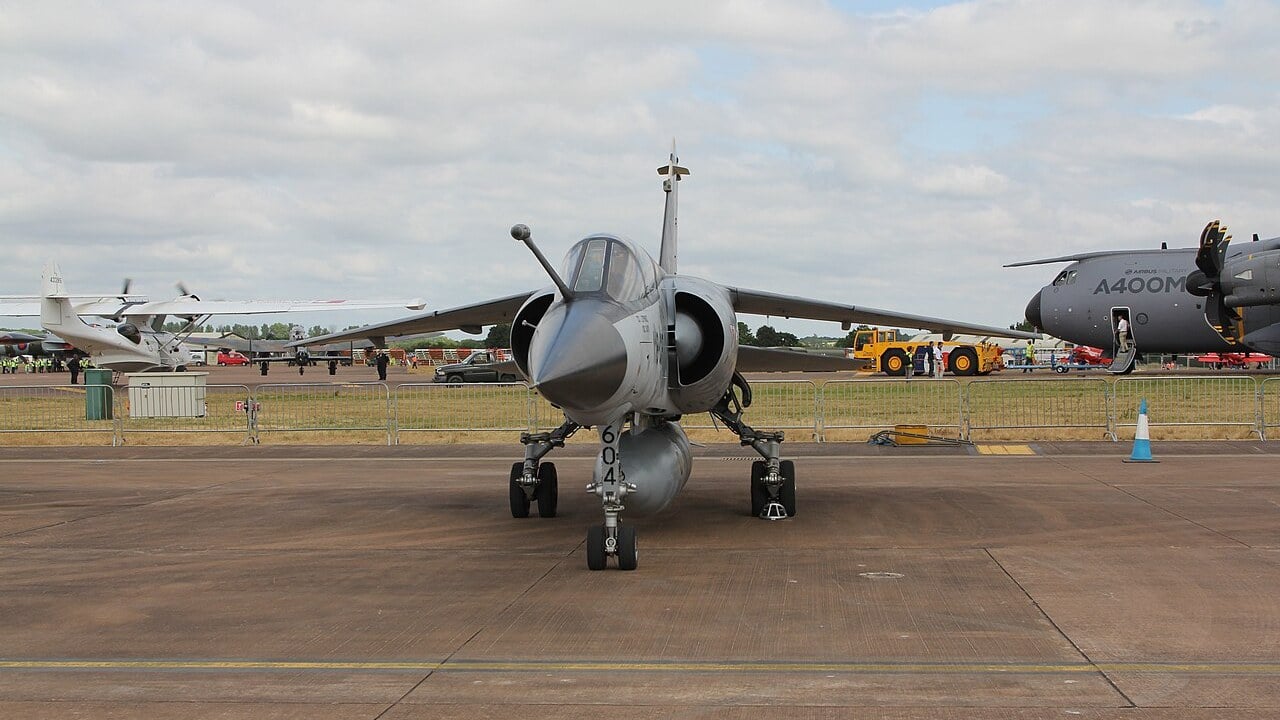
On the morning of 6 November 1981, two South African Air Force jets were scrambled from Ondangwa to intercept a pair of Angolan MiG-21s. The missiles would not guide. So Major Johan Rankin closed in and shot one of the MiGs down with his 30 mm cannon.
Rankin was flying a Dassault Mirage F1, the French fighter that broke with the delta wing of its famous ancestors. Few jets of its generation have fought in so many wars: Western Sahara, Chad, Angola, the Iran-Iraq War, the Gulf War, the Andes and the Sahel.
And its story is not over. Half a century after its first flight, ex-French and ex-Spanish Mirage F1s still fly over the United States, playing the enemy for American fighter pilots.
Kurzinfo
- Typ: Single-seat fighter, interceptor and attack aircraft (two-seat F1B/D trainers)
- Hersteller: Dassault Aviation, France
- Erster Flug: 23 December 1966, Melun-Villaroche (René Bigand)
- Motor: One SNECMA Atar 9K-50 afterburning turbojet, about 70 kN
- Geschwindigkeit: Mach 2 class; lands at about 125 knots
- Rüstung: Two 30 mm DEFA cannon, missiles, bombs, Exocet on Iraqi jets
- Gebaut: Around 720 (sources differ); 473 exported to 10 countries
- French service: 1974 to 13 June 2014
- Wars: Western Sahara, Chad, Angola, Iran-Iraq, Gulf War, Cenepa, Afghanistan, Libya, Mali
- Heute: Iran and several African air forces; ATAC and Draken as US adversary jets
Dassault abandons the delta
Der Mirage III had made Dassault famous, but its delta wing had a price: pilots had to approach and land fast, and needed long runways. In mid-1964, according to Dassault, Marcel Dassault quietly launched a company-funded design for a small Mach 2 fighter that could also land slowly. It would become the Mirage F1.
The new jet put a swept wing high on the fuselage and added a conventional tailplane. Leading-edge slats and double-slotted flaps gave it so much lift that, Dassault says, it could fly at Mach 2 and land at 125 knots. It carried more fuel than the Mirage III and needed far less runway.
The prototype first flew on 23 December 1966 at Melun-Villaroche with Dassault chief test pilot René Bigand at the controls, and reached Mach 2 on its fourth flight on 7 January 1967. Months later, during a fast low-level pass, flutter tore off its horizontal stabilisers and the aircraft hit the ground near Fos-sur-Mer, killing Bigand. The programme continued with three pre-production aircraft.
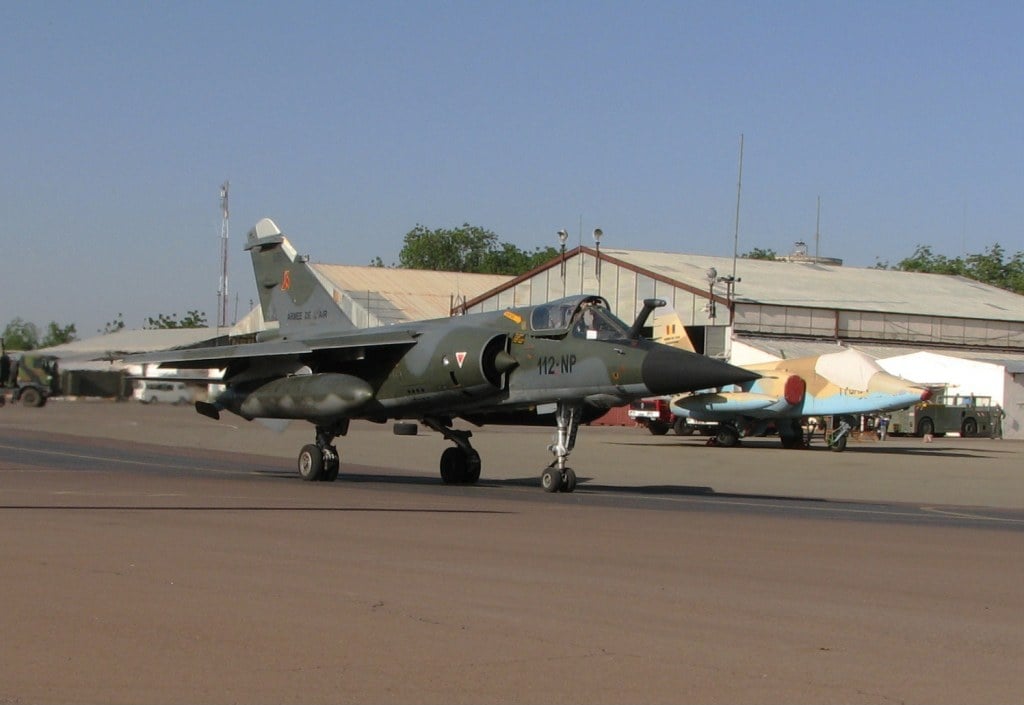
France’s interceptor, then its eyes
The first production Mirage F1 flew on 15 February 1973 at Mérignac and was delivered to the French Air Force in March 1974. Powered by a single SNECMA Atar 9K-50 turbojet of about 70 kN with afterburner, armed with two 30 mm DEFA cannon and fitted with the Cyrano IV radar, the F1C became France’s main interceptor until the Mirage 2000 arrived.
It then found a second life. The F1CR reconnaissance version first flew in November 1981, and surplus F1Cs were converted into F1CT ground-attack jets. French F1s covered Jaguar strikes in Chad in the 1980s, flew reconnaissance in the 1991 Gulf War and over Afghanistan, Libya and Mali.
In the Gulf, the French F1CRs were at first kept on the ground, partly so that coalition pilots would not mistake them for Iraqi Mirage F1s. The last French unit, Escadron de Reconnaissance 2/33 Savoie at Mont-de-Marsan, said goodbye to the type on Friday 13 June 2014, before a last flypast at the Bastille Day parade.
Aerocontact’s report on the end of an era: the French Air Force’s farewell to the Mirage F1 in 2014.
An export hit
Dassault says the Mirage F1 was an export success from the start: 473 aircraft went to South Africa, Spain, Greece, Kuwait, Libya, Morocco, Ecuador, Iraq, Jordan and Qatar. With the French jets, the total built is usually put at around 720, although sources differ.
A version with the more powerful M53 engine even competed in Europe’s 1970s contest to replace the F-104G, finishing behind the F-16. Spain upgraded its fleet to the F1M standard and flew it until 2013; Greece flew 40 F1CGs until 2003.
Iraq’s weapon in the Gulf
One of the most important customers was Iraq, which received its first F1EQs in 1981. In the Iran-Iraq War they flew interception, ground-attack and anti-shipping missions, and the F1EQ-5 gave Iraq an Exocet-capable fighter for its campaign against shipping in the Gulf. The 1987 Exocet attack on USS Stark is often linked to the type, although exactly which Iraqi aircraft fired is still disputed, as Afterburner has told in full.
The air war against Iran was brutal for both sides. According to research by aviation historian Tom Cooper, Iraqi F1EQs claimed at least 35 Iranian aircraft, including several F-14 Tomcats, while Iranian F-14s shot down 33 Iraqi Mirage F1s. Neither side published full official records.
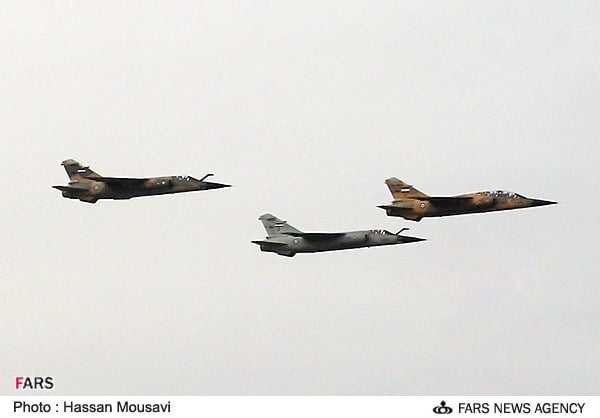
The Gulf War of 1991 almost ended the Iraqi F1 fleet. Of the roughly 88 F1EQs Iraq had before the war, 23 were destroyed and 24 were flown to Iran, which kept them. Iran was still flying a number of those ex-Iraqi Mirages in the 2020s, three decades after they crossed the border.
From the Sahara to the Andes
Africa saw the F1 at its busiest. Morocco flew it for years against the Polisario Front in Western Sahara and lost several to ground fire, before new tactics and countermeasures made its pilots far more effective. Over Angola, South African F1AZs flew 683 combat sorties in the last seven months of the Border War, and more than 100 surface-to-air missiles were fired at them.
In the Andes, Ecuador’s Mirage F1JAs went to war against Peru twice. On 10 February 1995, during the Cenepa War, two of them claimed two Peruvian Su-22s shot down. Peru disputes the claim, saying one was lost to ground fire and the other to an engine fire.
A second career as the enemy
As front-line air forces retired the type, private companies saw an opportunity. In 2017, Textron’s Airborne Tactical Advantage Company (ATAC) bought 63 former French Air Force Mirage F1s, along with spare engines and parts, to provide “Red Air” adversary training for the US military.
Its rival Draken International announced in November 2017 that it had acquired 22 Mirage F1Ms from Spain. The jets are attractive for the same reasons that once sold them to a dozen air forces: they are supersonic, robust, relatively cheap to run, and have a radar that can stand in for a fourth-generation threat.
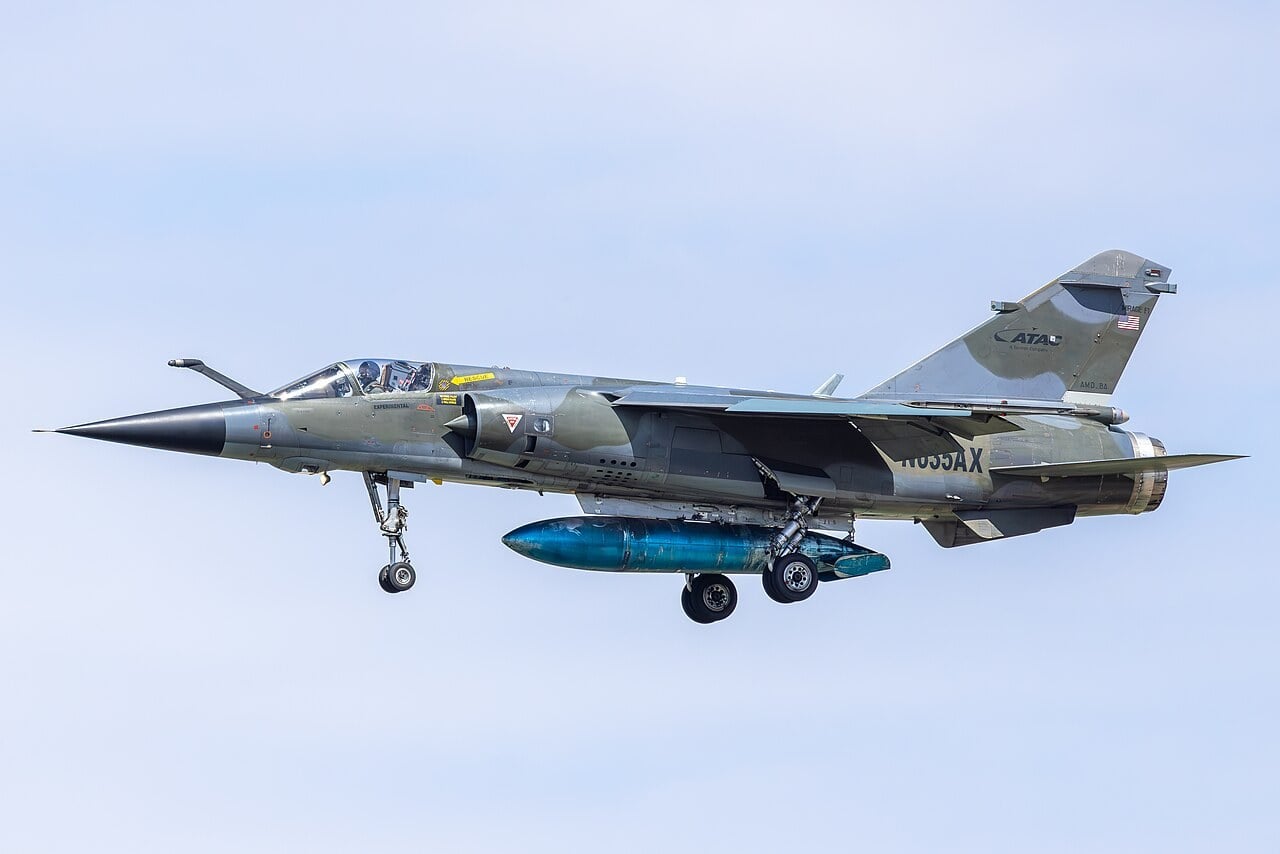
So the Mirage F1 that once hunted MiGs over Angola now plays the MiG itself. ATAC’s ex-French F1s fly from Luke Air Force Base in Arizona, among other places, in support of US fighter training.
The Dallas Morning News on the ex-French Mirage F1s that arrived at Fort Worth Alliance Airport for their new career as adversary aircraft.
It is a fitting afterlife for a jet that never quite became famous outside the cockpit. The Mirage III had the glamour and the Mirage 2000 the technology. The F1 simply went everywhere, fought nearly everyone, and is still flying nearly 60 years after René Bigand first took it into the air.
Sources: Dassault Aviation, Air & Space Forces Magazine, TWZ, The Aviation Magazine, SA Transport (Mirage F1 in SAAF Service), ACIG, Aerocontact, The Dallas Morning News
Header photo: Mark Kent / Wikimedia Commons, CC BY-SA 2.0
0 Comments