
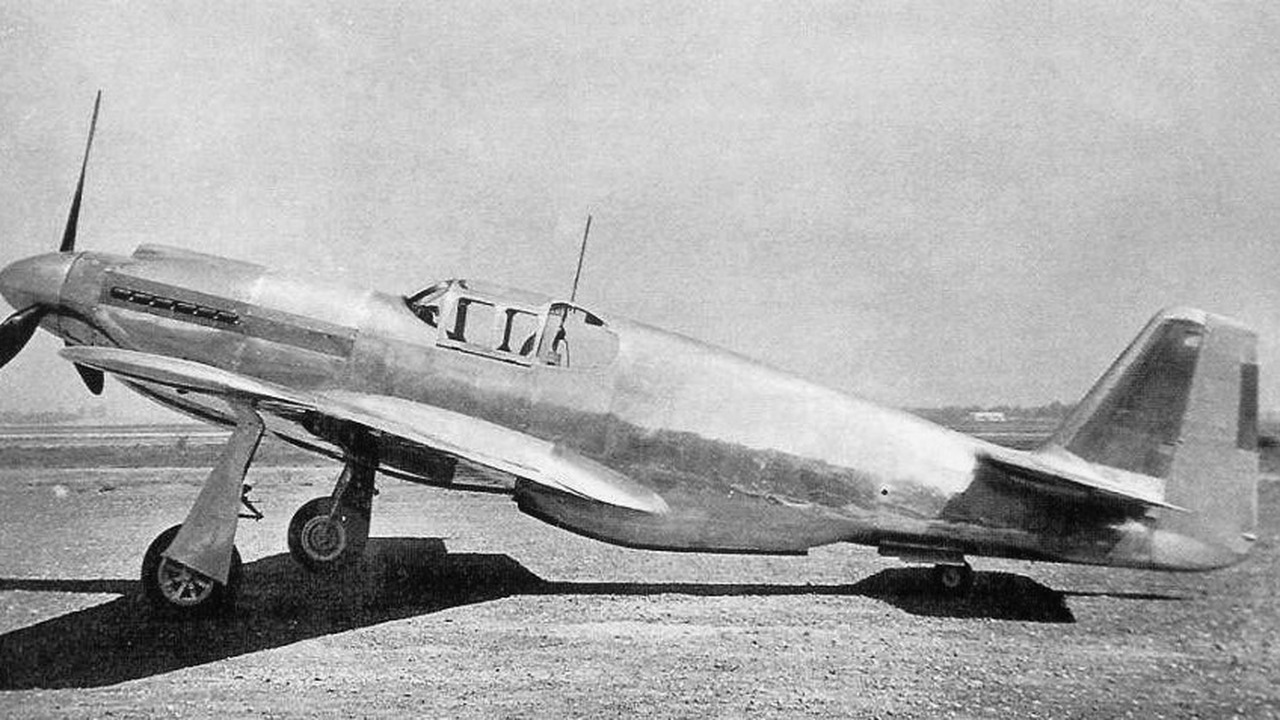
On the morning of 26 October 1940, a bare-metal fighter with no paint and not even a name sat waiting at Mines Field, the small Los Angeles airfield that would one day become LAX. Freelance test pilot Vance Breese climbed in, started the Allison V-12 and took it up for its first flight.
The aircraft was the NA-73X, and North American Aviation had never built a fighter before. Barely five months earlier, the British had only just signed the order for it. Within four years its descendants would be escorting bombers all the way to Berlin as the P-51 Mustang.
Eighty-six years later, the story of how it was built still reads like a dare. The British asked for P-40s. North American said no, and offered something better.
Kurzinfo
- Flugzeug: North American NA-73X, prototype of the Mustang (registration NX19998)
- Bestellt von: British Purchasing Commission, 1940
- Designer: Edgar Schmued’s team at North American Aviation
- Airframe complete: 9 September 1940, 102 or 117 days depending on the starting date used
- Erster Flug: 26 October 1940, Mines Field, Los Angeles (the Smithsonian gives 25 October)
- Pilot: Vance Breese
- Motor: Allison V-1710 V-12, single-stage supercharger
- Absturz: 20 November 1940, fuel starvation; pilot Paul Balfour unhurt
The order nobody wanted to fill
In 1940 Britain was desperate for fighters, and the British Purchasing Commission in the United States, headed by Sir Henry Self, was shopping for anything that could fight. The only American design that came close to European standards was the Curtiss P-40, and Curtiss’s factory was running flat out.
North American was already selling the T-6 Texan trainer to the Royal Air Force as the Harvard. When company president James “Dutch” Kindelberger came looking for more business, Self asked whether North American would build P-40s under licence. Kindelberger replied that his company could get a better fighter, with the same Allison engine, into the air sooner than it could set up a P-40 production line.
It was a bold claim from a firm with no fighter experience. The British set hard terms: four machine guns, a unit price of no more than $40,000, and, according to several histories, a prototype within 120 days. North American bought Curtiss’s P-40 wind-tunnel and test data, and on 29 May 1940 the commission firmly ordered 320 aircraft. A design team led by lead engineer Edgar Schmued got to work.
102 days, or 117?
Schmued’s team worked at a pace that became legend. The airframe of the NA-73X was complete on 9 September 1940, still waiting for its Allison engine. Exactly how fast that was depends on where you start the clock, and the sources do not agree.
Wikipedia, aviation historian Joe Baugher and The National WWII Museum all give 102 days, counted from the British order. The Smithsonian National Air and Space Museum and This Day in Aviation say 117 days, counted from when the prototype was authorised. Even the first-flight date wobbles: the Smithsonian gives 25 October, while Boeing, which now owns North American’s heritage, and most other sources give 26 October.
Either way, it beat the 120-day target. Counting to the first flight, Wikipedia puts it at 149 days into the contract, an extraordinarily short development time even in wartime. According to This Day in Aviation, that first flight lasted just five minutes, and Breese took the aircraft up for another ten later the same day.
Clean lines and a new wing
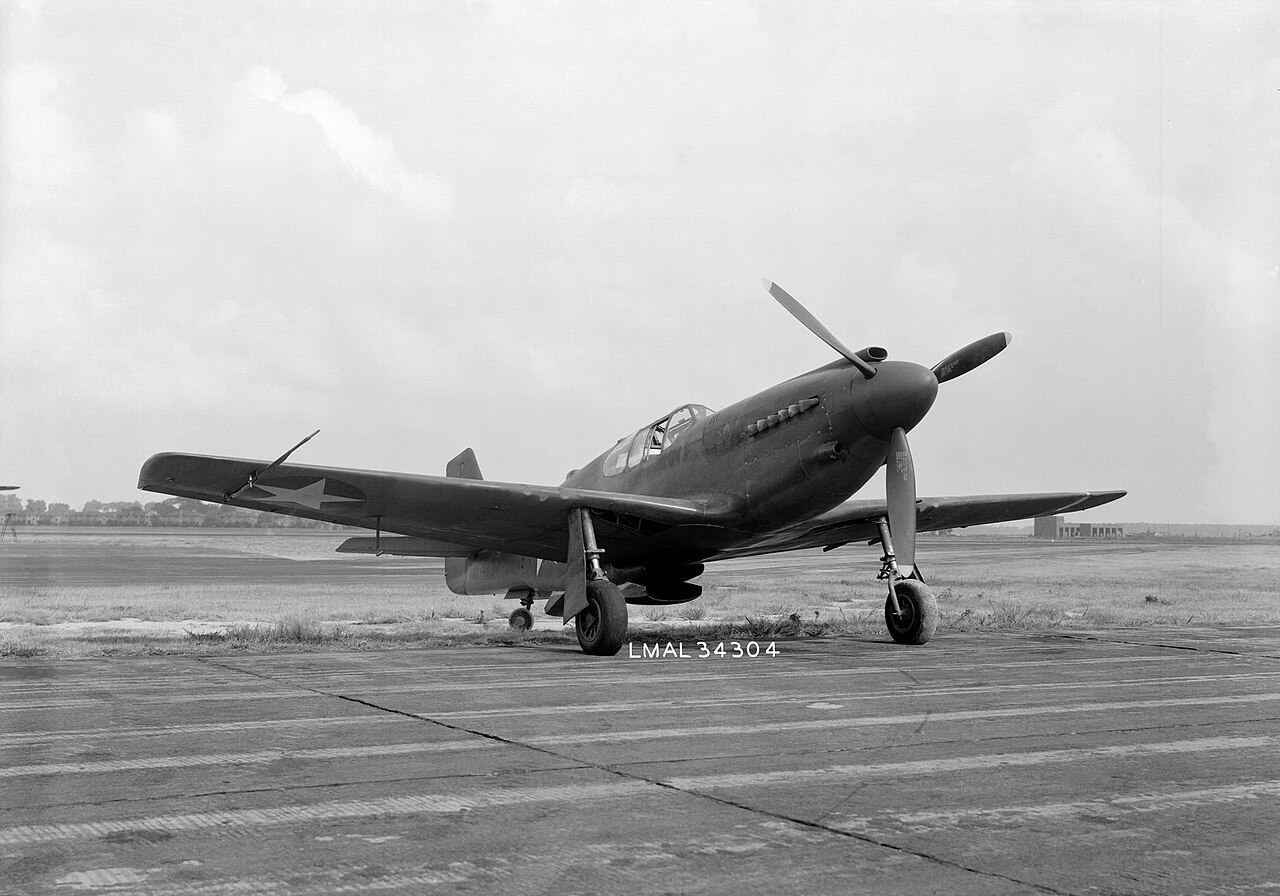
The speed was not just about long shifts. The NA-73X was designed from the start for mass production, built in five main sections that were fitted out with wiring and piping before being joined together. Its fuselage was lofted mathematically, giving smooth, low-drag curves.
The NA-73X prototype had two features that made it fast. The first was a laminar-flow wing, developed with the National Advisory Committee for Aeronautics, designed to keep the airflow smooth over more of its surface. The second was the radiator, moved behind the cockpit into a belly scoop, where heated air leaving the duct even produced a little thrust.
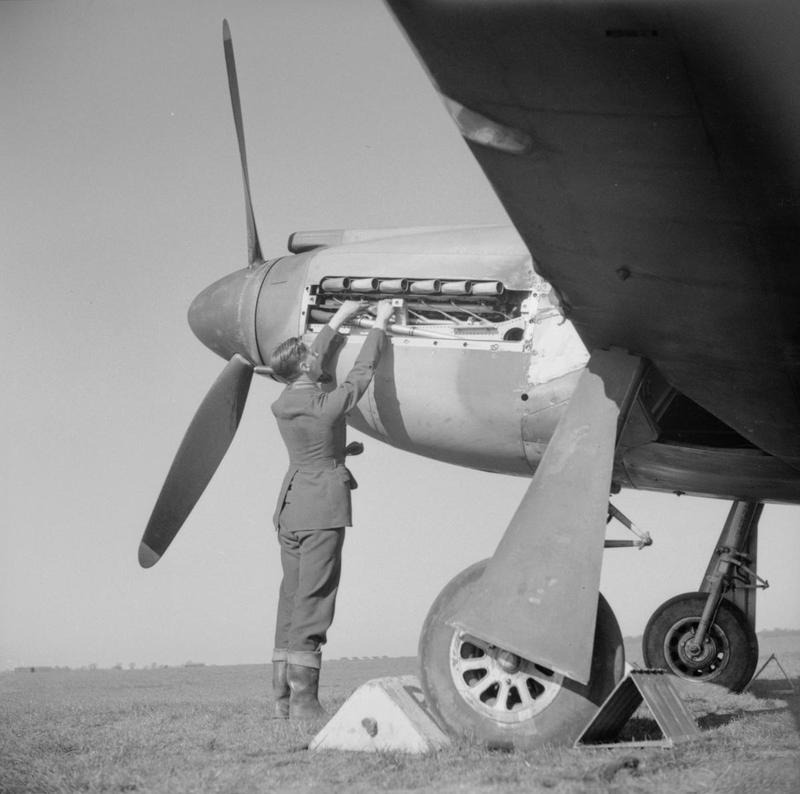
In Breese’s hands the prototype handled well and carried an impressive load of fuel. That fuel capacity, almost a footnote in 1940, would later decide the air war over Germany.
Archival North American Aviation film of a Mustang factory test flight, from Boeing’s heritage channel, Boeing Classics.
Out of fuel on flight day
On 20 November 1940, North American’s chief test pilot Paul Balfour took over for a high-speed run. According to This Day in Aviation, Schmued offered to walk him through the cockpit routine first. Balfour waved it away, saying “one airplane is like another.”
About twelve minutes into the flight, the Allison stopped. Balfour had forgotten to switch fuel tanks. Too far from the runway, he put the prototype down in a freshly ploughed field, where the wheels dug in and the aircraft flipped onto its back.
Balfour was not hurt and crawled out of the upside-down wreck. Most histories say the prototype was rebuilt and flying again in 1941, with Robert Chilton taking over the test programme, though one account holds that it never flew again. Either way, the design had already proved itself.
A low-level thoroughbred
The US Army Air Corps had played no part in the deal, but two early production aircraft were handed over for evaluation as XP-51s. The British, meanwhile, named their new fighter the Mustang.
The Mustang I reached RAF units in early 1942 and flew with Army Co-operation Command on low-level tactical reconnaissance and ground attack. Down low it was about 30 mph faster than the P-40, even with the same Allison engine, and faster than a Spitfire V at low and medium altitude.
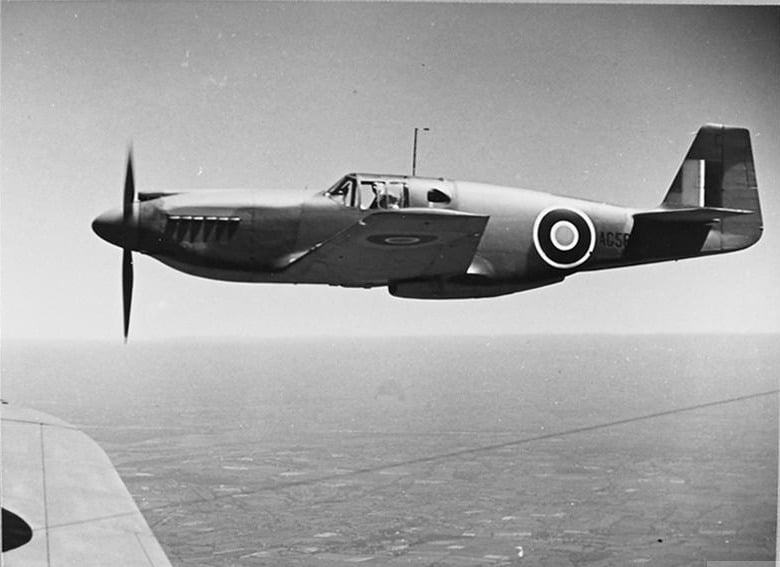
The problem was altitude. The Allison had only a single-stage supercharger, and above about 15,000 feet the Mustang’s performance fell away fast. That was exactly where the air war over Europe was being fought.
British Movietone footage of Allison-engined RAF Mustang Mk Is in 1942, via AP.
Enter the Merlin
In spring 1942 Rolls-Royce test pilot Ronald Harker flew a Mustang I and came back with an idea: fit it with the two-stage supercharged Merlin from the Spitfire IX. Rolls-Royce converted airframes at Hucknall, and the Merlin-powered Mustang X flew in October 1942.
In the United States, North American built its own Merlin prototype, the XP-51B, which flew in November 1942 with the Packard-built version of the engine. The US Army Air Forces was so impressed that it had already ordered 400 three months earlier.
The rest is legend. The P-51 Mustang went on to escort American bombers deep into Germany, and more than 15,000 were built. If you want to see how the finished article stacks up against the best of the Spitfires, read our Spitfire XIV vs P-51D comparison.
It all started with one unpainted prototype, a five-figure price cap and a company that had never built a fighter. North American did not build the P-40s the British asked for. It built the aircraft that replaced them.
Greg’s Airplanes and Automobiles explains where North American Aviation came from, and how it could turn out the T-6, B-25 and P-51.
Sources: Wikipedia (North American P-51 Mustang; Rolls-Royce Mustang Mk.X; Edgar Schmued; Vance Breese), Joe Baugher, Smithsonian National Air and Space Museum, The National WWII Museum, This Day in Aviation (Bryan R. Swopes), Boeing Classics
0 Comments