

In the late 1920s, a young man named Willard Custer watched a windstorm peel the roof off a barn. The roof did not slide forward and lift like an aircraft; it simply rose straight up as the wind screamed over it. Custer had a revelation that would consume the rest of his life: maybe it isn’t the speed of a wing through the air that makes lift, but the speed of the air over the wing.
From that idea came one of the strangest wings ever flown: a pair of half-barrels with propellers tucked inside them.
Datos rápidos
- Aeronave: the Custer Channel Wing, most famously the CCW-5
- Inventor: Willard Custer, great-grand-nephew of General George Custer
- La idea: half-barrel wing channels with pusher props to make lift at near-zero speed
- CCW-1 first flight: 12 November 1942; CCW-5 first flew July 1953
- Claimed: takeoff in ~100 feet, controllable flight from 22 to 200 mph
- Resultado: only a handful built; never mass-produced
The half-barrel wing
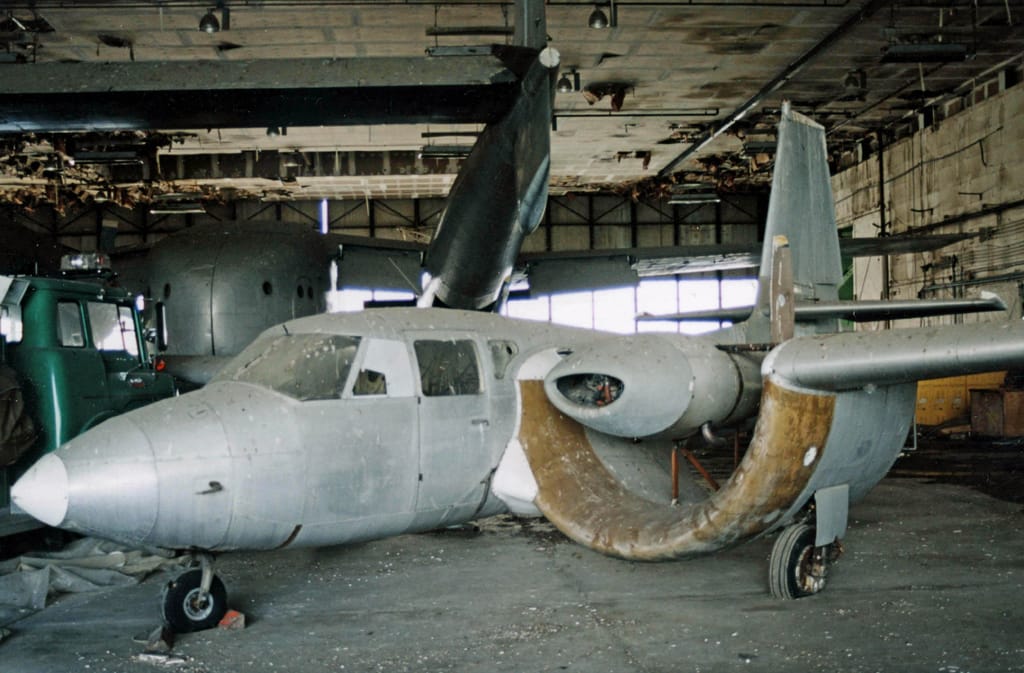
Custer — a great-grand-nephew of the General Custer of Little Bighorn fame — called his principle “aerophysics.” His solution was a wing shaped like a semicircular trough, with a pusher propeller mounted right at the trailing edge of each channel. The propeller sucked air through the half-barrel at high speed, and by Custer’s logic that fast-moving air generated lift whether or not the aircraft was moving forward at all.
His first full-size prototype, the CCW-1, flew on 12 November 1942 on two little 75-horsepower engines. Custer kept cropping its outer wings shorter and shorter to prove the channels were doing the lifting, and the aircraft flew on for more than 300 hours. In a stiff breeze, it could rise almost vertically.
The CCW-5
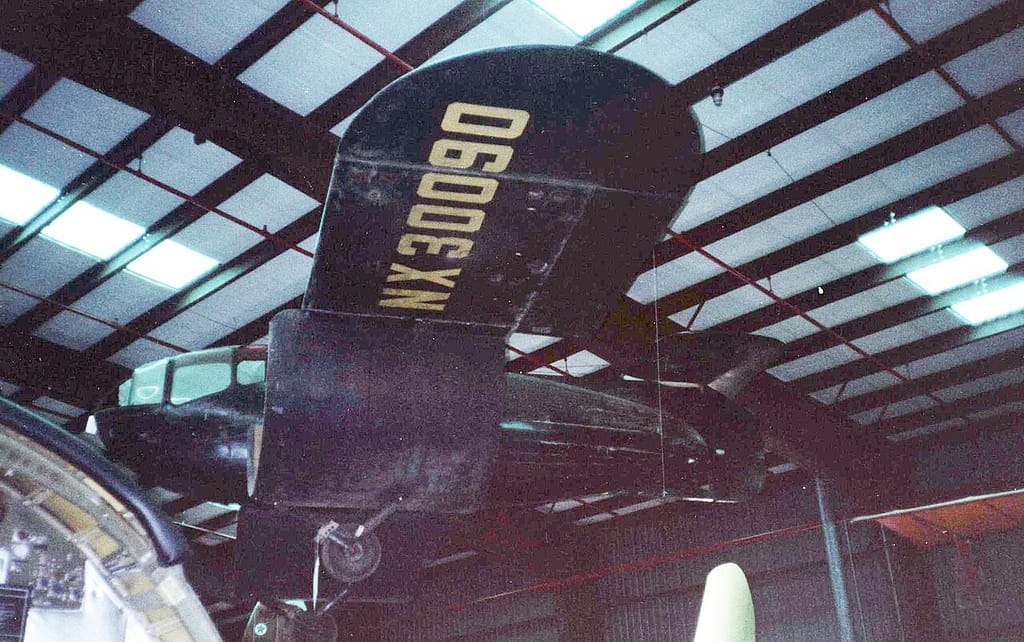
The ultimate channel wing was the CCW-5, a handsome five-seat twin built on the fuselage of a Baumann Brigadier. First flown in July 1953, it could get airborne in about three seconds after a hundred-foot roll, fly controllably as slow as 22 mph, and bank steeply at speeds where any ordinary aircraft would stall and fall out of the sky — all with no flaps or slots of any kind. Aerodynamically, it worked.
Commercially, it never had a chance. Custer spent decades pitching his wing to the big manufacturers and was met with polite skepticism, and worse. One executive who met him left an unusually candid assessment.
Crackpot or visionary?
The aviation establishment largely wrote Custer off as a crank — an outsider with grand claims and thin data, who was better at salesmanship than at winning over engineers. His company built just one production CCW-5 before folding, and Custer died in 1985 with his dream unrealised.
And yet the idea would not quite die. In the 2000s, researchers at NASA and Georgia Tech revisited the channel wing with modern tools and found real merit in it, even suggesting an updated version could rival tilt-rotors like the V-22 Osprey at a fraction of the cost. The eccentric inventor may have been closer to right than his critics ever admitted.
Sources: Robert Guttman, “Why Willard Custer’s Unique Channel Wing Never Took Off,” Aviation History magazine (HistoryNet); Wikipedia (Custer CCW-5; Willard Ray Custer).
Publicaciones relacionadas

0 Comentarios