
Leading Aircraftman Leonard Fuller was 22 years old, three months into flight training, and had just been landed on by another aeroplane.
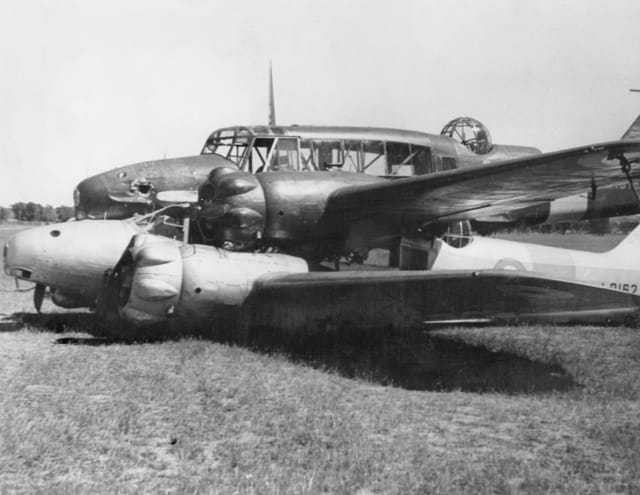
Not hit. Landed on. The Avro Anson underneath him had driven its gun turret into his port wing root and stuck there, its fin and rudder propped neatly under his port tailplane, the two aircraft welded into an accidental biplane 1,000 feet above a New South Wales wheat town on 29 September 1940.
His own engines were dead. The other aircraft’s were still at full power. And in about ninety seconds the other three men aboard would all jump out and leave him with it.
Fecha: 29 September 1940
Place: Over Brocklesby, near Albury, New South Wales
Unidad: No. 2 Service Flying Training School, RAAF Station Forest Hill
Aeronave: Avro Anson N4876 (upper) and L9162 (lower)
Upper pilot: LAC Leonard Graham Fuller, 22, of Cootamundra
Lower pilot: LAC Jack Inglis Hewson, 19, of Newcastle
Navigators: LAC Ian Menzies Sinclair, 27, and LAC Hugh Gavin Fraser, 27
Collision altitude: 1,000 ft
Distance flown while locked: about 5 miles (8 km)
Damnificados: none — all four survived
A Routine Navigation Exercise
The two Ansons had left Forest Hill near Wagga Wagga on a cross-country exercise, routed to Corowa, then Narrandera, then home. This was the Empire Air Training Scheme at full tilt, turning Australian farm boys into operational pilots as fast as the war demanded.
Over Brocklesby they went into a banking turn together. Fuller lost sight of Hewson’s aircraft below him. Then the noise.
The lower Anson’s propellers had chewed through the top of its own fuselage on the way past, and one of them had cut into Hewson’s back. The two airframes locked. Fuller’s engines were knocked out; Hewson’s kept turning at full power, and the stack began to circle slowly.
The Brocklesby collision, reconstructed with the original photographs.
Lumping Along Like a Brick
Fuller began experimenting. The elevators were useless, but the ailerons and flaps on his own aircraft still had authority, and the combination — which he called a “freak combination” — was flyable in the loosest sense of the word. He said it handled like it was lumping along like a brick.
One by one the others left. Sinclair went first, then Fraser, then Hewson with his injured back. Fuller stayed, because somebody had to fly the thing and because two aeroplanes falling on a town is a great deal worse than two aeroplanes landing in a paddock.
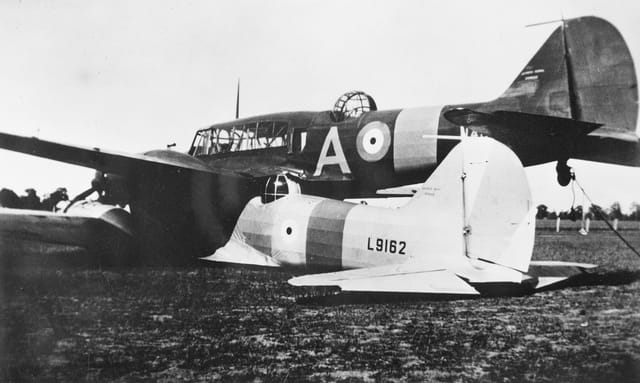
He flew the locked pair about five miles, circled a farmhouse twice to check the wind, and put them down on their belly in a paddock some four miles south-west of Brocklesby. The stack slid 200 yards across the grass and stopped.
“She Was Pretty Heavy on the Controls”
The RAAF’s Inspector of Air Accidents, Group Captain Arthur “Spud” Murphy, flew up from Melbourne the same day. What he got from Fuller was the most Australian accident report ever given.
Fuller reckoned the touchdown was better than any of the circuits he had flown at Forest Hill the day before. His acting commanding officer called the improvised runway “perfect” and the landing a “wonderful effort”. He had also saved roughly £40,000 of aircraft, worth something like AU$4.7 million in today’s money.
N4876, the aircraft on top, was repaired and flew again. L9162 became an instructional airframe.
Period photographs of the two Ansons after the landing.
Promoted, Then Confined to Barracks
The RAAF’s response was gloriously bureaucratic. Fuller was promoted to sergeant for the landing. He was also confined to barracks for fourteen days and docked seven days’ pay — for talking to newspapers about it without authorisation.
He graduated in October 1940 and went to war properly. Fuller flew in the Middle East and then with No. 37 Squadron RAF in Europe, earning the Distinguished Flying Medal for his actions over Palermo in March 1942. Commissioned later that year, he came home to Australia as a flying officer and became an instructor at No. 1 Operational Training Unit at Sale, Victoria.
The Ending Nobody Would Write
On 18 March 1944, Leonard Fuller was riding his bicycle near Sale when he was hit by a bus. He was killed.
The man who landed two aeroplanes at once, who flew bombing missions over Sicily and came back with a DFM, died on a country road on a pushbike. Hewson survived the war and left the RAAF a flight lieutenant in 1946. Sinclair was discharged a flight lieutenant in 1945. Fraser had the worst luck of the four: posted to No. 206 Squadron RAF at Aldergrove in Northern Ireland, he and his crew of three were killed on 1 January 1942 when their Lockheed Hudson hit a tree on a routine training flight.
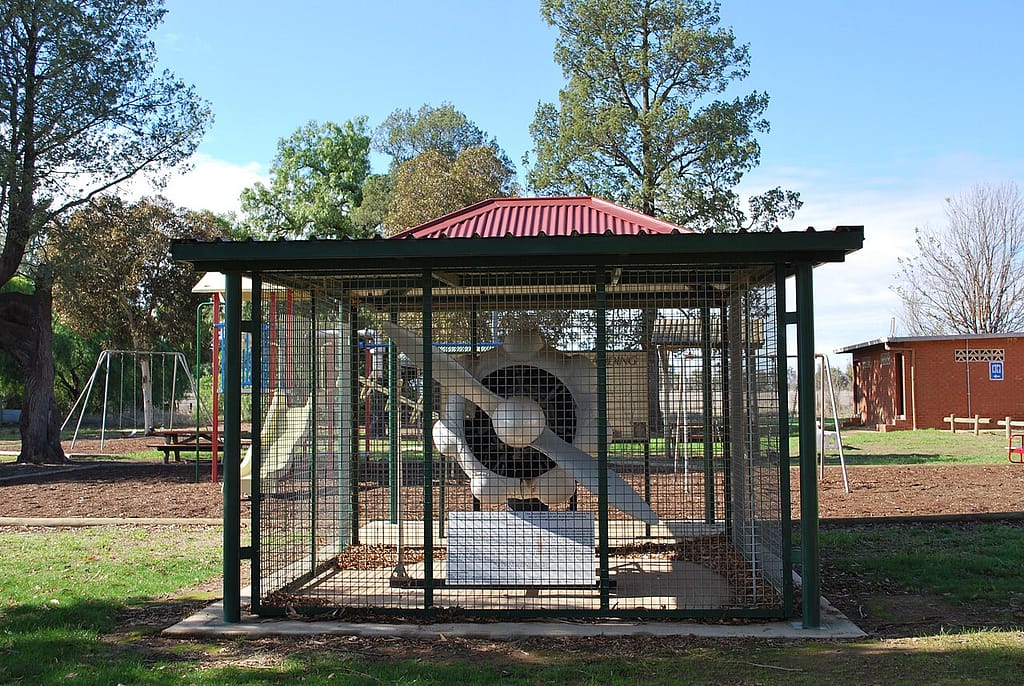
The Greater Hume Shire Council still calls the collision Brocklesby’s main claim to fame, which is a fair assessment. Locals put up a marker near the landing site for the fiftieth anniversary in 1990. Eighty-six years on, no one has repeated the trick, and nobody is trying.
A closer look at how the two airframes actually fitted together.
Sources: Wikipedia, Australian Broadcasting Corporation, Airways Museum, Monument Australia, Greater Hume Shire Council.
Publicaciones relacionadas
0 Comentarios