
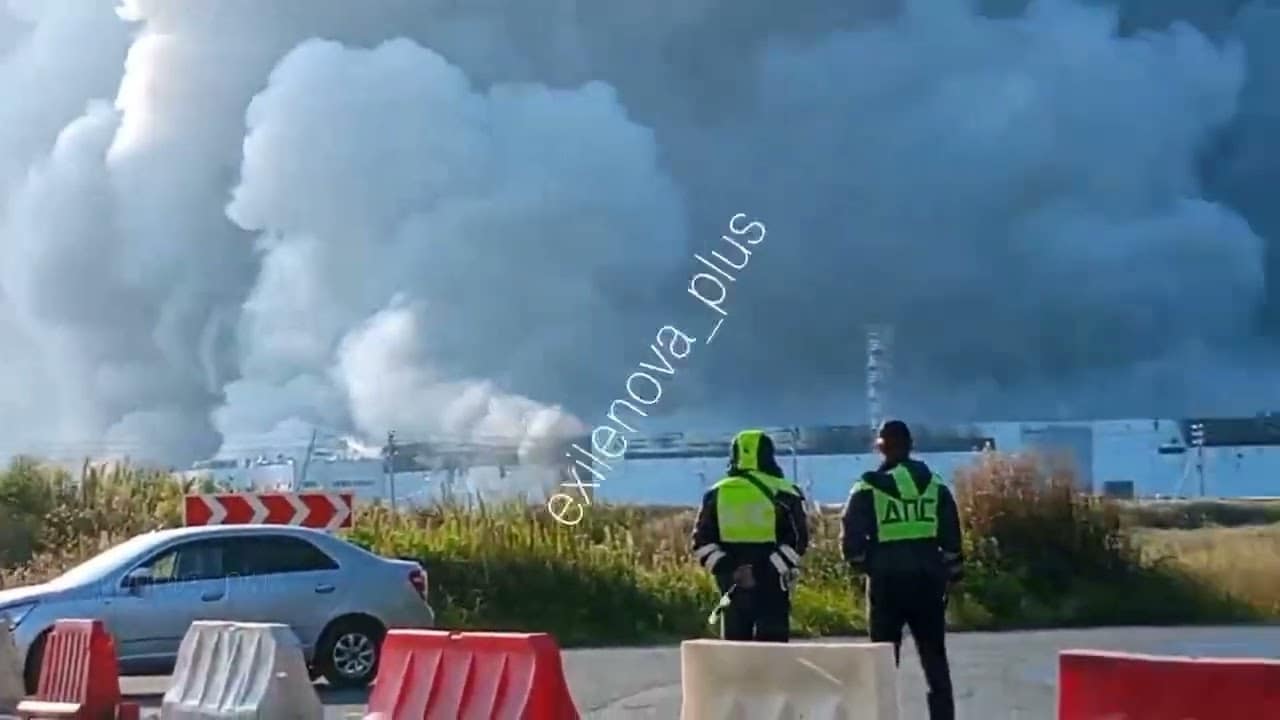
Shortly after one in the morning on 26 August, residents of Kotovsk — a small town in Russia's Tambov Oblast, some 430 kilometres southeast of Moscow — counted at least ten explosions. By dawn a smoke column stood over the town, and Russia's fourth-largest oil refinery, more than 400 kilometres to the north-northeast, was also burning.
Russia's Ministry of Defence said its air defences intercepted and destroyed 426 Ukrainian drones overnight, across 15 Russian regions and occupied Crimea. That figure cannot be independently verified, and it is the number Moscow uses to describe what it stopped, not what got through.
What got through is easier to see. Two of Russia's larger industrial sites spent the morning on fire.
Datos rápidos
Cuando: Overnight, evening of 25 August into the morning of 26 August 2026
Afirmación rusa: 426 Ukrainian drones intercepted and destroyed; figure not independently verified
Regions affected: 15 Russian regions plus occupied Crimea, including Belgorod, Bryansk, Kursk, Volgograd and Moscow oblasts and Krasnodar Krai
Target 1: Wildberries logistics hub, Kotovsk, Tambov Oblast — fire across more than 100,000 m²
Target 2: Lukoil-Nizhegorodnefteorgsintez (NORSI) refinery, Kstovo, Nizhny Novgorod Oblast
Refinery rank: Russia’s fourth largest by capacity, second largest gasoline producer
Ukrainian claim: 16 targets struck across Russia in 24 hours, including airfields and a missile unit
Reported deaths: At least 12 across Russia and Russian-occupied Ukraine, per local and Moscow-installed authorities
The warehouse
Tambov Governor Yevgeny Pervyshov confirmed the strike on the Wildberries logistics centre and said the fire covered more than 100,000 square metres — about fourteen football pitches. He later described the facility as completely destroyed by fire. Staff were evacuated; he reported one employee injured.
The Kotovsk site only opened in 2025 and was built to hold up to 54 million items, making it one of the anchor hubs of Russian e-commerce in the centre of the country. It had already been hit once, on 18 July, when Russian authorities reported seven people killed.
That earlier strike began a campaign. Ukraine has since worked steadily through Wildberries' distribution network — reportedly 23 centres across 16 regions — and in recent days has started on Ozon, the company's main rival. Kyiv accuses Wildberries of serving Russia's military supply chain. Moscow and the company say the sites are civilian.
The refinery
Around 3:40 a.m., drones reached Kstovo. The Lukoil-Nizhegorodnefteorgsintez plant — NORSI — is Lukoil's largest refinery, Russia's fourth largest by capacity and its second largest producer of gasoline, with a nameplate capacity in the region of 15 to 17 million tonnes of crude a year. It supplies fuel to the Moscow region and to Russia's Central Military District.
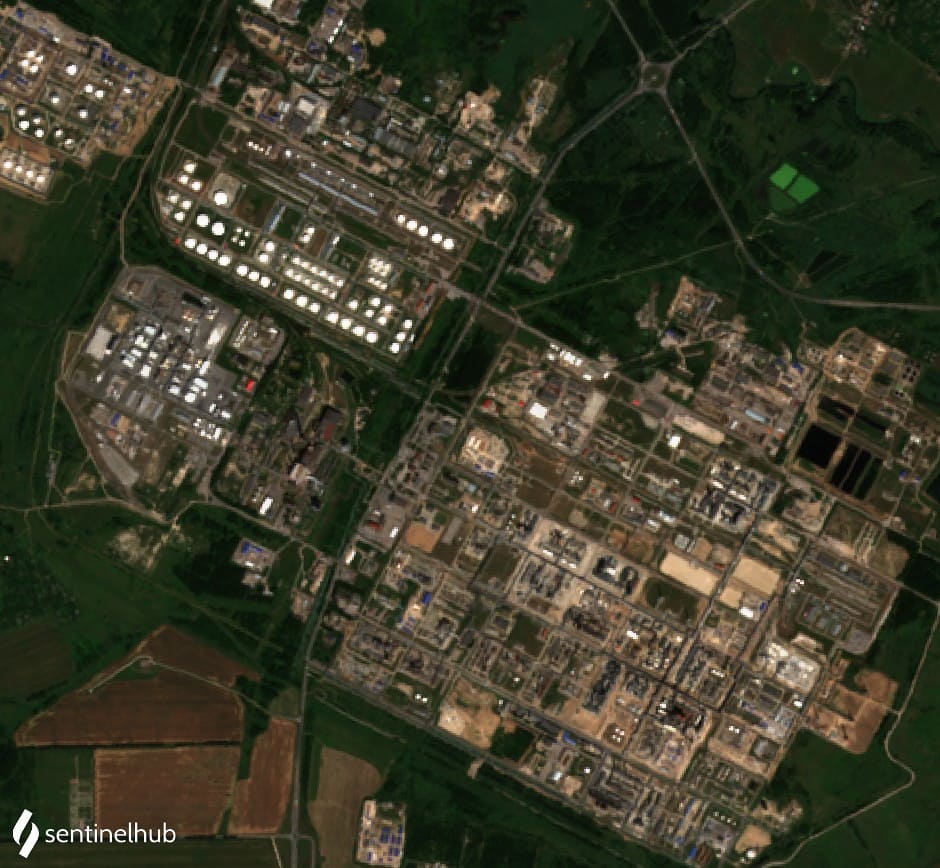
Ukraine's General Staff confirmed the strike and said the destruction of the target was confirmed, followed by a fire on the plant's territory. Ukraine's Special Operations Forces said its Deep Strike units had worked with the Unmanned Systems Forces to hit the plant, and put its share of Russian gasoline production at up to 11 percent.
This was not the refinery's first bad night. It has been struck repeatedly through 2026 — reported attacks on 5 April, 20 May, 24 June and 2 July — and operations were suspended after each. Three industry sources told Reuters that this strike damaged several processing units and the equipment connecting them. Processing was reported halted again the following day.
Cheap aircraft, expensive targets
The Ukrainian defence firm Fire Point said its FP-1 drones struck both sites the same night. The FP-1 is the shape of this campaign: a propeller-driven, one-way attack aircraft built in quantity for a small fraction of the cost of a cruise missile, carrying a modest warhead a very long way.
It is not precise in the way a Storm Shadow is precise, and it does not need to be. A refinery is a large, flammable, fixed target full of things that burn when punctured. Against that, a slow aircraft that costs tens of thousands of dollars and can be launched in dozens is a genuinely awkward problem — which is what the 426-drone claim really describes. Even if Russia shot down every one of them, it spent a night's worth of air defence doing it.
Footage from Kotovsk on the morning of 26 August, published by the monitoring channel Exilenova+ via Militarnyi.
The cost on the ground
The night was not bloodless. In the Lipetsk region, local authorities said a falling drone started a house fire that killed a man and a 14-year-old, with two women hospitalised. A woman was reported killed in Belgorod. In Russian-occupied Luhansk, Moscow-installed authorities said a Ukrainian drone hit a passenger bus on the Lysychansk-Stakhanov road, killing at least nine of the fifteen people aboard.
In the other direction the same day, a Russian guided bomb seriously damaged a combined heat and power plant in Kherson, according to the Ukrainian energy company Naftogaz. Both governments say they do not target civilians. The casualty figures on both sides have been climbing regardless.
President Volodymyr Zelensky said Ukraine had struck 16 targets in Russia over the day — oil facilities, logistics sites, airfields, a missile unit and a military enterprise — without naming them.
Strip away the claims from both sides and one thing is measurable: Russia's refining capacity keeps going offline, a few processing units at a time, and it is being done by aircraft that cost less than a family car.
Sources: Kyiv Post; Al Jazeera (AFP and Reuters); Militarnyi; Ukrainska Pravda; Kyiv Independent; Ukraine General Staff and Special Operations Forces statements; Russian Ministry of Defence statement; regional governors’ Telegram channels.
0 Comentarios