
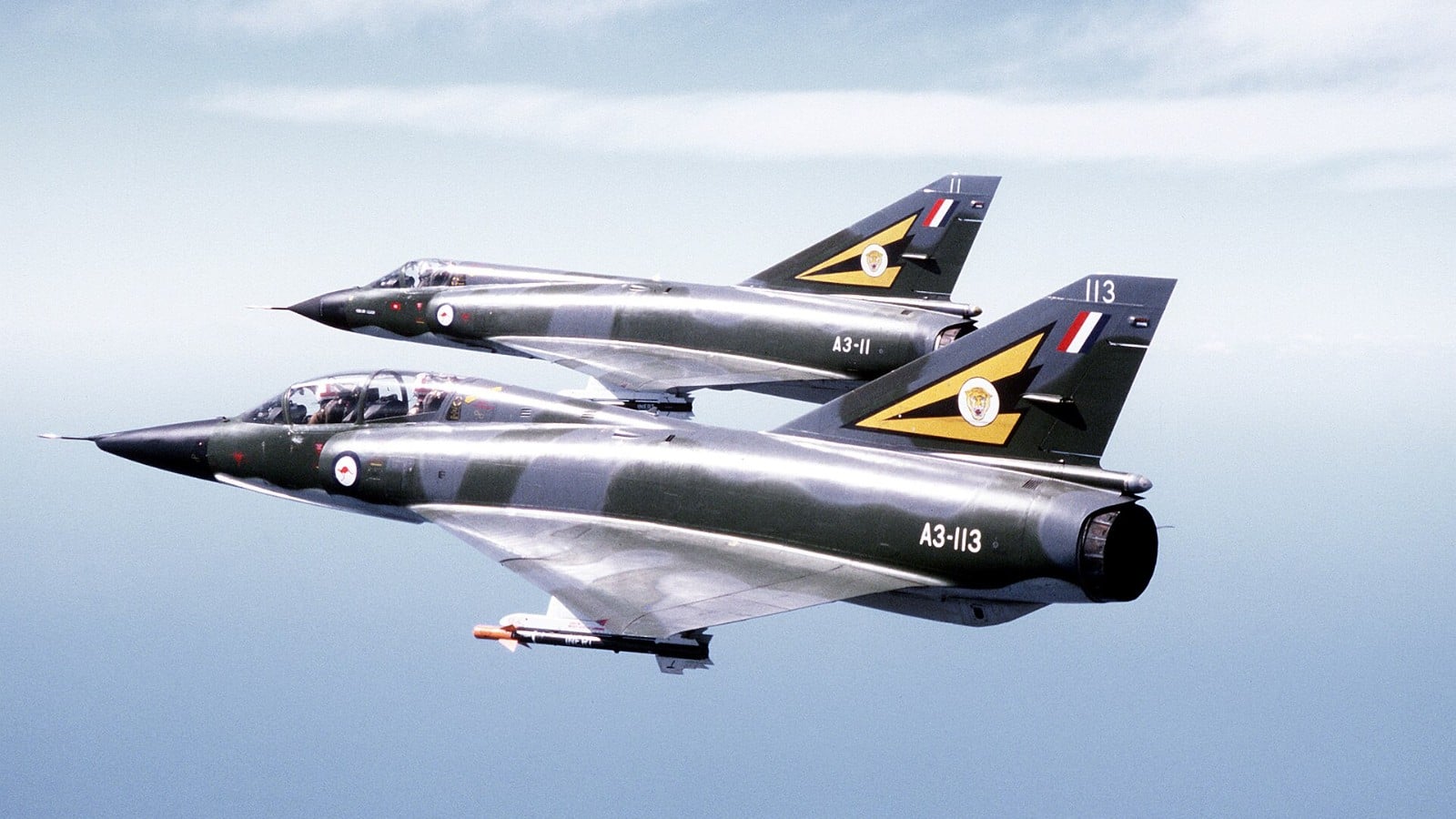
On 24 October 1958, a slim silver delta with tricolour roundels pushed past Mach 2 in level flight, reaching Mach 2.2. No Western European aircraft had done it before. Nine years later, the same design would win one of the most decisive air campaigns in history for a country that was not France, and along the way it would bring down the senior leadership of the Swiss military.
El Dassault Mirage III was elegant, simple, fast and, crucially, for sale. It turned Marcel Dassault’s company from a national supplier into a global name.
Datos rápidos
Aeronave: Dassault Mirage III single-engine delta-wing fighter
Origen: 1952 French requirement for a light interceptor; MD.550 Mystère-Delta first flew 25 June 1955
Primer vuelo del prototipo: 17 November 1956
Mach 2: 24 October 1958, Mach 2.2 in level flight (first in Western Europe)
Motor: Snecma Atar afterburning turbojet
Armamento: Two 30 mm DEFA cannon, plus missiles and bombs
Construido: About 1,400 Mirage III/5/50 family aircraft
Still flying: Pakistan Air Force, the last operator
From Mystère-Delta to Mach 2
The Mirage III grew out of a 1952 French specification for a lightweight all-weather interceptor. Dassault’s first answer, the MD.550 Mystère-Delta, flew in June 1955 and was refined into the Mirage I. The Mirage II was never built. Instead Dassault went bigger, wrapping a tailless delta wing around the new Snecma Atar afterburning turbojet.
The prototype Mirage III flew on 17 November 1956, and the production Mirage IIIC interceptor reached the Fuerza Aérea y del Espacio francesa, then the Armée de l’Air, from July 1961. The delta gave it a large wing for its weight, plenty of room for fuel and high speed, at the cost of long take-off runs and a tendency to bleed energy in tight turns.
The British had flown a similar delta, the Fairey Delta 2, first. Marcel Dassault was famously blunt about why it was France that sold it.
The history of the Dassault Mirage family, from the III to the 2000 (Cap Aviation, in French).
Six days in June
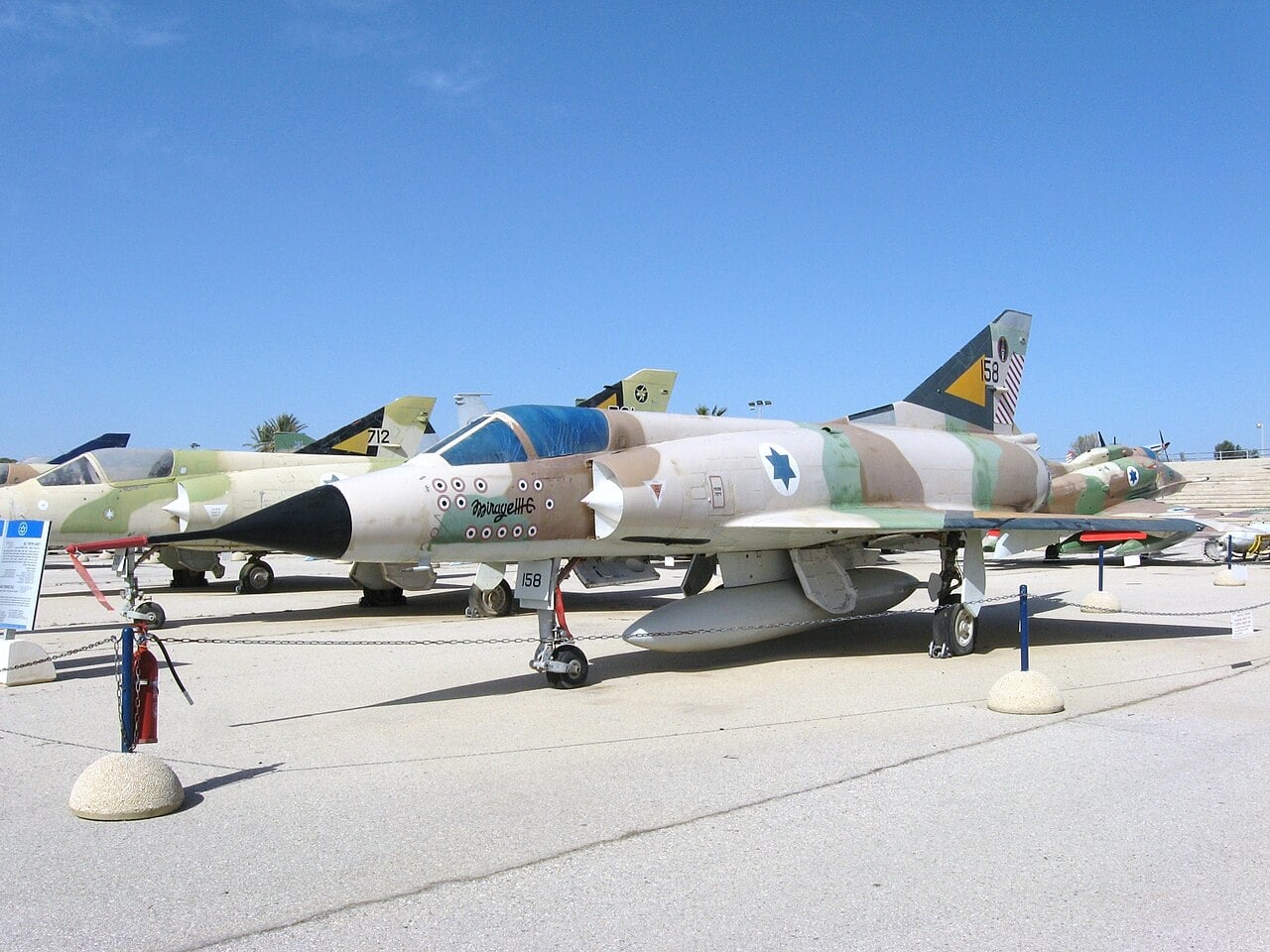
Israel was the Mirage III’s most famous customer, flying it as the Shahak. On 5 June 1967, the opening day of the Six-Day War, most of the Israeli Air Force’s Mirages joined the strikes on Arab air bases while a small force of 12 guarded Israel’s own skies. In the air fighting that followed, Mirage pilots were credited with 48 of the 58 Arab aircraft claimed in air-to-air combat.
Israeli pilots relied heavily on the two 30 mm cannon, and several of the country’s greatest aces, including Giora Epstein, began their scores in the type. When France imposed an arms embargo after the war, Israel built its own derivatives, the Nesher and later the Kfir.
The Swiss Mirage affair
In June 1961 the Swiss parliament approved 871 million francs for 100 Mirage IIIs, most to be built under licence in Switzerland. Swiss-specific changes and rising costs soon broke the budget. In May 1964 the Federal Council asked for another 576 million francs, and parliament set up the country’s first parliamentary inquiry committee, led by National Councillor Kurt Furgler.
The order was cut to 57 aircraft: 36 Mirage IIIS interceptors, 18 IIIRS reconnaissance jets and a few two-seaters. The chief of aviation was suspended, the chief of the general staff removed, and defence minister Paul Chaudet left office in 1966. The Swiss Air Force nonetheless flew its Mirages for decades, the reconnaissance versions until the early 2000s.
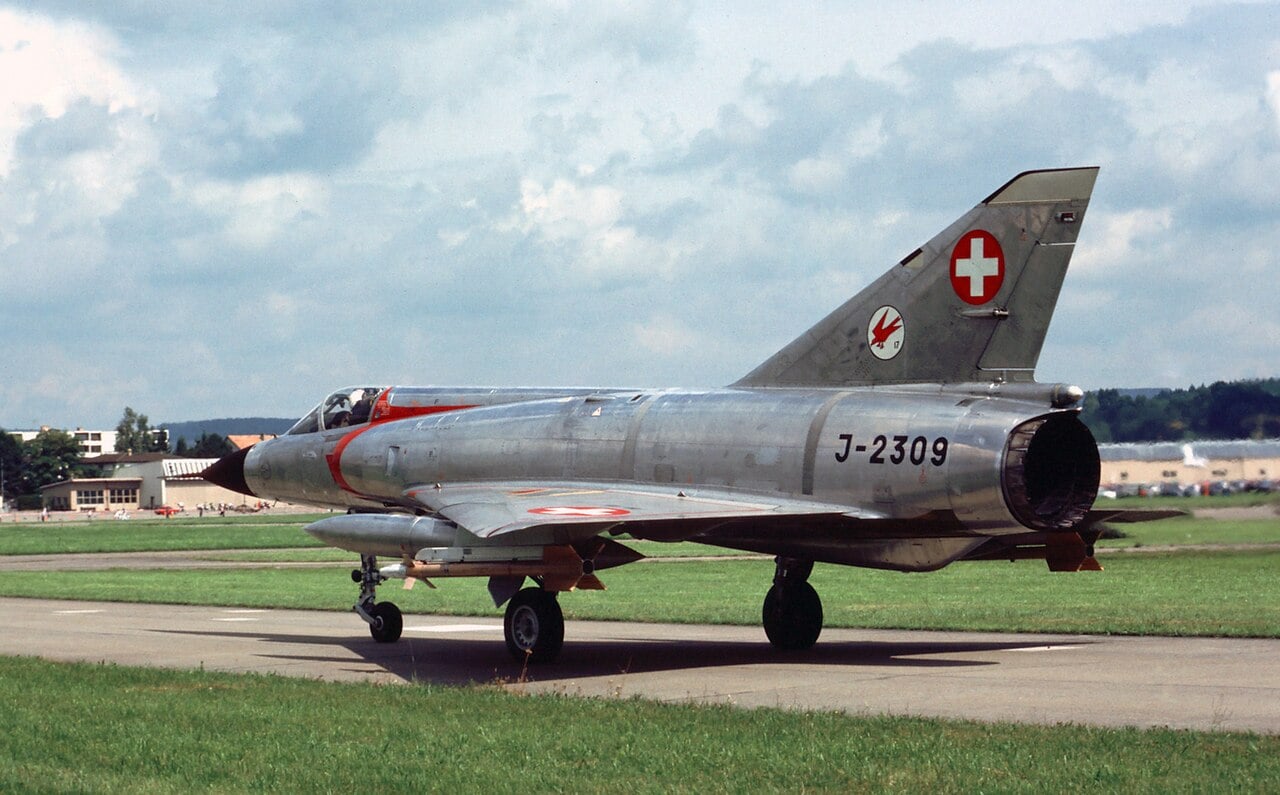
Mirage IIIS and IIIRS of the Swiss Air Force.
A fighter for half the world
The multirole Mirage IIIE became the most widely exported version, and the simplified Mirage 5, developed at Israel’s request, flew in May 1967. Australia built its own Mirage IIIO under licence in Melbourne and flew them until 1988; in 1990-91 about 50 went to the Fuerza Aérea de Pakistán. Argentina flew Mirage IIIs in the Falklands War, and South Africa turned its fleet into the Atlas Cheetah.
Pakistan, upgraded under Project ROSE, is the last air force still flying the type, and its Mirages took part in strikes as recently as February 2019. Nearly seventy years after the Mystère-Delta, Dassault’s delta is still in the air.
The Mirage III, a short history (Australian Military Aviation History).
Sources: Wikipedia (Dassault Mirage III; Mirages affair), blue News (Swiss Mirage affair), We Are The Mighty, Dassault Aviation
Preguntas frecuentes
¿Qué era el Dassault Mirage III?
How fast was the Mirage III?
How did the Mirage III perform in the Six-Day War?
What was the Swiss Mirage affair?
Is the Mirage III still in service?
Which aircraft were developed from the Mirage III?
Publicaciones relacionadas
Entrenamiento de pilotos de caza en Mirage III – década de 1970, Suiza
IAI Nesher and Kfir: How an Embargo Made Israel Build Its Own Mirage
Dassault Mirage IIIV: The Nine-Engine VTOL Fighter That Hit Mach 2
Atlas Cheetah: The Fighter South Africa Built Because Nobody Would Sell It One
0 Comments