
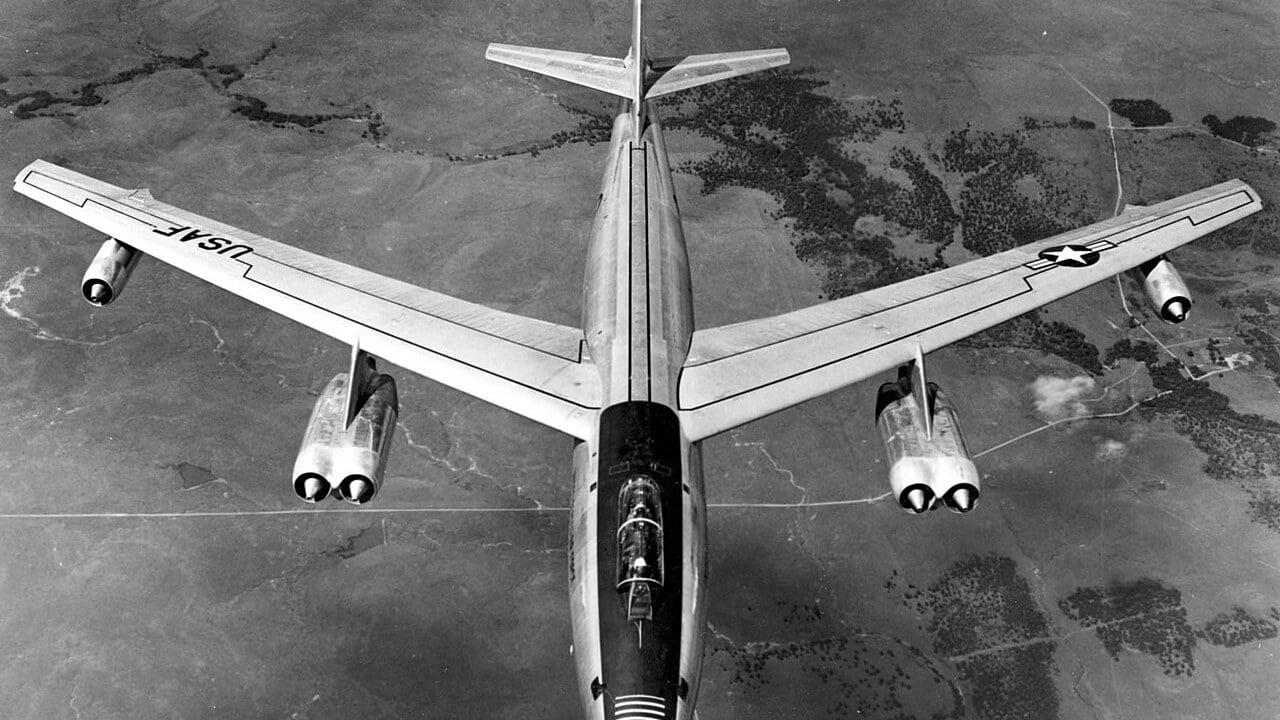
On 14 April 1956, three silver jets climbed out of Thule, Greenland, and turned towards the top of the world. Their pilots were heading for Noril’sk, a closed Soviet nickel-mining city 200 miles north of the Arctic Circle. Two air refuellings over the polar ice later, the three RB-47E Stratojets crossed into Soviet airspace at about 40,000 feet.
They were not lost. They were part of Project Homerun, one of the most ambitious runs of manned spy flights the United States ever flew over the Soviet Union. For seven weeks in the spring of 1956, Strategic Air Command sent its reconnaissance bombers across the Soviet Arctic almost every day, and the Soviet air defences could not stop them.
The crews kept the secret for more than four decades. Then the documents came out, and so did the stories.
Datos rápidos
- Operación: Project Homerun, SAC reconnaissance overflights of the Soviet Arctic
- Fechas: 21 March to 10 May 1956
- Base: Thule, Greenland
- Aeronave: 16 RB-47E (10th SRS) and 5 RB-47H (343rd SRS), supported by 27–28 KC-97 tankers
- Sorties: 156
- Coverage: Soviet Arctic coast from the Kola Peninsula to the Bering Strait
- Finale: Six RB-47Es over Chukotka on 6–7 May 1956, landing at Eielson AFB, Alaska
- Pérdidas: Ninguno
Why the Arctic mattered
In 1956 the shortest route from American bomber bases to the Soviet heartland ran over the North Pole. If the Cold War turned hot, hundreds of SAC bombers would cross the Soviet Arctic coast on their way in. Nobody in Washington knew what was waiting there: which airfields could launch interceptors, where the radars stood, what the Soviets were building in the far north.
President Dwight D. Eisenhower authorised the answer in early 1956. SAC would photograph and electronically map the entire northern edge of the Soviet Union, a 3,500-mile arc from the Kola Peninsula to the Bering Strait, according to Walter J. Boyne’s history in Air & Space Forces Magazine.
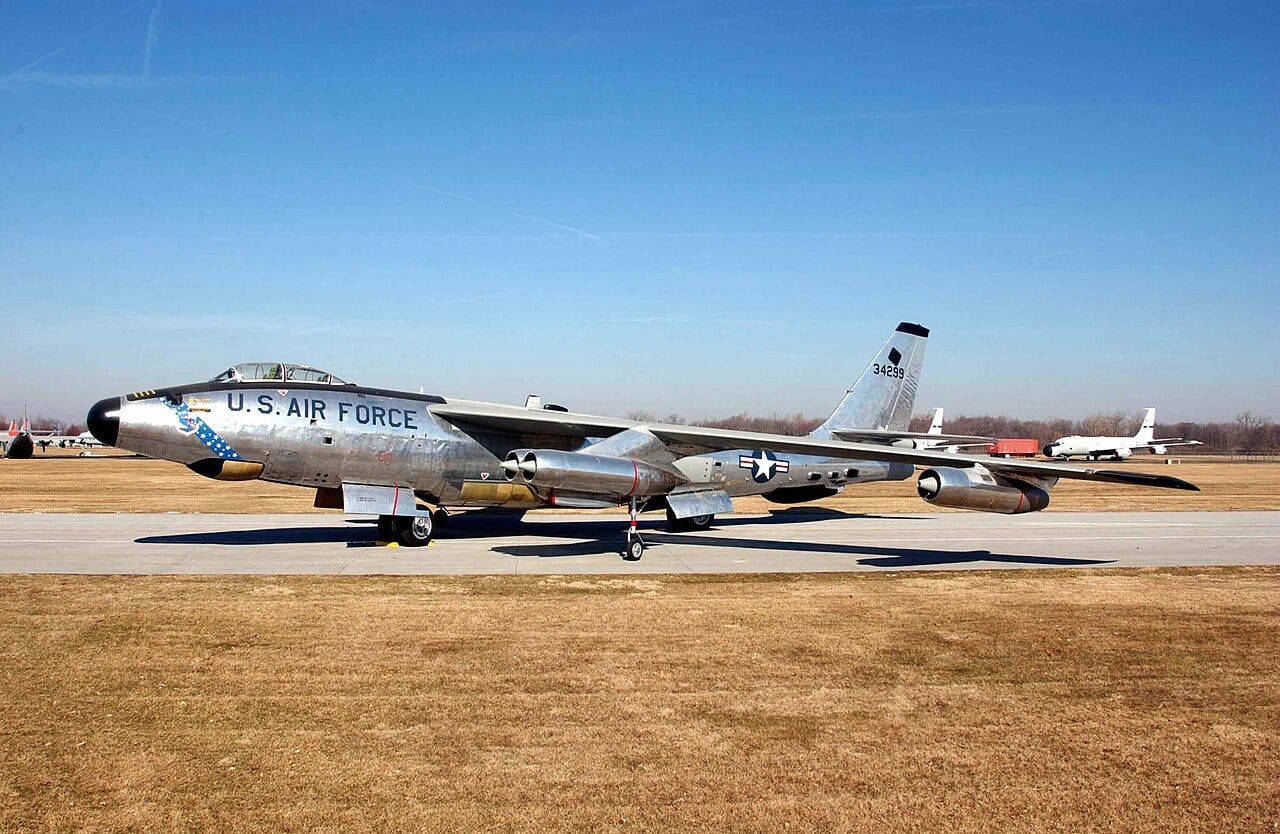
The tool was the RB-47, the reconnaissance version of the six-engine B-47 bomber. The RB-47E carried cameras and a crew of three. The RB-47H was an electronic eavesdropper: alongside the pilots and navigator flew three electronic warfare officers known as Ravens, recording the signals of Soviet radars.
Twenty jets at the end of the world
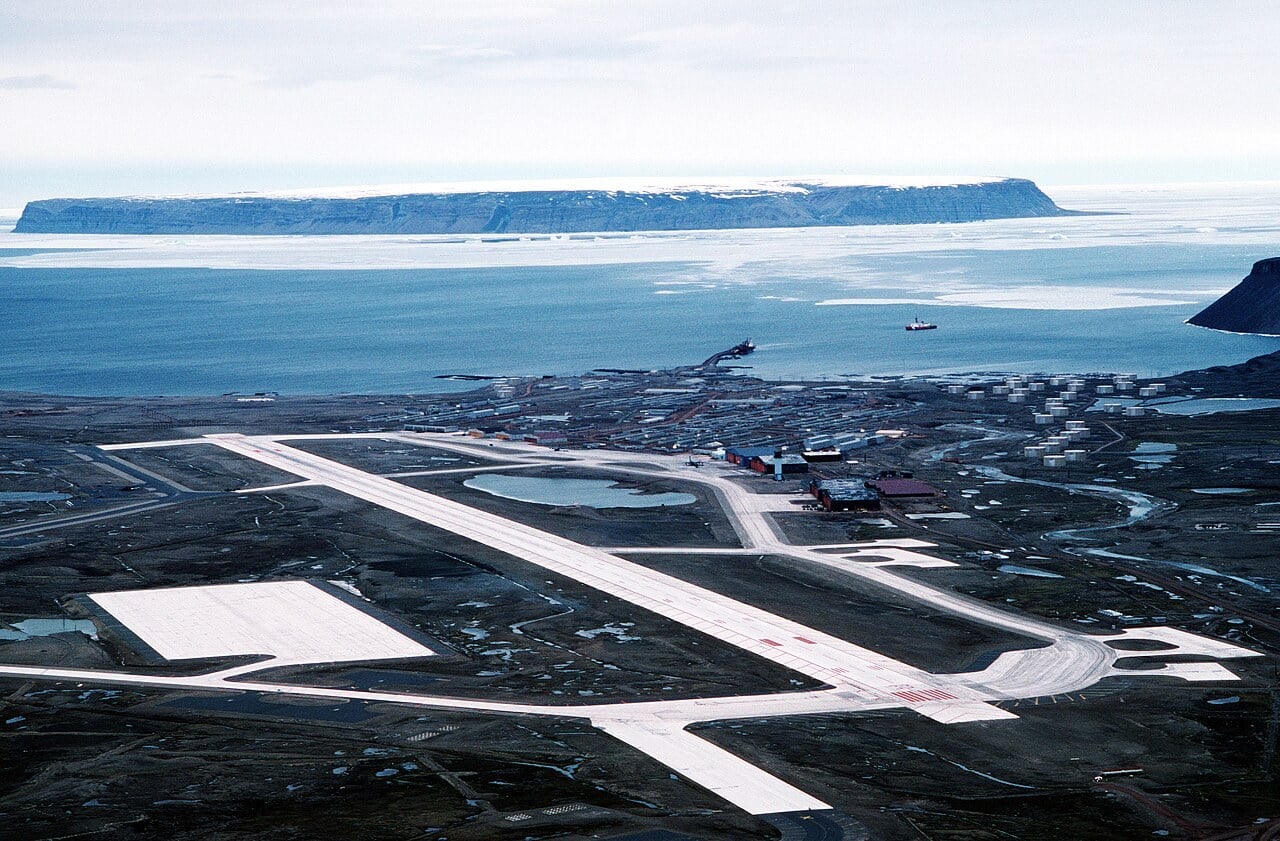
From 21 March to 10 May 1956, sixteen RB-47Es of the 10th Strategic Reconnaissance Squadron from Lockbourne AFB, Ohio, and five RB-47Hs of the 343rd Strategic Reconnaissance Squadron from Forbes AFB, Kansas, operated from Thule. Participant accounts describe the H-model detachment as four aircraft plus a spare. Some 27 to 28 KC-97 tankers came with them, depending on the account.
Thule was not built for an operation that size. There were no hangars for the RBs, so every engine run, repair and refuelling happened outdoors on the ice. Jet blast from the base’s fighters melted the snow on the runway, which then froze again into a sheet of ice.
Major George A. Brown, an operations planner, had visited Thule in February to prepare the deployment. His memoir, declassified by the National Reconnaissance Office in 2018, records the moment he stepped out into the wind.
The missions flew in strict radio silence. Crews used hand signals between aircraft and monitored a single-sideband radio for a recall that never came. Each element of two or three jets was briefed on its own, and crews were told not to discuss their flights with anyone else on the base.
British Pathé footage of the new US Arctic air base at Thule, Greenland, filmed in 1952, four years before Homerun.
The tanker dance over the pole
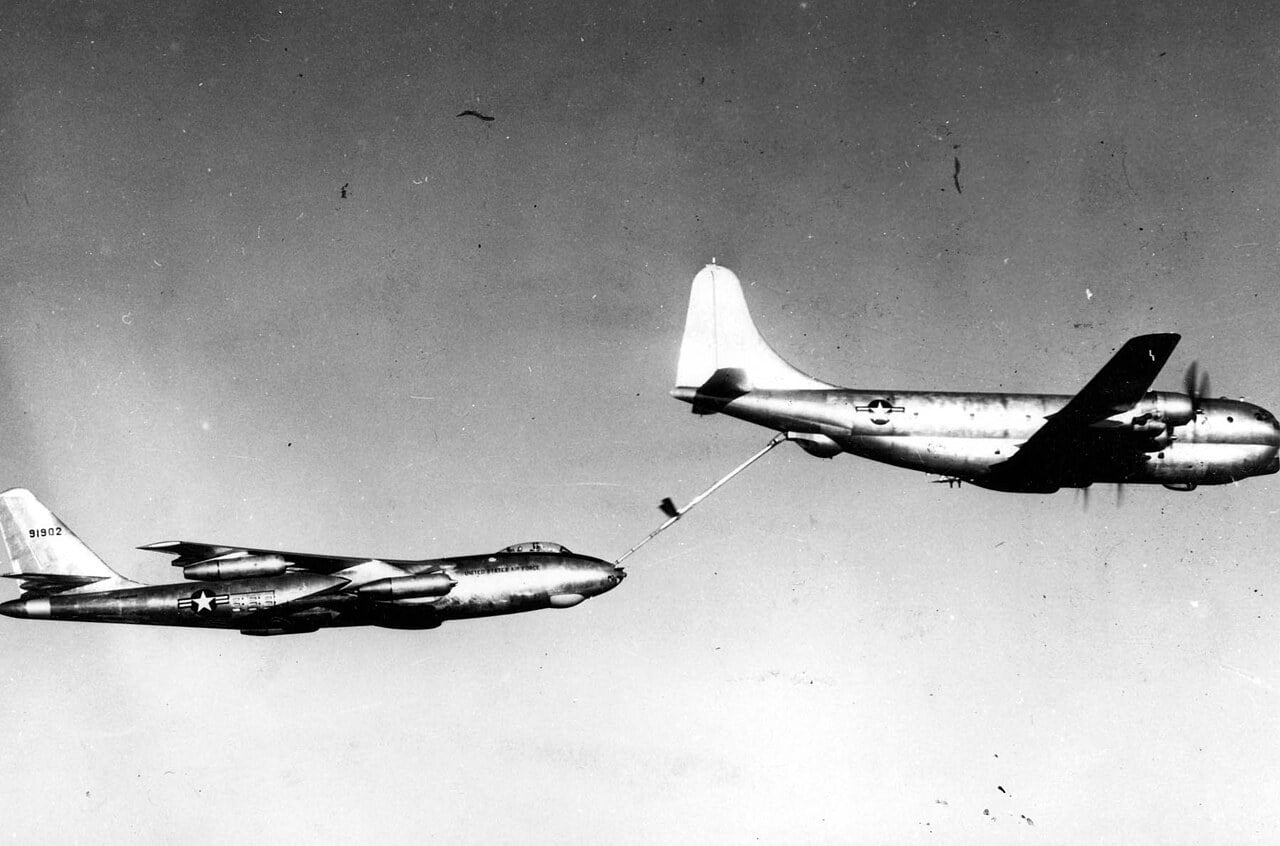
The distances were brutal. A typical RB-47H sortie from Thule to the Kara Sea, along to Murmansk and back covered almost 6,000 miles. The RB-47 could not do that on internal fuel, so the propeller-driven KC-97s had to meet it far out over the ice, in silence, on time.
No single tanker could hand over about 20,000 pounds of fuel and still get home. So two or three KC-97s flew abreast, and the RB-47 slid from one boom to the next, taking a share from each. The first mission, according to Brown, collapsed when only two tankers made the rendezvous. After that, the system worked.
It worked on the Noril’sk run too, just barely. John Lappo, SAC’s best-known reconnaissance pilot, led the three-ship formation over the city and the nearby ports of Igarka and Dudinka. Headwinds on the way home burned fuel faster than planned. When his squadron commander, Lloyd Fields, radioed to ask how much fuel he had left, Lappo’s reply, as recorded by NRO historian R. Cargill Hall, was one word: “Enough!” The jets landed at Thule below SAC’s prescribed minimum.
Amateur 8mm film dated 1956–57 showing KC-97 tankers taking off in snow and refuelling B-47s at night.
Six jets over Chukotka
Homerun ended with its boldest stroke. On 6 and 7 May 1956, six RB-47Es went in together. Boyne’s account has them entering Soviet airspace at Ambarchik on the East Siberian Sea and flying east to Anadyr. Brown remembered them flying roughly parallel courses over the Chukotka Peninsula to photograph military and naval facilities around Provideniya.
All six crossed the Bering Strait region and landed at Eielson AFB in Alaska, then flew back to Thule the next day. Even the planners had worried about the audacity of a six-ship formation over Soviet soil. There was no Soviet reaction during the flight.
Across the whole operation, 156 sorties went out. Soviet fighters tried to intercept, but none came close enough to matter, and there were no reports of missile firings. Boyne calls the result flawless: no aborts, no accidents, no losses. Not one aircraft or crewman was lost to mechanical failure, accident or Soviet action.
“Navigational difficulties”
Moscow knew exactly what was happening. The Soviet government protested bitterly. Washington’s reply was a masterpiece of Cold War deniability: if there had been an overflight, it had been caused by navigational error and was deeply regretted. Veterans have joked ever since about how many navigational errors SAC managed in seven weeks.
Col. Hal Austin, who flew an RB-47E over the Soviet Union in 1954 and was chased by MiG-17s, walks through the B-47 at March Field Air Museum.
The crews never learned what their film and tapes revealed. Everything went straight to SAC headquarters, and the men were sworn to silence. The flight crews received the Distinguished Flying Cross or the Air Medal, for missions they could not describe to their families.
Homerun was the high-water mark of the RB-47 overflight era. Eisenhower ended the bomber overflights later in 1956, and from July that year the U-2 took over the deep penetration work, flying far higher and with a fraction of the crew at risk. The RB-47s went back to flying along the Soviet border, where in 1960 a MiG-19 shot one down over the Barents Sea.
For a few weeks in 1956, though, SAC flew where it wanted over the Soviet Arctic, in formation, and came home every time. Twenty jets, a frozen runway and a fleet of piston tankers had pulled off the biggest aerial spying operation of the early Cold War.
Sources: Wikipedia (Project HOMERUN; Boeing B-47 Stratojet), Air & Space Forces Magazine (Walter J. Boyne, The Early Overflights), National Reconnaissance Office (George A. Brown, Project Home Run Operations; R. Cargill Hall, The 14 April 1956 Overflight of Noril’sk), 55th Strategic Reconnaissance Wing Association
0 Comments