
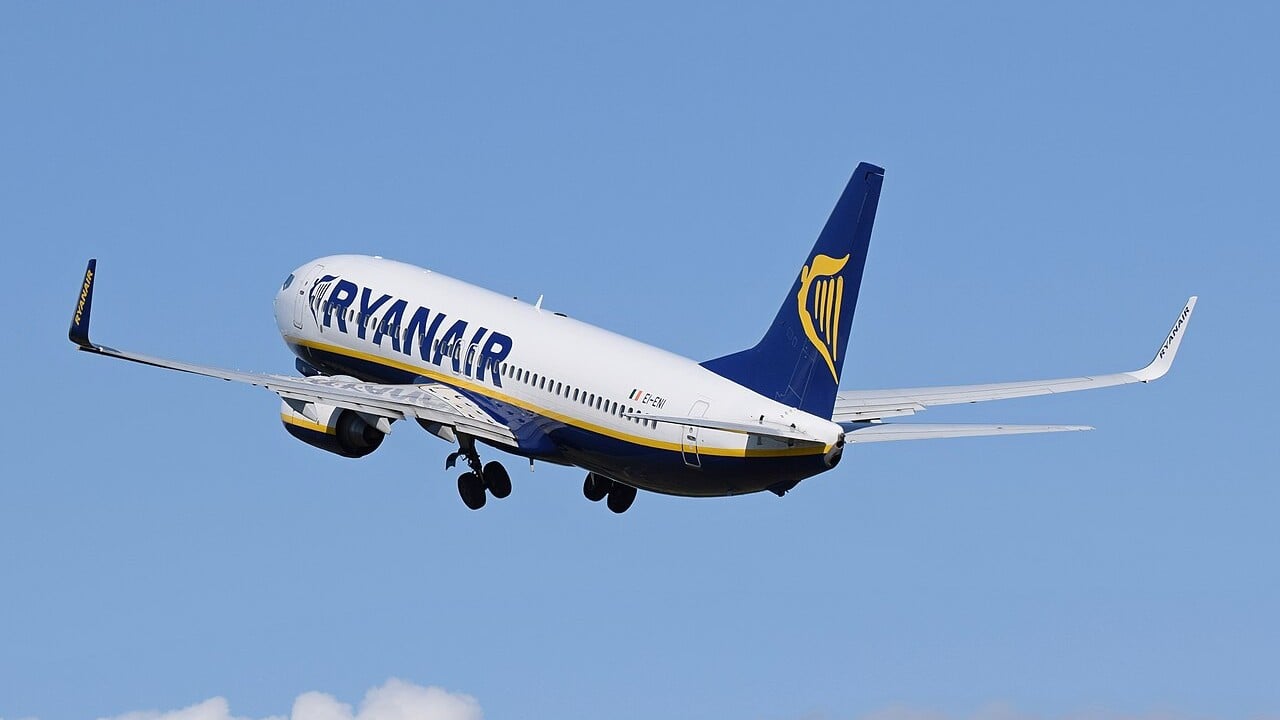
An airliner lifts off, the gear comes up, and somewhere around 800 feet above the runway the engines suddenly go quieter. Passengers often notice the change in sound and wonder if something has gone wrong. Nothing has. The crew is flying a noise abatement departure, and the moment the thrust comes back is a choice made long before the aircraft reached the runway.
Noise certification fixes how loud an aircraft is allowed to be, and night quotas decide when it may fly. But between the runway and 3,000 feet, it is the pilots who decide how that noise is spread across the ground. ICAO gives them two standard ways to do it, NADP 1 and NADP 2, and here is the catch: each one protects a different group of people.
Datos rápidos
- NADP 1: Cut thrust at 800 ft, keep takeoff flaps, climb at V2 + 10 to 20 kt to 3,000 ft, then accelerate and clean up; protects areas close to the runway
- NADP 2: At 800 ft lower the nose, accelerate and retract flaps on schedule, reduce thrust during the acceleration, climb to 3,000 ft; protects areas further out
- Common limits: No power reduction below 800 ft; procedure ends at 3,000 ft above aerodrome elevation
- ICAO source: PANS-OPS, Doc 8168 Volume I
- US source: FAA AC 91-53A (22 July 1993): close-in and distant profiles, no more than two per aircraft type
- Continuous descent: Minimum thrust and low drag, ideally from top of descent, before the final approach fix
- Europe 2017: 41% of flights flew a CDO from FL75; 24% from top of descent (EUROCONTROL)
Two examples, two audiences
The rules live in ICAO’s PANS-OPS, Doc 8168 Volume I, in an appendix called “Noise abatement departure climb guidance”. It sets out two example procedures. NADP 1 is described as a procedure “alleviating noise close to the aerodrome”. NADP 2 is one “alleviating noise distant from the aerodrome”.
Both share the same frame. Nothing changes below 800 feet above aerodrome elevation: ICAO says no power reduction may begin before that minimum height. Both end at 3,000 feet, where the aircraft transitions to its normal en-route climb. And both start with an initial climb speed of at least V2 plus 10 knots, V2 being the takeoff safety speed.
ICAO is explicit that these are examples, “one method, but not the only method”. The noise benefit depends heavily on aircraft type, engines, required thrust and the height at which thrust is reduced, which is why States are told not to force every operator into one of the two examples and to let airlines develop procedures that suit their aircraft.
NADP 1: quiet at the fence
In NADP 1, the crew reduces power or thrust at 800 feet but keeps the flaps and slats in the takeoff configuration. The aircraft keeps climbing at V2 plus 10 to 20 knots with reduced thrust all the way to 3,000 feet. Only then does it lower the nose, accelerate and retract the flaps on schedule.
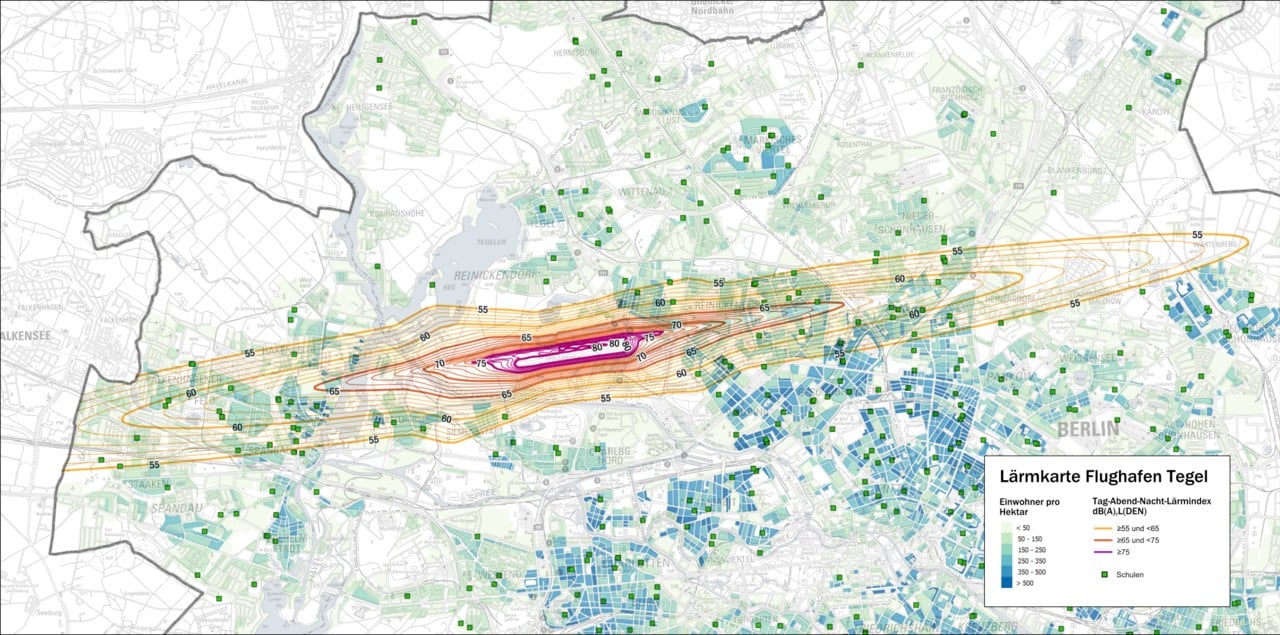
The idea is simple. With the flaps out and the speed low, the aircraft climbs steeply, so it is as high as possible over the houses closest to the runway end, and the engines are quieter because thrust has been cut. Anyone living within a few kilometres of the airport fence benefits most.
The cost comes later. The aircraft spends longer slow, draggy and at reduced thrust, so it takes longer to reach a clean, efficient climb. Further out along the departure track, it is lower and in the noisier configuration for longer than it would otherwise be.
NADP 2: clean up early
NADP 2 flips the order. At 800 feet, while keeping a positive rate of climb, the crew lowers the nose, accelerates towards the zero-flap speed and retracts the flaps and slats on schedule. The thrust reduction comes during that acceleration, at a point that still guarantees good acceleration performance. The aircraft keeps climbing to 3,000 feet, then transitions to normal en-route climb.
The close-in neighbours pay for this. The aircraft accelerates rather than climbing steeply in those first few miles, so it is lower over them. But it reaches its clean configuration much sooner, which helps the communities further out under the climb-out. A European aircraft-noise database published by EASA puts the split plainly: the NADP 1 family is designed to reduce noise close in to an aerodrome, the NADP 2 family to reduce noise more distant from it.
A cockpit view of a noise abatement departure from John Wayne Airport in a Challenger 300 business jet.
That is why, in the ICAO text, operators “may find” that two different procedures suit their route network: one designed for close-in and one for distant noise reduction. Which one is used at a given airport depends on where the people actually live.
The American version
The United States arrived at the same split through FAA Advisory Circular 91-53A, dated 22 July 1993. It covers subsonic turbojet aircraft above 75,000 pounds and defines a “close-in” and a “distant” profile, again with thrust cutback no lower than 800 feet above field elevation and the profile held to 3,000 feet or until the aircraft is in its en-route climb configuration.
The circular also tells each operator to limit the number of noise abatement profiles for any aircraft type to no more than two. The reason is safety. Before the circular, the FAA had seen airports invent their own elaborate departure profiles.
It also builds in an engine-failure safeguard. Whatever the thrust reduction, the aircraft must keep enough thrust, or an automatic thrust-restoration system, to meet the engine-out climb gradients of the certification rules if an engine quits during the noise-abatement segment. And nothing in the circular overrides the captain’s authority. John Wayne Airport in Orange County, California, is one well-known example of an airport where noise shapes every departure, as the cockpit video below shows.
Germany’s air navigation service provider DFS explains continuous descent operations (German).
Arriving quietly: continuous descent
Departures get the attention, but arrivals are where many people actually hear aircraft, low and slow over their roofs for mile after mile. The classic approach is a staircase: descend, level off, descend again. Every level segment needs extra thrust to hold altitude, often with flaps and gear already hanging out.
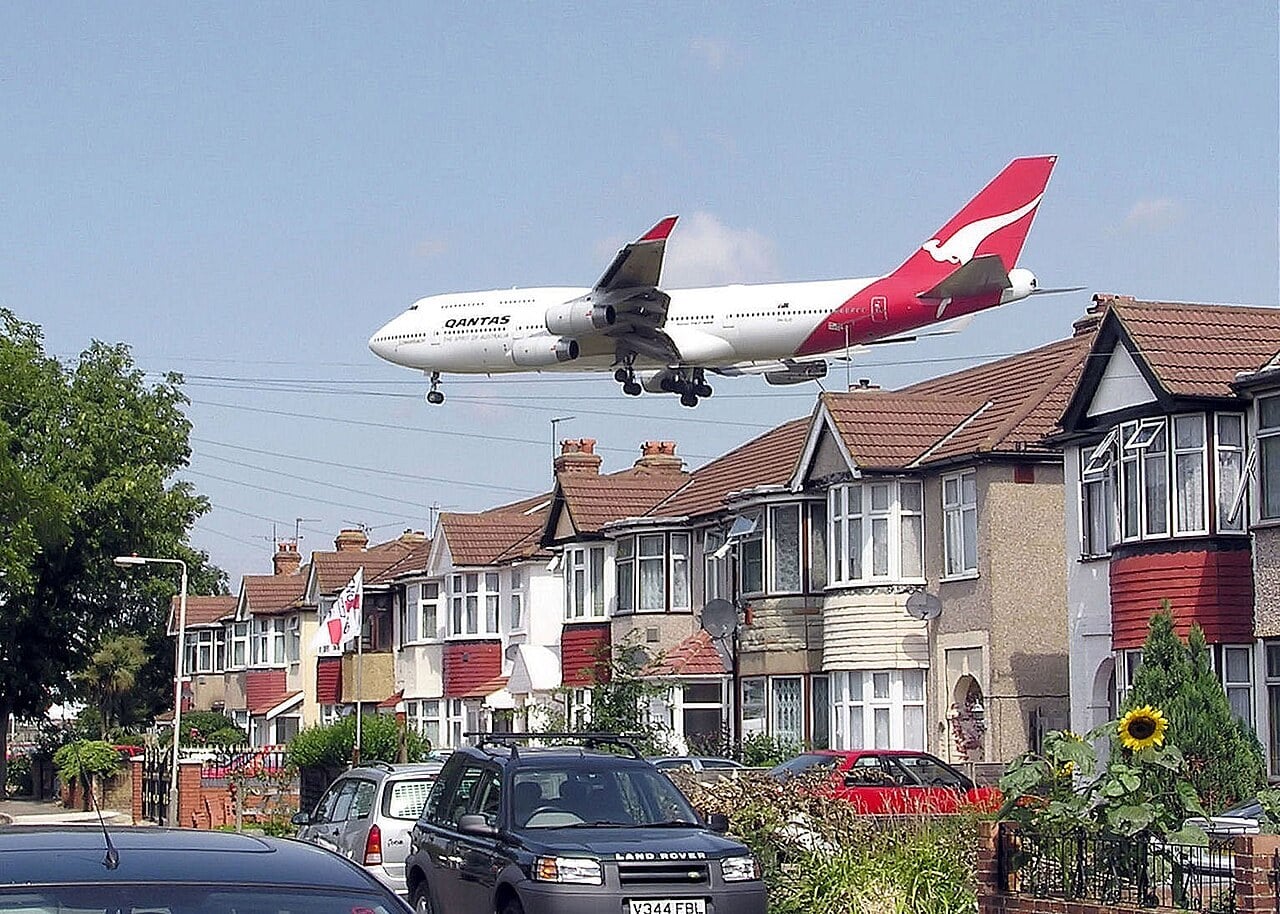
A continuous descent operation, or CDO, replaces the staircase with a smooth slope. EUROCONTROL describes it as descending with minimum engine thrust, ideally from the top of descent, in a low-drag configuration before the final approach fix. ICAO’s PANS-OPS makes the same point: the aim is uninterrupted descents at reduced power and with reduced drag, delaying the extension of flaps and landing gear until the final stages of the approach.
The noise benefit comes from both halves. Less thrust means quieter engines, and less drag means less airframe noise from flaps, slats and gear. EUROCONTROL measures the noise version of a CDO from flight level 75, roughly 7,500 feet, down to the final approach: the stretch where low-level level-offs are most audible on the ground. Once on the glide path, every aircraft flies much the same 3-degree slope.
How often it actually happens
In 2018 EUROCONTROL analysed 2017 traffic across the ECAC area. It found that 41% of flights flew a CDO from flight level 75, which it calls the top of the noise CDO, and only 24% flew one all the way from top of descent, the fuel CDO. Flights that did not were spending an average of 217 seconds in level flight on the way down.
The fuel numbers are real, too: an estimated 46 kg of fuel and 145 kg of CO2 per flight for those non-CDO arrivals. But EUROCONTROL notes that 100% CDO is probably not achievable, because controllers still need to separate traffic, handle weather and keep capacity up.
EUROCONTROL’s overview of continuous climb and descent operations and their fuel and noise benefits.
Quieter for whom?
There are also hard limits. PANS-OPS says noise abatement approach procedures should not be required on a contaminated runway, with a ceiling below 500 feet or visibility under 1.9 km, crosswinds above 15 knots, tailwinds above 5 knots or reported wind shear. Noise abatement procedures may not ban reverse thrust on landing, and they must state the height above which they no longer apply.
The uncomfortable truth behind every noise procedure is that it redistributes noise more often than it removes it. NADP 1 helps the street at the end of the runway and costs the town five miles out. NADP 2 does the opposite. A continuous descent helps people under the run-in but changes little for those under the last few miles of the glide path.
So the next time the engines go quiet at 800 feet, you are hearing a decision about whose evening gets interrupted. It is made by the airport, the airline and the crew, within ICAO’s rules, and it is one of the few noise decisions that is made fresh on every single flight.
Sources: ICAO PANS-OPS Doc 8168 Volume I (Part I, Section 7), FAA Advisory Circular 91-53A, EUROCONTROL (Continuous Climb and Descent Operations), EASA ANP Database release notes, OPSGROUP
Header photo: Adrian Pingstone / Wikimedia Commons, public domain
0 Comments