
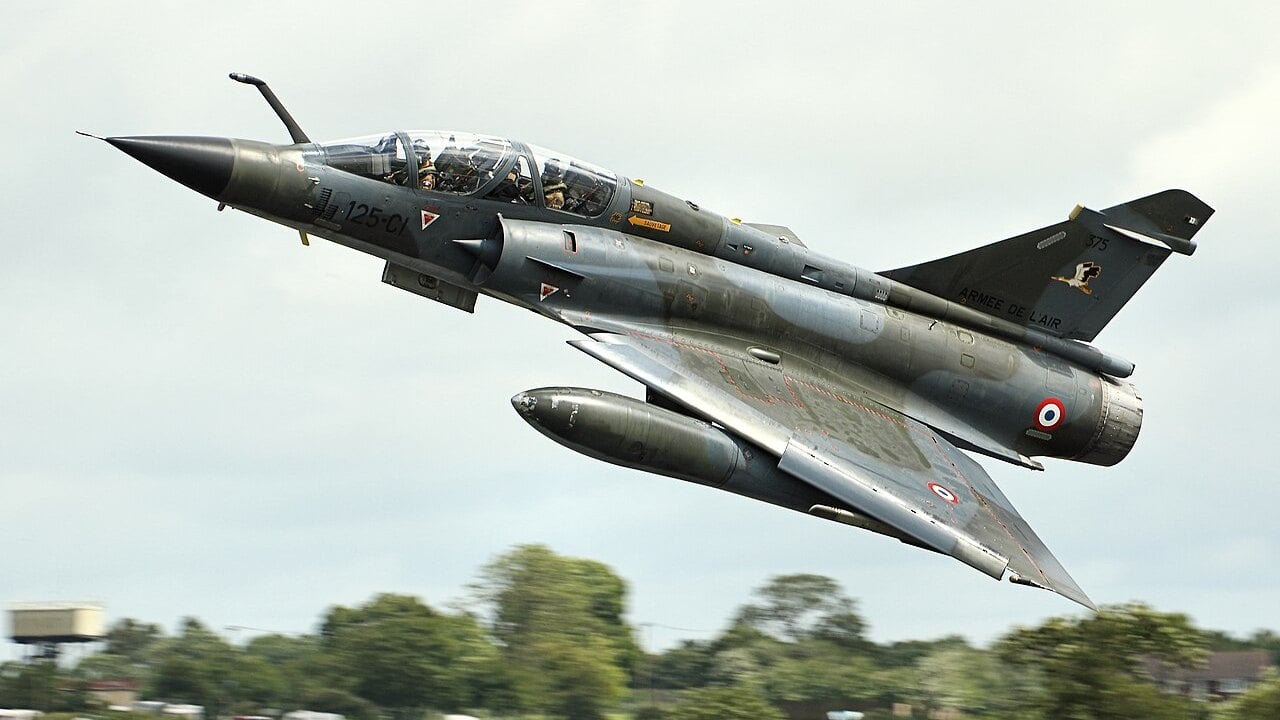
Two hundred feet above the ground at 600 knots, a little over 1,100 km/h at about 60 metres, there is no room for a mistake. For thirty years, French crews flew exactly that profile in the Mirage 2000N, hugging valleys and ridgelines on radar while training for a mission they hoped never to fly: delivering France’s nuclear missile deep into enemy territory.
The Mirage 2000N was the backbone of the airborne leg of France’s nuclear deterrent from 1988 until 2018. It looked almost like any other Mirage 2000 two-seater. Underneath, it was a very different aircraft.
Datos rápidos
- Aeronave: Dassault Mirage 2000N, two-seat nuclear strike variant of the Mirage 2000
- Role: Carrier of the ASMP stand-off nuclear missile for the French Strategic Air Forces
- Primer vuelo: 3 February 1983 (first of two prototypes)
- En servicio: 1988 to 2018
- Construido: 75 production aircraft
- Multitud: 2: pilot and weapon systems officer
- Low-level profile: 200 ft at 600 kt, with Antilope V terrain-following radar
- Carga típica: 1 ASMP, 2 Magic 2 missiles, 2 x 2,000-litre tanks
- Exported: Never, because of its nuclear role
A missile in search of an aircraft
By the late 1970s, France’s airborne nuclear weapons had a problem. The Mirage IV bombers of the Strategic Air Forces carried free-fall bombs, and the tactical air force’s Mirage IIIEs and Jaguars carried the AN-52 bomb, which had to be tossed from very low level close to the target. As Warsaw Pact air defences improved, getting that close looked less and less survivable.
The answer was a stand-off weapon. In 1978 France launched the ASMP programme, the Air-Sol Moyenne Portée, a supersonic nuclear cruise missile that would let an aircraft fire from a distance instead of overflying the target. At the same time, the air force staff drew up the requirement for an aircraft to carry it.
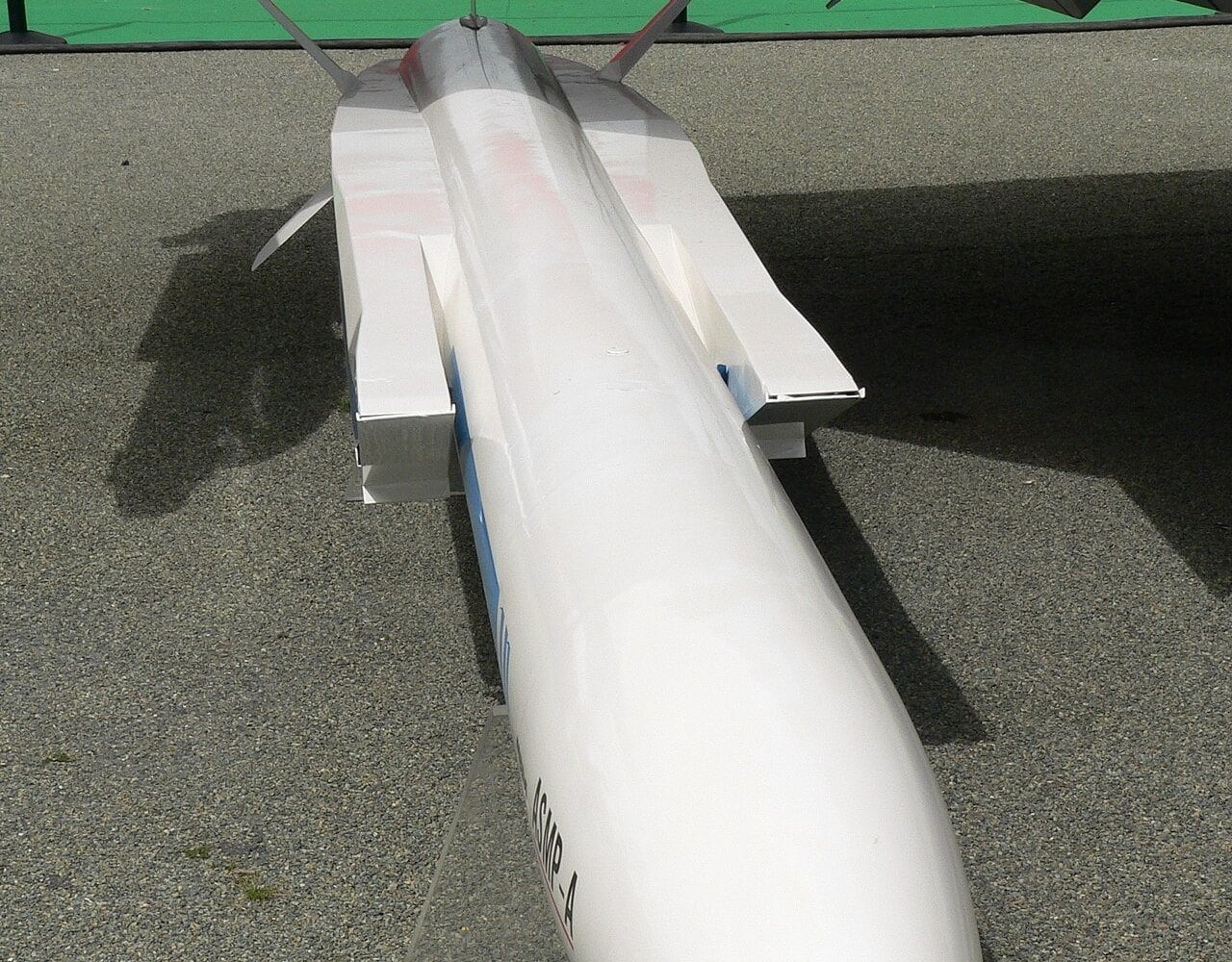
At first the idea was a single-seater, provisionally called the Mirage 2000 ASMP. In the end the air force chose a two-seater, with a weapon systems officer in the back, built around a new terrain-following and navigation radar, the Thomson-CSF Antilope V. The aircraft would be developed from the Mirage 2000B trainer and was first called the Mirage 2000P, for pénétration. It was soon renamed: N, for nucléaire.
Built to fly low
The first of two prototypes flew on 3 February 1983 with Michel Porta at the controls, according to Zone Militaire. Its structure was optimised for sustained flight at 200 feet and 600 knots, and its Antilope V radar, linked to inertial navigation and a mission computer, let it follow the terrain automatically. Self-protection systems, including a radar warning receiver, jammers and decoy launchers, were built into the airframe.
The standard war load was one ASMP under the fuselage, two Magic 2 missiles for self-defence, and two large 2,000-litre tanks under the wings for range. The aircraft could also refuel in flight. It was initially built without a gun, because nobody planned to use it for conventional ground attack.
A French Mirage 2000N training at low level in the Alps.
The ASMP itself entered service in 1986. Two years later, in 1988, the first of 75 production Mirage 2000Ns reached Escadron 1/4 Dauphiné, replacing its Mirage IIIEs. Escadron 2/4 La Fayette followed in 1989 and 3/4 Limousin in 1990, and all three squadrons passed under the command of the Strategic Air Forces.
On the hard edge of the deterrent
A crew who flew the jet operationally explained what that low-level flying felt like. Speaking to La Dépêche du Midi at the type’s farewell, the second-in-command of 2/4 La Fayette said the aircraft’s terrain-following function was what made it special, holding it tight against the relief, and that flying it by hand at that height tolerated no deviation at all.
In 1996 the Mirage IVP was switched to reconnaissance only, and the Mirage 2000N became the only aircraft of the Strategic Air Forces able to deliver a nuclear weapon. It held that role alone until 2008, when President Nicolas Sarkozy announced a cut in the French nuclear arsenal. Escadron 1/4 Dauphiné was dissolved two years later, followed by 3/4 Limousin.
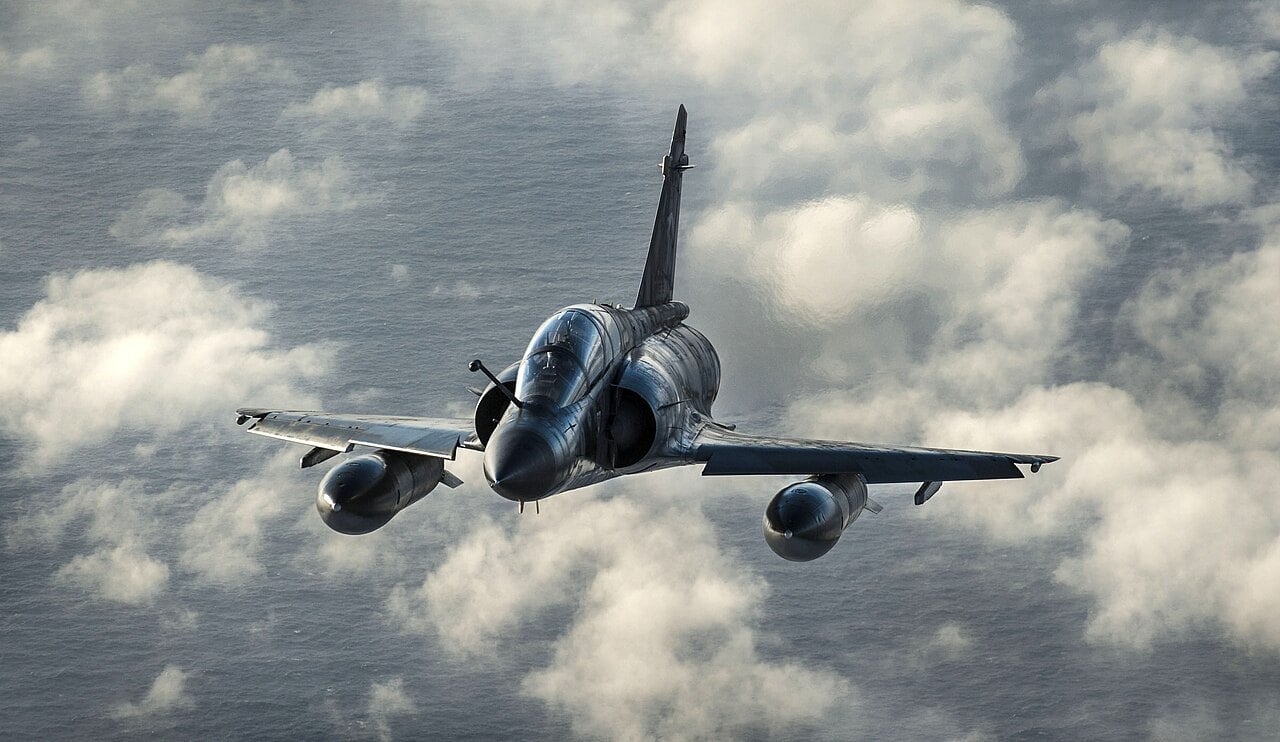
By then the successor was in place. The improved ASMP-A missile was entering service, and Rafale B two-seaters of Escadron 1/91 Gascogne had taken over nuclear alert from Saint-Dizier. In 2015, 2/4 La Fayette began preparing to make the same switch, and the plan for the Strategic Air Forces became an all-Rafale force.
A conventional second career
A nuclear bomber with no gun was an awkward fit for the wars France actually fought. A later standard, the 2000N K2, added a limited conventional attack capability, and Escadron 2/3 Champagne flew that version while waiting for the dedicated conventional Mirage 2000D. It was in that role that the type went to war over Bosnia.
On 30 August 1995, Mirage 2000N No. 346 was shot down by Bosnian Serb forces near Pale. Its two crew members were captured and later released. In the following decades the type took part in most French operations abroad, including Harmattan over Libya, Serval and Barkhane in the Sahel, and Chammal against the Islamic State group. Its last deployment, in 2018, was to N’Djamena in Chad.
The French Ministry of the Armed Forces’ press briefing on the operational retirement of the Mirage 2000N (in French).
The same pilot remembered that side of the job too: his first war mission, over Libya, and what he called the apprehension of the unknown.
Farewell at Istres
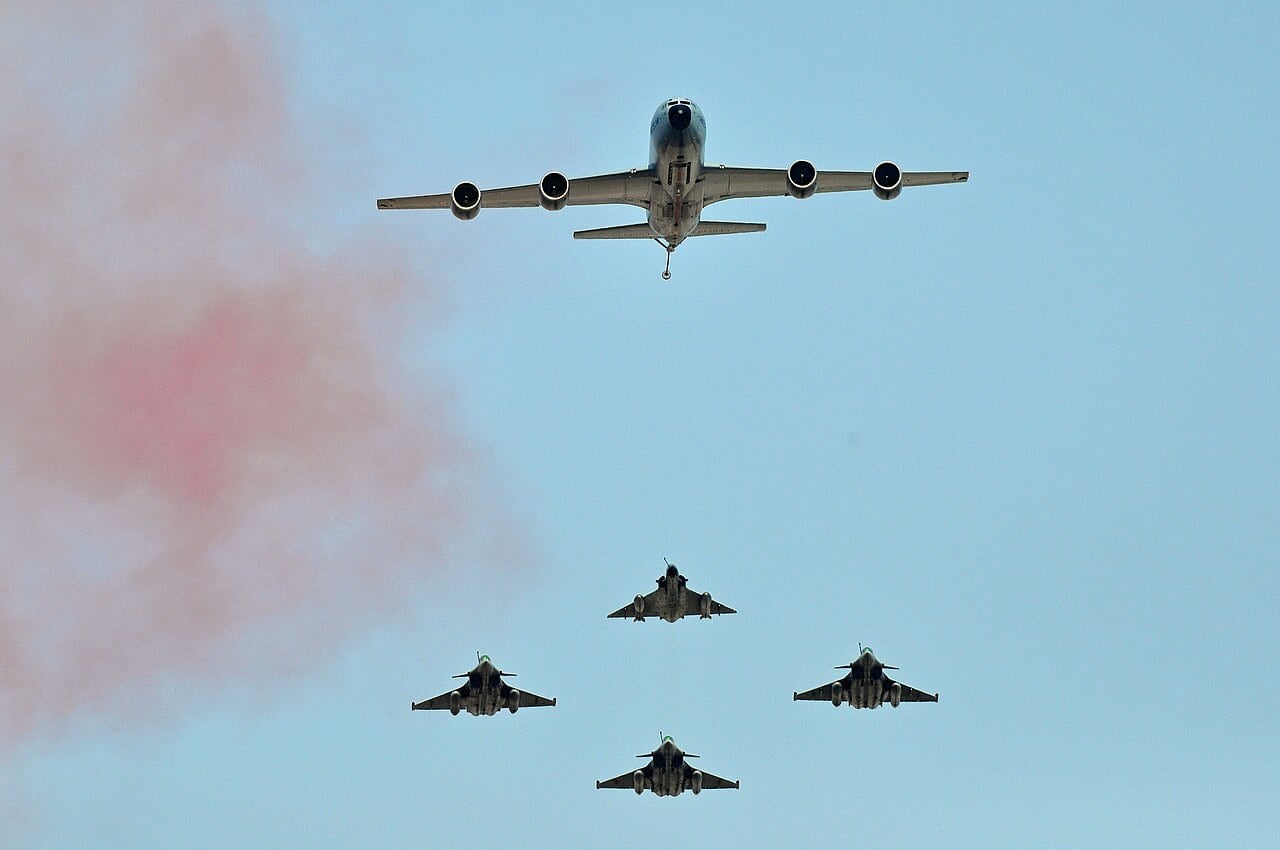
By 1 July 2017 only 22 Mirage 2000Ns were left in service. On 21 June 2018, the French Air Force held a farewell ceremony at Istres, home of 2/4 La Fayette, presided over by the chief of the air staff, General André Lanata, with around a thousand former crews and mechanics in attendance. The type also flew over the Champs-Élysées in the Strategic Air Forces formation at the 14 July 2018 parade, behind a C-135 tanker.
2/4 La Fayette then left Istres for Saint-Dizier and its new Rafale Bs. The Mirage 2000N was never exported, because of its nuclear role. The last one flying in France, No. 356 with the DGA flight test centre, made its final flight on 22 February 2022, from Istres to Nancy, where it became a training airframe for mechanics.
Three Mirage 2000Ns and two Rafales of the French Air Force departing the Royal International Air Tattoo in 2016.
For three decades, the Mirage 2000N carried the most serious weapon in France’s armoury, and never once had to use it. For a deterrent, that is the definition of success.
Sources: Zone Militaire (Laurent Lagneau, 21 June 2018), La Dépêche du Midi (Pierre Challier, 21 June 2018), Aerobuzz (Frédéric Lert, February 2022), French Ministry of the Armed Forces
0 Comments