
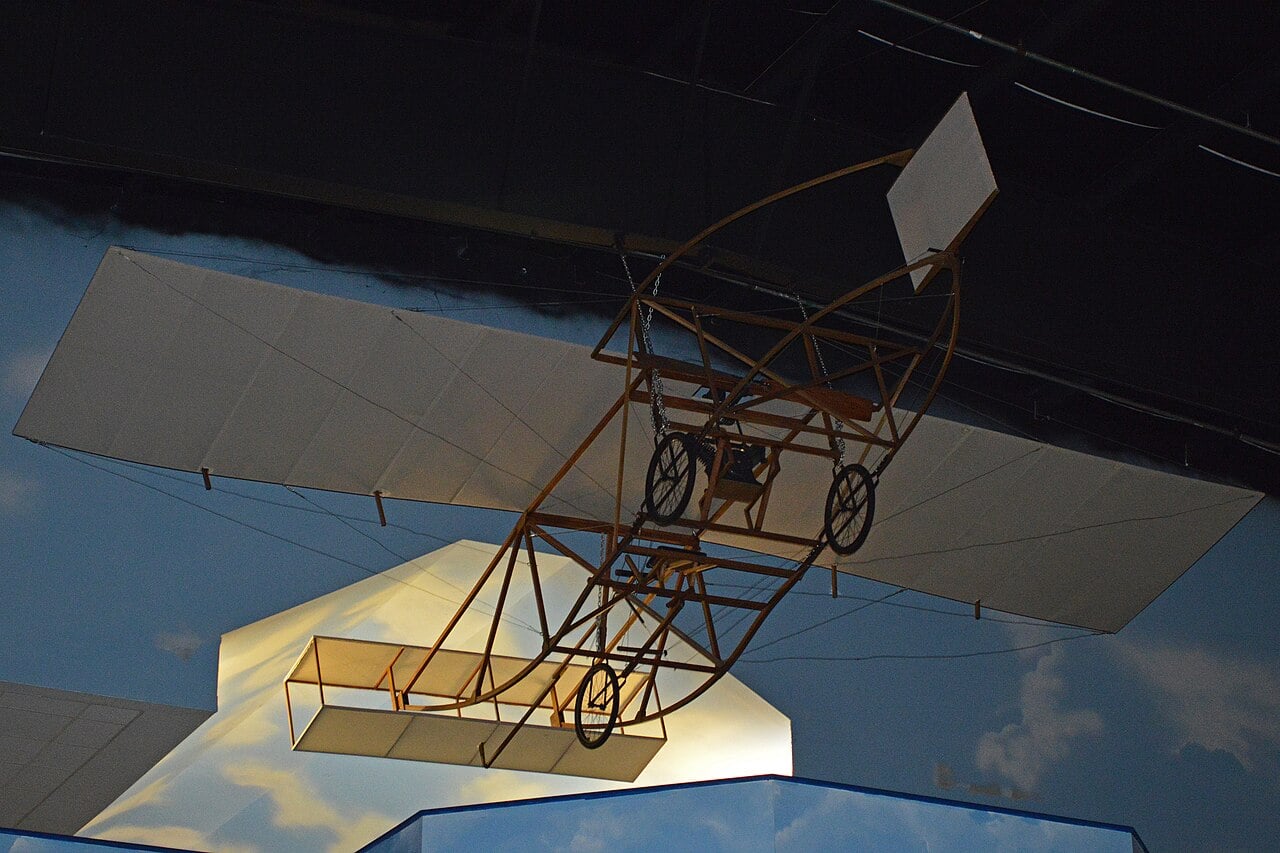
The first attempt failed. On the second, a homemade monoplane built from sawmill scrap and cotton rolled down a slope in Athens, Georgia, lifted 40 to 50 feet into the air, flew about 100 yards and crashed, losing both wings. The local editor T. W. Reed later recalled that “fortunately pilot Epps was not even scratched.”
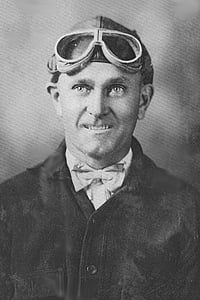
The pilot was Ben T. Epps, a self-taught mechanic who ran a garage on Washington Street. That short hop made him Georgia's first aviator, and he kept designing and flying his own aircraft for nearly 30 years, until one of them killed him in 1937.
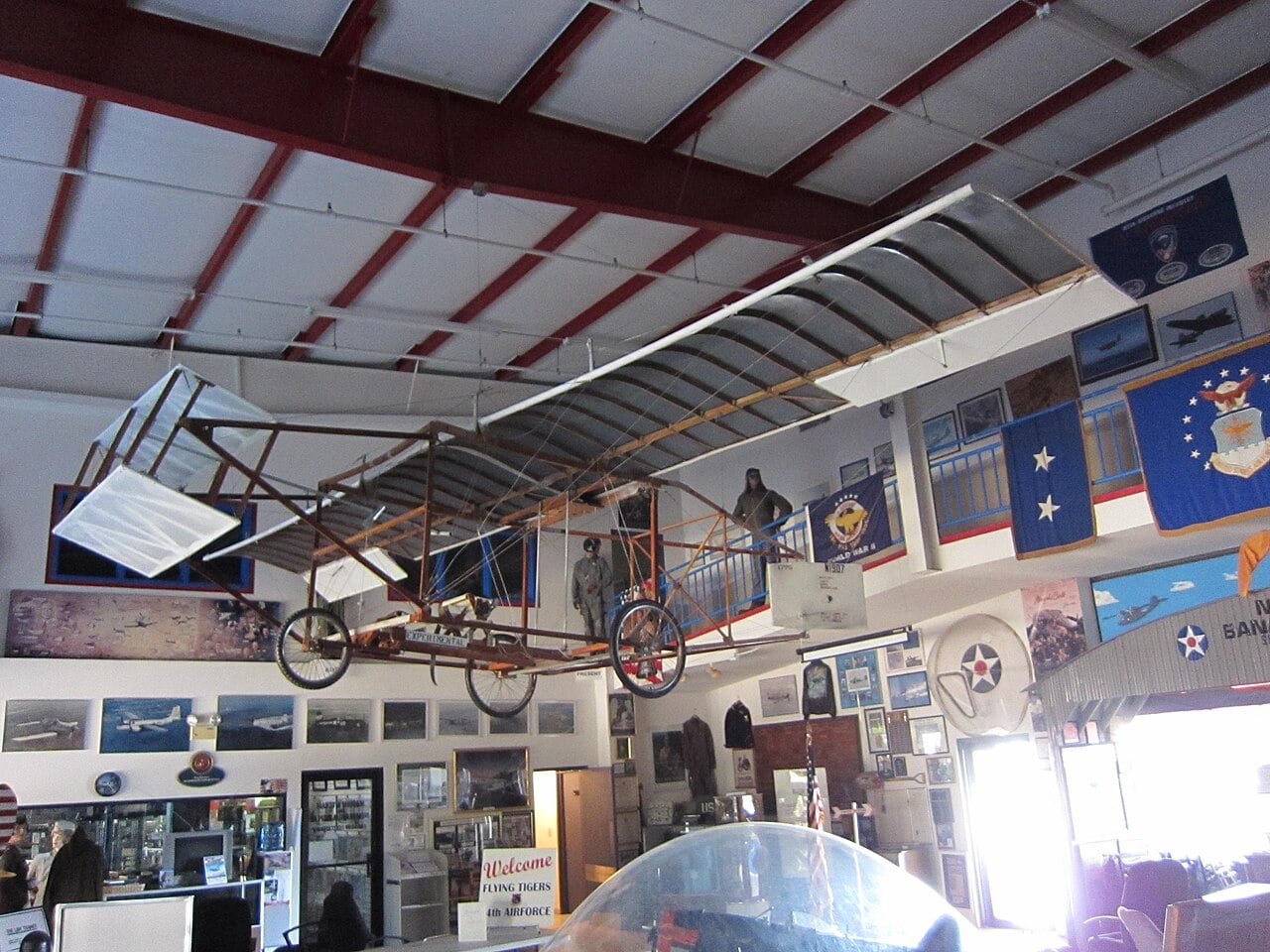
In recent weeks a replica of his 1912 monoplane joined the displays at the EAA Aviation Museum in Oshkosh, Wisconsin. It is a good moment to look again at the man, the machines, and a historical puzzle that took a century to untangle: when did Georgia actually first fly?
Datos rápidos
- Nacido: 20 February 1888, Oconee County, Georgia
- Conocido como: Georgia's first aviator
- First aircraft: Pusher monoplane with a 15-hp two-cylinder Anzani engine
- Primer vuelo: Traditionally dated 1907; research by Dan Aldridge points to 28 August 1909
- Distancia: About 100 yards at roughly 40 to 50 feet
- Designs: Seven aircraft between 1907 and 1930
- Flying business: Rolfe-Epps Flying Service, founded 1919
- Fallecido: 1937, after an engine failure on takeoff at the Athens airfield
- Legado: Athens-Ben Epps Airport; Georgia Aviation Hall of Fame, inaugural class 1989
A Mechanic on Washington Street
Benjamin Thomas Epps was born in Oconee County on 20 February 1888, the eldest of ten children, according to the New Georgia Encyclopedia. His family moved to Clarke County, where he went to school in Athens before studying briefly at Georgia Tech in Atlanta.
He came home to work with his hands. Athens-Clarke County's history says he built and repaired bicycles and worked as an electrical contractor; the encyclopedia credits him with opening the town's first automobile repair garage on Washington Street. The same shop became his aircraft factory.
Like the Wright brothers, he was a bicycle-and-engine man rather than a trained engineer. By 1905, the county history says, he was already working on a flying machine.
A Buggy Seat, Bicycle Wheels and an Anzani
The first Epps aircraft was a wire-braced monoplane with an open framework hanging beneath the wing. It rolled on three bicycle wheels, and the pilot sat upright on a buggy seat, rather than lying prone like the Wrights.
Behind him a 15-horsepower two-cylinder Anzani motorcycle engine drove a pusher propeller. A biplane elevator sat out front on struts and a single rudder at the back. The airframe was scrap timber from a sawmill, and the flying surfaces were covered in cotton, which Epps sewed on his mother's sewing machine, according to the county history.
Rather than using a launching rail, he used a hill as his runway. The flight lasted only seconds and ended in a crash, but it was enough to put Georgia on the aviation map.
1907 or 1909? The Date That Changed
For most of the 20th century the flight was dated 1907. The Georgia state historical marker erected at the Athens airport in 1987 said Epps flew the first airplane in Georgia that year, and the New Georgia Encyclopedia still describes a 1907 flight at age 19.
Then Athens historian Dan Aldridge went looking for the day itself. In his 2016 book To Lasso the Clouds he argued that the evidence pointed to 1909 instead.
Aldridge found a May 1909 Athens newspaper story headed “Two Boys Building Airship” naming Epps and his partner Zumpt Huff. He noticed that a photo of Epps with his machine, long dated 1907, shows the Georgian Hotel, which did not open until 1 March 1909. And an Atlanta Constitution report of 30 August 1909 described the pair's monoplane flight in Athens two days earlier.
The argument persuaded the Georgia Historical Society. When the airport marker was re-erected in 2018, it said Epps helped design and build Georgia's first successful airplane, which he flew in 1909, with Huff. Aldridge goes further and argues it was also the first monoplane flight in the United States, a claim Wikipedia reports but which rests on his research.
A short Georgia Airports Association history segment on the Athens airfield in the 1920s.
Monoplanes Up to 1912 and Beyond
Epps did not stop after one crash. Between 1907 and 1930 he designed and built seven aircraft, monoplanes and biplanes, Wikipedia records. One begun in 1909 or 1910 had a front-mounted engine, four landing wheels and a steering wheel; it did not fly well and was wrecked.
The 1911 to 1912 design was the most refined of his early machines: an open-cockpit, single-engine, mid-wing monoplane, wire braced, with conventional landing gear supplemented by skids. It too crashed, the county history notes, but its features carried into his later work. In 1971 his son Ben Epps Jr. built and flew a homebuilt replica.
The idea Epps returned to was cheap flying for ordinary people. His Light Monoplane of the mid-1920s weighed about 350 pounds and used a two-cylinder motorcycle engine; the county history says it reached 60 mph and returned 25 miles per gallon.
The Flying Service and the Airport
After the First World War, Epps went into aviation as a business. In 1919 he and wartime aviator L. M. “Monte” Rolfe founded the Rolfe-Epps Flying Service in Athens, offering passenger flights, flying lessons and aerial photography. He also bought, repaired and sold aircraft and designed a controllable-pitch propeller.
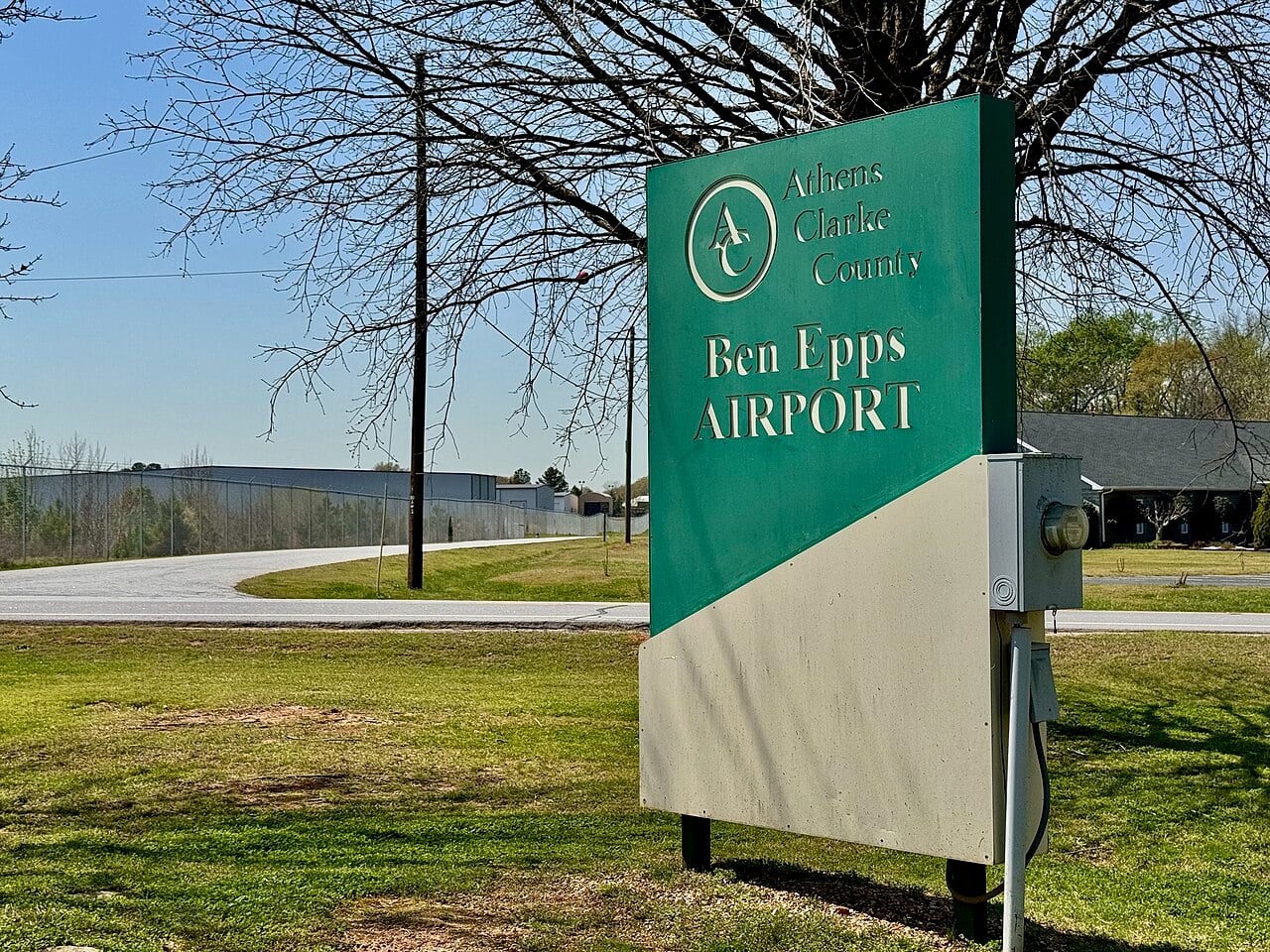
The state marker says he ran a flying service at the airport site from 1917 for nearly 20 years, and that in 1922 Clarke County gave him permission to build a hangar and use the land as a landing field. The New Georgia Encyclopedia calls Epps Flying Field Georgia's first civilian airport. Today it is Athens-Ben Epps Airport.
Flying ran in the family. His eldest son, Ben Jr., soloed at 13 in 1929 and was received at the White House by President Hoover in 1931. Father and son flew as barnstormers and air racers, and Ben Jr. later flew the Curtiss C-46 over the Himalayas in the Second World War.
The Last Takeoff
Flying home-designed aircraft was dangerous. Epps was critically injured in a crash at Athens in 1935. In 1937 the engine of his light biplane failed on takeoff from the Athens field, and he died of his injuries, aged 49. Wikipedia gives the date of death as 16 October 1937.
His wife, Omie Williams Epps, encouraged their children to keep flying after his death, and several of them made aviation their career. Youngest son Pat Epps went on to lead Epps Aviation at DeKalb-Peachtree Airport near Atlanta.
A feature on the Epps family's aviation legacy in Georgia, from Ben Epps's pioneer flights to his son Pat Epps.
From Athens to Oshkosh
In 1989 Epps was part of the inaugural class of the Georgia Aviation Hall of Fame. His replicas are spread across the country: a replica of his first monoplane in Florida, a 1912 replica at the Museum of Aviation in Warner Robins, Georgia, and now another 1912 replica among six aircraft added to the EAA Aviation Museum in recent weeks, as reported by Aero-News Network and Vintage Aviation News on 17 October 2026.
It is a fitting place for him. The EAA was built by people who design and build their own aircraft in garages and workshops. More than a century ago, a mechanic on Washington Street in Athens was doing exactly that.
Sources: Wikipedia (Ben T. Epps; Epps 1907 Monoplane; Epps 1909 Monoplane; Epps 1912 Monoplane; Athens-Ben Epps Airport), New Georgia Encyclopedia (Paul Stephen Hudson), Athens-Clarke County Unified Government, Georgia Historical Society, The Red & Black, Smithsonian National Air and Space Museum Wall of Honor, Aero-News Network, Vintage Aviation News


0 Comments