
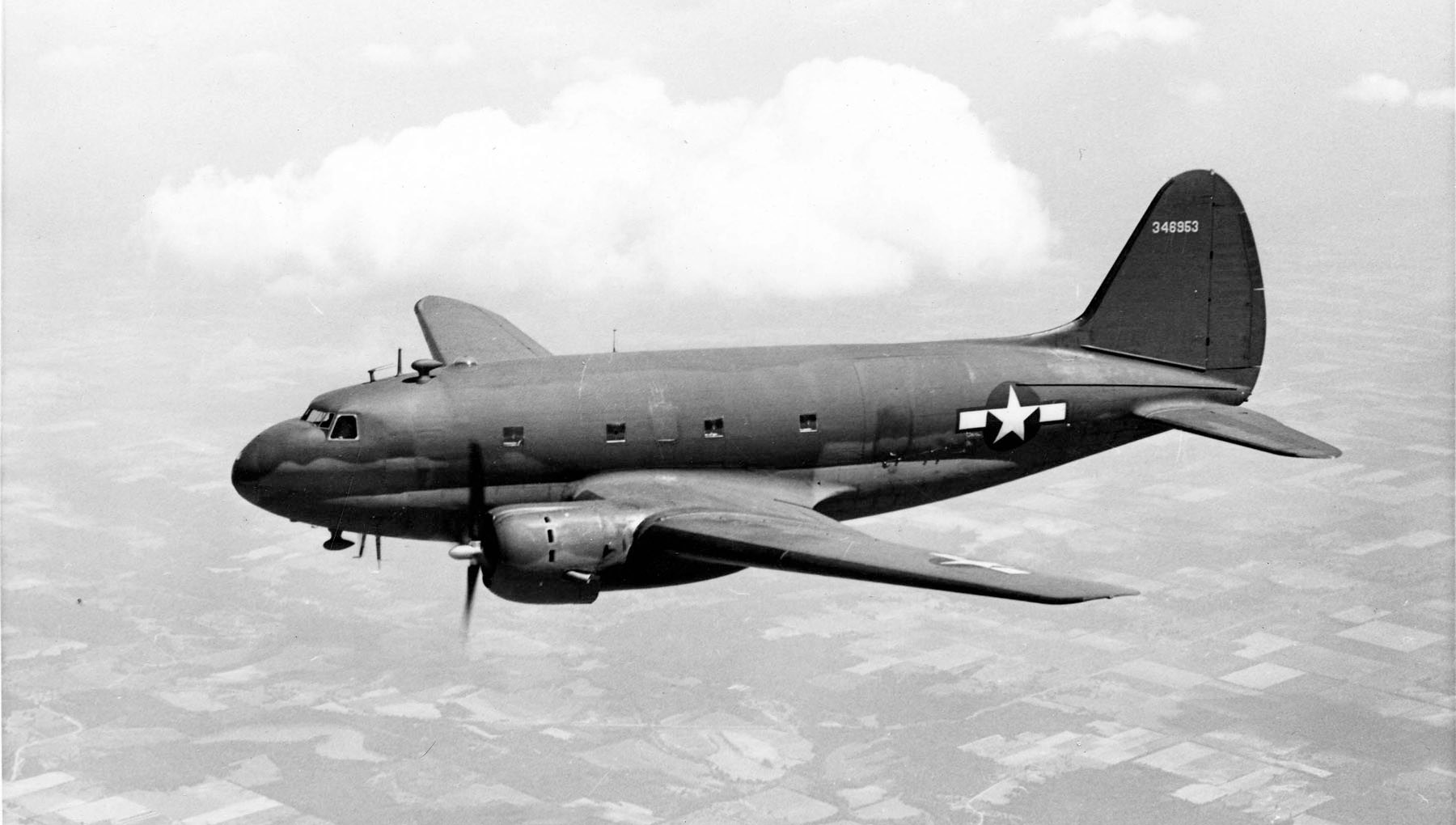
Curtiss C-46 Commando
Hauler of the Hump
The biggest twin-engined transport of the Second World War carried the weight of the Hump airlift over the Himalayas into China, jumped paratroopers across the Rhine, and still hauls freight in Canada’s north.
The C-46 Commando: how a failed airliner flew the Hump
Somewhere over the eastern Himalayas in 1944, a C-46 crew in a heavily loaded transport fought ice, turbulence and darkness at altitudes the aircraft’s designers had never expected it to need on a supply run. Beneath them lay what aircrew called the Aluminum Trail, the line of wreckage marking the route from Assam in India to Kunming in China. With the Burma Road cut, the airlift over the Hump was the only way to supply China, and from 1943 the aircraft that carried most of that load was the Curtiss C-46 Commando: bigger than a C-47, temperamental, unloved by many who flew it, and indispensable. Without it, the Chinese armies and the American air force in China would have starved of fuel and ammunition.
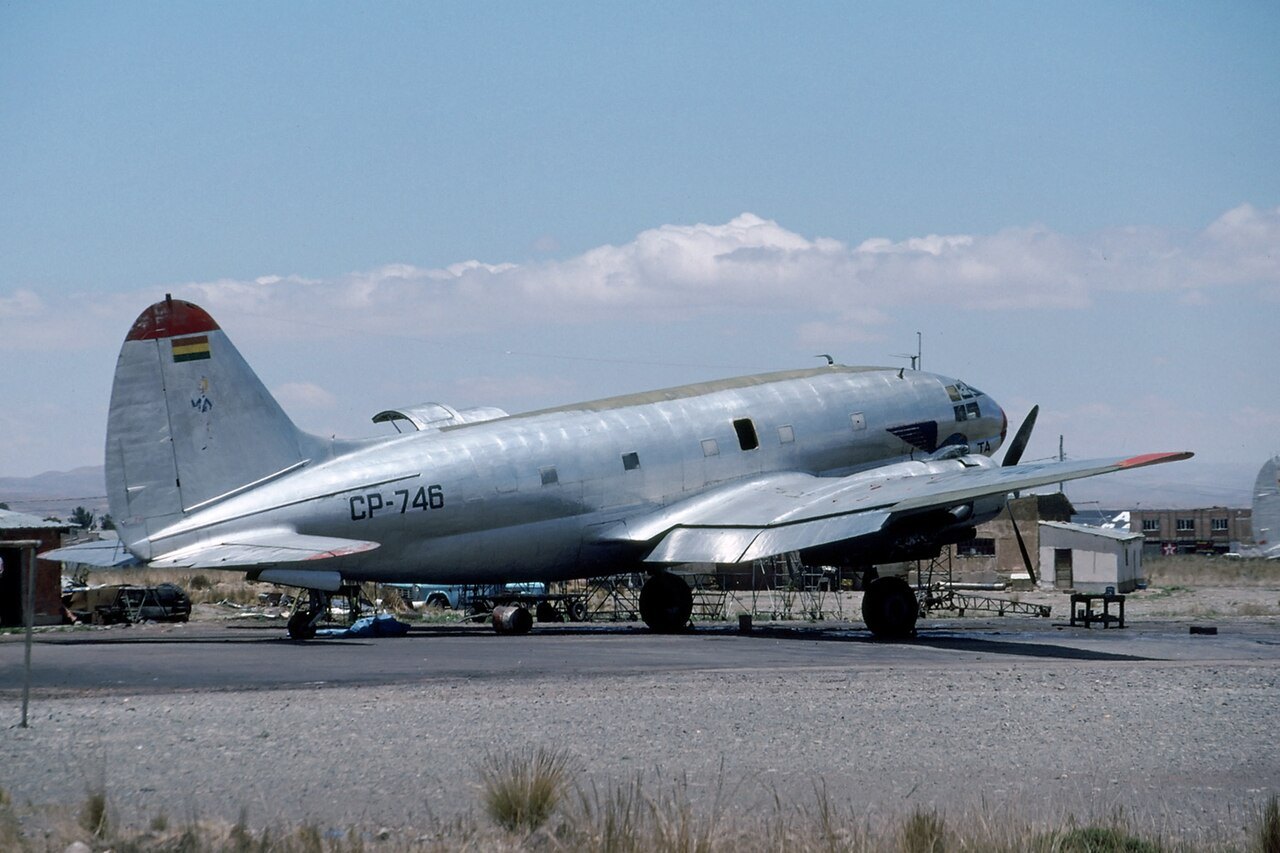
It began as a civil airliner. Curtiss-Wright, until then a builder of fighters, designed the CW-20 as a pressurised airliner with a distinctive figure-of-eight “double bubble” fuselage, and the prototype first flew on 26 March 1940, originally with twin tails. War turned it into a freighter. The Army bought it as the C-46, with a strengthened floor, large cargo doors and two of the new 2,000 hp Pratt & Whitney R-2800 radials. It could lift 40 troops, 30 stretchers or about 15,000 lb of cargo, far more than the C-47, and over 3,100 were built at Buffalo, St Louis and Louisville. The Marines called theirs the R5C and flew it across the Pacific.
Its reputation was mixed. Early aircraft were rushed into service, and a run of mid-air explosions earned it the grim nickname flying coffin until fuel vapour in the wings was identified and cured. When 72 C-46s carried paratroopers across the Rhine in Operation Varsity in March 1945, their lack of self-sealing tanks proved deadly. Yet after the war the Commando served from China to Israel, flew CIA missions for Air America, evacuated Saigon in 1975 and became the freighter of choice where loads were bulky and runways short. A handful still work in northern Canada, more than eighty years after the first flight, and one flies with the Commemorative Air Force.
01The C-46 over the Hump: the Aluminum Trail
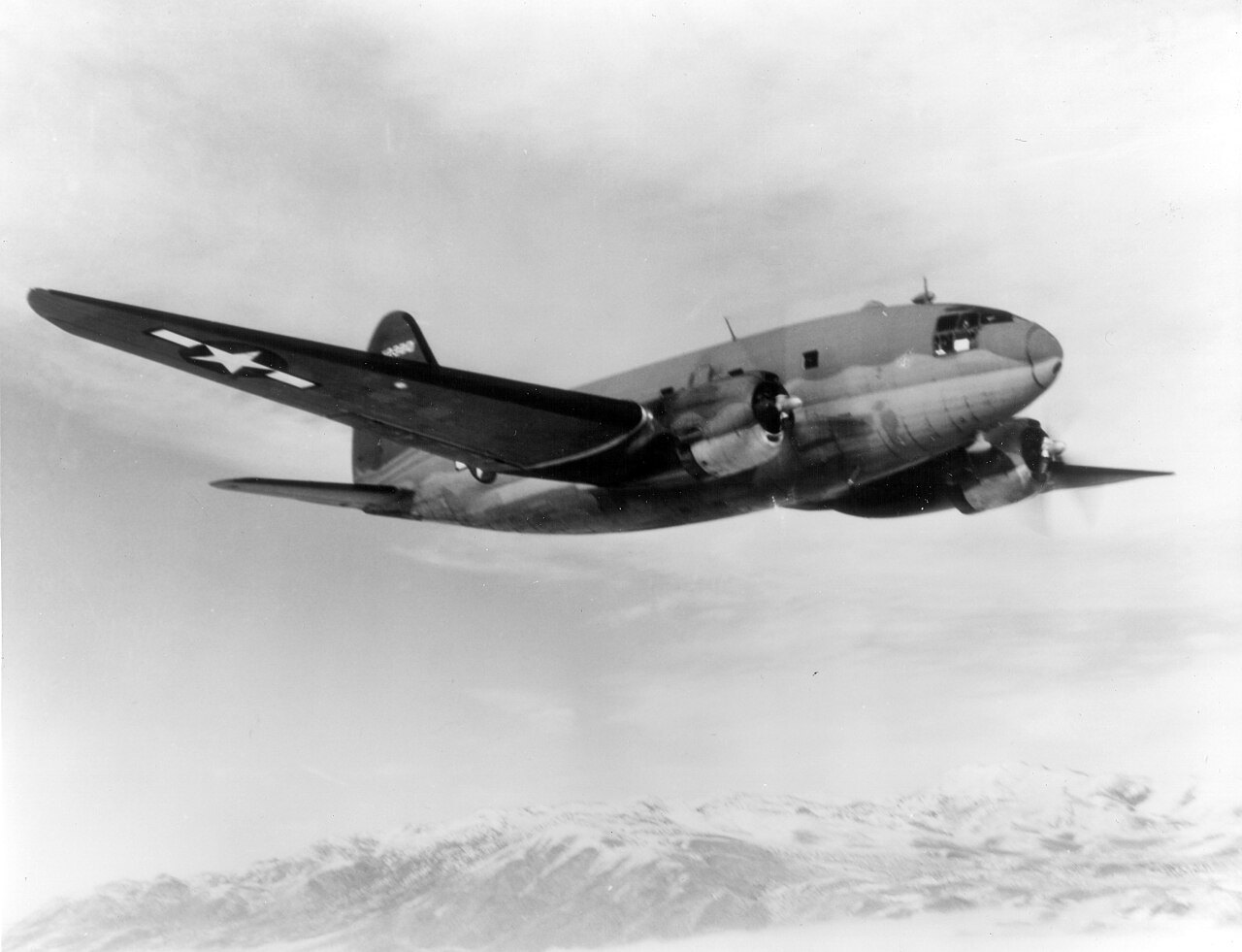
When Japan cut the Burma Road in 1942, the only way to keep China in the war was by air, over the eastern end of the Himalayas from bases in Assam to Kunming. The airlift began in April 1942 with whatever aircraft were available, mostly C-47s. The C-46 began flying Hump missions in 1943 and transformed the operation: it carried much heavier loads than the C-47 or the C-87 Liberator transport, and it flew at the heights needed to clear the ridges.
It was a hard introduction. The aircraft had been rushed from the factory with unresolved faults, the bases were primitive and spare parts scarce, and crews flew in monsoon storms, icing and at night over mountains with few navigation aids. Losses were heavy across the whole airlift, and the debris scattered along the route gave it the name the Aluminum Trail.
Things changed when General William H. Tunner took command of the India-China Division of Air Transport Command in September 1944. He applied production-line maintenance and strict flying standards, tonnage rose sharply and the accident rate fell. By the end of the operation the C-46 fleet over the Hump numbered several hundred aircraft, and the record monthly delivery came in July 1945. The Commando had become the backbone of the most demanding airlift of the war.
02The C-46 after 1945: Air America, Saigon and the far north
Cheap and plentiful after the war, surplus C-46s were snapped up by non-scheduled airlines, cargo operators and new air forces. A CAF history notes that surplus aircraft sold for around $20,000 to $25,000 in the late 1940s and early 1950s. The type flew for air forces from Latin America to Asia, and for the CIA-owned airline Air America in Indochina, where its load-carrying ability suited the dirt strips of Laos and Vietnam.
On 29 April 1975, as Saigon fell, Air America C-46s were among the last transports out. The company’s association records that Captain E. G. Adams flew a 52-seat C-46 to Bangkok with about 152 people inside. In Canada, Buffalo Airways in the Northwest Territories still flies two Commandos as freighters, saying they can haul up to 14,000 lb of bulky freight into short, unprepared strips.
What makes the C-46 Commando special
The double-bubble fuselage
Curtiss designed the CW-20 to be pressurised, and the most efficient way to do that was a fuselage made of two intersecting circles, a figure-of-eight cross-section. As a freighter it gave a cavernous cabin with a strong floor and large cargo doors. Its gross weight was roughly 45 per cent higher than that of the DC-3, and it could carry 40 troops, 30 stretchers or around 15,000 lb of freight.
Two R-2800s
The C-46 used two Pratt & Whitney R-2800 Double Wasps, the same 18-cylinder radial as the P-47 Thunderbolt and F6F Hellcat, of about 2,000 hp each. That power gave it a service ceiling of about 24,500 ft, enough to cross the Hump, and a much better payload than the C-47. The price was fuel: modern operators reckon on roughly 125 to 180 US gallons an hour depending on power setting.
Light hands, lazy feet
Pilots describe surprisingly light, responsive controls for a big twin, and a spacious cockpit where both pilots can reach everything. Its weaknesses are on the ground and at low speed: the rudder is notoriously ineffective on the take-off roll, so pilots steer with differential power, and the big ailerons create strong adverse yaw. With one engine out, it only just met post-war airline climb requirements.
03The C-46’s flying coffin problem: fuel, sparks and fixes
In 1943 to 1945 a series of C-46s caught fire or exploded in the air without obvious cause. Investigators traced the problem to fuel leaking from lines and pooling in unvented parts of the wing, where vapour could be ignited by electrical sparks. Venting and other fixes cured it, but the episodes, combined with the mechanical teething troubles of an aircraft rushed into service, gave the Commando a reputation it never fully shook off with wartime crews.
The other lesson came at Varsity. Unlike many C-47s, the new C-46D paratroop carriers used on the Rhine crossing had no self-sealing fuel tanks. When flak hit them, fuel burst into flames that streamed back along the fuselage. It was the C-46’s first big combat jump, and the war ended before the paratroop version could redeem itself.
Curtiss C-46 Commando specifications
Specifications
- Crew
- 4
- Capacity
- 40 troops, 30 stretchers or about 6,800 kg (15,000 lb) of cargo
- Length
- 23.27 m (76 ft 4 in)
- Wingspan
- 32.92 m (108 ft 0 in)
- Empty weight
- about 13,600 kg (30,000 lb)
- Max take-off weight
- commonly given as 20,400 kg (45,000 lb) gross; up to 25,400 kg (56,000 lb) in military service
- Powerplant
- 2 × Pratt & Whitney R-2800 Double Wasp radials, 2,000 hp (1,491 kW) each
- Maximum speed
- about 435 km/h (270 mph)
- Cruise speed
- about 250–380 km/h (155–236 mph), depending on power setting and source
- Range
- up to about 5,070 km (3,150 mi) with maximum fuel
- Service ceiling
- 7,470 m (24,500 ft)
Costs & production
- Unit cost
- Not reliably documented for wartime contracts; surplus C-46s sold for about US$20,000–25,000 in the late 1940s and early 1950s, per a CAF history
- Cost per flight hour
- Hedged estimate for a privately operated C-46 today: several thousand US dollars an hour, based on a fuel burn of roughly 125–180 US gallons of avgas an hour (operator estimate) plus R-2800 overhaul reserves
- Production
- About 3,100 to 3,180 built, 1940 to 1945, at Buffalo, St Louis and Louisville
- Programme
- CW-20 first flight 26 March 1940; Hump service from 1943; still in commercial service in Canada
04The C-46’s variants: from CW-20 to Commando
- CW-20: pressurised airliner prototype, first flown in 1940 with twin tails, later with a single fin.
- C-46A: main cargo version with large cargo doors and a strengthened floor, about 1,450 built.
- C-46D: paratroop version with doors on both sides, about 1,400 built.
- C-46F: about 234 built, with square wingtips and doors on both sides.
- R5C-1: US Marine Corps version, about 160 delivered.
- C-46E/G and XC-46B/C/K/L: small-batch and experimental versions with modified noses, engines or performance.
05The C-46’s operating costs: why it survives in the north
Two R-2800s are expensive to feed and overhaul, so the C-46 makes sense only where its particular qualities matter. In Canada’s north they do: Buffalo Airways says its two Commandos haul up to 14,000 lb of bulky freight into short, unprepared strips at an operating cruise of about 190 mph. The aircraft’s big cabin and doors take loads a modern turboprop of similar size cannot, and the airframes are simple enough to repair in remote places. For museum operators such as the Commemorative Air Force, fuel and engine overhaul dominate the bill.
The C-46 from CW-20 to the Arctic
The design begins
Curtiss-Wright starts work on the CW-20, its largest project to date.
First flight
The CW-20 prototype NX-19436 flies on 26 March.
The Hump opens
The airlift from India to China begins in April after the Burma Road is cut.
Commandos over the mountains
C-46s begin Hump missions and soon carry the bulk of the tonnage.
Tunner arrives
General William H. Tunner takes over the India-China Division in September and transforms its safety and output.
Varsity
On 24 March, 72 C-46s drop paratroopers across the Rhine, the type’s first large-scale combat jump; 19 are shot down.
Peak tonnage
The Hump airlift delivers its record monthly total in July.
Out of Saigon
Air America C-46s carry evacuees out of Saigon on 29 April, one with about 152 people aboard.
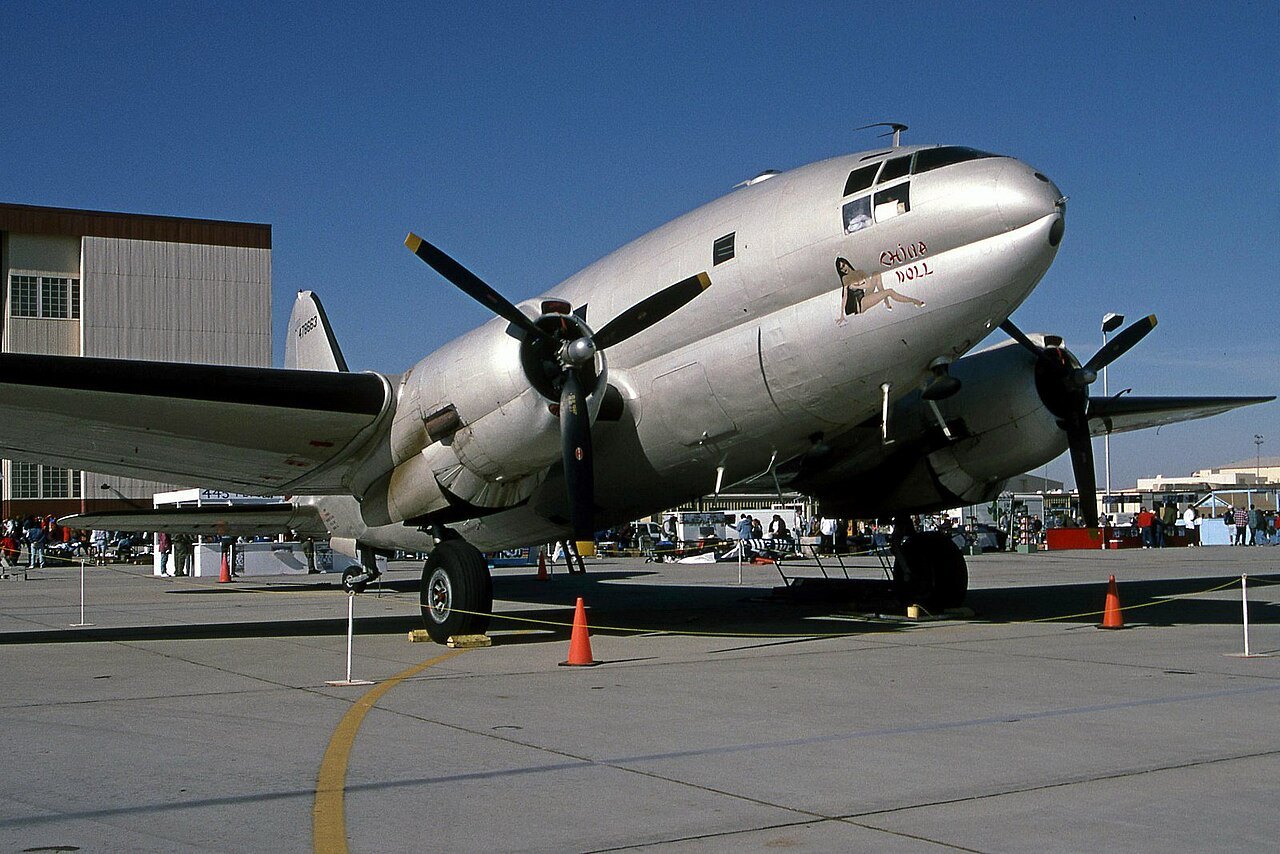
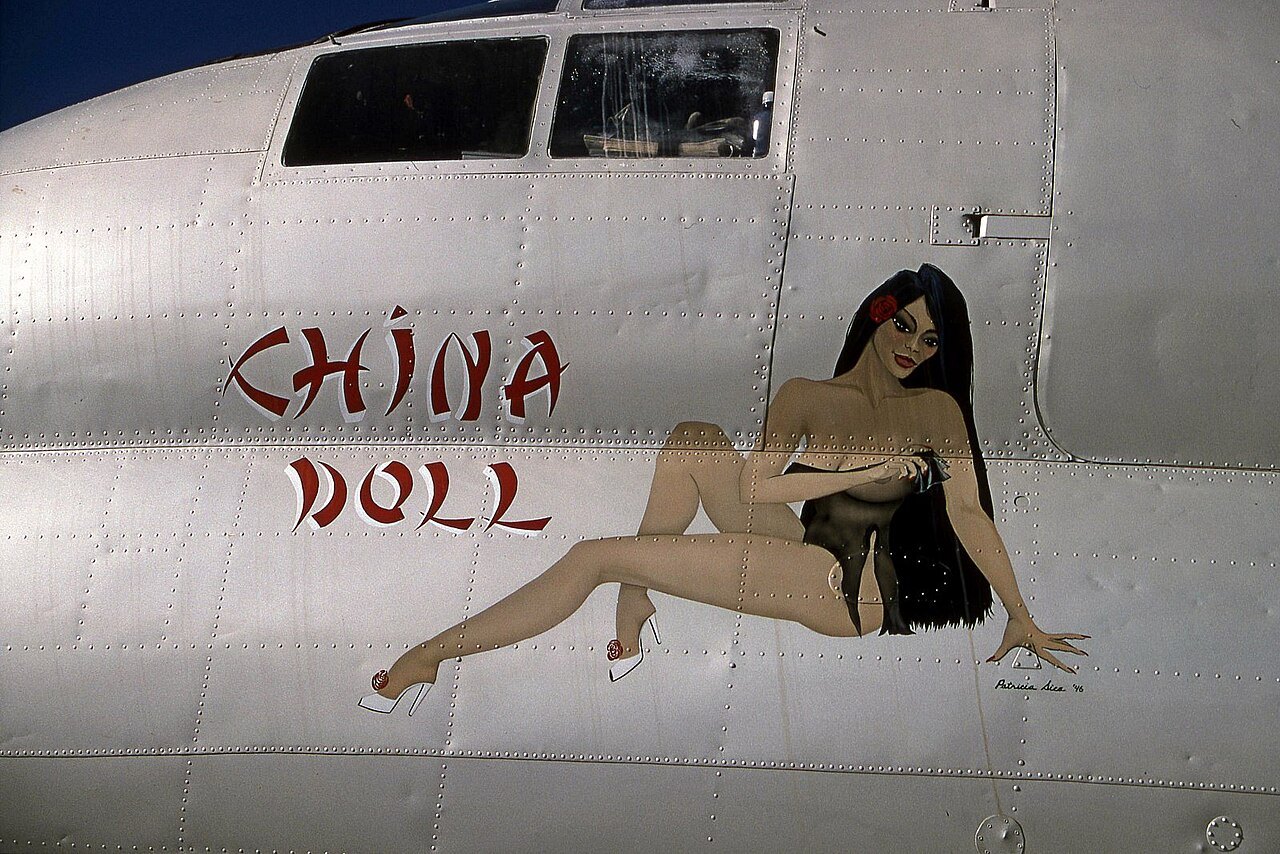
China Doll
The Commemorative Air Force acquires C-46F 44-78663, later named China Doll.
Still working
Buffalo Airways flies two C-46s as freighters in the Northwest Territories.
Stories & eyewitnesses: the C-46 over mountains and rivers
The Aluminum Trail
A route over the Himalayas marked by wreckage.
Read the full story
Tunner’s production line
The general who made the Hump work, and then did it again in Berlin.
Read the full story
Across the Rhine
The C-46’s first and last big combat jump.
Read the full story
The flying coffin
Mysterious explosions that turned out to be fuel vapour.
Read the full story
152 people in a 52-seat aircraft
An Air America pilot with a broken hand flies out of falling Saigon.
Read the full story
China Doll
A 1945 Commando now flies with the Commemorative Air Force.
Read the full story
Pilots on the Commando
Light controls, a lazy rudder and a big cockpit.
Read the full story
Freighting in the Northwest Territories
Two Commandos still earn their living.
Read the full story
The C-46 in pictures
Where the C-46 flies and flew
The C-46 Commando’s record
The C-46 was an unarmed transport, but it flew one of the most dangerous jobs of the war. It carried most of the Hump tonnage into China from 1943, dropped paratroopers across the Rhine in 1945 and served in Asian wars into the 1970s. Its losses, from weather, mountains, fuel fires and flak, were heavy.
See how training and combat types compare in the military aircraft statistics database. Figures are approximate.
Everything people ask about the C-46
Can I fly in a Curtiss C-46 Commando?
Why was the C-46 used on the Hump?
Why was the C-46 called the flying coffin?
How many C-46s were built?
Is the C-46 bigger than the C-47?
Are any C-46s still flying?
You can’t fly the C-46.
These, you can.
Most of this museum you can only look at. These genuine military jets you can fly yourself with MiGFlug — with aerobatics and time on the controls.
 Fly the L-39 AlbatrosThe world’s most-flown jet trainer — aerobatics included
 Fly the F-104 Starfighter“The missile with a man in it”
 Fly the MiG-21The Cold War’s most-produced jet
 Fly the T-33 Shooting StarAmerica’s first jet trainer
 Fly the DH VampireA piece of early jet history
 Fly the S.211Agile Italian jet trainer
 Fly the MB-326The classic Aermacchi jet
 Fly the MiG-15The Soviet legend of the Korean War
Continue the tour
Every fact, checked
- C-46 Curtiss CommandoRuud Leeuw: CW-20 origins, first flight, design, production and Hump service
- C-46 China DollCAF Southern California Wing: history and specifications of 44-78663
- Flying the C-46Pilots’ accounts of handling, fuel burn and surplus prices
- C-46 China DollCommemorative Air Force aircraft listing for N53594
- Operation Varsity: Allied Airborne Assault Over the Rhine RiverHistoryNet on the C-46 in Varsity and its fuel-tank vulnerability