
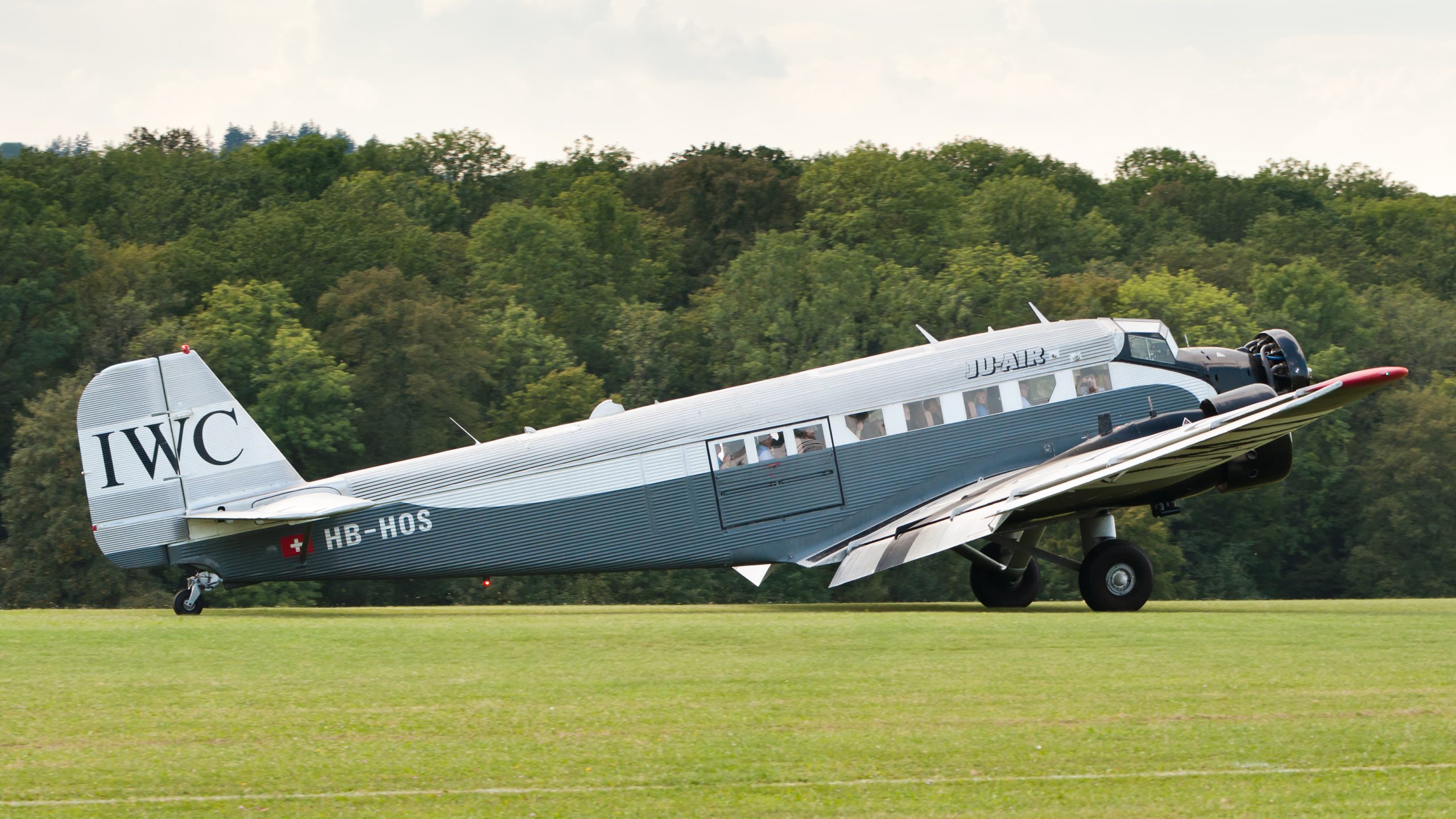
Junkers Ju 52/3m
“Tante Ju”
The corrugated-metal trimotor that defined an era: Junkers’ rugged, three-engine transport was Lufthansa’s flagship airliner in the 1930s and the German military’s principal transport and paratroop aircraft in the Second World War. Slow, boxy and almost impossible to kill, the “Tante Ju” (Auntie Ju) carried passengers, freight and soldiers across four continents — and a handful still fly today.
The Junkers Ju 52: the corrugated trimotor that carried the 1930s and the Second World War
The Junkers Ju 52 began life in 1930 as a large single-engine freighter designed by the pioneering German firm Junkers, whose founder Hugo Junkers had championed all-metal aircraft since the First World War. Built from corrugated duralumin — a stressed skin folded into ridges for stiffness — it was strong, simple and unmistakable. When designers hung three radial engines on it in 1932, the result, the Ju 52/3m (“drei Motoren”, three engines), became one of the most recognisable aircraft ever built.
Through the 1930s the Ju 52/3m was the flagship of Deutsche Lufthansa and the workhorse of dozens of airlines from Scandinavia to South America. It was not fast — it cruised at little more than a fast car’s speed — but it was dependable, could operate from rough fields, and could be maintained almost anywhere. For millions of early air travellers, the Ju 52 was flying.
The same ruggedness made it invaluable to the military. From the Spanish Civil War onward the Ju 52 served the German Luftwaffe as its principal transport and paratroop aircraft throughout the Second World War — from the airborne assault on Crete in 1941 to the doomed airlifts of Stalingrad. After the war it was built under licence in Spain (CASA 352) and France (AAC.1 Toucan), and soldiered on with air forces and airlines for decades. The Swiss Air Force flew its Ju 52s until 1981, after which the Swiss operator Ju-Air flew them as beloved heritage airliners.
01Why the Junkers Ju 52 looks the way it does: Hugo Junkers and all-metal flight
Hugo Junkers pioneered all-metal aircraft during and after the First World War, using duralumin — a light aluminium alloy — where rivals still built in wood and fabric. To make thin metal skin stiff without heavy internal structure, Junkers corrugated it, giving his aircraft their ribbed, industrial appearance. The Ju 52 inherited this philosophy directly from earlier Junkers designs such as the single-engine W 33 and the F 13.
The corrugations run along the line of flight and add remarkably little drag for the strength they provide. Combined with the patented Junkers “double wing” — a full-span trailing surface acting as both flap and aileron — the design gave the Ju 52 gentle handling and short, rough-field takeoffs that airlines and armies alike prized.
02The name “Tante Ju”: how a boxy transport became Auntie Ju
German crews and passengers nicknamed the Ju 52 “Tante Ju” — “Auntie Ju” — a term of genuine affection for an aircraft that was homely, reassuring and utterly dependable. In the Spanish Civil War, Nationalist forces called it “Pava” (the turkey-hen). The designation itself is straightforward: Ju for Junkers, and 3m for the three-motor version that made the type famous.
How the Junkers Ju 52 works: corrugated structure, the double wing and three radial engines
A corrugated all-metal airframe
The Ju 52 is built almost entirely of corrugated duralumin, a stressed skin folded into ridges that make thin metal stiff without heavy framing. The result is an airframe that is light, immensely strong and easy to repair — damaged panels could be beaten out or replaced in the field. That ribbed skin, running nose to tail, is the aircraft’s signature and the reason it is recognisable at a glance.
The Junkers “double wing”
Along the entire trailing edge the Ju 52 carries a separate, narrow-chord surface — the patented Junkers double wing (Doppelflügel). Its outer sections work as ailerons and its inner sections as flaps, giving docile low-speed handling and short takeoffs and landings from rough, unpaved strips — exactly what 1930s airlines and wartime armies needed.
Three radial engines
The classic Ju 52/3m is powered by three air-cooled radial engines — most commonly the German BMW 132, a licence-developed descendant of the American Pratt & Whitney Hornet — one in the nose and one on each wing. Three engines gave redundancy and reliability over water and mountains, and let the aircraft keep flying on two if one failed.
03The Junkers Ju 52’s engines: the BMW 132 and its Pratt & Whitney roots
Most Ju 52/3m aircraft were powered by three BMW 132 radial engines of roughly 660–830 horsepower each, depending on the variant. The BMW 132 was itself a licence-built and further-developed version of the American Pratt & Whitney Hornet, reflecting how international aero-engine technology was before the war. Some export and licence-built aircraft used other radials, including French and Spanish engines on the post-war AAC.1 and CASA 352.
With three engines the Ju 52 could lose one and still fly, a vital margin for an airliner crossing the Alps or the Andes and for a transport operating from exposed forward airfields.
04Junkers Ju 52 variants and licence production: CASA 352 and AAC.1 Toucan
The Ju 52/3m was produced in many sub-variants for civil and military use, with different engines, defensive armament and interior fits. After the Second World War, production continued outside Germany: Spain built the type as the CASA 352 (and 352L) with Spanish-made engines, and France built it as the Amiot AAC.1 Toucan. Between wartime German output and post-war licence production, total numbers are usually given as around 4,800 or more; exact figures vary between sources.
These licence-built machines kept the Ju 52 in service for decades and are why many “Ju 52s” flying or preserved today are in fact Spanish CASA 352 or French AAC.1 airframes.
05Who built the Junkers Ju 52: the Junkers company and Hugo Junkers
The Ju 52 was designed and built by Junkers Flugzeug- und Motorenwerke, the company founded by aviation pioneer Hugo Junkers. Junkers himself, a committed pacifist, lost control of his firm to the Nazi state in 1933 and died in 1935; the company that bore his name went on to build the Ju 52 in huge numbers, as well as the Ju 87 Stuka and Ju 88 bomber.
Junkers Ju 52/3m specifications: dimensions, performance and cost
Baseline note: the figures below describe the Ju 52/3m g7e, the dominant wartime production model — 18 troops or 12 stretchers, BMW 132T-2 engines, autopilot and enlarged cargo doors. Deltas for the single-engined Ju 52/1m of 1930, the pre-war civil Ju 52/3m airliners, the earlier military g3e and g4e, and the postwar French AAC.1 Toucan and Spanish CASA 352 are in grey. Two warnings about Ju 52 data. First, the type ran to some forty sub-types over twenty-two years and three countries, so a figure quoted without a sub-type is close to meaningless. Second, most published performance data traces back to a small number of secondary works rather than to manufacturer’s figures; where sources disagree, the disagreement is stated rather than averaged away.
Dimensions & weights
- Crew
- 3 (pilot, co-pilot, radio operator, the last doubling as flight engineer and, on armed aircraft, as the dorsal gunner). Civil airliners flew with two on the flight deck and a steward
- Capacity
- 18 fully equipped soldiers, or 12 stretchers as an air ambulance, or roughly 1,500 kg (3,300 lb) of freight. The pre-war airliner seated 17 passengers, which for 1932 was a large aeroplane and a comfortable one
- Length
- 18.90 m (62 ft 0 in)
- Wingspan
- 29.25 m (95 ft 11 in)
- Height
- 5.55 m (18 ft 3 in)
- Wing area
- 110.5 m² (1,189 sq ft)
- Cabin volume
- 16.7 m³ (590 cu ft), entered through a port-side door aft of the wing whose lower half drops to form a loading platform. That door, and a floor strong enough to be walked on with a load, are most of the reason the aircraft worked as a freighter when prettier types did not
- Empty weight
- 6,500 kg (14,330 lb); the lighter g3e of 1934 came in around 5,720 kg (12,610 lb)
- Maximum take-off weight
- 11,000 kg (24,250 lb); 10,500 kg (23,150 lb) for the g3e
- Structure
- Corrugated Duralumin over a welded steel-tube fuselage frame, with a Junkers multi-spar cantilever wing whose corrugated skin is genuinely structural. This is the point most often got wrong: the corrugations run fore and aft, and on the wing and tail they let thin light-alloy sheet resist buckling and carry shear and torsion without heavy internal stiffening — stressed-skin construction a decade before flush riveting and clad alloys made a smooth stressed skin practical. On the fuselage the steel tube carries the loads and the corrugated skin is mostly a very tough covering. The price is drag, and it is not trivial: this is why a 1932 trimotor with 2,500 horsepower cruises at 253 km/h while a Douglas DC-3 with less power cruises at 333 km/h
- Undercarriage
- Fixed and divided, with a fixed tailskid on early aircraft and a tailwheel from the g4e onward. Some aircraft carried wheel spats, many did not. From the g5e the main gear was interchangeable in the field between wheels, twin floats and skis, which is how one airframe served Norway, the Mediterranean and the Eastern Front. A tow coupling in the tailskid allowed two DFS 230 assault gliders to be towed
- Wing loading
- 99.5 kg/m² (20.4 lb/sq ft) at maximum weight — roughly a quarter of a Second World War fighter’s, and the reason the aircraft could use a pasture
- Power loading
- 5.9 kg/kW (9.7 lb/hp) at maximum weight
Performance
- Maximum speed
- 286 km/h (178 mph; 154 kn) at 1,400 m (4,590 ft); the 690 PS g3e managed 265 km/h (165 mph) at sea level
- Cruise speed
- 253 km/h (157 mph; 137 kn) maximum continuous; roughly 209 km/h (130 mph) at economical cruise, which is the setting a Lufthansa timetable was actually built around
- Range
- 1,100 km (683 mi; 594 nmi) with normal load, 1,300 km (808 mi; 702 nmi) maximum
- Service ceiling
- 5,900 m (19,360 ft)
- Rate of climb
- 3.5 m/s (210 m/min; 689 ft/min)
- Time to altitude
- 3,000 m (9,840 ft) in 17 minutes 30 seconds
- Engine-out performance
- This is the number that matters most and is almost never quoted. On two engines the Ju 52 can hold height at low level, but above about 2,500 m (8,200 ft) it can no longer climb with one engine failed. Swiss regulators used exactly this figure when reconstructing the 2018 Piz Segnas accident: it forced a minimum safe altitude of about 3,800 m over that terrain, which the operator’s own unpressurised-cabin rule made impossible to fly
- Field performance
- Take-off and landing runs of roughly 300 m (1,000 ft) at typical weights. The type’s whole reputation rests here rather than on any speed or range figure. It would go into and out of ploughed fields, beaches, frozen lakes and hastily bulldozed strips, and it would keep doing it with three engines that had not been overhauled and a mechanic with hand tools
- Handling
- Heavy, slow and utterly honest. The double-wing surfaces keep aileron authority almost to the stall, and the outer engines are canted outwards in plan specifically to reduce the yaw handful if one quits. There is no vice in it at sea level; there is very little margin in it high, hot and slow, which is precisely the combination that destroyed HB-HOT in 2018
- Vulnerability
- 265–286 km/h flat out is roughly half the speed of a Hawker Hurricane. Any Ju 52 formation inside a contested area needed a fighter escort, and when the escort was absent or outnumbered the losses were catastrophic. 125 lost over the Netherlands in the first days of May 1940; 170 of the 493 committed to Crete in May 1941; 266 lost at Stalingrad between 24 November 1942 and 31 January 1943; 11 shot down in a single interception near Cap Bon on 5 April 1943 during Operation Flax, with the Tunisian air bridge reduced to 29 flyable aircraft
- Fuel
- Carried in tanks in the wing centre section and outer panels. Published capacities differ substantially between sources and between sub-types, so no single figure is given here; the range numbers above are far better attested than any tankage figure you will find quoted for this aircraft
Propulsion & systems
- Engines
- 3 × BMW 132T-2 nine-cylinder air-cooled radials, a licence-developed and fuel-injected refinement of the Pratt & Whitney R-1690 Hornet, 27.7 litres each. Earlier and export aircraft used almost anything: Pratt & Whitney Hornets and Wasps, Bristol Pegasus VI, Piaggio Stella X, Alfa Romeo 126 RC/34, and on two test aircraft a pair of Junkers Jumo 205C two-stroke diesels. The Spanish CASA 352L used the ENMA Beta B-4, a licence BMW 132
- Power
- 619 kW (830 hp; 841 PS) each for take-off, 1,857 kW (2,490 hp) total. Ratings are contested: the BMW 132T is elsewhere published at 537 kW (730 PS), and the g3e’s BMW 132A-3 at 510 kW (690 PS). The 830 hp figure is the one most consistently attached to the g7e in the literature, and is used here on that basis rather than because it is beyond dispute
- Propellers
- Two-blade fixed-pitch metal propellers on most aircraft. Fixed pitch on a three-engined transport in 1932 was normal; by 1940 it was a real handicap, and it is part of why the aircraft climbs so badly
- Engine installation
- The two wing engines are mounted almost perpendicular to the swept leading edge and so splay visibly outwards in plan, which reduces the asymmetry if one fails. Cowlings are usually mixed: a deep-chord NACA cowling on each wing engine and a narrow Townend ring on the nose engine, which the widening fuselage behind it will not accept. Starting was by compressed air from a common bottle that also charged the wheel brakes — no electrical starter, no ground power trolley, which is exactly what you want at a strip with no infrastructure
- Double wing (Doppelflügel)
- The Junkers signature and the second thing most often got wrong. A full-span auxiliary aerofoil is carried on short struts behind and below the main trailing edge, with a visible gap between the two. The outboard sections work differentially as ailerons and project slightly beyond the wingtips on control horns; the inboard sections act as flaps. The result is high lift with retained roll control very close to the stall, which is worth more to a short-field transport than any amount of cruise efficiency. The tailplane repeats the arrangement with horn-balanced elevators and is adjustable in flight, and every tail surface is corrugated too
- Avionics and equipment
- Radio from the g3e onward, an autopilot from the g6e and standard on the g7e, direction-finding equipment on the g8e, de-icing on the g11e and deleted again on the g10e. The g7e’s autopilot is the single most useful thing on it: long, dull, low-level transport legs are where crews make mistakes
- Sights
- The bomber versions used a simple optical bombsight worked from the ventral position. The Ju 52 was never a precision bomber and was never claimed to be one; its work over Spain and over Warsaw in September 1939 was area bombing from an aeroplane that happened to be available
- Protection
- None to speak of. No self-sealing tanks, no armour on the great majority of aircraft; the g14e, the last German production version, added improved crew armour and the heavier 13 mm dorsal gun. Nothing about the airframe was survivable against fighters, and the loss figures reflect it precisely
- Special equipment
- The Minensuch minesweeping fit carried a 14 m (46 ft) diameter current-carrying degaussing ring slung beneath the airframe to detonate magnetic sea mines — the aircraft flew low over the water and set them off. Other fits included twin floats, skis, glider tow gear and tropical filters for North Africa
- First flight
- 13 October 1930 for the single-engined Ju 52/1m; 7 March 1932 for the three-engined Ju 52/3m, which is the aircraft the world means by "Ju 52"
- Service entry
- May 1932 with Deutsche Luft Hansa as a 17-seat airliner. Military service from 1934–35, when 450 Ju 52/3m g3e were delivered to the then still-secret Luftwaffe as an interim bomber pending the Dornier Do 11
- Number built
- ~4,845 in total across 1931–1952, of which 2,804 were delivered to the Luftwaffe between 1939 and 1944 alone (145 in 1939, 388 in 1940, 502 in 1941, 503 in 1942, 887 in 1943, 379 in 1944). 585 were built after the war outside Germany: 415 AAC.1 Toucans in France and 170 CASA 352 and 352L in Spain
- Cost
- No reliable period unit price is published in the open literature, and any figure you see quoted for a Ju 52 should be treated as invention. The modern equivalent is instructive: in 2024 Ju-Air put the cost of returning a single grounded airframe to airworthy condition at over one million Swiss francs, and concluded it could not be justified
06Junkers Ju 52 numbers: how many were built, and how many survive
Production of the Ju 52/3m ran from 1932 into the early 1950s when licence-built machines are included. German wartime output plus Spanish CASA 352 and French AAC.1 Toucan production brings the usual total to around 4,800 or more aircraft, though sources differ and the exact figure should be treated as an estimate.
Only a small number survive today. Several are static museum exhibits, and a handful have flown in recent decades — including aircraft operated in Germany and by Switzerland’s Ju-Air. Many “Ju 52s” still airworthy are in fact CASA 352 or AAC.1 airframes.
07The Junkers Ju 52’s operating costs: what it takes to fly a 1930s trimotor today
There is no meaningful modern “unit cost” for a Ju 52 — the surviving airframes are irreplaceable historic aircraft rather than items with a market price. The real cost is in operating and maintaining them: three vintage radial engines, hand-worked corrugated skin, and scarce spares make every flight hour expensive.
Heritage operators have publicly described costs on the order of a few thousand Swiss francs per flight hour, which is why passenger flights were always priced as a premium experience. Treat any specific figure as an estimate; exact operating costs are not officially published and vary by operator and year.
Armament & payload
The Ju 52 is a transport that was given guns to defend itself, and briefly asked to be a bomber
The standard Ju 52/3m g7e carries no offensive armament of any kind. Its guns are defensive: a single rifle-calibre MG 15 in an open dorsal position, one MG 15 at each of two beam windows, and on earlier military aircraft a semi-retractable ventral "dustbin" turret cranked down by hand. That is three or four 7.92 mm machine guns with saddle-drum magazines, on an aeroplane doing 253 km/h, and no honest account should describe it as more than a gesture.
There was a genuine bomber period. The Ju 52/3m g3e of 1934–35 was ordered as an interim medium bomber for the secret Luftwaffe, 450 were built, and 20 of them were the first German aircraft delivered to Franco’s Nationalists within a week of the Spanish Civil War starting. They bombed in Spain and again over Warsaw in September 1939, and after that the bomber role was abandoned entirely. Everything the type is remembered for afterwards — Norway, the Netherlands, Crete, North Africa, Stalingrad — it did as a transport.
So the six cards below describe what the aircraft actually carried: guns for defence, bombs on the versions that had them, soldiers, freight, parachutes and gliders. Fits varied enormously by sub-type, theatre and year, civil aircraft carried nothing at all, and the postwar French and Spanish machines were built as unarmed transports; where a figure is disputed between sources it is flagged rather than smoothed over.
Defensive guns
- 1 × 7.92 mm MG 15 in an open dorsal position aft of the wing, on a pivot mount with saddle-drum magazines. On the late g14e this became a 13 mm MG 131, which is the only meaningful improvement the type’s armament ever received.
- 2 × 7.92 mm MG 15 firing from beam windows in the cabin sides, with racks for spare drums beside each position. Worked by whoever was available, which in a fully loaded transport frequently meant nobody.
- 1 × 7.92 mm MG 15 in a semi-retractable ventral Bodenlafette — the "dustbin" — wound down by hand crank on the g3e and other early military aircraft, and deleted on most later transports because it cost speed and was of little use.
- Civil Ju 52s, the Lufthansa and Swissair airliners, the AAC.1 Toucan and the CASA 352 all carried no guns at all. Neither did many wartime transports on non-operational duties.
- None of it worked against fighters. The aircraft’s real defence was an escort, and where the escort was not there the loss rates were among the worst suffered by any type in the war.
Bombs
- Up to 1,500 kg (3,310 lb) in internal vertical cells on the dedicated bomber fit of the Ju 52/3m g3e, released through bomb-bay doors in the cabin floor.
- The figure is disputed. 1,500 kg is the load most consistently given in the Spanish Civil War literature and in reference works on the bomber sub-types; other tabulations, including the current Wikipedia infobox, give 500 kg. The discrepancy is probably between the maximum cell capacity and a normal operational load, but it is not resolved in the open sources.
- The record it built with those bombs: by the end of the Spanish Civil War, Ju 52s had flown about 5,400 offensive sorties, accumulated 13,000 operational hours and dropped more than 6,000 bombs.
- After the bombing of Warsaw in September 1939 no further bomber variants were built and the role was dropped. The French Air Force did use Ju 52s as improvised bombers in Indochina in the 1950s, in very small numbers.
- The standard g7e transport carries no bombs and has no bomb cells. The floor apertures that survive on transports are supply-container chutes, not a bomb bay.
Paratroops and airborne assault
- Up to 18 fully equipped Fallschirmjäger, jumping through the port-side door in a stick. The Ju 52 is the aircraft that made vertical envelopment a real military option, and every airborne force since has been shaped by what it did and failed to do.
- 10 May 1940, the Netherlands: the first large-scale airborne attack in history, at the Battle for The Hague and against the Dutch bridges. It worked tactically and cost 125 Ju 52s destroyed and 47 damaged in the opening days.
- 20 May 1941, Crete: 493 Ju 52s carried most of the 22,750 troops flown in, the largest German airborne operation of the war. 170 transports were lost. Casualties among the paratroop arm were so severe that Germany never mounted another major airborne assault — the aeroplane won the island and ended the concept in the same week.
- Portugal was still dropping paratroops from Ju 52s over Angola in the 1960s, and Spain trained parachutists on CASA 352s at Alcantarilla into the 1970s. Yugoslavia’s last operational paratroop drop from a Ju 52 was at Maribor in 1960.
- No weapon is involved in any of this. The aircraft delivers soldiers and leaves.
Cargo and casualties
- Roughly 1,500 kg (3,300 lb) of freight in a 16.7 m³ hold, loaded through the port-side door whose lower half folds down as a ramp, or 12 stretcher cases in the ambulance fit.
- The loading arrangement is the design’s quiet masterstroke: a large square door, a strong flat floor and a fuselage you can stand up in, on an aeroplane that will take off from a field. Very little else in the 1930s could do all four.
- What it moved: 4,400 tonnes to the front in the Chaco War before 1935; 13,962 of Franco’s Army of Africa across the Strait of Gibraltar between 20 July and early October 1936, past a Republican naval blockade, in the first strategic airlift in history; 3,018 sorties in the Norwegian campaign of 1940.
- And what it could not move: the Sixth Army at Stalingrad needed 300 tonnes a day and never once received it. 266 Ju 52s were among the 488 aircraft lost on that airlift between 24 November 1942 and 31 January 1943, and the promise that the Luftwaffe could supply an encircled army by air was destroyed with them.
- Freight only. No cargo fit carried or released a weapon.
Airdrop and glider towing
- Supply containers parachuted through two double chutes and through the bomb-bay apertures in the cabin floor, the standard method of resupplying troops who had outrun their roads.
- Underslung loads at the bomb-bay exits: supply canisters, and Kettenkrad half-track motorcycles dropped on four parachutes to give a landed parachute unit something with which to move its guns.
- Glider tug: a tow coupling built into the tailskid, capable of towing up to two DFS 230 assault gliders at once. This is how the heavy element of a German airborne assault arrived.
- The Minensuch conversion belongs here too, as the closest the type came to an offensive system: a 14 m diameter degaussing ring under the airframe, energised in flight to detonate magnetic sea mines by flying low over them.
- None of these fits is armament. A minesweeping Ju 52 destroys mines by generating a magnetic field, not by dropping anything.
Interchangeable undercarriage and special fits
- Wheels, twin floats or skis, interchangeable in the field from the g5e onward. Colombia and Bolivia flew floatplane Ju 52s in the early 1930s; the See floatplanes served off Norway in 1940 and later in the Mediterranean.
- Tropical fit on the g9e and g10e for North Africa, with filters, strengthened undercarriage and glider tow gear; de-icing equipment fitted on the g11e and absent on the g10e, which tells you where each was meant to work.
- VIP and head-of-state fits: Hitler’s Immelmann II, D-2600, flown by Hans Baur from 1933 until an Fw 200 Condor replaced it in September 1939; and Chiang Kai-shek’s personal aircraft, bought from a Eurasia Aviation demonstrator in China.
- Trainer and target-tug fits: the g f1e for the DVS flying school, and a single Swedish conversion, the K 45c, made into a torpedo bomber — the only time anyone hung a torpedo on a Ju 52.
- The standard aircraft in any of these configurations carries no weapon beyond the defensive machine guns described above.
Three typical loadouts
- Spanish airlift (Morocco to Seville, 20 July to early October 1936)
- Ju 52/3m g3e stripped to the shell, no bombs, dorsal gun manned or not depending on the day, packed with as many of Franco’s Army of Africa as would fit. 461 crossings by the end of August carrying 7,350 men, 5,455 more in September, 1,157 more to early October. It is the first time in history that air transport decided the opening of a war, and it is why the aircraft matters beyond aviation.
- Operation Merkur (Crete, 20 May 1941)
- 18 Fallschirmjäger and their weapon containers, or a DFS 230 glider on the tail hook, flown from dust-choked Greek strips in successive waves. 493 aircraft, 22,750 troops delivered, 170 transports destroyed. The island fell and the German airborne arm never jumped in strength again.
- Stalingrad airlift (Tatsinskaya and Morozovskaya to Pitomnik, winter 1942–43)
- Roughly 1,500 kg of ammunition, fuel drums or bread outbound; wounded men on the floor coming back. Flown in blizzards, into a shrinking pocket, against fighters and flak, from airfields that were themselves being overrun. 266 Ju 52s lost in ten weeks, and an army lost with them.
Sourcing caveat: armament and sub-type detail follow William Green’s Warplanes of the Third Reich and the Aircraft Profile monograph on the Ju 52 series, with campaign figures from the standard operational histories. The bomb-load discrepancy noted above is real and unresolved. Loss figures for Crete, the Netherlands and Stalingrad are those given in the German records as usually published; airborne-operation casualty totals in particular are quoted inconsistently across sources, and only aircraft losses are stated here.
Variants
Tante Ju had two entirely separate lives, and the second one has poisoned the memory of the first
Before it was a Luftwaffe workhorse the Ju 52 was one of the most important airliners ever built. By 1935 it was flying with Deutsche Luft Hansa, Swissair, Finland’s Aero O/Y, Sweden’s AB Aerotransport, Brazil’s Syndicato Condor, Eurasia in China and a dozen more; it opened routes across Europe, Asia and South America, and it did so with a reliability that no trimotor of its generation matched. Canadian Airways had the sixth single-engined airframe built. For most of the 1930s, roughly half of Lufthansa’s fleet was Ju 52s.
Then the Nazi government took control of Junkers in 1935 and the same aeroplane became the transport arm of a war. It carried the paratroops to The Hague and to Crete, it kept Rommel supplied across the Mediterranean, and it failed at Stalingrad because no aircraft of its size could have succeeded. Both lives are true, and the second one is why a Ju 52 in a museum is a more complicated object than a DC-3.
Production ran from 1931 to 1952 in three countries. Junkers built the aircraft at Dessau; Avions Amiot built it in occupied France and kept building it after liberation as the AAC.1 Toucan; CASA built it in Spain as the 352 and 352L until 1952. Roughly 4,845 were completed, and the sub-type list runs to some forty designations, of which the militarily significant ones are below.
- Ju 52/1m (first flight 13 October 1930; 6 completed of 12 laid down)
- The original single-engined freighter, with a BMW VII or Junkers V-12 in the nose. Underpowered and quickly abandoned, but it established the airframe. One flew in Canada as CF-ARM; another was converted in Sweden into the K 45c torpedo bomber.
- Ju 52/3m (first flight 7 March 1932; civil airliner)
- Three Pratt & Whitney Wasps on the prototype, then Hornets and BMW 132s. 17 seats. The version that made the type’s reputation, sold across Europe, Asia and South America and built in export sub-types with Bristol Pegasus, Piaggio and Alfa Romeo engines to suit the customer.
- Ju 52/3m g3e (1934–35; 450 built)
- The first military version: interim medium bomber and transport for the still-secret Luftwaffe, BMW 132A-3 engines, bomb-release gear, dorsal gun and hand-cranked ventral dustbin. Twenty of these were the first aircraft Germany sent to Franco in July 1936.
- Ju 52/3m g4e and g5e (1937–39)
- The g4e replaced the tailskid with a tailwheel. The g5e brought the more powerful BMW 132T-2 and, crucially, undercarriage interchangeable in the field between wheels, floats and skis.
- Ju 52/3m g6e and g7e (1939–42; the dominant wartime models)
- The g6e added extra radio and the option of the Minensuch degaussing ring; the g7e added an autopilot and enlarged cargo doors and standardised 18 troops or 12 stretchers. The g7e is the aeroplane most people picture when they say Ju 52.
- Ju 52/3m g8e to g14e (1942–44)
- Progressive detail work: improved radio and direction finding on the g8e, tropicalisation and glider tow gear on the g9e, floats or wheels without de-icing on the g10e, de-icing restored on the g11e, BMW 132L engines on the g12e. The g14e was the last German production version, with improved crew armour and the 13 mm MG 131.
- AAC.1 Toucan (France, 1945–47; 415 built)
- Avions Amiot had been building Ju 52s for the occupier and simply carried on afterwards. Flown by Air France and the French Air Force, including as an improvised bomber in Indochina.
- CASA 352 and 352L (Spain, 1945–52; 106 and 64 built)
- Spanish licence production, the 352L with Spanish-built ENMA Beta B-4 engines. Nicknamed Pava, in Spanish Air Force service as the T.2B into the 1970s. Almost every Ju 52 flying or displayed in the world today is one of these, not a German-built aircraft.
- Military designations abroad (Sweden Tp 5, Spain T.2B, Czechoslovakia D52, USAAF C-79)
- The type served under its own name almost everywhere, but these local designations recur in records and in museum labels. Switzerland bought three g4e in 1939 and flew them until 1982, the longest military service the type had anywhere. Portugal flew them operationally in Angola into the 1960s.
- Ju 52 New Generation (announced April 2022; none flying)
- A Swiss project by Junkers Flugzeugwerke AG for a 14-seat modern-build successor with RED A03 diesel engines and current avionics. Announced for a launch no earlier than 2025; it has not appeared, and it should not be confused with any original aircraft.
Closing note, with the survivor arithmetic, since there is no operator chart on this page: of roughly 4,845 built, only three airframes are currently listed as airworthy anywhere in the world — one with the Amicale Jean-Baptiste Salis at Cerny in France, one with the South African Airways Museum Society at Germiston, and one at the Military Aviation Museum in Virginia Beach — and all three are Spanish-built CASA 352Ls. No German-built Ju 52 is flying. About thirty more survive on static display, from the Deutsches Museum in Munich and the Technikmuseum Hugo Junkers at Dessau to Udvar-Hazy, Bodø, Belgrade, Kraków and Sintra. The Swiss part of the story matters most here. Ju-Air flew the Swiss Air Force’s three 1939-vintage Ju 52/3m g4e from Dübendorf from 1982 until 4 August 2018, when HB-HOT stalled and spun into the plateau below Piz Segnas on a sightseeing flight from Locarno, killing all 20 people aboard. The Swiss Transportation Safety Investigation Board’s final report of 28 January 2021 was damning: the pilots were flying at low altitude in a basin with no escape route and at an airspeed dangerously close to the stall, the aircraft was outside its aft centre-of-gravity limit, its engines were not producing rated power and it was not in an airworthy condition when it took off, the company tolerated routine rule-breaking, and the Federal Office of Civil Aviation had failed to supervise it. Radar analysis of 216 flights in the four months before the crash found more than a third flown in high-risk conditions. FOCA banned commercial passenger flights in March 2019 and then revoked the operating and maintenance licences for HB-HOP and HB-HOS as well. In August 2024 Ju-Air announced that the fleet will not fly again: restoring one airframe would cost over CHF 1 million, the permitted passenger numbers under the new rules make operation uneconomic, and the aircraft is instead to be displayed at the aviation museum in Dübendorf. Note that several reference sources, including the current English Wikipedia article, still list the Ju-Air aircraft as under restoration to airworthy; on the operator’s own 2024 statement, they are not.
Operators
The Junkers Ju 52 was the Luftwaffe’s workhorse, and more than thirty other military services flew it from the Chaco War to the 1980s.
Over 4,500 military Ju 52/3ms carried German paratroops to Norway, Crete and Stalingrad, but the type had already fought as a bomber in Colombia, Bolivia and Spain, and after 1945 French-built Amiot Toucans and Spanish CASA 352s kept it in uniform into the 1970s. Switzerland flew its three Ju 52s until 1981, the last military Tante Ju anywhere. Only military services are listed; many small pre-war and postwar fleets are recorded without reliable numbers, and impressed airliners blur the civil-military line.
In service with
- No current military operator
- —
Formerly operated by
- LuftwaffeGermany · 1,027 auxiliary bombers 1934–37 and about 3,500 g4e to g14e transports from Junkers, ATG, PIRT and Amiot; Legion Condor use in Spain 1936–39
- ~4,500 · 1934–1945
- French Air ForceFrance · captured Ju 52s and at least 216 Amiot AAC.1 Toucans; Indochina, Algeria and the Berlin Airlift, retired late 1960s
- ~220 · 1945–
- Spanish Air ForceSpain · ex-Legion Condor aircraft and 170 CASA 352/352L licence-built transports; last withdrawn mid-1970s
- ~200 · 1939–1975
- Portuguese Air ForcePortugal · 9 Ju 52/3mg3e from 1936, 2 more in 1956 and 14 AAC.1 Toucans from 1960
- 25 · 1936–1972
- Swiss Air ForceSwitzerland · three Ju 52/3m g4e bought 1939 for observer training and transport; all passed to Ju-Air
- 3 · 1939–1981
- Royal Norwegian Navy Air ServiceNorway · one aircraft rented from DNL from January to 9 April 1940
- 1 · 1940–1940
- United States Army Air ForcesUnited States · single ex-Peruvian aircraft designated C-79, flown in Panama
- 1 · 1942–
- Air Force of the Independent State of CroatiaCroatia · wartime transports
- — · —
- Argentine Air ForceArgentina · pre- and postwar transports
- — · —
- Austrian Air ForceAustria · pre-Anschluss Luftstreitkräfte transports
- — · —
- Belgian Air ForceBelgium · postwar ex-German aircraft
- — · 1945–
- Bolivian Air ForceBolivia · Lloyd Aéreo Boliviano aircraft impressed as transports in the Chaco War
- — · 1932–
- Bulgarian Air ForceBulgaria · wartime transports
- — · —
- Chinese Nationalist Air ForceChina · small number alongside Eurasia airline aircraft
- — · —
- Colombian Air ForceColombia · improvised bombers in the Leticia conflict with Peru 1932–33
- — · 1932–
- Czechoslovak Air ForceCzechoslovakia · postwar ex-German aircraft
- — · 1945–
- Ecuadorian Air ForceEcuador · ex-SEDTA aircraft
- — · —
- Force PubliqueBelgian Congo · colonial aviation
- — · —
- French Navy AéronavaleFrance · postwar AAC.1 Toucans
- — · 1945–
- Hellenic Air ForceGreece · postwar ex-German aircraft
- — · —
- Peruvian Air ForcePeru · pre-war transports
- — · —
- Regia AeronauticaItaly · Piaggio-engined airliners militarised from Ala Littoria; all lost by 1943
- — · 1940–1943
- Royal Hungarian Air ForceHungary · including four PIRT-built aircraft
- — · —
- Royal Norwegian Air ForceNorway · captured ex-Luftwaffe aircraft
- — · 1945–
- Royal Romanian Air ForceRomania · wartime transports; postwar Romanian Air Force use
- — · —
- Slovak Air ForceSlovakia · wartime transports
- — · —
- South African Air ForceSouth Africa · South African Airways Ju 52s impressed in 1939–40
- — · 1939–
- Soviet Air ForceSoviet Union · captured aircraft
- — · —
- Swedish Air ForceSweden · Tp 5 transports
- — · —
- Syrian Air ForceSyria · postwar transports
- — · —
- Volkspolizei-LuftEast Germany · police aviation transports of the 1950s
- — · —
- Yugoslav Air ForceYugoslavia · 1st Transport Regiment 1944–48, 119th Transport Regiment 1948–66 and 81st Support Regiment 1961–64
- — · 1944–1966
32 operators, 0 current. Dates are first delivery to last retirement, and the basis of the quantity column is stated above. Air forces with a MiGFlug Order of Battle page are linked (20 so far); the rest follow as the database grows.
The Junkers Ju 52: a timeline from Lufthansa flagship to heritage icon
A single-engine freighter
The first Junkers Ju 52 flies as a large single-engine freighter, built from corrugated duralumin.
The three-engine Ju 52/3m
The three-engine Ju 52/3m appears, and quickly becomes the definitive version of the type.
Lufthansa’s flagship airliner
The Ju 52/3m becomes the flagship of Deutsche Lufthansa and an airliner for dozens of carriers worldwide, from Scandinavia to South America.
War over Spain
The Ju 52 serves in the Spanish Civil War as both a transport and an improvised bomber, and airlifts troops across the Strait of Gibraltar.
The Luftwaffe’s workhorse
As the Luftwaffe’s principal transport, the Ju 52 flies supply, casualty-evacuation and paratroop missions on every front.
The assault on Crete
Ju 52s carry the German airborne assault on Crete (Operation Mercury); many are lost in the fierce fighting.
The great airlifts
Ju 52s take part in the costly airlifts to encircled forces, including Stalingrad, suffering heavy losses.
CASA 352 and AAC.1
Licence production continues as the Spanish CASA 352 and French AAC.1 Toucan; air forces and airlines fly the type for decades.
Heritage flights and grounding
After Swiss Air Force service ended in 1981, the Swiss operator Ju-Air flies restored Ju 52s on heritage passenger flights until the fleet is grounded following a fatal crash in 2018.
The Junkers Ju 52 in service: airline flagship, warhorse and heritage legend
Hugo Junkers and the all-metal idea
How a professor’s obsession with metal shaped the Ju 52.
Read the full account
Why the Ju 52 is covered in ridges
The famous corrugated skin is engineering, not decoration.
Read the full account
The flagship of 1930s air travel
For millions, the Ju 52 was what flying looked like.
Read the full account
Ju 52s over the Andes
The trimotor opened up some of the world’s hardest routes.
Read the full account
War over Spain: transport and bomber
The Ju 52’s first war revealed its military value.
Read the full account
Crete 1941: the airborne assault
The Ju 52 carried Germany’s great paratroop gamble.
Read the full account
Stalingrad and the costly airlifts
When armies were trapped, the Ju 52 was sent in.
Read the full account
Slow, boxy and hard to kill
The Ju 52’s reputation was built on survival.
Read the full account
CASA 352 and AAC.1 Toucan
The Ju 52 lived on under other flags.
Read the full account
The Swiss Ju 52s: service to 1981
Switzerland kept the trimotor flying longer than most.
Read the full account
Ju-Air: flying passengers into the 21st century
For decades you really could book a seat on a Ju 52.
Read the full account
The 2018 crash and the end of the flights
A fatal accident grounded the heritage fleet.
Read the full account
Junkers Ju 52 photos: Lufthansa flagship, wartime transport and restored survivors
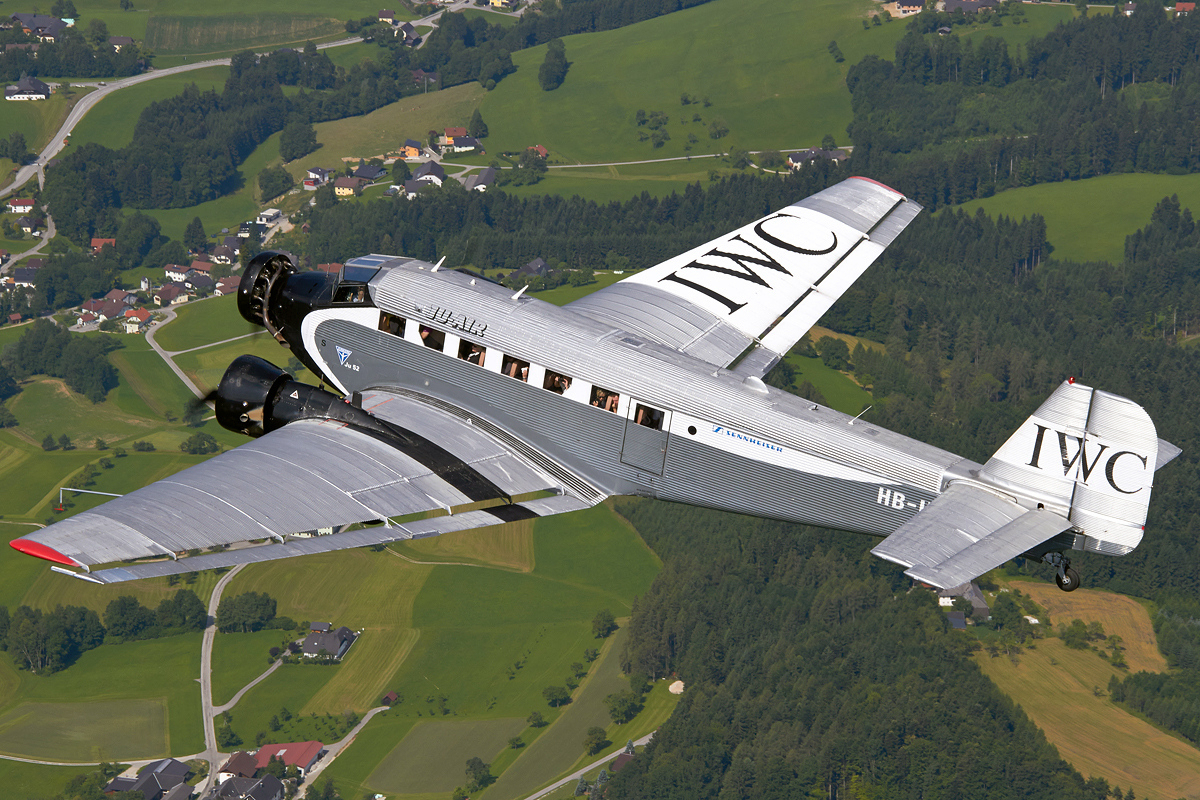
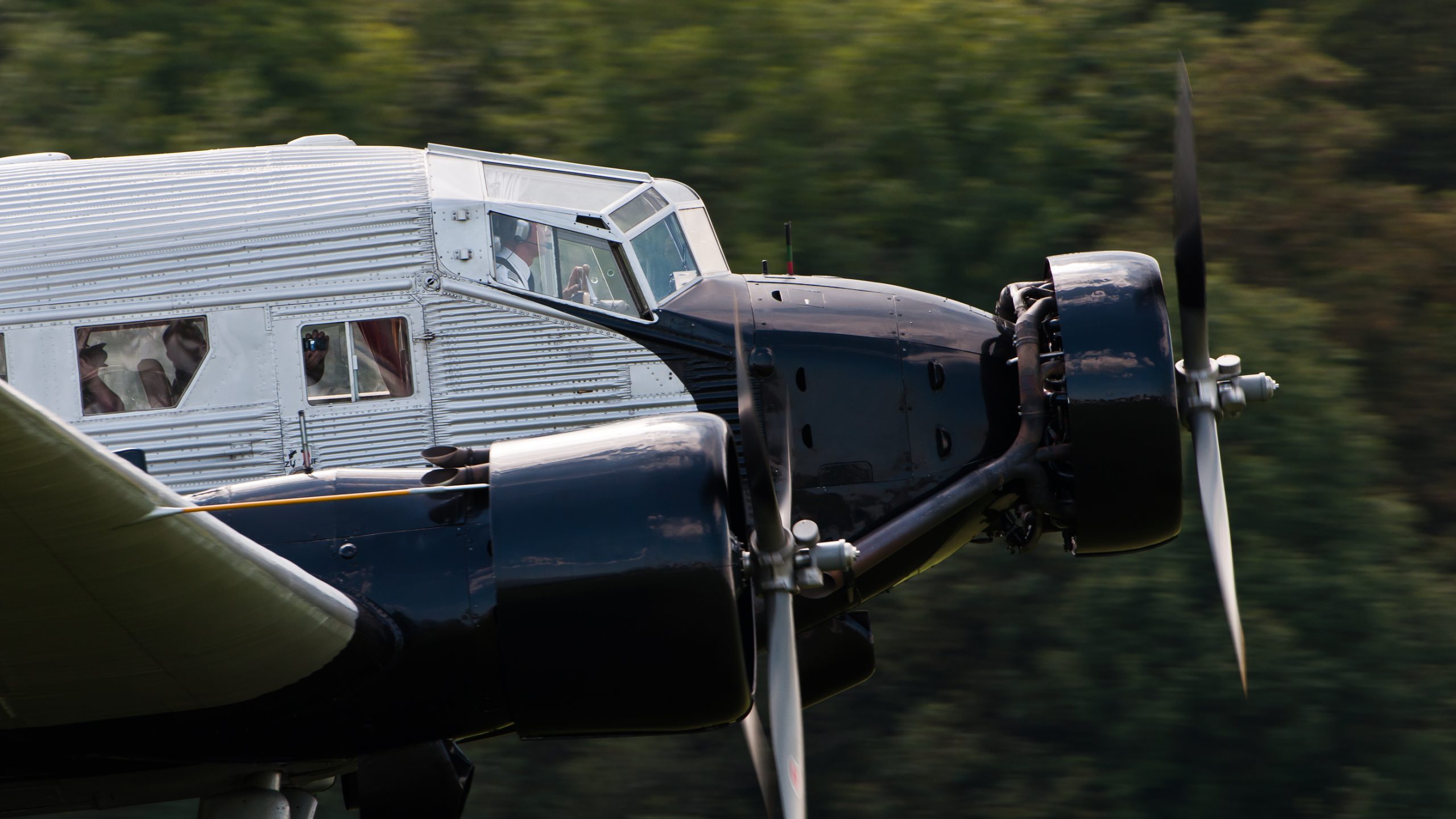
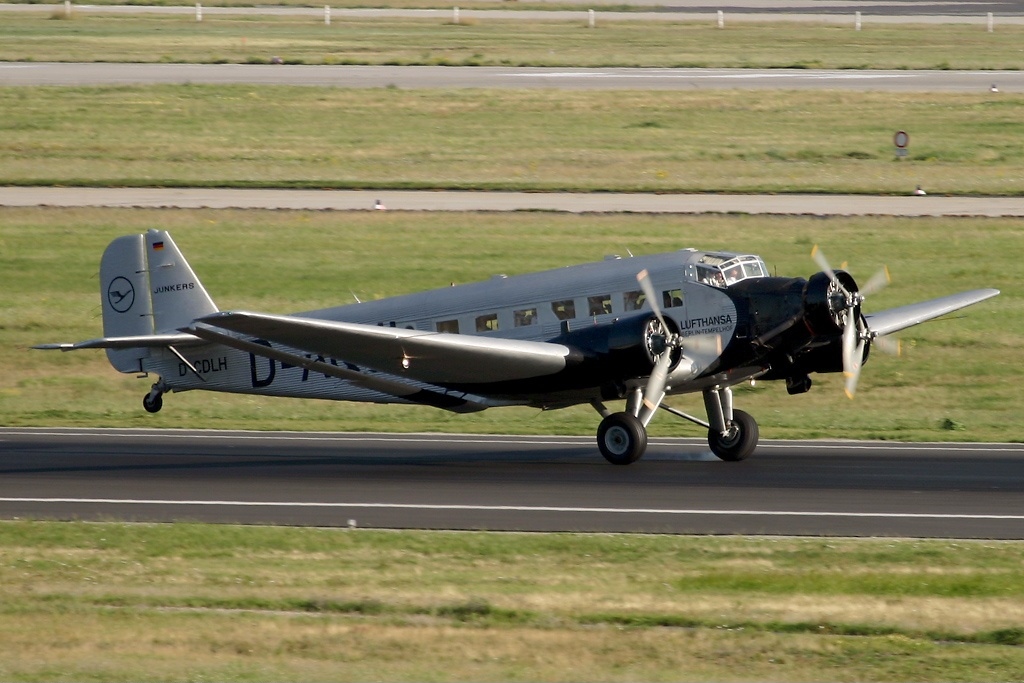
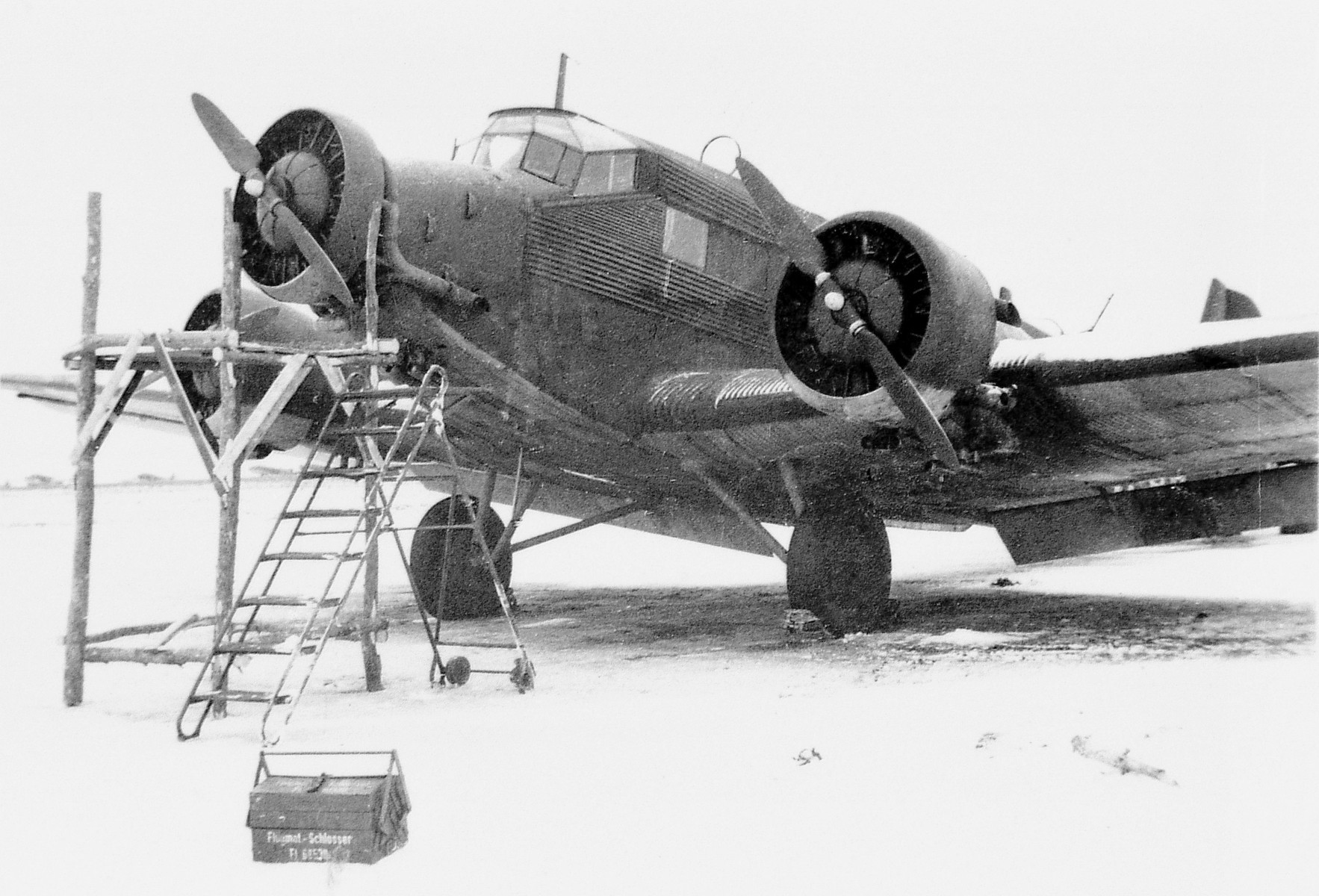
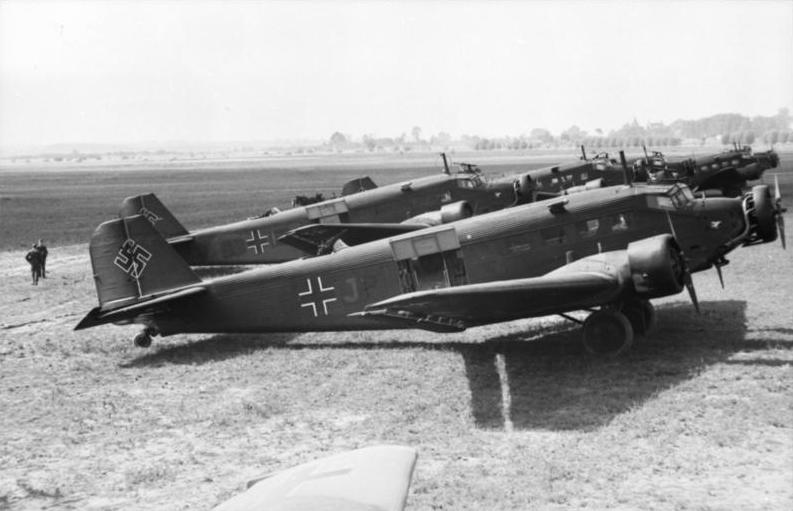
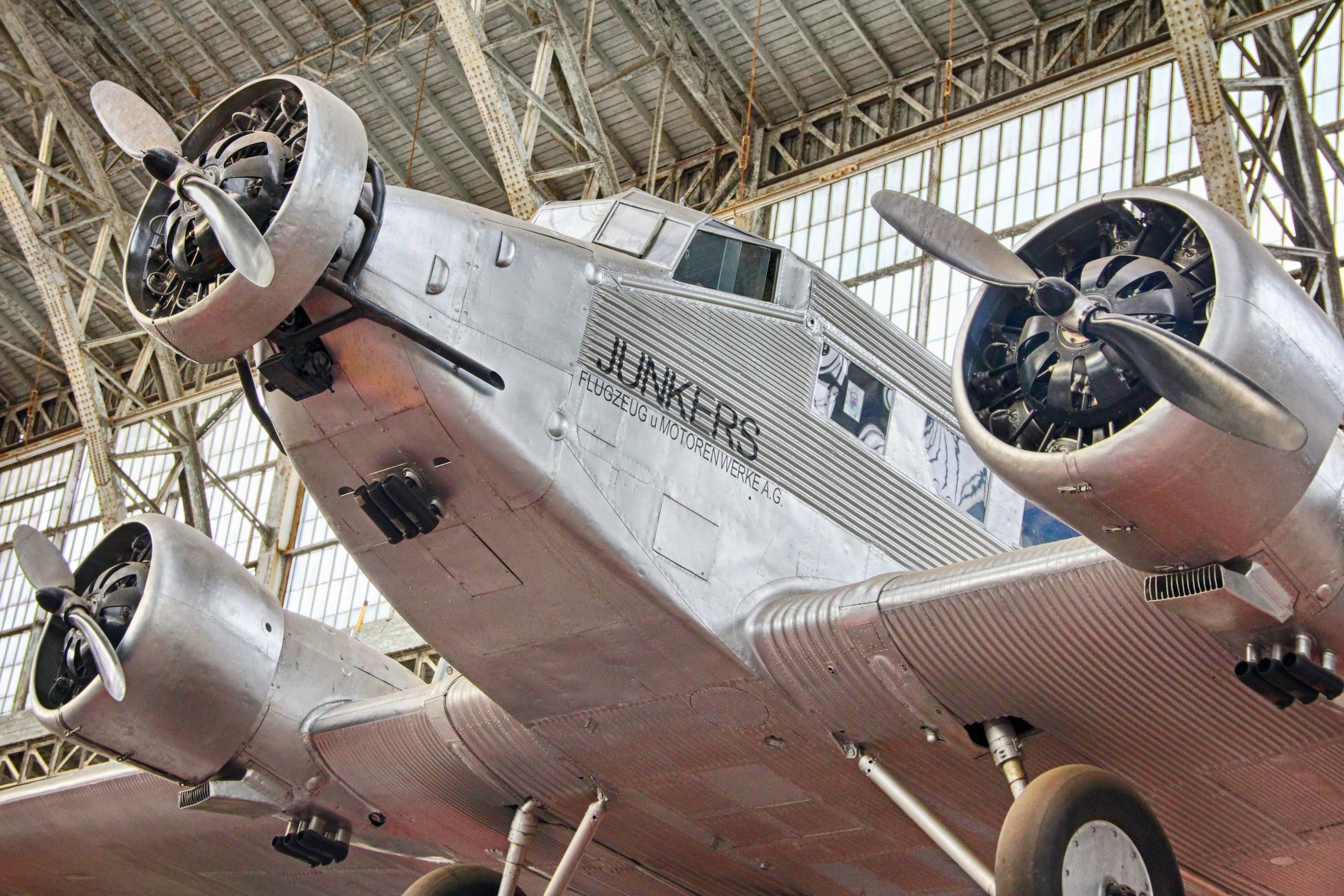
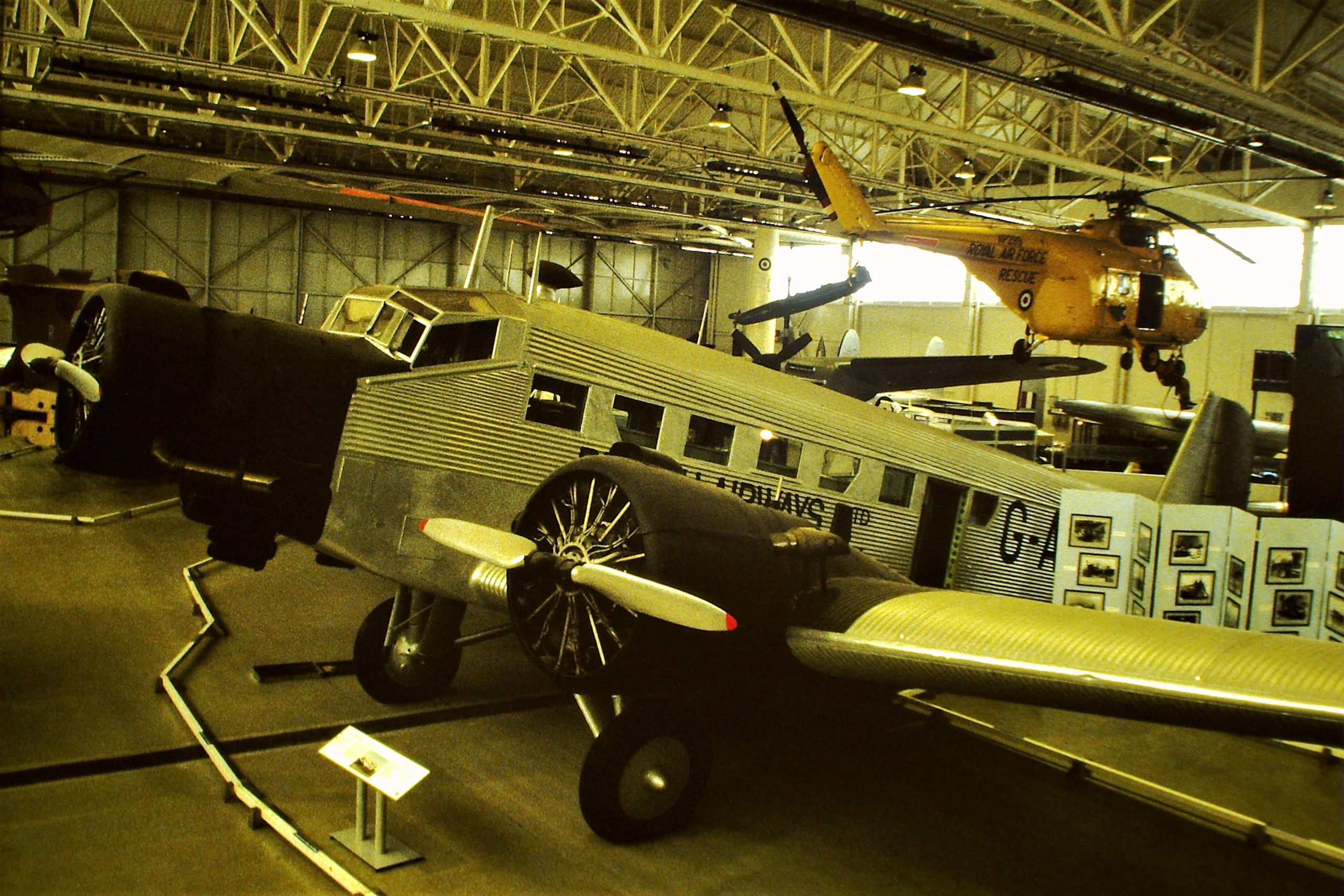
The Junkers Ju 52 on screen: the Tante Ju in the air
A restored Junkers Ju 52/3m making a dramatic crosswind departure — a rare, widely shared chance to see and hear the three-engine “Tante Ju” in action.
Where the Junkers Ju 52 flew: origin, military operators and airlines worldwide
The Junkers Ju 52 at war: Spain, Crete and the great airlifts
Though built as an airliner, the Ju 52 became the German military’s indispensable transport. It first saw war in Spain from 1936, airlifting troops and serving as an improvised bomber. In the Second World War it flew supply, casualty-evacuation and paratroop missions on every front — most famously carrying the airborne assault on Crete in 1941 and struggling through the doomed airlifts to encircled armies such as at Stalingrad. Slow and lightly defended, it suffered heavily whenever it met fighters or dense flak, yet its ruggedness and reliability made it irreplaceable. Loss and production figures vary between sources and should be treated as estimates.
Compare the Explore the combat record of every military aircraft. Data as of July 2026.
Junkers Ju 52: frequently asked questions
Can I fly in a Junkers Ju 52?
What is the Junkers Ju 52?
Why is the Junkers Ju 52 called Tante Ju?
Why is the Junkers Ju 52 covered in corrugated metal?
How many engines does the Junkers Ju 52 have?
How many Junkers Ju 52s were built?
What was the Junkers Ju 52 used for in the Second World War?
Are any Junkers Ju 52s still flying?
What happened to the Swiss Ju-Air Ju 52 in 2018?
You can’t fly the Junkers Ju 52.
These, you can.
Some legends only live in museums — others are fuelled and waiting. MiGFlug has put civilians in real military jet cockpits since 2004.
 Fly the L-39 AlbatrosThe world’s most-flown jet trainer — aerobatics included
 Fly the F-104 Starfighter“The missile with a man in it”
 Fly the MiG-21The Cold War’s most-produced jet
 Fly the T-33 Shooting StarAmerica’s first jet trainer
 Fly the DH VampireA piece of early jet history
 Fly the S.211Agile Italian jet trainer
 Fly the MB-326The classic Aermacchi jet
 Fly the MiG-15The Soviet legend of the Korean War
More from the Military Aircraft Encyclopedia
Junkers Ju 52: sources & further reading
- Deutsches MuseumDeutsches Museum — the Junkers Ju 52 and the history of German all-metal aircraft.
- Deutsche Lufthansa Berlin-StiftungDeutsche Lufthansa Berlin-Stiftung — on the Ju 52 as Lufthansa’s 1930s flagship and its later restored D-AQUI.
- Smithsonian National Air and Space MuseumSmithsonian National Air and Space Museum — Junkers Ju 52/3m collection entry and history.
- Imperial War MuseumsImperial War Museums — the Ju 52 in the Second World War, Crete and the airlifts.
- Royal Air Force MuseumRoyal Air Force Museum — Junkers Ju 52/3m background and preserved airframe.
- Swiss Transportation Safety Investigation Board (STSB/SUST)Swiss Transportation Safety Investigation Board (STSB/SUST) — investigation into the 2018 Ju-Air Ju 52 accident.
- flugzeuginfo.netflugzeuginfo.net — Junkers Ju 52/3m technical data and specifications.
- MiGFlug AfterburnerMiGFlug Afterburner — the Junkers Ju 52 and its Swiss farewell with Ju-Air.
Hero and gallery photography: U.S. Air Force / NASA, public domain. Combat statistics as of July 2026. Spotted an error? Every page in the Aircraft Museum is fact-checked before publication — write to us and we'll correct it.