
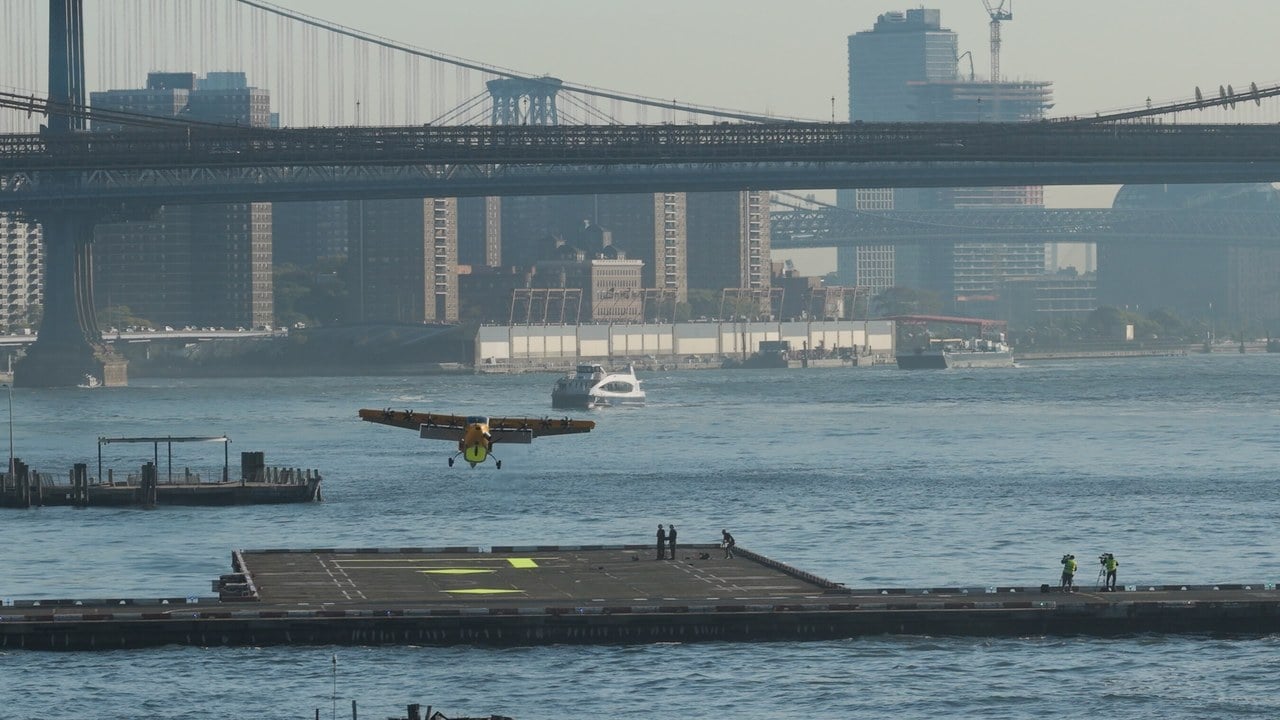
Helicopters own the piers of Lower Manhattan. On Monday morning, 26 October 2026, a small yellow airplane with ordinary fixed wings joined them. Electra flew its hybrid-electric EL2 demonstrator into Downtown Skyport, the heliport on the East River, landed on the pad, and took off again.
According to Electra, it is believed to be the first landing at the heliport by a fixed-wing aircraft without vertical takeoff capability. The EL2 has no tilting rotors and no lift fans. It is a conventional-looking airplane that simply needs very little room to get into the air and back down.
Datos rápidos
- Aeronave: Electra EL2 (Goldfinch), two-seat hybrid-electric Ultra Short demonstrator
- Fecha: Monday, 26 October 2026, morning
- Place: Downtown Skyport (KJRB), Pier 6, Lower Manhattan
- Afirmar: Believed to be the first landing there by a fixed-wing aircraft without vertical takeoff capability
- Tecnología: Blown lift with distributed electric propulsion; Electra quotes takeoff and landing in 150 ft
- Next step: Nine-passenger EL9, in FAA certification; AIN reports a 2030 service target
- Heliport operator: Skyports Infrastructure
A fixed-wing airplane on a helipad
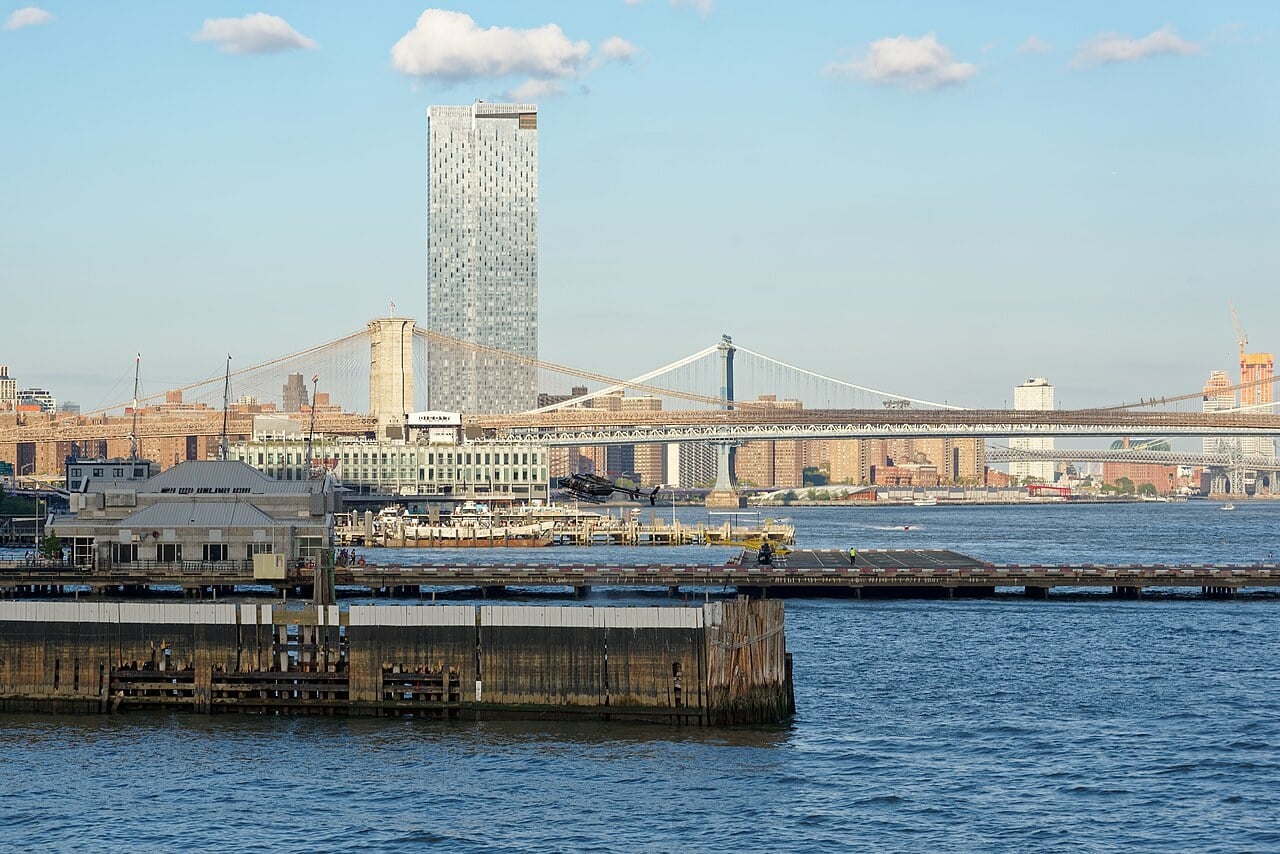
Downtown Skyport sits on Pier 6 in the Financial District, a short walk from Wall Street. It opened as the Downtown Manhattan Heliport in 1960 and was renamed in April 2025. Today it is operated by Skyports Infrastructure, which also runs heliports and vertiports for helicopters and electric air taxis.
AIN reports that the two-seat EL2 used the heliport’s 62-by-62-foot landing pad. Electra says its Ultra Short design can take off and land in just 150 feet, which is what makes a helipad on a pier a realistic destination rather than a stunt.
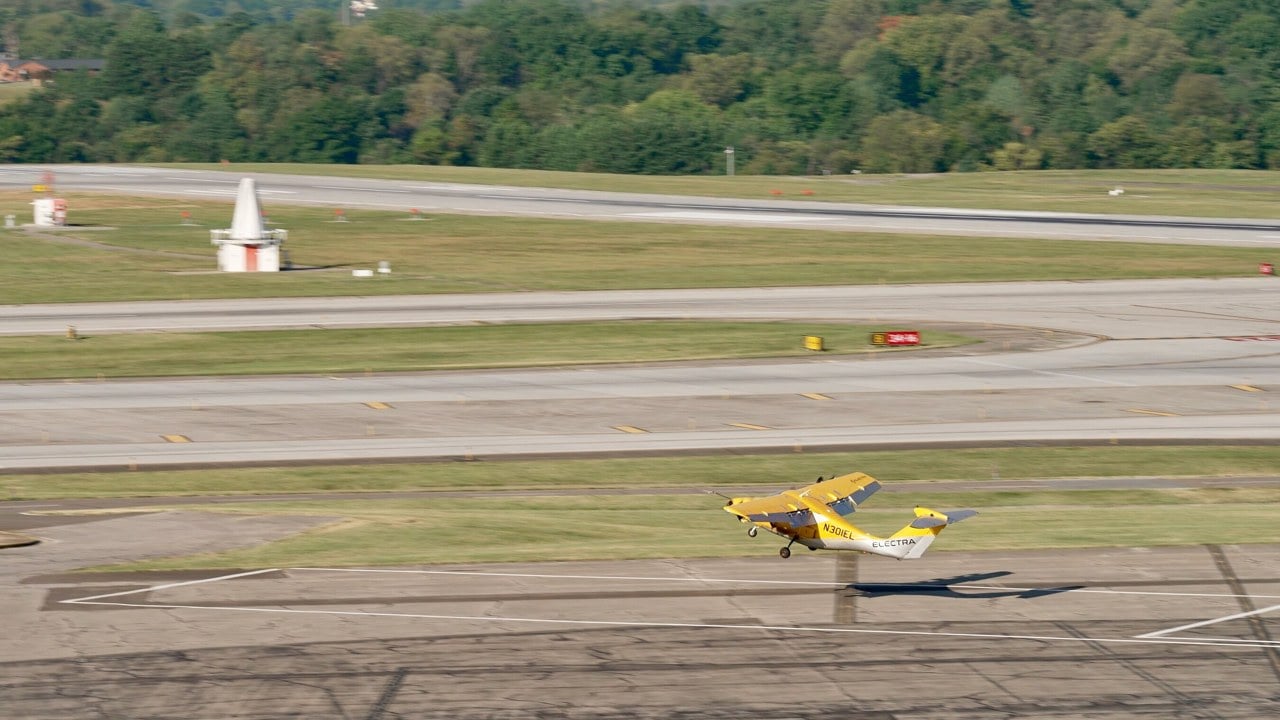
The flight was the latest in what Electra calls its “Life Beyond Runways” series. The EL2 has already flown demonstrations from Downtown Charleston, Bader Field in Atlantic City, Watertown International Airport and Snowshoe Mountain Resort. As part of the FAA’s advanced air mobility integration pilot programme, it also flew helicopter-style instrument procedures and landed on and took off from heliports at commercial airports such as Roanoke-Blacksburg Regional in Virginia.
Blown lift, explained simply
A normal airplane needs speed to fly, because the wing only makes enough lift when air is rushing over it fast enough. That is why airliners need long runways: they have to accelerate until the airflow over the wings can carry them.
Blown lift cheats. The EL2 uses distributed electric propulsion: a row of electric motors and propellers along the wing that blast air straight over the wing and its large flaps. The wing “feels” much faster airflow than the airplane’s actual speed, so it makes enough lift to fly at a crawl, and needs only a fraction of the ground roll of a normal light aircraft.
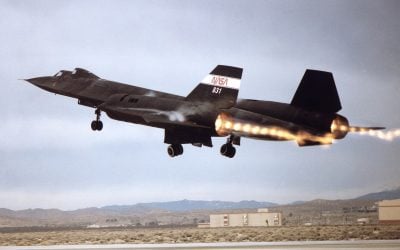
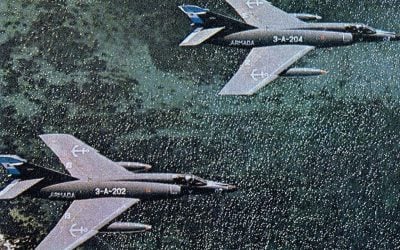
The idea is not new. The Caza estelar F-104 blew high-pressure engine bleed air over its trailing-edge flaps to cut its landing speed by more than 30 knots. The C-17 Globemaster III uses externally blown flaps, directing jet exhaust onto them. And in the 1960s France’s Breguet 941 transport spread four oversize propellers along its wing to blow air over full-span flaps, an arrangement Breguet called the blown wing. What is new is using small electric motors, fed by a hybrid powertrain, to do the blowing precisely and quietly.
Electra’s own video of the EL2 taking off and landing at Downtown Skyport in Lower Manhattan on 26 October 2026.
From EL2 to the nine-seat EL9
The EL2 is a technology demonstrator. It first flew in November 2023 from Manassas Regional Airport in Virginia, where Electra is headquartered. The airplane Electra actually wants to sell is the EL9, a nine-passenger Ultra Short aircraft it is taking through FAA certification.
AIN reports that Electra aims to bring the EL9 into commercial service from 2030, on routes of 50 to 500 miles, with electric motors and a Safran TG600 turbogenerator. Electra says it holds more than 2,200 letters of intent from over 60 operators, and its contracted customers include the US Air Force, US Army, US Navy and NASA.
Electra calls its concept “Direct Aviation”: regional flights from heliports, barges, fields and parking lots rather than from big airport hubs. The company’s own market study estimates a time saving of around three hours and 45 minutes between New York City and Boston. Those are company estimates, and the EL9 still has to be certified and built.
A heliport that suddenly looks bigger
Manhattan has seen new kinds of aircraft before. In 2026 Joby flew its electric air taxi between JFK and Manhattan, a story Afterburner covered in Joby vuela del aeropuerto JFK a Manhattan en 7 minutos.. But eVTOL air taxis are built to take off vertically. Electra’s point is that a fixed-wing airplane, with the efficiency, payload and range that wings bring, can now use the same small spaces.
Whether Direct Aviation becomes a real network depends on certification, cost and the patience of New Yorkers living near the river. For one Monday morning, though, a fixed-wing airplane landed where only helicopters had landed before, and nobody needed a runway.
Sources: Electra (PR Newswire release, 26 October 2026), AIN, AVweb, FLYING, Wikipedia (Electra EL-2 Goldfinch; Downtown Manhattan Heliport; Blown flap; Lockheed F-104 Starfighter)
0 Comments