
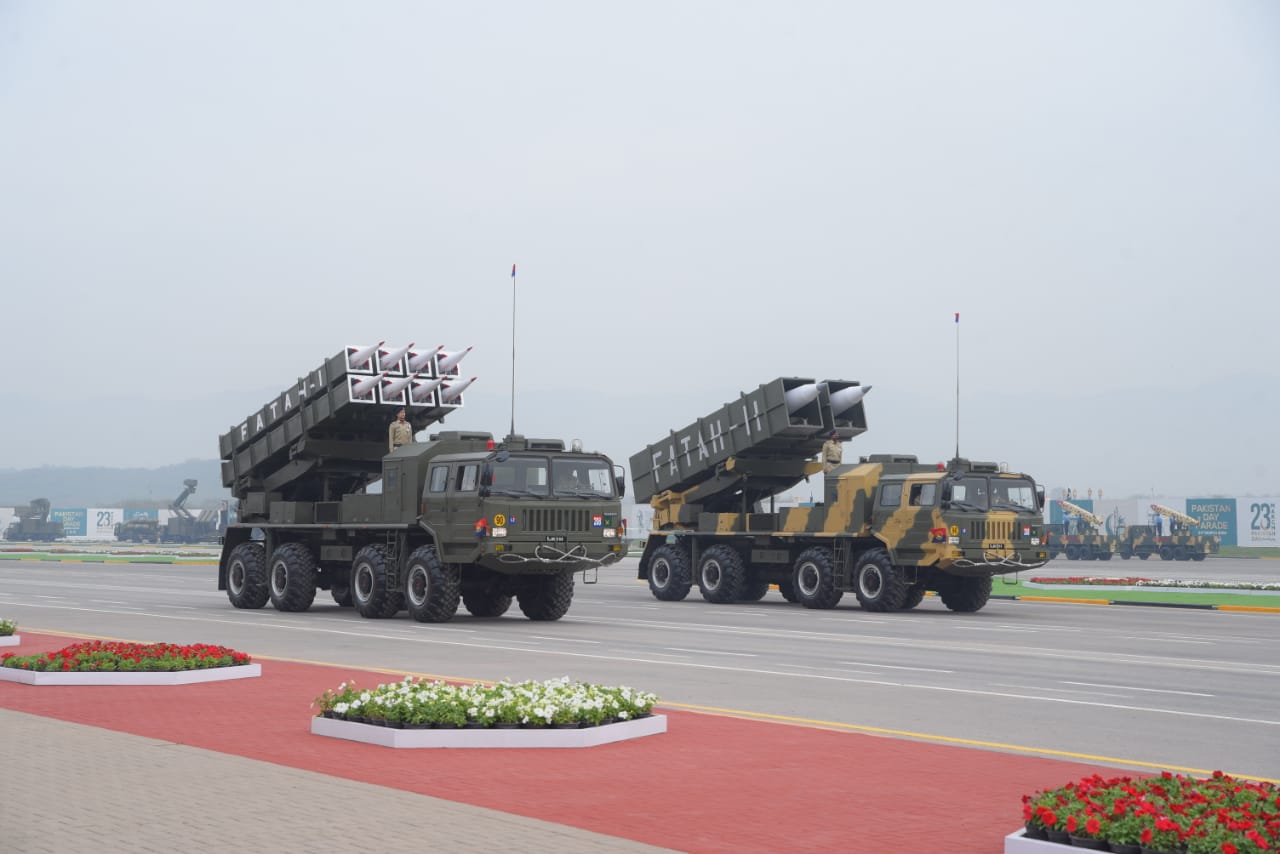
Pakistan's Army Rocket Force fired another missile on Tuesday, and this one comes with a word that every defence ministry now likes to use: hypersonic. The military's media wing, ISPR, announced on 13 October 2026 that the army had successfully test-launched the Fatah-2 ER, an extended-range version of its Fatah-2 guided rocket.
ISPR did not say how far the new missile flies. It said only that the extra range will let the army hit deep targets, and that the missile can defeat enemy missile defences thanks to its trajectory and manoeuvrability. It was the second test by the Army Rocket Force Command in October, a week after an extended-range Fatah-IV cruise missile.
Why does this matter to an aviation audience? Because the last time Fatah-2s were fired in anger, in May 2025, their targets reportedly included Indian air bases.
Quick Facts: Fatah-2 ER
Test announced: 13 October 2026, by ISPR
Operador: Pakistan Army Rocket Force Command (ARFC)
Tipo: Guided surface-to-surface missile, described by ISPR as a hypersonic ballistic missile
Rango: Not disclosed; the original Fatah-2 has a stated range of about 400 km
Developer of the original: NESCOM, according to Quwa
Original Fatah-2 first test: 27 December 2023
Witnessed by: ARFC commander Lt Gen Nauman Zakaria, senior officers, scientists and engineers
Previous test: Fatah-IV extended-range cruise missile, a week earlier
What Pakistan Said
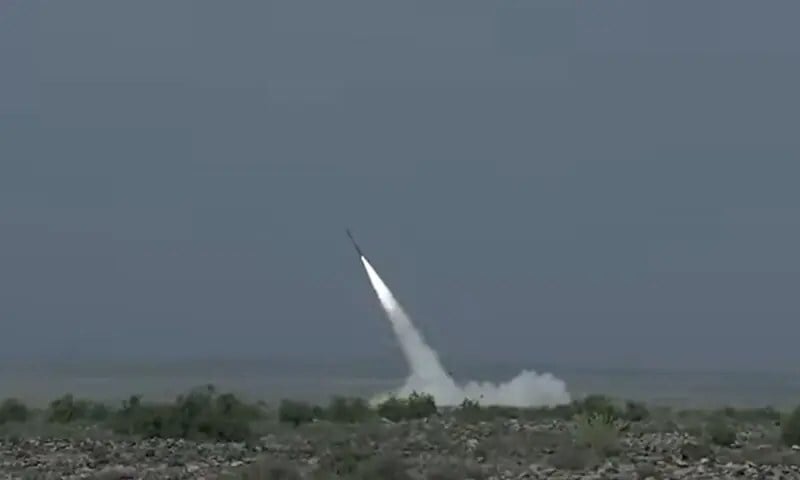
The ISPR statement was short on numbers and long on capability claims. It said the test validated additional technical parameters of various sub-systems, and that the missile is designed to defeat enemy missile defence systems through its unique trajectory and manoeuvrability.
The defence analysis site Quwa gives the original Fatah-2's specifications as a range of 400 km, a length of 7.5 m, a diameter of 600 mm and a 365 kg warhead, developed by Pakistan's NESCOM. Based on the released footage, Quwa notes that the ER version appears longer while keeping the same 600 mm diameter, which would leave more room for fuel. It counts this as the fourth publicly announced ARFC missile test of 2026.
About That Word, Hypersonic
Hypersonic simply means faster than Mach 5. By that definition, many ballistic missiles reach hypersonic speeds on the way down, so the word on its own says little. What makes a weapon hard to intercept is not just speed but the ability to manoeuvre, which stops a defender from predicting where it will be. ISPR's claim rests on exactly that, but Pakistan has not published flight data to back it up, and independent assessments are not yet available.
The difference between ballistic, boost-glide and scramjet-powered hypersonic weapons is a story of its own, and an important one, because the label is now used for very different things.
The Air Base Connection
The Fatah family is not a paper programme. During the India-Pakistan conflict of May 2025, Pakistan fired Fatah-I and Fatah-II missiles at military targets in India, and India reported intercepting them. One Fatah-II was reported intercepted near Sirsa Air Force Station on 10 May 2025, with debris recovered around Sirsa and Jalandhar.
That is the real context of Tuesday's test. A longer-range missile that is harder to intercept puts more of an opponent's air bases within reach, and air bases are where the Fuerza Aérea de la India keeps its fighters, tankers and early-warning aircraft. Every new missile of this kind is also a reason for the other side to invest in hardened shelters, dispersed operations and more missile defence.
ISPR footage of the Fatah-2 ER test launch, released on 13 October 2026.
What actually makes a missile hypersonic? Our explainer sorts out the three types: Hypersonic Weapons Explained: Boost-Glide, Scramjet and Ballistic.
Sources: Dawn (ISPR statement); Quwa; Wikipedia (Fatah multiple rocket launcher); ISPR video.



0 Comments