
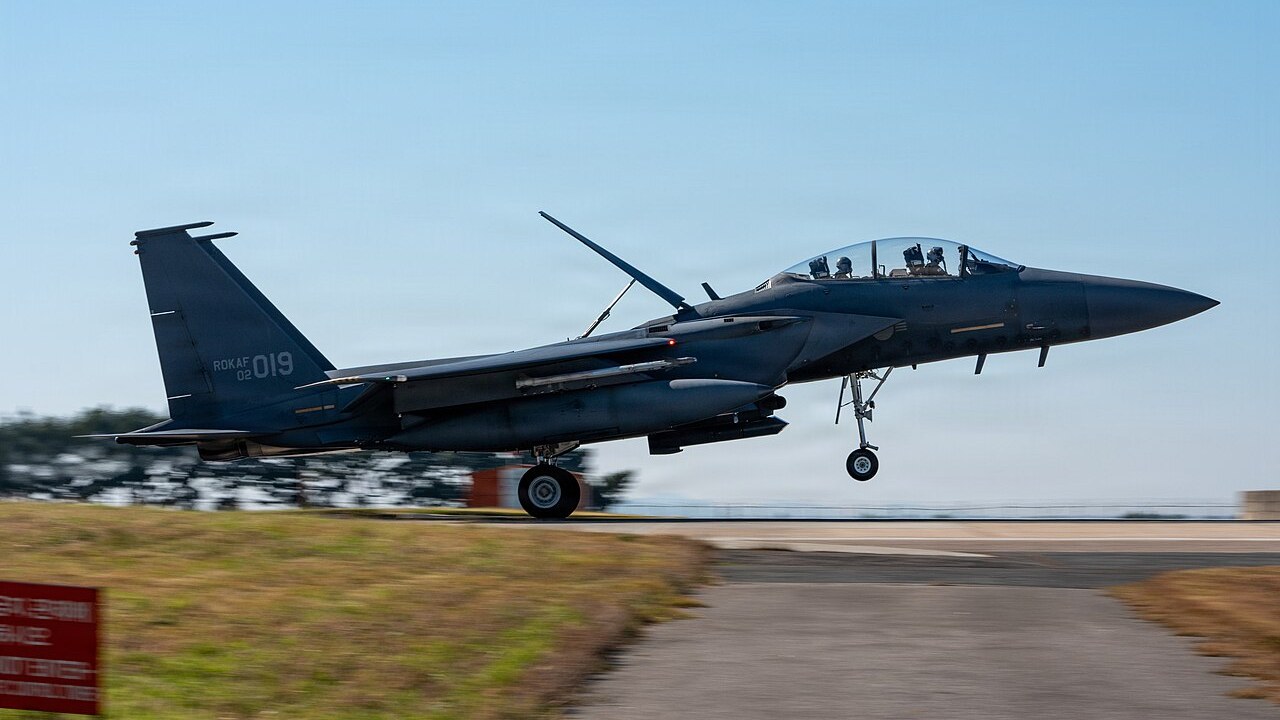
Two weeks of allied air combat training began on Monday in the southwest of the Korean Peninsula. South Korea and the United States opened the Freedom Flag exercise on 26 October 2026, a two-week combined air drill that the Republic of Korea Air Force says will run until 6 November from Kunsan Air Base in Gunsan, about 180 kilometres southwest of Seoul.
The headline aims are familiar: defensive counter-air and air interdiction, flown by a mix of fourth- and fifth-generation fighters from both countries. The twist is political. Seoul wants this exercise to prove it can plan and lead combined air operations itself, as it works to take back wartime operational control of its forces from Washington.
Datos rápidos
- Ejercicio: Freedom Flag, combined South Korea-US air drill (held twice a year)
- Fechas: 26 October to 6 November 2026 (two weeks)
- Base: Kunsan Air Base, Gunsan, about 180 km southwest of Seoul
- Corea del Sur: F-5E/F, F-15K, KF-16, FA-50, F-35A, KC-330, C-130J, E-737, HH-47, HH-60
- Estados Unidos: USAF F-16, RC-135, KC-135; US Navy MH-60S; USMC F-35B, MQ-9
- Aircraft totals: Not released
- Misiones: Defensive counter-air, airborne alert interdiction, air interdiction
- Political aim: Test Korea-led combined operations ahead of the OPCON transfer
What is flying
According to the South Korean Air Force release, as reported by Yonhap and SBS, Seoul is fielding F-5E/F fighters, F-15K Slam Eagles, KF-16s, FA-50 light attack jets and F-35A stealth fighters. Support comes from KC-330 tankers, C-130J transports, E-737 Peace Eye early warning jets and HH-47 and HH-60 rescue helicopters.
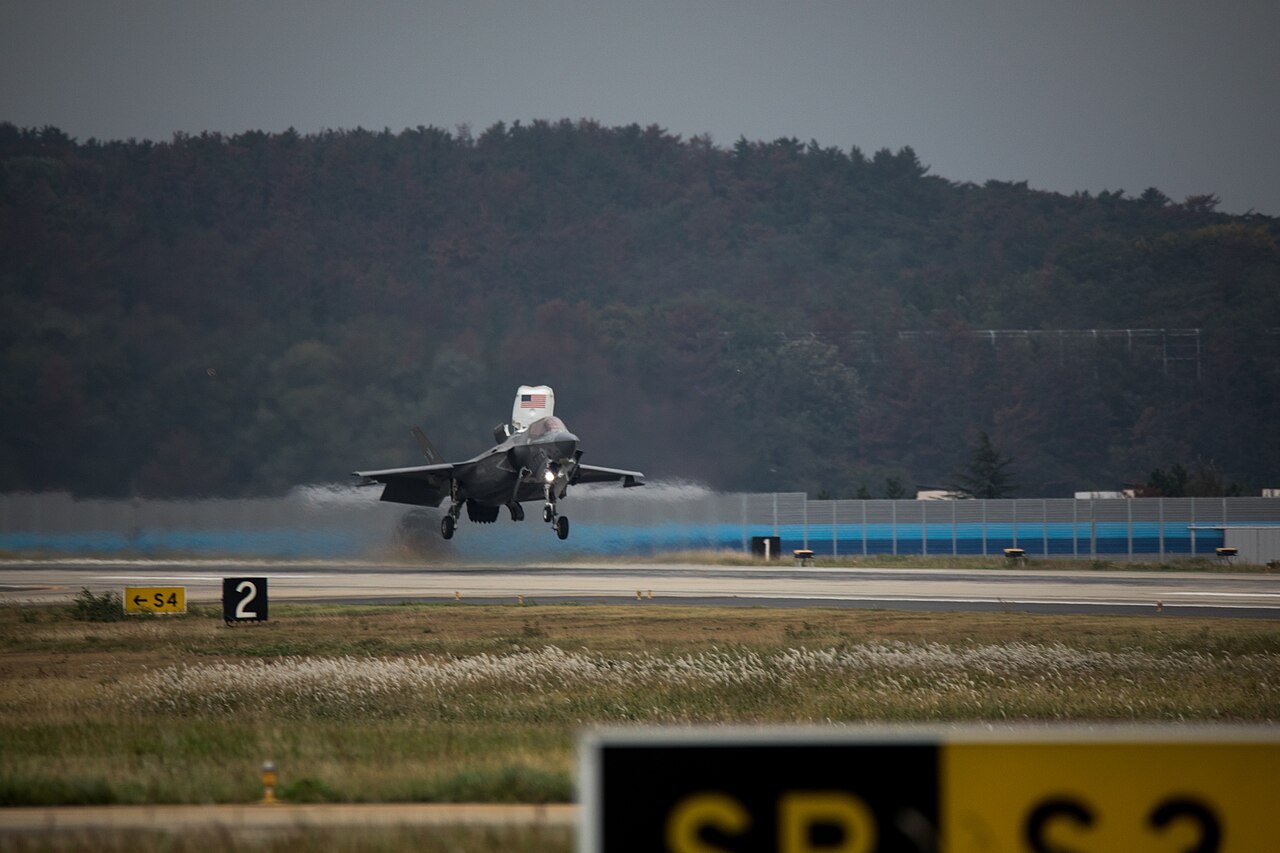
On the American side, the US Air Force brings F-16 Fighting Falcons, RC-135 reconnaissance aircraft and KC-135 tankers. US Navy MH-60S helicopters join in, and US Marine Corps aviation sends F-35B stealth fighters and MQ-9 Reaper drones.
Neither air force has published how many aircraft are taking part. The releases list types, not tail counts.
Counter-air, interdiction and aggressors
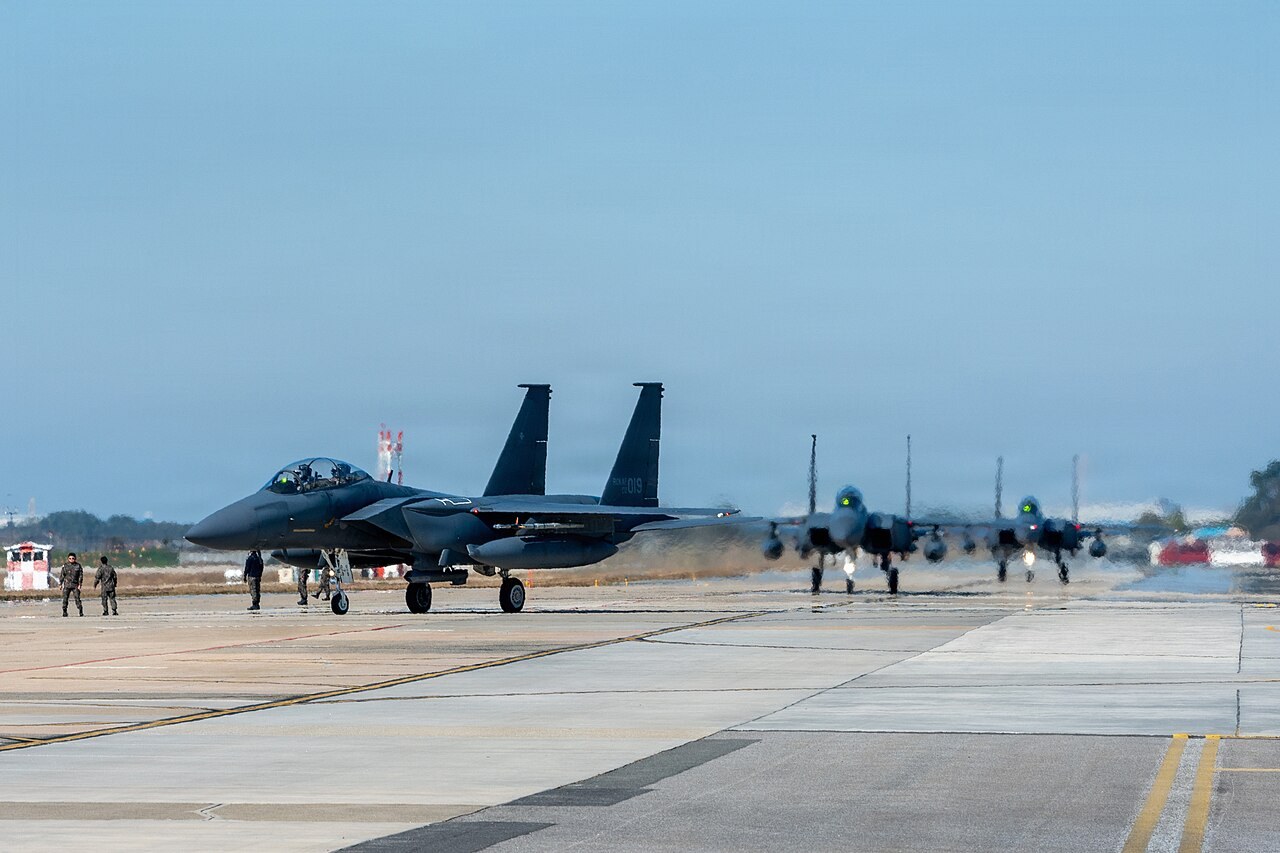
The mission set, as SBS reported it, covers defensive counter-air, airborne alert interdiction and air interdiction. In plain terms: defend friendly airspace against incoming attackers, keep strike jets airborne and ready to hit targets that pop up, and go after enemy forces before they reach the fight.
Planners will run “mission planning cells” around the clock, by day and by night, to swap tactics and refine wartime procedures. The scenarios use aggressor aircraft playing the enemy, and the two sides will test how well their older fighters and their stealth jets fight as one force.
That last point matters on the Korean Peninsula. South Korea now flies F-35As alongside F-15Ks and KF-16s, while the Marines bring short-take-off F-35Bs. Making those very different jets share a single air picture is the kind of problem that only gets solved by flying it.
A drill with an OPCON deadline
In a war today, combined forces in Korea would fight under American-led command. South Korea wants to retake wartime operational control, known as OPCON, by 2030 or earlier, according to Yonhap, by showing that it can lead combined forces itself. This Freedom Flag will evaluate the planning and execution of Korea-led combined training as part of that effort.
The exercise also comes two months after President Donald Trump ordered the Pentagon to scale back joint drills with South Korea, as Afterburner reported in August. Neither government has said whether this autumn’s Freedom Flag is smaller than earlier iterations.
A 2025 US Air Force Expeditionary Center feature on agile combat employment during an earlier Freedom Flag exercise.
Two years of Freedom Flag
Freedom Flag is young. The allies launched it in 2024, according to Yonhap, to replace their two regular large-scale air exercises: Korea Flying Training in the first half of the year and Vigilant Defense in the second. The first iteration, Freedom Flag 24-1, ran in October and November 2024, with Marine F-35Bs flying from Pohang.
The autumn 2025 edition at Kunsan was cut short. Stars and Stripes reported that it shrank from two weeks to one combined week because South Korea kept its forces on alert for the APEC summit in Gyeongju. This spring’s Freedom Flag 26-1 ran from 10 to 24 April from Gwangju and Kunsan, with more than 30 US and South Korean units flying over 500 sorties, according to US Air Combat Command.
Now the exercise is back at Kunsan, home of the US Air Force’s 8th Fighter Wing, the Wolf Pack, for a full two weeks. The aircraft list is long and the stated goal is clear. When the jets land on 6 November, Seoul will have one more set of data on whether it is ready to run the air war itself.
Sources: Yonhap, SBS News, Korea JoongAng Daily, Stars and Stripes, US Air Combat Command, US Air Force and US Marine Corps imagery (DVIDS via Wikimedia Commons)
Preguntas frecuentes
What is the Freedom Flag exercise?
When and where is Freedom Flag in autumn 2026?
Which aircraft are taking part in Freedom Flag 2026?
Why does Freedom Flag matter for OPCON transfer?
When was Freedom Flag first held?
Was the autumn 2025 Freedom Flag shortened?
Publicaciones relacionadas
Trump cancela los juegos de guerra en Corea y elogia a Kim.
Corea del Sur refuerza la seguridad de 59 F-15K contra el misil.
Seúl se moviliza mientras 10 aviones de guerra ponen a prueba su sistema de vigilancia.
Un dron estadounidense provocó una alerta en la frontera coreana.
0 Comments