
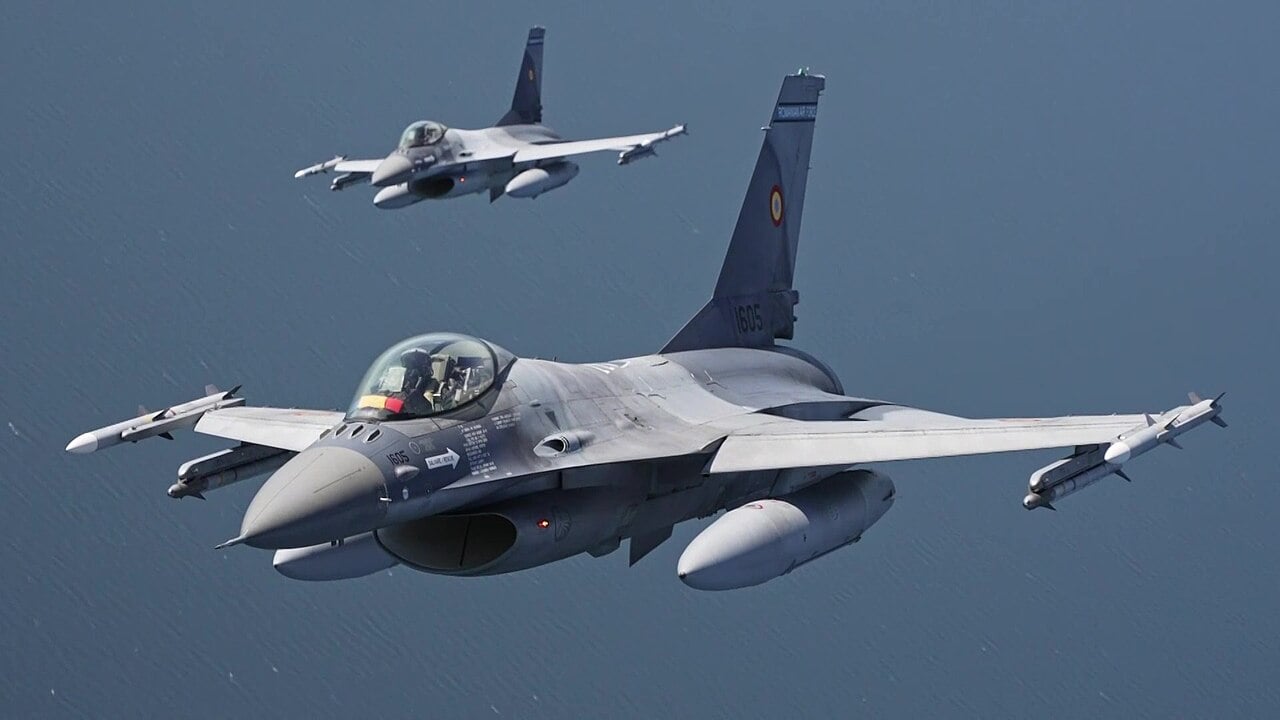
At 17:43 on Saturday, 17 October 2026, two F-16s of the Romanian Air Force roared off the runway at the 86th Air Base at Borcea. Radar had picked up a group of targets about 120 kilometres east of Snake Island, heading south-west. Twenty-two minutes later, two jet-powered Geran attack drones had been shot down over Romanian territorial waters near Sulina.
It was a textbook interception, and a separate Afterburner news report covers it in detail. But it also raises the question every air force on NATO's eastern flank now faces almost weekly: when fighter jets shoot down drones, which weapon is the right one, and what does each shot cost?
The answer depends on the drone, the jet and the weapons hanging under its wings. There are really only four options, and each one has a catch.
Datos rápidos
- El arma: F-16: one M61A1 20mm cannon with 500 rounds (USAF)
- Heat-seeker: AIM-9X Sidewinder, roughly $450,000 (TWZ) to $580,000 (FY2026 budget average)
- Radar missile: AIM-120 AMRAAM, roughly $1 million (TWZ) to $1.5 million (FY2026 budget average)
- Cheap option: APKWS laser-guided 70mm rocket; guidance section about $15,000 to $20,000 (TWZ)
- The target: Shahed-type drones: estimates from about $20,000 to $193,000 per unit
- Recent kills: Romanian F-16 gun kill of a sea drone (Aug 2026); two jet Gerans downed (Oct 2026)
Option One: The Gun
Every F-16 carries the same backup weapon. According to the US Air Force fact sheet, it is one M61A1 20mm multibarrel cannon with 500 rounds. The M61 Vulcan typically fires at about 6,000 rounds per minute, which means the F-16's entire magazine lasts roughly five seconds of trigger time.
Rounds cost a tiny fraction of a missile, which makes the gun look like the perfect drone killer. In practice, it is the hardest option to use. A one-way attack drone is small and flies slowly compared with a fighter, so the pilot has to slow down, close to very short range and hold the aim steady. If the target carries a warhead, closing in means flying towards a possible explosion and its debris.
Still, it works. On 20 August 2026, a Romanian F-16 destroyed an explosive-laden sea drone near the Neptun Deep gas platform in the Black Sea using its onboard cannon. Interim Defence Minister Radu Miruță announced that the maritime drone had been destroyed with the onboard cannon of a Romanian F-16, after Ukraine confirmed through a direct channel that the boat was not one of its own.
Two months later the targets were different. The 17 October drones were jet-powered Gerans, and the defence ministry's photos released afterwards show missile launches. According to the ministry, the first drone entered Romanian airspace at 17:59 and was shot down at 18:01; the second was shot down at 18:05. The ministry has not named the missile type used.
Option Two: The Sidewinder
The AIM-9X Sidewinder is the obvious next step. It is an infrared-guided, short-range missile designed to kill manoeuvring fighters, so a slow drone with a hot engine is an easy target. Romania's first air-to-air drone kill, on 24 July 2026 over an unpopulated area near Padina in Buzău County, was made by an F-16 that, in the ministry's words, engaged the target with an air-to-air missile.
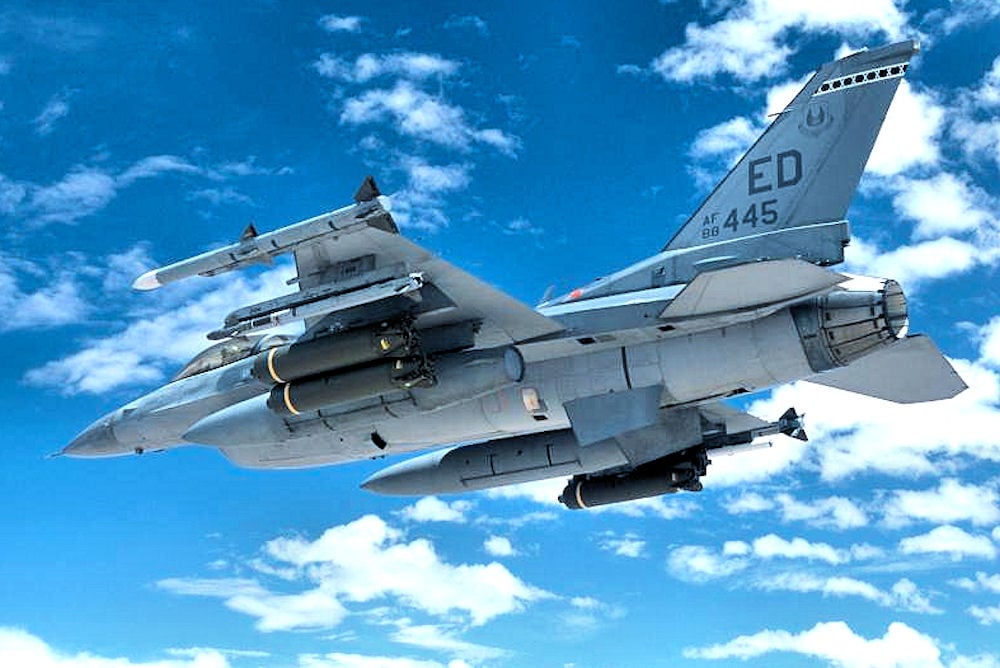
The problem is price. TWZ puts an AIM-9X at around $450,000. Dividing the Air Force's enacted FY2026 Sidewinder procurement line, $200.7 million for 346 missiles, gives an average of about $580,000 per round, support costs included. That is a lot to spend on a slow drone built around a small piston engine.
And the targets keep getting cheaper to estimate and harder to price. Early media reports put the Shahed-136 at around $20,000. Leaked contract documents reported by Ukraine's Militarnyi in 2024 suggested Russia agreed to pay Iran $193,000 per drone for 6,000 units, with the cost falling to about $48,800 once production was fully localised. TWZ concluded that about $50,000 seemed a realistic unit cost.
Option Three: The AMRAAM, and Poland's Expensive Night
The AIM-120 AMRAAM is the long-range option: radar-guided, all-weather and able to engage targets far beyond visual range. It is also the most expensive. TWZ puts a current AIM-120 at about $1 million; the Air Force's FY2026 enacted line, $1.35 billion for 906 missiles, works out at roughly $1.5 million each, again including support costs.
The night of 9 to 10 September 2025 showed both the value and the risk. Somewhere between about 20 and more than 30 Russian drones, depending on the source, crossed into Poland. The Fuerza Aérea Polaca scrambled F-16s, and the Royal Netherlands Air and Space Force sent F-35s, supported by an Italian early-warning aircraft and a Belgian tanker. Up to four drones were confirmed shot down, most of them by the Dutch F-35s. It was the first time a NATO country had downed Russian assets in its airspace since the full-scale invasion of Ukraine.
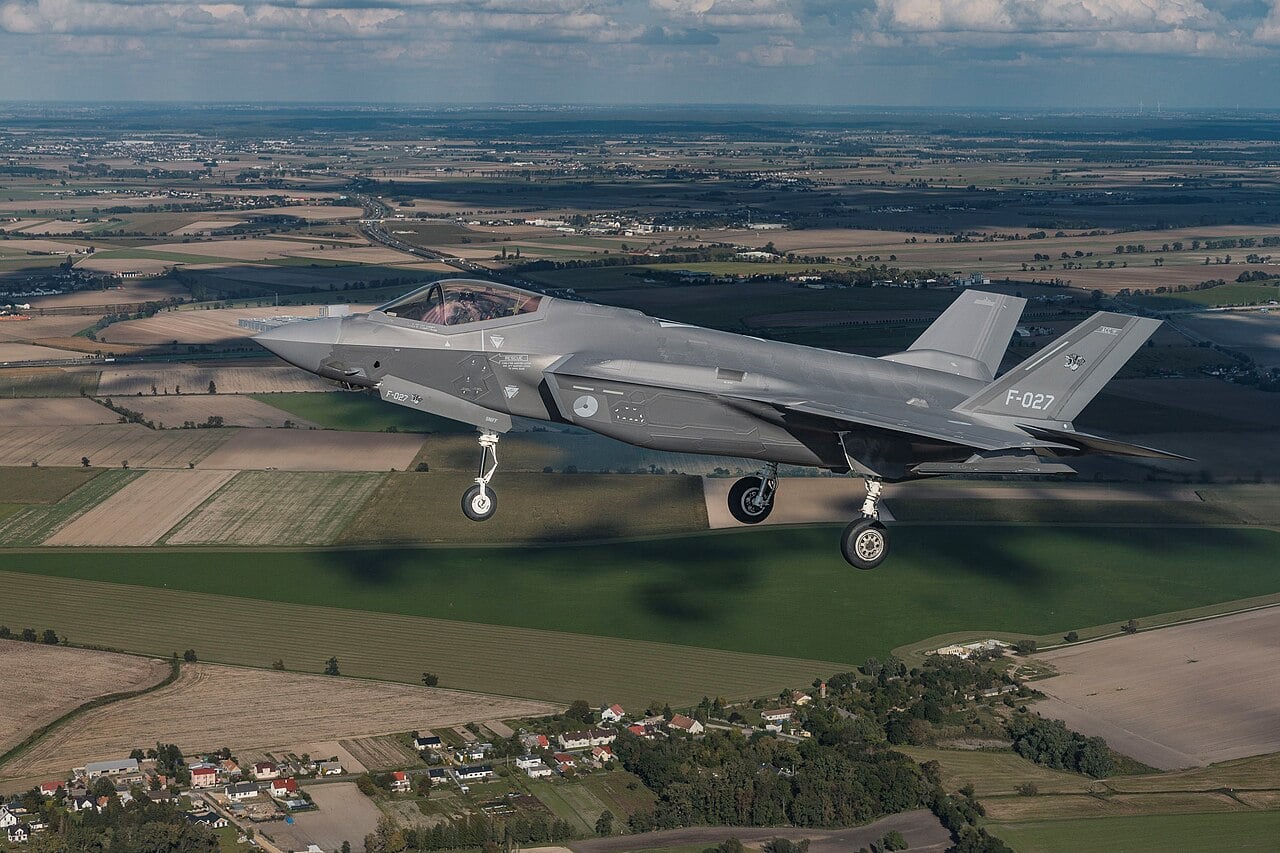
Then came the awkward details. Investigators later described the recovered drones as unarmed decoys, some of them Gerbera types made of polystyrene. And a stray air-to-air missile hit the roof of a house in Wyryki-Wola without exploding. Polish officials acknowledged it had been fired by an aircraft defending Poland; early reports said it was an AIM-120 from a Polish F-16, while Rzeczpospolita later reported it came from a Dutch F-35. The night became the clearest illustration yet of the cost problem: expensive missiles fired at what investigators called decoys, with real risks on the ground.
DW News on the September 2025 Russian drone incursion into Poland and NATO's response.
Option Four: The Laser-Guided Rocket
The answer the US Air Force has settled on looks almost low-tech. The Advanced Precision Kill Weapon System, APKWS, takes an ordinary 70mm Hydra rocket and screws a laser-guidance section between the warhead and the motor. The air-to-air version, AGR-20F or FALCO, adds a proximity fuze, so it does not need a direct hit.
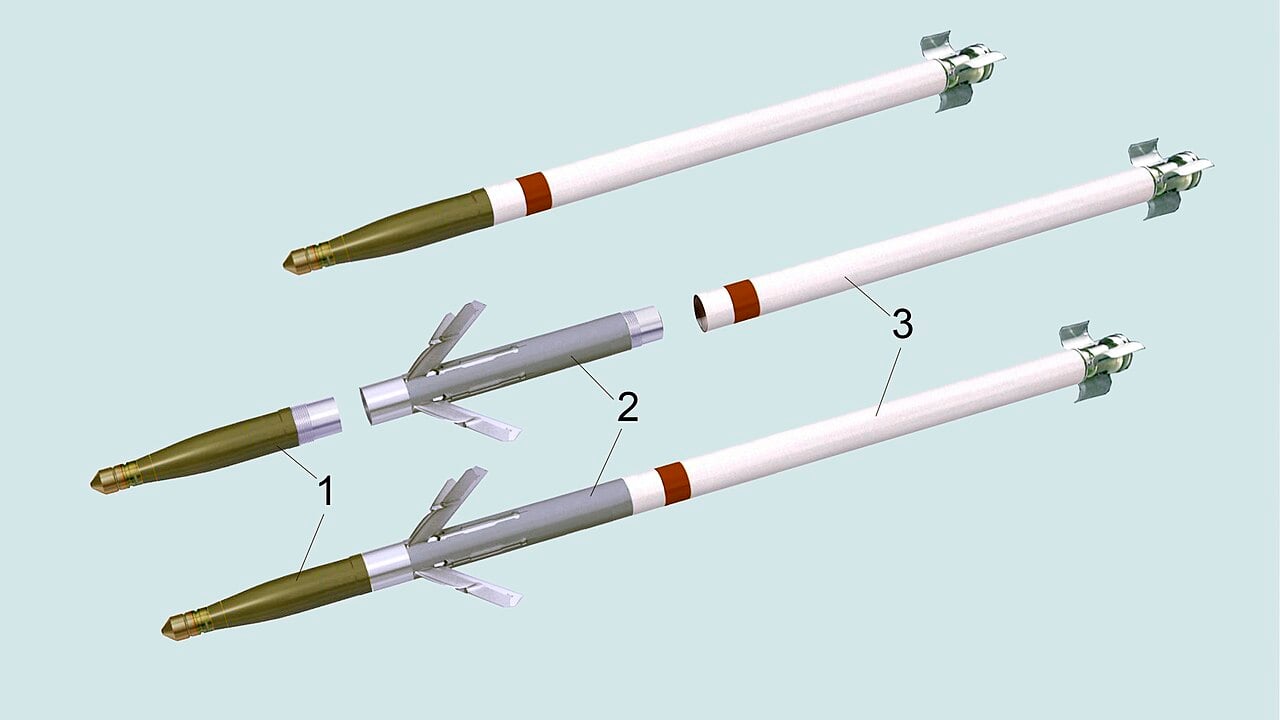
US F-16s first used it against drones in 2024, a US official told TWZ, and in March 2025 US Central Command published imagery of American fighters downing Houthi one-way attack drones with the rockets. The weapon has since been extended to the F-15E Strike Eagle y el A-10. According to TWZ, the guidance section costs between $15,000 and $20,000, with the motor and warhead adding a few thousand dollars more.
Just as important is magazine depth. APKWS rockets are fired from seven-shot pods, and TWZ reports that an F-15E can carry up to 42 of them in six pods on two stations while still carrying eight air-to-air missiles. A jet that once came home after two or four kills can now stay on station for dozens.
France also described the April 2024 Iranian attack on Israel, when an F-15E crew that had run out of missiles tried to hit a drone with a laser-guided bomb and missed. With an APKWS pod, he said, they could have fired rockets instead.
Official US Air Force footage of an F-16C from the 85th Test and Evaluation Squadron firing an APKWS II laser-guided rocket at a target drone.
The Cost-Exchange Problem
The underlying arithmetic has not changed: a defender who fires a $500,000 or $1 million missile at a drone that costs a fraction of that loses the economic war even while winning every engagement. The attacker can always build more drones than the defender can buy missiles.
That is why fighters are only one layer. Cheap interceptor drones, guns on the ground and electronic warfare increasingly carry part of the load, and the US Air Force is funding an APKWS version with an infrared seeker, so that a jet has to keep its laser on the target for less time. Europe is moving too: in August 2026 the US approved the sale of APKWS II rockets to Italy for counter-drone use.
CNN on why Iranian drones are cheap to produce and costly to defend against.
Guns, Missiles or Rockets?
The honest answer is all of them. The gun is the cheapest per shot and the hardest to use. The Sidewinder is reliable and expensive. The AMRAAM reaches furthest and costs most, as Poland learned. The laser-guided rocket is the best compromise yet, provided the jet carries the pods and a laser designator.
Romania's pilots have now used two of those four tools in two months. As jet-powered Gerans start to appear over the Black Sea, the question is no longer whether fighters can shoot drones down. It is how many they can afford to.
Sources: Romanian Ministry of National Defence, Romania Insider, Euromaidan Press, UNITED24 Media, US Air Force (F-16 fact sheet), US Central Command, TWZ, HigherGov (DoD budget data), Kyiv Post, Wikipedia (2025 Russian drone incursion into Poland; M61 Vulcan), DW News, CNN


0 Comments