
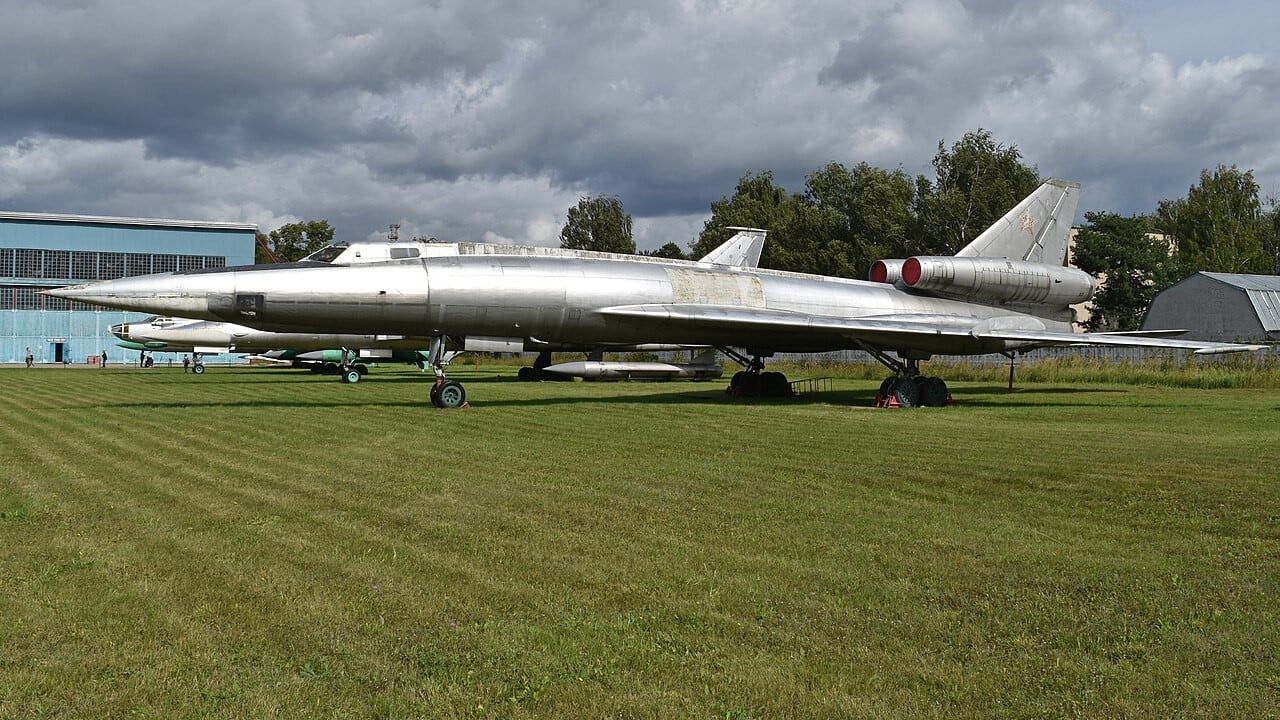
On 7 September 1987, two Libyan bombers ran in towards N’Djamena, the capital of Chad. A French MIM-23 Hawk missile battery fired, and one of them fell out of the sky. Inside the cockpit section were the bodies of its crew of three, all East Germans. The aircraft was a Tupolev Tu-22, NATO name Blinder, the first supersonic bomber the Soviet Union ever put into production.
It was a strange end for a strange aeroplane. The Tu-22 was built to dash through Western air defences at more than Mach 1. Instead it became one of the least loved aircraft in the Soviet inventory, a jet its own crews reportedly called unflyable, and it saw almost all of its combat in other countries’ wars.
It is also easy to confuse with its successor. The swing-wing Retroceso del Tu-22M shares the name but is a very different aircraft. This is the story of the original.
Datos rápidos
- Tipo: Supersonic medium bomber, reconnaissance, missile carrier and jammer
- NATO name: Blinder (earlier proposals: Bullshot, Beauty)
- Primer vuelo: 21 June 1958 (prototype 105); 7 September 1959 (105A)
- Entrada de servicio: 1962
- Multitud: Three: pilot, navigator, weapons officer, on downward-firing ejection seats
- Motores: Two afterburning turbojets mounted high beside the tail fin
- Velocidad máxima: Around Mach 1.4
- Construido: 311 of all variants, the last in 1969, at Kazan
- Combatir: Libya (Chad conflict), Iraq (Iran-Iraq War), Soviet jamming support over Afghanistan in 1988
- Not to be confused with: Tu-22M Backfire, a different swing-wing design
A bomber built for speed
By the mid-1950s the subsonic Tu-16 Badger was the backbone of Soviet long-range aviation, and speed was seen as a bomber’s best defence against the supersonic interceptors being built in the West. In August 1954 the Soviet government authorised Tupolev to build a supersonic successor.
Tupolev’s answer, the Samolyot 105, was a slim, needle-nosed jet with highly swept wings and a radical layout: its two huge afterburning turbojets sat in pods high on the rear fuselage, either side of the tail fin. The position cut drag and inlet losses, but it put the engines so high off the ground that servicing them became a chore.
Test pilot Yuri Alasheev flew the first prototype on 21 June 1958. It quickly showed that it had neither the speed nor the range expected. A redesigned prototype, the 105A, reworked with the area rule to cut transonic drag, flew on 7 September 1959. According to MilAvia’s history of the type, it was lost on its seventh test flight that December, but series production at Factory No. 22 in Kazan was already under way.
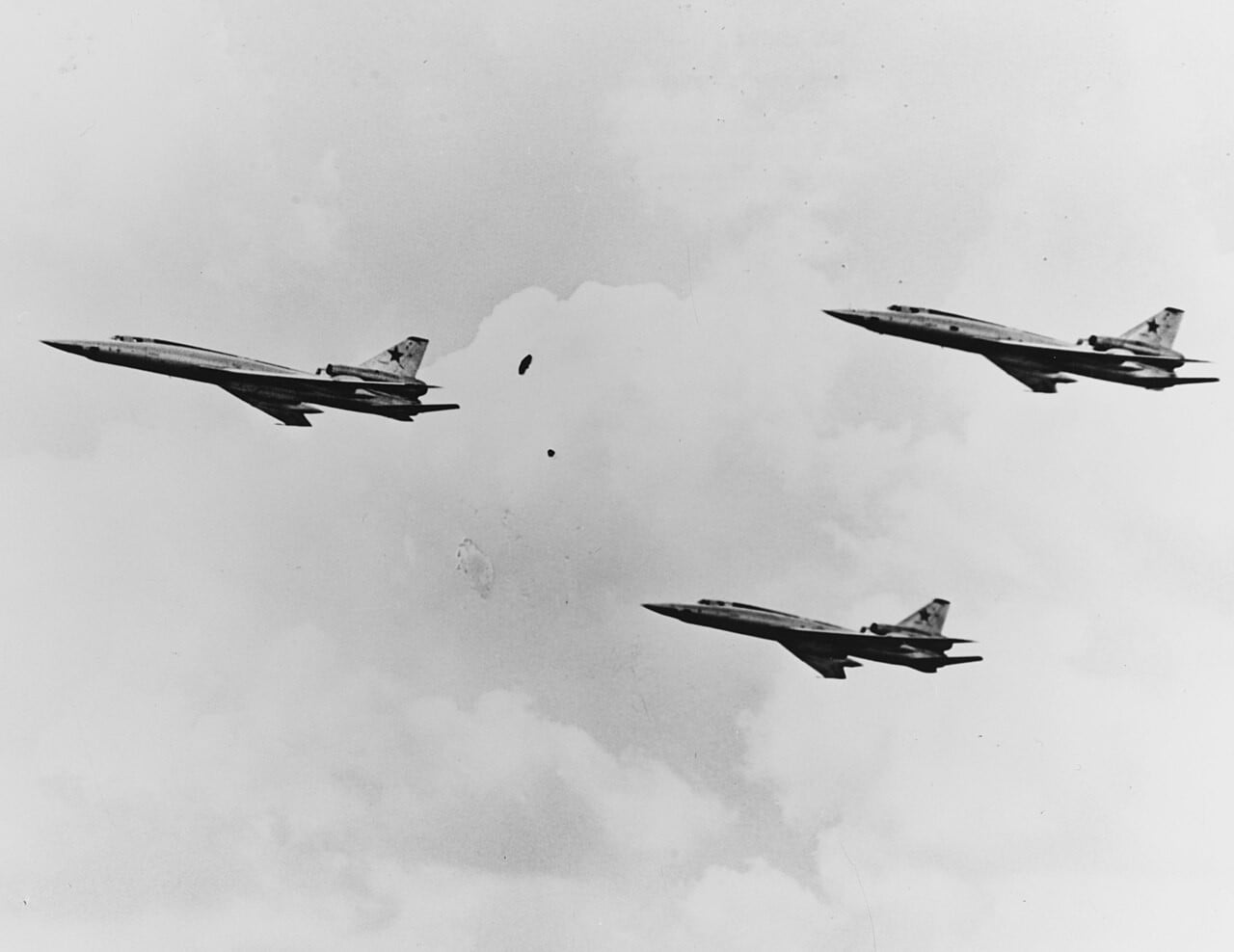
Bullshot, Beauty, Blinder
The public first saw the new bomber at the Aviation Day display at Tushino in July 1961. NATO’s first reporting name for it was Bullshot, which was judged inappropriate. The second, Beauty, was thought far too complimentary. The third, Blinder, stuck.
The Tu-22 entered service in 1962, and its problems quickly piled up. The thin, highly swept wing meant high landing speeds and long take-off runs. The three crew, a pilot, a navigator and a weapons officer, sat on ejection seats that fired downwards, which made them useless during take-off and landing, the most dangerous moments of any flight.
The cockpit did not help. Some levers were out of the pilot’s reach, and crews took to flying with hooks and strings to operate them. The view of the runway could be blocked in a crosswind. Accounts of the type also describe a cockpit-cooling system that used an alcohol and water mixture, which earned the Tu-22 the nickname “booze carrier”.
Paper Skies on the Tu-22 and why Soviet crews nicknamed it the booze carrier.
Saved by new jobs
Just as the bomber reached squadrons, Nikita Khrushchev was betting the Soviet Union’s nuclear future on ballistic missiles. Only 15 free-fall Tu-22B bombers were built. To keep the programme alive, Tupolev turned the Blinder into other things.
The Tu-22R became a long-range reconnaissance aircraft that could still carry bombs, and it served with both Long-Range Aviation and Soviet Naval Aviation. The Tu-22K carried a single enormous Kh-22 anti-ship missile semi-recessed under its belly, a weapon meant for NATO aircraft carriers. The Tu-22P was an electronic-warfare jammer, and the Tu-22U a trainer with a raised second cockpit.
In total, 311 Tu-22s of all variants were built, the last in 1969. With performance roughly comparable to the American B-58 Hustler, it could dash at around Mach 1.4 but cruised at high subsonic speed, and it never fully replaced the Tu-16, which had better range and could carry two Kh-22s.
Libya’s Blinders in Chad
In the 1970s, Middle Eastern air forces wanted something faster than their Tu-16s. Moscow turned down an Egyptian request, but approved sales to Libya and Iraq. Libyan aircraft were delivered from 1977, and US Navy fighters in the Mediterranean photographed at least one on its delivery flight.
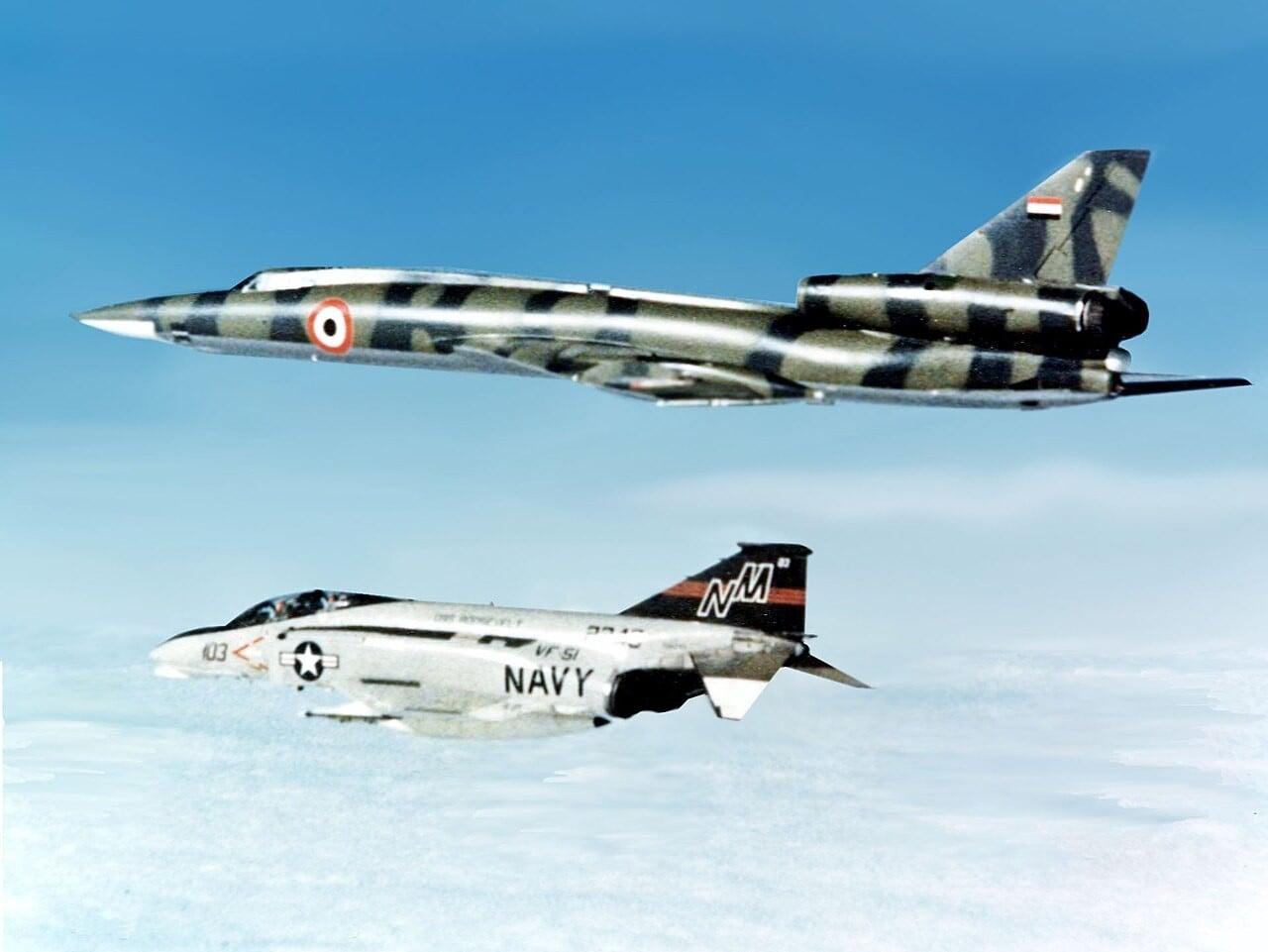
El Libyan Air Force used its Blinders in the long conflict with Chad in the 1980s, flying occasional bombing raids against forces loyal to Hissène Habré and against N’Djamena. Several were lost, including the aircraft shot down by French Hawk missiles in September 1987.
Iraq’s war with Iran
El Iraqi Air Force made the heaviest combat use of the type. Its Tu-22s flew throughout the Iran-Iraq War, from 1980 until 1988, striking targets deep inside Iran, including raids on Iranian cities during the so-called War of the Cities. Several were lost to Iranian fighters and air defences.
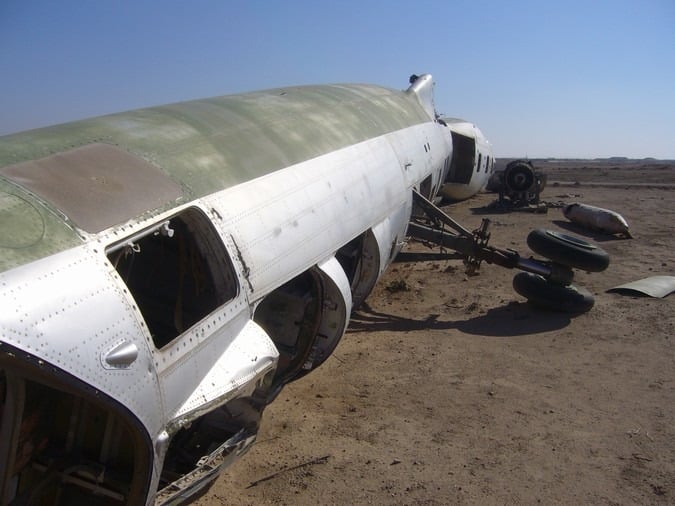
The survivors did not outlast the next war. Iraq’s remaining Tu-22s were destroyed by coalition air attacks during the 1991 Gulf War. Wrecks of the big bombers were still lying at Iraqi airfields years later.
One Soviet combat mission, and the Backfire
The Soviet Union itself used the Tu-22 in combat only once, and not as a bomber. In late 1988, during the withdrawal from Afghanistan, Tu-22PD jamming aircraft escorted Tu-22M3 Backfire bombers striking targets near the Pakistani border, to protect them from Pakistani F-16s and radar-guided defences.
That pairing said everything. The Tu-22M was gradually replacing the Blinder, and when the Soviet Union collapsed in 1991 more than 150 Tu-22s were still on strength, many at bases in Ukraine and Belarus. They were scrapped or left to rot in the years that followed.
A short history of the Tu-22, the Soviet Union’s first supersonic bomber.
The Blinder never delivered what its designers promised. But it taught Tupolev hard lessons about supersonic heavy aircraft, and the company’s next attempt, the Backfire, still flies today. Few aircraft have been so thoroughly overshadowed by the one that borrowed their name.
Sources: MilAvia (Tu-22 history), Federation of American Scientists (Tu-22 Blinder), U.S. Navy, The National Interest
Header photo: Alan Wilson / Wikimedia Commons, CC BY-SA 2.0
0 Comments