
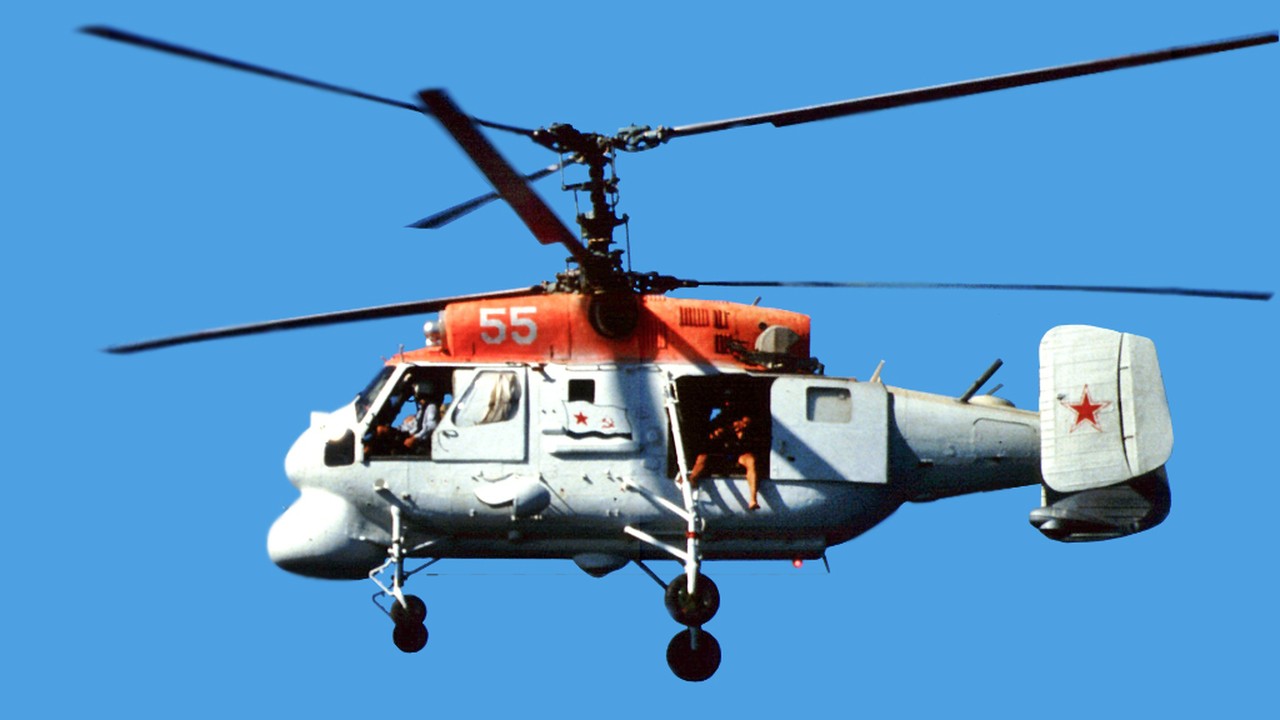
In April 1967 a single Soviet Navy helicopter sailed from Murmansk aboard a converted support ship, part of a long voyage with a submarine group code-named Priliv. It spent 175 days at sea and flew about 100 hours. When engineers inspected it afterwards, salt corrosion had eaten so deeply into the structure that the helicopter was written off.
That helicopter was a Kamov Ka-25, known to NATO as “Hormone”. Lessons like Priliv were part of how it became the Soviet Navy’s standard shipborne helicopter, the machine that put rotary-wing eyes and ears on cruisers, destroyers and helicopter carriers across the world’s oceans for a quarter of a century.
Informations clés
- Taper: Kamov Ka-25, NATO name “Hormone”
- Rôle: Shipborne anti-submarine, missile targeting, search and rescue
- Ordered: February 1958
- Premier vol : Prototype 21 May 1961; first production aircraft 25 April 1965
- Entrée de service : Formally accepted 2 December 1971
- Construit: About 460, at Ulan-Ude
- Rotors: Two coaxial three-bladed rotors, 15.74 m
- Moteurs : Two Omsk GTD-3F turboshafts, 900 hp each (GTD-3M from 1972)
- Remplacé par : Kamov Ka-27 from the 1980s; Ka-25Ts in Russian service until the mid-1990s
A problem only a helicopter could solve
By the late 1950s, American nuclear-powered submarines armed with homing torpedoes and ballistic missiles had become the Soviet Navy’s gravest problem. Soviet planners drew up a layered defence: shore-based amphibious helicopters near the coast, Be-12 flying boats further out, Il-38 patrol aircraft in distant waters, and in the open ocean, helicopters flying from ships.
There was a second problem. Soviet anti-ship cruise missiles of the time could fly 200 km or more, but a ship’s own radar saw only about 30 to 40 km before the curve of the Earth hid the target. Lifting a radar into the sky on a helicopter would solve that too.
In February 1958 the Soviet government ordered Nikolai Kamov’s design bureau to build a new shipborne helicopter, known internally as “product D”. The radar, sonar and weapons would not all fit into one airframe of the permitted size, so Kamov designed two versions from the start: an anti-submarine helicopter and a target-designation helicopter, identical except for their equipment.
Two rotors, no tail rotor
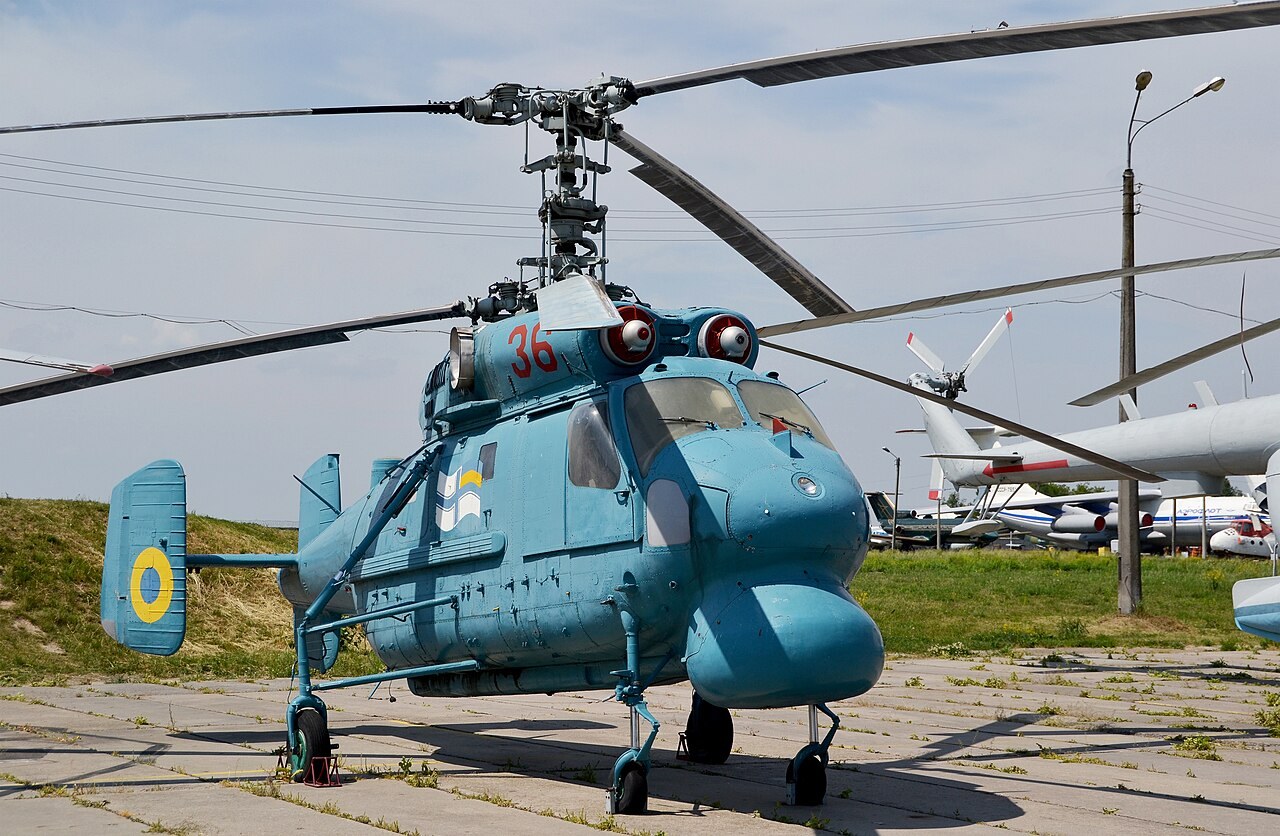
Kamov’s bureau had long specialised in coaxial helicopters, with two rotors turning in opposite directions on one mast. The torque of one cancels the other, so no tail rotor is needed. That made the fuselage short, just 9.75 metres, while the two three-bladed rotors spanned 15.74 metres and folded for stowage. Three tail fins replaced the tail rotor for directional stability. The result fitted into small hangars on cruisers and destroyers.
Power came from two GTD-3 turboshafts developed by a special design bureau at the Omsk engine plant. Production helicopters used the uprated GTD-3F of 900 hp each, and from 1972 the GTD-3M of up to 1,100 hp. In a curious side story, a tank version of the engine was tested in an experimental Soviet tank in 1965 and 1966.
Weapon Detective’s history of the Ka-25, the helicopter that gave the Red Fleet eyes beyond the horizon.
The prototype made its first circuit flight on 21 May 1961 and appeared at the Moscow air parade that July with crude dummy missiles hung on its sides. Western analysts named it the Ka-20. Development was slow: ground resonance forced a complete redesign of the landing gear, the gearbox and rotor column gave trouble, and the submarine-hunting equipment was not ready. The first production helicopter flew at Ulan-Ude on 25 April 1965.
Moskva and the Hormone fleet
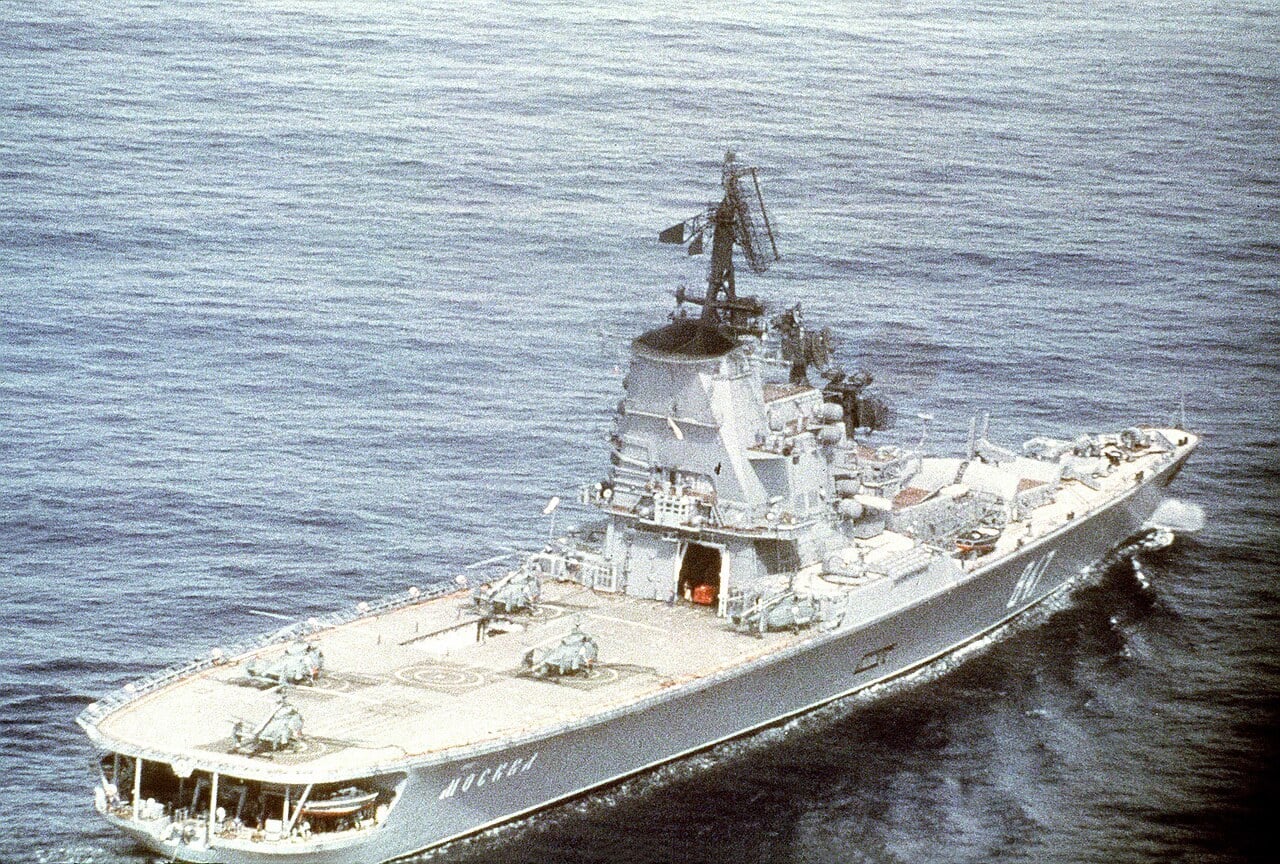
The Ka-25 was conceived alongside the ships that would carry it. The anti-submarine cruisers Moscou et Leningrad, built at Nikolaev on the Black Sea, were designed to carry a full helicopter squadron. Moscou joined the fleet on 25 December 1967, and Leningrad followed. Up to about 40 other Soviet ships carried a single Ka-25 each, and later the carriers Kiev et Minsk flew them too.
The anti-submarine Ka-25PL carried a search radar in a bulbous chin radome, a dipping sonar lowered from the hover, a magnetic anomaly detector and a weapons bay under the cabin floor for a homing torpedo or depth charges, including nuclear depth charges. The pilot sat on the left, the navigator on the right. The Ka-25 was formally accepted into service only on 2 December 1971, years after it had gone to sea.
About 460 were built at Ulan-Ude. Besides the anti-submarine version, there was the Ka-25Ts targeting helicopter, NATO’s Hormone-B, with a larger radar and a data link to feed targets to missile-armed ships, and landing gear that lifted out of the radar beam in flight. The Ka-25PS search-and-rescue version, Hormone-C, was usually painted red and white. Other versions tracked missiles, swept mines or carried passengers and cargo.
A short film on the Kamov Ka-25 from the AIRBOYD aviation archive channel.
Sweeping the Suez Canal
The Ka-25’s most unusual job came after the 1973 October War, when the approaches to the Suez Canal were littered with mines. In 1974 the Soviet Union joined the international clearance effort, and Ka-25 minesweeping helicopters operated from the cruiser Leningrad, towing sweeps through the water to detonate mines.
Sources disagree on the scale. The Ukraine State Aviation Museum says six Ka-25s were converted into minesweepers and distinguished themselves at Suez; Russian sources credit twelve helicopters with 188 sorties. Either way, it was one of the few times the type worked on a real task in a foreign theatre, side by side with Western navies doing the same job.
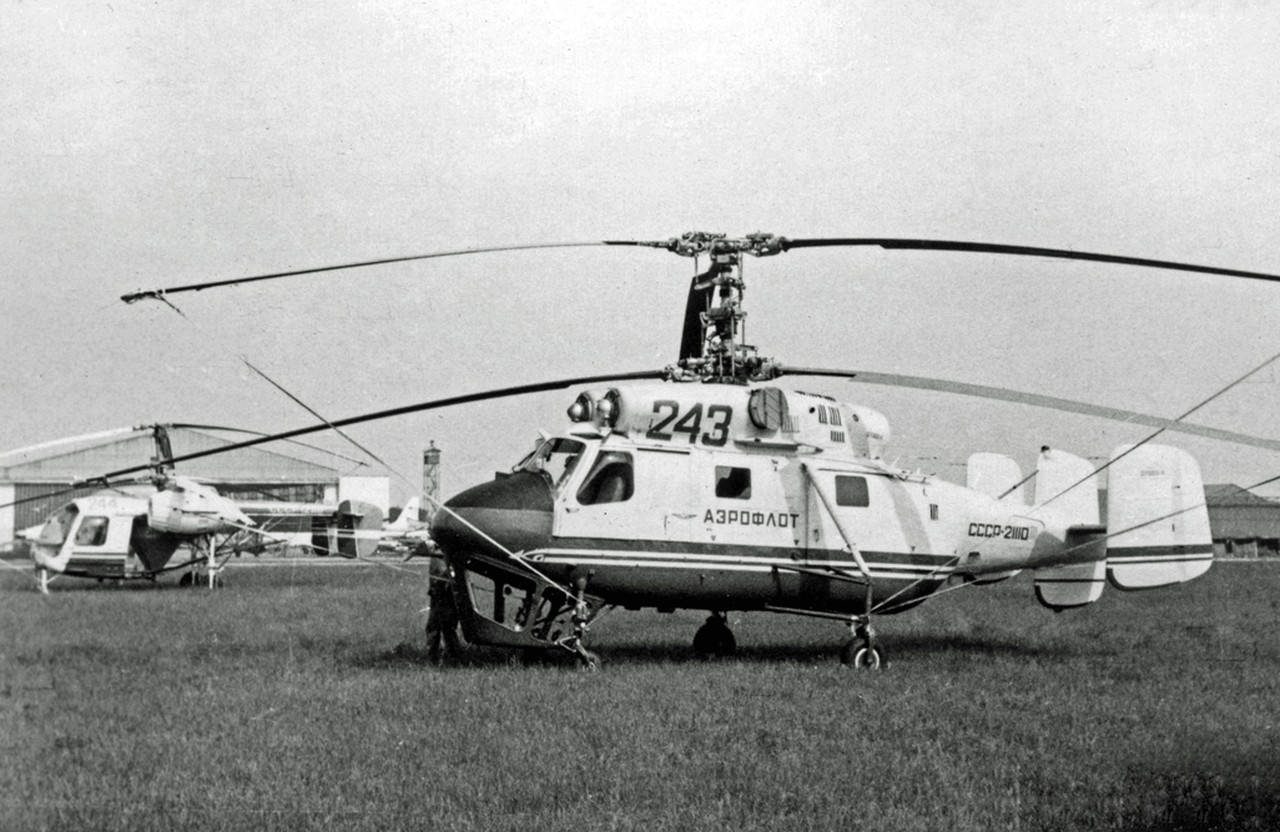
There was even a civilian Ka-25. The Ka-25K flying crane, with a gondola under a lengthened nose for the operator controlling slung loads of up to two tonnes, flew as a single prototype in 1966 and was shown at the Paris Air Show in 1967 in Aeroflot colours. It never went into production.
Exports and a long goodbye
The Ka-25 was exported to India, Syria, Yugoslavia, Vietnam and Bulgaria. The Indian Naval Air Arm commissioned INAS 333 at Goa on 11 December 1980 with Ka-25s to fly from its Kashin-class destroyers. India kept the type longer than almost anyone: its last Ka-25s were decommissioned in April 2009.
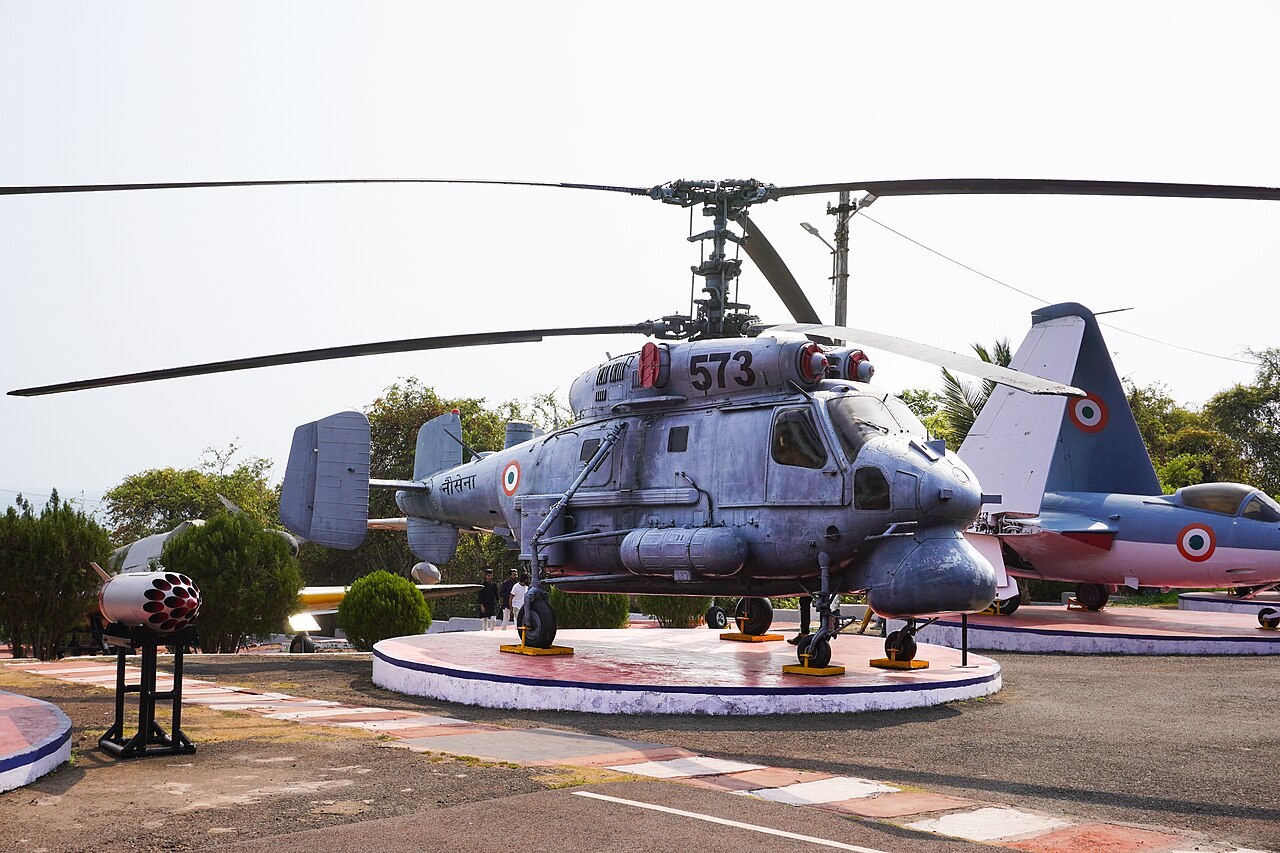
At home, the Soviet Navy judged the anti-submarine Ka-25PL unable to fully meet its main mission, and from the 1980s the larger Ka-27 replaced it. Russian assessments rated the Ka-25Ts targeting helicopter as the most successful version, and because no equivalent Ka-27 was built, it stayed in Russian naval aviation service until the mid-1990s. When the Black Sea Fleet was divided in 1997, Ukraine received 28 Ka-25s.
The Ka-25 episode of the Russian documentary series Wings of Russia (in Russian).
The Hormone was cramped, corrosion-prone and short on submarine-hunting performance. But it proved the formula. Every Ka-27 and Ka-29 flying from a Russian warship today still has two rotors on one mast and no tail rotor, the layout Kamov chose in 1958 to fit a helicopter into a cruiser’s hangar.
Sources: Wikipedia (Kamov Ka-25, Russian-language article Ка-25, Moskva-class helicopter carrier, INAS 333), Ukraine State Aviation Museum, kamov.net archive, US Department of Defense imagery
Header photo: US Navy / Wikimedia Commons, public domain

0 Comments