
Stand at the fence at almost any air base and the fin of a fighter will tell you, if you can read it, which country owns the aircraft, which base it lives at, which squadron flies it, which year it was ordered, and occasionally whether the person strapped into it outranks everybody else on the ramp.
None of that is written down anywhere on the aeroplane in plain language. It is encoded in two letters, a coloured band, a badge and a handful of digits, and every air force has arrived at a slightly different answer to the same problem.
Here is how to read them.
Informazioni rapide
| What a tail code is | A unit or base identifier, not a unique aircraft identity. Two aircraft can wear the same code |
| USAF format since 1993 | Two large letters, two small digits, then three large digits |
| USAF letters | Home base or a historic legacy, such as FF for the 1st Fighter Wing or WP for the 8th Fighter Wing |
| USAF digits | Small digits are the fiscal year the aircraft was ordered; large digits are the last three of the serial |
| Air National Guard | Usually the two-letter USPS state abbreviation, with exceptions |
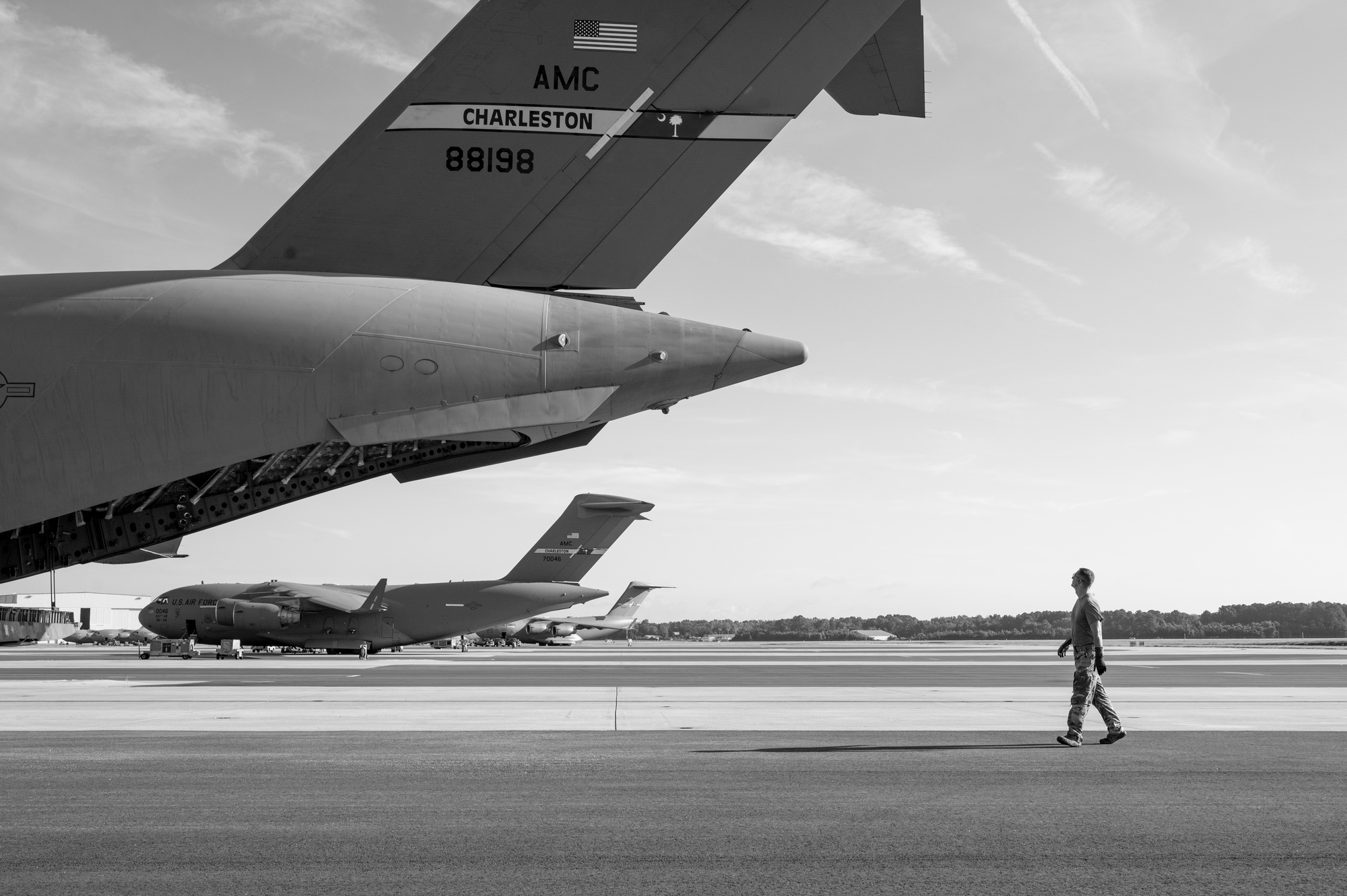
| Air Mobility Command | No two-letter code. The base name appears inside the tail flash with a five-digit number |
| Coloured tail band | Identifies the squadron within a wing; multiple stacked bands often mark a commander’s aircraft |
| Russia | Two-digit bort numbers, usually red, assigned by the local base commander |
| Francia | Since 2009 the first number is the air base, followed by two letters |
| Israel | Tail art and squadron emblem, with tail numbers unique to the airframe |
First, the thing everyone gets backwards
A tail code is not a registration. It does not identify the aeroplane. It identifies the organisation the aeroplane currently belongs to, and it changes when the aeroplane moves.
That is the single most common misunderstanding, and it matters, because the serial number is usually painted on the same fin a few inches away and the two get conflated constantly. The serial is permanent and unique. The code is temporary and shared by everything in the unit.
There is a second piece of vocabulary trouble. In British and Commonwealth usage a “fin flash” means the small national marking on the fin, usually stripes in the colours of the roundel. In American usage the same phrase has come to mean the unit’s decorative tail band. Both are correct in their own dialect, and both appear in this article, so it is worth keeping the two apart.
The USAF system, decoded
Since 1993 the United States Air Force, the Air Force Reserve and the Air National Guard have used one format on almost everything they fly. It looks like this, reading down the fin: two large letters, then two small digits, then three large digits.
The two letters are the home base, or sometimes a historic legacy the wing has earned the right to keep. FF is the 1st Fighter Wing, for “First Fighter”. WP is the 8th Fighter Wing, for “Wolf Pack”. LN is Lakenheath, HO is Holloman, DM is Davis-Monthan, AV is Aviano.
The two small digits, usually under a small “AF”, are the fiscal year in which the aircraft was ordered. The three large digits are the last three of the serial number. So an F-15E at RAF Lakenheath wearing LN with 91 above 302 would have been ordered in fiscal year 1991, with a serial ending 302.
Air National Guard units usually use the two-letter USPS abbreviation for their state, so an Alabama F-16 wears AL and an Arizona jet wears AZ. There are exceptions with their own logic: the 110th Wing at Battle Creek uses BC rather than the MI worn by other Michigan units.
Everything in a unit shares one code, and units of different commands at the same base deliberately use different ones. Whiteman is the textbook example: the 509th Bomb Wing wears WM, while the Air Force Reserve’s 442nd Fighter Wing on the same field wears KC.
Why the transports look wrong
If you have ever tried to apply the two-letter rule to a C-130 or a C-17 and got nowhere, that is because Air Mobility Command opted out.
AMC aircraft carry no two-letter code at all. Instead the base name is written inside the tail flash, and the number is five digits all printed the same size. In most cases the first digit is the last digit of the fiscal year and the remaining four are the sequence number. In years where more than ten thousand aircraft were ordered, 1964 being the classic example, the full five-digit sequence is used with no year identifier at all, which is exactly the sort of edge case that keeps spotters arguing.
The coloured band is the interesting part
The letters tell you the wing. The stripe across the top of the fin tells you the squadron inside it.
A fighter wing typically holds two or three flying squadrons, each with its own colour, and that band is the fastest way to sort them out on a crowded ramp. It is also the oldest idea on the aeroplane by several centuries.
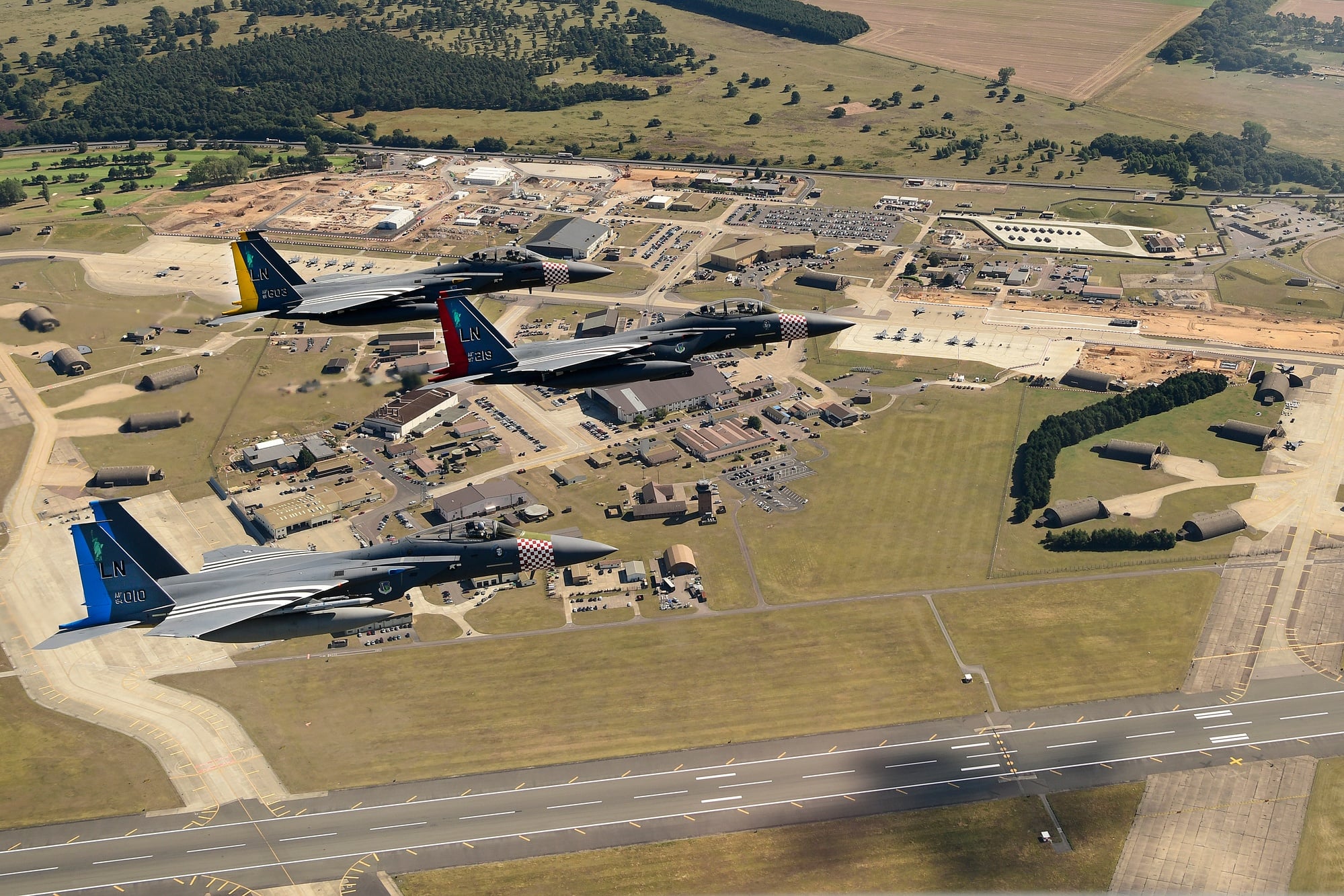
Then there is the flagship. Each unit picks one aircraft as its commander’s jet, and that one gets a more elaborate tail: the squadron or wing emblem, often the mascot, and frequently several coloured stripes stacked one above the other rather than a single band.
Those stacked stripes are the giveaway, and they have a specific origin. Command aircraft used to carry a diagonal command stripe around the fuselage. When that fell out of fashion, units moved the idea to the fin, painting one stripe for each squadron in the wing on the commander’s aircraft. A jet wearing three colours instead of one is usually telling you it answers to somebody who owns all three squadrons.
The official guidance is charmingly practical about the aesthetics: the design should be simple and tasteful, should not carry too much detail, and although colour is permitted, the finished flash will usually be rendered in greys so it does not undo the camouflage. A thin strip of blue, red and yellow may be added at the top of the fin.
Britain: badges, bars and a letter
The Royal Air Force never adopted a base-code system. It identifies by squadron, and it does so with heraldry.
An RAF Tifone carries its squadron badge on the fin, frequently inside the standard RAF badge frame, together with the unit’s colours. Alongside the fuselage roundel you will often find the squadron’s marking bars, a device inherited directly from the biplane era. And each airframe carries a short individual code, historically a single letter and today usually two, allocated to the squadron in blocks.
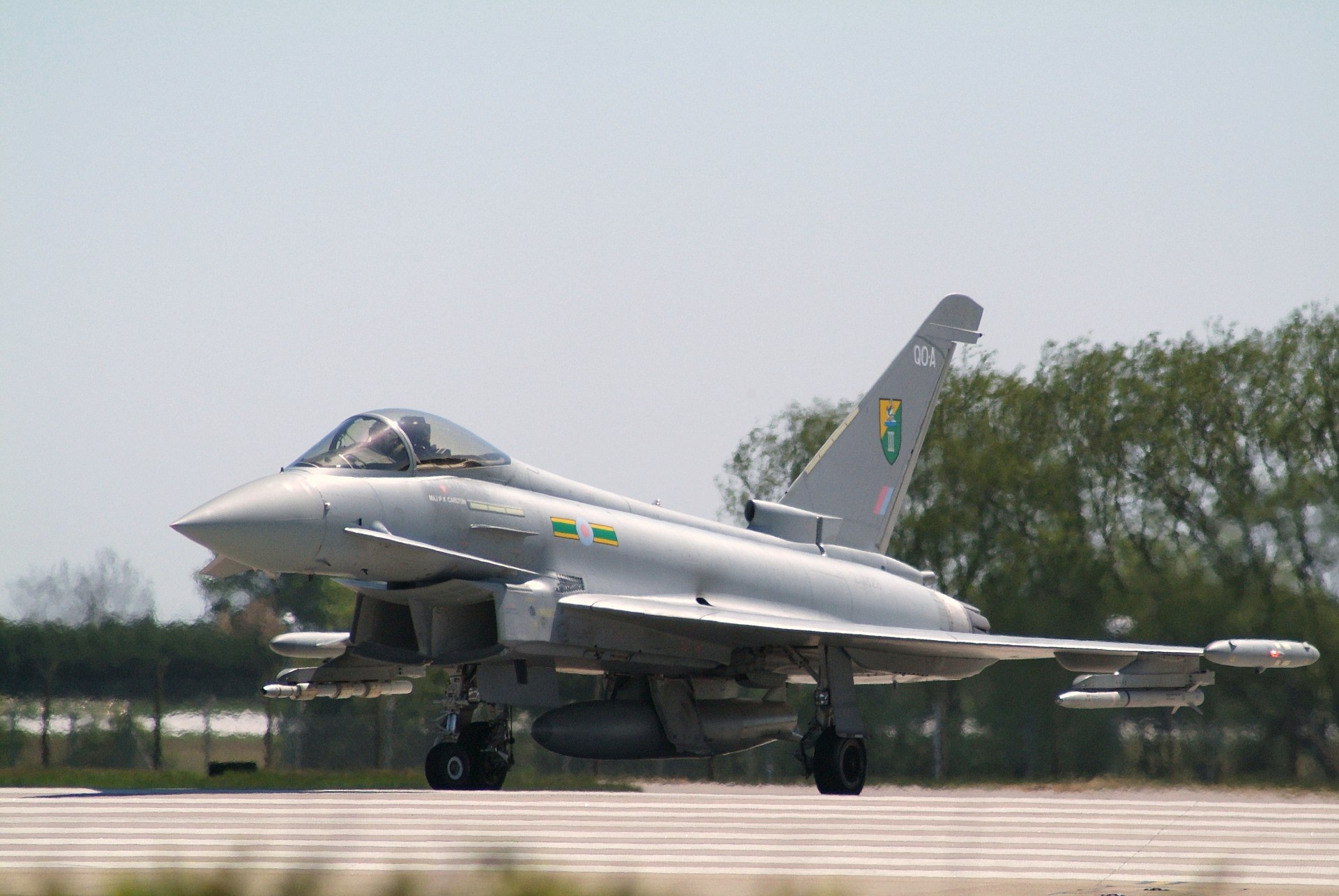
The result is that an RAF fin tells you the squadron immediately and the base only by inference, which is precisely the opposite of the American arrangement. Underneath all of it sits the true serial, a letter-and-three-digit combination such as ZK344, which does uniquely identify the aircraft and stays with it for life.
France: the number is the base
French tactical codes look like a fraction and are painted on the fuselage rather than the fin. They also changed meaning in living memory, which trips up a lot of older reference books.
Under the old system the code took the form of a number and two letters, in which the number was the escadre, the wing, the first letter was the escadron, the squadron, and the second letter identified the individual aircraft.
Since 2009 the leading number is the base aérienne number instead. So a Rafale marked 113-HA belongs to a unit at BA 113 Saint-Dizier, and the letters run through the squadron’s allocated block: Escadron de Chasse 1/7 Provence, the first French unit to fly the Rafale, was allocated 113-HA to 113-HZ.
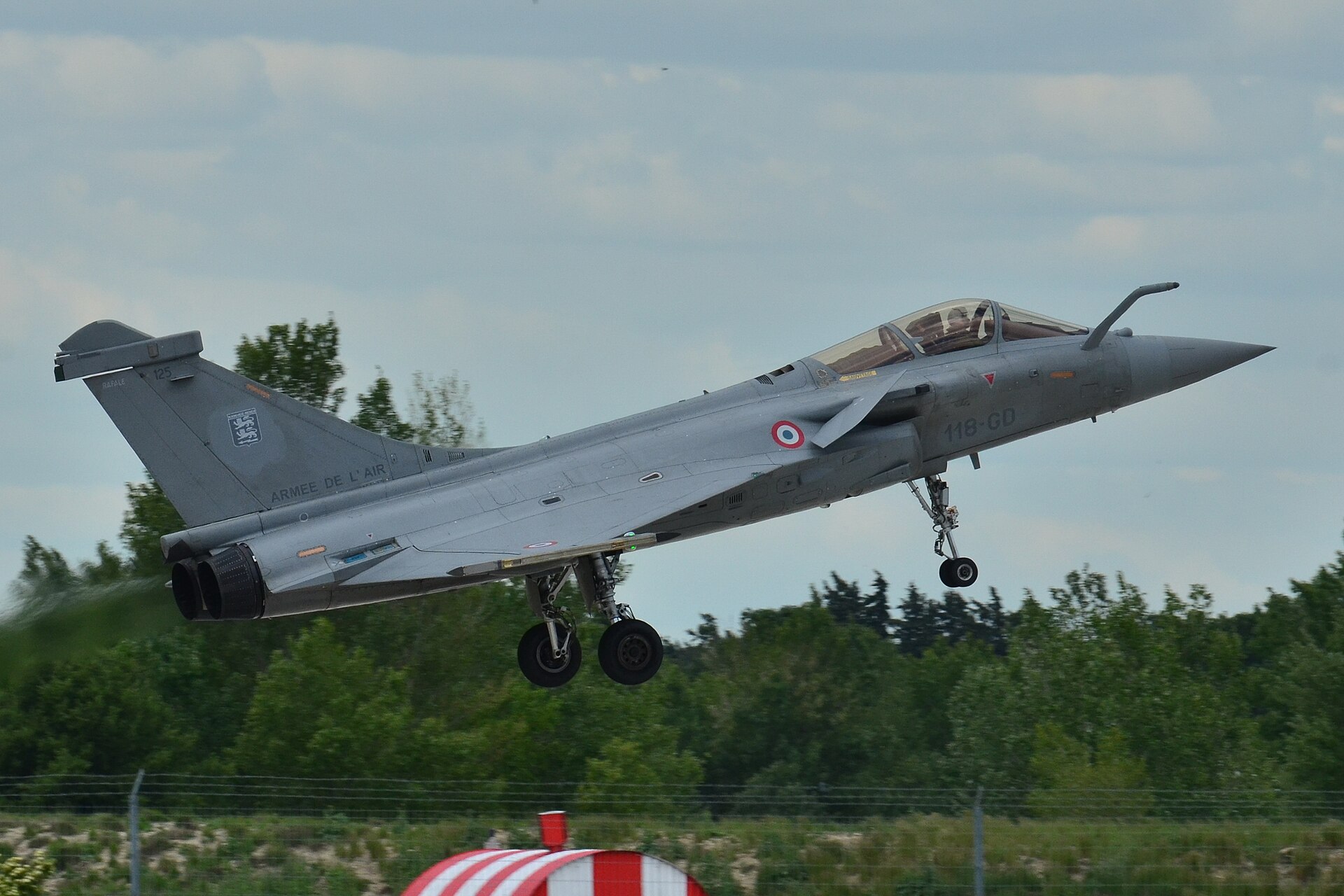
France also keeps a national marking on the fin in the form of rudder stripes rather than a roundel, a habit dating to the First World War, when French aircraft were the first to carry a formalised national marking at all.
Russia: a red number and no fixed meaning
Soviet and Russian practice went in a different direction entirely, and the result is the hardest system on this list to read from outside.
Russian aircraft carry a bort number: two digits, usually red, sometimes blue and occasionally yellow, painted on the forward fuselage near the cockpit. Bombers are the exception and wear it on the fin and the nosewheel door. The practice dates to the Second World War, but the modern system was only formalised in 1975.
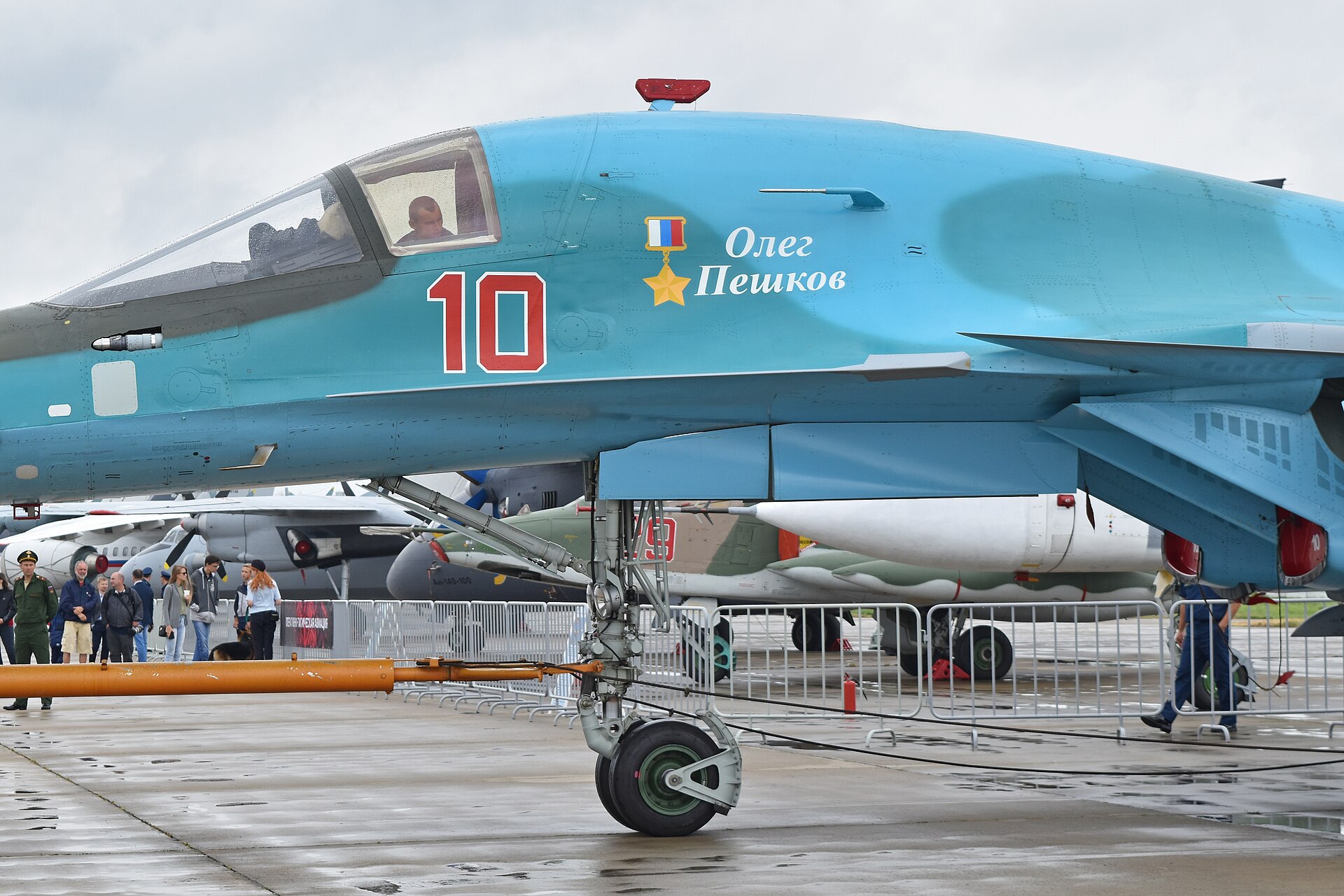
The rules are local rather than national. The base commander assigns the numbers, and the conventions are these: every aircraft at a given base must use the same colour; numbers run from 01 to 99 and may repeat if the base holds more than a hundred aircraft; and squadrons at the same base should not hold sequential blocks, so one might be allotted 05 to 16 and 43 to 72 while another takes 21 to 35 and 81 to 99.
The consequence for anybody trying to read them is significant. A bort number is not unique, it changes over time, and without additional context it cannot be attributed to a particular base or squadron at all. It is a squadron-internal name tag, not a public identifier, which is arguably the point.
Israel: the tail as artwork
The Israeli Air Force took the idea furthest. Its squadron emblems are usually circular, and every element inside them is meant: the name, the traits, the mission.
Raanan Weiss has designed IAF squadron emblems and aircraft tails for a quarter of a century, and his description of the constraints is a reminder that this is applied art with a maintenance schedule attached.
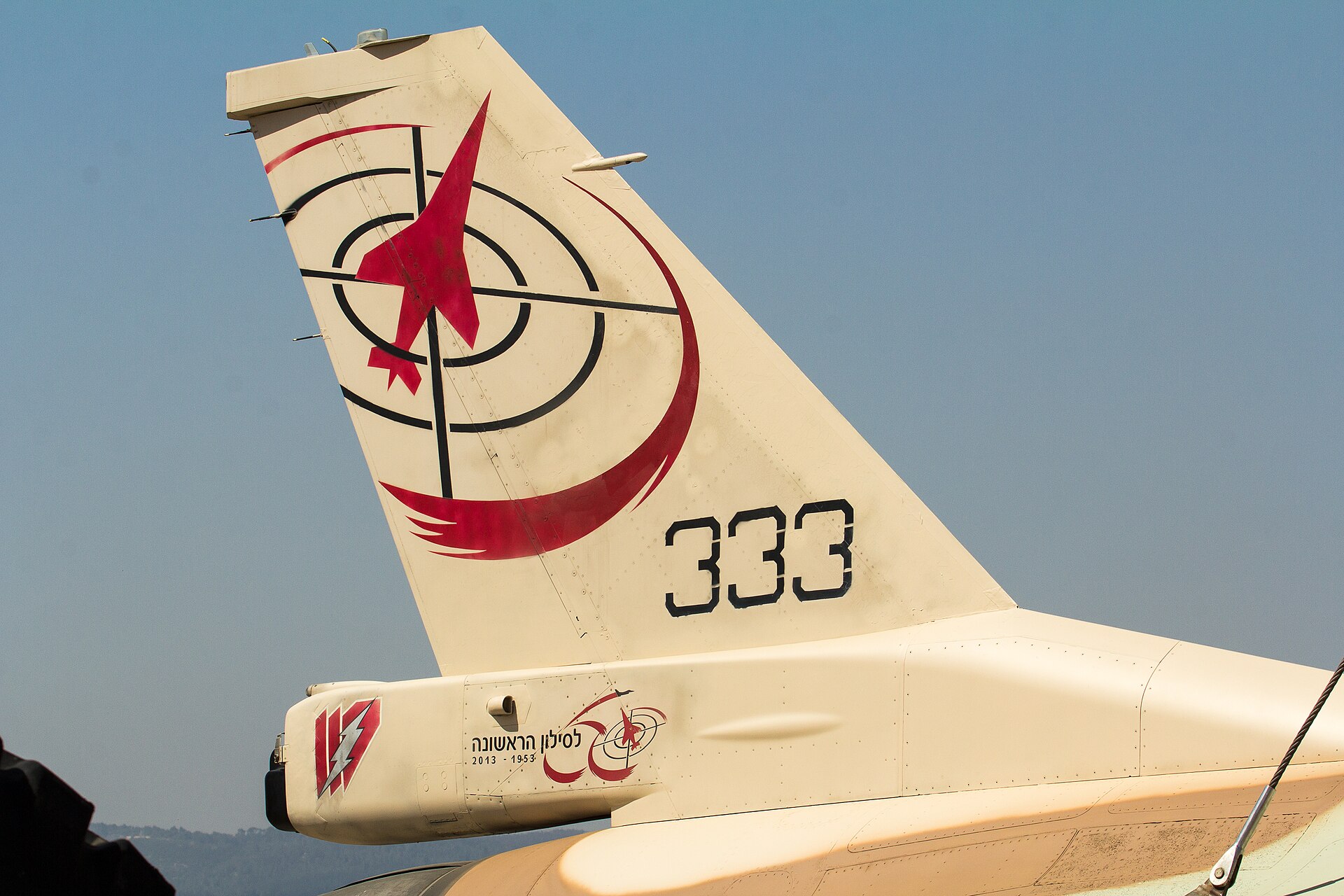
It began as pure function. In the IAF’s early decades the markings existed simply to tell apart identical aircraft belonging to different squadrons flying from the same base, and Weiss recalls that they were “either lines across the aircraft or a triangle on the tail”. The first properly designed tail emblem was drawn in 1986, for the 110th “Knights of the North” Squadron, by the IAF illustrator Arnon Kremer.
Then comes the detail that no other air force on this list can match. For years the emblems were treated as classified. Until the end of the 1980s they were covered up at every exhibition and ceremony, and at one point the solution was to invent fictional emblems and paint those on instead, specifically to confuse anybody watching.
Germany, and the numbers that are not a code
Germany runs a system that looks like a tail code and is not one. A Luftwaffe aircraft carries a serial such as 31+01 or 30+25: a two-digit prefix identifying the aircraft type block, a cross, then the individual aircraft number. It is a permanent identity, not a unit marking. Unit identity is carried separately, by the Geschwader badge on the fin.
It is worth noting how far this is from the wartime Luftwaffe, which used a genuinely complex alphanumeric code on the rear fuselage. A Bf 110 marked U8+AH, for instance, belonged to Zerstörergeschwader 26, identified by U8, and served with its first Staffel, identified by the H.
And the US Navy, which uses letters differently again
American naval aviation shares the idea and not the implementation. A US Navy tail code identifies the carrier air wing rather than the base, and the first letter tells you the fleet: A for the Atlantic Fleet, N for the Pacific.
Every squadron in an air wing wears the same code regardless of what it flies, so CVW-1 is AB, CVW-2 is NE, CVW-5 is NF, CVW-9 is NG. Expeditionary electronic attack squadrons that answer to no air wing use NL. Fleet Replacement Squadrons use NJ on the Pacific side and AD on the Atlantic.
Which means that on a carrier deck, two letters identify eight or nine squadrons at once, and the individual aircraft is picked out by its modex, the two or three-digit number on the nose.
How to actually read a fin
Work in this order and most fins in the world will open up.
One: nationality. Roundel, star and bar, cross, flag or rudder stripes. This is the only marking required by the laws of armed conflict, and it is the one thing on the aeroplane that is not optional.
Two: letters. Two large letters on a US fin means base or wing. A name inside a decorative flash means Air Mobility Command. A badge means Britain or Germany. No letters at all and a number by the cockpit means Russia.
Three: colour. A single band is the squadron. Several stacked bands, or a noticeably fancier tail than the aircraft parked next to it, is the commander’s jet.
Four: numbers. Small digits above larger ones on a US fin means fiscal year above serial. A single continuous string is a serial. Two digits in red on a Russian fuselage is a bort number and tells you almost nothing without context.
The remarkable thing is how little of this is legally required and how much of it survives anyway. Modern low-visibility greys have shrunk every marking on a combat aircraft to the point of near-invisibility, and squadrons keep painting them on regardless, because an aeroplane that belongs to nobody in particular is a much harder thing to be proud of.
Domande frequenti
What do the two letters on a USAF aircraft tail mean?
Is a tail code the same as an aircraft serial number?
What do the numbers under the tail code mean?
What does the coloured stripe on a fighter’s tail mean?
Why do American transport aircraft not have tail codes?
What is a fin flash?
What is a Russian bort number?
How do French tactical codes work?
Why does the Royal Air Force not use tail codes?
Why were Israeli Air Force tail emblems kept secret?
Sources: U.S. Air Force tail marking guidance via GlobalSecurity.org; Airplanes Online USAF tail code listing; Israeli Air Force, “The Meaning of an Emblem” by Nuphar Blitt; Wikipedia entries on tail codes, bort numbers and military aircraft insignia.

0 Comments