
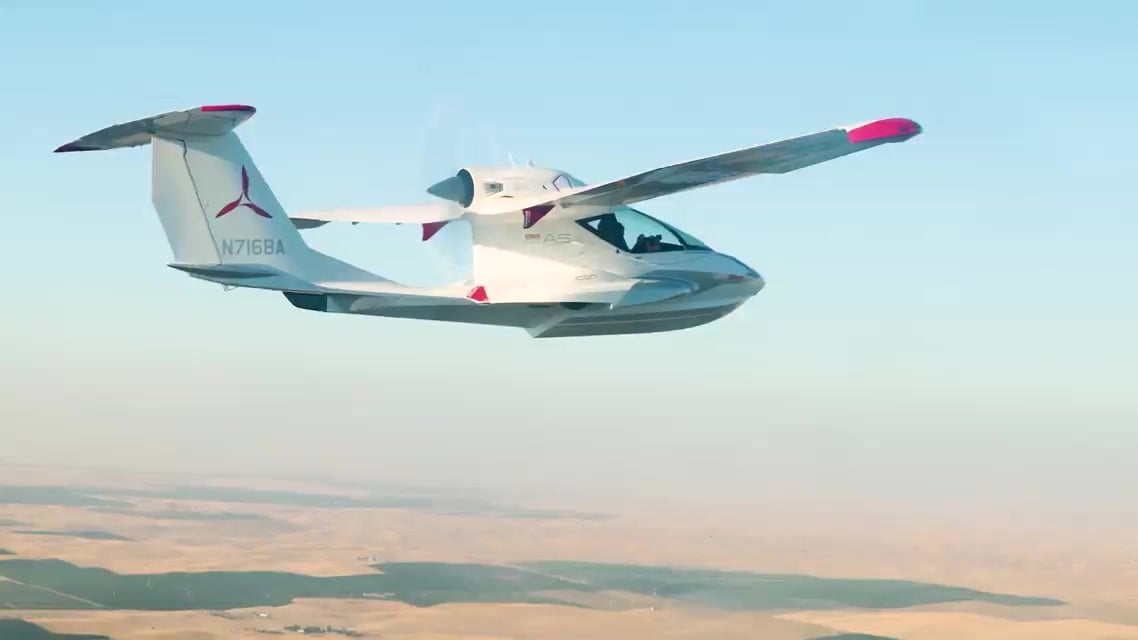
The people who will one day sign off on America's next fighters spend most of their year in places like the Mojave Desert, where the runways are endless and the ground is bone dry. This autumn, some of them traded concrete for open water, wrestling two small amphibians onto the surface and back into the air.
On 18 October 2026, the 412th Test Wing announced that water landings have returned to the Qualitative Evaluation program at the US Air Force Test Pilot School (TPS) at Edwards Air Force Base. Instructors joined students from Class 26A to fly the Icon A5 and the Lake Buccaneer, which the wing described as a return to amphibious flying for the school. FlightGlobal reported the change a day later.
It looks like a holiday. It is anything but. Taking off and landing on water is a skill set most military pilots never touch, and that is exactly why the school wants its students to feel it.
Quick Facts
- Who: USAF Test Pilot School, 412th Test Wing, Edwards AFB, California
- What: Water landings returned to the Qualitative Evaluation program
- Announced: 18 October 2026
- Students: Class 26A, flying with TPS instructors
- Aircraft: Icon A5 and Lake Buccaneer, both pusher-propeller amphibians
- Typical TPS year: Students fly 20+ unique aircraft types
Two pusher amphibians, two very different boats
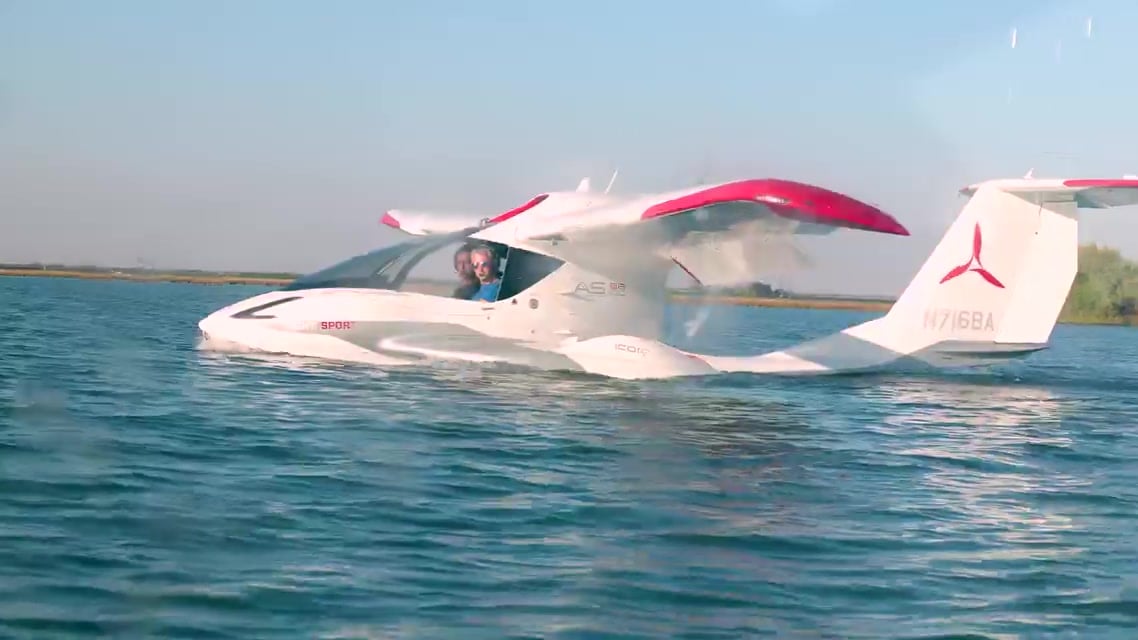
The Icon A5 is a modern American amphibious light-sport aircraft. It seats two side by side in an enclosed cockpit, and a 100 hp Rotax 912 iS engine drives a three-bladed pusher propeller mounted behind the cabin. Sponsons on the hull keep it stable on the water, and the wings fold back for transport.
The Lake Buccaneer is the older sibling by several decades. It grew out of the Colonial Skimmer of the 1950s and became the Buccaneer in 1970, when Lake fitted a 200 hp fuel-injected Lycoming IO-360. It is a four-seat, all-metal flying boat with retractable tricycle gear and its engine perched on a pylon above the hull, pushing rather than pulling.
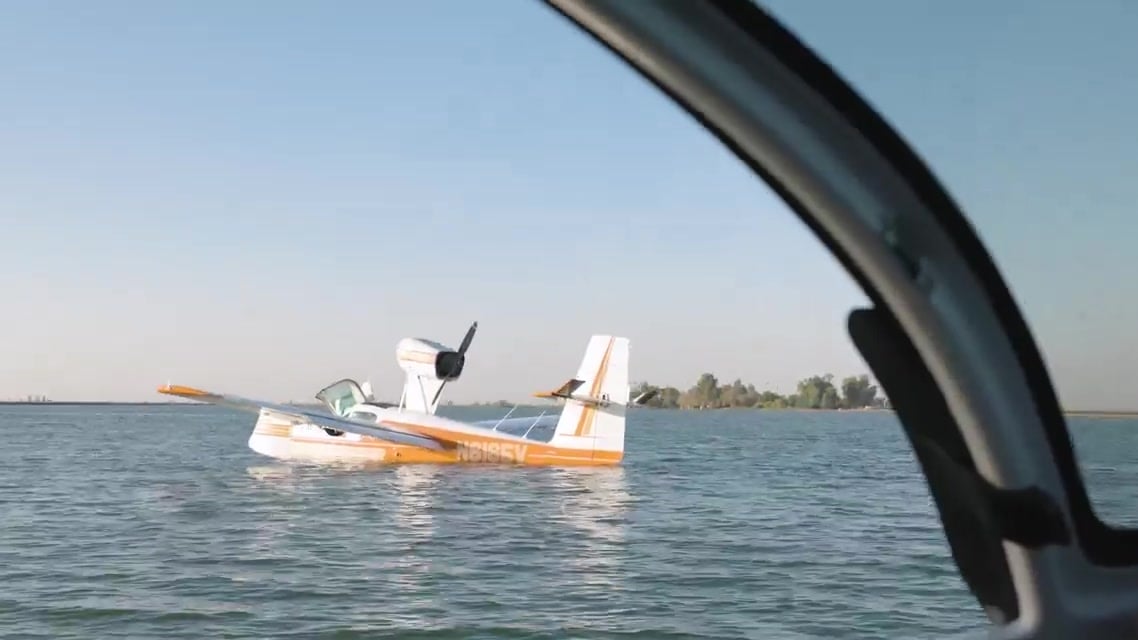
Put the two side by side and the training value becomes obvious. One is a carbon-fibre light-sport design built around ease of use. The other is a classic metal amphibian with a high thrust line that changes how the aircraft responds to power. Students get to compare handling, water behaviour and cockpit design in two machines built half a century apart.
Comfortable with the uncomfortable
The 412th Test Wing summed up the reasoning in one line when it announced the change:
The wing added that a standard year at TPS sees students fly more than 20 unique aircraft types, and that the new additions to the program are meant to further aid airmanship and critical thinking. A test pilot who has only ever flown jets off long runways has a narrow frame of reference. One who has also judged a glassy-water landing in a flying boat has a wider one.
That wider frame of reference is the whole point. Test pilots are paid to meet aircraft they have never flown, find what is wrong with them and explain it clearly to engineers. The more varied the machines they have handled, the faster they recognise what is normal and what is not.
A look inside the US Air Force Test Pilot School at Edwards, from the flight line to the classroom.
What the Qualitative Evaluation program is for
The Qualitative Evaluation program, known as QE, puts students in aircraft well outside the normal Air Force inventory. In a December 2022 release, Edwards said the program is designed to have students fly diverse and unique aircraft so that they gain confidence and the ability to handle new flight test situations. It noted that aircraft ranging from the World War II-era DC-3 to foreign military jets such as the L-39 regularly appear on the TPS ramp.
The 2022 class took that idea abroad. For its Capstone event, the end-of-course exercise where students plan, fly and report on an unfamiliar aircraft and mission, a TPS team travelled to Sacheon Air Base in South Korea. There, students flew the Republic of Korea Air Force's KT-1 trainer, including its spin characteristics, and planned an evaluation of the FA-50, an attack variant of the T-50 jet trainer. ROKAF pilots and engineers in turn flew the T-38, F-16, C-12 and gliders with TPS instructors at Edwards.
Seen in that light, the Icon A5 and the Buccaneer are not a novelty. They are the latest entries in a long list of unusual aircraft chosen to stretch students before they ever touch a prototype.
They also add something no runway can: a landing surface that moves. Wind, swell and glare change how the water looks and how the hull meets it, so judging height and attitude becomes a fresh problem. That is exactly the kind of unfamiliar situation the program is built to create.
From Wright Field to the water's edge
The school itself dates back to 9 September 1944, when it was set up as the Flight Test Training Unit in Dayton, Ohio, at what is now Wright-Patterson Air Force Base. It moved to Edwards in 1951, drawn by uncongested skies, reliable weather and the vast dry lakebeds of the Mojave.
Today it trains experimental test pilots, flight test engineers and flight test navigators, runs two classes a year and sits within the 412th Test Wing of Air Force Materiel Command. Its graduates go on to test everything from new fighters to bombers and autonomous aircraft.
For the students of Class 26A, though, one memory from the course will be a little wetter than usual.
Icon Aircraft footage of an Icon A5 landing on the water and flying a demonstration, the same type flown by the Test Pilot School students.
A desert school landing on water sounds like a contradiction. For the people whose job is to be ready for anything an aircraft throws at them, it is simply more of the curriculum.
Sources: 412th Test Wing (LinkedIn, 18 Oct 2026), FlightGlobal, Edwards Air Force Base (USAF Test Pilot School release, Dec 2022), Wikipedia (U.S. Air Force Test Pilot School, Icon A5, Lake Buccaneer), Plane & Pilot
0 Comments