
KAI KT-1
“Woongbi”
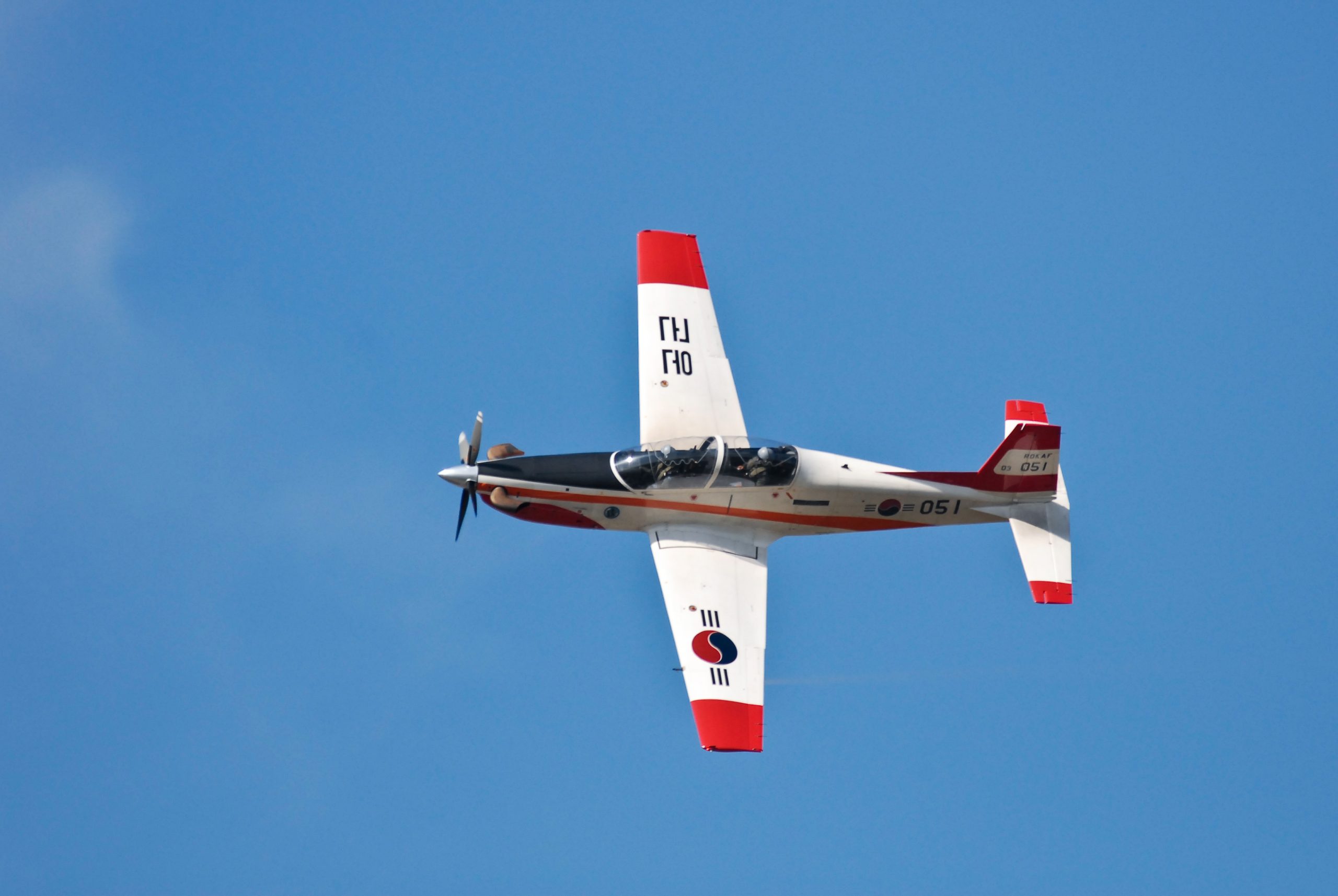
South Korea’s first fully indigenous aircraft — a single-turboprop basic trainer that grew into the armed KA-1 light-attack machine and became one of Asia’s most widely exported military trainers.
The KT-1 Woongbi: the jet that made Korea an aircraft-builder
For most of the 20th century South Korea flew aircraft designed and built by others. The KAI KT-1 Woongbi changed that. Launched as the KTX-1 programme in 1988 and developed by the government’s Agency for Defense Development (ADD) together with the aviation arm that would become Korea Aerospace Industries (KAI), it became the country’s first aircraft designed, developed and produced entirely at home — airframe, systems integration and flight testing all done in Korea.
The first prototype flew in November 1991. Development ran through several prototypes across the 1990s before the definitive production-standard aircraft was finalised, adopting the name “Woongbi” — roughly “soaring high” — and entering Republic of Korea Air Force (ROKAF) service around 2000 as the service’s standard basic trainer, replacing an ageing fleet of Cessna T-37 jets.
Underneath, the KT-1 is a conventional but well-judged design: a single Pratt & Whitney Canada PT6A-62 turboprop of about 950 shaft horsepower, a stepped tandem cockpit seating a student ahead of an instructor, ejection seats and a pressurised cabin. It is fully aerobatic and spin-cleared, exactly what a first fast-jet-track trainer needs to be. That solid basic airframe proved adaptable: fitted with five weapons hardpoints it became the armed KA-1 (originally KO-1), a light-attack and forward-air-control aircraft the ROKAF still operates.
The KT-1’s real significance, though, is commercial and strategic. It gave Korea a complete aircraft to sell, and export orders followed from Indonesia (KT-1B), Turkey (KT-1T, 55 aircraft), Peru (KT-1P, assembled locally) and Senegal (the armed KT-1S). More than 150 have been built across all variants. The programme also laid the industrial groundwork for KAI’s bigger project — the supersonic T-50 Golden Eagle — and turned a country that once only flew foreign aircraft into a genuine exporter of them.
01The KT-1 Woongbi’s origins: how the KTX-1 programme built Korea’s first indigenous aircraft
When the KTX-1 study began in 1988, South Korea had assembled and licence-built foreign types but had never carried a clean-sheet aircraft from concept to production. The Agency for Defense Development led the design with the future KAI (then rooted in Daewoo Heavy Industries’ aviation division) as industrial partner. Early prototypes flew from November 1991 and the design was refined repeatedly — wing, tail and systems all matured through the decade — before the production KT-1 was frozen and named “Woongbi.”
Doing it in-country was the point: the goal was not just a trainer but a domestic capability to design, integrate and certify aircraft. That capability is what made the follow-on programmes — the KA-1 light-attack version, the T-50 supersonic jet trainer, and later the KF-21 fighter — possible. The KT-1 is, in that sense, the seed of the entire modern Korean aerospace industry.
What makes the KT-1 Woongbi special
Korea’s first home-grown airframe
The KT-1 is South Korea’s first fully indigenous aircraft — designed, built and flight-tested at home rather than licence-assembled. That made it as much an industrial milestone as a training tool, proving Korea could take a clean-sheet design all the way to production and export.
PT6A turboprop, tandem cockpit
A single Pratt & Whitney Canada PT6A-62 of about 950 shp drives a Hartzell propeller. The stepped tandem cockpit seats student ahead of instructor on zero-zero ejection seats, is pressurised and fully aerobatic — a deliberate stepping-stone toward fast-jet training.
From trainer to KA-1 gunship
Give the airframe five hardpoints and it becomes the armed KA-1 — a light-attack and forward-air-control aircraft carrying rocket pods, gun pods and even AIM-9 Sidewinders. One design covers everything from a cadet’s first sortie to close air support.
02The KT-1 Woongbi’s engine and cockpit: what a PT6A basic trainer is built to do
The Pratt & Whitney Canada PT6A is one of the most successful turboprops ever made, and the KT-1’s PT6A-62 gives it the reliable, responsive power a training aircraft needs — roughly 950 shaft horsepower, smooth throttle response and turbine simplicity that suits a machine flown hard by students every day. The tandem, stepped cockpit gives the instructor in the back seat a genuine view forward over the student, and the pressurised cabin plus zero-zero ejection seats let the syllabus cover higher altitudes and full aerobatics safely. It is a deliberately “honest” aircraft: benign enough to teach in, capable enough to prepare pilots for supersonic jets.
03The KA-1: how the KT-1 Woongbi became a light-attack and forward-air-control aircraft
The armed derivative — first designated KO-1, later KA-1 — adds five hardpoints (two under each wing and one on the fuselage) plus targeting and communications gear for the forward-air-control (FAC) mission. In ROKAF service the KA-1 marks targets for strike aircraft and delivers light ordnance itself: rocket launchers, gun pods and, for self-defence, AIM-9 air-to-air missiles. It is cheap to fly, can loiter over a battlefield far longer than a fast jet, and turns a basic trainer design into a useful counter-insurgency and close-support asset — the same logic that has driven armed-trainer exports worldwide.
KAI KT-1 Woongbi full specifications
Baseline note: the figures below describe the production KT-1 as delivered to the Republic of Korea Air Force from November 2000 — the 950 shp PT6A-62 aeroplane — and not the KTX-1 prototype that first flew in 1991 on roughly half that power. Deltas for the armed KA-1 and for the KT-1B, KT-1C, KT-1T, KT-1P and KA-1S export standards are given in grey. Three widely repeated figures need correcting before the tables start. First, the aircraft has two maximum take-off weights and popular tables mix them: 2,540 kg is the clean aerobatic limit a training sortie actually flies at, 3,311 kg is the limit with external stores, and quoting the second while describing a basic trainer overstates the aeroplane by three-quarters of a tonne. Second, the much-quoted 648 km/h maximum is a true airspeed high up, around 4,570 m; other reputable tables give 450–500 km/h, which are cruise numbers, and the indicated airspeed a student sees on the gauge is lower again. Third, production totals of "over 150" are stale — Korean, Indonesian, Turkish, Peruvian and Senegalese orders together account for roughly 190 airframes, and the programme is not quite finished.
Dimensions & weights
- Crew
- 2 — student forward, instructor aft on a raised seat with a genuinely usable view over the front canopy bow. The stepped rear cockpit was one of the few things about the KTX-1 that survived the redesign untouched
- Length
- 10.26 m (33 ft 8 in); English-language tables usually round to 10.3 m
- Wingspan
- 10.60 m (34 ft 9 in) — almost exactly as wide as it is long, the classic tandem turboprop-trainer proportion
- Height
- 3.67 m (12 ft 0 in)
- Wing area
- 16.01 m² (172.3 sq ft)
- Aspect ratio
- 7.0 — modest. This is a wing sized for roll rate and honest stall behaviour at instructional weights, not for endurance
- Empty weight
- 1,910 kg (4,211 lb); Korean sources give 1,872 kg (4,127 lb), the difference being avionics and armament provision rather than a real disagreement
- Max take-off weight, aerobatic
- 2,540 kg (5,600 lb) — the clean, no-stores limit. This is the number that matters for a training syllabus, and the one most published tables leave out
- Max take-off weight, with stores
- 3,311 kg (7,300 lb) — the KA-1 and armed export figure. The 771 kg between the two is the entire military payload of the type, fuel tanks included
- Wing loading
- 159 kg/m² (32.5 lb/sq ft) clean; 207 kg/m² (42.4 lb/sq ft) at maximum stores weight. For comparison, a Pilatus PC-9 sits at about 158 kg/m² and a Cessna T-37B at about 156 — the KT-1 was aimed squarely at that band, deliberately
- Power loading
- 2.67 kg/shp (5.9 lb/shp) clean — a very healthy figure, and the reason a KT-1 climbs away from a T-37 as though the jet were tied to the ground
- Internal fuel
- 551 L (146 US gal), roughly 440 kg (970 lb) of Jet A-1 in integral wing tanks. A smaller 416 L figure appears in some KT-1P material and is best treated as a usable rather than total quantity
- External fuel
- 2 × 189 L (2 × 50 US gal) drop tanks on the inboard pylons — the ferry fit, and the reason a Peruvian or Senegalese aircraft can be repositioned across a country without a tanker
Performance
- Maximum level speed
- 648 km/h (350 kt, 403 mph) true airspeed at about 4,570 m (15,000 ft). KAI and the Republic of Korea Air Force both quote 350 kt; sources quoting 450–500 km/h are describing cruise, not maximum
- Cruise speed
- 500 km/h (270 kt, 311 mph) — the number a transit sortie is actually planned at
- Stall speed
- 132 km/h (71 kt, 82 mph) with flaps and gear down. Clean stall is higher and is not published; the low landing-configuration figure is what makes the aircraft forgiving in the circuit
- Rate of climb, sea level
- 17.8 m/s (3,500 ft/min) — better than most jets a 1970s student would have flown, and the single most persuasive number in KAI’s sales pitch against the T-37
- Service ceiling
- 11,580 m (38,000 ft) — identical to the published PC-9 figure, which is not a coincidence so much as a shared PT6A and a shared design brief
- Typical KA-1 mission altitude
- 6,700 m (22,000 ft) is the operational ceiling Korean sources quote for the armed variant, which flies its forward-air-control work far lower — usually between 300 and 3,000 m over the fire-support area
- Range, internal fuel
- 1,333 km (720 nmi, 828 mi)
- Ferry range
- 2,070 km (1,120 nmi, 1,286 mi) with two drop tanks. GlobalSecurity and several Korean tables give about 1,688–1,700 km, an intermediate figure that appears to assume one tank
- Endurance
- ~3 h 45 min on internal fuel; KAI’s KT-1P material claims four hours and airforce-technology has published five, which would require both drop tanks and an economical profile
- Load factor, aerobatic
- +7.0 / −3.5 g — a full aerobatic and spinning clearance, which is the entire reason a basic trainer costs what it does
- Load factor, with external stores
- +4.5 / −2.3 g — Korean sources give −2.25 g for the KA-1. Hanging rockets and gun pods on the aeroplane costs it more than a third of its manoeuvre envelope
Propulsion & systems
- Engine
- 1 × Pratt & Whitney Canada PT6A-62 free-turbine turboprop, 708 kW (950 shp) flat-rated. The early KTX-1 prototypes flew behind a 410 kW (550 shp) PT6A-25A and were visibly underpowered; the jump to the -62 is the single change that turned a demonstrator into an aeroplane the air force would buy
- Propeller
- Hartzell four-blade constant-speed, 2.44 m (8 ft 0 in) diameter, fully feathering, governed at 2,000 rpm. The four-blade choice is a noise and ground-clearance decision as much as an efficiency one
- Fuel
- Jet A-1 — a turbine trainer removes the avgas logistics chain that the piston-and-jet mixed fleets of the 1980s had to maintain, which was a large part of the operating-cost case for the type
- Cockpit
- Tandem, one-piece rearward-hinged canopy — unpressurised, with an onboard oxygen generating system (OBOGS) on later builds and export standards. Night-vision-goggle compatible lighting on the KA-1 and export aircraft
- Ejection seats
- 2 × Martin-Baker Mk.16 class, zero-zero — a genuine zero-height, zero-speed capability. It is worth saying plainly that in the type’s worst accident, the 2022 Sacheon mid-air, all four occupants got out and none survived; the seat is not a guarantee at low level in a disturbed airframe
- Avionics
- CMC Electronics Cockpit 4000 integrated suite on the KA-1, KT-1P and later export builds — head-up display, two multi-function displays, up-front control panel, FV-4000 open-architecture mission computer, HOTAS. The Indonesian KT-1B was deliberately simplified onto commercial off-the-shelf equipment to hit a price
- Navigation
- GPS/INS, VOR/ILS, TACAN (L-3 RT-1634(V) on the KT-1P), IFF. Meggitt integrated standby flight display
- Landing gear
- Retractable tricycle, hydraulically actuated — steerable nosewheel, single wheel per unit, sized for semi-prepared strips rather than for carrier-style arrivals
- Hardpoints
- 5 on the KA-1 — two under each wing plus one under the fuselage. The plain KT-1 trainer carries four underwing points cleared principally for practice bomb carriers and drop tanks
- Structure
- Aluminium-alloy semi-monocoque — conventional, and intentionally so. KAI’s claim that the KT-1 was the first aircraft in its class designed entirely on computer is the more interesting fact: the CAD tooling and the engineering cadre built for it went straight into the T-50
- Domestic content
- 80.9% by item count — but only 60.4% by cost, and the gap is the whole honest story of the programme. The engine, the propeller, the seats and the avionics core were all imported, and they are where the money is
04The KT-1 Woongbi’s operating costs: why no firm price exists
KAI does not publish a standard flyaway price or a cost-per-flight-hour figure for the KT-1, and export contract values bundle spares, training and support, so any single dollar figure is an estimate. Reported deals put the unit cost in the low single-digit millions of US dollars — an order-of-magnitude guess, not a sourced list price. What is certain is the class economics: as a single-turboprop trainer the KT-1 costs a small fraction of a jet trainer to operate — turboprop trainers of this size are commonly cited in the low hundreds of dollars per flight hour against the low thousands for jets. That gap is precisely why air forces buy turboprop trainers for early flying training. Treat any exact KT-1 cost figure you see as an estimate.
Armament & payload
The KA-1 arms the Woongbi to mark targets rather than to destroy them, and the weapons list is honest about it
The KT-1 in its basic training form carries almost nothing: four underwing points, practice bomb carriers, occasionally a drop tank. The armed KA-1 — designated KO-1 until 1 October 2007, when the Republic of Korea Air Force renamed it to reflect a light-attack rather than a purely observation role — adds a fifth, centreline station and a small, deliberately unambitious inventory of 70 mm rockets and podded 12.7 mm guns. That is the whole of it. There is no internal gun, no radar, no integrated precision weapon, and the aeroplane loses more than a third of its manoeuvre envelope the moment stores go on the pylons. What the KA-1 does carry is the white-phosphorus marking rocket, and that is the point: flying from Wonju with the 8th Fighter Wing, its job is to loiter over a contact, find the target, mark it, and talk an F-15K or an FA-50 onto it. Fits vary sharply by customer: the Indonesian KT-1B was bought as a lightly armed trainer, the Senegalese KA-1S as a light-attack and airspace-policing aircraft for an air force that had no fixed-wing combat fleet at all, and Peru operates both standards side by side.
Gun
- No internal gun, on any variant. Nothing in the KT-1 airframe was ever laid out around a fixed weapon and no customer has asked for one.
- FN Herstal HMP-250 podded 12.7 mm (.50 in) machine gun, 250 rounds per pod, normally carried in pairs on the inboard wing stations of the KA-1.
- The larger HMP-400 pod (400 rounds) appears in KAI export literature; Korean service practice is the 250-round pod.
- At 12.7 mm this is a strafing and suppression weapon against soft targets and light vehicles. It is not an anti-armour gun and was never sold as one.
Air-to-air
- AIM-9 Sidewinder carriage is advertised by KAI and appears in the Senegalese and Peruvian sales material as a self-defence option.
- No radar, no beyond-visual-range capability, no helmet-mounted sight, no data link for an air-to-air picture.
- No Republic of Korea Air Force KT-1 or KA-1 unit carries air-to-air missiles in routine service, and no operational use of the fit has been reported anywhere.
- Treat this card as a brochure capability. A 350 kt turboprop with a Sidewinder is a deterrent against slow, low intruders and nothing more.
Air-to-surface guided
- None integrated as standard on any operational KT-1 family aircraft. This is the type’s largest capability gap and it is a deliberate one.
- Guided 70 mm rockets and laser-guided bombs have been discussed in export marketing for the armed standards; no operator has fielded them on the type.
- The centreline forward-looking infrared and laser rangefinder pod on the KT-1C and KA-1 export standard gives the crew the ability to find and range a target, not to guide a weapon onto it themselves.
- The KA-1’s contribution to a precision strike is the smoke rocket and the radio call. The precision belongs to whoever answers.
Bombs
- Practice bomb carriers on the underwing pylons are the standard and, in Korean training service, essentially the only bomb fit — the pylons exist so that a student learns weapons circuits on a cheap aeroplane.
- Free-fall bombs to Mk 82 class are quoted in KAI export literature for the KA-1 and KT-1C, subject to customer requirement.
- No Republic of Korea Air Force KA-1 mission profile is built around bomb delivery; the aircraft is a controller first.
- With 771 kg between the clean and maximum stores weights, a meaningful bomb load and a useful fuel state are close to mutually exclusive.
Rockets
- LAU-131/A seven-tube 70 mm (2.75 in) launchers — the type’s principal air-to-ground weapon. Korean sources describe a standard fit of two launchers, 14 rockets total; four launchers are possible at the cost of the gun pods.
- Hydra 70 family warheads: high explosive, flechette, and white-phosphorus smoke.
- The smoke round is the important one. Marking a target with white phosphorus for a fast jet is the KA-1’s reason for existing and the mission the Republic of Korea Air Force actually bought twenty of them for.
- Unguided 70 mm against a moving or hardened target from a turboprop is a weapon of the 1960s. It works against what it works against.
Pods & other stores
- Centreline forward-looking infrared (FLIR) sensor and laser rangefinder pod on the KT-1C and armed export standards — the single most valuable thing hung on the aeroplane.
- Two 189 L (50 US gal) drop tanks on the inboard pylons, for ferry and long-loiter sorties.
- Chaff and flare dispensers are quoted for the KT-1C; there is no published radar warning receiver or missile approach warning fit.
- Five hardpoints on the KA-1, four on the plain trainer. Nothing carried is heavy, and two drop tanks consume roughly a third of the available external weight before a single weapon is loaded.
Three typical loadouts
- Basic and advanced flying training, 3rd Flying Training Wing, Sacheon
- Clean airframe, no external stores, full internal fuel. Aerobatic limits of +7.0 / −3.5 g apply, spinning is cleared, and a typical sortie runs 60 to 90 minutes. This is what most of the roughly 190 airframes built have spent their whole lives doing.
- Forward air control, KA-1, 8th Fighter Wing, Wonju
- Two LAU-131/A seven-tube launchers with white-phosphorus marking rockets, one or two HMP-250 12.7 mm gun pods, centreline FLIR and laser rangefinder pod. The aircraft loiters over the fire-support area, identifies and marks, and hands the target to fast air. Manoeuvre limits drop to +4.5 / −2.3 g.
- Light attack and airspace policing, KA-1S Senegal or KA-1P Peru
- Two gun pods inboard, two rocket launchers outboard, or one drop tank traded against a launcher for range over territory that has no other combat aircraft over it. For Senegal, which had retired its Fouga Magisters and had no fixed-wing combat fleet at all, four of these were the entire armed air force until the L-39NG order matured.
Sourcing caveat: KAI publishes no consolidated weapons manual for the KT-1 family, and the stores above are assembled from KAI export literature, the airforce-technology project files on the KT-1, KA-1 and KT-1P, Korean-language service descriptions, and operator reporting for Korea, Peru and Senegal. Station allocations, a single authoritative maximum external load, and the exact clearance status of the AIM-9 fit are not in the public record. Where a brochure gives a precise figure it is usually customer-specific rather than fleet-wide, and the four-versus-five hardpoint count in circulation reflects the difference between the plain trainer and the armed KA-1 rather than a contradiction.
Variants
The KT-1 family is short — one prototype series, one trainer, one armed derivative and four export badges — and its real product was an industry
The KTX programme opened in 1988 at the Agency for Defense Development, which held design authority while what would become Korea Aerospace Industries — then the aerospace arm of Daewoo Heavy Industries — did the detailed design and the building. The first KTX-1 "Yeo-myung" ("dawn") prototype flew in late 1991, and the programme then spent most of a decade being unpicked and rebuilt. About nine airframes were flown, several with different engines, and the aeroplane that finally emerged was bigger, heavier and fitted with a 950 shp PT6A-62 in place of the 550 shp PT6A-25A of the early machines. The name Woongbi — roughly "soaring high" — was awarded in 1995; production certification came from the Ministry of National Defense in 1998; the first aircraft reached the Republic of Korea Air Force in November 2000 and training began in 2001. Twelve years from programme start to first squadron delivery is slow by any standard, and it was the price of learning to design an aircraft rather than assemble one.
What the money bought was not primarily an aeroplane. The development budget was 104.7 billion won, and the resulting aircraft was 80.9% domestic by item count but only 60.4% by cost — engine, propeller, ejection seats and avionics core all imported. The honest reading is that Korea built the airframe, the systems integration and, above all, the engineering organisation. KAI was consolidated in 1999 out of Samsung Aerospace, the Daewoo Heavy Industries aerospace division and Hyundai Space and Aircraft at the government’s insistence after the Asian financial crisis, and the CAD tooling, the flight-test discipline and the certification experience from the KT-1 went straight into the supersonic T-50 Golden Eagle and, two decades later, the KF-21 Boramae. Judged as a trainer the KT-1 is competent and unremarkable. Judged as the first rung of a ladder that reached a fifth-generation-adjacent fighter, it is one of the most consequential light aircraft of the last forty years.
One popular claim about the type needs correcting. The Republic of Korea Air Force’s Black Eagles did not fly the KT-1. The team flew six Cessna A-37B Dragonflies from December 1994 until it was stood down on 31 October 2007, and reformed in August 2009 on the T-50B, with no intervening turboprop era. The display team that made the Woongbi famous is Indonesian: the Jupiter Aerobatic Team of Training Squadron 102 at Adisucipto, reformed in 2008 on four KT-1Bs and later expanded to six in red and white with smoke generators. Jupiter is also responsible for the type’s most-watched accident — two aircraft touched during a rehearsal for LIMA at Langkawi on 15 March 2015, one falling onto an empty house; all four crew ejected and survived.
The safety record deserves to be stated plainly rather than glossed. Over twenty-five years and roughly 190 airframes the KT-1 has been involved in a handful of publicly reported losses: a fatal crash after take-off from Sacheon on 13 November 2003 in which the student died and the instructor ejected; the Langkawi mid-air of 2015; a Turkish KT-1T into the Aegean on 9 April 2021 with both crew recovered; a Republic of Korea Air Force KA-1 lost after take-off on 26 December 2022 with the crew unhurt; and a Peruvian KT-1P that went missing near Pisco on 21 May 2025, the pilot found dead after a sixteen-day search. The worst by far was on 1 April 2022, when two KT-1s from the training wing at Sacheon collided about six kilometres south of the base roughly five minutes after the first got airborne. All four occupants — two trainee first lieutenants and two civilian instructors — ejected. All four were found dead. That is not a scandalous record for a fleet of this size and age, but it is not a spotless one either, and the 2022 collision is a reminder that a zero-zero seat is not a zero-altitude, disturbed-airframe seat.
- KTX-1 Yeo-myung (1988–1998, about nine airframes)
- Agency for Defense Development technology demonstrator, first flown in late 1991 — November and December both appear in the sources. Smaller and lighter than the production aircraft, with successive prototypes flown behind different engines including the 550 shp PT6A-25A. No KTX-1 entered service.
- KT-1 Woongbi (certified 1998; 85 delivered to the ROKAF from November 2000)
- The production basic trainer: 950 shp PT6A-62, four underwing points for practice stores, full aerobatic and spinning clearance. Replaced the Cessna T-37 in the Korean primary and basic syllabus at the 3rd Flying Training Wing, Sacheon.
- KA-1, originally KO-1 (developed 2001–03; 20 for the ROKAF; renamed 1 October 2007)
- Armed forward-air-control and light-attack derivative. Head-up display, up-front control panel, multi-function displays, Mk.16 seats and five hardpoints. Flies with the 8th Fighter Wing at Wonju alongside the FA-50 rather than with the training organisation.
- KT-1B (Indonesia, ordered 2001–06; about 19 delivered)
- The first export, and the one that proved the type could be sold. Avionics deliberately simplified onto commercial off-the-shelf equipment to reach a price; the initial package of seven aircraft plus training and spares was worth around US$60 million, with twelve more following. Flown by Training Squadron 102 and by the Jupiter Aerobatic Team.
- KT-1C (export demonstrator standard, from the mid-2000s)
- Armed export configuration used as the sales baseline: centreline FLIR and laser rangefinder pod, 12.7 mm gun pods, chaff and flare dispensers, training missiles, rockets and unguided bombs. More a marketing standard than a production block, and the ancestor of the Peruvian and Senegalese fits.
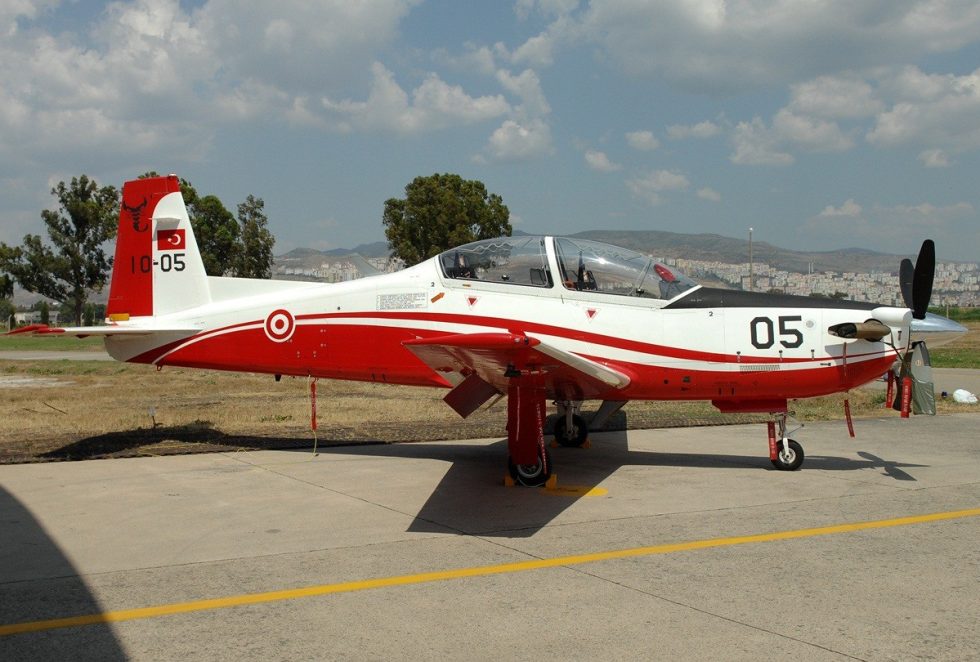
- KT-1T (Turkey, ordered June 2007; 40 delivered October 2010 to June 2012)
- The breakthrough sale, worth roughly US$350 million, won against the Raytheon T-6 Texan II and the Embraer EMB 314 Super Tucano. Co-produced with Turkish Aerospace Industries near Ankara and used to replace the T-37. Figures of 55 aircraft in circulation reflect an option and follow-on talk that were not exercised; 40 is the delivered number.
- KT-1P and KA-1P (Peru, ordered November 2012; 20 delivered from October 2014)
- Ten trainers and ten armed aircraft for about US$210 million. Four were built in Korea; the remaining sixteen had structural parts made and final assembly performed by the Peruvian air force’s own SEMAN maintenance service at Las Palmas in Lima, the first Peruvian-assembled aircraft flying in April 2015. Cockpit 4000 avionics, L-3 TACAN, Meggitt standby display. Serving with Grupo Aéreo No. 51 at Pisco.
- KT-1S and KA-1S (Senegal, ordered July 2016; 4 delivered April 2020 to 2021)
- KAI’s first African sale, following a 2015 presidential visit. Four aircraft configurable between trainer and light attack with gun pods, rockets, bombs and a claimed Sidewinder option. With the Fouga Magisters gone, these four constituted Senegal’s entire fixed-wing armed capability pending L-39NG deliveries. KAI kept technicians on site until the warranty expired in March 2022 and reported no accidents in that period.
- Campaigns that came to nothing (1990s–2010s)
- A joint Korean-Indian committee was set up in 2010 around a possible 60-aircraft basic trainer requirement and never converted; various Southeast Asian, Middle Eastern and South American bids were lost, mostly to the T-6 and the Super Tucano. The KT-1 has been a persistent runner-up in a market where the Texan II’s United States pedigree and the Super Tucano’s combat record are hard to argue with.
Closing caveat: the frequently quoted "more than 150 built" is an undercount. Adding 85 KT-1s and 20 KA-1s for Korea, about 19 KT-1Bs for Indonesia, 40 KT-1Ts for Turkey, 20 KT-1P/KA-1Ps for Peru and 4 KA-1Ss for Senegal gives roughly 188–192 production airframes, plus about nine KTX-1 and pre-production machines that were never operational aircraft. Indonesian totals are the least firm: 19 is the figure Indonesian sources give, English-language tables usually say 20, and independent assessments have put only about 15 in flyable condition. Turkish totals of 55 and Korean totals of 103 rather than 105 both appear in reputable places; the differences are options, attrition and whether the KA-1 is counted with the trainers. Nothing here is a survivor count of a retired type — the KT-1 is still being flown, still being armed, and still, occasionally, still being offered.
Operators today
Five air forces fly the Woongbi, and the Republic of Korea Air Force owns more than half of every one built
The KT-1 is not a museum type. It is the primary and basic trainer of the Korean, Turkish, Peruvian, Indonesian and Senegalese air forces, and in three of those it is also an armed aircraft that flies operational sorties. The bars below count airframes delivered and carried on charge rather than airframes serviceable on a given morning — the distinction matters most for Indonesia, where independent assessments have put roughly fifteen of the fleet in flyable condition. Two aircraft in these totals are known to have been lost since delivery (one Turkish in 2021, one Peruvian in 2025) and the Korean figure includes the twenty armed KA-1s of the 8th Fighter Wing at Wonju, which are not part of the training organisation at all.
These are estimates built from delivery and contract records rather than from a single inventory snapshot: Korean and Senegalese figures cross-checked against Republic of Korea Air Force and defenceWeb reporting, Turkish against the June 2007 contract and the 2010–12 delivery run, Peruvian against the November 2012 SEMAN co-production programme, Indonesian against Indonesian-language sources that give 19 where English tables give 20. Many airframes counted on paper are stored, in deep overhaul, or not operational, and the Indonesian fleet in particular is usually assessed well below its delivered strength. Entries that could not be corroborated in at least two places have been left out, and no competitor dataset has been copied.
From KTX-1 study to global trainer
Programme launched
South Korea starts the KTX-1 project to design a home-grown basic trainer, led by the Agency for Defense Development with the future KAI.
First flight
The first KTX-1 prototype takes to the air in November — the maiden flight of an aircraft designed and built in Korea.
Design matured
Successive prototypes refine the wing, tail and systems; the production standard is frozen and named “Woongbi.”
Enters ROKAF service
The KT-1 becomes the Republic of Korea Air Force’s standard basic trainer, replacing the Cessna T-37.
The armed KA-1
The armed KA-1 (originally KO-1) enters service as a light-attack and forward-air-control aircraft with five hardpoints.
First exports
Indonesia orders the KT-1B and Turkey signs for 55 KT-1T trainers — the type’s breakthrough on the world market.
Peru and Senegal
Peru fields the KT-1P, assembled locally, and Senegal takes the armed KT-1S — widening the operator map across three continents.
Still training, still selling
The KT-1 remains in front-line training service worldwide and underpins KAI’s rise to the T-50 and KF-21.
The KT-1 Woongbi: twelve stories
The programme that started an industry
The KTX-1 study set out to build Korea’s first home-designed aircraft.
Read the full story
Wheels up on a Korean design
In November 1991 the first KTX-1 prototype flew — a national first.
Read the full story
Why “Woongbi”
The production trainer took a name meaning roughly “soaring high.”
Read the full story
Replacing the T-37
The KT-1 became the ROKAF’s standard basic trainer around 2000.
Read the full story
The PT6A choice
A proven Pratt & Whitney Canada turboprop gave the trainer its reliable heart.
Read the full story
From cadet trainer to gunship
Five hardpoints turned the KT-1 into a light-attack aircraft.
Read the full story
The first foreign buyer
Indonesia became the KT-1’s launch export customer with the KT-1B.
Read the full story
Fifty-five for Turkey
Turkey ordered 55 KT-1T trainers, delivered through the early 2010s.
Read the full story
Built in Lima
Peru didn’t just buy the KT-1 — it assembled it locally.
Read the full story
The armed KT-1S
Senegal took the armed light-attack version.
Read the full story
The road to the T-50
The KT-1 built the industrial base for Korea’s supersonic trainer.
Read the full story
Still on the flight line
More than 150 built, and still training pilots on three continents.
Read the full story
The KT-1 Woongbi in pictures
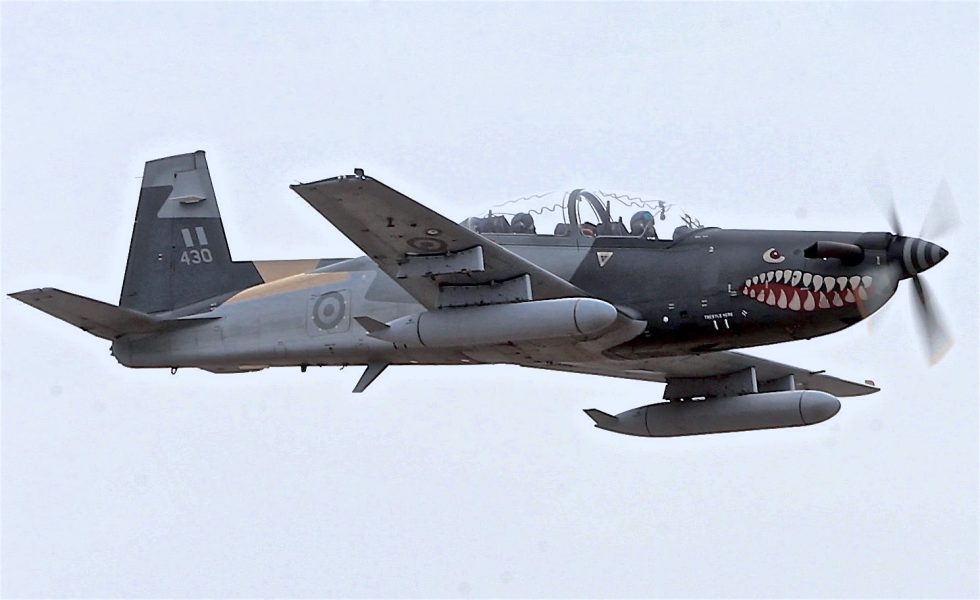
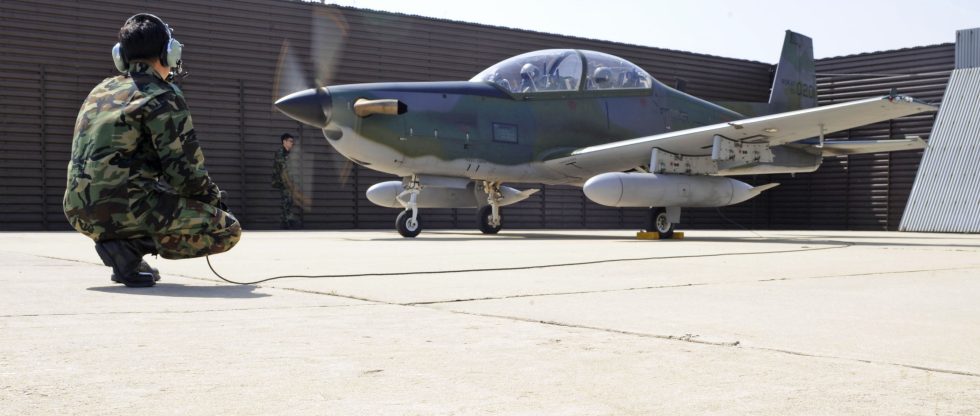
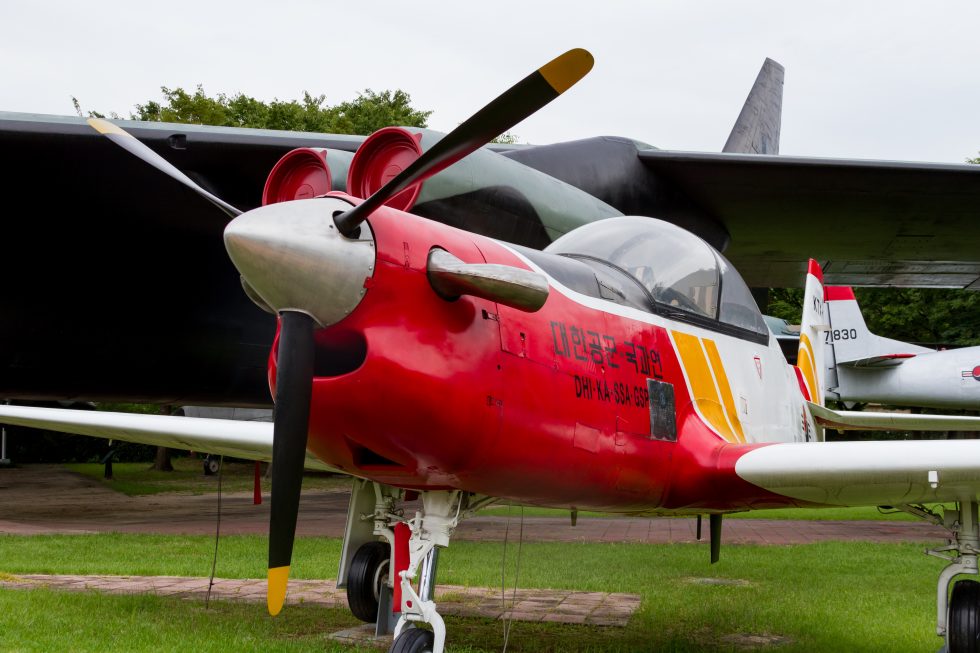
The KT-1 Woongbi in motion
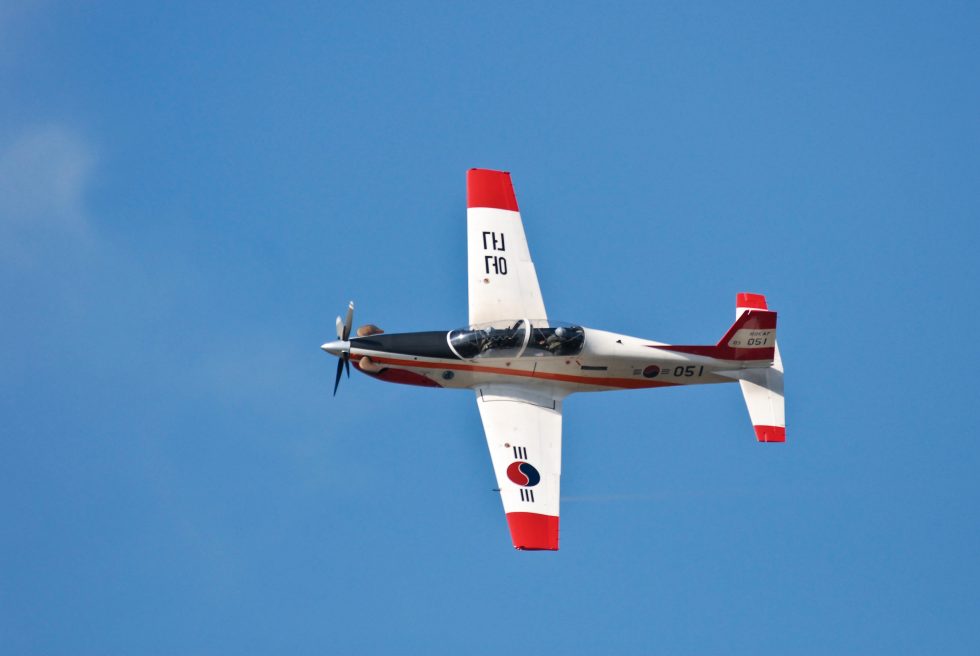
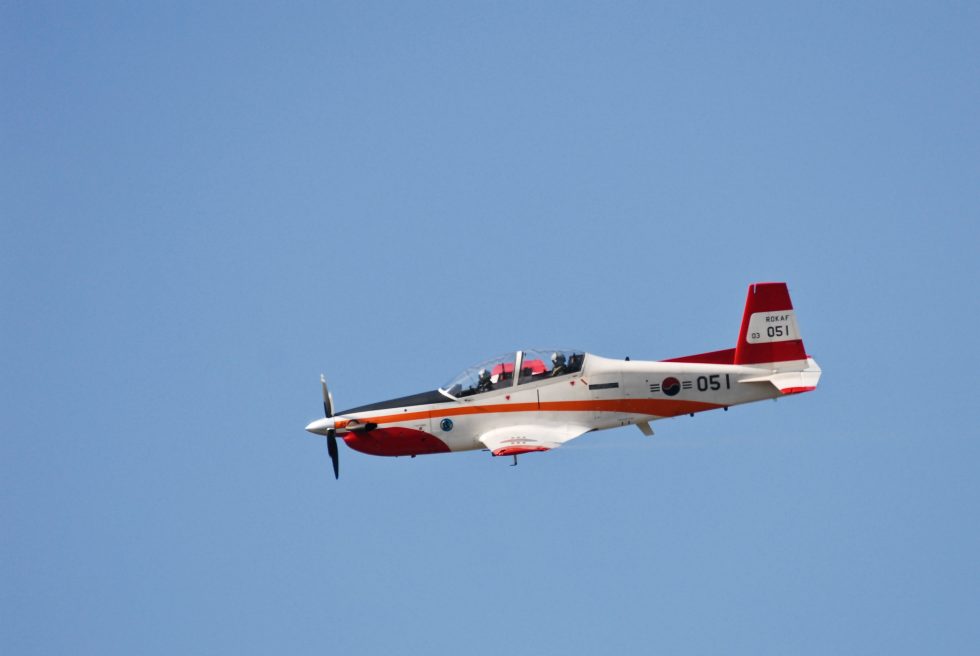
KAI KT-1 Woongbi flight display at ADEX 2021. Airshow footage of the Woongbi putting its aerobatic handling on show at Seoul’s ADEX exhibition — a good look at the trainer that started Korea’s aerospace industry.
Where the KT-1 Woongbi flies
The KT-1 Woongbi’s record: exports, not kills
The KT-1 is a trainer, so its record is written in graduates and sales rather than air-to-air kills. Its achievements are industrial and commercial: it made South Korea an aircraft-building nation, spawned a capable light-attack variant, and became one of Asia’s most successful military-trainer exports.
See how trainers compare in the military aircraft database. Figures are approximate and vary by source.
Everything people ask about the KAI KT-1
Can I fly in a KAI KT-1?
What is the KAI KT-1 Woongbi?
Who makes the KT-1 and where?
What engine does the KT-1 use?
What is the difference between the KT-1 and the KA-1?
Which countries operate the KT-1?
How fast is the KT-1 Woongbi?
Is the KT-1 still in service?
You can’t fly the KT-1.
These, you can.
Some legends only live in museums — others are fuelled and waiting. MiGFlug has put civilians in real military jet cockpits since 2004.
 Fly the L-39 AlbatrosThe world’s most-flown jet trainer — aerobatics included
 Fly the F-104 Starfighter“The missile with a man in it”
 Fly the MiG-21The Cold War’s most-produced jet
 Fly the T-33 Shooting StarAmerica’s first jet trainer
 Fly the DH VampireA piece of early jet history
 Fly the S.211Agile Italian jet trainer
 Fly the MB-326The classic Aermacchi jet
 Fly the MiG-15The Soviet legend of the Korean War
Continue the tour
Every fact, checked
- Korea Aerospace Industries (KAI)Manufacturer reference for the KT-1 / KA-1 family and its development history.
- Airforce Technology — KT-1 project profileProgramme timeline, engine, dimensions and export figures.
- Military Factory — KAI KT-1 Woong-BeeSpecifications, variants and operator overview.
- JanesReference for KT-1 variants, orders and in-service status.
- Army Recognition — Indonesia KT-1B service-life extension (2025)Recent export-fleet support news.
- Republic of Korea Air Force (ROKAF)Operator reference for the KT-1 trainer and KA-1 light-attack fleet.
- The War Memorial of KoreaReference for the preserved KT-1 airframe on public display in Seoul.