
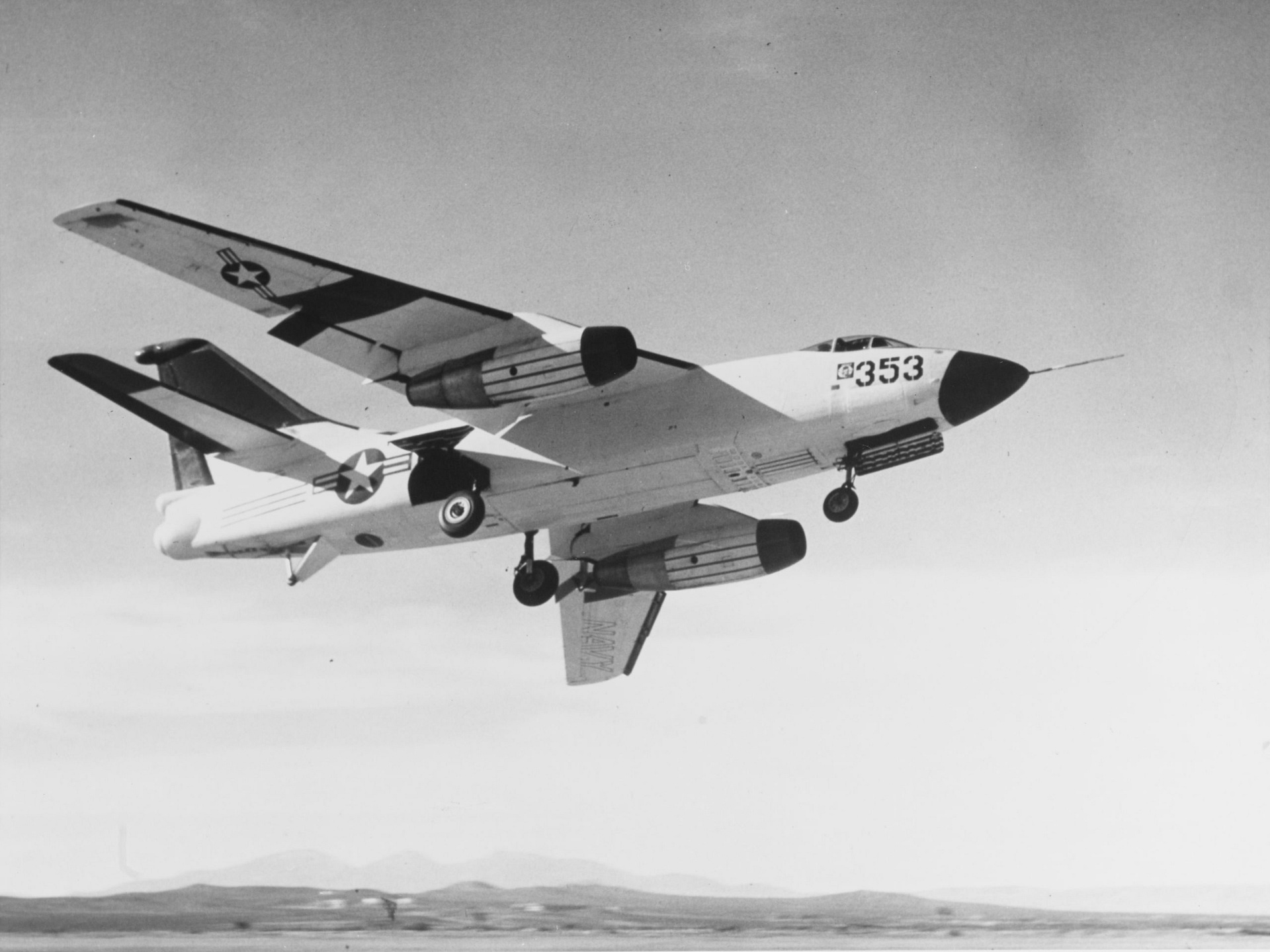
Douglas A-3 Skywarrior
“The Whale”
The largest and heaviest aircraft ever to operate routinely from an aircraft carrier — a carrier-borne nuclear bomber that outlived its own mission to become the fleet’s tanker, spy and electronic-warfare workhorse for 35 years.
The nuclear bomber that flew from a carrier deck
In the late 1940s the U.S. Navy wanted something the other services said was impossible: a jet bomber that could lift an early atomic bomb off an aircraft carrier and carry it some 2,000 nautical miles to a target. Nuclear weapons of the era were huge, and every existing design that could haul one was far too big and heavy for a flight deck. At Douglas, chief engineer Ed Heinemann — the man behind the tiny A-4 Skyhawk — answered with fanatical weight discipline, and won the contract in 1949.
The result first flew on 28 October 1952 and reached the fleet in 1956. Even trimmed to Heinemann’s limits it was enormous: at over 70,000 lb loaded, the Skywarrior is widely described as the largest and heaviest aircraft ever to operate routinely from a carrier. The crews took one look at the slab-sided giant and named it “The Whale.” Its outer wings and vertical tail folded so it could squeeze onto carrier lifts and into hangar bays.
To save weight, Heinemann made one notorious choice: no ejection seats. The three-man crew was meant to bail out down an internal chute — a system that worked poorly low, fast or over water. Aviators turned the A3D designation into a grim joke: “All Three Dead.” Yet the airframe proved astonishingly adaptable. As the nuclear-strike role faded, the Whale was rebuilt into buddy-tankers (KA-3B), electronic-warfare and reconnaissance platforms (EA-3B, EKA-3B) that served through Vietnam and, in tiny numbers, all the way to 1991.
01The A-3 Skywarrior’s land-based cousin: the USAF B-66 Destroyer
The U.S. Air Force liked the Skywarrior enough to adapt it into a land-based tactical bomber and reconnaissance aircraft, the Douglas B-66 Destroyer. On paper it was the same family, but the redesign went much further than expected: a reworked fuselage and wing, different Allison J71 engines in place of the J57s, revised landing gear — and, tellingly, ejection seats, which the carrier A-3 never had. Aviation writers such as Bill Gunston argued many of the changes were needless inter-service tinkering, but the B-66 gives a clear picture of what a Skywarrior looked like once Heinemann’s brutal carrier weight limits were relaxed. We mention it only in passing here — the B-66 is a story of its own.
What makes the A-3 Skywarrior special
Heinemann’s weight obsession
The Navy’s requirement demanded a carrier jet able to loft a ~10,000 lb atomic bomb roughly 2,000 nautical miles. Rivals grew heavy; Ed Heinemann’s Douglas team came in reportedly around 32,000 lb lighter than competing proposals — light enough to work from older, modified WWII-era decks. That obsessive trimming is the reason a bomber this size could go to sea at all.
The biggest thing on the boat — and it folded
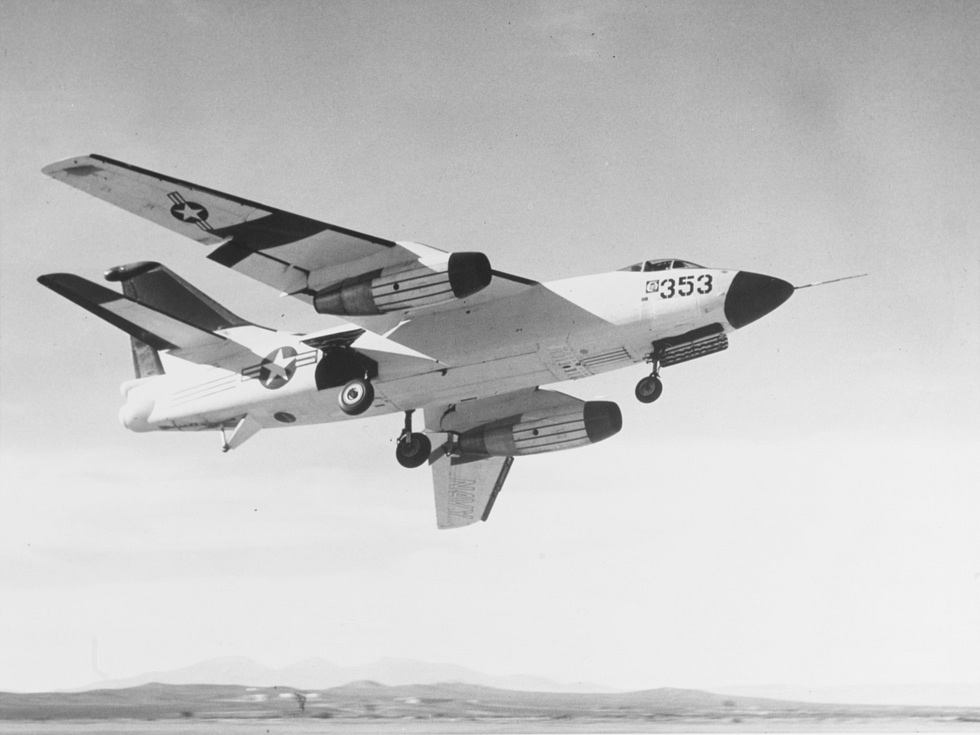
Even lightened, the A-3 was huge: over 70,000 lb loaded, the largest and heaviest aircraft to routinely fly from carriers, hence “The Whale.” To fit lifts and hangars, Heinemann gave it folding outer wings and a folding vertical tail. Twin podded Pratt & Whitney J57 turbojets hung under the wing in nacelles with distinctive bullet-shaped fairings — an instantly recognisable Skywarrior signature.
A nuclear bomb bay and no ejection seats
The Skywarrior was built around a large internal bomb bay sized for early atomic weapons (later cited at up to ~12,000 lb of ordnance). To hold the weight down, Heinemann deleted the ejection seats; the crew of three was to escape down an internal chute to the belly — a system nearly useless in low, fast or water emergencies, and the origin of the aircraft’s darkest nickname.
02The A-3 Skywarrior’s escape chute: why “All Three Dead” stuck
Ejection seats are heavy, and Heinemann was fighting for every pound, so the Skywarrior went to sea without them. Instead the three-man crew was meant to slide down an internal chute that ran from the cockpit to a hatch on the aircraft’s belly. In theory it worked; in practice it needed altitude, a controlled attitude and time — exactly what a low-level miss, a catapult failure or a ditching denied. Fatal accidents in which crews could not get out gave the A3D designation its grim gloss among aviators: “All Three Dead.” It was gallows humour built on a real and well-documented hazard, not just a bad joke.
03The A-3 Skywarrior’s second life: from nuclear bomber to tanker and spy plane
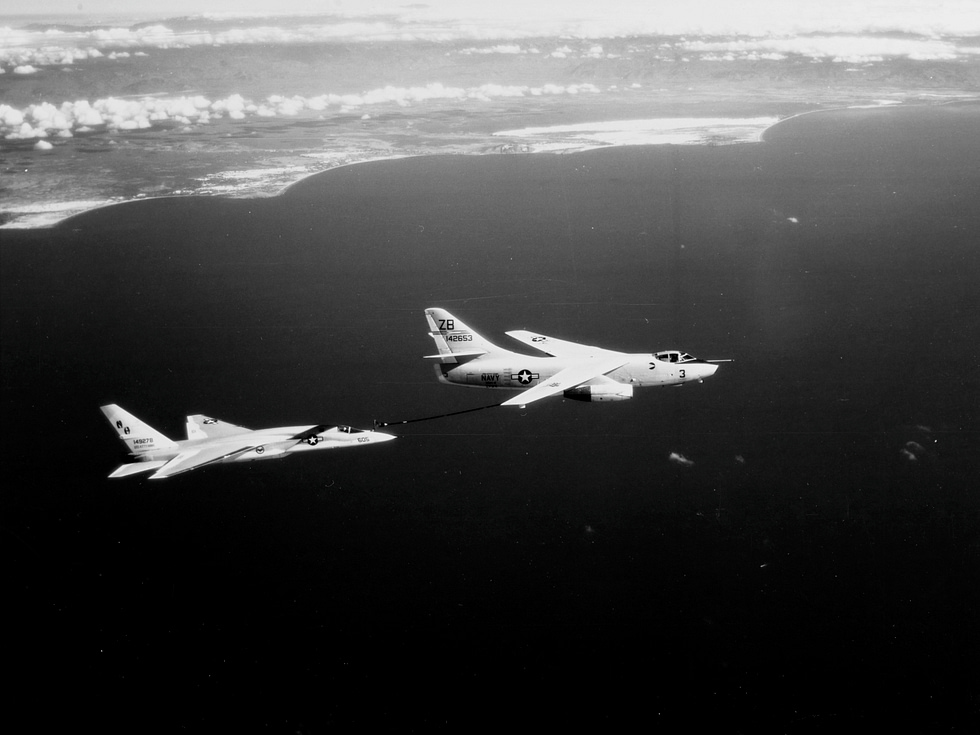
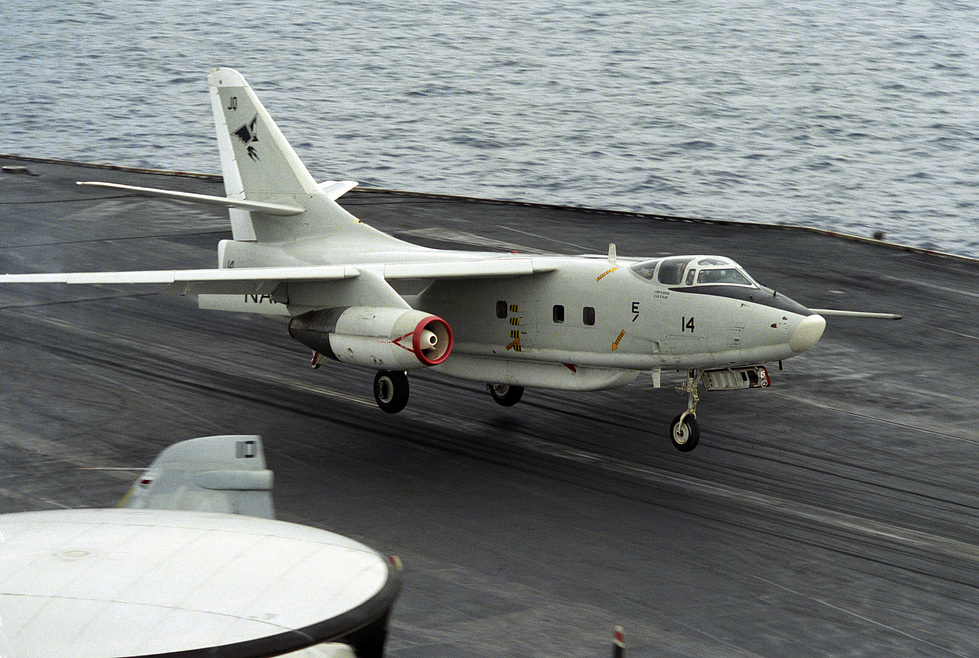
By the mid-1960s the carrier nuclear-strike mission was passing to smaller aircraft and submarine-launched missiles, but the Whale’s big, long-legged airframe made it ideal for other work. Converted KA-3B buddy-tankers turned it into the air wing’s flying gas station over Vietnam, saving battle-damaged jets that could not otherwise reach the boat. EKA-3B aircraft combined tanking with electronic countermeasures, while the EA-3B packed its former bomb bay with up to four electronic-intelligence operators — nicknamed “crows” — expanding the crew from three to seven. That flexibility, not the atom bomb, is why the Whale served for 35 years.
Douglas A-3 Skywarrior full specifications
Airframe & Performance
- طاقم
- 3 (pilot, bombardier/navigator, crewman); EA-3B up to 7
- طول
- ~23.3 m (76 ft 4 in)
- طول الجناحين
- ~22.1 m (72 ft 6 in)
- ارتفاع
- ~6.95 m (22 ft 9 in)
- منطقة الجناح
- ~75.4 m² (812 sq ft)
- الوزن الفارغ
- ~17,900 kg (~39,400 lb)
- Max takeoff weight
- ~37,200 kg (~82,000 lb)
- Max speed
- ~982 km/h (~610 mph) at altitude
- يتراوح
- ~3,380 km (~2,100 mi) ferry; combat radius less (varies)
- سقف الخدمة
- ~12,500 m (~41,000 ft)
Propulsion, Armament & Programme
- Engines
- 2 × Pratt & Whitney J57 turbojets
- Thrust (each)
- ~9,700–12,400 lbf (variant/water injection)
- Bomb load
- Internal bay; nuclear or up to ~12,000 lb conventional
- Defensive guns
- Early aircraft: 2 × 20 mm in a tail turret
- First flight
- 28 October 1952 (XA3D-1)
- Service entry
- 31 March 1956 (VAH-1)
- Built
- ~282 (retired by U.S. Navy 1991)
- Unit cost
- Not reliably documented in public sources
- Cost per flight hour
- No reliable public figure
04The A-3 Skywarrior’s operating costs: why no reliable price exists
The Skywarrior was a 1950s U.S. Navy programme, procured and operated as a military asset rather than sold on an open market, and no dependable per-aircraft flyaway price or cost-per-flight-hour figure survives in accessible public sources. What is documented is scale: roughly 282 airframes built and a service life stretching across 35 years and at least a dozen sub-variants, from nuclear bomber to tanker, trainer, photo-reconnaissance and electronic-intelligence platform. Any precise dollar cost you see attached to an A-3 should be treated as an estimate, not a sourced number.
From atomic bomber to electronic Whale
A carrier nuclear bomber is demanded
The U.S. Navy defines a requirement for a carrier jet able to deliver an atomic bomb ~2,000 nm. Douglas, under Ed Heinemann, wins the contract on 31 March 1949.
First flight
The XA3D-1 prototype flies for the first time on 28 October 1952.
Enters the fleet
The first production A3D-1 is delivered to squadron VAH-1 on 31 March 1956, entering service as a carrier-based strategic nuclear bomber.
Production winds down
The ~282-aircraft run ends around 1962; the type is redesignated A-3 in the 1962 unified system.
Vietnam — bomber to tanker
Skywarriors fly conventional bombing early in the war, then shift rapidly toward the tanker, electronic-warfare and reconnaissance roles where they prove most valuable.
The conversion era
KA-3B buddy-tankers, EKA-3B tanker/ECM aircraft and EA-3B electronic-intelligence platforms (crew up to seven) take over frontline duties.
Ranger 12 lost on Nimitz
On 25 January 1987 an EA-3B of VQ-2 is lost in a barricade-landing accident aboard USS Nimitz; all seven aboard die. The tragedy hardens Navy resolve to retire the Whale.
Retirement — after one last war
Electronic Whales support Operation Desert Storm early in 1991; the Navy formally retires the type at NAS Key West on 27 September 1991. A civilian Raytheon testbed flies on until 2011.
From atomic strike to spy plane: twelve Whale stories
“All Three Dead”
Heinemann deleted the ejection seats to save weight — and the crews never forgot it.
Read the full story
Why they called it The Whale
The biggest thing that ever routinely landed on a carrier deck.
Read the full story
Heaviest on the boat
No heavier aircraft ever operated regularly from a flight deck.
Read the full story
Ocean to ocean in a day
Launched in the Pacific, recovered in the Atlantic — the same day.
Read the full story
From nuke-hauler to gas station
The Whale’s second career saved other pilots’ lives.
Read the full story
A bomb bay full of eavesdroppers
The electronic-warfare Whale carried a crew of seven.
Read the full story
Ranger 12 goes over the side
Seven lost on USS Nimitz — and the beginning of the end.
Read the full story
Drowned in the chute
A stark illustration of the price Heinemann accepted for weight.
Read the full story
The Air Force version that got seats
Same lineage, land-based — and, crucially, ejection seats included.
Read the full story
The Whale’s last war
Electronic Skywarriors flew combat support in Desert Storm.
Read the full story
The Navy says goodbye at Key West
27 September 1991 — 35 years of service ends.
Read the full story
The very last Whale flight
A civilian test Skywarrior flew on twenty years after retirement.
Read the full story
The Whale in pictures
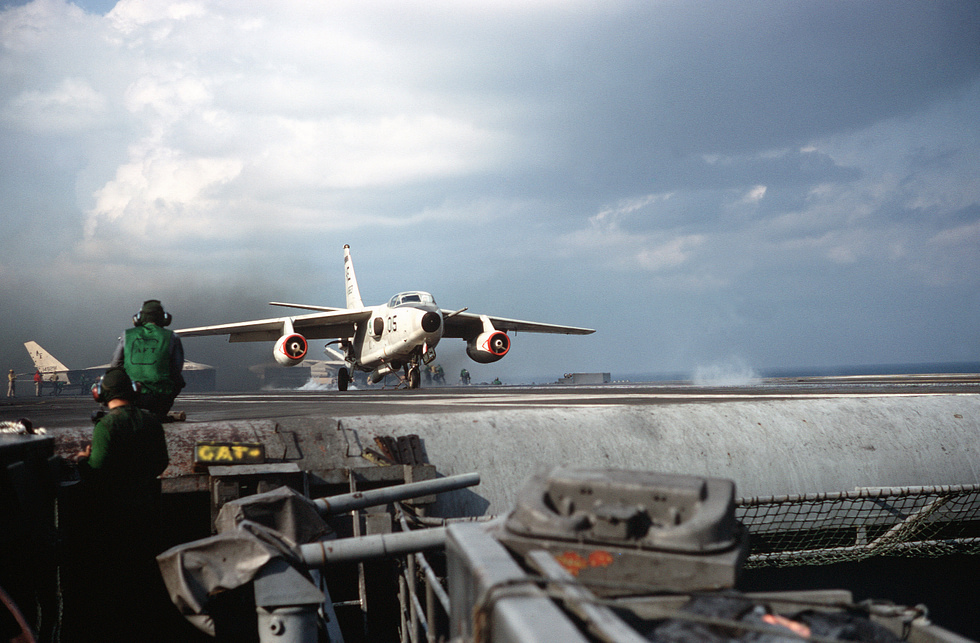
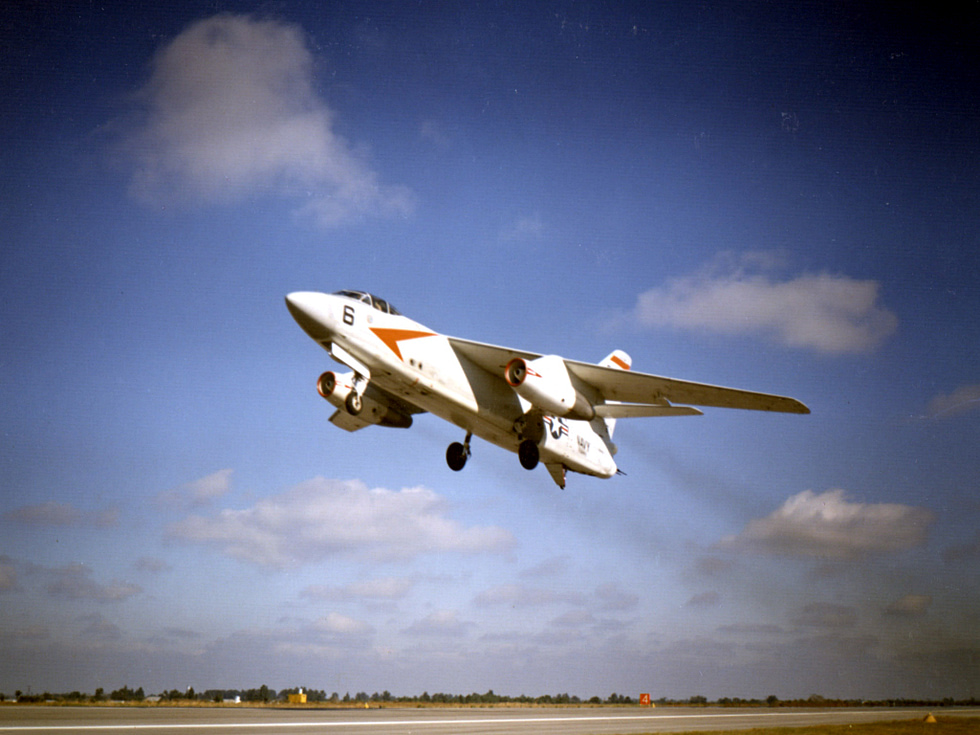
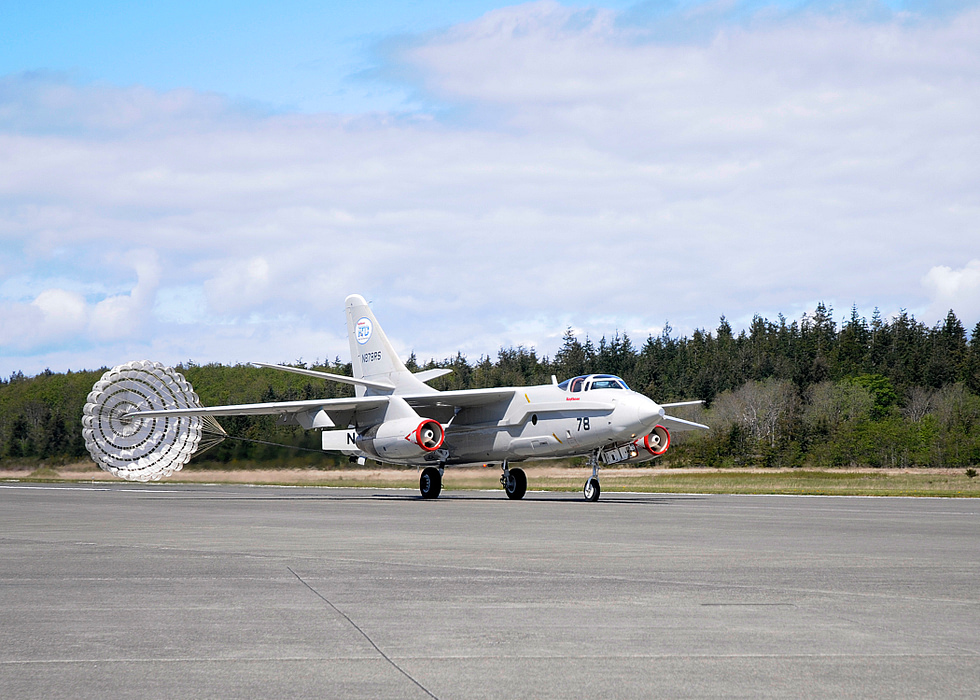
Where the A-3 Skywarrior served
A bomber, a tanker and a spy — its real legacy
The Skywarrior is not remembered for air-to-air kills; that was never its job. Its record is written in reach, adaptability and sheer endurance — a nuclear deterrent that became the fleet’s fuel truck and its ears, and stayed useful for 35 years.
Compare the combat record of every military aircraft. Figures as of July 2026.
Everything people ask about the A-3 Skywarrior
Can I fly in an A-3 Skywarrior?
Why did the A-3 Skywarrior have no ejection seats?
Why is the A-3 called “The Whale”?
What do KA-3, EA-3 and EKA-3B mean?
Was the A-3 Skywarrior nuclear-capable?
Did the A-3 serve in Vietnam?
What replaced the A-3 Skywarrior?
What was the B-66 Destroyer?
You can’t fly the Skywarrior.
These, you can.
Some legends only live in museums — others are fuelled and waiting. MiGFlug has put civilians in real military jet cockpits since 2004.
 Fly the L-39 AlbatrosThe world’s most-flown jet trainer — aerobatics included
 Fly the F-104 Starfighter“The missile with a man in it”
 Fly the MiG-21The Cold War’s most-produced jet
 حلّق بطائرة تي-33 شوتينغ ستارAmerica’s first jet trainer
 Fly the DH VampireA piece of early jet history
 Fly the S.211Agile Italian jet trainer
 Fly the MB-326The classic Aermacchi jet
 Fly the MiG-15The Soviet legend of the Korean War
Continue the tour
Every fact, checked
- Naval History & Heritage Command — Skywarrior in DetailAuthoritative on the Heinemann design, weight limits, no ejection seats and the “All Three Dead” nickname.
- NHHC — Skywarriors on DisplayConfirms Desert Storm combat missions and the 30 June 2011 final flight to Pensacola.
- A-3 Skywarrior Association — Aircraft SpecsDetailed dimensions, weights, J57 thrust figures, speed, range and ceiling.
- The Aviation Geek Club — EA-3B Ranger 12The 25 January 1987 Nimitz accident, its seven crew and its link to retirement.
- AvGeekery — The Whale“The Whale” nickname, loaded weight, folding wings/tail and the 1957 two-ocean flight.
- Pearl Harbor Aviation Museum — A3D/A-3 SkywarriorThe Vietnam bombing-to-EW/tanker shift and the “crows/ravens” ELINT operators.
- Vintage Aviation News — Boneyard Files: A-3Variant rundown, nuclear capability and the “heaviest carrier aircraft” record.
- Military Factory — Douglas A-3 SkywarriorProduction total, first-flight date, engine variant and dimensions cross-check.