
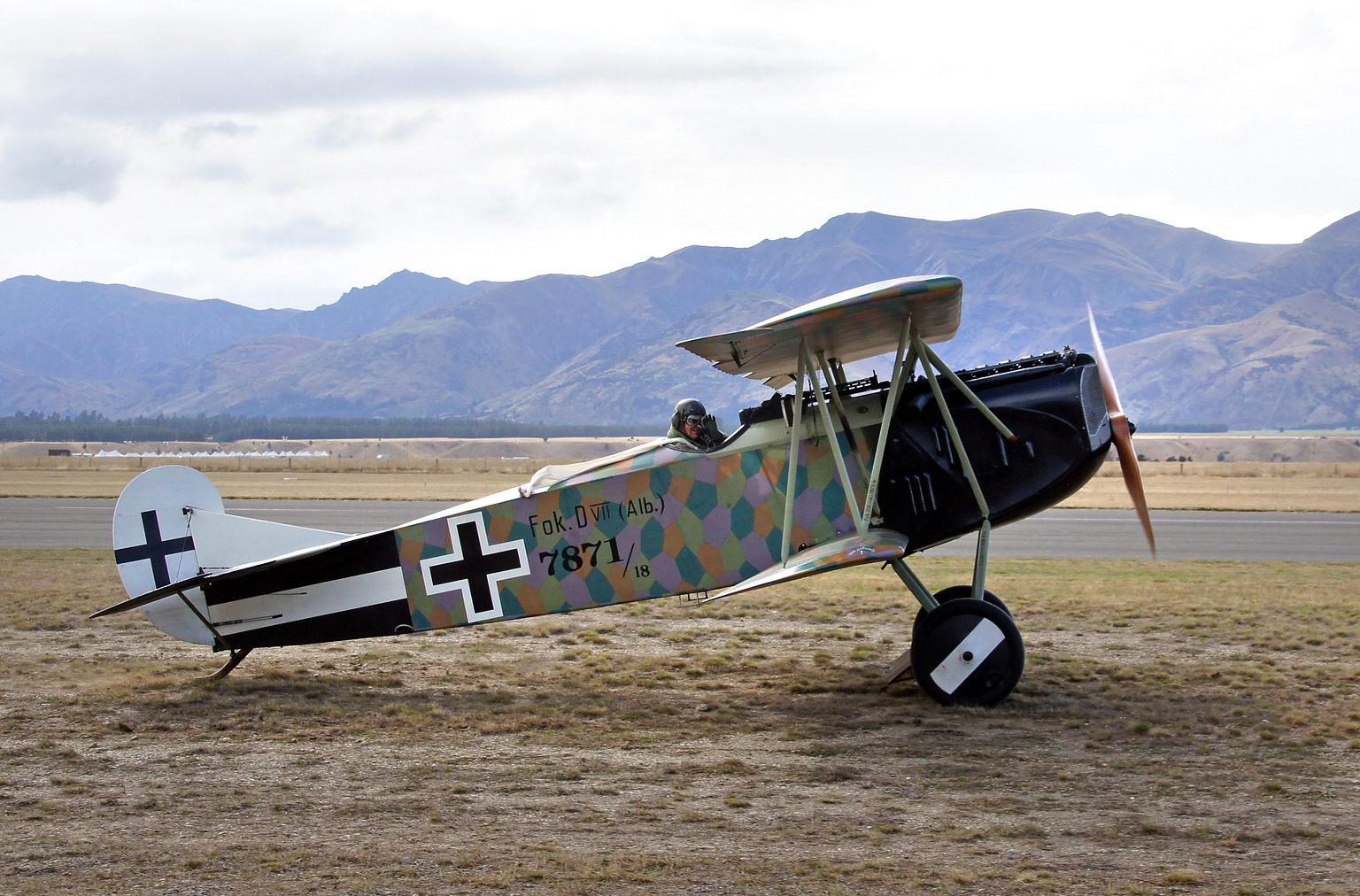
Germany’s finest fighter of 1918 — so respected that the Armistice named it by type as the one aircraft the defeated air force was ordered to hand over first.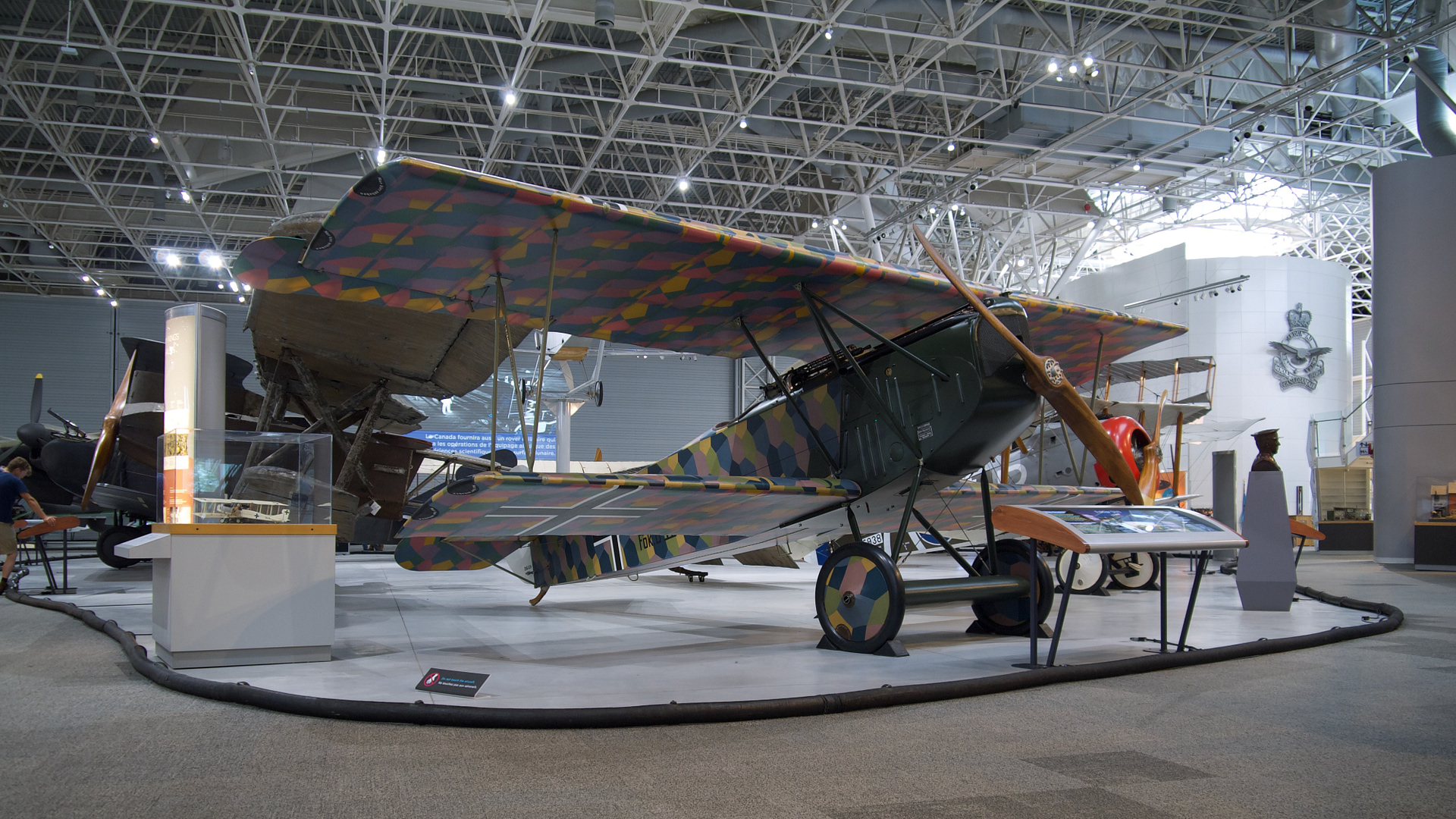
Fokker D.VII
“The fighter written into the Armistice”
The Fokker D.VII: how Germany answered 1918 with its best fighter
By the start of 1918 the German air service was losing its edge. The Fokker Dr.I triplane that had made the Red Baron famous was slow and dated, and newer Allied fighters — the SPAD S.XIII, the SE5a, the Sopwith Camel — were arriving in numbers. Germany needed a new front-line fighter fast, and held a competition at Adlershof in January 1918 to find one. The winner was a Fokker prototype designed by Reinhold Platz, a former welder with no formal engineering training who had become Anthony Fokker’s chief designer.
What set Platz’s design apart was the wing. Instead of the thin, heavily wire-braced wings of its rivals, the D.VII used a thick cantilever aerofoil strong enough to carry its own loads with almost no external bracing. The result was an aircraft with tremendous lift, a gentle and forgiving stall, and outstanding control at low speed and high altitude — exactly where dogfights of 1918 were decided.
Entering service in the spring of 1918 with the elite Jagdgeschwader I, the D.VII quickly proved formidable. Pilots found it could be hauled around the sky near the stall without falling out of control, and could “hang on its propeller” to fire up at enemy aircraft above it. Fitted with the high-altitude BMW IIIa engine, the D.VIIF could out-climb almost anything the Allies flew. Aces including Ernst Udet flew it, and it equipped the units Germany could least afford to lose.
When the war ended, the aircraft received a distinction no other has matched. The Armistice of 11 November 1918 listed the war material Germany had to surrender, and its Western Front clauses named the D.VII specifically — the only aircraft singled out by type. Surrendered and licence-built airframes went on to serve a dozen air forces through the 1920s and 1930s, while Anthony Fokker smuggled aircraft and engines home to the Netherlands to rebuild his company.
01The Fokker D.VII’s origins: Reinhold Platz, the Adlershof competition and Anthony Fokker
The D.VII grew out of a series of experimental Fokker prototypes designed by Reinhold Platz, who favoured thick, internally braced cantilever wings at a time when most designers still trusted thin wire-braced ones. His V.11 biplane prototype was entered in the first Fighter Competition at Adlershof in January 1918, where front-line aces were invited to fly the candidates and give their verdict.
The prototype was fast and climbed well but was initially unstable in a dive; on advice from pilots at the competition — a group that, by many accounts, included Manfred von Richthofen — Platz lengthened the fuselage and revised the fin. The reworked aircraft won convincingly, and Fokker received a large production order. Because Fokker’s factory could not build enough on its own, the design was also produced under licence by Albatros at its Johannisthal and OAW plants — so many D.VIIs were, confusingly, built by Fokker’s biggest rival.
What makes the Fokker D.VII special
A thick wing that refused to stall
Platz’s deep cantilever aerofoil carried its loads internally, so the D.VII needed almost no bracing wires. It generated huge lift and, crucially, a soft, progressive stall — the aircraft mushed under control instead of spinning, letting pilots fight at low speed and high altitude where rivals ran out of wing.
A welded steel-tube fuselage
Where most fighters used wire-braced wooden frames, the D.VII’s fuselage was welded from steel tubing — Reinhold Platz’s trade. It was strong, damage-tolerant, quick to repair in the field, and well suited to mass production by semi-skilled labour, which mattered in 1918.
The BMW IIIa changed everything
The standard 160–180 hp Mercedes D.III made a fine fighter. The high-compression BMW IIIa, tuned for altitude, made a great one: the D.VIIF held its power where the air thinned, climbing and fighting effectively above 5,000 m — a decisive edge over Allied types that gasped at those heights.
02The Fokker D.VII’s wing: how a thick cantilever aerofoil beat the wire-braced biplane
Conventional 1918 biplanes used thin wings that could not support themselves, so they relied on a web of struts and bracing wires — draggy, fragile, and forever needing to be re-tensioned. Platz took the opposite approach: a thick aerofoil section with box spars strong enough to be a cantilever, needing only light interplane struts and no flying or landing wires.
The aerodynamic payoff was large. The deep wing produced more lift and stalled gently, so the D.VII kept flying and turning at speeds that would drop other fighters into a spin. It also gave the aircraft its trademark ability to point its nose up and “hang on the propeller,” firing at aircraft above it without stalling out. The idea was decades ahead of its time; thick cantilever wings would become standard on almost every aircraft that followed.
03The Fokker D.VII’s engines: the Mercedes D.III and the game-changing BMW IIIa
Most D.VIIs were powered by the Mercedes D.III, a reliable 160–180 hp six-cylinder water-cooled inline that gave good performance at low and medium altitude. But the version pilots wanted was the D.VIIF, fitted with the BMW IIIa.
The BMW IIIa was a high-compression engine designed for altitude. At sea level it produced comparable power to the Mercedes, but as the air thinned it held onto its output far better — so much so that pilots were warned against running it at full throttle low down, where it could over-rev. Above roughly 4,000–5,000 m the D.VIIF could still climb hard and fight, reaching a ceiling commonly quoted around 7,000 m against about 6,000 m for the Mercedes aircraft. Demand for the BMW engine always outstripped supply, so BMW-powered D.VIIs went to the best squadrons first.
04Why the Fokker D.VII could “hang on its propeller” and fight where others fell away
Two qualities combined to give the D.VII its edge in the vertical. First, the thick wing kept generating lift at very high angles of attack, so the aircraft could be held nose-high and slow without stalling and spinning. Second, the strong low-speed control let a pilot point the nose up at an enemy above and fire a burst while effectively balanced on the propeller’s thrust.
Allied pilots quickly learned not to assume a slow, nose-high D.VII was a beaten one — it was often a loaded gun. The aircraft’s forgiving handling also meant that squadrons could convert less-experienced pilots onto it quickly, which is why it was so often said that the D.VII made ordinary pilots dangerous and good pilots deadly.
Fokker D.VII full specifications
Airframe & Performance
- طاقم
- 1 — pilot
- طول
- 6.95 m
- طول الجناحين
- 8.90 m
- ارتفاع
- 2.75 m
- منطقة الجناح
- 20.5 m²
- Empty / loaded weight
- 670 kg / 906 kg
- Max speed
- 189 km/h (Mercedes) · ~200 km/h (BMW IIIa)
- سقف الخدمة
- 6,000 m (higher with BMW IIIa)
- Endurance
- ~1.5 hours
Propulsion, Armament & Production
- محرك
- 1 × Mercedes D.III, 160–180 hp (or BMW IIIa, ~185 hp)
- Engine type
- 6-cyl. water-cooled inline piston
- التسليح
- 2 × 7.92 mm LMG 08/15 “Spandau”
- First flight
- Prototype late 1917; service April 1918
- Built
- ~3,300 (second half of 1918)
- Manufacturers
- Fokker; Albatros (Johannisthal & OAW) under licence
- Unit cost
- Not reliably recorded (1918 procurement)
- Cost per flight hour
- ~$3,000–5,000 (modern airworthy-reproduction estimate)
05Fokker D.VII variants: the Mercedes D.VII, the BMW-powered D.VIIF and licence production
The main distinction is by engine. The baseline D.VII carried the Mercedes D.III; the prized D.VIIF carried the high-altitude BMW IIIa and is usually identified by cooling louvres on the cowling. A small number of experimental and post-war sub-types followed, including licence-built Dutch and Swiss machines produced into the mid-1920s.
Production was split three ways: Fokker’s own works plus Albatros at Johannisthal and its OAW subsidiary. Licence-built Albatros aircraft were sometimes designated D.VII (Alb) or D.VII (OAW). Because three plants built to slightly different standards, quality and detail fittings varied between airframes.
06The Fokker D.VII’s costs: from 1918 mark contracts to flying a reproduction today
Reliable per-aircraft procurement figures for the D.VII are not well documented in surviving records, and comparing 1918 German mark contracts to modern money is fraught — wartime inflation and the post-war collapse of the mark make any single figure misleading. What is clear is that the welded steel-tube fuselage and simplified wing were deliberately cheap and quick to build, which is how Germany produced roughly 3,300 in a matter of months.
There is no meaningful “cost per flight hour” for an aircraft retired a century ago. As a modern reference point, the small number of airworthy reproductions that fly at vintage airshows are estimated to cost on the order of a few thousand dollars per flight hour to operate and maintain — a figure driven by hand-built engines, fabric and woodwork, and specialist insurance rather than fuel. Treat these figures as rough estimates flagged for the fact-check pass, not documented history.
The Fokker D.VII: from Adlershof to the Armistice and beyond
Platz builds the prototype
Reinhold Platz’s experimental V.11 biplane, with its thick cantilever wing, flies at the Fokker works late in the year.
Wins the Adlershof competition
In January the reworked prototype wins the first Fighter Competition, judged in part by front-line aces, and Fokker receives a major production order.
Into service with JG I
From April the D.VII equips Germany’s elite fighter units; the BMW IIIa-powered D.VIIF gives a decisive high-altitude advantage.
Named in the Armistice
11 November — the surrender terms single out the D.VII by type as war material to be handed over, the only aircraft so named.
A long post-war life
Surrendered and licence-built D.VIIs serve a dozen air forces, from the Netherlands and Belgium to Switzerland, the Soviet Union and the USA, into the 1930s.
The Fokker D.VII in twelve stories
The aircraft written into the Armistice
Of all the war material Germany surrendered in November 1918, only one aircraft was named by type.
Read the full story
Ernst Udet and his red D.VII
Germany’s highest-scoring surviving ace flew the D.VII in the last months of the war.
Read the full story
Hermann Goering takes over JG I
The famous ‘Flying Circus’ ended the war flying D.VIIs under a future Nazi leader.
Read the full story
How aces chose the D.VII
Front-line pilots, not committees, picked Germany’s next fighter at Adlershof in January 1918.
Read the full story
Hanging on the propeller
The D.VII could point its nose at the sky and keep flying where others spun.
Read the full story
The BMW engine everyone wanted
The D.VIIF’s high-compression BMW IIIa turned a good fighter into the best of 1918.
Read the full story
Fokker smuggles his factory home
After the Armistice, Anthony Fokker moved his company to the Netherlands – by train, quietly.
Read the full story
A fighter for a dozen air forces
The D.VII kept flying long after the war that produced it had ended.
Read the full story
The Soviets buy fifty
One of the D.VII’s largest post-war customers was Soviet Russia.
Read the full story
American evaluation
Surrendered D.VIIs were shipped to the United States for testing.
Read the full story
The D.VII in Hollywood
Reproductions of the D.VII have been dogfighting on film for decades.
Read the full story
The barn-find at the Deutsches Museum
One of the most complete originals spent years hidden in a German barn.
Read the full story
The Fokker D.VII in pictures
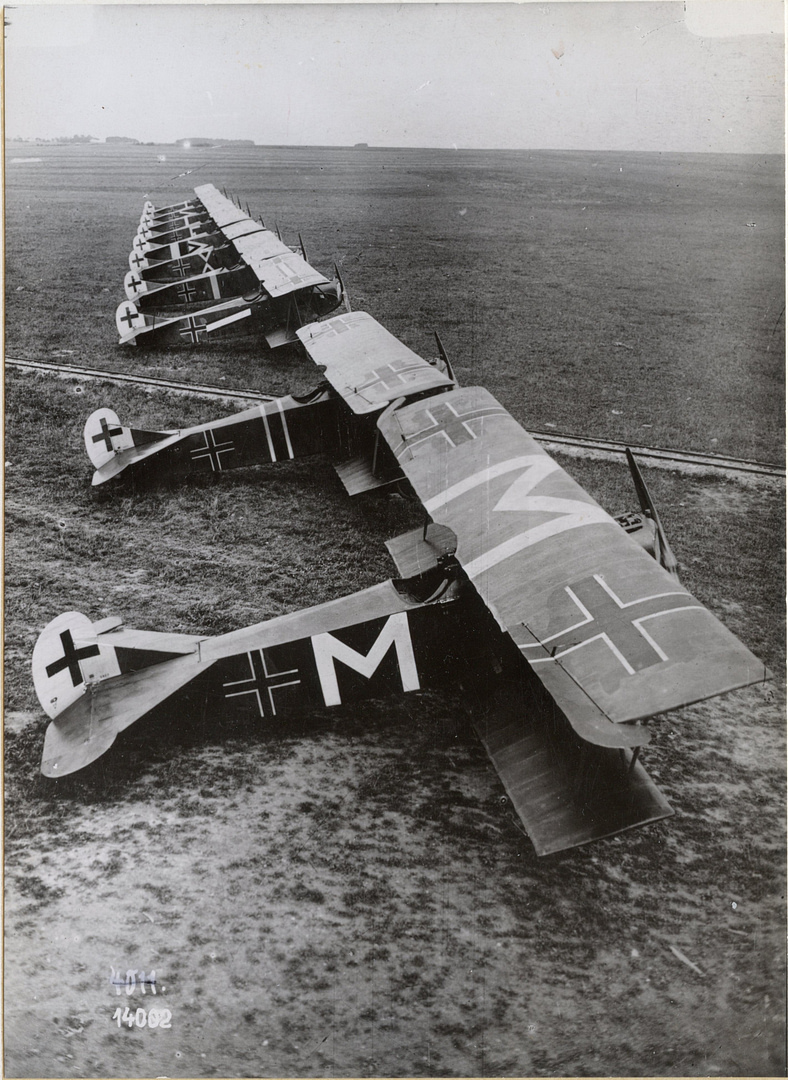
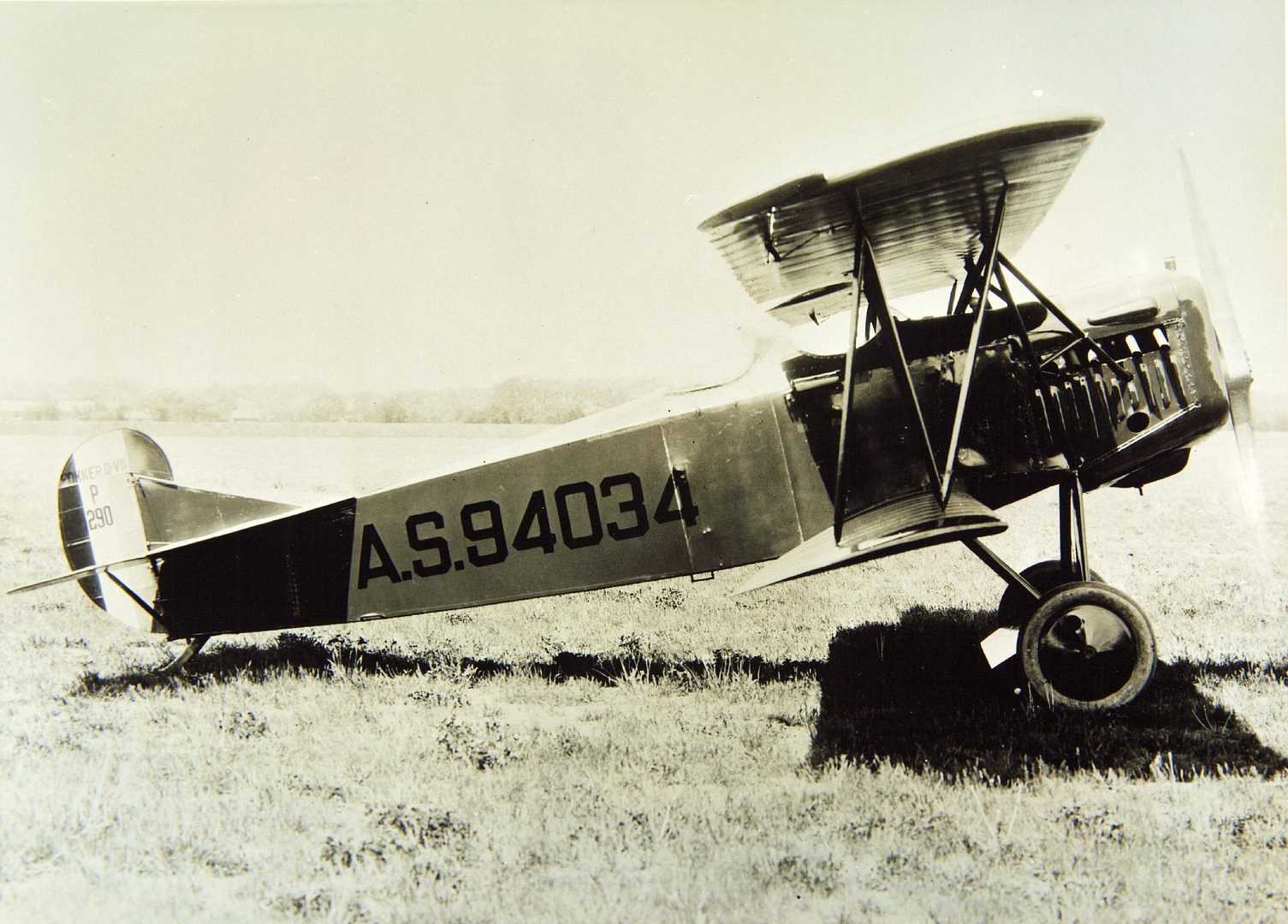
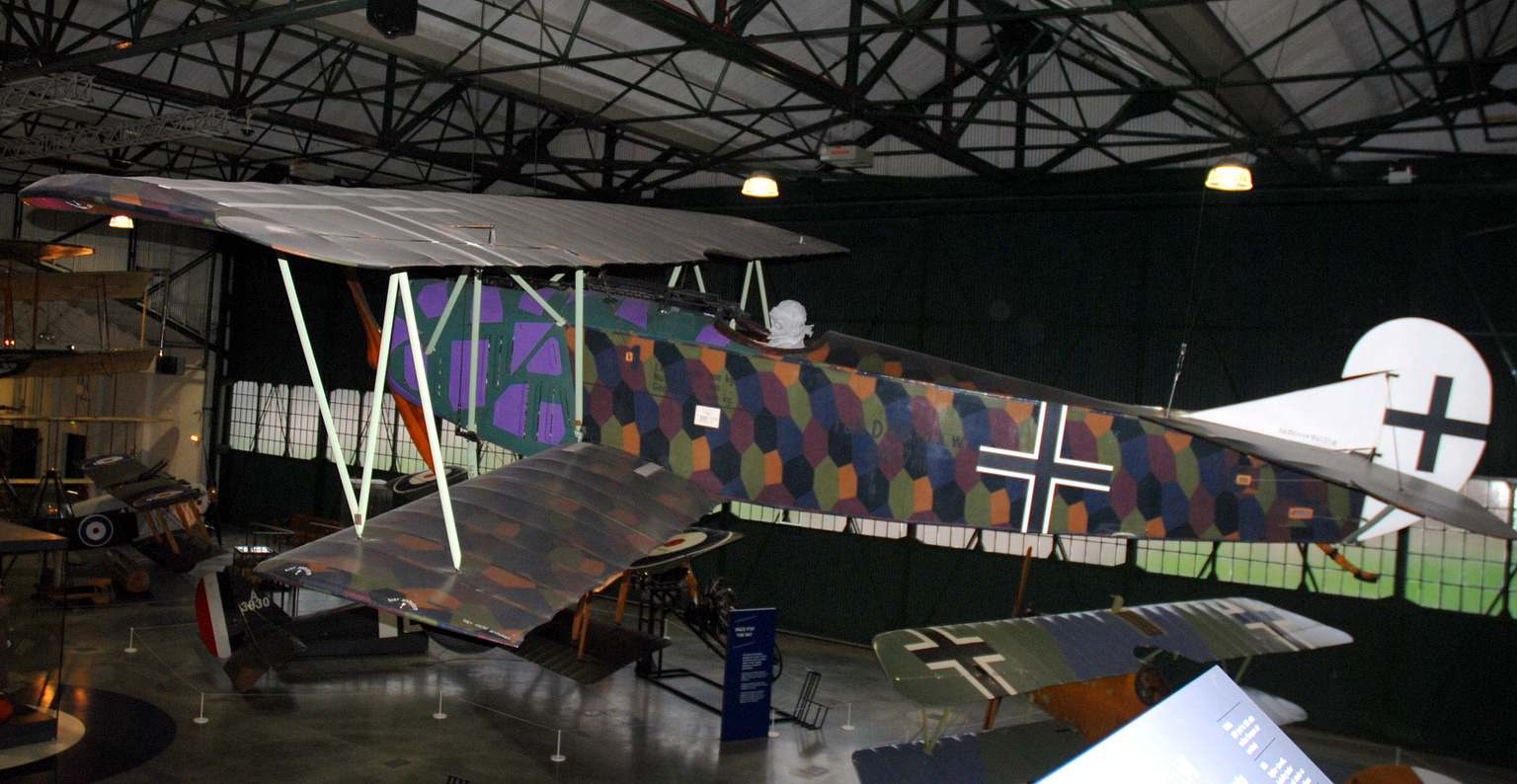
The Fokker D.VII on film
“The Fokker D.VII: WWI German Aerial Superiority” — a feature from the official channel of the Smithsonian National Air and Space Museum, filmed with the museum’s own airframe.
Where the Fokker D.VII flew
Built by Germany in 1918, fought over the Western Front, and — after the Armistice — flown by a dozen air forces across Europe and beyond. Toggle the categories to see wartime service, combat theatres, surviving museum airframes and post-war operators.
The record that defines it
The D.VII reached the front only in the spring of 1918, yet in a handful of months it restored German fighter effectiveness against numerically superior Allied air forces — and earned a place in the surrender terms that no other aircraft has ever held.
Precise victory tallies for individual 1918 types are contested; figures here follow the consensus of museum and historical sources. Compare the combat record of every military aircraft.
Everything people ask about the Fokker D.VII
Can I fly in a Fokker D.VII?
What made the Fokker D.VII so good?
How many Fokker D.VIIs were built?
Why did the Armistice specifically name the Fokker D.VII?
What engine did the Fokker D.VII use?
Are there any original Fokker D.VIIs left?
You can’t fly the Fokker D.VII.
These, you can.
Some legends only live in museums — others are fuelled and waiting. MiGFlug has put civilians in real military jet cockpits since 2004.
 Fly the L-39 AlbatrosThe world’s most-flown jet trainer — aerobatics included
 Fly the F-104 Starfighter“The missile with a man in it”
 Fly the MiG-21The Cold War’s most-produced jet
 حلّق بطائرة تي-33 شوتينغ ستارAmerica’s first jet trainer
 Fly the DH VampireA piece of early jet history
 Fly the S.211Agile Italian jet trainer
 Fly the MB-326The classic Aermacchi jet
 Fly the MiG-15The Soviet legend of the Korean War
Continue the tour
Every fact, checked
- Smithsonian National Air and Space Museum — Fokker D.VIIMuseum record of a genuine airframe, construction and service history
- Smithsonian NASM — “The Fokker D.VII: WWI German Aerial Superiority”Curator video filmed with the museum’s own aircraft
- Royal Air Force Museum — Fokker D.VIIThe genuine survivor on display at Hendon
- Canada Aviation and Space Museum — Fokker D.VIIAirframe history and technical description
- Deutsches Museum Flugwerft SchleissheimThe ex-Netherlands Naval Aviation barn-find survivor
- Imperial War Museums — First World War aviation collectionsWestern Front air war context
- Avalon Project, Yale Law School — Armistice with Germany, 11 November 1918Primary text of the surrender terms naming the D.VII
- P. M. Grosz — Fokker D.VII (Windsock Datafile)Detailed monograph on design, production and variants
- Alex Imrie — Pictorial History of the German Army Air ServiceFront-line service of the D.VII with the Jagdgeschwader
- MiGFlug Afterburner — aviation history featuresMiGFlug’s magazine of aircraft history and flying reports
Hero and gallery photography credited per image (Wikimedia Commons). Some performance and cost figures for a century-old aircraft are estimates and are hedged in the text. Spotted an error? Every page in the Aircraft Museum is fact-checked before publication — write to us and we’ll correct it.