
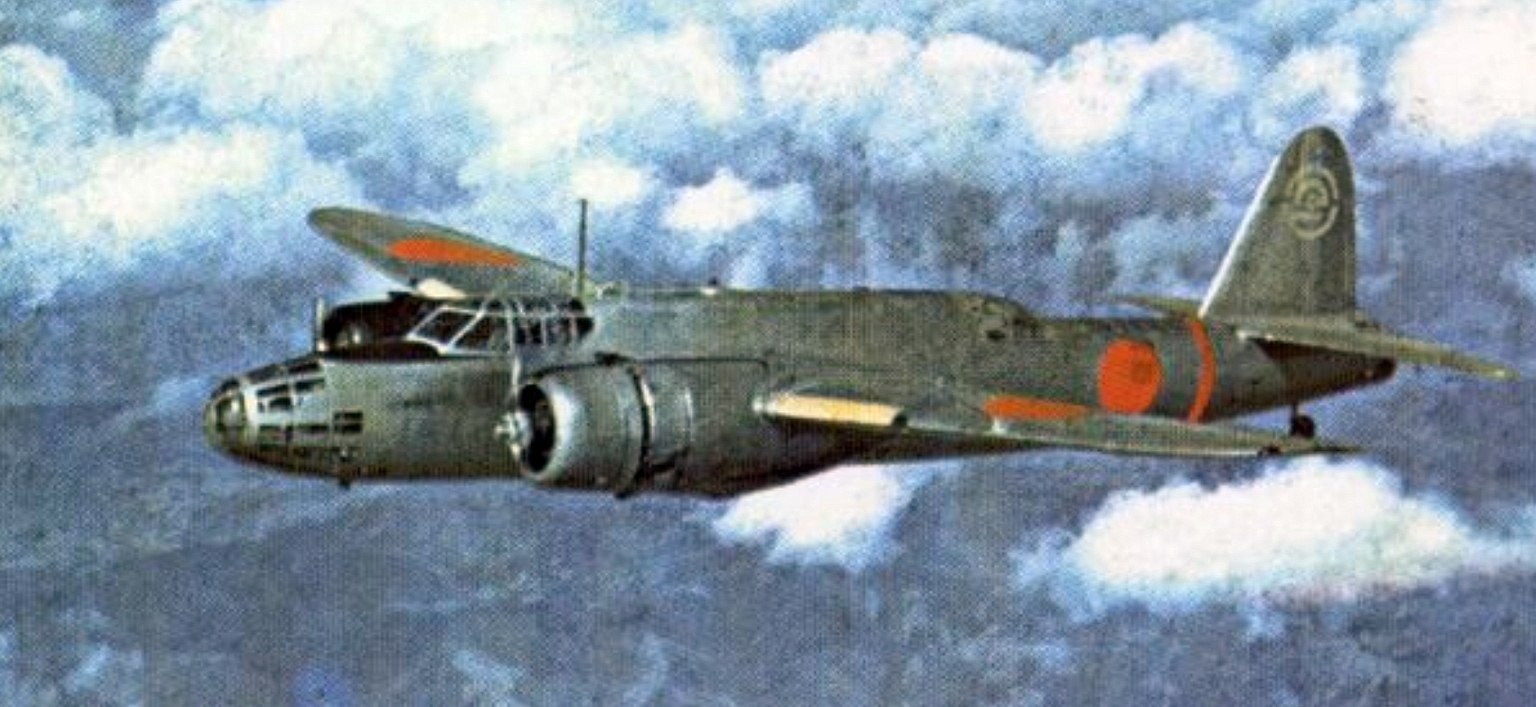
Nakajima Ki-49 Donryu
“Helen”
The Imperial Japanese Army’s answer to its own best bomber — a heavily armed, well-protected successor to the Ki-21 that ended up too underpowered to replace the aircraft it was built to retire.
The bomber built to replace a better bomber
By 1938 the Imperial Japanese Army had a problem it had created for itself. Its standard heavy bomber, the Mitsubishi Ki-21 “Sally,” was modern, reliable and well liked — but it was lightly armed and barely protected, and Army planners could see that a coming war against Western air forces would punish those weaknesses. So they asked Nakajima for a replacement designed around exactly the qualities the Ki-21 lacked: heavy defensive armament, self-sealing fuel tanks and armour for the crew.
The result, first flown in August 1939 and accepted into service in 1941 as the Army Type 100 Heavy Bomber, was the Ki-49 Donryu. On paper it was one of the best-defended bombers Japan ever built. It carried up to five machine guns plus a 20 mm cannon, and it was the first Japanese Army bomber to mount a manned tail-gun position — a direct response to the Allied fighters that liked to attack bombers from behind. Its tanks were self-sealing and its crew sat behind armour, luxuries almost unheard of in Japanese aircraft of the period.
The trouble was weight. All that protection and firepower had to be hauled by two Nakajima Ha-41 radials that simply were not powerful enough, and the early Donryu proved slow, heavy on the controls and no faster in practice than the Sally it was meant to supersede. A re-engined version, the Ki-49-II with 1,450-horsepower Ha-109s, helped — but it arrived in 1942–43 just as Allied fighters were getting faster and more numerous, and it was never enough to make the Donryu the dominant bomber the Army had wanted.
So the Ki-49 never actually replaced the Ki-21; the two served side by side to the end. The Donryu fought over China, bled heavily over New Guinea and the Philippines, and raided Darwin in northern Australia in 1943. By the war’s final year, surviving airframes were stripped for transport work, fitted with submarine-hunting gear, or flown into Allied ships as kamikaze. Roughly 800 were built — and not one complete example survives anywhere in the world today.
01The Nakajima Ki-49 Donryu’s name: the ‘Storm Dragon’ that was really a priest
“Donryu” (吞龍) is usually translated into English as “Storm Dragon,” the gloss made popular by the historian René Francillon — and wartime propaganda happily leaned on the dragon imagery. The literal characters, though, read closer to “swallowing dragon,” and the name did not come from mythology at all. It honoured Saint Donryu (1556–1623), a Pure Land Buddhist priest, commemorated by a temple near Nakajima’s factory at Ōta in Gunma Prefecture. So the fierce-sounding name of Japan’s heavy bomber was, in origin, a quiet local tribute rather than a battle cry — a nuance worth keeping when the “Storm Dragon” label gets repeated.
What makes it special
A tail gunner — a Japanese Army first
The Ki-49 was the first Imperial Japanese Army bomber with a manned tail-gun position, closing the blind spot Allied fighters loved to exploit. Combined with a 20 mm cannon in the dorsal position and up to five 7.7 mm machine guns in the nose, belly and beam windows, the Donryu was, on paper, the most heavily defended bomber Japan fielded to that point.
Protection the Ki-21 never had
Where earlier Japanese bombers traded survivability for range, the Donryu was built the other way round: self-sealing fuel tanks and armour plating for the crew. It was a deliberate philosophical break — and a costly one, because every kilogram of protection came straight out of the aircraft’s speed, ceiling and payload.
The engines that were never quite enough
The first Ki-49-I flew behind two Nakajima Ha-41 radials of about 1,250 hp — too little for so heavy an airframe. The improved Ki-49-II fitted 1,450 hp Ha-109 engines, and a projected Ki-49-III promised far more, but only a handful were built. Chronic under-powering defined the type from first flight to last.
02The Nakajima Ki-49 Donryu’s armament: how much was in the tail, and how much in the dorsal turret
Popular summaries sometimes describe a “20 mm tail cannon.” The detail is worth getting right: on the standard Ki-49-IIa the 20 mm cannon sat in the dorsal (upper) position, while the pioneering manned tail turret mounted a 7.7 mm machine gun (upgraded to 12.7 mm on the Ki-49-IIb). Additional 7.7 mm guns covered the nose, ventral and two beam positions, for roughly five machine guns plus the cannon. It was heavy defensive firepower for a Japanese bomber — but Allied pilots quickly learned the Donryu was still slow enough to catch.
03The Nakajima Ki-49 Donryu’s engines: why the ‘Storm Dragon’ was always underpowered
The Donryu’s central flaw was fixed at birth. Designed for protection and firepower, it was simply too heavy for the Ha-41 engines of the Ki-49-I, which gave it a disappointing top speed and heavy handling — faster than the Ki-21 in level flight, but less manoeuvrable and harder to fly. The Ha-109-engined Ki-49-II recovered some performance, yet by then Allied fighters had moved on. A third version with 2,400-horsepower Ha-117 engines was tested in just six prototypes and abandoned as Japan’s industry collapsed. The aircraft that was meant to out-perform the Sally never decisively did.
Full specifications
Airframe & Performance (Ki-49-IIa)
- Posádka
- 8 (some sources 7)
- Délka
- 16.50 m
- Rozpětí křídel
- 20.42 m
- Výška
- 4.25 m
- Max takeoff weight
- ~11,400 kg
- Max speed
- 492 km/h (306 mph)
- Servisní strop
- ~9,300 m
- Rozsah
- ~2,000 km normal · ~2,950 km max
- Bomb load
- ~1,000 kg (up to ~1,600 kg overload)
Propulsion, Armament & Production
- Engines
- 2 × Nakajima Ha-109 (Army Type 2)
- Power (each)
- ~1,450 hp (Ki-49-I: Ha-41, ~1,250 hp)
- Defensive guns
- 1 × 20 mm cannon + ~5 × 7.7 mm MG
- Notable
- First IJA bomber with a manned tail turret
- First flight
- August 1939
- Service entry
- 1941 (Army Type 100 Heavy Bomber)
- Built
- ~800 (sources give 796–819), to Dec 1944
- Unit cost
- No reliable public figure
- Cost per flight hour
- No reliable public figure exists
04The Nakajima Ki-49 Donryu’s operating costs: why no reliable price exists
No published procurement unit cost or cost-per-flight-hour figure exists for the Ki-49 in the English-language record, and Japanese wartime cost accounting for the type was not preserved or published in any accessible form. The Donryu was a state war-production aircraft, never traded on an open market, so any precise dollar or yen figure attached to it is effectively invented. What the record does show is the real cost of the design — paid in heavy operational losses over New Guinea and the Philippines, where under-powering and Allied air superiority made even a well-armed bomber desperately vulnerable.
From great expectations to attrition
Requirement issued
The Imperial Japanese Army asks Nakajima for a Ki-21 replacement with heavier armament, self-sealing tanks and crew armour.
First flight
The Ki-49 prototype flies in August, designed by a Nakajima team under T. Koyama.
Enters service
Accepted as the Army Type 100 Heavy Bomber; combat debut follows over China in the autumn.
The Ha-109 re-engine
The Ki-49-II arrives with 1,450 hp engines to fix chronic under-powering — just as Allied fighters get faster.
The Darwin raid
On 20 June the 61st Sentai, flying from the Celebes, bombs Darwin in northern Australia; the operation proves costly.
Decimated over New Guinea
Donryu units suffer heavy losses, many aircraft destroyed on the ground by Allied low-level parafrag attacks.
Kamikaze and odd jobs
Stripped for transport, fitted with submarine-detection gear, and flown as suicide aircraft in the Philippines and at Mindoro.
Production ends
Manufacture stops in December after roughly 800 aircraft; no complete example would survive the war.
Twelve stories of the Donryu
Built to replace the Sally
The Ki-49 was designed to retire the Ki-21 — and never quite managed it.
Read the full story
A dragon named after a priest
“Donryu” sounds like a war cry; it was really a local tribute.
Read the full story
The first Army tail gunner
The Donryu closed the blind spot Allied fighters loved.
Read the full story
Protected, but too heavy
Every kilo of armour came out of speed and ceiling.
Read the full story
The fix that came too late
The Ha-109 helped, but the war had moved on.
Read the full story
Combat debut
The Donryu first went to war over China in 1941.
Read the full story
Decimated on the ground
Allied low-level raids caught Donryu units in the open.
Read the full story
The raid on Darwin
On 20 June 1943 the Donryu struck northern Australia.
Read the full story
Found at Kalidjati
Captured Donryu were tested by the Allies after the surrender.
Read the full story
A bomber turned suicide weapon
In the last year the Donryu was flown into Allied ships.
Read the full story
Sub-hunter and night-fighter
The Donryu’s last roles were the strangest.
Read the full story
Why no Donryu survives
Roughly 800 were built; not one complete example remains.
Read the full story
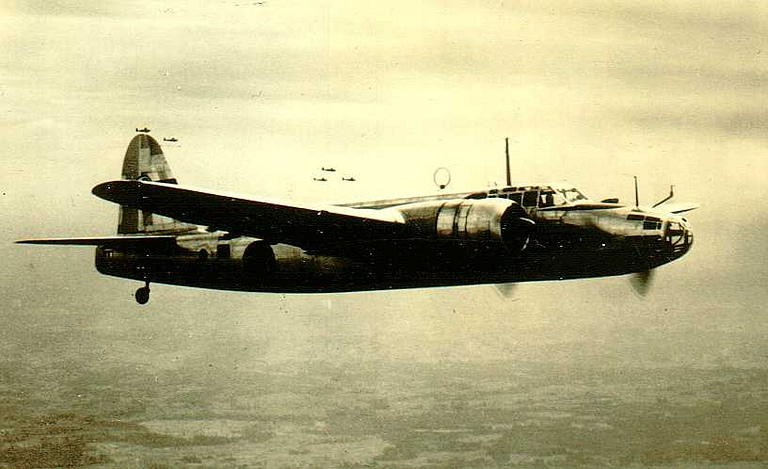
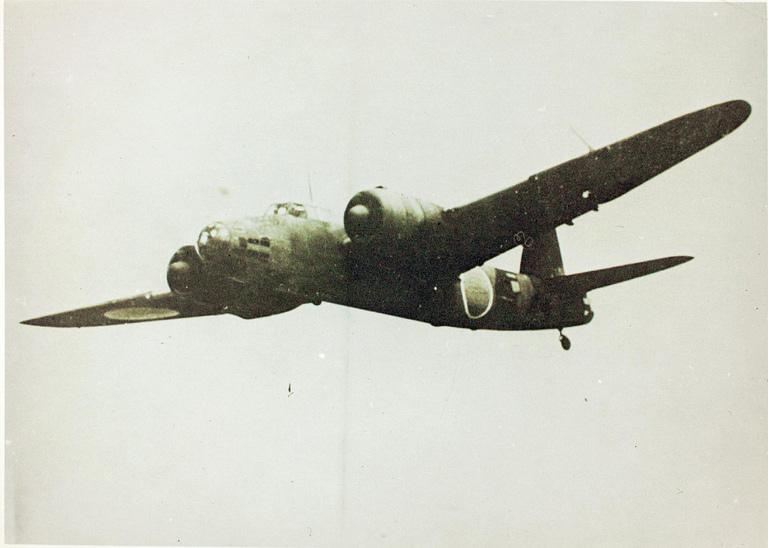
The Donryu in pictures
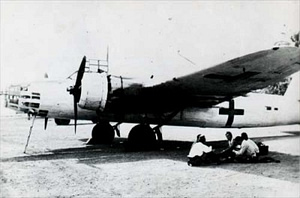
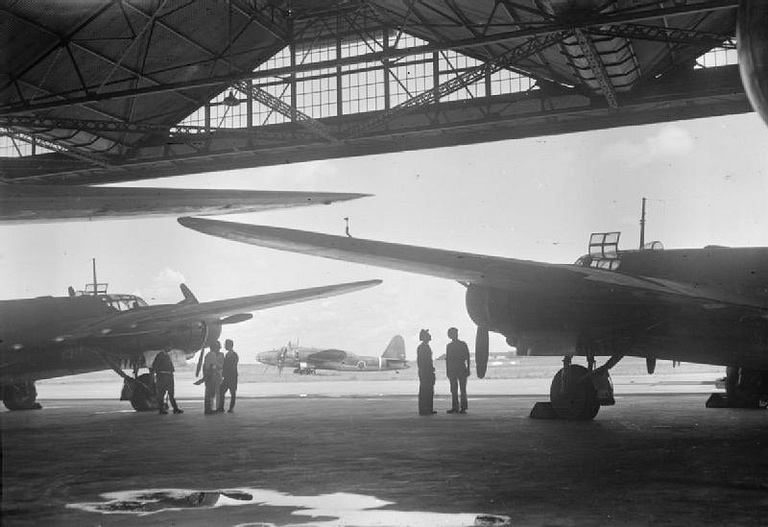
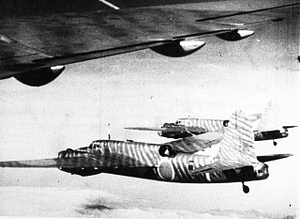
Where the Ki-49 Donryu flew
The record that defines it
The Donryu’s combat story is not one of victories but of attrition. Well-armed and well-protected for a Japanese bomber, it was still too slow to survive against modern Allied fighters, and its units were ground down over New Guinea and the Philippines. Its defining numbers are the ones that measure what it cost, not what it achieved.
Compare the combat record of every military aircraft in our database.
Everything people ask about the Ki-49 Donryu
Can I fly in a Nakajima Ki-49 Donryu?
What does “Donryu” mean?
Why was the Ki-49 built?
Was the Ki-49 a good bomber?
What was the Allied nickname for the Ki-49?
How many Ki-49s were built?
Do any Ki-49 Donryu survive today?
You can’t fly the Ki-49 Donryu.
These, you can.
Some legends only live in museums — others are fuelled and waiting. MiGFlug has put civilians in real military jet cockpits since 2004.
 Fly the L-39 AlbatrosThe world’s most-flown jet trainer — aerobatics included
 Fly the F-104 Starfighter“The missile with a man in it”
 Fly the MiG-21The Cold War’s most-produced jet
 Leťte s T-33 Shooting StarAmerica’s first jet trainer
 Fly the DH VampireA piece of early jet history
 Fly the S.211Agile Italian jet trainer
 Fly the MB-326The classic Aermacchi jet
 Fly the MiG-15The Soviet legend of the Korean War
Continue the tour
Every fact, checked
- J. Rickard — History of War: Nakajima Ki-49 DonryuDetailed development history, variants and the production breakdown.
- Pacific Wrecks — Nakajima Ki-49 DonryuCombat use, surviving wrecks in New Guinea and the “no survivors” record.
- Aeropedia — Nakajima Ki-49 Donryu (Helen)Production totals, the Darwin raid and confirmation that none survives.
- j-aircraft.com — Ki-49 FAQAuthoritative discussion of the Donryu name and its temple origin.
- Military Factory — Nakajima Ki-49 DonryuSpecifications and armament quick-reference.
- World War II Database — Ki-49 DonryuService history and technical data.
- Aviastar — Nakajima Ki-49 DonryuVariant list and dimensional data.
- René J. Francillon — Japanese Aircraft of the Pacific WarThe standard scholarly reference; source of the “Storm Dragon” gloss and higher production figures.