
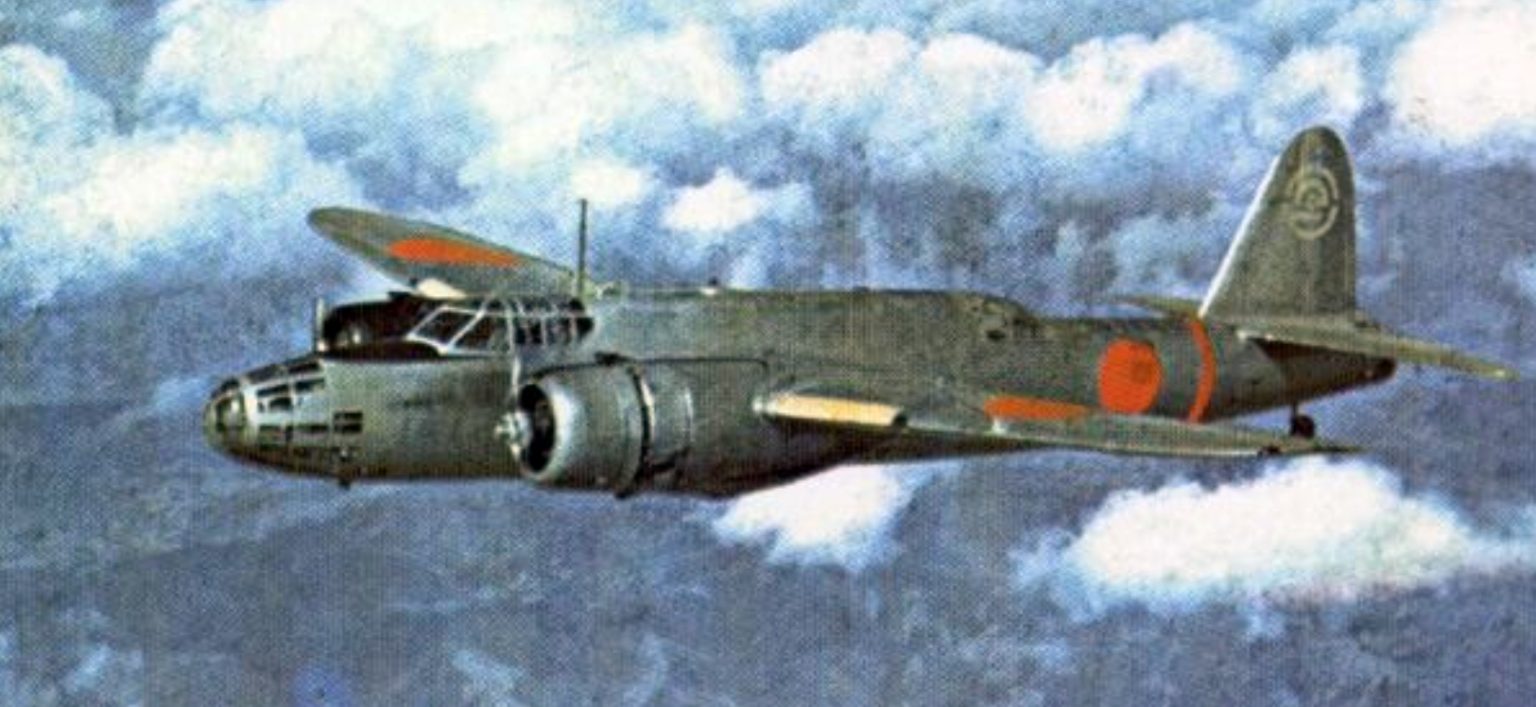
Nakajima Ki-49 Donryu
“Helen”
The Imperial Japanese Army’s answer to its own best bomber — a heavily armed, well-protected successor to the Ki-21 that ended up too underpowered to replace the aircraft it was built to retire.
The bomber built to replace a better bomber
By 1938 the Imperial Japanese Army had a problem it had created for itself. Its standard heavy bomber, the Mitsubishi Ki-21 “Sally,” was modern, reliable and well liked — but it was lightly armed and barely protected, and Army planners could see that a coming war against Western air forces would punish those weaknesses. So they asked Nakajima for a replacement designed around exactly the qualities the Ki-21 lacked: heavy defensive armament, self-sealing fuel tanks and armour for the crew.
The result, first flown in August 1939 and accepted into service in 1941 as the Army Type 100 Heavy Bomber, was the Ki-49 Donryu. On paper it was one of the best-defended bombers Japan ever built. It carried up to five machine guns plus a 20 mm cannon, and it was the first Japanese Army bomber to mount a manned tail-gun position — a direct response to the Allied fighters that liked to attack bombers from behind. Its tanks were self-sealing and its crew sat behind armour, luxuries almost unheard of in Japanese aircraft of the period.
The trouble was weight. All that protection and firepower had to be hauled by two Nakajima Ha-41 radials that simply were not powerful enough, and the early Donryu proved slow, heavy on the controls and no faster in practice than the Sally it was meant to supersede. A re-engined version, the Ki-49-II with 1,450-horsepower Ha-109s, helped — but it arrived in 1942–43 just as Allied fighters were getting faster and more numerous, and it was never enough to make the Donryu the dominant bomber the Army had wanted.
So the Ki-49 never actually replaced the Ki-21; the two served side by side to the end. The Donryu fought over China, bled heavily over New Guinea and the Philippines, and raided Darwin in northern Australia in 1943. By the war’s final year, surviving airframes were stripped for transport work, fitted with submarine-hunting gear, or flown into Allied ships as kamikaze. Roughly 800 were built — and not one complete example survives anywhere in the world today.
01The Nakajima Ki-49 Donryu’s name: the ‘Storm Dragon’ that was really a priest
“Donryu” (吞龍) is usually translated into English as “Storm Dragon,” the gloss made popular by the historian René Francillon — and wartime propaganda happily leaned on the dragon imagery. The literal characters, though, read closer to “swallowing dragon,” and the name did not come from mythology at all. It honoured Saint Donryu (1556–1623), a Pure Land Buddhist priest, commemorated by a temple near Nakajima’s factory at Ōta in Gunma Prefecture. So the fierce-sounding name of Japan’s heavy bomber was, in origin, a quiet local tribute rather than a battle cry — a nuance worth keeping when the “Storm Dragon” label gets repeated.
What makes it special
A tail gunner — a Japanese Army first
The Ki-49 was the first Imperial Japanese Army bomber with a manned tail-gun position, closing the blind spot Allied fighters loved to exploit. Combined with a 20 mm cannon in the dorsal position and up to five 7.7 mm machine guns in the nose, belly and beam windows, the Donryu was, on paper, the most heavily defended bomber Japan fielded to that point.
Protection the Ki-21 never had
Where earlier Japanese bombers traded survivability for range, the Donryu was built the other way round: self-sealing fuel tanks and armour plating for the crew. It was a deliberate philosophical break — and a costly one, because every kilogram of protection came straight out of the aircraft’s speed, ceiling and payload.
The engines that were never quite enough
The first Ki-49-I flew behind two Nakajima Ha-41 radials of about 1,250 hp — too little for so heavy an airframe. The improved Ki-49-II fitted 1,450 hp Ha-109 engines, and a projected Ki-49-III promised far more, but only a handful were built. Chronic under-powering defined the type from first flight to last.
02The Nakajima Ki-49 Donryu’s armament: how much was in the tail, and how much in the dorsal turret
Popular summaries sometimes describe a “20 mm tail cannon.” The detail is worth getting right: on the standard Ki-49-IIa the 20 mm cannon sat in the dorsal (upper) position, while the pioneering manned tail turret mounted a 7.7 mm machine gun (upgraded to 12.7 mm on the Ki-49-IIb). Additional 7.7 mm guns covered the nose, ventral and two beam positions, for roughly five machine guns plus the cannon. It was heavy defensive firepower for a Japanese bomber — but Allied pilots quickly learned the Donryu was still slow enough to catch.
03The Nakajima Ki-49 Donryu’s engines: why the ‘Storm Dragon’ was always underpowered
The Donryu’s central flaw was fixed at birth. Designed for protection and firepower, it was simply too heavy for the Ha-41 engines of the Ki-49-I, which gave it a disappointing top speed and heavy handling — faster than the Ki-21 in level flight, but less manoeuvrable and harder to fly. The Ha-109-engined Ki-49-II recovered some performance, yet by then Allied fighters had moved on. A third version with 2,400-horsepower Ha-117 engines was tested in just six prototypes and abandoned as Japan’s industry collapsed. The aircraft that was meant to out-perform the Sally never decisively did.
Full specifications
Baseline note: the figures below describe the Nakajima Ki-49-IIa and Ki-49-IIb (Army Type 100 Heavy Bomber Model 2, Allied reporting name “Helen”), the Ha-109-engined aircraft that made up roughly four fifths of production and flew every campaign the type is remembered for. Deltas for the Ha-41-engined Ki-49-I of 1941–42 are given in grey. Japanese Army data were quoted at normal loaded weight; Ki-49-I performance figures are poorly attested in Western literature and the few that circulate disagree with each other, so they are flagged rather than quoted as fact.
Dimensions & weights
- Crew
- 8 — pilot, co-pilot, navigator, bombardier, radio operator and three gunners. Six crew stations could work guns, against three on the Ki-21, and the extra bodies are a large part of why the aeroplane gained weight without gaining payload
- Length
- 16.50 m (54 ft 2 in)
- Wingspan
- 20.42 m (67 ft 0 in) — two metres less than the Ki-21 it was meant to replace, on a heavier aeroplane
- Height
- 4.25 m (13 ft 11 in); Russian and some German compilations give 4.50 m (14 ft 9 in), a disagreement that probably reflects tail-up against tail-down measurement rather than two aeroplanes
- Wing area
- 69.05 m² (743.2 sq ft)
- Aspect ratio
- 6.04 — unusually low for a bomber, and chosen deliberately. Nakajima wanted a wing that would stay stable and responsive at medium and low altitude, on the assumption that an unescorted bomber would have to manoeuvre. It got that, and paid for it in cruise efficiency and therefore in range
- Wing
- Cantilever mid-set monoplane, all-metal stressed skin, straight centre section with tapered outer panels and split flaps. The centre section carried six protected fuel tanks and the engine nacelles; the outer panels carried two more tanks and an oil tank
- Fuselage
- All-metal semi-monocoque with a glazed nose, an internal ventral bomb bay and — a first for a Japanese Army bomber — a manned tail gun position built into the rear fuselage rather than a periscopic remote mounting of the kind bolted onto the Ki-21
- Empty weight
- 6,530 kg (14,396 lb) — 460 kg more than a Ki-21-IIb, most of it armour, protected tanks, guns and gunners
- Normal loaded weight
- 10,680 kg (23,545 lb)
- Maximum take-off weight
- 11,400 kg (25,133 lb)
- Wing loading
- 154.7 kg/m² (31.7 lb/sq ft) at normal loaded weight — high by Japanese Army standards of 1942 and one reason the aeroplane was unforgiving from the short, soft strips it had to work from in New Guinea
- Power loading
- 3.51 kg/hp (7.75 lb/hp); 4.71 kg/kW. The Ki-49-I, with 520 hp less in total, was worse again
- Undercarriage
- Retractable tailwheel type, main units folding rearwards into the engine nacelles. The tailwheel retracted as well, which no previous Japanese Army bomber had managed
- Protection
- Approximately 5 mm (0.20 in) armour plate at several points in the fuselage, armoured glass for the pilots, and protected fuel tanks. German and English sources put the weight of the protection package at around 500 kg (1,100 lb) — a genuinely large investment, and almost unheard of in a Japanese design begun in 1938
Performance
- Maximum speed
- 492 km/h (306 mph) at 5,000 m (16,404 ft). The 1938 specification demanded at least 500 km/h. Even the re-engined Model 2, three years and one complete powerplant change later, did not reach it
- Maximum speed, Ki-49-I
- Lower again, and not reliably documented. The Ha-41 aircraft fell well short of the specification, which is precisely why the Ha-109 installation was rushed through — figures quoted in Western works for the Model 1 vary widely and none can be traced to Japanese test data
- Cruising speed
- 350 km/h (217 mph) at 3,000 m (9,843 ft)
- Time to 5,000 m
- 13 min 39 s (to 16,404 ft), at normal loaded weight
- Rate of climb
- 6.1 m/s (1,200 ft/min), the mean rate implied by the timed climb rather than an instantaneous sea-level figure
- Service ceiling
- 9,300 m (30,510 ft) — 700 m below the Ki-21-IIb, which is the wing loading and the low aspect ratio presenting their bill
- Range, normal
- 2,000 km (1,243 miles)
- Range, maximum fuel
- 2,950 km (1,833 miles) — the ferry figure, and the one usually quoted in comparison tables, which flatters the aeroplane considerably
- Endurance
- About 8 hours at economical cruise, which is what made the type useful for maritime and anti-submarine patrol once it had failed as a bomber
- Handling
- Well liked in the air: stable, pleasant, and more manoeuvrable at medium and low altitude than a 10-tonne bomber had any right to be. It was the ground and the engines that killed crews, not the aerodynamics
- For comparison: Mitsubishi Ki-21-IIb
- 478–486 km/h (297–302 mph), 2,700 km (1,678 miles) range, the same 1,000 kg (2,205 lb) of bombs — the aeroplane the Ki-49 was built to replace, giving away six to fourteen km/h and taking back 700 km of range. That single line is the whole argument
- For comparison: Mitsubishi Ki-67-I Hiryu
- 537 km/h (334 mph) — what the Army actually needed, ordered too late and built in too few numbers to matter
- For comparison: North American B-25J
- 438 km/h (272 mph) with 1,360 kg (3,000 lb) — a good deal slower, and carrying more than a third again in bombs behind heavier guns
Propulsion & systems
- Engines
- 2 × Nakajima Ha-109 (Army Type 2, 1,500 hp class; unified designation Ha-34-21), fourteen-cylinder two-row air-cooled radials of 37.5 l (2,288 cu in)
- Take-off power
- 1,133 kW (1,520 hp) each; the Ki-49 literature very commonly quotes 1,100 kW (1,500 hp), which is the nominal class rating rather than the bench figure
- Rated power
- 971 kW (1,320 hp) at 5,250 m (17,225 ft); English-language sources usually give 969 kW (1,300 hp) at 5,280 m (17,320 ft), the same number rounded through two unit conversions
- Engines, Ki-49-I
- 2 × Nakajima Ha-41, same 37.5 l displacement, 940 kW (1,260 hp) for take-off — 520 hp less in total than the Model 2, in an airframe designed around the promise of more
- Engine lineage
- Ha-41 and Ha-109 were both boosted developments of the Nakajima Ha-5 that powered the early Ki-21. The Ha-41 also went into the Ki-44 Shoki, where its 1,260 mm (49.6 in) cowling diameter was a fighter designer’s nightmare. Neither engine ever delivered the power the Ki-49 had been drawn around, and neither was reliable in tropical service
- Prototype engines
- The first prototype of August 1939 flew on 708 kW (949 hp) Ha-5 KAI radials, which was never a serious production proposal — it was what was available while the Ha-41 was finished
- Ki-49-III engine
- Nakajima Ha-117 of 1,805 kW (2,421 hp) — the engine that would have made the design work. It was never developed to a usable standard, and the six Ki-49-III prototypes of 1943–44 went nowhere
- Propellers
- Three-blade constant-speed metal units
- Fuel system
- Six self-sealing tanks in the wing centre section, a further pair plus an oil tank in the outer panels. Protected tankage was designed in from the outset rather than retrofitted after losses, which sets the Ki-49 apart from almost every other Japanese aircraft of its generation — sources differ on how effective the early covering was, and the Model 2 tankage was certainly better
- Bomb bay
- Internal ventral bay, 1,000 kg (2,205 lb) maximum, 750 kg (1,653 lb) normal — identical to the Ki-21 on an aeroplane half a tonne heavier and far more expensive to build
- Specialised equipment
- From 1944 a number of Model 2 aircraft were converted for maritime patrol as the Ki-49-II Kai, carrying magnetic detection equipment (jikitanchiki) for locating shallow-running submarines. It was the Army flying an anti-submarine mission that properly belonged to the Navy, in an aeroplane whose only real qualification was eight hours of endurance
- Production
- 819 built in total, including 50 assembled by Tachikawa; manufacture ended in December 1944. Against 2,064 Ki-21s, that is the market’s verdict — a proposed Manshu production line in Manchukuo never opened
04The Nakajima Ki-49 Donryu’s operating costs: why no reliable price exists
No published procurement unit cost or cost-per-flight-hour figure exists for the Ki-49 in the English-language record, and Japanese wartime cost accounting for the type was not preserved or published in any accessible form. The Donryu was a state war-production aircraft, never traded on an open market, so any precise dollar or yen figure attached to it is effectively invented. What the record does show is the real cost of the design — paid in heavy operational losses over New Guinea and the Philippines, where under-powering and Allied air superiority made even a well-armed bomber desperately vulnerable.
Armament & payload
The Ki-49 was the best-defended bomber the Japanese Army ever fielded in numbers, and it still could not carry a kilogram more than the aeroplane it was built to replace
The 1938 specification was clear-eyed and, for its moment, unusually honest: the Army wanted a heavy bomber that could reach 500 km/h, fly 3,000 km, carry 1,000 kg of bombs, and survive without fighter escort. Nakajima answered it seriously. The Ki-49 got eight crew, six gun positions, a manned tail gun — the first on a Japanese Army bomber — armour plate, armoured glass and protected fuel tanks designed in from the start. In 1939 no other Japanese combat aircraft was being drawn to that standard.
The arithmetic never closed. The armour, the guns, the gunners and the tankage cost roughly half a tonne, and the engines available in 1941 could not carry it. The Ha-41 aircraft missed the speed requirement badly; the Ha-109 Model 2 of 1942 got to 492 km/h and still missed it. The bomb load stayed at 1,000 kg maximum, exactly what a Ki-21 carried, while range fell from 2,700 km to 2,000. So the Army had spent a heavier, costlier, more complicated aeroplane to gain six kilometres an hour and lose seven hundred kilometres of reach. The Ki-49 never displaced the Ki-21; the Ki-21 outlived it in production and outnumbered it two and a half to one.
One correction is worth making because the error is everywhere. The Ki-49’s 20 mm Ho-1 cannon sat in the dorsal position, not in the tail; the tail station carried a 7.7 mm Type 89 on the Model 1 and Model 2A, and a 12.7 mm Ho-103 on the Model 2B. What was genuinely new about the tail was that a man sat in it and aimed the gun directly, instead of squinting through the periscope of the Ki-21’s remote mounting. Gun fits varied between production blocks and were altered in the field, and late-war conversions for transport, patrol and special-attack work stripped armament out entirely, so any single tabulated fit describes a factory standard rather than what a given aircraft actually flew.
Gun
- Ki-49-I and Ki-49-IIa: 1 × 20 mm Ho-1 cannon in the dorsal position, plus 5 × 7.7 mm Type 89 machine guns in the nose, tail, ventral and two beam positions — six guns and a cannon covering the sphere, where a Ki-21-I had three rifle-calibre guns
- The Ho-1 was the Army’s 20 mm derivative of the Type 97 anti-tank rifle action, firing the 20 × 125 mm round. Slow-firing and low-velocity by 1943 standards, but the only gun on a Japanese Army bomber capable of breaking up an attacking fighter
- Ki-49-IIb: three of the 7.7 mm Type 89 guns replaced by 12.7 mm Ho-103 (Army Type 1) weapons, normally at the nose, ventral and tail stations, with the 20 mm dorsal cannon retained
- The tail position was a manned station with a direct sight, not the periscopic remote gun of the Ki-21-Ib. It is the single defensive feature Allied crews consistently commented on
- Popular accounts that place a cannon in the Ki-49’s tail have moved it there. Every detailed source — English, German and Russian — puts the Ho-1 on the upper fuselage
Air-to-air
- No guided air-to-air weapon existed in the Ki-49’s service life. The defensive battery was the whole of the air-to-air armament, and the doctrine was formation crossfire
- It was better than the Ki-21’s and it was not enough. Against P-38s and P-40s over New Guinea in 1943 the losses were ruinous, and the aeroplane that had been designed to operate without escort spent the rest of the war being escorted, flying at night, or not flying at all
- The Ki-58 escort-fighter conversion — three aircraft, five 20 mm cannon and three 12.7 mm guns, no bombs — was the Army’s attempt to build a gunship that could shepherd Ki-49 formations. It was abandoned in 1941, the idea overtaken by the twin-engined Ki-45 Toryu and by the plain fact that a bomber-derived gunship was no faster than the bombers it was protecting
- Late in the war some Ki-49s were flown on night-fighter sorties, a role for which a 10-tonne bomber with a 20 mm dorsal gun was conspicuously unsuited, and which produced nothing
- The reverse comparison is instructive: the Ki-49 was, briefly, a hard target. Allied pilots rated it tougher than the Ki-21 and harder to set alight, which is exactly what the armour and the protected tanks were bought for
Air-to-surface guided
- None, ever. The card is kept because the absence tells you what kind of aeroplane this was: a level bomber with an optical sight, a bombardier in the nose and nothing else
- No Japanese Army bomber carried a guided air-to-surface weapon operationally. Such Japanese guided-weapon work as existed went to the Navy
- What the Ki-49 got instead of a guided weapon, in December 1944, was a pilot willing to fly the aeroplane into the target — which is the cheapest and cruellest form of terminal guidance ever fielded
Bombs
- 1,000 kg (2,205 lb) maximum in the internal ventral bay; 750 kg (1,653 lb) normal. Identical to the Ki-21 in both figures
- Typical loads were built from Army Type 94 and Type 99 general-purpose bombs of 50, 100 and 250 kg, with 500 kg weapons carried against shipping and hardened targets
- Incendiary and fragmentation clusters were used against airfields and dispersal areas in China and New Guinea, which is where most of the type’s bombs actually fell
- Special-attack conversions from December 1944 were stripped of armament, flown by two pilots and loaded with up to 1,600 kg (3,527 lb) — proof that the airframe could always lift more than the Army ever asked it to carry, given a mission with no return leg
- No torpedo capability of any kind. Anti-shipping work was done with bombs, at the level, with the results that implies
Rockets
- None carried. The Ki-49 had no rocket armament, offensive or defensive, at any point in its service
- Japanese Army air-to-ground rocket work was thin and late, and none of it reached the heavy bomber squadrons
- The type also lacked the rocket-assisted take-off gear that might have made its high wing loading tolerable from the short coral strips of New Guinea, which is a small tragedy of its own
Pods & other stores
- Magnetic detection equipment (jikitanchiki) on the Ki-49-II Kai anti-submarine conversion from 1944 — the type’s only genuinely modern piece of mission equipment, and an Army aircraft doing a Navy job over the East China Sea and the approaches to Formosa
- Transport conversions: armament and bomb gear removed, the bay and fuselage used for freight and troops. This is how a great many surviving Ki-49s spent 1944, hauling supplies to garrisons that bombers could no longer defend
- Standard Army bomber radio and direction-finding equipment for the long over-water navigation legs the type flew from Timor, Wewak and Luzon
- No external stores pylons, no drop tanks in normal service, no gun pods. All ordnance was internal, which capped the aeroplane at 1,000 kg for its entire operational life
Three typical loadouts
- Airfield attack, New Guinea 1943
- Eight to twelve 100 kg bombs or a mixed fragmentation and incendiary load totalling around 750 kg, full defensive fit, eight crew, flown by the 61st or 95th Sentai from Wewak, But or Dagua against Allied strips in the Markham and Ramu valleys. After the Fifth Air Force struck the Wewak complex in August 1943 these formations were being destroyed on the ground faster than they could be replaced.
- Long-range raid, China 1942
- 750 kg internal, maximum fuel, the load and the range the type was actually comfortable with. The 61st Sentai flew the first operational Ki-49 sorties in the Chinese theatre in autumn 1941, including attacks on Chungking. Against Chinese air defences the aeroplane worked exactly as intended, which is the last time that was true.
- Anti-submarine patrol, 1944–45
- Ki-49-II Kai with magnetic detection gear, depth bombs in the ventral bay, reduced crew, eight hours on task over the East China Sea. A slow, long-legged aeroplane with protected tanks and armour turned out to be a reasonable submarine hunter — the only role in which the Ki-49’s design compromises paid for themselves.
Sourcing caveat: Japanese Army loading tables for the Ki-49 survive only in fragments, and most published loadouts are reconstructed from unit histories, Allied intelligence reports and photographs rather than from official documents. Bomb-type attributions above should be read as typical rather than certified.
Variants
Two engines, three marks and four dead ends, none of which fixed the aeroplane
The Ki-49’s variant history is the history of a design waiting for an engine that never came. Every mark is the same airframe with more power bolted to it, and every increase in power was consumed by the weight of the protection and guns that made the aeroplane worth building in the first place. The Ha-117 of the Ki-49-III would have broken the deadlock at around 2,400 hp a side. It was never made to work, and by the time that was clear the Ki-67 Hiryu had made the whole question academic.
Two further programmes deserve their own lines because they show what the Army thought it was buying. The Ki-58 was a Ki-49 turned into a flying gun battery to escort other Ki-49s — an admission, in 1940, that the unescorted-bomber premise had already failed. The Ki-80 was a Ki-49 turned into a formation leader and pathfinder, carrying the navigator and the equipment that would take a bomber stream to its target. Both were sound ideas. Both died in prototype, and the aircraft ended up serving as engine test-beds.
- Ki-49 prototypes and service trials (1939–40 / 3 prototypes plus 7 pre-production)
- First flight August 1939 on Nakajima Ha-5 KAI engines of 708 kW (949 hp), the later aircraft re-engined with the Ha-41. Retractable tailwheel, manned tail gun and protected tanks were all present from the start.
- Ki-49-I, Army Type 100 Heavy Bomber Model 1 (1941–42 / about 128)
- Ha-41 engines of 940 kW (1,260 hp), 20 mm Ho-1 dorsal cannon and five 7.7 mm Type 89 guns. Accepted for production in March 1941, operational in China from that autumn with the 61st Sentai. Underpowered from the day it entered service.
- Ki-49-II prototypes (1941 / 2)
- Ha-109 installation trials with revised nacelles and cooling, plus strengthened armour and improved tank protection. The engine change was pushed through in months, which tells you how badly the Model 1 was performing.
- Ki-49-IIa, Model 2A (1942–44 / about 366)
- Ha-109 engines of 1,133 kW (1,520 hp), roughly 5 mm armour plate and improved self-sealing tanks, Model 1 gun fit retained. Reached the 7th and 61st Sentai in China in the summer of 1942 and became the standard Donryu of the New Guinea campaign.
- Ki-49-IIb, Model 2B (1943–44 / about 301)
- Three of the 7.7 mm Type 89 guns replaced by 12.7 mm Ho-103 weapons, normally nose, ventral and tail. The final production mark and the best-defended Japanese Army bomber to reach quantity service.
- Ki-49-II Kai (1944–45 / conversions, number not established)
- Maritime patrol conversion with magnetic detection equipment for anti-submarine work, flown over the East China Sea and around Formosa. The one job the aeroplane did well, found for it four years after it entered service.
- Ki-49-III (1943–44 / 6)
- Nakajima Ha-117 engines of 1,805 kW (2,421 hp) and a further increase in protection. The engine was never developed to a usable standard and the mark never entered production; the six airframes were the end of the line.
- Ki-58 (1940–41 / 3)
- Escort-fighter conversion of the Ki-49-I: bombs and bombing equipment deleted, five 20 mm Ho-1 cannon and three 12.7 mm Ho-103 machine guns fitted. Abandoned in 1941 — a gunship no faster than the formation it escorted, superseded by the Ki-45 Toryu.
- Ki-80 (1941 / 2)
- Pathfinder and formation-leader conversion, carrying extra navigation equipment and crew to guide bomber streams. Not adopted; both aircraft were used afterwards as engine test-beds.
- Transport, special-attack and foreign service (1944–49)
- Field conversions to unarmed transports in New Guinea and the Philippines; in December 1944 most surviving Ki-49s in the Philippines were stripped, crewed by two pilots, loaded with up to 1,600 kg and expended in special-attack sorties against the Allied ships supporting the Mindoro landings. Afterwards, three captured aircraft flew in French Indochina between 1946 and 1949, one served the Royal Thai Air Force as a transport in 1945–46, and ex-Japanese examples passed to Indonesian republican forces.
Survivors: none. Not one complete Nakajima Ki-49 exists in any museum in any country, and there is no reproduction. Nothing was preserved in 1945 — no surrendered airframe was shipped to the United States or Britain for evaluation and retention, as happened with the Ki-46 and the Ki-84 — and the type is represented today only by wreckage in the places where it was destroyed: the airfield complexes around Wewak, But and Dagua in Papua New Guinea, the Hollandia and Sentani strips in Indonesian Papua, and scattered crash sites in the Philippines and eastern Indonesia. Individual wreck identifications in these areas are contested, because Ki-49 remains lie mixed with Ki-21, Ki-48 and Ki-67 wreckage on the same fields and the distinguishing structure has usually corroded away. Of 819 aircraft built, nothing whole is left. Even by the standards of Japanese wartime aviation, where survival rates are dismal, that is a complete erasure.
From great expectations to attrition
Requirement issued
The Imperial Japanese Army asks Nakajima for a Ki-21 replacement with heavier armament, self-sealing tanks and crew armour.
First flight
The Ki-49 prototype flies in August, designed by a Nakajima team under T. Koyama.
Enters service
Accepted as the Army Type 100 Heavy Bomber; combat debut follows over China in the autumn.
The Ha-109 re-engine
The Ki-49-II arrives with 1,450 hp engines to fix chronic under-powering — just as Allied fighters get faster.
The Darwin raid
On 20 June the 61st Sentai, flying from the Celebes, bombs Darwin in northern Australia; the operation proves costly.
Decimated over New Guinea
Donryu units suffer heavy losses, many aircraft destroyed on the ground by Allied low-level parafrag attacks.
Kamikaze and odd jobs
Stripped for transport, fitted with submarine-detection gear, and flown as suicide aircraft in the Philippines and at Mindoro.
Production ends
Manufacture stops in December after roughly 800 aircraft; no complete example would survive the war.
Twelve stories of the Donryu
Built to replace the Sally
The Ki-49 was designed to retire the Ki-21 — and never quite managed it.
Read the full story
A dragon named after a priest
“Donryu” sounds like a war cry; it was really a local tribute.
Read the full story
The first Army tail gunner
The Donryu closed the blind spot Allied fighters loved.
Read the full story
Protected, but too heavy
Every kilo of armour came out of speed and ceiling.
Read the full story
The fix that came too late
The Ha-109 helped, but the war had moved on.
Read the full story
Combat debut
The Donryu first went to war over China in 1941.
Read the full story
Decimated on the ground
Allied low-level raids caught Donryu units in the open.
Read the full story
The raid on Darwin
On 20 June 1943 the Donryu struck northern Australia.
Read the full story
Found at Kalidjati
Captured Donryu were tested by the Allies after the surrender.
Read the full story
A bomber turned suicide weapon
In the last year the Donryu was flown into Allied ships.
Read the full story
Sub-hunter and night-fighter
The Donryu’s last roles were the strangest.
Read the full story
Why no Donryu survives
Roughly 800 were built; not one complete example remains.
Read the full story
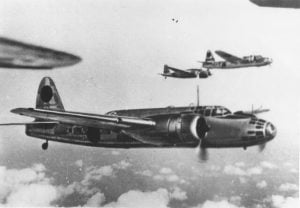
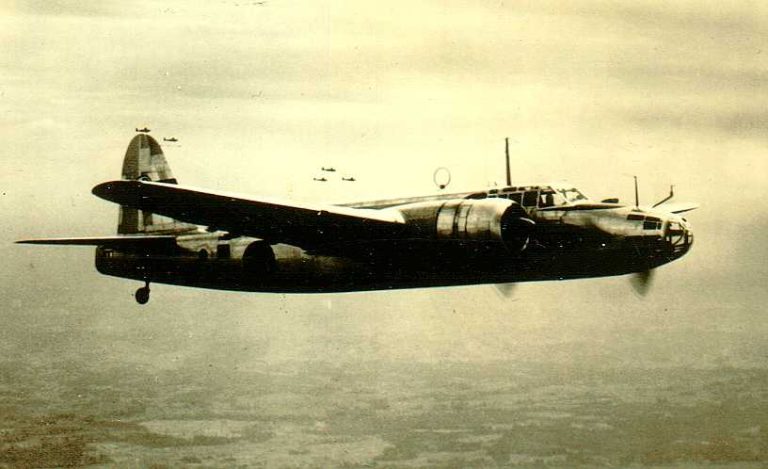
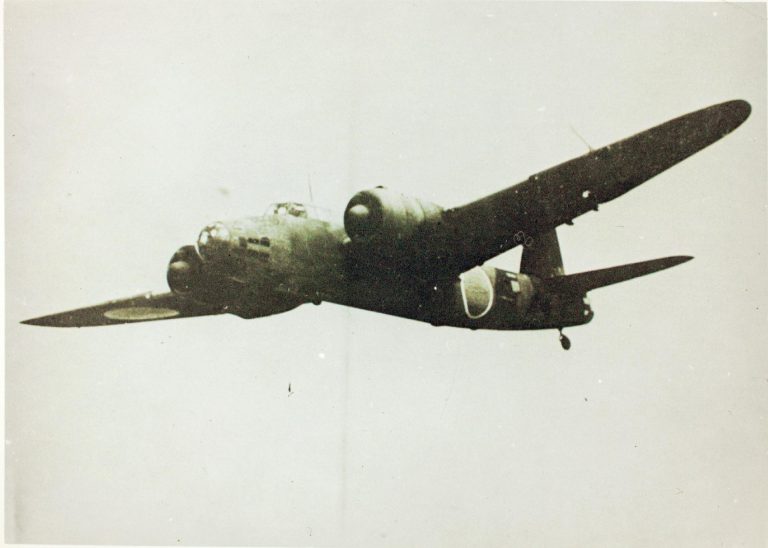
The Donryu in pictures
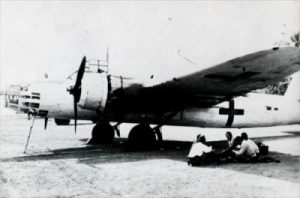
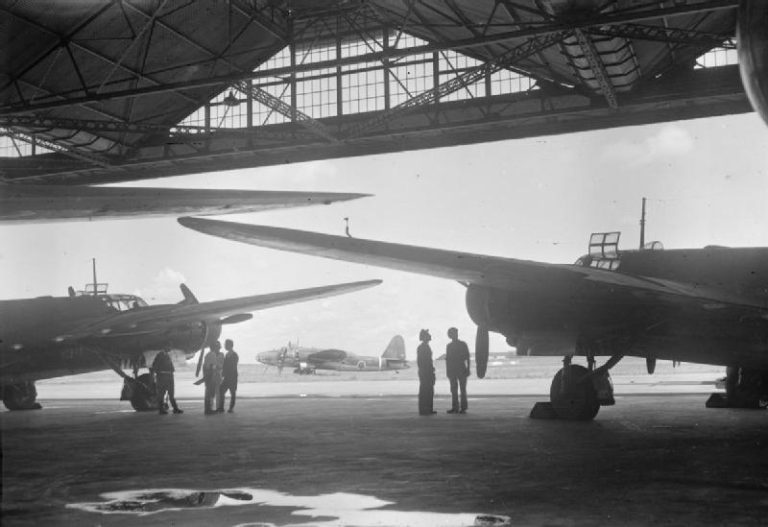
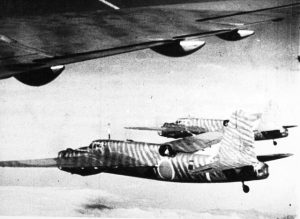
Where the Ki-49 Donryu flew
The record that defines it
The Donryu’s combat story is not one of victories but of attrition. Well-armed and well-protected for a Japanese bomber, it was still too slow to survive against modern Allied fighters, and its units were ground down over New Guinea and the Philippines. Its defining numbers are the ones that measure what it cost, not what it achieved.
Compare the combat record of every military aircraft in our database.
Everything people ask about the Ki-49 Donryu
Can I fly in a Nakajima Ki-49 Donryu?
What does “Donryu” mean?
Why was the Ki-49 built?
Was the Ki-49 a good bomber?
What was the Allied nickname for the Ki-49?
How many Ki-49s were built?
Do any Ki-49 Donryu survive today?
You can’t fly the Ki-49 Donryu.
These, you can.
Some legends only live in museums — others are fuelled and waiting. MiGFlug has put civilians in real military jet cockpits since 2004.
 Fly the L-39 AlbatrosThe world’s most-flown jet trainer — aerobatics included
 Fly the F-104 Starfighter“The missile with a man in it”
 Fly the MiG-21The Cold War’s most-produced jet
 Fly the T-33 Shooting StarAmerica’s first jet trainer
 Fly the DH VampireA piece of early jet history
 Fly the S.211Agile Italian jet trainer
 Fly the MB-326The classic Aermacchi jet
 Fly the MiG-15The Soviet legend of the Korean War
Continue the tour
Every fact, checked
- J. Rickard — History of War: Nakajima Ki-49 DonryuDetailed development history, variants and the production breakdown.
- Pacific Wrecks — Nakajima Ki-49 DonryuCombat use, surviving wrecks in New Guinea and the “no survivors” record.
- Aeropedia — Nakajima Ki-49 Donryu (Helen)Production totals, the Darwin raid and confirmation that none survives.
- j-aircraft.com — Ki-49 FAQAuthoritative discussion of the Donryu name and its temple origin.
- Military Factory — Nakajima Ki-49 DonryuSpecifications and armament quick-reference.
- World War II Database — Ki-49 DonryuService history and technical data.
- Aviastar — Nakajima Ki-49 DonryuVariant list and dimensional data.
- René J. Francillon — Japanese Aircraft of the Pacific WarThe standard scholarly reference; source of the “Storm Dragon” gloss and higher production figures.