
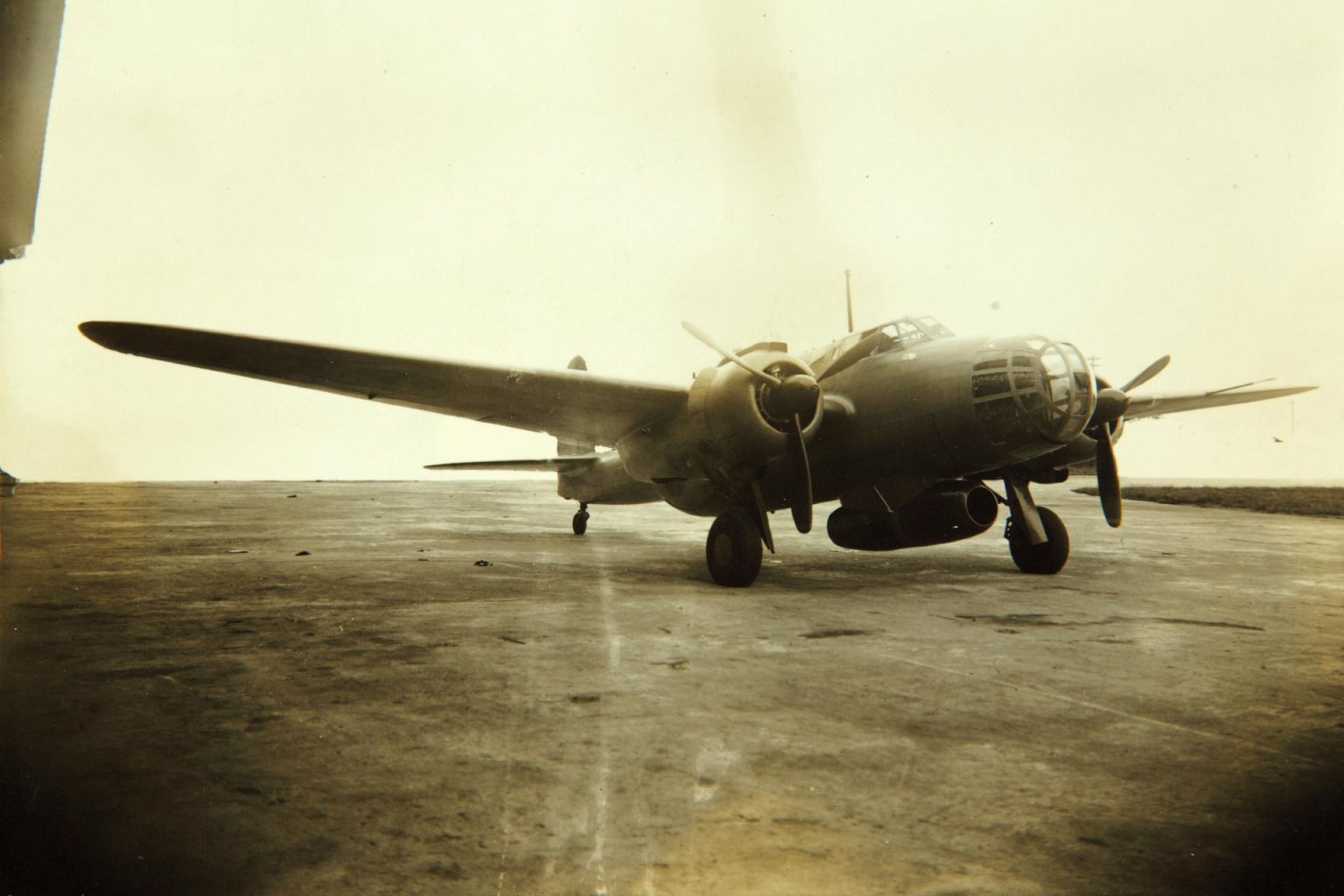
Kawasaki Ki-48
“Lily”
The fast little bomber Japan built to catch a Soviet ghost — brilliant over China in 1940, and a lightly-armed, unarmoured target once Allied fighters caught up.
The Kawasaki Ki-48: the bomber built to catch a Soviet speedster
The Kawasaki Ki-48 owes its existence to being outrun. In the fighting over China from 1937, the Imperial Japanese Army kept meeting the Soviet-supplied Tupolev SB — a twin-engine fast bomber quick enough that Japan’s own fighters and bombers struggled to catch it. Embarrassed by an enemy machine that could simply run away, the Army in December 1937 ordered Kawasaki to build a light bomber that would do the same thing better.
Design work began in January 1938 under Takeo Doi — the engineer who would also shape the Ki-45 “Nick” and the inline-engined Ki-61 “Tony.” The requirement was blunt about priorities: a top speed around 480 km/h, a cruise near 350 km/h, a modest 400 kg bombload and three or four hand-held 7.7 mm guns. Speed came first; protection and firepower came a distant second. The first prototype flew in July 1939, suffered a spell of tail flutter that was cured on the pre-production machines, and the type entered service in 1940 as the Army Type 99 Twin-engined Light Bomber.
For a season it worked exactly as intended. Over China in 1940–41 the Ki-48 was fast enough to be nearly uninterceptable — though that said as much about the thin Chinese air opposition as about the aircraft itself. Then the Pacific War arrived, and with it the P-40, the P-38 Lightning and the Spitfire. Against those fighters the Ki-48’s virtues evaporated: its speed was no longer exceptional, its three rifle-caliber guns were useless for self-defence, and its lack of armour and self-sealing tanks meant it burned easily. The Allies gave it the reporting name “Lily,” and by October 1944 the Army itself had declared it obsolescent.
Kawasaki kept improving it — the more powerful Ki-48-II added some armour, a bigger bombload and even a dive-bomber sub-variant — but the design had been overtaken by the war it was built for. In its last years the “Lily” was pushed into night raids, pressed into special-attack (kamikaze) conversions carrying an explosive charge in the nose, and used as a flying testbed for Japan’s experimental I-Go radio-guided bomb and even an early jet engine. Roughly 1,977 were built — a large number for an aircraft almost no one remembers.
01The Kawasaki Ki-48’s origin: how the Tupolev SB shamed Japan into building it
When the Second Sino-Japanese War flared in 1937, Chinese units flew the Soviet Tupolev SB, a sleek twin-engine bomber whose speed let it strike and escape before Japanese fighters could reach it. For an army used to owning the sky over China, that was intolerable. The response was a formal December 1937 instruction to Kawasaki for a fast light bomber of its own — a machine defined less by what it should carry than by what it should be able to outrun.
The result, the Ki-48, was a clean cantilever mid-wing monoplane with retractable gear and two radial engines. It hit its speed target and, for a year or two, delivered exactly the immunity the Army had wanted. The deeper lesson — that a bomber optimised purely for speed in 1938 would be a slow, fragile target a few years later — would be learned the hard way over Burma and New Guinea.
What made the Ki-48 tick
Speed bought by sacrificing everything else
The Ki-48 was designed around one number: top speed. To reach it, Takeo Doi’s team kept the airframe light and clean and accepted a small bombload (about 300–400 kg on the early model), no armour and no self-sealing fuel tanks. In 1940 that trade looked smart. By 1943, against fighters that could catch it, the same choices made the “Lily” a machine that caught fire when hit.
Two Nakajima radials — and a mid-life power boost
The Ki-48-I used two Nakajima Ha-25 14-cylinder radials of roughly 950–1,000 hp each, good for about 480 km/h. The improved Ki-48-II swapped in the two-stage-supercharged Nakajima Ha-115 of around 1,130 hp, lifting top speed to roughly 505 km/h and raising the ceiling — the same engine family that powered several of Japan’s best-known Army aircraft.
Three rifle-caliber guns for a crew of four
Defence rested on just three 7.7 mm machine guns — nose, dorsal and ventral — hand-aimed by a crew of four. That was adequate against 1930s biplanes and thin opposition; it was hopelessly light against P-38s and Hellcats. Only the late Ki-48-IIc up-gunned the dorsal position to 12.7 mm, and by then the type’s day had passed.
02The Ki-48’s defensive armament: three popguns against modern fighters
Japanese and Western light bombers alike leaned on defensive machine guns to survive interception, but the Ki-48 went to war with the bare minimum: three flexible 7.7 mm Type 89 guns, the same rifle-caliber weapons that had armed 1930s aircraft. Against a diving P-38 Lightning or a Spitfire, three hand-held popguns offered almost nothing, and the unarmoured, unprotected fuel system behind them meant a single burst could be fatal.
The Army knew this. The up-armed Ki-48-IIc substituted a 12.7 mm gun in the dorsal mount, and surviving units increasingly flew at night to avoid interception altogether. But the fundamental problem — a fast-bomber philosophy that had traded away defence for speed — could not be patched out of the airframe.
03The Kawasaki Ki-48-II: more power, a little armour and a dive-bomber that wasn’t quite
Three Ki-48-II prototypes flew in February 1942 and the variant entered production that April. The Ha-115 engines added power and altitude, the structure was strengthened, and — learning from the Pacific — the II finally gained some armour and partial fuel-tank protection and a larger bombload of up to about 800 kg. One sub-type, the Ki-48-IIb, added under-wing dive brakes to turn the level bomber into a dive-bomber, a mid-life role change forced by battlefield reality.
It was a genuinely better aircraft than the Ki-48-I — but “better” was measured against a 1938 design, and the improvements never closed the gap with the fighters now hunting it. Production of the II ran until October 1944.
Full specifications
Figures below are for the improved Ki-48-II, with the earlier Ki-48-I noted where it differs. Many Ki-48 numbers vary between sources — treat weights, range and production totals as well-supported approximations rather than exact values.
Baseline note: the figures below describe the Kawasaki Ki-48-IIb (Army Type 99 Twin-engined Light Bomber Model 2B, Allied reporting name “Lily”), the dive-brake aircraft that dominated 1943–44 production and flew the campaigns the type is remembered for. Deltas for the Ha-25-engined Ki-48-Ia/Ib of 1940–42 are given in grey. Japanese Army figures were quoted at normal loaded weight; Western compilations of Ki-48 data descend almost entirely from one post-war source and repeat each other, so where a second reading exists it is flagged rather than averaged away.
Dimensions & weights
- Crew
- 4 — pilot, bombardier/nose gunner, radio operator who also worked the dorsal gun, and a ventral gunner. Only three men could fire, and never in the same direction
- Length
- 12.75 m (41 ft 10 in) — standard tables give the same length for the Ki-48-I and the Ki-48-II, although the Model 2 rear fuselage was redesigned and is usually described as slightly lengthened. The discrepancy is unresolved and probably reflects a table copied forward rather than two measurements
- Wingspan
- 17.45 m (57 ft 3 in)
- Height
- 3.80 m (12 ft 6 in)
- Wing area
- 40.00 m² (430.6 sq ft)
- Aspect ratio
- 7.61 — high for a 1938 bomber and the clearest sign of what Kawasaki was chasing. Takeo Doi’s team wanted cruise efficiency and a clean high-speed wing, not load-carrying volume
- Aerofoil
- NACA 24015 at the root, NACA 23010 at the tip, on a two-spar all-metal stressed-skin cantilever wing with split flaps and a straight centre section
- Fuselage
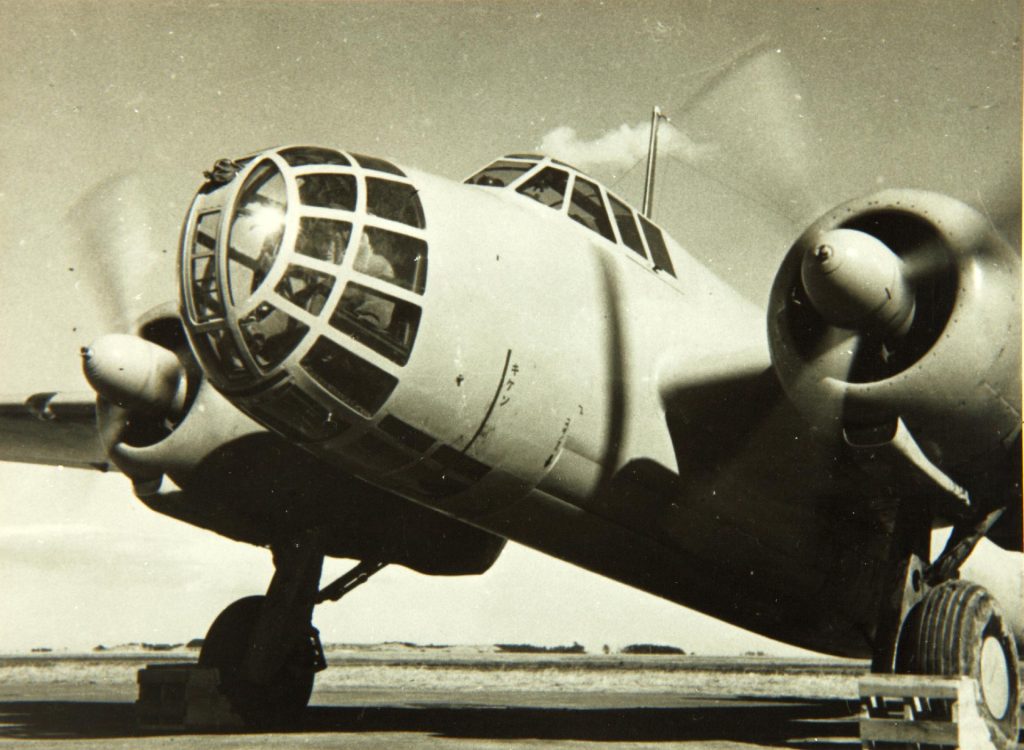
- All-metal semi-monocoque, mid-wing, with a fully glazed bombardier’s nose and a stepped underside: the belly rises sharply aft of the bomb bay so the ventral gunner can see and fire rearwards. That step is the type’s recognition feature and the reason for its odd, hump-backed profile
- Bomb bay
- Single internal ventral bay between the spars. There were no external racks of any kind, so the bay set the payload ceiling absolutely
- Empty weight
- 4,550 kg (10,031 lb); Ki-48-I 3,550 kg (7,826 lb). One thousand kilogrammes of armour, protected tanks, bigger engines and structure, added between 1942 and 1943
- Normal loaded weight
- 6,500 kg (14,330 lb); Ki-48-I 5,400 kg (11,905 lb)
- Maximum take-off weight
- 6,750 kg (14,881 lb); Ki-48-I 6,000 kg (13,228 lb)
- Useful load fraction
- 30 per cent of normal loaded weight — four crew, fuel, guns, ammunition and 800 kg of bombs inside 1,950 kg of disposable load. The Ki-48 was a big aeroplane carrying a small war
Performance
- Maximum speed
- 505 km/h (314 mph, 273 kt) at 5,600 m (18,370 ft); a minority of tables give 503 km/h. Ki-48-I: 480 km/h (298 mph) at 3,500 m (11,480 ft)
- Cruising speed
- 400 km/h (249 mph, 216 kt) at 3,000 m (9,840 ft); Ki-48-I 350 km/h (217 mph)
- Climb to 5,000 m
- 8 min 30 sec (to 16,400 ft) — unchanged between the Model 1 and the Model 2, because the extra 400 hp per side went entirely into carrying the extra weight
- Average rate of climb
- 588 m/min (1,929 ft/min) over the first 5,000 m
- Service ceiling
- 10,100 m (33,140 ft)
- Maximum range
- 2,400 km (1,491 miles, 1,296 nm) at economical cruise with no bombs
- Range with full bomb load
- ~1,200 km (~746 miles) — the figure that mattered, and the one that kept the type tied to forward strips
- Typical combat radius
- ~400–500 km (~250–310 miles) with 800 kg of bombs and a reserve
- Endurance
- ~4 hours at cruise
- Wing loading
- 162.5 kg/m² (33.3 lb/sq ft) at normal loaded weight; Ki-48-I 135.0 kg/m² (27.7 lb/sq ft). The Model 2 lost much of the Model 1’s pleasant handling to that increase
- Power loading
- 2.83 kg/hp (6.23 lb/hp) — almost identical to the Ki-48-I’s 2.84 kg/hp, which is the whole story of the Model 2 in one number
- Dive-bombing limit
- Ki-48-IIb only: dives of about 60 degrees with the wing brakes extended, entry from roughly 3,500 m and release at about 1,000 m. Earlier marks were cleared for shallow glide attacks only
Propulsion & systems
- Engines
- Two Nakajima Ha-115 (Army Type 1 1,150 hp Air-Cooled Radial), fourteen-cylinder two-row radials with two-speed superchargers, driving three-blade constant-speed metal propellers — the same engine as the Ki-43-II Hayabusa, which is why it was available in quantity
- Power ratings
- 1,150 hp (858 kW) for take-off, 1,100 hp (820 kW) at 2,850 m and 980 hp (731 kW) at 6,000 m per engine — several tables quote 1,130 hp for take-off instead
- Earlier engines
- Ki-48 prototypes and Ki-48-I: two Nakajima Ha-25 (Army Type 99 950 hp), 950 hp (708 kW) for take-off and 970 hp (723 kW) at 4,000 m — a single-stage supercharged engine that ran out of breath above about 4,000 m and capped the Model 1’s useful bombing altitude
- Fuel
- Internal wing and centre-section tanks only; ~1,600 litres (~352 imp gal, ~423 US gal) is the figure usually quoted, but Japanese Army fuel capacities for this type are poorly attested in Western sources and should be treated as approximate
- Fuel tank protection
- None on the Ki-48-I. Rubber-covered self-sealing tanks from the Ki-48-II — a change forced by 1942 combat, and one of the two reasons the Model 2 weighed a tonne more than the Model 1
- Armour
- None on the Ki-48-I. Steel plate behind the pilot and at the gunners’ stations on the Ki-48-II. Modest by Allied standards of the same date, but it was the first serious crew protection in a Japanese Army light bomber
- Dive brakes
- Ki-48-IIb only: slatted (perforated) split brakes under the outer wing panels, inherited directly from the abandoned Ki-66 dive-bomber programme. They allowed genuine steep-dive attack without the airframe running away in the dive
- Undercarriage
- Hydraulically retractable tailwheel type, main units folding rearwards into the nacelles, retractable tailwheel. Designed for the unpaved forward strips it would spend its life on
- Radio and navigation
- Type 96 Model 3 or Type 99 HF transceiver with a wire aerial from the fin to the cockpit, plus a loop direction-finder on later aircraft. No blind-bombing aid, no radar, no autopilot — navigation to the target was the bombardier’s eyes and a map
- Bombsight
- Type 88 optical bombsight in the nose for level attack. Accuracy from 3,000 m against a moving or defended target was poor, which is part of why the dive-brake Model 2B mattered
- Production
- ~1,977 aircraft in total from Kawasaki Kokuki Kogyo at Gifu: 4 prototypes and 5 service-trial machines, 557 Ki-48-I (1940 to mid-1942), 3 Ki-48-II prototypes and 1,408 Ki-48-II (April 1942 to October 1944) — the widely quoted total of 1,997 does not reconcile with the sub-totals usually printed beside it; 1,977 does
04The Kawasaki Ki-48’s cost: why no reliable price exists
There is no dependable public figure for what a Ki-48 cost to buy or to operate. It was a wartime product of Imperial Japan’s state-directed aircraft industry, never sold on an open market, and Japanese wartime procurement costs are poorly documented in Western-accessible sources. No reviewed reference — museum, encyclopedia or specialist history — lists a unit price or a cost-per-flight-hour for the type.
So both the unit-cost and cost-per-flight-hour rows above read “no reliable public figure exists,” and any precise number you see attached to a Ki-48 should be treated with suspicion. This field is kept for consistency with the rest of the encyclopedia, where operating-cost data does exist for later aircraft.
Armament & payload
The Ki-48 carried four hundred kilogrammes and three rifle-calibre guns, and neither number ever improved enough
Everything the Ki-48 could drop went in one internal ventral bay: 400 kg on the Model 1, 800 kg on the Model 2. For comparison, a Bristol Blenheim IV of 1939 carried 454 kg and was already considered under-armed, and a Douglas A-20G carried 1,814 kg. There were no external racks, no drop tanks and no pylons, so there was no way to trade range for load or load for range — the bay was the entire argument.
Defensive armament was three flexible 7.7 mm Type 89 machine guns, one each in the nose, dorsal and ventral positions, and it stayed three rifle-calibre guns from the 1939 prototype to the last Model 2 off the line in October 1944. The final sub-variant substituted a single 12.7 mm Ho-103 in the dorsal position, which is the sum total of five years of defensive development. Against Chinese I-15bis biplanes this was survivable. Against a P-38 making a high-side pass at 640 km/h it was decoration. Armament fits varied by unit and by year in ways the surviving paperwork does not fully capture, and field modifications — extra guns, deleted guns, oblique cannon — were common by 1944.
Gun
- One 7.7 mm Type 89 (Te-4) flexible machine gun in the glazed nose, worked by the bombardier
- One 7.7 mm Type 89 on a pillar mount in the dorsal position, behind the wing
- One 7.7 mm Type 89 firing rearwards and downwards through the ventral step
- Ki-48-IIc: the dorsal 7.7 mm replaced by one 12.7 mm Ho-103 (Army Type 1) — the only calibre increase the type ever received in production
- Night-interception conversions: one or two 20 mm Ho-5 cannon mounted obliquely upwards in the fuselage, fired by the pilot at bombers passing overhead
Air-to-air
- No guided air-to-air weapon existed for the Japanese Army Air Force, and none was ever fitted
- No fixed forward-firing armament on any production Ki-48; the pilot could not shoot at anything
- The Ki-66 prototype added two fixed 12.7 mm Ho-103 in the nose for strafing and self-defence; it was not adopted, and the guns did not carry over to the Ki-48-II
- The oblique 20 mm night-fighter conversions were the type’s only deliberate air-to-air fit. With no AI radar, no speed margin over a B-24 and none at all over a B-29, they achieved next to nothing
- Air-burst anti-formation bombs were a Japanese Army tactic of 1944–45, but firm evidence of Ki-48 units using them is lacking and the claim should not be repeated as fact
Air-to-surface guided
- Kawasaki Ki-148, the I-Go-1-B (Igo-1 Otsu): a radio-command-guided rocket-powered air-to-surface missile with a 300 kg (661 lb) warhead
- Liquid-fuel rocket motor of about 1.47 kN (330 lbf) burning for up to 80 seconds; released from a modified Ki-48-II carrying one under the fuselage
- Trials from late 1944; roughly 180 rounds were built. None was used in action, and the Ki-102 was intended to take over as the operational carrier
- The companion Mitsubishi Ki-147 (I-Go-1-A) had an 800 kg warhead and was too large for the Ki-48; it flew from the Ki-67 Hiryu
- Guidance was visual and line-of-sight: the launch crew tracked a flare in the missile’s tail and flew straight and level while steering it. Against a defended warship that was a death sentence for the launch aircraft, which is precisely why the Army was simultaneously funding manned special attack
Bombs
- Ki-48-I: 400 kg (882 lb) maximum — typically four 100 kg Type 94 bombs, or a mixed load of 50 kg weapons
- Ki-48-II: 800 kg (1,764 lb) maximum — two 250 kg (551 lb) Type 92 bombs plus smaller stores, or an overload single-mission fit for short-range work
- Type 2 Ta-Dan cluster containers of small anti-personnel and shaped-charge bomblets, and incendiaries, for airfield and troop attack — the loads that did the most damage in China and Burma
- Nothing was ever carried externally. No shackles, no wing racks, no torpedo capability
- Special attack conversions: a single fixed charge of about 800 kg in the bay with an extended nose fuze, the bay doors faired over
Rockets
- None. No production or trials Ki-48 carried unguided rocket ordnance of any kind
- The rocket motor associated with the type belongs to the Ki-148 guided missile, and was propulsion for that weapon rather than an air-to-ground store
- Japanese Army 20 cm and 30 cm rocket projectiles of 1944–45 went to single-engined attack and heavy fighter types, never to the Ki-48
- No rocket-assisted take-off gear was fitted, despite the type spending its career on short forward strips where it would have helped
Pods & other stores
- No drop tanks. Range was fixed by what the wing held, which is why the Ki-48 was always a tactical aeroplane operating from strips close behind the line
- No gun pods, no external fuel, no external stores stations at all — unusually austere even by 1939 standards
- Vertical cameras were fitted to some aircraft for post-strike photography and light tactical reconnaissance, a role the type drifted into as bombing became unsurvivable
- Ki-48 airframes served as flying testbeds for early Japanese jet-propulsion work in 1944–45. This appears in Japanese accounts of the Ne-series and Tsu-11 programmes but is thinly documented in English and is offered here as a claim, not a certainty.
- The one genuine external store the type ever carried was the Ki-148 missile, covered above
Three typical loadouts
- China, autumn 1940: unescorted medium-level raid
- Four 100 kg Type 94 bombs internally, full internal fuel, three 7.7 mm guns with roughly 500 rounds each. Cruise at 4,000 m and 350 km/h, bomb from 3,000 m on the Type 88 sight. This is the mission the Ki-48 was designed for and the only one it ever performed well, because the fighters underneath could not catch it.
- New Guinea, mid-1943: low-level airfield and shipping attack
- Two 250 kg bombs plus Ta-Dan cluster containers, reduced fuel, run in at 100 m to defeat the bombsight problem and the interceptors. Ki-48-IIa or IIb of the 208th Sentai. Loss rates on these sorties were ruinous: Fifth Air Force P-38s and P-40s could reach the Ki-48’s altitude, exceed its speed by 100 km/h and attack from outside the arc of three rifle-calibre guns.
- Okinawa, April 1945: special attack
- One fixed 800 kg charge, bay faired over, defensive guns and two of the four crew removed, minimum fuel for a one-way transit from Kyushu or Formosa. Flown at low level in loose formation with fighter escort where escort could be found. The Ki-48 was a poor kamikaze aircraft — too slow to survive the combat air patrol, too large to hide — and its results in this role were negligible.
Sourcing caveat: Japanese Army ordnance records for 1944–45 are fragmentary, and much of what circulates in English about Ki-48 loadouts is reconstructed from photographs and from unit histories written decades later. Bomb weights and gun fits by sub-variant are well attested; ammunition quantities, camera installations and the special attack conversions are not, and the numbers given for the Ki-148 programme vary between roughly 150 and 180 rounds depending on the source.
Variants
Kawasaki built one aeroplane twice: a fast light bomber that was not fast enough, and then a protected one that was slower still
The Ki-48 exists because of the Tupolev SB. In 1937 and 1938 Soviet-supplied SB-2 bombers flew over China faster than the Ki-10 and Ki-27 fighters sent to intercept them, and the Koku Hombu concluded that speed was the answer to everything. In December 1937 it asked Kawasaki for a twin-engined light bomber to make 480 km/h at 3,000 m and reach 5,000 m in ten minutes, and Takeo Doi’s team gave it exactly that: a clean, high-aspect-ratio, lightly built aeroplane with a small bay, no armour, no protected tanks and three rifle-calibre guns.
The first prototype flew in July 1939 and, once horizontal tail flutter was cured, met the specification. By the time the Ki-48-Ia reached China in the autumn of 1940 the specification had stopped mattering. The Spitfire had been in service for two years; the P-40 was in production. A 480 km/h bomber was no longer an uncatchable bomber, and the design had bought that speed by giving up everything that lets a bomber absorb damage.
The Ki-48-II of 1942 fixed the protection and could not fix the arithmetic. Ha-115 engines added 400 hp a side; armour, self-sealing tanks and a heavier structure added a tonne. Maximum speed rose by 25 km/h, climb did not improve at all, and power loading came out fractionally worse than the Model 1’s. Kawasaki had turned a fast unprotected bomber into an ordinary protected one, at a moment when ordinary was fatal.
- Ki-48 (1939–40 / 4 prototypes, 5 service-trial aircraft)
- Ha-25 engines. First flight July 1939 at Gifu; horizontal tail flutter found in August 1939 testing and cured by redesign. Accepted in the autumn of 1940 as the Army Type 99 Twin-engined Light Bomber.
- Ki-48-Ia (1940–41 / part of 557 Model 1 built)
- First production model. Two Ha-25, 400 kg bomb load, three 7.7 mm Type 89 guns, no armour and no tank protection. Entered combat in China from the autumn of 1940, replacing the Kawasaki Ki-32.
- Ki-48-Ib (1941–42 / part of the same 557)
- Revised gun mountings for better field of fire and detail equipment changes. Otherwise identical; the mark that fought the opening Malaya, Burma, Philippines and Netherlands East Indies campaigns.
- Ki-48-II (1942 / 3 prototypes)
- Ha-115 engines, redesigned and strengthened rear fuselage, armour and self-sealing tanks, bay enlarged to 800 kg. The prototypes flew in February 1942 and confirmed both the gain and the cost.
- Ki-48-IIa (April 1942 onwards / part of 1,408 Model 2 built)
- First Model 2 production sub-variant. Same three 7.7 mm guns as the Model 1 — the protection improved, the sting did not.
- Ki-48-IIb (1943–44 / part of the same 1,408)
- Slatted dive brakes under the outer wings, taken from the cancelled Ki-66, allowing dive-bombing at around 60 degrees. The most numerous and most capable sub-variant, and the only one whose weapon delivery was genuinely better than the 1940 aircraft’s.
- Ki-48-IIc (1944 / part of the same 1,408, final production sub-variant)
- Dorsal 7.7 mm replaced by a 12.7 mm Ho-103. Frequently and wrongly described as a night-fighter model: the -IIc was a production bomber with a heavier dorsal gun. Night-interception Ki-48s were unit and depot conversions of Model 2 airframes fitted with obliquely mounted 20 mm Ho-5 cannon, without radar and without a designation of their own.
- Ki-48-II KAI, special attack conversion (late 1944–1945 / conversions, ~11 in the first Philippines batch)
- Guns and surplus crew stations removed, an 800 kg charge fixed in the bay with a nose-mounted fuze. Used from the Philippines and then at Okinawa in April 1945. Too slow and too visible to reach shipping through the combat air patrol.
- Ki-48-II missile carrier (1944–45 / small number of conversions)
- Modified to carry and guide one Kawasaki Ki-148 (I-Go-1-B) radio-controlled missile. The trials worked; the war ended before the weapon reached a unit, and the Ki-102 was to have taken over the carrier role.
- Ki-66 (1942–43 / six prototypes, some sources eight)
- Dedicated dive-bomber derivative with a strengthened airframe, dive brakes and two fixed forward-firing 12.7 mm guns. Flown from November 1942 and abandoned as not worth a separate production line; its brakes were transplanted into the Ki-48-IIb instead.
- Ki-174 (1945 / project only, none completed)
- Proposed single-seat special attack development of the Ki-48. It never left the drawing board, which is the kindest thing that can be said about it.
- Licence and export production (none)
- Every Ki-48 was built by Kawasaki Kokuki Kogyo at Gifu. There were no licence-built aircraft, no export variants and no foreign orders. The only non-Japanese operators acquired their aircraft by capture: the Chinese Nationalist Air Force, the Chinese Communist air arm — whose last Ki-48 left the training role in 1952 — and the Indonesian republican forces, who flew at least one against the Dutch.
Closing caveat and survivors: of roughly 1,977 built, no complete original Ki-48 is known to survive in Japan, none is airworthy anywhere, and no reproduction has been built. The most substantial survivor is the aircraft displayed at the China Aviation Museum at Datangshan, north of Beijing, in People’s Liberation Army Air Force markings — a captured airframe that stayed in Chinese service after 1945. A second, considerably less complete airframe recovered from the former Soviet Far East is held by the Central Museum of the Great Patriotic War on Poklonnaya Hill in Moscow. Several reference works also credit the Indonesian Air Force Museum at Yogyakarta with a Ki-48; that claim is repeated widely but is not corroborated by any photograph or catalogue entry this survey could verify, and it should be treated as unconfirmed rather than as a third survivor. Production totals also need care: 4 prototypes, 5 service-trial aircraft, 557 Model 1, 3 Model 2 prototypes and 1,408 Model 2 sum to 1,977, which is the figure Japanese sources give; the 1,997 that circulates online does not reconcile with its own components.
From answer-to-the-SB to obsolete relic
Outrun over China
Soviet-supplied Tupolev SB bombers outpace Japanese fighters over China; in December the Army orders Kawasaki to build a fast light bomber in reply.
Doi starts work
Design begins under Takeo Doi, with speed prioritised over armour and firepower from the outset.
First flight
The prototype flies in July; early tail flutter is cured on the pre-production machines.
Into service over China
Enters service as the Army Type 99 Twin-engined Light Bomber and proves nearly uninterceptable against weak opposition.
The opening offensives
Serves in Malaya, the Philippines and the Dutch East Indies during Japan’s advance across South-East Asia.
The improved Ki-48-II
More powerful Ha-115 engines, some armour, a bigger bombload and a dive-bomber sub-variant enter production.
Caught by the fighters
Over Burma and New Guinea, P-38s and P-40s expose the “Lily’s” thin defences; losses push it toward night operations.
Guided bombs and kamikaze
Declared obsolescent in October 1944; used to test the I-Go radio-guided bomb and an early jet engine, and converted for special-attack ramming missions.
War’s end
Surviving Ki-48s serve to the surrender, including over Okinawa; almost none survive intact today.
Twelve stories about the “Lily”
The bomber born from being outrun
The Soviet Tupolev SB humiliated Japanese fighters over China — so Japan built a whole aircraft to answer it.
Read the full story
Speed over survival — a philosophy that aged badly
Engineers deliberately traded armour, protected tanks and firepower for velocity.
Read the full story
The two-year fall from grace
Nearly uninterceptable in 1940; declared obsolescent by October 1944.
Read the full story
Three popguns against Lightnings
The Ki-48 went to war with the defensive firepower of a 1930s biplane.
Read the full story
From the drawing board of a legend
Chief engineer Takeo Doi also designed the Ki-61 “Tony” and Ki-45 “Nick.”
Read the full story
Japan’s guided-missile experiment rode a Lily
The Ki-48 served as a launch aircraft in trials of the I-Go radio-controlled anti-ship bomb.
Read the full story
An unlikely jet testbed
One Ki-48 was rigged to help test an experimental Japanese jet engine.
Read the full story
The level bomber that learned to dive
The Ki-48-IIb bolted on dive brakes to change the aircraft’s job mid-war.
Read the full story
From bomber to bomb
Late-war Ki-48 conversions carried an explosive charge in the nose for ramming attacks.
Read the full story
Retreating into the dark
Surviving Lilys were pushed into night raids to avoid interception.
Read the full story
The Lily almost no one can see today
Despite roughly 1,977 built, not one complete example survives intact.
Read the full story
Fast for its day, small for its size
Next to Allied light bombers, the Ki-48 carried a strikingly light bombload.
Read the full story
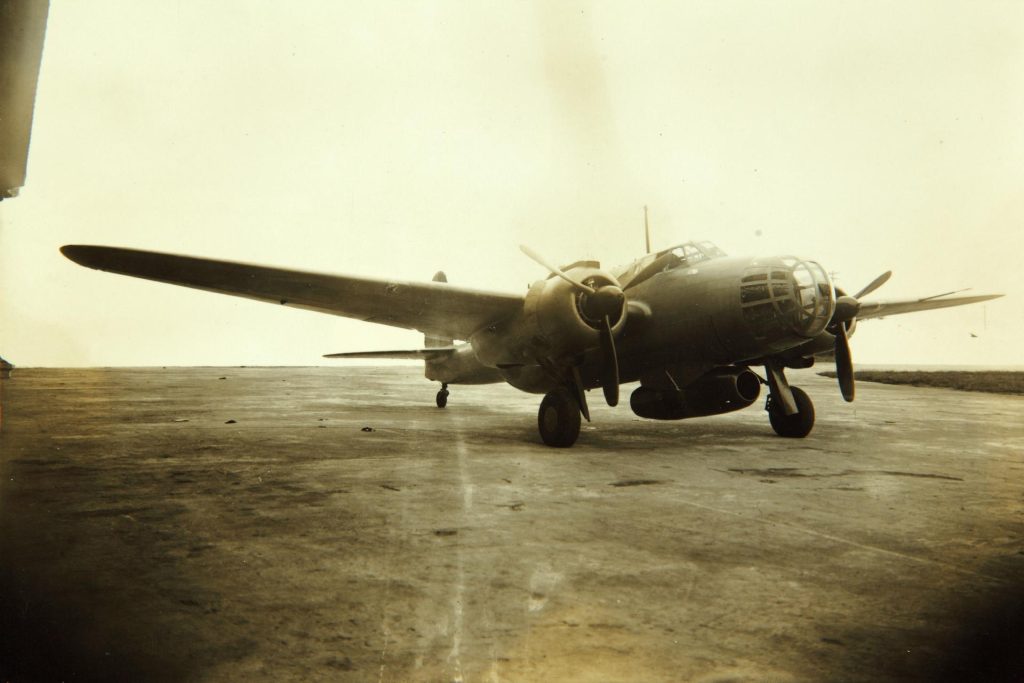
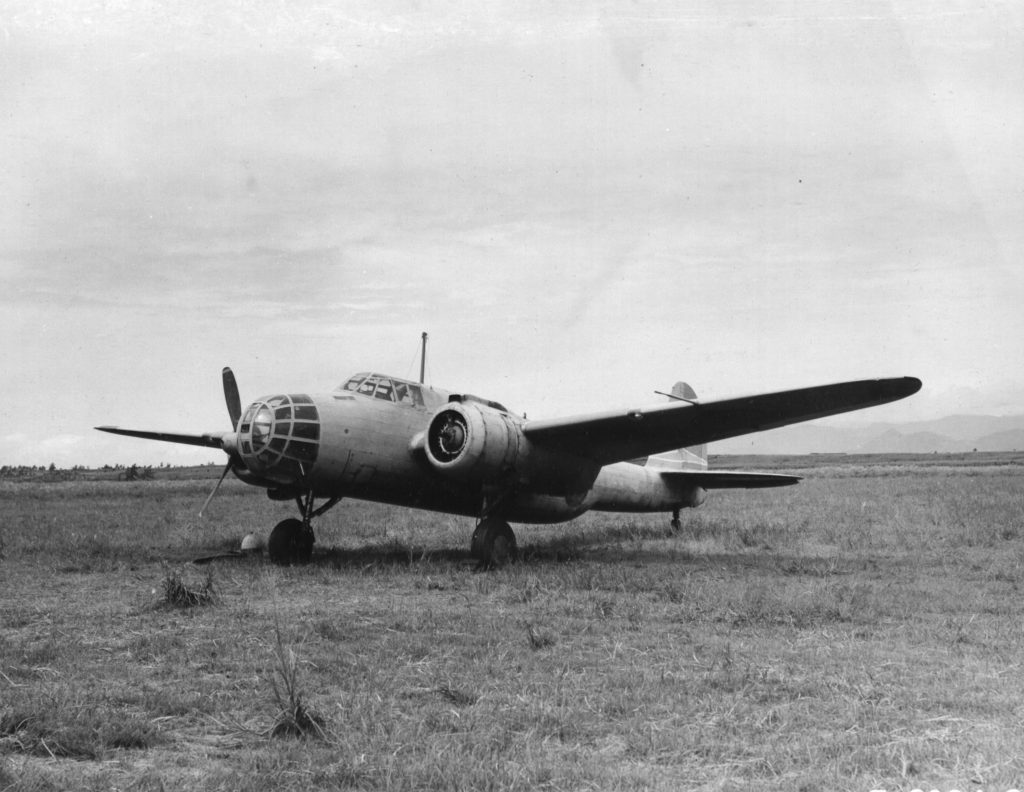
The Ki-48 “Lily” in pictures
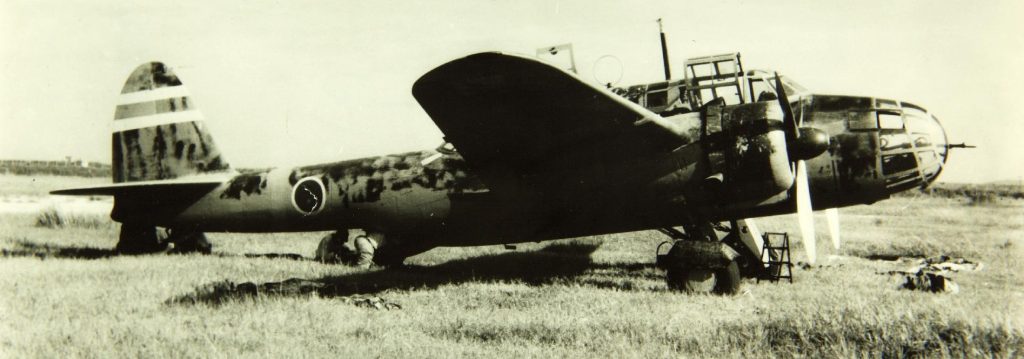
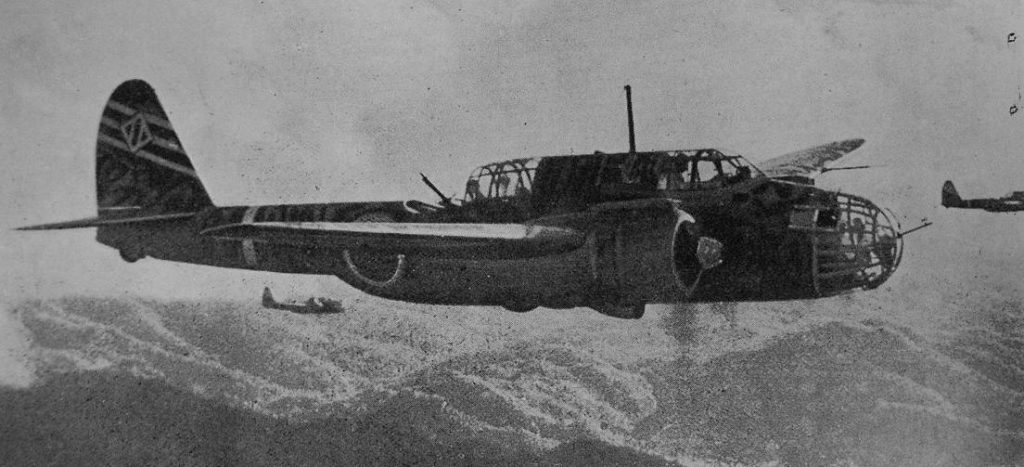
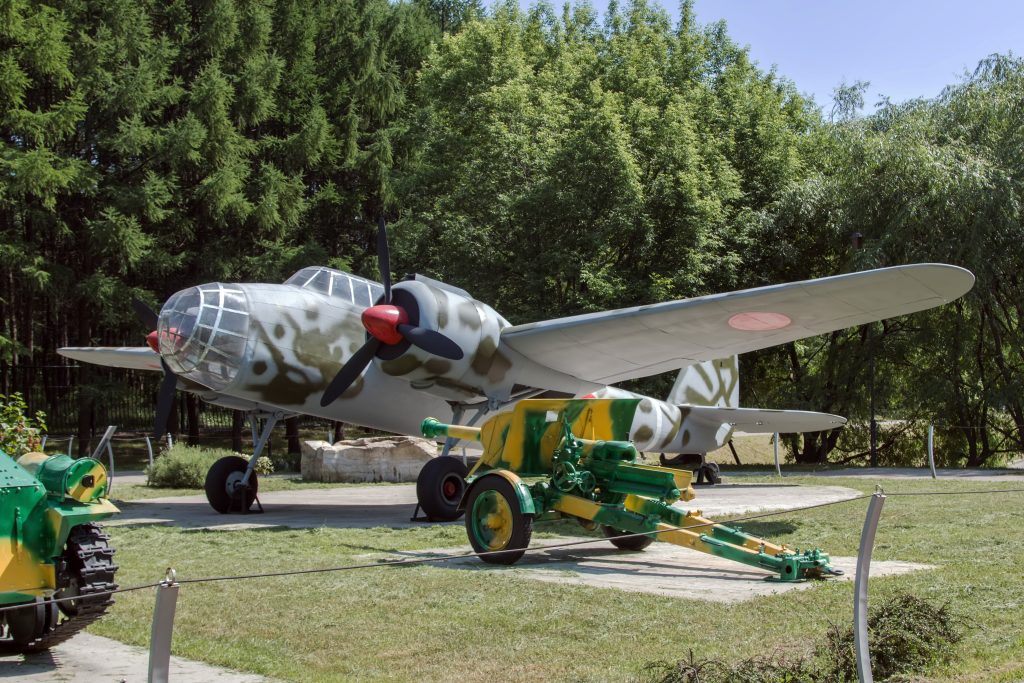
The Ki-48 on film
Rare wartime film of the Kawasaki Ki-48 “Lily” in operation. No high-production documentary is devoted to this obscure type, so we have chosen genuine archival footage over a modern narration — it shows the aircraft as it actually flew.
Where the Ki-48 flew
A record written in speed, then in loss
The Ki-48 has no roll of aerial victories — it was a bomber, and a lightly defended one. Its story is the arc of its own obsolescence: a fast, near-untouchable debut over China, followed by steadily heavier losses as Allied fighters caught up, and a final descent into night raids and special-attack missions. It is best understood not by kills scored but by how quickly a “fast bomber” became a slow target.
Compare the combat record of every military aircraft in our statistics database.
Everything people ask about the Kawasaki Ki-48
Can I fly in a Kawasaki Ki-48?
What was the Kawasaki Ki-48?
Why was the Ki-48 built?
How fast was the Kawasaki Ki-48?
Why did the Ki-48 become obsolete so quickly?
How many Ki-48s were built?
Did the Ki-48 have any unusual roles?
Are there any surviving Kawasaki Ki-48s?
You can’t fly the Kawasaki Ki-48.
These, you can.
Some legends only live in museums — others are fuelled and waiting. MiGFlug has put civilians in real military jet cockpits since 2004.
 Fly the L-39 AlbatrosThe world’s most-flown jet trainer — aerobatics included
 Fly the F-104 Starfighter“The missile with a man in it”
 Fly the MiG-21The Cold War’s most-produced jet
 Fly the T-33 Shooting StarAmerica’s first jet trainer
 Fly the DH VampireA piece of early jet history
 Fly the S.211Agile Italian jet trainer
 Fly the MB-326The classic Aermacchi jet
 Fly the MiG-15The Soviet legend of the Korean War
Continue the tour
Every fact, checked
- History of War — Kawasaki Ki-48Development, variant-by-variant detail and production figures.
- Military Factory — Kawasaki Ki-48 (Lily)Specification sheet and a production total (~1,997).
- Pacific Wrecks — Ki-48 indexIndividual airframes, wreck sites, wartime captures and the Indonesian survivor.
- Pacific Wrecks — Ki-48 technical informationEngines, dimensions, armament and production notes.
- Pacific War Online Encyclopedia — Ki-48 “Lily”Concise sourced specifications and service history (~1,977 built).
- Pacific Eagles — Kawasaki Ki-48 Type 99 “Lily”Narrative history of the design and its combat career.
- Aeropedia — Kawasaki Ki-48 LilyEncyclopedic overview used as a cross-check.
- Japanese Aircraft of WWII — Kawasaki Ki-48Design lineage (Takeo Doi), variants and the guided-bomb and testbed programmes.