
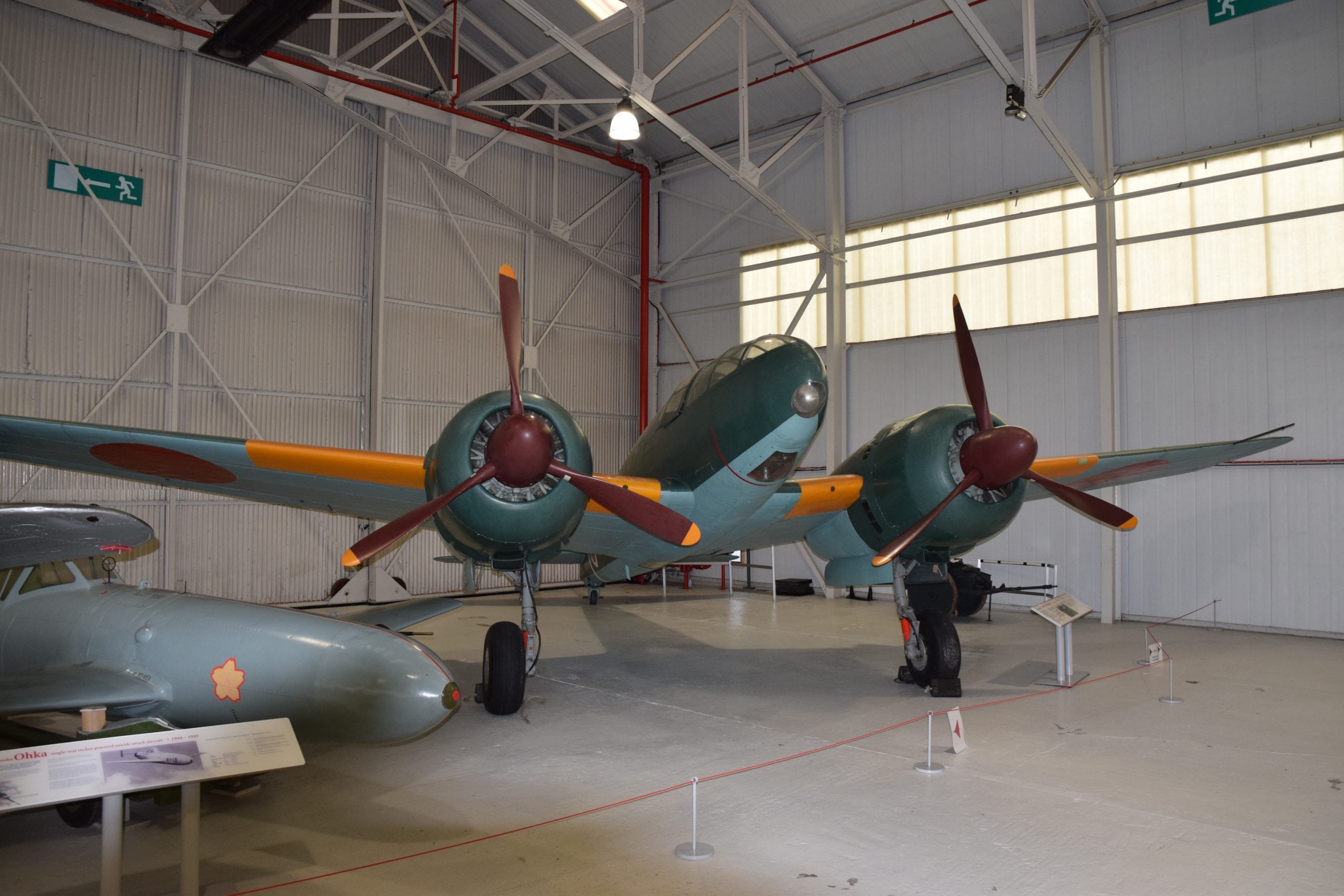
Mitsubishi Ki-46
“Dinah”
The most elegant aircraft of the Pacific War — a twin-engine strategic reconnaissance machine so clean and so fast that, for much of the war, no fighter could catch it.
The Mitsubishi Ki-46: built to outrun interception
In December 1937 the Imperial Japanese Army issued a demanding requirement: a long-range command reconnaissance aircraft fast enough and high-flying enough to gather intelligence over hostile territory and simply outrun anything sent to stop it. Mitsubishi handed the project to a young engineer, Tomio Kubo, whose team — working with the Aeronautical Research Institute of the University of Tokyo on the drag of the engine cowlings — produced one of the cleanest airframes of its generation. The prototype first flew in November 1939, and the type entered service in July 1941 as the Army Type 100 Command Reconnaissance Plane.
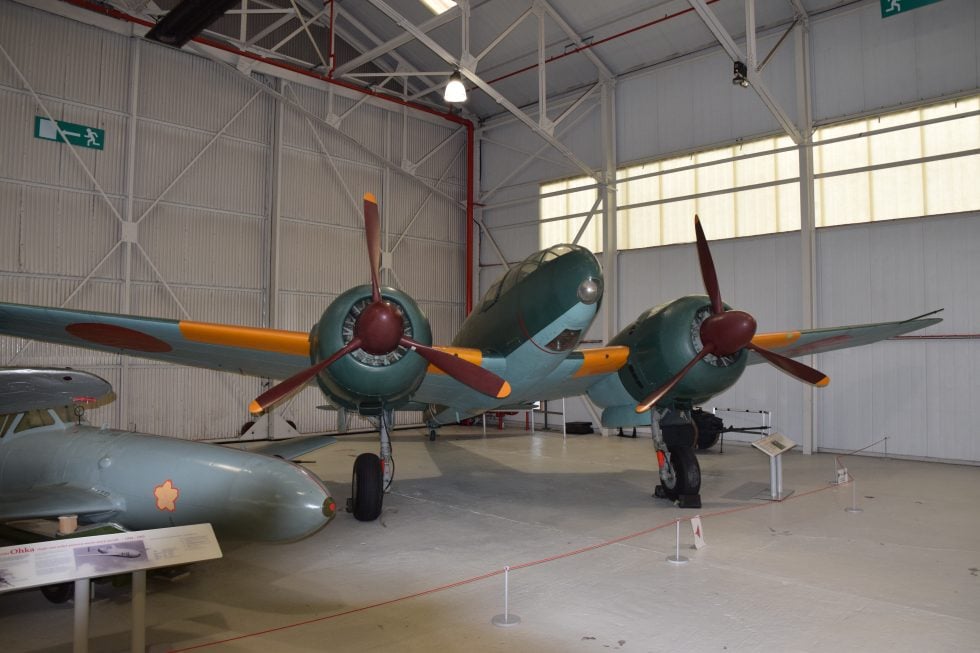
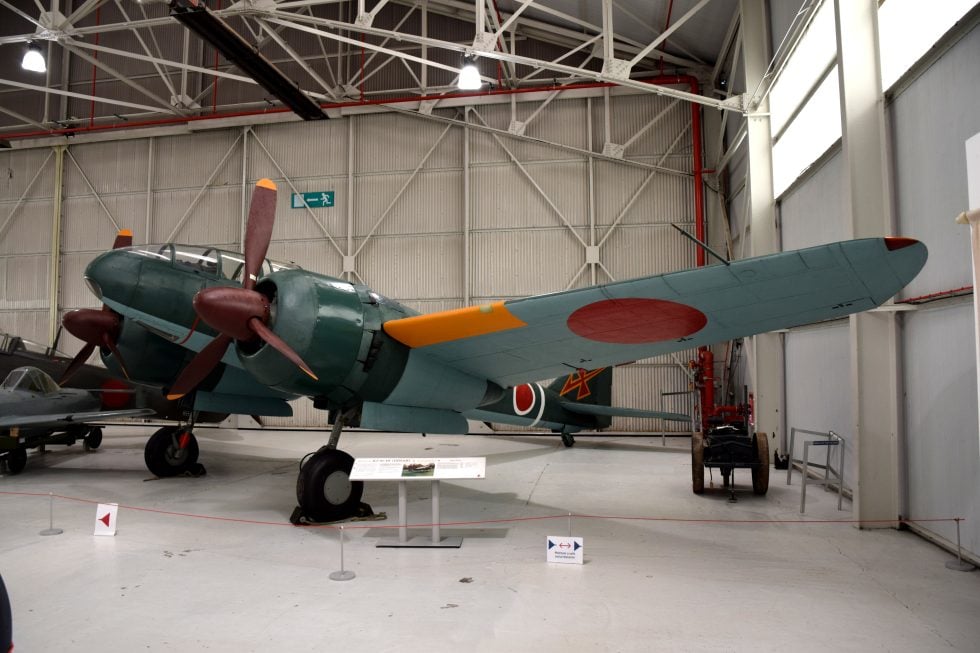
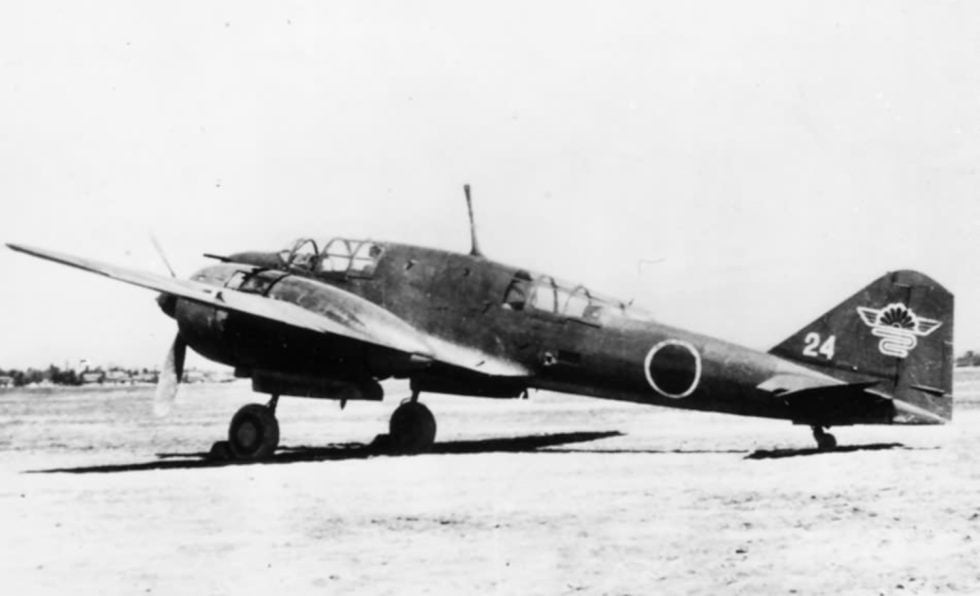
The result was a slender, twin-engine machine of exceptional beauty and even more exceptional performance. Its close-fitting cowlings, wasp-waisted fuselage and large wing tanks gave it a rare combination of high speed, high altitude and very long range. Over China, and later across South-East Asia, the Ki-46 roamed almost at will — and it was working over British Malaya on clandestine high-altitude runs weeks before the attack on Pearl Harbor. Allied crews, who code-named it “Dinah,” struggled to intercept it, and Western historians have since called it one of the most attractive aircraft of the entire war.
The definitive Ki-46-III of 1942–43 traded its single defensive machine gun for still more speed and fuel. But time caught up with the Dinah: as Spitfires reached northern Australia and American fighters improved, the once-untouchable spyplane began to be shot down. Late in the war a handful were rebuilt as the Ki-46-III-KAI high-altitude interceptor to hunt the B-29 — a role for which it was poorly suited. Today a single Ki-46 survives, preserved at the RAF Museum in Britain: the only Dinah left in the world.
01The Mitsubishi Ki-46 “Dinah”: the spyplane that flew over Malaya before Pearl Harbor
The Dinah went to war before the war officially began. In October 1941 — documented flights on the 20th and 22nd — Ki-46s made clandestine high-altitude reconnaissance runs over British Malaya, photographing airfields, ports and defences ahead of Japan’s planned December offensive. Flying high and fast, they were effectively immune to the fighters of the day, and they handed Japanese planners a detailed picture of the ground they were about to invade. It was exactly the mission the aircraft had been designed for: see everything, and leave before anyone can respond.
What makes the Ki-46 special
Aerodynamics ahead of their time
The Ki-46’s signature was its drag — or rather the lack of it. Working with the University of Tokyo, Kubo’s team wrapped the radial engines in unusually tight, low-drag cowlings and blended them into a slim, wasp-waisted fuselage. The clean lines gave the aircraft its famous good looks and, more importantly, let modest engines push it to remarkable speeds. It remains a textbook example of aerodynamic refinement in a late-1930s design.
Speed and altitude as armour
The Dinah carried almost no defensive armament — and on the Ki-46-III, none at all. The design philosophy was blunt: height and speed were the defence. Cruising near 10,500 m at up to ~630 km/h, it flew above and faster than most interceptors could manage, so a gun would only add weight it could not afford. For years the bet paid off.
Radial power and enormous reach
Early Dinahs used Mitsubishi Ha-26 and then Ha-102 radials; the definitive Ki-46-III switched to the ~1,500 hp Ha-112-II. Combined with large wing tanks, that gave the type a reconnaissance range approaching 4,000 km — enough to reach deep into enemy territory and return, the quality that made it such a valuable strategic asset.
02The Mitsubishi Ki-46’s clean airframe: engineering the drag away
Where many contemporaries bolted engines onto a fuselage, Mitsubishi treated the whole shape as one problem. The nacelles were faired so closely to the wing and the fuselage narrowed so smoothly behind the cockpit that the aircraft looked, in the words of more than one historian, like a piece of sculpture. That refinement was not vanity: reducing drag was what let two mid-power radials carry a two-man crew, cameras and a very large fuel load fast enough and high enough to be nearly uncatchable. The Dinah is routinely ranked among the most beautiful — and most aerodynamically honest — aircraft of the war.
03The Mitsubishi Ki-46-III-KAI: turning a spyplane into a B-29 hunter
As American B-29s began raiding Japan, the Army rebuilt some Ki-46-IIIs into the Ki-46-III-KAI air-defence fighter. It carried two forward-firing 20 mm cannon in the nose and a single 37 mm cannon mounted obliquely to fire upward into a bomber from below — the same idea as the German night-fighters’ Schräge Musik. In practice it was a poor interceptor: it could not climb fast enough to reach B-29 altitude in time, had no radar, no armour and no self-sealing tanks, and its light airframe was never built to absorb the recoil of a 37 mm gun. Results were correspondingly limited.
Full Ki-46 specifications
Baseline note: the figures below describe the Ki-46-II, Army Type 100 Command Reconnaissance Plane Model 2 — the Ha-102-engined mark of 1941, of which 1,093 were built and which did the greater part of the type’s work. Deltas for the Ki-46-I prototype and Model 1, the Ha-112-engined Ki-46-III of 1943 and the turbocharged Ki-46-IV are in grey. Metric figures follow the Mitsubishi and Koku Hombu tables reprinted in Japanese sources; the standard Western compilation after Rene Francillon rounds several differently and, on rate of climb, disagrees outright — both readings are named where that happens.
Dimensions & weights
- Crew
- 2 — pilot forward, observer aft, sitting in separate cockpits because the fuselage section was too narrow to put them side by side. The main fuselage fuel tank sat between them, so neither could reach the other in flight
- Length
- 11.00 m (36 ft 1 in) — unchanged across every mark, including the stepless-canopy Ki-46-III
- Wingspan
- 14.70 m (48 ft 3 in). Units in the Australia sector cut 50 cm (20 in) off each tip in 1943 as a field experiment; see the performance column
- Height
- 3.88 m (12 ft 9 in), tail down on a fully retractable tailwheel
- Wing area
- 32.0 m² (344 sq ft) — smaller than a Messerschmitt Bf 110C’s 38.4 m² (413 sq ft) on comparable installed power
- Aspect ratio
- 6.75 — deliberately high. Mitsubishi chose two engines over one partly because the wing needed the span for range, and a high-aspect-ratio wing is the cheapest range there is
- Fuselage
- slender oval section, semi-monocoque, with the crew, the radio, the cameras and the main tank arranged in a single line behind one another. No published Japanese or Western source states a maximum width or diameter, so no fineness ratio can honestly be quoted — but the layout is the number: everything the aeroplane carried was stacked fore and aft rather than abreast, which is how the frontal area was kept down
- Empty weight
- 3,263 kg (7,194 lb); Ki-46-III 3,831 kg (8,446 lb), the whole of the increase in engines, propellers, nose tank and protected tankage
- Loaded weight
- 5,050 kg (11,133 lb); Ki-46-III 5,720 kg (12,610 lb)
- Maximum take-off weight
- 5,800 kg (12,787 lb) for the Ki-46-II. Francillon gives this as an overload figure; Japanese tables generally stop at the 5,050 kg loaded weight
- Wing loading
- 158 kg/m² (32.3 lb/sq ft) at loaded weight; Ki-46-III 179 kg/m² (36.6 lb/sq ft). High for a 1941 Japanese aeroplane, and the reason the Model 2’s landing run grew by a hundred metres over the Model 1
- Power loading
- 2.34 kg/hp (5.15 lb/hp); Ki-46-III 1.91 kg/hp (4.20 lb/hp). Note how modest these are: the Dinah was not fast because it had power to spare, it was fast because it had almost no drag to spend it on
Performance
- Maximum speed
- 604 km/h (375 mph, 326 kn) at 5,800 m (19,000 ft) — the first Japanese aeroplane of either service to pass 600 km/h, and it did it on two 1,080 hp radials
- Ki-46-III
- 630 km/h (391 mph, 340 kn) at 6,000 m (19,700 ft), rising to about 642 km/h (399 mph, 347 kn) when the exhaust collector ring was replaced by thrust-augmenting individual stacks, a change proved during acceptance trials in March 1944. That made it faster than the Ki-84 Hayate fighter (624 km/h) and the fastest Japanese service aeroplane of the war
- Ki-46 prototype
- 540 km/h (336 mph, 292 kn) at 4,100 m (13,450 ft) — 60 km/h under the specification, and grounds for rejection, except that it was already faster than the Ki-43 and the A6M2 that Japan was about to go to war with
- Ki-46-IV
- 630 km/h (391 mph) at 10,000 m (32,800 ft) — the same top speed as the Model 3 but 4,000 m higher up, which is the whole point of a turbocharger and the whole of what the Ki-46-IV achieved
- Cruising speed
- 400 km/h (249 mph, 216 kn) at 4,000 m (13,100 ft) — the exact figure the 1937 specification named, because the endurance requirement was written as six hours at that speed and height
- Climb to 8,000 m
- 17 min 58 s (26,250 ft); Francillon gives 20 min 15 s for the Ki-46-III. That the heavier mark with 40 per cent more power should climb slower is implausible and the Japanese literature carries a conflicting 11 min 58 s for the Model 2; the figures are quoted here as published rather than reconciled
- Service ceiling
- 10,720 m (35,170 ft); the Ki-46-I reached 110 m higher before the Model 2’s extra weight took it back, and the Ki-46-III is credited with 10,500 m (34,450 ft) — lower on paper, but far better sustained performance in the 8,000–10,000 m band where it actually worked
- Range
- 2,474 km (1,537 miles) on internal fuel; Ki-46-III about 4,000 km (2,485 miles) with the ventral drop tank. The Model 3 requirement was simply the Model 2 endurance plus one hour
- Landing run
- 706 m (2,316 ft), against 606 m (1,988 ft) for the Ki-46-I — the price of the higher wing loading, and a real complaint from units working off short forward strips
- Clipped-wing trial, 1943
- about 10 km/h (6 mph) gained by cutting 50 cm from each wingtip, tested locally by a unit reconnoitring northern Australia after Spitfires took away its speed margin. Take-off and landing became markedly worse. The result was passed to Tokyo and never adopted
- Record flight
- 27 February 1945: two Ki-46-IV flew Nanyuan, Peking, to Tama airfield at Fussa, 2,250 km (1,398 miles), in 3 h 35 min and 3 h 15 min, an average over 700 km/h with a winter westerly behind them. Both landed with the forward fuselage tank still full
Propulsion & systems
- Engines
- 2 × Mitsubishi Ha-102, 14-cylinder two-row air-cooled radial with a two-speed supercharger, 1,080 hp (805 kW) for take-off and 1,055 hp (787 kW) at 2,800 m (9,200 ft)
- Ki-46-I
- 2 × Mitsubishi Ha-26-I, 875 hp (652 kW) — the Ha-102 was simply this engine with the two-speed blower added, which is why the Model 2 cost so little development time and bought so much altitude
- Ki-46-III
- 2 × Mitsubishi Ha-112-II, 1,500 hp (1,119 kW), with direct fuel injection and water-methanol. Some 40 per cent larger than the Ha-102 and 100 mm (3.9 in) greater in diameter, which forced Kubo’s team to redesign the nacelles from scratch rather than simply re-cowl
- Ki-46-IV
- 2 × Ha-112-II Ru, the same engine with an exhaust-driven turbocharger in a two-stage two-speed installation It flew on 12 January 1944 and was judged practicable by February 1945, but the turbochargers were never made reliable and only four aircraft were completed
- Nacelles and cowlings
- designed with Professor Kawada Sanji of the Aeronautical Research Institute, Tokyo Imperial University — unusually tight-fitting, faired directly into the wing, and the single item that most nearly answers the question of how a radial-engined twin reached 604 km/h The received wisdom in 1937 was that an air-cooled radial’s frontal area made high speed impossible; the Ki-46-II is the counter-example
- Propellers
- three-blade constant-speed metal. The Ki-46-III used the Pe 26, a Sumitomo-built Hamilton Standard hydraulic unit locally reworked to widen the pitch range
- Fuel
- 1,490 litres (328 imp gal, 394 US gal) — one large tank in the fuselage between the two cockpits, plus tanks in the thin wing inboard and outboard of each nacelle. The fuselage tank is the design decision the whole aeroplane turns on: it kept the wing thin, it kept the crew in line, and it made the fuselage a fuel container with two men bolted to the ends of it
- Ki-46-III fuel
- 1,895 litres (417 imp gal, 501 US gal) internal, including a new 200-litre (44 imp gal) tank in the nose ahead of the pilot — which is why the Model 3 canopy had to be faired forward over the pilot’s head. A 400–600 litre (88–132 imp gal) ventral drop tank could be added
- Tank protection
- none on the Ki-46-I and Ki-46-II. Japanese sources state that the Ki-46-III introduced laminated-rubber self-sealing tanks; English-language accounts of the armed Model 3 conversions say flatly that they lacked self-sealing tanks The two claims are not reconcilable from published material and the discrepancy is recorded here rather than resolved
- Undercarriage
- fully retractable including the tailwheel, with doors closing over the bays — the first Japanese twin-engined aircraft so fitted, and worth several km/h on its own. The main gear was structurally marginal throughout the type’s life and remained its one persistent airframe complaint
- Cameras
- Ki-46-I one Type 96 small aerial camera; Ki-46-II one Type 100 large plus one Type 96 small; Ki-46-III one Type 100 small plus one Type 1 automatic aerial camera The automatic camera mattered: it let a single observer run a photographic line at 10,000 m while also navigating
- Radio and crew equipment
- Type 96 Hi-2 set on the Model 1, Type 99 Hi-2 medium-range on the Model 2, Type 99 Hi-1 long-range on the Model 3; oxygen equipment throughout, and an autopilot on the Model 3 that crews rated poor The Model 3’s curved one-piece windscreen also distorted the view and scattered instrument light at night, the only serious criticism made of that famous nose
04The Mitsubishi Ki-46’s operating costs: why no reliable price exists
There is no credible unit cost or cost-per-flight-hour figure for the Ki-46 in the public record. It was a wartime Imperial Japanese Army procurement, and those costs were never published in a form that survives in verifiable Western references. Production totals themselves are debated — commonly given as around 1,742 aircraft, with some sources running higher — so any precise price attached to the Dinah should be treated as guesswork rather than a sourced number.
Armament & payload
The Ki-46 carried one rifle-calibre gun, then none at all, and was only armed in earnest when the war had already been lost
A command reconnaissance aircraft in Japanese Army practice was not a scout attached to a division; it was an instrument of the high command, sent hundreds of miles behind the enemy to photograph what the staff needed to plan by. The 1937 specification asked for six hours of endurance and enough speed to escape any fighter then flying or in design, and it asked for exactly one gun: a single flexible 7.7 mm weapon in the rear cockpit, for self-defence. That gun was a fiction from the start. It was deleted early in Ki-46-III production, and thereafter the Dinah’s only weapon was its speed — a phrase Japanese accounts use without irony, because it was literally true.
The armed conversions came late and came from desperation. With B-29s over the home islands from late 1944 and no interceptor able to reach them, the Army took the one aeroplane it had that could work reliably above 8,000 m and hung cannon on it. Two 20 mm Ho-5 in the nose made the Ki-46-III Otsu; a 37 mm Ho-204 firing upward and forward through the spine, in the manner of the Luftwaffe’s Schräge Musik, made the Ki-46-III Otsu plus Hei. It was an expedient and everyone involved knew it: 75 of the first and 15 of the second were converted, against 1,742 airframes built. Western and Japanese designation schemes do not map cleanly here. What English-language books call the "Ki-46-III KAI" interceptor is the Japanese Model 3 Otsu plus Hei, and the "Ki-46-IIIb ground-attack" of the Western lists is the Model 3 Otsu; unit-level field conversions with other guns and extra tanks muddy both.
Gun, as designed
- One 7.7 mm Te-4 flexible machine gun on a ring in the rear cockpit, the Army’s Type 89 pattern, on the Ki-46-I and most of the Ki-46-II
- Not fitted to every Model 2 airframe; units removed it to save weight and drag, since it could not deter anything that had already caught them
- Deleted outright not far into Ki-46-III production. Japanese accounts mark this as the moment the type became, in name and in fact, an aeroplane whose only weapon was speed
- No fixed forward gun was ever fitted to a reconnaissance Dinah. There was nothing for the pilot to shoot at that he was not already running from
The 20 mm conversions
- Two Ho-5 20 mm fixed cannon in the nose, replacing the camera bay — belt-fed, 20 × 94 mm ammunition, 735 m/s, 750–800 rounds per minute, 37 kg (82 lb) per gun
- Ordered from the Army Air Arsenal in May 1944 as a stopgap air-defence and high-altitude fighter; the first converted aircraft was complete in June 1944 and accepted as the Model 3 Otsu (Ki-46-III Otsu)
- 75 converted in all. The Army Type 100 Air Defence Fighter designation dates from this conversion, not from any new-build aeroplane
- The Ho-5 was a good gun for its weight but a light-shelled one, developed from the 12.7 mm Ho-103; two of them against a B-29 was thin
- Chosen because nothing better could reach the altitude. The Ki-84 was still in trials, the Ki-102 was a prototype, and the Ki-43, Ki-44, Ki-45 and Ki-61 all ran out of climb and ceiling below the bombers
Upward-firing cannon
- One 37 mm Ho-204 in the dorsal decking, firing upward and forward, 35 rounds carried. Ordered in July 1944 and accepted as the Model 3 Otsu plus Hei; 15 aircraft converted
- Ho-204 data: 130 kg (287 lb), 1,260 mm barrel, 710 m/s, 400 rounds per minute nominal, 475 g (16.8 oz) projectile, short recoil, recoil force about 1.3 tonnes. A scaled-up Ho-103, not a copy of the American M4 as is often written
- There was an earlier and worse attempt: in January 1943, fifteen Ki-46-II were fitted with a Type 98 37 mm tank gun against B-17s over Rabaul. The pilot had to hand-reload between shots, giving about one round every three minutes. Six reached Rabaul in February 1943 and never engaged a B-17
- The airframe was not stiff enough for sustained 37 mm fire — the standard criticism. Ikeda Kenji, who did the conversion work, disputed it: only the gun mounting was reinforced, and a reconnaissance airframe stressed to 3.5 g should hold 6.3 g, which is more than fighters actually pull
- One confirmed success is recorded: on 24 November 1944 an armed Dinah of the 17th Independent Chutai, Capt. Kitagawa Teisuke flying, brought down a returning B-29 40–50 km off Choshi. The chutai lost an aircraft the same day
Bombs and cluster stores
- No reconnaissance Dinah carried bombs. The type had no bomb bay and no wing racks as built
- From September 1944, 50 of the armed conversions were ordered fitted with racks for Ta-Dan air-to-air cluster bombs — canisters of shaped-charge bomblets scattered into a bomber formation from above
- Ta-Dan was a weapon of last resort across the Japanese air services and was never effective in the way its designers hoped; the Ki-46 fit is documented as an instruction rather than as a tally of successes
- Western sources list a Ki-46-IIIb ground-attack or assault variant, and the Shiki designation Army Type 100 Assault Plane does exist. In Japanese records this is the same cannon-nosed Model 3 Otsu given a secondary strafing role, not a separate bomber
- The ventral station carried a 400–600 litre drop tank, never ordnance, on every reconnaissance sortie that needed the range
Cameras and sensors — the real payload
- Ki-46-II: one Type 100 large aerial camera and one Type 96 small camera, a considerable advance on the Model 1’s single Type 96
- Ki-46-III: one Type 100 small camera and one Type 1 automatic aerial camera, the latter running a photographic line without the observer having to work the shutter
- Long-range wireless: Type 99 Hi-2 on the Model 2, the longer-ranged Type 99 Hi-1 on the Model 3 — a reconnaissance aircraft that cannot report is worthless, and the Ki-46 was expected to transmit from over the target
- Oxygen equipment for both crew as standard, without which none of the altitude performance would have been usable; crews rated the Model 3’s oxygen system and autopilot as its two weakest items
- One genuine oddity: in 1944 a technical officer’s "aerial mine" — several dozen rubber balloons released into the path of a pursuing fighter to make it break violently — was carried operationally and credited with six aircraft
What was not carried
- No armour of any kind on the reconnaissance marks, and none worth the name on the armed ones. Weight was speed and speed was survival
- No self-sealing tanks on the Model 1 or Model 2. The Model 3 is credited with them in Japanese sources and denied them in English ones; see the systems column
- No radar, ever. The armed Dinahs went up against B-29s at night with the naked eye and a searchlight belt, which is the single largest reason the interception record is as thin as it is
- No defensive gunner from the Model 3 onward, no bomb bay, no dive brakes, no arrester gear, no crew armour, no fighter-standard structural margin
- What it did carry, and what nothing else in Japanese service carried as well, was two men, two cameras, a long-range radio and 1,895 litres of petrol, at 10,000 m, for six hours, with nobody able to reach it
Three typical loadouts
- Covert strategic reconnaissance, Ki-46-II, Malaya and the Philippines, autumn 1941
- Full internal fuel, Type 100 large and Type 96 small cameras, Type 99 Hi-2 radio, one 7.7 mm flexible gun often left on the ground. These flights began in July 1941, months before the Pacific War, and were flown without authorisation from anyone whose permission mattered under international law; the photographs of Malaya, Singapore and the Palembang oilfields and refineries that they brought back were the survey on which the Southern Operation, and the Palembang parachute assault, were planned.
- Long-range photographic sortie, Ki-46-III, the Marianas and Iwo Jima, 1944–45
- 1,895 litres internal plus a 400–600 litre ventral drop tank, Type 100 small and Type 1 automatic cameras, Type 99 Hi-1 long-range set, no guns at all. Flown high and straight over the B-29 bases in the Marianas and the fighter strips on Iwo Jima to count aircraft on the hardstandings. Against P-51D and radar-directed interception this was no longer a safe sortie, and the units flying it knew it; they flew it anyway, because nothing else could.
- Home-defence interception, Ki-46-III Otsu plus Hei, 24 November 1944
- Two Ho-5 20 mm in the nose, one 37 mm Ho-204 in the spine with 35 rounds, reduced fuel, no radar and no armour. The 17th Independent Chutai put these up against the first B-29 raids on Tokyo from a standing patrol at altitude, since the type could not climb to a bomber it had not already anticipated. Capt. Kitagawa destroyed a B-29 off Choshi on this date. Once the B-29s came in lower and brought P-51 escort from Iwo Jima, the armed Dinahs were quietly withdrawn and sent back to photography.
Gun data follow Japanese Army ordnance tables; conversion totals of 75 and 15 aircraft follow the Japanese literature and are not reproduced in most English-language accounts, which give only a generic "Ki-46-III KAI". The 1943 Type 98 tank-gun conversion is documented in Japanese Army arsenal histories and is absent from the standard Western references altogether. Claims of B-29 kills by armed Dinahs beyond the 24 November 1944 case are recorded as damage rather than destruction in the Japanese unit histories, and are not repeated here.
Variants
The Ki-46 ran to four marks in six years, and the fifth died with its turbochargers
The Ki-46 is unusual among Japanese wartime types in that its development is a straight line. There is no abandoned redesign, no competing prototype, no change of role forced on it halfway. Mitsubishi built one airframe and improved the engines under it three times: Ha-26 to Ha-102 to Ha-112-II to turbocharged Ha-112-II Ru. Kubo Tomio led the design throughout; the Army’s specification was demanding on performance and, unusually, silent on configuration, armament and engine count, and Mitsubishi has always credited that freedom with the result.
The line ended not because a better aeroplane replaced it but because none could. The Tachikawa Ki-70, built specifically to succeed the Ki-46, was slower than the mark it was meant to replace and was never put into production. Production totals are firm at 1,742 aircraft, all from Mitsubishi at Nagoya. Sub-mark totals are given below in the Japanese Ko-Otsu-Hei sequence rather than the Western letter suffixes, because the Western scheme collapses several distinct conversions into one designation.
- Ki-46 prototypes (1939–40, 3 prototypes and 8 pre-production)
- Ha-26-I engines of 875 hp. First flight from Kakamigahara in November 1939 with Mitsubishi’s pilot Eguchi at the controls; 540 km/h at 4,100 m, sixty short of the requirement, and accepted anyway because it already outran the Ki-43 and the A6M2.
- Ki-46-I, Army Type 100 Command Reconnaissance Plane Model 1 (1940–41, 26 production, 34 with prototypes)
- Provisionally adopted in late September 1940 — the Type 100 designation comes from Japanese year 2600. Served in Manchukuo and China with seven units, and flew the pre-war covert surveys of Malaya and the Philippines.
- Ki-46-II, Model 2 (1941–44, 4 prototypes and 1,093 production)
- Ha-102 engines, more fuel, less empty weight. First flew March 1941, deliveries from July 1941, formally adopted June 1942 after trials completed in May. 604 km/h made it the first Japanese aircraft past 600 km/h and won Mitsubishi an Army Technical Merit Award in March 1942.
- Ki-46-II KAI, Model 2 Modified (from 1943, small number of conversions)
- Three-seat radio and navigation trainer with an instructor’s station added behind the pilot under a raised, stepped dorsal extension. Ugly, and the only Dinah variant that was not trying to be fast.
- Ki-46-III Ko, Model 3a (1943–45; 613 Model 3 airframes of all sub-marks)
- Ha-112-II of 1,500 hp, new nacelles, a 200-litre nose tank and the famous stepless canopy faired from the extreme nose over the pilot. Rear gun deleted. 630 km/h at 6,000 m, and 642 with individual exhaust stacks. This is the pure reconnaissance mark and the one that survives.
- Ki-46-III Otsu, Model 3b (from June 1944, 75 conversions)
- Two Ho-5 20 mm cannon in the nose in place of the cameras. Adopted as the Army Type 100 Air Defence Fighter and also used in the assault role, which is what Western lists render as the Ki-46-IIIb ground-attack variant.
- Ki-46-III Otsu plus Hei (from July 1944, 15 conversions)
- As the Otsu, plus a 37 mm Ho-204 in the dorsal decking firing upward and forward with 35 rounds. This is the aircraft English-language sources call the Ki-46-III KAI. Fifty of the armed conversions were additionally to take Ta-Dan cluster-bomb racks from September 1944.
- Ki-46-IV (1943–45, 4 built)
- Turbocharged Ha-112-II Ru, two-stage two-speed, and more fuel. First prototype complete December 1943, first flight 12 January 1944, 630 km/h at 10,000 m. Production aircraft were to have reverted to a stepped windscreen, wind-tunnel work having shown the streamlined nose gained little while costing visibility on night landings. The turbochargers never became reliable.
- Ki-46-IIIc, Ki-46-IVa and Ki-46-IVb (1944–45, none built)
- Paper projects for further reconnaissance and fighter developments, cancelled with the collapse of the Japanese aircraft industry in 1945.
- Tachikawa Ki-70 (1943–44, 3 built)
- Not a Ki-46 variant but its intended replacement, listed here because its failure is why the Ki-46 served to the last day of the war: the Ki-70 was heavier, slower and no longer-ranged than the Ki-46-III, and was abandoned.
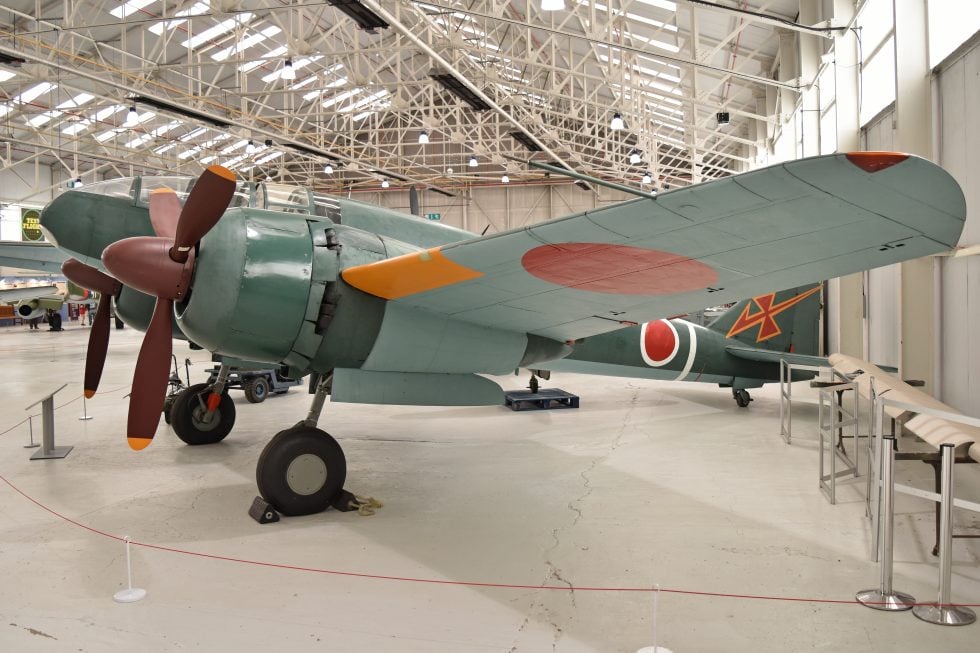
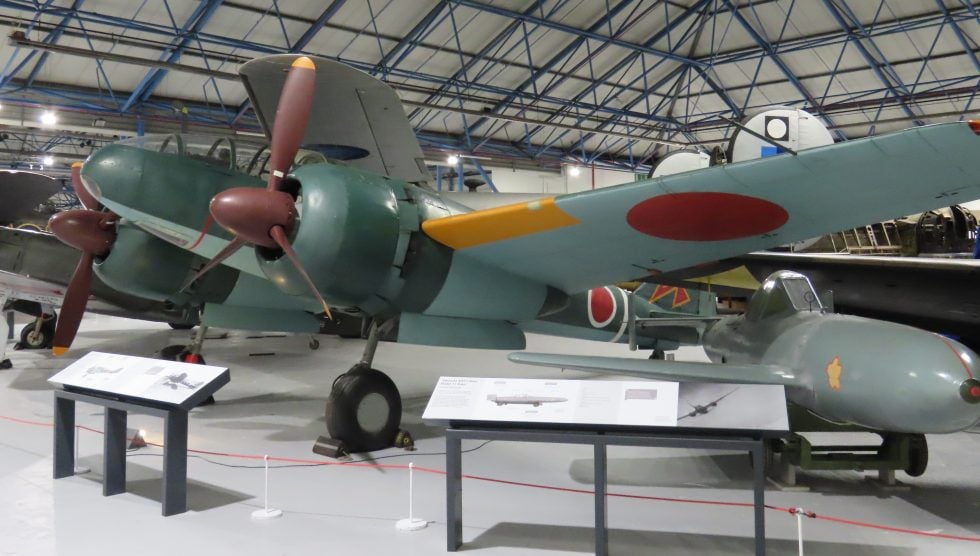
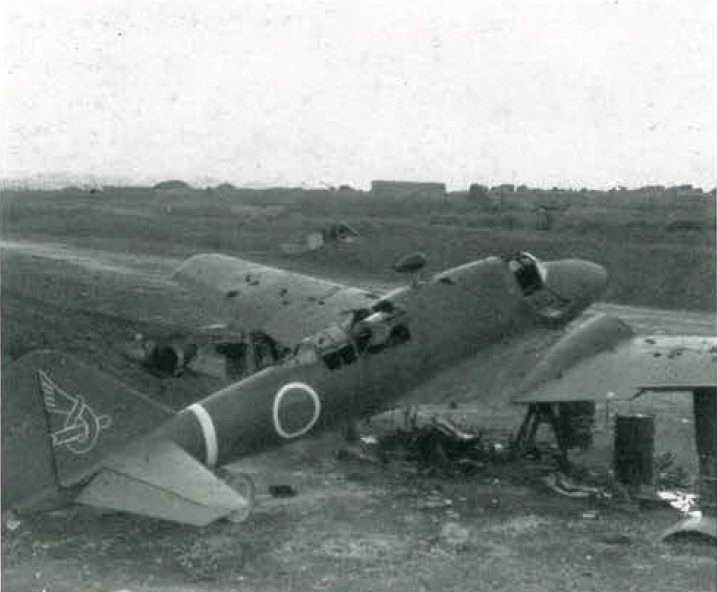
Survivors: there is one, and it is complete. Ki-46-III Ko, constructor’s number 5439, built at Nagoya, RAF maintenance serial 8484M, museum accession 1989/0307/AF, held by the Royal Air Force Museum and on display at Hendon in London since 2022 after decades at Cosford. It was surrendered on the Malay peninsula, restored to flying condition by Japanese personnel for the Allied Technical Air Intelligence Unit, flown to Seletar by a Japanese pilot named Morita in early 1946, shipped from Singapore and landed at Portsmouth on 24 August 1946; restored at St Athan between 1975 and 1981 and comprehensively again at Cosford in 1992–93, at a cost of about £60,000, half of it paid by Mitsubishi Heavy Industries. Its tail bears the marking of the 81st Sentai, applied during restoration; Japanese research indicates the aircraft actually served with the reconnaissance flight of the 1st Field Replacement Air Unit, so the markings are decorative rather than documentary. Nothing else survives entire. Substantial wreckage of a Ki-46-II abandoned at Jacquinot Bay, New Britain, was recovered in 2003, and derelict remains lie in New Guinea and the Indies; there is no airworthy example and no reproduction. Post-war, small numbers flew briefly with the French in Indochina and two served the Chinese Communist air force as a ground-attack aircraft and a trainer until the early 1950s, while one Ki-46-III went to the Soviet NII VVS for evaluation in 1946–47.
From untouchable spyplane to B-29 hunter
The requirement
The Imperial Japanese Army issues a specification for a fast, long-range command reconnaissance aircraft able to outrun interception.
First flight
Tomio Kubo’s clean twin-engine prototype flies in November, showing performance well ahead of expectations.
Into service — and over Malaya
The Ki-46-II enters service in July; in October, Dinahs fly clandestine recon over British Malaya before the war begins.
The definitive Dinah
The Ki-46-III appears with Ha-112-II engines, a redesigned nose and extra fuel — the defensive gun deleted for speed.
Losses over Australia
As Spitfires reach the Darwin front, the once-untouchable Dinah is shot down in numbers over northern Australia.
The B-29 interceptor
Some Ki-46-IIIs are rebuilt as the III-KAI with nose and oblique cannon to hunt the B-29; production ends in December.
The last missions
Dinahs fly some of Japan’s final long-range reconnaissance sorties before the surrender in August.
The sole survivor sails
A surrendered Ki-46-III, flown by its former Japanese pilot in RAF markings, is shipped to Britain — where it survives today.
From the archive: twelve Ki-46 Dinah stories
The plane no fighter could catch
For much of the early war the Dinah roamed enemy skies with near impunity.
Read the full story
Spying on Malaya before the war
Dinahs photographed British Malaya weeks before Pearl Harbor.
Read the full story
Beauty admired by its enemies
Allied and Western historians alike rank it among the war’s most beautiful aircraft.
Read the full story
Germany wanted it
Nazi Germany reportedly sought a licence to build the Dinah.
Read the full story
It outran its American captor
A captured Dinah reportedly outpaced its own P-38 chase plane.
Read the full story
A Japanese Schräge Musik
The B-29 interceptor fired a 37 mm cannon obliquely upward.
Read the full story
Why the B-29 hunter failed
The interceptor simply could not do the job asked of it.
Read the full story
Shot down over Australia
As Spitfires arrived, the Dinah’s luck over Darwin ran out.
Read the full story
The gun deleted for speed
On the Ki-46-III, designers removed the defensive gun entirely.
Read the full story
A 2,300 km dash in one morning
A turbocharged prototype flew Peking to Japan in about three hours.
Read the full story
The last eyes on the B-29 bases
Dinahs flew Japan’s final long-range recon over the Marianas.
Read the full story
The survivor that flew for the RAF
The world’s only Dinah was flown to Singapore wearing RAF roundels.
Read the full story
The Ki-46 Dinah in pictures
The Ki-46 Dinah in motion
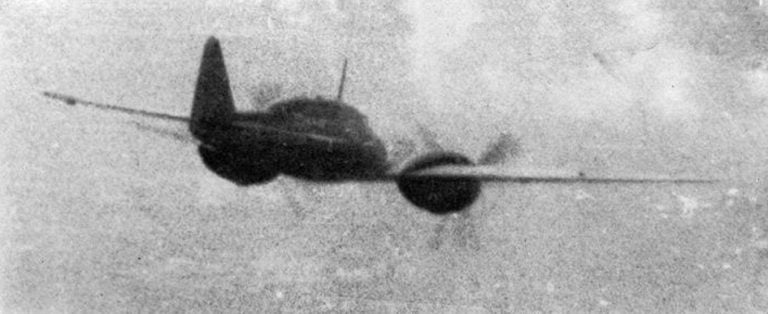
Original wartime film of the Mitsubishi Ki-46 in flight and on the ground. No English documentary of note exists for this obscure type, so we have chosen authentic period footage over narrated reconstructions — the Dinah’s clean lines speak for themselves.
Where the Ki-46 Dinah flew
The record that defines the Ki-46
The Dinah was not a fighter, and its record is not written in kills. It is written in the missions it flew and returned from — the intelligence it gathered over Malaya, China, the Indies and the Marianas, and the years in which it simply could not be caught. Its greatest victories were the interceptions that never happened.
Compare the combat record of every military aircraft. Figures as of 2026.
Everything people ask about the Ki-46 Dinah
Can I fly in a Mitsubishi Ki-46 Dinah?
How fast was the Ki-46?
Why was the Ki-46 so hard to shoot down?
What does the name “Dinah” mean?
Did the Ki-46 fight B-29s?
Was the Ki-46 used before Pearl Harbor?
How many Ki-46 survive today?
How many Ki-46 were built?
You can’t fly the Ki-46 Dinah.
These, you can.
Some legends only live in museums — others are fuelled and waiting. MiGFlug has put civilians in real military jet cockpits since 2004.
 Fly the L-39 AlbatrosThe world’s most-flown jet trainer — aerobatics included
 Fly the F-104 Starfighter“The missile with a man in it”
 Fly the MiG-21The Cold War’s most-produced jet
 Fly the T-33 Shooting StarAmerica’s first jet trainer
 Fly the DH VampireA piece of early jet history
 Fly the S.211Agile Italian jet trainer
 Fly the MB-326The classic Aermacchi jet
 Fly the MiG-15The Soviet legend of the Korean War
Continue the tour
Every fact, checked
- RAF Museum — Mitsubishi Ki-46 collection recordPrimary reference for the sole surviving airframe and its display.
- RAF Museum — individual airframe history (PDF)Full provenance of the survivor: surrender in Malaya, flight to Singapore, shipment to Britain.
- History of War — Mitsubishi Ki-46Design, variants, operational history and the pre-war Malaya flights.
- The Pacific War Online EncyclopediaSpecifications, engine data and production figures.
- Military Factory — Mitsubishi Ki-46Variant breakdown and the Ki-46-III-KAI interceptor armament.
- Aeropedia — Mitsubishi Ki-46 DinahAustralian-front losses and the postwar captured-aircraft test anecdote.
- Key Aero — rare Japanese types moved to LondonThe survivor’s recent relocation from Cosford to the RAF Museum London.
- National Museum of the US Air ForceReference for captured and evaluated Japanese aircraft of the period.