
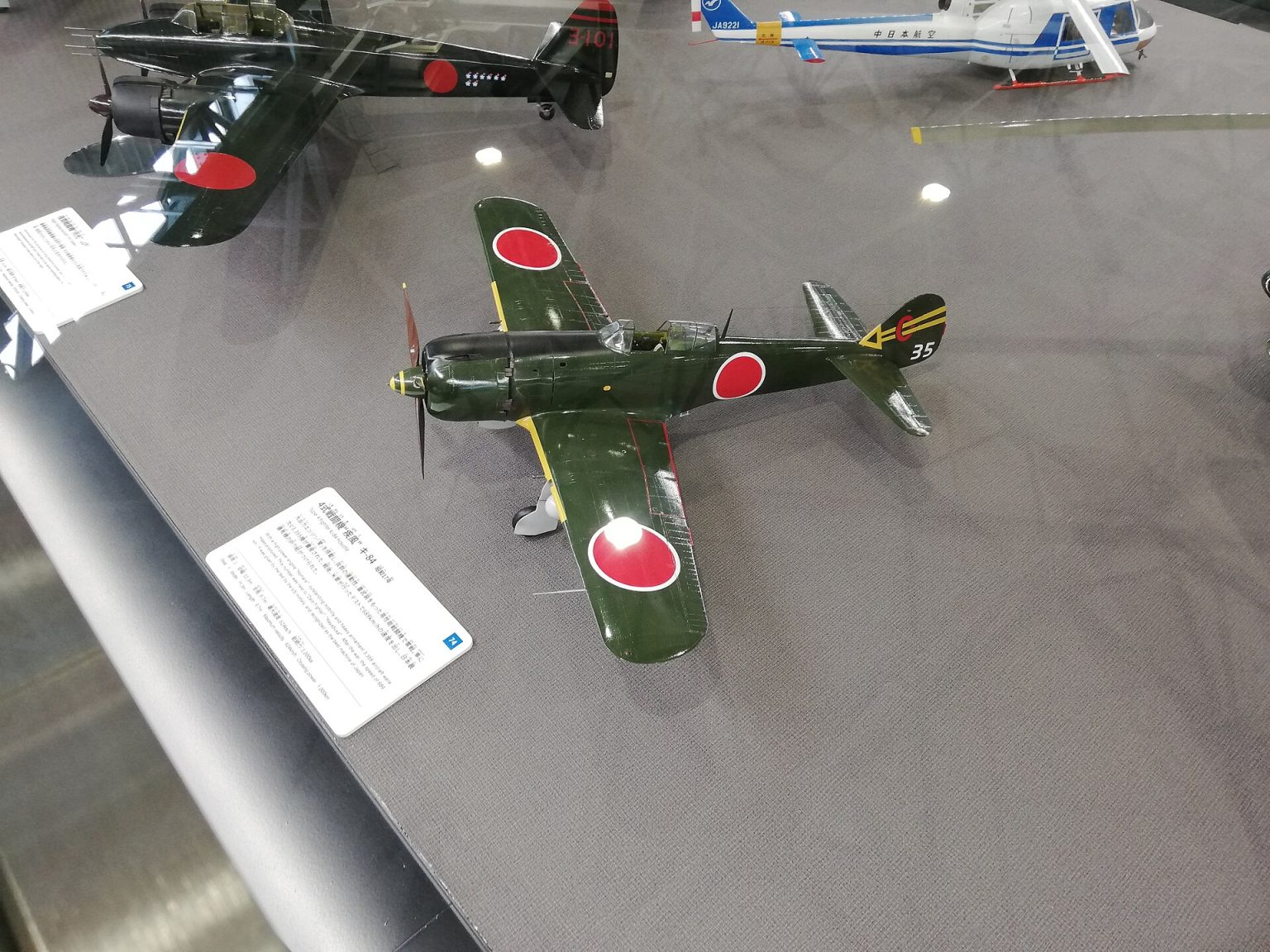
Nakajima Ki-84 Hayate
“Frank”
The Imperial Japanese Army’s premier late-war fighter — fast, hard-climbing and, unusually for a Japanese aeroplane, armoured — widely rated Japan’s best mass-produced fighter when it was well-built and well-fuelled.
Japan’s best fighter — when it worked
By late 1941 the Imperial Japanese Army could see the shape of the coming air war. Its nimble but lightly built fighters — the Ki-43 Oscar above all — traded armour and firepower for range and agility, a bargain that was starting to look dangerous against heavier, faster Allied types. On 29 December 1941 the Army issued a specification for a new fighter that would keep the manoeuvrability but add real speed, heavy guns, pilot armour and self-sealing tanks. Nakajima’s design team under Yasumi Koyama began work in early 1942, and the aircraft that emerged — the Ki-84 Hayate, or “Gale” — first flew in April 1943.
On paper, and in the right hands, it was formidable. Built around the powerful Nakajima Ha-45 “Homare” radial, the Hayate could climb hard, dive fast and hit around 624–687 km/h, carrying two 20 mm cannon and two heavy machine guns. Crucially it protected its pilot — a break with Japanese practice. Allied pilots who met a well-flown Ki-84 found an opponent that could stay with a P-51 Mustang or P-47 Thunderbolt in many parts of the envelope, and out-climb and out-turn them in others.
The catch was that many Hayates were not well-built or well-fuelled. The Homare engine was demanding, and Japan’s collapsing wartime industry — bombed factories, poor-quality low-octane fuel, unskilled labour and scarce materials — meant a large share of aircraft ran below their rated power, suffered engine and landing-gear failures, and never matched the numbers the design promised. The Ki-84 is therefore remembered two ways at once: as arguably the finest fighter Japan mass-produced in the war, and as a machine whose reputation was blunted by the country’s inability to build and feed it properly. Around 3,500 were completed; it fought over China, the Philippines, Okinawa and the Home Islands until the surrender.
01The Nakajima Ki-84 Hayate’s design brief: why Japan wanted an armoured fighter
Early-war Japanese fighters were optimised for range and dogfighting agility, achieved by keeping them light — which usually meant no armour and no self-sealing fuel tanks. That doctrine worked in 1941–42 but grew costly as Allied aircraft became faster, tougher and better armed. The December 1941 requirement behind the Ki-84 deliberately reversed the priorities: the new fighter had to be fast and heavily armed and survivable, with cockpit armour and protected tanks, while still manoeuvring well. Delivering all of that in one airframe made the Hayate heavier and more complex than its predecessors — and far more dependent on a powerful, reliable engine to carry the extra weight, which is exactly where wartime Japan struggled most.
What makes it special
Balanced speed, climb and protection
The Hayate’s design goal was to stop trading survivability for agility. It paired a strong airframe and heavy armament with genuine pilot armour and self-sealing fuel tanks — rare on Japanese fighters — while still climbing and turning well. The result was one of the few Japanese types that could meet late-war Allied fighters across much of the performance envelope rather than in a narrow niche.
The Homare radial: power against reliability
Power came from the Nakajima Ha-45 “Homare,” an 18-cylinder radial rated near 1,900–1,990 hp — a lot of output from a compact engine. But it was highly strung and needed skilled maintenance and good fuel. On the low-octane fuel and rushed servicing of 1944–45, many engines never reached rated power, so real-world performance varied widely from one aircraft to the next.
A home-defence interceptor against the B-29
As American B-29s began raiding Japan, the Hayate’s speed and climb made it one of the better interceptors available. It could reach bomber altitudes faster than older types and hit hard with its 20 mm cannon. Fuel shortages, engine troubles and the sheer scale of the raids limited what any single fighter could achieve, but the Ki-84 was among the aircraft Japan leaned on to defend its cities.
02The Nakajima Ki-84’s Homare engine: why the same aircraft could feel fast or feeble
The Ha-45 Homare packed a great deal of power into a small, light package — on paper an ideal fighter engine. In practice it demanded high-octane fuel, precise manufacture and careful maintenance, none of which wartime Japan could reliably supply by 1944. Low-grade fuel forced reduced boost, poor quality control produced engines that varied unit to unit, and overworked ground crews could not keep them in tune. Two Hayates off the same line could therefore behave very differently: one near its rated ~1,900 hp and genuinely fast, another down on power and sluggish. Much of the type’s uneven combat reputation traces back to this engine rather than the airframe.
03The Nakajima Ki-84’s postwar reckoning: how fast it really was on good fuel
After the war the United States tested captured Hayates. Running on high-grade American fuel and properly maintained, an example reportedly reached around 687 km/h (about 427 mph) — markedly better than the figures many wartime aircraft had managed, and competitive with contemporary Allied fighters. These tests are often cited as evidence of what the Ki-84 was capable of when its engine was fed and serviced properly. They should be read with care: a single well-prepared airframe on premium fuel is not the same as a squadron of war-weary machines, and exact test figures vary between sources. Still, they support the common view that the design itself was excellent, and that Japan’s industrial decline — not the aeroplane — was its main limitation.
Full specifications
Baseline note: the figures below describe the Ki-84-I Ko — Army Type 4 Fighter Model 1A — as built by Nakajima at Ota during 1944, the version that made up the great majority of the roughly 3,500 Hayate completed. Deltas for the Otsu and Hei gun fits, for the substitute-material and re-engined aircraft, and for the American test airframe of 1946 are given in grey. Two incompatible families of numbers circulate for this aeroplane and they must not be mixed: Japanese Army acceptance data, taken on nominal 91-octane fuel with service plugs and a full war load, and the United States Technical Air Intelligence figures measured at Middletown Air Depot in 1946 on high-grade American fuel with the guns removed. Both are quoted here, each labelled.
Dimensions & weights
- Crew
- 1
- Length
- 9.92 m (32 ft 6 in)
- Wingspan
- 11.238 m (36 ft 10 in)
- Height
- 3.385 m (11 ft 1 in), tail down
- Wing area
- 21.0 m² (226 sq ft) — first drawn at 17.4 m² and enlarged as the range requirement grew; the extra area cost speed and bought back the turn
- Aerofoil
- Nakajima NN-21, 16.5 per cent at the root, 8 per cent at the tip
- Empty weight
- 2,660 kg (5,864 lb)
- Normal loaded weight
- 3,608 kg (7,954 lb); authorities scatter between 3,602 and 3,613 kg depending on the fuel and ammunition state assumed
- Maximum take-off weight
- 3,890 kg (8,576 lb) with drop tanks or bombs
- Wing loading
- 172 kg/m² (35.2 lb/sq ft) — heavy for a Japanese fighter, moderate against a P-47 at 58 lb/sq ft
- Power loading
- 2.37 kg/kW (3.90 lb/hp) at normal loaded weight, on rated rather than delivered power
- Weight of the Middletown test aircraft
- 3,397 kg (7,490 lb) — guns, ammunition and mountings stripped out, 211 kg (465 lb) below normal loaded weight and 493 kg (1,087 lb) below maximum
Performance
- Maximum speed
- 631 km/h (392 mph) at 6,120 m (20,080 ft)
- Japanese trials figures
- 624 km/h (388 mph) at 6,500 m (21,300 ft) for the production Ko, and 640 km/h (398 mph) at 6,000 m on a prototype — against a specification that had asked for 680 km/h (423 mph)
- Middletown, 2 April to 10 May 1946
- 687 km/h (427 mph) at 6,096 m (20,000 ft) — unarmed, on American fuel and plugs; see the caveats below
- Cruising speed
- 446 km/h (277 mph)
- Time to 5,000 m
- 5 min 54 s (16,400 ft)
- Rate of climb, sea level
- 22 m/s (4,300 ft/min), from the American report; a service aircraft on degraded fuel with a tired Homare did materially worse
- Service ceiling
- 10,500 m (34,450 ft); the widely republished 11,826 m (38,800 ft) is derived from the American test airframe and is not a Japanese service figure
- Range, internal fuel
- 1,695 km (1,053 miles)
- Range, two 200 litre drop tanks
- 2,168 km (1,347 miles); some Japanese sources give as much as 2,920 km (1,814 miles) at economical settings
- Dive
- Would follow a P-51 down and stay together — the elevator was deliberately made heavy so that pilots could not overstress the airframe, a decision veterans of the Ki-27 and Ki-43 hated
- Serviceability, Air General Army survey of 20 May 1945
- 235 of 555 Ki-84s (42 per cent) rated internally complete and combat-ready — the single most important number on this page. Well-run units did far better: the 47th Sentai held 87 to 100 per cent, the Manchuria-based 104th Sentai 80 to 100 per cent on imported American lubricants, while poorly equipped home-defence units ran at 20 per cent and sometimes nothing at all
- For comparison, P-51D Mustang
- 703 km/h (437 mph) at 7,600 m (24,900 ft) — below 6,000 m the Hayate was competitive, above it the Mustang simply climbed away
Propulsion & systems
- Engine
- 1 × Nakajima Ha-45 Homare Model 21 (the Navy knew the family as the NK9), 18-cylinder two-row air-cooled radial; Models 11, 12, 21, 23 and 25 were all fitted at various points
- Displacement
- 35.8 litres (2,187 cu in); bore 130 mm, stroke 150 mm
- Take-off power
- 1,522 kW (2,041 hp) with water-methanol injection
- Rated power at altitude
- 1,360 kW (1,820 hp) at 5,500 m (18,000 ft) on paper; early production engines frequently delivered nearer 970 kW (1,300 hp) at height, and the Army imposed standing power restrictions to keep them alive
- Engine size and dry weight
- 1,180 mm (46.5 in) diameter, 810 kg (1,785 lb) — the most tightly packaged 2,000 hp radial of the war, and the reason almost nothing on it could be reached without pulling something else off first
- Induction
- Two-speed centrifugal supercharger; Model 21 carburetted, Model 23 fuel-injected; water-methanol boost on all service marks
- Fuel required
- Designed around 100-octane. Front-line units were issued nominal 91-octane, and wartime Japanese testimony holds that by 1945 fuel labelled 91 was behaving like 87 or worse — the gap between the Homare’s design assumptions and what went into the tank is most of this aircraft’s story
- Propeller
- Four-blade constant-speed electric, 3.05 m (10 ft) — a Ratier-derived Pe-32 that hunted and let the engine overspeed until its pitch-change rate was halved to 6.6 degrees per second; the disc was also small for 2,000 hp, where contemporaries used 3.3 to 3.6 m
- Internal fuel
- ~737 litres (162 imp gal, 195 US gal) in rubber-lined self-sealing tanks proof against 12.7 mm fire
- Protection
- 13 mm head and back armour, 65 mm armour-glass windscreen, multiple fuselage bulkheads and an explosive canopy jettison — better protected than any earlier Japanese Army fighter, and a deliberate break with the Ki-43 philosophy
- Undercarriage
- Wide-track inward-retracting main legs. Heat treatment of late-war Japanese steel was poor and the oleo legs buckled or collapsed on landing often enough to be a recognised cause of loss, made worse by inexperienced pilots converting from the far slower-landing Ki-43
- Gunsight and radio
- Type 3 optical gunsight on production aircraft, replacing the Type 100 reflector sight of the trials machines; Army standard radio, unreliable enough that controlled interception seldom worked
04The Nakajima Ki-84’s costs and numbers: why no dollar price exists
The Ki-84 was a state product of a wartime command economy, built in bulk against a losing war rather than sold on any market, so there is no meaningful flyaway unit price or cost-per-flight-hour for it in the modern sense. What can be said is that it was produced in quantity — roughly 3,500 airframes in about 17 months across Nakajima’s plants and a Manchurian line — and that output and quality both fell as US bombing, material shortages and fuel scarcity bit in 1945. Precise production totals differ between sources (figures around 3,382 to 3,514 are commonly cited), which is itself a reflection of how chaotic late-war Japanese record-keeping had become.
Armament & payload
The Ki-84 was the first Army fighter designed from the outset around 20 mm cannon, and it was still thin for killing a B-29
The December 1941 specification demanded two 20 mm cannon and two 12.7 mm machine guns from the start, which no previous Japanese Army fighter had been given, and the Ki-84-I Ko delivered exactly that: a pair of Ho-5 in the wings and a pair of synchronised Ho-103 over the engine, with a generous 350 rounds for each machine gun. Against Allied fighters it was ample. Against a Superfortress it was not, because the Ho-5 fired a short, light 20 × 94 mm round whose propellant charge was reduced further as Japanese powder quality fell, so the Army kept adding calibre it could not really afford — four 20 mm on the Otsu, two 20 mm and two 30 mm Ho-155 on the Hei — and each step bought hitting power with ammunition, climb and reliability. Ammunition figures vary between accounts; 150 rounds per Ho-5 and 350 per Ho-103 are the best attested for the Ko, while rounds carried for the 30 mm Ho-155 and the numbers of Otsu and Hei aircraft actually completed are not reliably recorded.
Gun
- 2 × 20 mm Ho-5 cannon in the wings, 150 rounds per gun, firing the 20 × 94 mm round at roughly 735 m/s — a scaled-up Browning, light for its calibre by German or American standards
- 2 × 12.7 mm Ho-103 machine guns over the engine, synchronised through the disc, 350 rounds per gun — noticeably more than the 250 to 270 rounds carried by the Ki-43-II, Ki-44-II Hei or Ki-61-I Otsu
- Ki-84-I Otsu replaced the cowl machine guns with Ho-5, giving four 20 mm; Ki-84-I Hei put two 30 mm Ho-155 in the wings and kept two 20 mm Ho-5 in the nose
- The Ho-103 was a licence-derived Browning firing the 12.7 × 81SR Breda round, including the explosive-tipped Ma-103 shell that punched above its calibre against aircraft structure
- Type 3 optical gunsight on production aircraft; Ho-5 cyclic rate about 850 rounds per minute, giving roughly ten seconds of cannon fire
Air-to-air
- No guided air-to-air weapon of any kind, as for every Japanese fighter of the war; the Hayate fought with guns and, unusually for a single-seat Army fighter, with air-dropped cluster bombs
- Ta-Dan cluster containers scattering small shaped-charge bomblets were released above or ahead of bomber formations and over parked aircraft, and Ki-84 units used them in earnest rather than experimentally
- Against B-29 formations the standard attack was the head-on pass, the one aspect from which the bomber was vulnerable and the one that gave the fighter least time to shoot
- Against Allied fighters the Ki-84 was flown as an energy fighter — dive, zoom, refuse the turning contest — which is what a heavy elevator and 172 kg/m² of wing loading wanted, and what pilots trained on the Ki-27 and Ki-43 found hardest to accept
- Instructors at the Akeno Army Flying School concluded in the spring of 1945 that between pilots of equal experience the lighter Kawasaki Ki-100 would beat the Ki-84. That verdict was about handling and about engines that ran, not about outright performance.
Air-to-surface guided
- None. Japan fielded no guided air-to-surface weapon that a single-seat fighter could carry, and none was ever projected for the Hayate
- The card is kept because the substitute is the point: from late 1944 the Army increasingly used the aeroplane itself as the guided weapon, and Ki-84s equipped Shinbu special attack units through the Okinawa campaign of 1945
- Those aircraft were flown by pilots with a fraction of the training the type demanded, on an airframe whose landing gear punished exactly that inexperience
- Conventional ground attack remained crude and effective: bombs and Ta-Dan on two wing racks, delivered low. Ki-84s of the 104th Sentai attacked Soviet mechanised columns in Manchuria with Ta-Dan on 12 and 15 August 1945, among the last Japanese air operations of the war
Bombs
- 2 × 250 kg (551 lb) bombs on the two underwing racks — the same fittings that carried the drop tanks, so it was fuel or ordnance, never both
- 2 × 100 kg (220 lb) or smaller weapons could be substituted for airfield and shipping work
- Ta-Dan air-dropped cluster containers hung on the same racks and were the Army’s most effective anti-airfield store of the period
- 16th Flying Regiment Hayates bombed Tacloban and the other Leyte strips at low level in late 1944, in a sequence of attacks MacArthur afterwards described as the most sustained and effective Japanese air action his forces had faced
- Special attack aircraft carried a single large bomb; the loads quoted in Japanese unit accounts vary and no standard tokko fit for the Ki-84 is firmly documented.
Rockets
- None. No Ki-84 is recorded as having carried rocket projectiles operationally
- The Army’s 20 cm and 30 cm air-to-air rockets went to twin-engined types such as the Ki-45 and Ki-46, which had a second crewman to aim them and airframe margin to absorb the drag
- The Hayate’s equivalent was the Ta-Dan cluster bomb, which needed no launcher, no rail and no second pair of eyes
- On an aeroplane whose engine was routinely failing to deliver its rated power, nothing that added drag for a marginal weapon was welcome
Pods & other stores
- 2 × 200 litre (44 imp gal, 53 US gal) drop tanks, taking maximum range beyond 2,100 km (1,300 miles) and making the type genuinely long-legged for a Japanese interceptor
- Oxygen equipment for the interception role; the Ki-84 Sa-Go proposal to replace water-methanol with oxygen injection for high-altitude work never left paper
- Camera gun provision for gunnery training and the assessment of claims
- Radio was the Army’s standard set and shared the standard Japanese failing — unreliable enough that ground-controlled interception of B-29 streams rarely worked, which wasted the aircraft’s climb
- No pressurisation, no turbocharger and no radar reached a service Ki-84. That is why it was a first-class fighter at 6,000 m and a disappointing one at 10,000 m, where the bombers were
Three typical loadouts
- Home-defence interception, 1945
- Two 20 mm Ho-5 with 150 rounds each, two 12.7 mm Ho-103 with 350 rounds each, full internal fuel, nothing on the racks. Climb to about 6,000 m and take the bomber stream head-on; the Hayate did this better than any other Army fighter and still could not reach a B-29 flying high and fast.
- Escort and fighter sweep, Philippines, late 1944
- Guns as above plus two 200 litre drop tanks, released before contact. The configuration in which the type met the P-38 and P-51 over Leyte and Luzon, where the aircraft was respected and the serviceability rate was the enemy.
- Airfield attack, Leyte, November 1944
- Guns plus two 250 kg bombs, or two Ta-Dan cluster containers, on the wing racks. Delivered at low level against parked aircraft — the Hayate’s most productive sorties of the entire war, and the ones that had least to do with the fighter it was designed to be.
Japanese Army armament records for 1944 and 1945 are incomplete, and a great deal of what circulates in English descends from postwar American technical intelligence reports written from captured airframes rather than from Nakajima drawings. Rounds per gun for the Otsu and Hei fits, and the number of aircraft completed to each standard, should be read as approximate.
Variants
Nakajima built one good fighter, then spent 1945 trying to build it out of wood, steel and whatever engine was to hand
The striking thing about the Hayate family is how little of it is aerodynamics. The airframe Koyama’s team drew in 1942 was right the first time and barely changed; almost every variant that follows is about guns, materials or engines, which is to say about shortages. Read the list in order and it becomes a short history of the collapse of Japanese industry.
The binding constraint was light alloy. The Ki-84-II put wood and plywood into the rear fuselage, tail surfaces, wing tips and control rods and did reach service. The Ki-106 went the whole way to an all-wooden aeroplane and came out several hundred kilogrammes heavy with a surface finish that gave much of the remaining performance away. The Ki-113 went the other way, into carbon steel skinning and structure, and was heavier still. Neither substitute was a fighter any longer; both were proofs that the material, not the design, was the limit.
The other line of development chased altitude, because the B-29 was above where the Homare worked. Turbochargers, the 2,500 hp Ha-219, enlarged wings and two-stage superchargers were all drawn and none flew. The one that might have mattered was the simplest: the Ki-116, a Manshu-built airframe with the Ki-100’s Mitsubishi Kinsei in place of the Homare, trading 500 hp for 450 kg and, far more valuable in 1945, an engine that ran.
- Ki-84-I Ko (1943–45 / 2 prototypes, 83 service-trials aircraft, then the bulk of about 3,500 built)
- Army Type 4 Fighter Model 1A: two wing 20 mm Ho-5 and two cowl 12.7 mm Ho-103. The version almost every Hayate pilot flew, built at Nakajima’s Ota and Utsunomiya plants, with 373 completed in December 1944 alone — more than any other Japanese aircraft that month.
- Ki-84-I Otsu (1945 / small numbers)
- Cowl machine guns replaced by Ho-5, giving four 20 mm cannon. Built for bomber interception and probably never enough of them to equip a full sentai.
- Ki-84-I Hei (1945 / very few)
- Two 30 mm Ho-155 in the wings with two 20 mm Ho-5 in the nose. A genuine Superfortress killer on paper; heavy, slow to accelerate and short of rounds in the air.
- Ki-84-I Tei (1945 / 2)
- Night-fighter conversion with a 20 mm Ho-5 mounted obliquely behind the cockpit in the German Schrage Musik manner. Recorded in postwar accounts; no operational use is established.
- Ki-84-I Ko, Manshu-built (1945 / 94–95)
- Assembled by Manshu Hikoki Seizo at Harbin, the only Hayate production outside Japan. These aircraft served the 104th Sentai, which had access to imported American lubricants and consequently kept 80 to 100 per cent of them flying — the clearest evidence that the Homare’s reputation was as much about supply as about design.
- Ki-84-II Hayate-Kai (1945 / included in the overall total)
- Duralumin replaced by wood and plywood in the rear fuselage, tail unit, wing tips and push-pull control rods, produced in Ko, Otsu and Hei gun fits. The only substitute-material Hayate to reach squadrons.
- Ki-84-III, Ki-84-N (Ki-117), Ki-84-P and Ki-84-R (1944–45 / none completed)
- The high-altitude family: a turbo-supercharged Ha-44 slung under the fuselage on the III; the 2,500 hp Ha-219 with wings enlarged to 23.2 m² and then 24.5 m² on the N and P; and the modest Ha-45-44 with a two-stage three-speed mechanical supercharger on the R. Only the R got as far as an airframe, roughly 80 per cent complete at the surrender.
- Ki-106 (1945 / 3)
- An all-wooden Hayate designed by Tachikawa and built with Ohji Koku Kogyo. It flew, but came out badly overweight with a surface finish that cost speed, and by mid-1945 there was neither the seasoned timber nor the skilled joinery to do better.
- Ki-113 (1945 / 1)
- The opposite experiment on an Otsu airframe: steel sheet skinning, with carbon-steel ribs, bulkheads and cockpit structure to release light alloy for engines. The prototype was completed and proved so heavy that the programme was abandoned.
- Ki-116 (1945 / 1)
- A Manshu-built airframe re-engined with the Mitsubishi Ha-112-II Kinsei of the Ki-100, 1,120 kW (1,500 hp) against the Homare’s nominal 1,522 kW, but cutting empty weight by about 450 kg to 2,240 kg. Still under test when Japan surrendered, and the most interesting road not taken.
A word on the Middletown test, because it is the figure everyone quotes. Airframe 1446 was flown by American pilots between 2 April and 10 May 1946 on high-grade American fuel (reported as 100/130 or 100/140 octane) with American spark plugs, guns and ammunition removed, at 3,397 kg against a normal loaded weight of 3,608 kg, and it recorded 687 km/h at 6,096 m. That is a real measurement of what the design could do. It is not a measurement of what Japanese units flew: no operational Hayate ever had that fuel, those plugs, that preparation or that weight, and the aircraft still fell away above 6,100 m while the P-51D it is compared with went on climbing to 703 km/h at 7,600 m. A separate American estimate of 684 km/h issued in 1945 was a calculation from intelligence, not a flight test, and should not be read as independent confirmation.
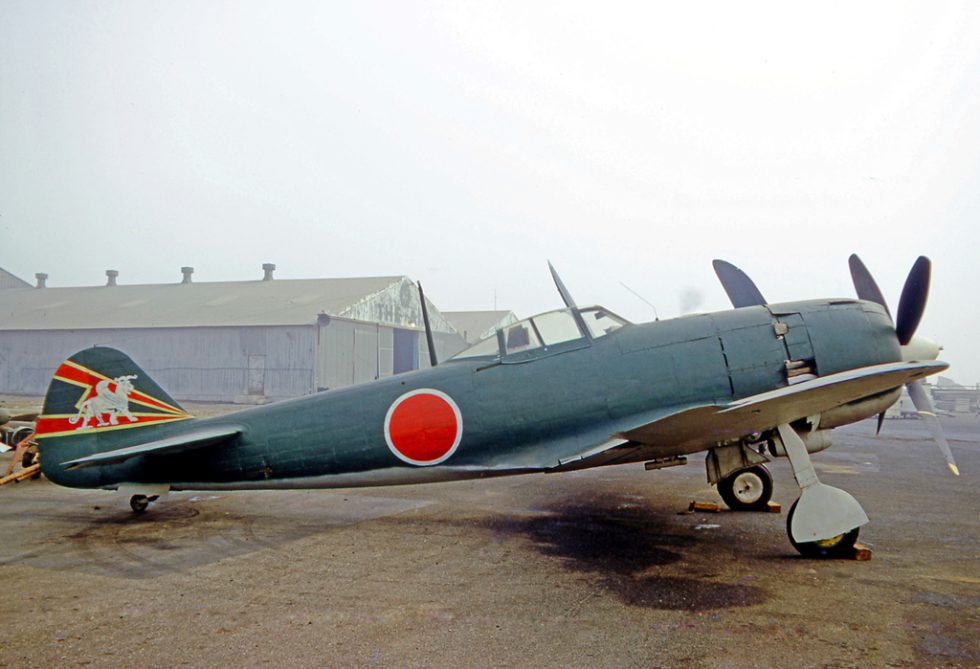
Survivors: exactly one original Ki-84 exists anywhere in the world, and there is no airworthy example and no full-scale reproduction. It is airframe 1446, completed by Nakajima at Ota in December 1944 and flown by the 11th Sentai, captured at Clark Field in the Philippines in 1945 and shipped to the United States aboard the escort carrier USS Long Island; it is the aircraft tested at Middletown. Sold as surplus in 1952 to Edward Maloney of the Ontario Air Museum, later Planes of Fame, it was restored and flown in California during the 1960s, then returned to Japan in 1973 for the Arashiyama Museum in Kyoto, where unsupervised public access and years of neglect cost it parts and its airworthiness. Since that museum closed in 1991 it has been displayed at the Chiran Tokko Heiwa Kaikan in Minamikyushu, Kagoshima. No Ki-106, Ki-113 or Ki-116 survives, and the Ki-84 material recovered from Pacific and Philippine crash sites amounts to relics rather than airframes.
From design brief to sole survivor
The requirement
On 29 December the Imperial Japanese Army issues a specification for a fast, heavily armed and — unusually — armoured fighter to succeed the Ki-43.
Design begins
Nakajima’s team under Yasumi Koyama starts work; a prototype is ordered in the spring.
First flight
The first Ki-84 prototype flies in April; testing proceeds quickly and the type is ordered into production.
Combat debut over China
The 22nd Sentai takes the Hayate into action over China in the late summer, initially with success.
The Philippines
Multiple Ki-84 units are committed over the Philippines around the Leyte landings — the type’s largest battle.
Home defence
Hayates fly as interceptors against B-29 raids on Japan and fight over Okinawa; some are used in special-attack roles.
Industry collapses
Bombing, fuel shortages and poor materials cut both output and quality; many aircraft perform below their design potential.
Tested, then preserved
The US tests captured Hayates — one reportedly near 687 km/h on good fuel. The sole survivor returns to Japan in 1973 and is displayed, non-airworthy, at Chiran.
From the record: twelve Hayate stories
The brief that broke with doctrine
Japan’s Army asked for speed, heavy guns AND armour — a deliberate reversal of its light-fighter tradition.
Read the full story
The Homare’s promise
The Ha-45 packed nearly 1,900–1,990 hp into a compact radial — on paper an ideal fighter engine.
Read the full story
The octane problem
Low-grade wartime fuel forced reduced power — a fast fighter often flown slow.
Read the full story
Armour for the pilot
Self-sealing tanks and cockpit armour set the Hayate apart from earlier Japanese fighters.
Read the full story
Combat debut
The 22nd Sentai took the Hayate into action over China in the late summer of 1944.
Read the full story
The Leyte battles
Seven Hayate units were thrown into the Philippines — the type’s biggest fight.
Read the full story
Chasing the B-29
The Hayate’s climb and speed made it one of Japan’s better bomber-interceptors.
Read the full story
The landing gear
Alongside the engine, the Hayate’s undercarriage was a recurring source of trouble.
Read the full story
Built worse as the war got worse
Bombed factories and unskilled labour meant later Hayates were often lower quality.
Read the full story
What it could really do
On American high-octane fuel, a captured Hayate reportedly hit around 687 km/h.
Read the full story
“Japan’s best” — with caveats
Many historians rate the Hayate Japan’s finest mass-produced fighter of the war.
Read the full story
The last Hayate
One complete Ki-84 survives — static, not airworthy — at the Chiran Peace Museum.
Read the full story
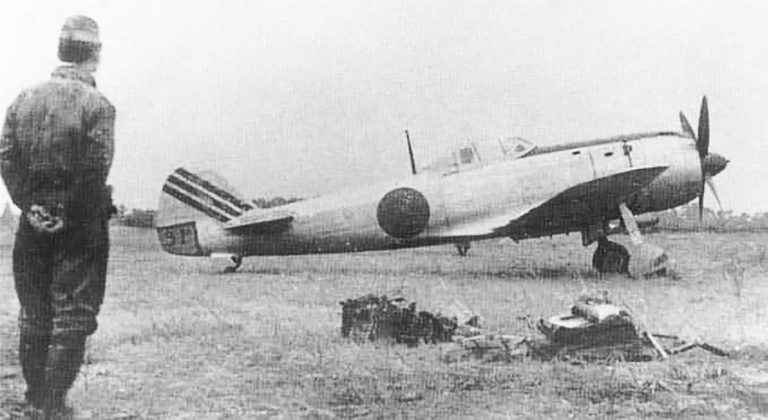
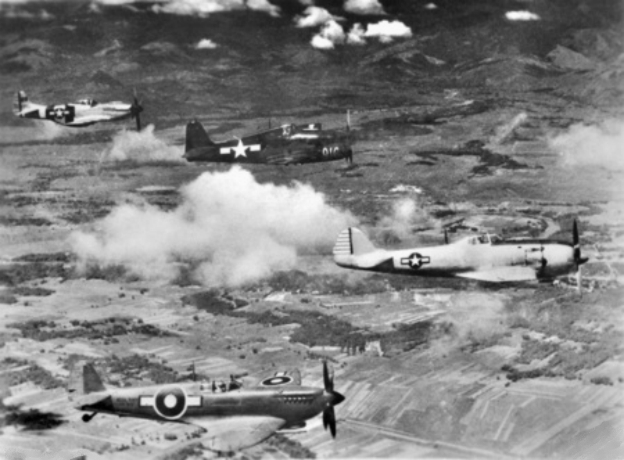
The Hayate in pictures
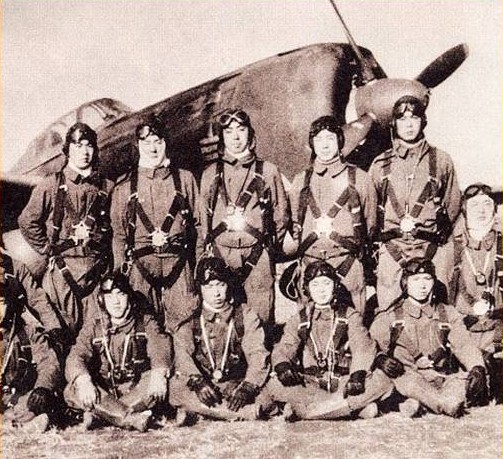
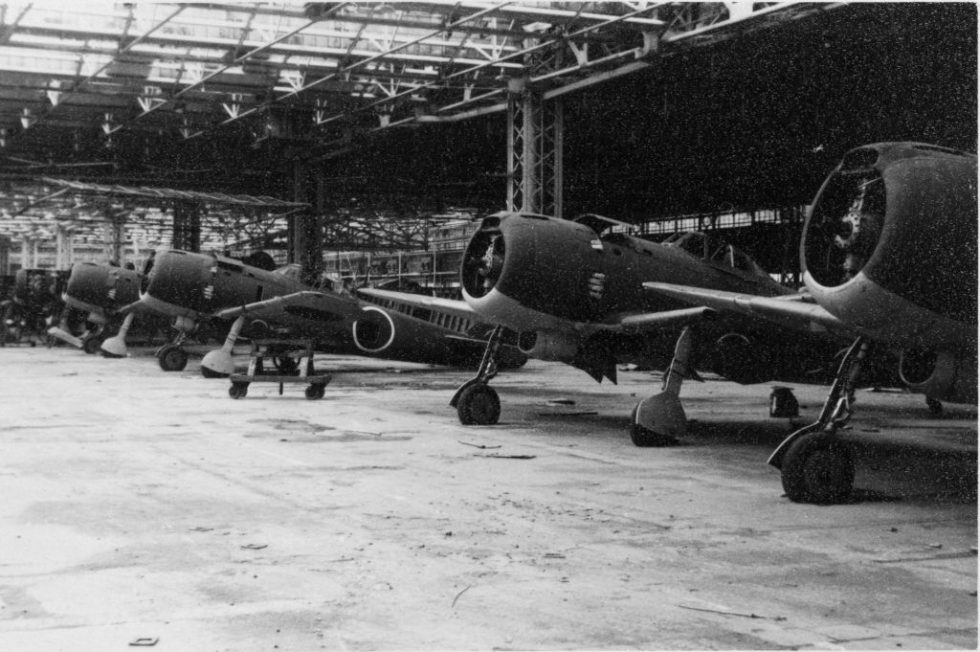
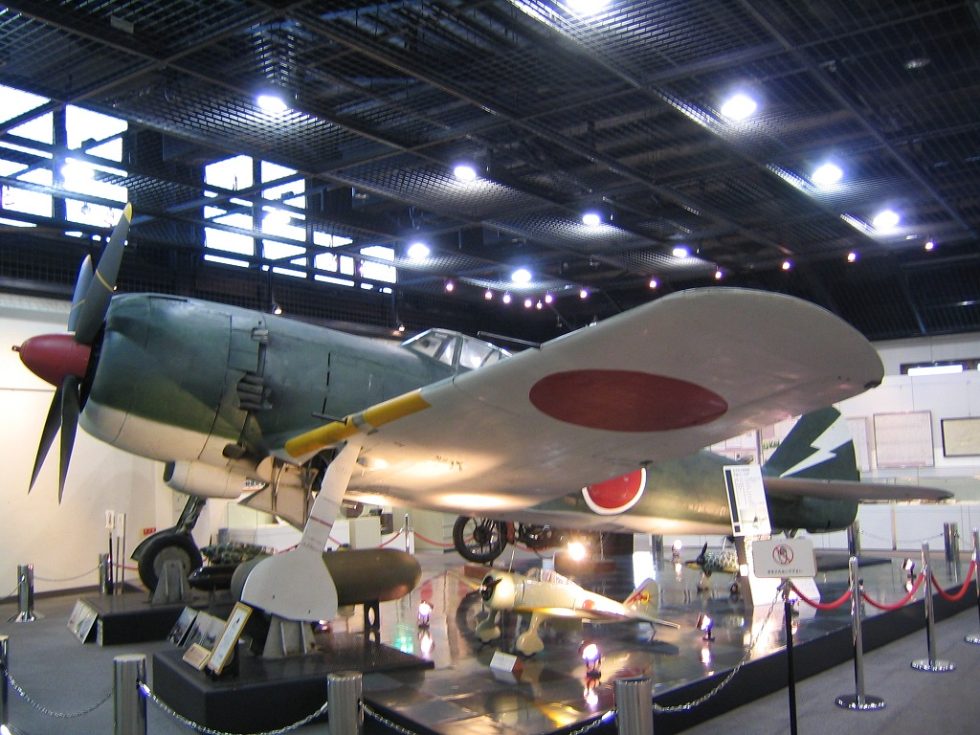
The Hayate in motion
A verified, high-authority video feature on the Ki-84 Hayate is coming soon to this exhibit. In the meantime, explore the photo gallery above and the stories from the type’s brief but intense combat career.
Where the Hayate flew
The score that defines it
The Ki-84 arrived late, when Japan had already lost air superiority, so its record is one of hard local fighting rather than sweeping victory. In capable hands it was respected by Allied pilots; overall its impact was limited by small numbers of fully serviceable aircraft, fuel shortages and the overwhelming strength ranged against it. Precise kill tallies for the type are not reliably documented.
Compare the combat record of every military aircraft.
Everything people ask about the Ki-84 Hayate
Can I fly in a Ki-84?
How fast was the Ki-84 Hayate?
Was the Ki-84 better than the P-51 Mustang?
Why was the Ki-84 considered unreliable?
What armament did the Ki-84 carry?
Did the Ki-84 have armour?
How many Ki-84s were built, and do any survive?
What do “Hayate” and “Frank” mean?
You can’t fly the Hayate.
These, you can.
Some legends only live in museums — others are fuelled and waiting. MiGFlug has put civilians in real military jet cockpits since 2004.
 Fly the L-39 AlbatrosThe world’s most-flown jet trainer — aerobatics included
 Fly the F-104 Starfighter“The missile with a man in it”
 Fly the MiG-21The Cold War’s most-produced jet
 Fly the T-33 Shooting StarAmerica’s first jet trainer
 Fly the DH VampireA piece of early jet history
 Fly the S.211Agile Italian jet trainer
 Fly the MB-326The classic Aermacchi jet
 Fly the MiG-15The Soviet legend of the Korean War
Continue the tour
Every fact, checked
- Smithsonian National Air and Space MuseumCollection record for the NASM Ki-84 — design, service and preservation notes.
- History of War — J. RickardDevelopment, production figures, combat deployment and the reliability problems.
- Military FactoryDimensions, weights, performance and armament reference data.
- The Aviation Geek ClubPostwar US evaluation of captured Hayates and comparisons with Allied fighters.
- The National WWII MuseumContext on late-war Japanese air power and the Home Islands air defence.
- Simple FlyingOverview of the Hayate’s performance, engine troubles and the sole survivor.
- Chiran Peace MuseumHome of the only surviving Ki-84 airframe — preserved, non-airworthy.
- Wikimedia CommonsSource of the licensed period and museum photographs used in this exhibit.