
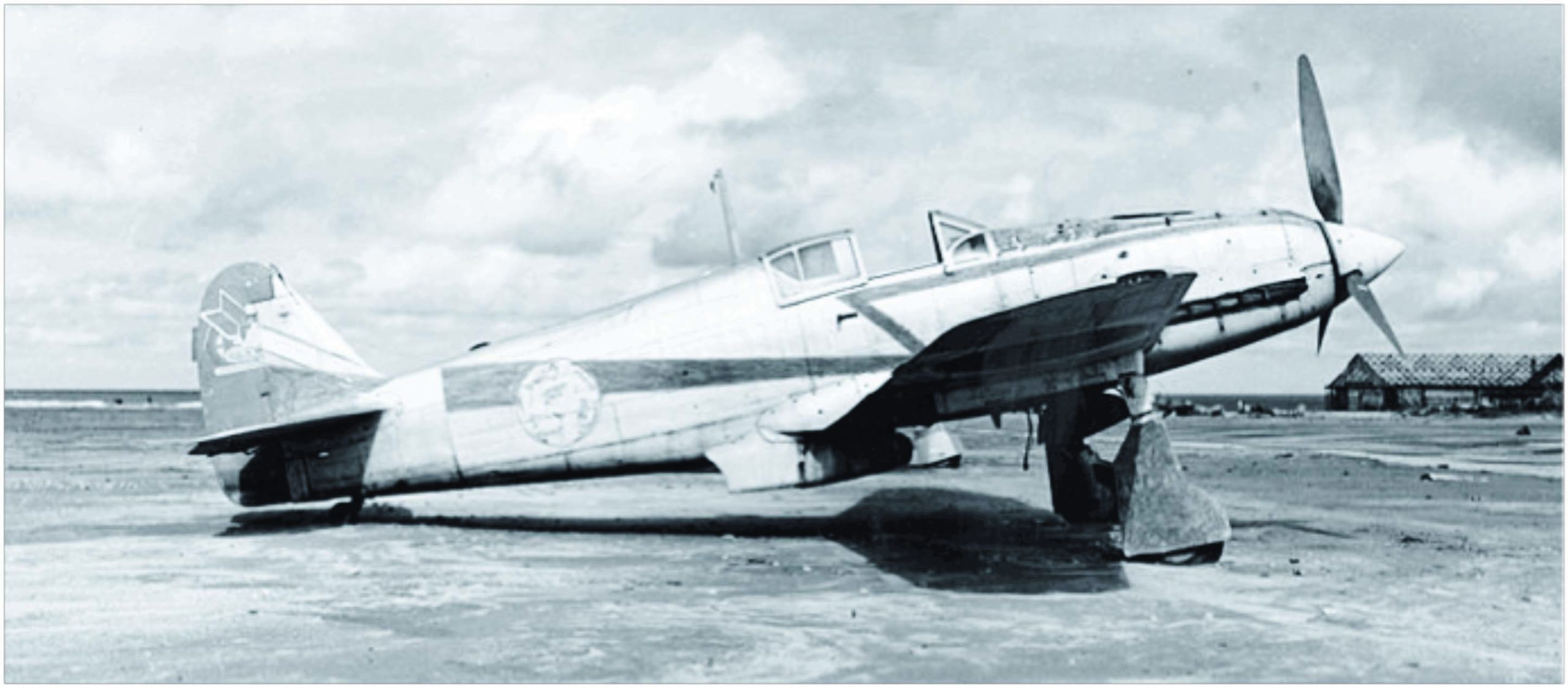
Kawasaki Ki-61 Hien
“Tony”
The Imperial Japanese Army’s one liquid-cooled inline fighter of WWII — so sleek that Allied crews assumed Japan had bought a German or Italian design, and the only Japanese Army fighter to carry armour and self-sealing tanks as standard.
The Japanese fighter the Allies mistook for a European one
By 1940 almost every Japanese fighter shared a design philosophy: light weight, tight turning, and an air-cooled radial engine, with little armour and no self-sealing fuel tanks. The Kawasaki Ki-61 Hien (“Flying Swallow”) broke that mould. Its designer, Takeo Doi, built the airframe around a liquid-cooled inline V-12 — the Kawasaki Ha-40, a licence-built version of the German Daimler-Benz DB 601 — giving the aircraft a slim, pointed nose quite unlike the blunt radial fighters around it.
That silhouette caused genuine confusion. When Allied crews first met the type over New Guinea in 1943, intelligence officers reportedly assumed it was a licensed German Messerschmitt or an Italian design; the Allied reporting name “Tony” reflects the early belief that it was an Italian fighter. In reality it was wholly Japanese — and unusually well protected. Unlike the famous A6M Zero, the Ki-61 carried armour plate for the pilot and self-sealing fuel tanks, and it could out-dive American fighters such as the P-38, P-39 and P-40 that its rivals struggled to escape.
The Hien’s weakness was under its cowling. The Ha-40 was a demanding, tightly-toleranced engine, and Japanese industry — short of skilled labour, quality alloys and precision tooling as the war turned — never mastered it. Chronic unreliability and a bombing raid that wrecked the engine factory left rows of finished airframes with no engines to fit. The solution was radical and, in the end, brilliant: graft a radial engine onto the Hien airframe. The result, the Kawasaki Ki-100, became one of the best Japanese fighters of the war. Around 2,750 Ki-61s were built; with the Ki-100 the family total nears 3,000.
01The Kawasaki Ki-61 Hien’s German heart: how a Daimler-Benz V-12 ended up in a Japanese fighter
In 1940 Kawasaki obtained a licence for the Daimler-Benz DB 601, the inverted V-12 that powered the Messerschmitt Bf 109 and Bf 110. A design team returned from Germany with drawings and sample engines, and the first Kawasaki Ha-40 was completed in 1941. On paper it was excellent: lighter than the German original and rated around 1,175 hp. In practice the Ha-40 was where Japanese production limits showed most cruelly — it ran hot, its bearings and tolerances were unforgiving, and reliability in the field was poor. The uprated Ha-140 of the Ki-61-II pushed power toward 1,500 hp but made the problems worse. The engine that gave the Hien its distinctive lines was also the reason so many never flew.
What makes it special
A liquid-cooled inline, alone among Japanese fighters
Almost every wartime Japanese fighter used an air-cooled radial. The Ki-61 was the exception, built around the Kawasaki Ha-40 — a licence-built Daimler-Benz DB 601 inverted V-12. The slim nose it allowed gave the Hien clean aerodynamics and a European look that briefly fooled Allied recognition officers into logging it as a German or Italian type.
Armour, self-sealing tanks and a fast dive
Where the Zero traded protection for range and agility, the Hien carried pilot armour and self-sealing fuel tanks from the outset — rare for a Japanese fighter. Sturdily built, it could out-dive the P-38, P-39 and P-40 and held up well at altitude, making it a serious opponent until the P-51 Mustang and F6F Hellcat arrived in numbers.
Engineless airframes — and the radial-engined Ki-100
The Ha-40/Ha-140 was chronically unreliable, and a 1945 raid crippled the Akashi engine works, leaving hundreds of complete Hien airframes with no engines. Engineers fitted a Mitsubishi radial instead, creating the Ki-100 — widely judged one of Japan’s finest late-war fighters, born directly from the Hien’s engine crisis.
02The Kawasaki Ki-61 Hien in home defence: high-altitude fighting and the ramming of the B-29s
By 1944 the Hien had become one of the Imperial Japanese Army’s more capable interceptors against the B-29 Superfortress. The improved Ki-61-II could reach the bombers’ high cruising altitude where lighter, radial fighters ran out of breath, and units such as the 244th Sentai defending the Tokyo area became closely associated with the type. As raids intensified and conventional interceptions proved costly, some Hien pilots resorted to deliberate ramming attacks (taiatari) — stripping their aircraft of guns and armour to gain altitude and colliding with the bombers. It was a measure of desperation, and of how far the defenders were prepared to go.
03The Kawasaki Ki-61 Hien’s variants: from the Ki-61-I to the Ha-140 and the Ki-100
The first production Ki-61-I (from 1942–43) used the roughly 1,175 hp Ha-40 and went through sub-variants with heavier armament, including licensed 20 mm Mauser cannon and later the Japanese Ho-5. The Ki-61-II introduced the more powerful but troublesome Ha-140 and a redesigned wing, aiming at the altitude needed to fight the B-29. Engine supply collapsed: of several hundred Ki-61-II airframes, only a fraction received engines before the Akashi factory was bombed in January 1945. The remaining airframes were completed with a Mitsubishi radial as the Ki-100 — the same basic aircraft, transformed into one of the war’s best-handling Japanese fighters.
Full specifications
Figures below are for the Ki-61-II-KAI, the late-war Ha-140 version; early Ki-61-I aircraft were a little lighter and slower. Wartime Japanese figures vary between sources, so some values are commonly-cited approximations.
Baseline note: the figures below describe the Kawasaki Ki-61-I-Tei — the Army Type 3 Fighter, Model 1d — built at Gifu between January 1944 and January 1945 and, at 1,358 aircraft, by a wide margin the most numerous mark. It is also the fairest baseline, because it is the version most Allied pilots met. Deltas for the lighter Ki-61-I-Otsu and for the Ha-140-engined Ki-61-II-KAI are given in grey. Japanese manufacturer’s figures for the Hien survive in several competing sets; where Akimoto’s 1961 tabulation, Watanabe’s reconstruction and René Francillon’s English-language account disagree, the disagreement is stated rather than averaged away.
Dimensions & weights
- Crew
- 1
- Length
- 8.94 m (29 ft 4 in) — Ki-61-I-Otsu 8.74 m (28 ft 8 in); Ki-61-II-KAI 9.16 m (30 ft 1 in)
- Wingspan
- 12.00 m (39 ft 4 in), identical on every mark that entered service
- Height
- 3.70 m (12 ft 2 in) tail down; 3.75 m (12 ft 4 in) on the Ki-61-II-KAI
- Wing area
- 20.0 m² (215 sq ft). The Ki-61-II prototype’s enlarged 22 m² (237 sq ft) wing was tried and abandoned, and nobody has ever satisfactorily explained why
- Aspect ratio
- 7.2 — very high for a 1941 fighter, and the root of the Hien’s easy high-altitude handling
- Aerofoil
- NACA 2R1 16 at the root, NACA 24009 at the tip
- Maximum fuselage depth
- 1.35 m (4 ft 5 in) — a slim oval section that made the later radial graft of the Ki-100 so awkward
- Undercarriage track
- 4.00 m (13 ft 1 in), inward-retracting and forgiving on rough strips
- Empty weight
- 2,630 kg (5,798 lb) — Otsu 2,380 kg (5,247 lb); Ki-61-II-KAI 2,855 kg (6,294 lb)
- Loaded weight
- 3,470 kg (7,650 lb) — Otsu 3,130 kg (6,900 lb); Ki-61-II-KAI 3,825 kg (8,433 lb)
- Penalty of the Ho-5 installation
- About 250 kg (551 lb) empty and 330 kg (728 lb) loaded, for two 20 mm cannon in the nose — the single largest step change in the type’s weight history
- Wing loading
- 173.5 kg/m² (35.5 lb/sq ft) — Otsu 156.5 kg/m² (32.1 lb/sq ft); Ki-61-II-KAI 191.3 kg/m² (39.2 lb/sq ft)
- Power loading
- 4.02 kg/kW (6.60 lb/hp) at loaded weight
- Protection
- 13 mm (0.51 in) plate behind the pilot and an armoured windscreen; from the 514th airframe a detachable 8 mm plate weighing 22 kg (48 lb) was added above the radiator
Performance
- Maximum speed
- 560 km/h (348 mph) at 5,000 m (16,400 ft). Sources genuinely differ: 580 km/h (360 mph) is the figure most English texts print, and Watanabe records the fall from 590 to 560 km/h as measured at 6,000 m (19,700 ft)
- Ki-61-I-Otsu, for comparison
- 590 km/h (367 mph) at 4,860 m (15,950 ft) — four machine guns instead of two cannon, and 30 km/h (19 mph) in hand
- Ki-61-II-KAI
- 610 km/h (379 mph) at 6,000 m (19,700 ft) and still 591 km/h (367 mph) at 8,000 m (26,200 ft) — the aeroplane the Army wanted and could not have
- Unarmed prototype
- 590 km/h (367 mph) in the 1942 comparative trials, 30 km/h (19 mph) faster than both the Ki-60 and a Messerschmitt Bf 109E-7 flown against it
- Time to 5,000 m
- 7 min 00 s (16,400 ft) — Otsu 5 min 31 s; Ki-61-II-KAI 6 min 00 s
- Time to 10,000 m, stripped
- 45 to 55 min (32,800 ft), armour, most guns and batteries removed. Major Teruhiko Kobayashi of the 244th Sentai put it at about an hour, by which time the B-29s had bombed and gone
- Service ceiling
- 11,600 m (38,100 ft) on paper; Ki-61-II-KAI 11,000 m (36,100 ft) but genuinely usable there
- Practical fighting altitude
- 7,500 to 8,000 m (24,600 to 26,200 ft) fully equipped — the gap between that and a B-29 at 10,000 m is the whole tragedy of the home-defence campaign
- Dive limit
- 850 km/h (528 mph) indicated. The Hien would follow a P-40 or an F6F down and keep station, which no earlier Japanese fighter could do
- Normal range
- 1,100 km (680 miles) plus 20 minutes of combat
- Maximum range
- ~1,800 km (1,120 miles) overload on the Tei; the lighter Otsu was credited with 2,850 km (1,770 miles) and 7 hr 39 min on two drop tanks
- Combat radius as assessed in the field
- ~550 km (340 miles) — the 14th Air Division’s own working figure at Wewak in 1943, against a catalogue that promised far more
- For comparison: P-51D Mustang
- 703 km/h (437 mph) at 7,600 m (25,000 ft) — by 1945 the Hien could not run and could only turn
Propulsion & systems
- Engine
- 1 × Kawasaki Ha-40 (Army Type 2 1,100 hp liquid-cooled), a licence-built Daimler-Benz DB 601Aa: inverted 60° V-12, liquid-cooled, with direct fuel injection and a hydraulically coupled supercharger drive
- Take-off power
- 864 kW (1,175 PS, 1,159 hp) at 2,500 rpm; 787 kW (1,070 PS) at 3,700 m (12,100 ft)
- Displacement
- 33.93 litres (2,070 cu in); bore 150 mm (5.91 in), stroke 160 mm (6.30 in)
- Engine dry weight
- 590 kg (1,301 lb) — roughly 30 kg (66 lb) lighter than the German original, which meant tighter tolerances still, on an industry that could not hold the German ones
- Supercharger
- Single-stage centrifugal driven through a Daimler-Benz hydraulic fluid coupling, giving infinitely variable drive. Set wrongly it produced almost no power at all, and ground adjustment meant picketing the aircraft, running it up and playing a hose over the radiator to stop it boiling
- Licence
- Kawasaki bought DB 601 manufacturing rights for the Army in January 1939 for 500,000 yen; Aichi had already bought a separate licence for the Navy. Daimler-Benz is said to have offered to waive the second fee, and Hitler to have remarked that one purchase by the Japanese government would have done
- Ki-61-II-KAI engine
- Kawasaki Ha-140, 1,103 kW (1,500 PS) at 2,750 rpm, about 80 kg (176 lb) heavier, with a larger supercharger and 95 litres (21 imp gal, 25 US gal) of water-methanol. It failed outright: see the variants section below
- Cooling
- Ventral radiator and oil cooler in a shallow fairing aft of the wing trailing edge with an adjustable exit flap, protruding only 250 mm (9.8 in) — Takeo Doi’s own calculation put the saving at 14 per cent of total drag, and he noted with some satisfaction after the war that the P-51 had put its radiator in the same place
- Propeller
- Three-blade constant-speed metal airscrew, 3.00 m (9 ft 10 in)
- Internal fuel
- 595 litres (131 imp gal, 157 US gal) on the Tei. Early Ko aircraft carried 755 litres; a fuselage tank whose faulty valve upset the centre of gravity in flight was deleted from the 514th airframe, cutting fuel to 555 and then 500 litres, before a protected 95 litre tank was restored on the Tei
- External fuel
- 2 × 200 litre (44 imp gal, 53 US gal) drop tanks; from the 351st Tei the racks were cleared for a 100 kg (220 lb) bomb as well
- Tank protection
- Self-sealing from the outset — 3 mm rubber over 10 mm felt, then 9 mm rubber on the upper surfaces from the 421st airframe and 12 mm on the wing tanks from the 650th. Almost alone among Japanese fighters, the Hien did not readily burn, and Allied pilots said so
- Radio
- Army standard sets of poor quality and worse reliability. The Army adopted the German two-aircraft Rotte in mid-1943, but could not fly it as the Americans did because the radios would not carry the calls
04The Kawasaki Ki-61 Hien’s cost: why no meaningful price figure exists
The Ki-61 was a wartime Japanese state product, built under a command economy and destroyed or scrapped almost in its entirety by 1945. No credible flyaway unit price or cost-per-flight-hour figure survives in open sources, and any modern dollar figure attached to the type is guesswork. What is documented is the human and industrial cost: an engine so hard to build that finished airframes sat waiting, and a programme of roughly 2,750 aircraft whose potential was throttled by supply, not design.
Armament & payload
The Hien fought its best battles with German cannon it could not replace, and its worst with Japanese ones it could not get
Armament is the clearest single thread through the Ki-61’s five years, because the Japanese Army began the war without an aircraft cannon and spent the rest of it improvising. The first Hien carried two synchronised 12.7 mm Ho-103 in the decking and two rifle-calibre Type 89 machine guns in the wings, which was inadequate against a B-17 and merely adequate against a P-40. The answer, from late 1943, was 800 Mauser MG 151/20 cannon bought from Germany and shipped to Japan by submarine: superb weapons, fitted to the Ki-61-I-Hei, and impossible to resupply once the ammunition ran out, so that units sent to the Philippines had them taken out again before they left. Only in 1944 did the home-grown 20 mm Ho-5 arrive, and fitting it meant six months of work on a synchronisation gear for a cannon — something the Imperial Navy flatly refused to attempt, on the grounds that a 20 mm round detonating in the propeller disc would take the blade off. Ammunition capacities are reported inconsistently across marks, and the figures below take the most commonly attested value for each; where a source disagrees materially, it is named.
Gun
- Ki-61-I-Ko: 2 × 12.7 mm Ho-103 synchronised in the upper decking, 250 rounds per gun, plus 2 × 7.7 mm Type 89 in the wings
- Ki-61-I-Otsu: the wing guns raised to 12.7 mm Ho-103, giving four heavy machine guns — the configuration originally intended for the type
- Ki-61-I-Hei: wing guns replaced by 2 × 20 mm Mauser MG 151/20, muzzles projecting visibly ahead of the leading edge, with the two fuselage Ho-103 retained
- Ki-61-I-Tei: 2 × 20 mm Ho-5 in a nose lengthened by about 200 mm (7.9 in), 120 rounds per gun, plus 2 × 12.7 mm Ho-103 in the wings at 250 rounds
- Ki-61-II-KAI: the same battery with Ho-5 ammunition raised to 200 rounds per gun (some tabulations say 250); a four-cannon fit was drawn but only the mixed one was built
Air-to-air
- No guided air-to-air weapon of any kind existed in Japanese service; guns were the whole of it, as on every Japanese fighter of the war
- The Ho-103 was light for its calibre at about 23 kg (51 lb) and fired a light shell, compensated for by a high cyclic rate; the Ma-103 explosive round made it more useful than the calibre suggests
- The MG 151/20 was the best gun the type ever carried, and the one that made the New Guinea survivors dangerous when it reached them in December 1943
- The Ho-5 was an enlarged Ho-103 firing a 20 × 94 mm round: short enough to fit the nose, more accurate for being close to the centreline, but with a weaker shell than the Mauser and a poor reliability record
- A small number of Tei airframes were rebuilt with 2 × 30 mm Ho-155 in the wings for B-29 work — the conversion is attested in the English literature but the quantity is not, and no Japanese production figure supports it
Air-to-surface guided
- None. No guided air-to-surface weapon reached Japanese service in any form a single-seat fighter could carry
- The card is kept because the absence shaped the type’s last year: from 1944 the Hien was an interceptor with a bomb rack, and nothing else
- What the Army substituted for a guided weapon was the pilot. Ramming attacks were made policy on 7 November 1944, and Ki-61 units carried out about thirty of them, twenty by the 244th Sentai alone
- Ninety-seven Ki-61s were expended on special-attack sorties in the Okinawa campaign, roughly ten per cent of all Army aircraft so used
Bombs
- 2 × 250 kg (551 lb) bombs on the underwing racks, the same fittings used for drop tanks
- 2 × 100 kg (220 lb) was the more usual load, and from the 351st Ki-61-I-Tei the drop-tank racks were cleared for it as standard
- Bombing was a secondary and reluctant duty: every external store cost climb rate the Hien had none of to spare
- In the Okinawa campaign the bomb became the mission — special-attack Ki-61s flew with a single weapon and no intention of returning
Rockets
- None. No Ki-61 is recorded as having carried rocket projectiles operationally
- The Army’s 20 cm and 30 cm air-to-air rockets went to twin-engined types — the Ki-45 Toryu and Ki-46 — which had the airframe and the second crewman to aim them
- A Ki-61-II development with a 37 mm motor cannon firing through the propeller hub, in the German manner the Ha-140 made possible, was studied and never built
- The Hien’s answer to a B-29 therefore stayed what it had always been: two cannon, a head-on pass, and if that failed, the aeroplane itself
Pods & other stores
- 2 × 200 litre (44 imp gal, 53 US gal) drop tanks. Chronic shortage of them nearly destroyed the 68th Sentai on its transit to Rabaul, where most aircraft flew with one tank instead of two
- Camera gun provision for gunnery training and the assessment of claims
- No pressurisation, no turbocharger, no gunsight of any sophistication — the reason the type could reach 10,000 m and could not fight there
- Home-defence interceptors were stripped rather than fitted: armour plate, wing guns, batteries, self-sealing tank liners and on occasion even the paint came off to buy climb rate
- Kobayashi recorded loading 50 rounds a gun instead of 300 on ramming sorties — enough to shoot on the way in, light enough to get there
Three typical loadouts
- Bomber escort, 68th and 78th Sentai, Wewak, August 1943
- Ki-61-I-Otsu, four 12.7 mm Ho-103 with 250 rounds a gun, one 200 litre drop tank because there were rarely two to be had. Fully fuelled the Hien climbed worse than the bombers it was escorting, which is the single most damning sentence in the type’s operational record. On 17 August a surprise attack by 32 B-25s and 85 P-38s reduced 4th Air Army from 130 aircraft to 40; the 68th had six serviceable Hien that evening and the 78th had none.
- High-altitude B-29 interception, 244th Sentai, Chofu, 27 January 1945
- Ki-61-I-Tei stripped of armour and wing guns, cannon loaded light, no tanks, taking 45 to 55 minutes to reach 10,000 m. Major Teruhiko Kobayashi rammed a B-29 at 9,200 m, blacked out on impact, came round at 3,000 to 4,000 m in a spinning aircraft and took to his parachute. Nine B-29s were lost that day to all causes. Sergeant Masao Itagaki rammed, jumped and survived for the second time, becoming one of only two men to hold the Bukosho twice.
- Special attack sortie, 56th Shinbu-tai, Chiran, 11 May 1945
- One bomb, full internal fuel, no return leg. Second Lieutenant Ryoji Uehara, whose last testament became one of the most-read documents of the war in Japan, flew a Hien against the radar picket line off Okinawa; the destroyers Hugh W. Hadley and Evans were both wrecked beyond repair that day by the combined Army and Navy attack. Ninety-seven Ki-61s were used this way in the campaign.
Sourcing caveat. Japanese ordnance returns for 1943–45 are fragmentary, and much of what circulates in English traces to Francillon’s 1970 reconstruction or to post-war interrogation. Per-gun ammunition loads, the extent of field conversion between marks, and the true number of 30 mm-armed aircraft are all reported inconsistently; the more conservative figure has been taken throughout, and claims of aircraft destroyed are given as claims.
Variants
Four gun fits, one failed engine and 275 finished airframes with nothing in the nose
Takeo Doi and his deputy Shin Owada drew the Ki-61 from December 1940 against a Koku Hombu requirement for two fighters built around the Daimler-Benz DB 601Aa. The other, the Ki-60, was the heavy interceptor and flew first; the Ki-61 was to be the lighter general-purpose machine. Doi refused the Army’s doctrinal split between light and heavy fighters altogether and called what he was building a "medium" fighter, a decision he traced back to losing the 1939 competition with the fast but stiff-turning Ki-28. The result first flew at Kagamigahara in December 1941, reached 590 km/h in comparative trials against a Ki-43, a Ki-44, a defector’s LaGG-3, a Bf 109E-7 and a captured P-40E, and beat every one of them for speed. Only the Ki-43 out-turned it.
The aeroplane was good. The engine was the problem, and it was never solved. The Ha-40 was some 30 kg lighter than the DB 601Aa it copied, which meant it demanded tolerances the German engine did not, from an industry that could not hold the German ones. The Army instructed Kawasaki to leave nickel out of the chrome-molybdenum steel; crankshafts developed surface cracks and broke. Roller bearings measured from a surviving Ha-40 in 1998 showed a roundness of 0.010 to 0.022 mm where SKF held 0.001 mm. Cylinder yield ran at about 50 per cent. Bosch would not licence the fuel-injection patent. One Japanese history of the Diesel Kiki works puts the acceptance rate of injection pumps at 5 per cent. The engine took three times the manufacturing steps of an ordinary 1,000 hp radial; the Ha-140 that followed took five. From the autumn of 1944, complete Ki-61 airframes began accumulating at Gifu with no engine to fit — 190 of them by that November, before the Ki-61-II programme had even properly started.
Then it got worse. Ha-140 deliveries against a schedule of 20 engines in July 1944 came to 8; 40 were due in August and 5 arrived; September produced a single engine. Captain Tomoo Natori of the Army Air Inspection Department, sent to live at the Akashi works and find out why, concluded that as an engineer he could not tell anybody to fly behind one. B-29s destroyed the Akashi plant on 19 January 1945 and settled the argument. Of 374 Ki-61-II-KAI airframes completed, 99 received engines, of which bombing and attrition left about 60 delivered and 52 issued to the 55th and 56th Sentai. The remaining 275 stood headless, and became the Kawasaki Ki-100 — a conversion covered in full on its own page in this encyclopedia, and not repeated here.
- Ki-61 prototypes (Dec 1941–1942, 12)
- Three prototypes and nine pre-production aircraft. The first three are stated by the Army test pilots who flew them to have used imported DB 601Aa engines; the Ha-40 appeared from the fourth aircraft and brought supercharger trouble with it. Two were scrambled against the Doolittle B-25s on 18 April 1942 carrying practice armour-piercing rounds, and hit one to no effect.
- Ki-61-I-Ko, Army Type 3 Fighter Model 1a (Aug 1942–Sep 1943, 388)
- First production version, airframe numbers 113 to 500. Two 12.7 mm Ho-103 in the decking, two 7.7 mm Type 89 in the wings, fully retractable tailwheel. Self-sealing tanks and pilot armour from the start, which no other Japanese fighter of 1942 could claim.
- Ki-61-I-Otsu, Model 1b (Sep 1943–Apr 1944, about 592–603)
- Wing guns raised to 12.7 mm; the unreliable retracting tailwheel fixed down. A troublesome fuselage tank was deleted from the 514th airframe after it was blamed for crashes just after take-off, and added armour above the radiator went in at the same point. The fastest-climbing mark the type ever had.
- Ki-61-I-Hei, Model 1c (Sep 1943–Jul 1944, about 388)
- Wing guns replaced by imported Mauser MG 151/20, barrels protruding from the leading edge. Kawasaki called it the "Ki-61 Ma-shiki". Eight hundred guns and 400,000 rounds arrived against a contract for 300 a month, because the only route left was by submarine. Whether the 388 figure includes field conversions of earlier marks is disputed: Komine counts 387 built new and no conversions, Ikari 235 new plus a hundred-odd converted.
- Ki-61-I-Tei, Model 1d (Jan 1944–Jan 1945, 1,358)
- The definitive Hien and the most-built. Two 20 mm Ho-5 moved into a nose lengthened by about 200 mm, with a synchronisation gear developed over six months, thicker nose skinning against premature shell detonation, tail ballast and the wing shifted 4 cm forward to hold the centre of gravity. It gained 250 kg empty and lost 30 km/h and a minute and a half of climb for it. A few were rebuilt with 30 mm Ho-155 wing cannon for B-29 interception.
- Ki-61-I evaporative-cooling testbed (experimental, very few)
- Surface evaporative cooling on the Heinkel He 100 principle, deleting the ventral radiator altogether. It reached 630 km/h (391 mph), the fastest Hien ever flown, and was as impractical in Japanese hands as it had been in German ones.
- Ki-61-II (Aug 1943–Jan 1944, 8)
- The Ha-140 installation with an enlarged 22 m² wing sized to take Ho-5 cannon internally, a 420 mm fuselage stretch, a bigger fin and a radiator core lengthened from 250 to 300 mm for 20 per cent more cooling. Water-pump failures wrecked the test programme; handling disappointed; the eighth aircraft was still beginning engine flight tests in June 1944, and the design was abandoned.
- Ki-61-II-KAI, Army Type 3 Fighter Model 2 (Sep 1944–1945, 374 airframes, 99 engined)
- The Ki-61-II reworked around the Tei’s 20 m² wing and its armament, 220 mm longer than a Tei with the wing moved 8 cm forward. When the engine ran it was a genuinely good aeroplane: 610 km/h, comfortable formation flying at 10,000 m, out-diving even the Ki-84 and Ki-100 in Akeno trials, and rated by the 55th Sentai as no worse than a P-51 on equal terms. It almost never ran.
- Ki-61-III (1945, 1 prototype)
- Cut-down rear fuselage with an all-round-vision canopy. The airframe went nowhere, but the canopy did: it reappeared on the Ki-100-I-Otsu, the only part of the Hien’s last development to see production.
- Export, licence production and post-war users (none exported; three post-war operators)
- There was no export and no licence production; the Hien never left Japanese service while Japan was fighting. Afterwards, captured examples were flown briefly by the Chinese Nationalist air force and the People’s Liberation Army Air Force, and six were taken over in 1945 by Indonesian republican forces, most of which were destroyed during the national revolution of 1945–49.
Production and survivors, counted carefully. The figure of 3,159 aircraft circulates widely and should be treated with caution. The United States Strategic Bombing Survey’s monthly returns give 3,058 — 2,654 Ki-61-I and 404 Ki-61-II — and Francillon gives 3,078, comprising 2,666 and 412 including prototypes; Japanese authorities put the range at 3,148 to 3,162, which is where 3,159 comes from. Whichever total is preferred, 275 of those airframes never flew as Hien at all, becoming Ki-100s instead, so roughly 2,875 aircraft served as Ki-61s. Exactly one complete original survives anywhere in the world, and it is in Japan: Ki-61-II-KAI, Kawasaki construction number 6117, the seventeenth Model 2 built at the Gifu works in 1944. It served with the Army Air Inspection Department, was seized by American forces at Fussa immediately after the surrender and later passed to the Japan Aeronautic Association. It was shown at a Keio department store war exhibition in 1965, spent 23 years in store at the JASDF Gifu base, and was lent from 1986 to the Chiran Peace Museum in Kagoshima. Removed in September 2015, it was stripped and restored by Kawasaki Heavy Industries at Gifu across 2015 and 2016, exhibited at Kobe, and has been on display in the main hall of the Gifu-Kakamigahara Air and Space Museum since 24 March 2018. The restoration settled its identity: stencil traces found under the paint proved the construction number to be 6117, not the 5017 or 61217 previously assumed. Three further original airframes exist as incomplete recovered wrecks, all from New Guinea — number 299 under static restoration for the Papua New Guinea National Museum, number 640 under restoration towards airworthy condition for the Military Aviation Museum at Virginia Beach, both worked on by specialist shops in Australia and New Zealand, and number 379 in storage at Fantasy of Flight in Polk City, Florida. There is no flying example. A full-size replica, built to measurements taken from a New Guinea wreck bought at auction in 2017 by a Kurashiki businessman, was unveiled at Ibaraki Airport on 9 September 2023 and has been displayed at Asakuchi in Okayama since April 2024; it is a reproduction and is counted as one here. Wrecks remain scattered across the Pacific, including an airframe photographed on the seabed of Cenderawasih Bay.
From a German licence to a radial-engined rescue
The DB 601 licence
Kawasaki acquires a licence for the Daimler-Benz DB 601 V-12; a team returns from Germany with drawings and engines to build the Ha-40.
First flight
Takeo Doi’s inline-engined fighter prototype flies in December 1941, standing apart from Japan’s radial-powered fighters.
Combat debut over New Guinea
The Ki-61 enters operational service and meets Allied aircraft over New Guinea; recognition officers code-name it “Tony,” assuming an Italian design.
The Philippines and home defence
Hien units fight over the Philippines and are pulled back for the defence of Japan, where the high-flying type takes on the B-29.
Engineless airframes
A raid cripples the Akashi engine works; hundreds of completed Ki-61-II airframes are left with no engines to fit.
The Ki-100 is born
Fitting a Mitsubishi radial to the stranded airframes creates the Ki-100 — a fast, forgiving fighter regarded as one of Japan’s best.
End of production
Ki-61 production ends after roughly 2,750 aircraft; the war closes months later.
A single survivor
One restored Ki-61 is preserved in Japan — a static museum aircraft, not airworthy, and the only complete Hien left in the world.
From the war: twelve Hien stories
A German engine for a Japanese fighter
Kawasaki licensed the Daimler-Benz DB 601 and built it as the Ha-40.
Read the full story
Why the Allies called it “Tony”
Its slim nose led intelligence to assume a German or Italian design.
Read the full story
The fighter that carried armour
Unlike the Zero, the Hien protected its pilot and fuel.
Read the full story
Diving away from trouble
The Hien could out-dive the P-38, P-39 and P-40.
Read the full story
A hard debut
The Hien fought in the brutal New Guinea campaign from 1943.
Read the full story
The 244th Sentai over Tokyo
A famous home-defence unit flew the Hien against the B-29.
Read the full story
Ramming the Superfortress
Some Hien pilots deliberately collided with B-29s.
Read the full story
Engines that would not come
The Ha-40 was too hard for wartime industry to build well.
Read the full story
Rows of airframes, no power
A 1945 raid on the Akashi engine works stranded the fleet.
Read the full story
A radial where a V-12 had been
Fitting a Mitsubishi radial created the excellent Ki-100.
Read the full story
Potential throttled by supply
Historians see a good design let down by production.
Read the full story
The last Hien
One restored survivor remains, preserved in Japan.
Read the full story
The Hien in pictures
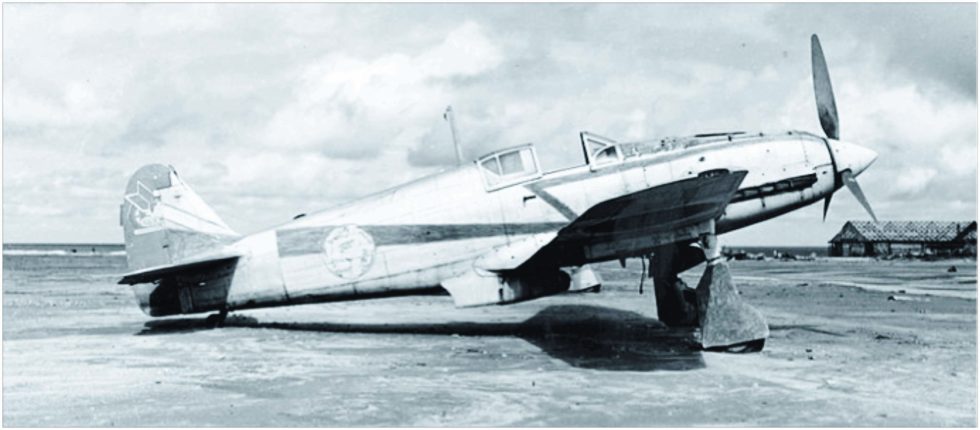
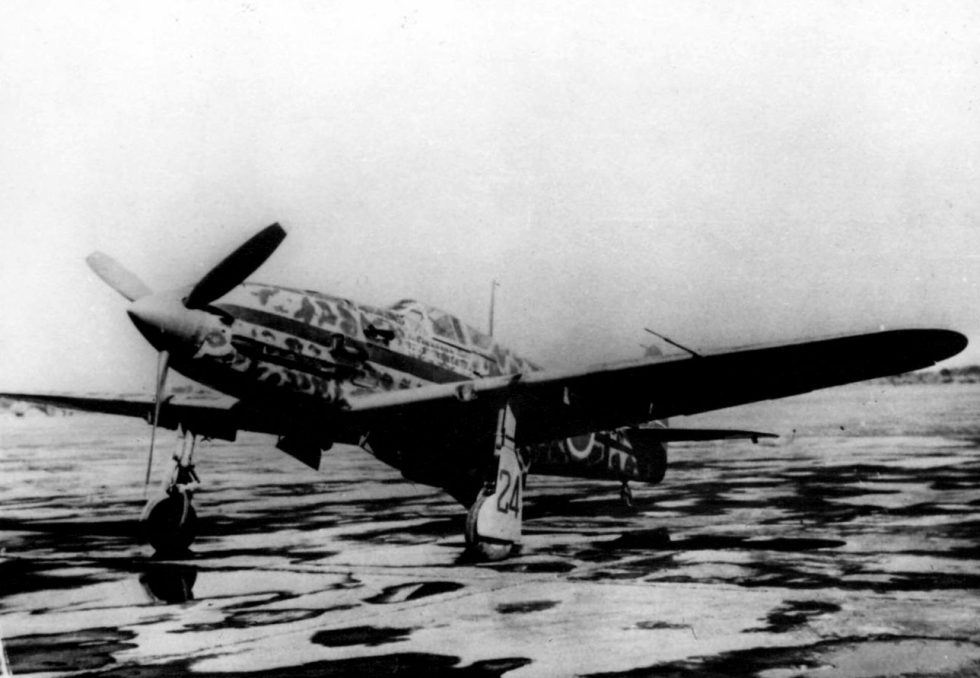
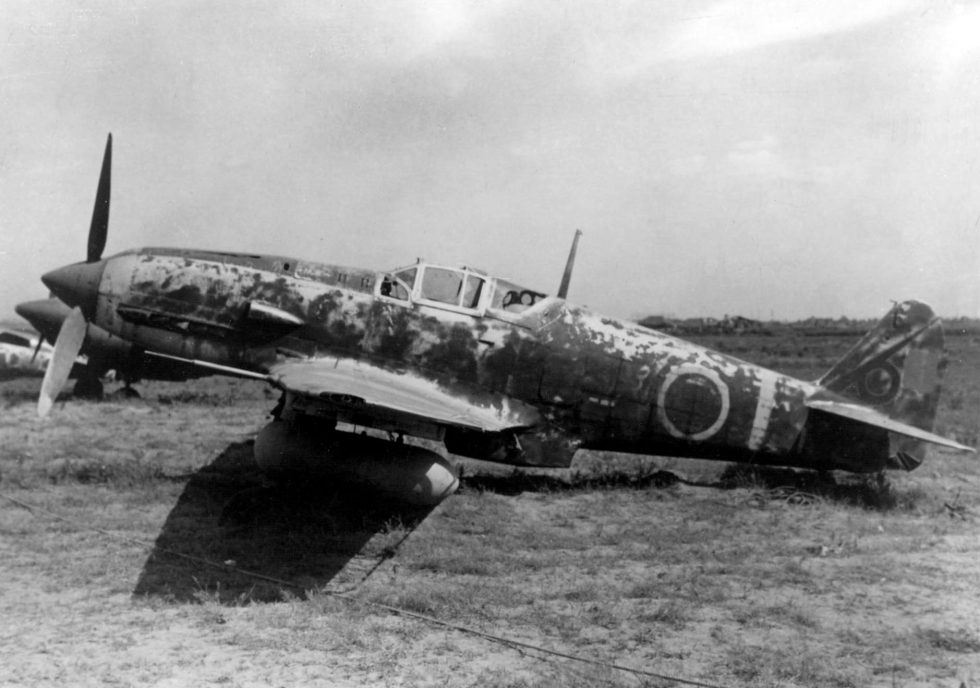
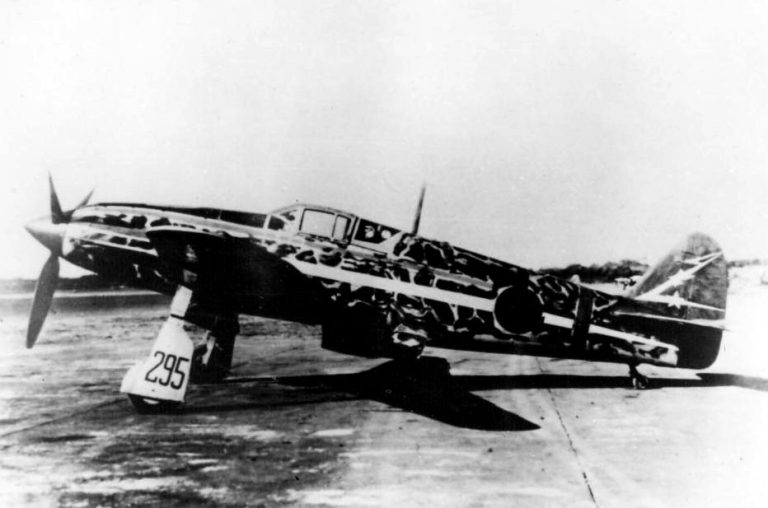
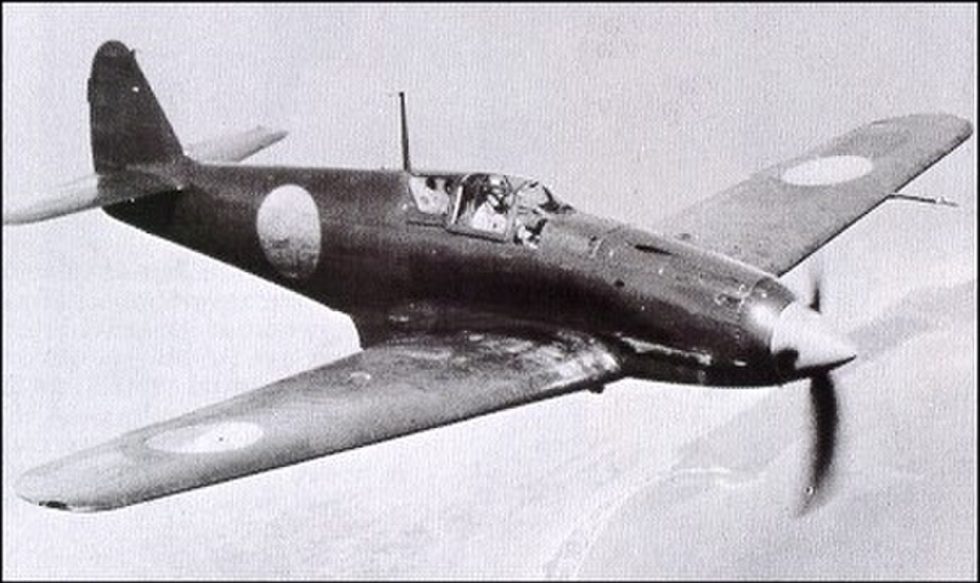
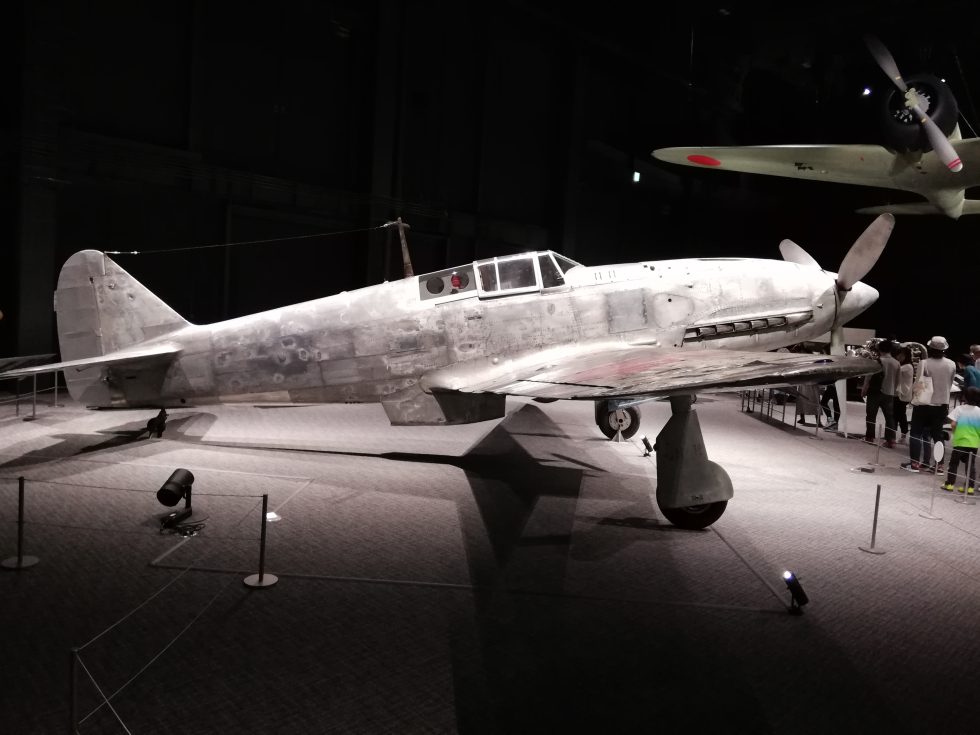
The Hien on film
Verified archival footage of the Kawasaki Ki-61 Hien in flight is scarce, and we would rather show you nothing than something mislabelled. A carefully sourced video is coming soon.
Where the Hien flew
The record that defines it
The Hien was a workmanlike frontline fighter rather than a record-setter, and precise Japanese victory tallies are unreliable. Its significance lies in what it represented: the one Japanese Army fighter with a European inline engine, armour and self-sealing tanks, effective enough at altitude to be trusted with the defence of Japan itself — and hamstrung less by the enemy than by the engine its own industry could not build.
Compare the combat record of every military aircraft. Figures as of July 2026.
Everything people ask about the Ki-61 Hien
Can I fly in a Ki-61?
Why did the Allies call the Ki-61 “Tony”?
What engine did the Ki-61 use?
How was the Ki-61 different from the A6M Zero?
Did the Ki-61 fight the B-29?
What is the Ki-100, and how is it related?
How many Ki-61s were built?
Are any Ki-61s left today?
You can’t fly the Hien.
These, you can.
Some legends only live in museums — others are fuelled and waiting. MiGFlug has put civilians in real military jet cockpits since 2004.
 Fly the L-39 AlbatrosThe world’s most-flown jet trainer — aerobatics included
 Fly the F-104 Starfighter“The missile with a man in it”
 Fly the MiG-21The Cold War’s most-produced jet
 Fly the T-33 Shooting StarAmerica’s first jet trainer
 Fly the DH VampireA piece of early jet history
 Fly the S.211Agile Italian jet trainer
 Fly the MB-326The classic Aermacchi jet
 Fly the MiG-15The Soviet legend of the Korean War
Continue the tour
Every fact, checked
- The History of War — Kawasaki Ki-61 HienJ. Rickard’s detailed development and service history, and the “Tony” naming.
- Air Vectors — The Kawasaki Ki-61 & Ki-100Greg Goebel’s technical overview of the Ha-40 engine and the radial-engined Ki-100.
- Pacific War Online Encyclopedia — Ki-61 “Tony”Kent Budge’s reference specifications and combat summary.
- World War II Database — Ki-61 HienCross-check for dimensions, weights and armament figures.
- Military Factory — Kawasaki Ki-61 Hien (Tony)Variant breakdown and production overview.
- Smithsonian National Air and Space MuseumReference for Japanese wartime aircraft and preservation context.