
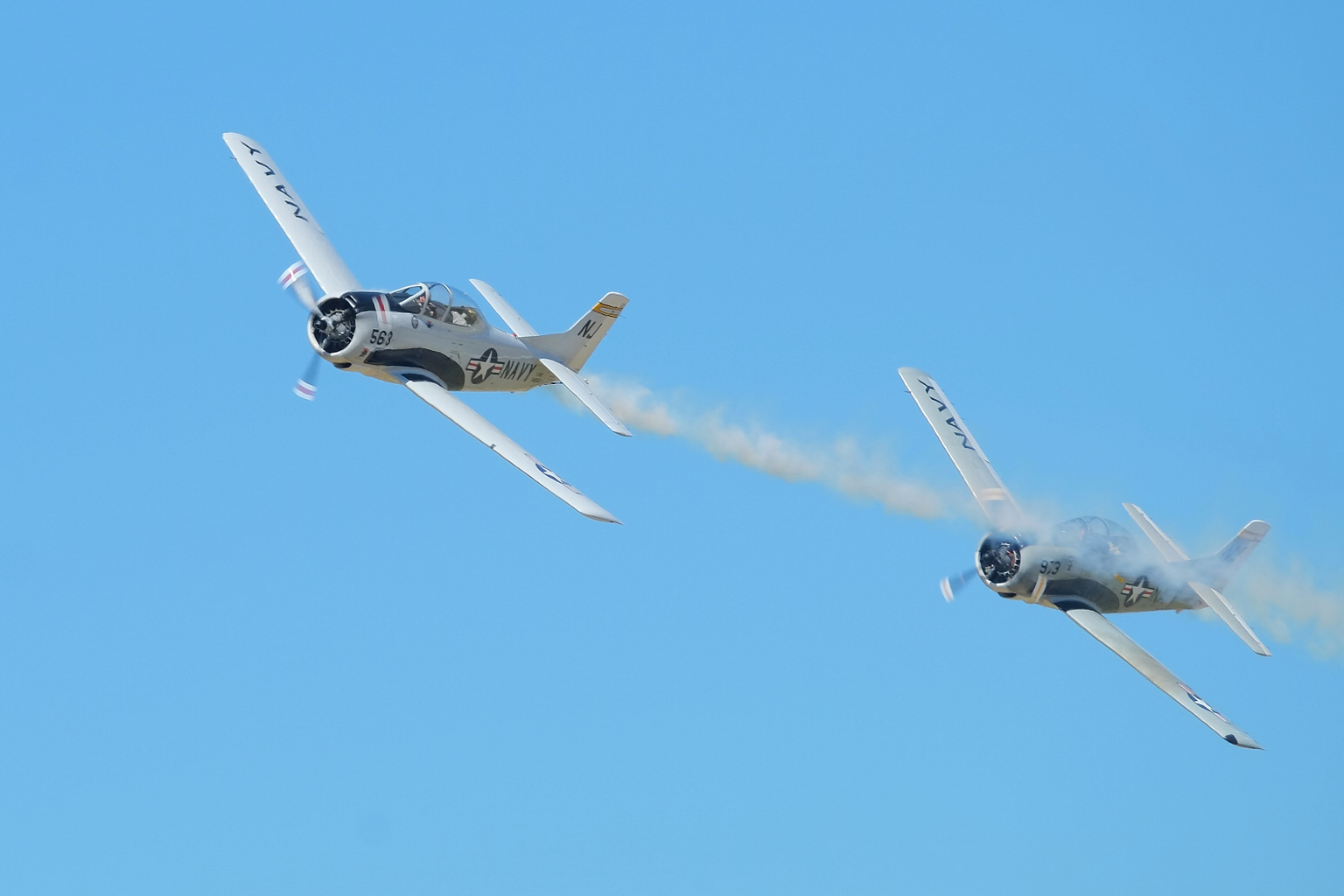
North American T-28
“Trojan”
The piston trainer that taught a generation of American military pilots — then went back to war as a bomb-carrying counter-insurgency aircraft over the jungles of Vietnam and Laos and the mountains of Algeria.
The T-28 Trojan: built to replace the Texan, sent to fight a guerrilla war
In 1948 the U.S. Air Force wanted a modern replacement for the North American T-6 Texan, the tail-dragging trainer that had checked out most of the pilots of the Second World War. North American Aviation answered with the T-28 — a purpose-built trainer with tricycle landing gear, a roomy tandem cockpit, and a big radial engine turning a constant-speed propeller. It first flew on 24 September 1949, and the USAF adopted it as the T-28A in 1950, powered by an 800-horsepower Wright R-1300.
The Air Force flew the type only briefly before moving its primary training to jets, but the U.S. Navy took the design much further. The Navy’s T-28B and carrier-capable T-28C swapped in the far more powerful 1,425-horsepower Wright R-1820 Cyclone, and the Trojan became the backbone of American naval flight training for three decades, teaching thousands of aviators before it was finally replaced by the T-34C Turbo Mentor in the 1980s.
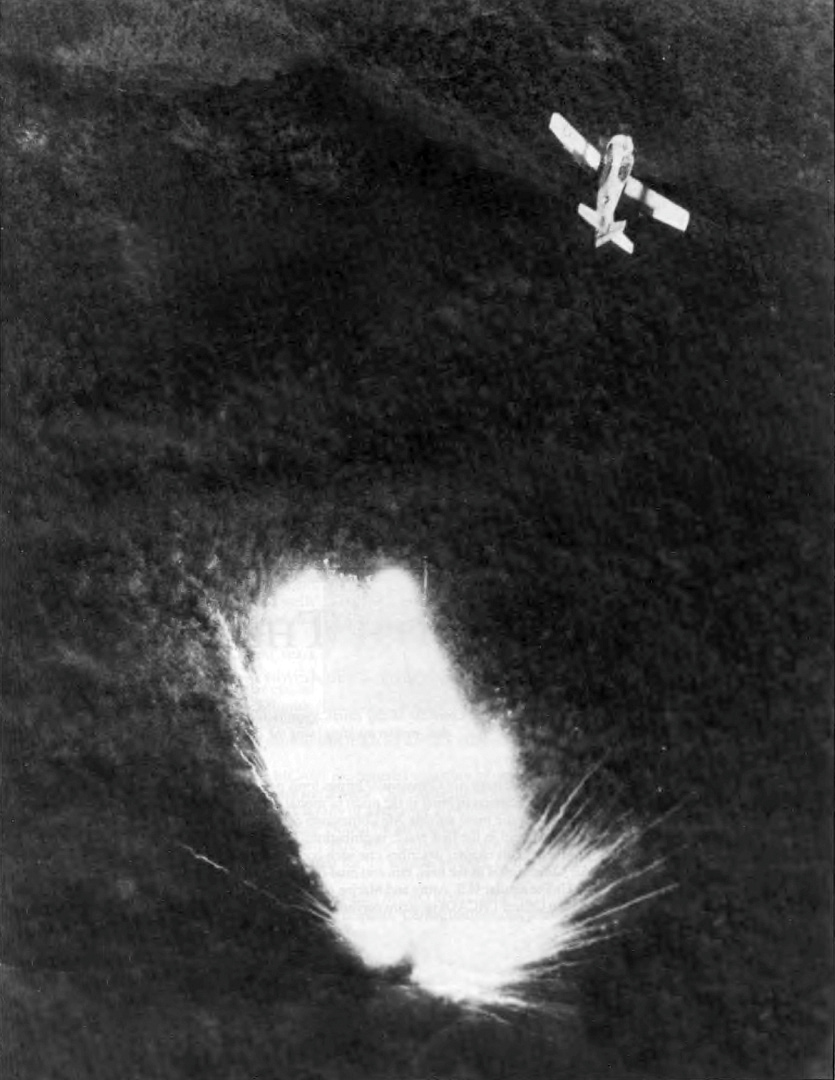
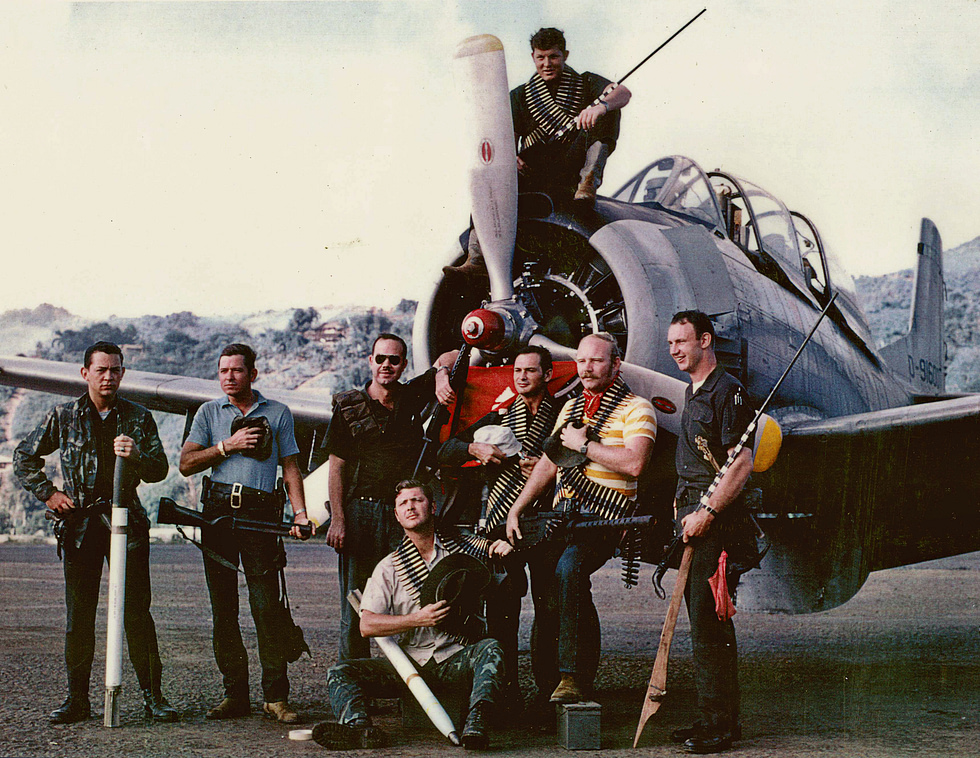
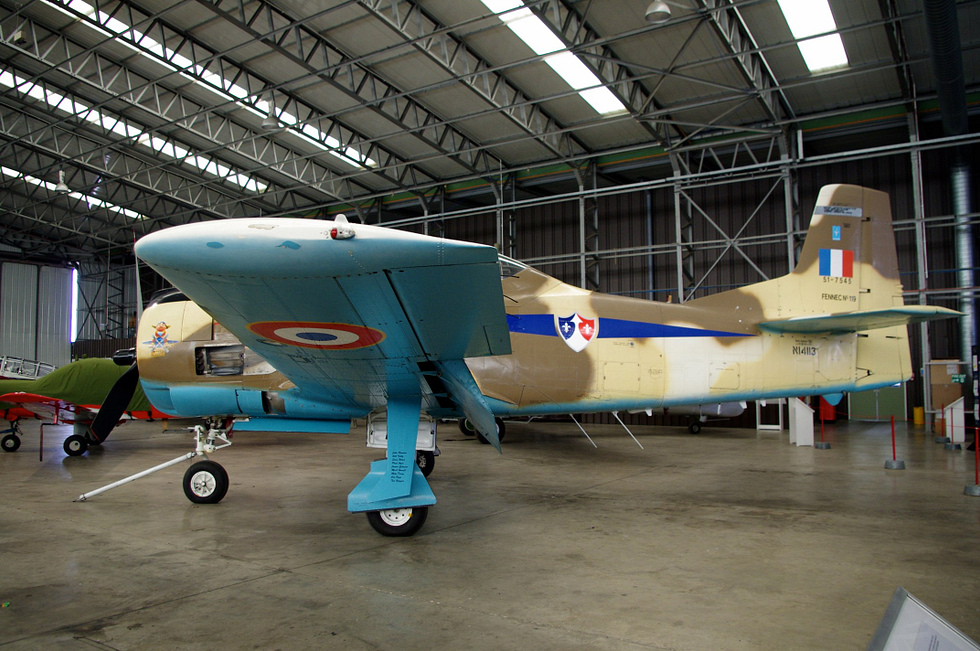
It might have remained a footnote — a competent trainer — had the Cold War’s brush wars not given it a second life. France was first: from 1959 it converted surplus T-28A airframes into the armed “Fennec,” a light strike aircraft used for counter-insurgency in the Algerian War. The United States followed, rebuilding Trojans into the T-28D Nomad — a stronger airframe with the R-1820, six underwing hardpoints, gun pods, bombs, rockets and napalm. The T-28D became one of the defining aircraft of the early Vietnam War: it equipped the South Vietnamese Air Force from 1962, flew the CIA-backed “Secret War” in Laos alongside Air America and the Royal Lao Air Force, and served with the Khmer Air Force over Cambodia. A cheap, forgiving trainer had become a workhorse of America’s shadow wars in Southeast Asia.
01The T-28 Trojan’s two lives: how a flight-school trainer became a counter-insurgency bomber
The T-28 was designed for one job: to take a raw student and turn them into a military pilot safely. Tricycle gear made it easy to land, the big radial gave honest, predictable power, and the tandem cockpit let an instructor watch every input. For that role it was excellent, and the U.S. Navy kept it in primary and basic training into the 1980s.
Its second life came from economics and politics. In the counter-insurgency campaigns of the late 1950s and 1960s, air forces needed something cheaper, slower and more rugged than a jet — an aircraft that could loiter over a jungle, carry a useful load of bombs and rockets, operate from rough strips, and be flown by pilots of modest experience. The surplus T-28 fitted perfectly. France’s Fennec conversion proved the concept in Algeria; the American T-28D Nomad industrialised it for Southeast Asia. The same qualities that made the Trojan a good trainer — docility, ruggedness, simplicity — made it a natural light-attack aircraft. Its limits, exposed in combat, were structural: airframes built for training were not built for the sustained stress of diving weapons delivery, and wing failures dogged the type in hard use.
What makes the T-28 Trojan special
A trainer built around forgiveness
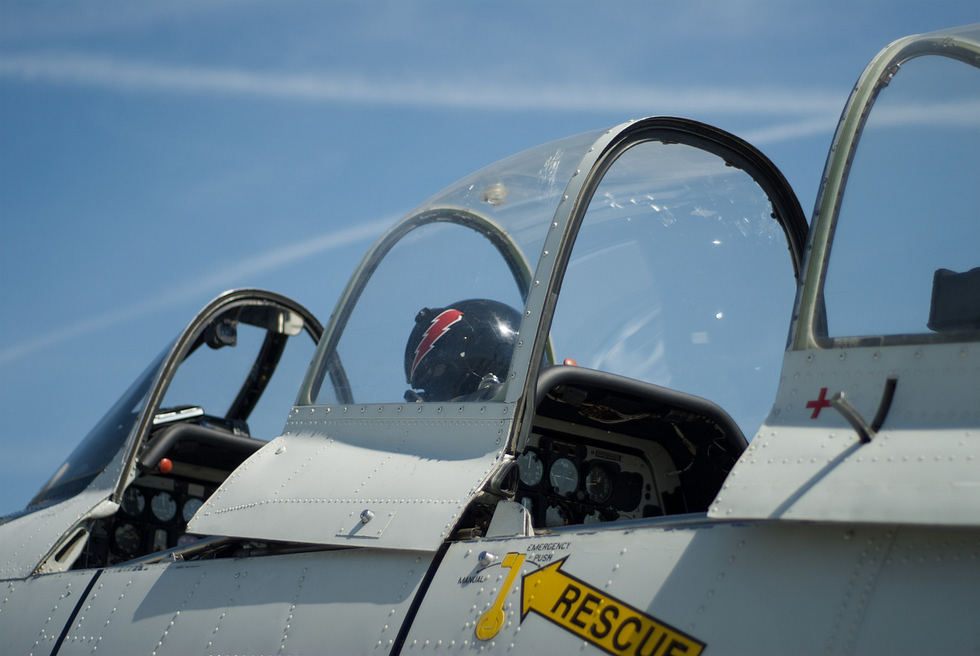
The Trojan’s whole design was about teaching safely. Tricycle landing gear made ground handling and landings far easier than the T-6 Texan’s tail-wheel, cutting training accidents. The stepped tandem cockpit gave the instructor a clear view forward, and the aircraft’s honest, stable handling let students make mistakes and recover. It was powerful enough to feel like a real warplane, gentle enough to survive learning in.
From 800 to 1,425 horsepower
The USAF’s T-28A used the 7-cylinder Wright R-1300 of about 800 hp. The Navy found it underpowered and re-engined the T-28B/C with the 9-cylinder Wright R-1820 Cyclone of roughly 1,425 hp — nearly doubling the power. That big Cyclone, driving a three-blade propeller, is why the armed T-28D and Fennec could haul ordnance off short strips and still climb away.
Six hardpoints and a war load
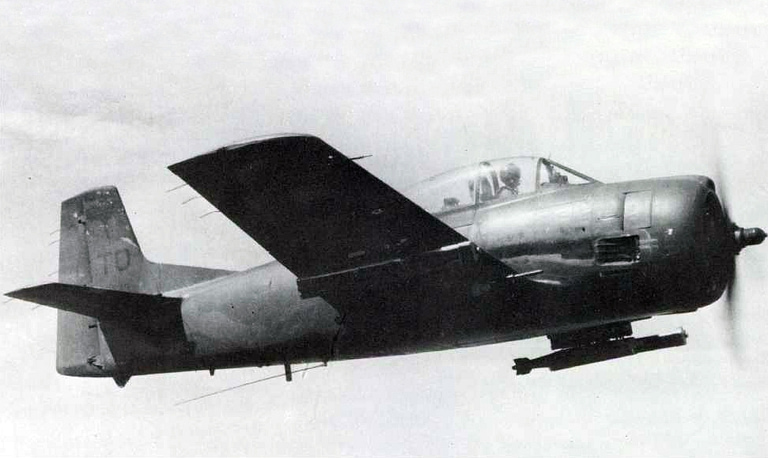
The armed T-28D Nomad and French Fennec added six underwing pylons for bombs, rockets, napalm and gun pods, typically a pair of .50-calibre machine guns. It could carry a useful war load — commonly cited around 1,800 kg (4,000 lb) — and loiter over a target far longer than a fast jet, making it well suited to close air support against guerrilla forces.
02The T-28D Nomad and the Fennec: how two nations turned a trainer into a gunship
The armed conversions were separate national programmes with the same idea. France acted first: from 1959 the state converted surplus T-28A airframes into the Sud Aviation Fennec (“desert fox”), fitting the R-1820 engine, underwing armament and, on many, machine-gun pods, for counter-insurgency in Algeria. Roughly 245 are commonly cited as converted. The United States industrialised the concept as the T-28D Nomad from the early 1960s, strengthening the airframe and adding six hardpoints. Both aircraft did the same job — slow, patient, low-altitude strike work against irregular forces — that fast jets did poorly.
03The T-28 Trojan’s Achilles heel: wing failures in the dive-bombing role
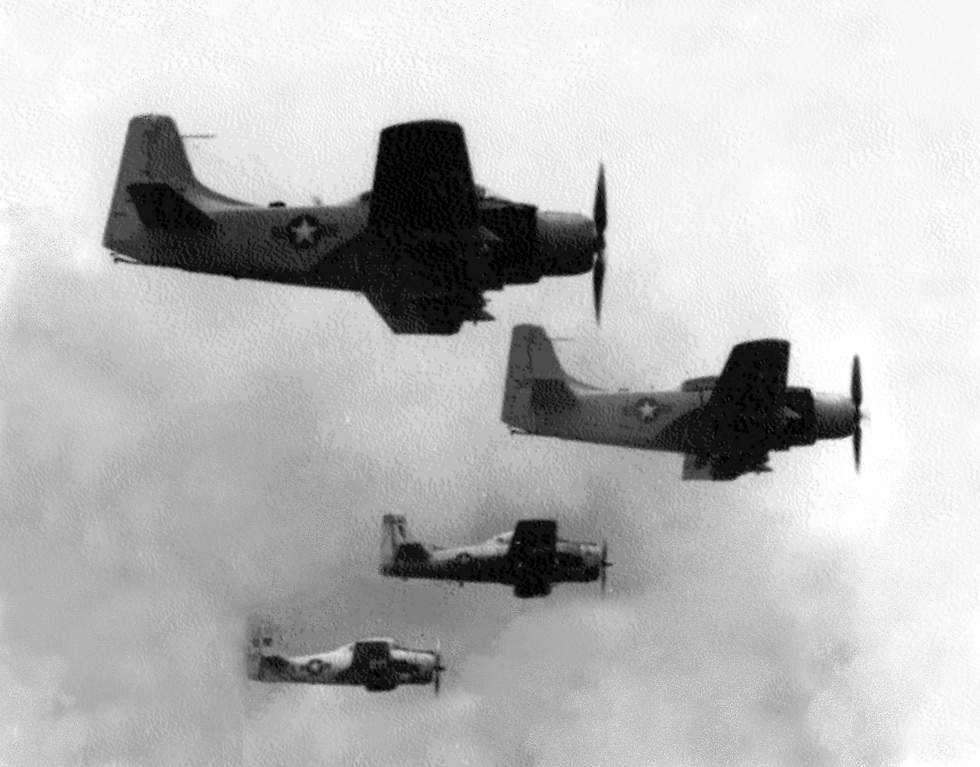
The Trojan was engineered as a trainer, not a dive bomber, and combat use found the difference. Flown hard in repeated weapons-delivery dives — a flight profile it was never stressed for — T-28Ds in South Vietnamese service suffered wing separations that killed crews and badly hurt confidence in the aircraft. The problem drove reinforcement programmes and, ultimately, the type’s replacement in front-line VNAF service by the sturdier Douglas A-1 Skyraider and, later, jets such as the A-37. It is the clearest illustration of the T-28’s core tension: a training airframe asked to do a combat airframe’s job.
North American T-28 Trojan: full specifications
Airframe & Performance (T-28B)
- Posádka
- 2 (instructor & student, tandem)
- Délka
- 9.75 m (32 ft)
- Rozpětí křídel
- 12.22 m (40 ft 1 in)
- Výška
- 3.86 m (12 ft 8 in)
- Max takeoff weight
- ~3,860 kg (8,500 lb)
- Max speed
- ~552 km/h (343 mph)
- Servisní strop
- ~10,800 m (35,500 ft)
- Rozsah
- ~1,600 km (1,000 mi)
- First flight
- 24 September 1949
- Built
- ~1,948 (all variants)
Propulsion, Armament & Cost
- Engine (T-28A)
- Wright R-1300, ~800 hp
- Engine (T-28B/C/D)
- Wright R-1820 Cyclone, ~1,425 hp
- Propeller
- Constant-speed, 2 or 3 blade
- Armament (D/Fennec)
- 6 hardpoints: bombs, rockets, napalm, gun pods
- War load
- ~1,800 kg (4,000 lb), hedged
- Unit cost (period)
- ~$130,000 est. (T-28A, 1950s)
- Cost per flight hour
- ~$400–800 as a warbird today (est., varies widely)
- Warbird status
- Widely flown; scores airworthy
04The T-28 Trojan’s operating costs: what a Trojan costs to fly today
As a military trainer the T-28 was deliberately cheap to buy and run — that was the point of a trainer — and no standardised period cost-per-flight-hour figure survives in the open record. A commonly repeated period unit cost of around $130,000 for a 1950s T-28A should be read as an order-of-magnitude estimate, not a sourced price.
As a modern warbird the Trojan is considered one of the more affordable big radials to own. Owner and broker estimates for direct operating cost — fuel, oil and routine maintenance — commonly fall in the region of $400–800 per flight hour, with the thirsty Wright R-1820 and engine-overhaul reserves the main drivers. Treat any single figure with caution: real costs swing widely with fuel prices, how hard the engine is worked, and whether a major overhaul is looming.
The T-28 Trojan: from flight school to shadow war
A replacement for the Texan
The USAF issues a requirement for a modern trainer to replace the T-6 Texan; North American designs the T-28.
First flight
The prototype XT-28 flies on 24 September 1949, with tricycle gear and an 800-hp Wright R-1300 radial.
T-28A enters USAF service
The Air Force adopts the T-28A for primary training, though it soon shifts basic training toward jets.
The Navy’s Trojans
The re-engined T-28B (1,425-hp R-1820) and carrier-capable T-28C become the backbone of U.S. naval flight training.
France’s Fennec goes to war
France converts surplus T-28As into the armed Fennec for counter-insurgency strikes in the Algerian War.
Nomad over Vietnam
Armed T-28Ds arrive with USAF “Farm Gate” units and the South Vietnamese Air Force for close air support.
The Secret War in Laos
T-28Ds fly the CIA-directed war in Laos with Air America and the Royal Lao Air Force, guided by USAF Raven FACs.
Retirement and rebirth
The U.S. Navy retires the Trojan in the 1980s; hundreds pass into civilian hands and it becomes a hugely popular warbird.
From the cockpit: twelve T-28 Trojan stories
Retiring the Texan
The T-28 was built to replace the legendary T-6 Texan that trained WWII pilots.
Read the full story
Three decades of naval aviators
The Navy’s T-28B and T-28C trained thousands of pilots into the 1980s.
Read the full story
Landing on a moving deck
The T-28C added a tailhook so student naval aviators could qualify aboard a carrier.
Read the full story
The Fennec, France’s desert fox
From 1959 France turned surplus Trojans into armed Fennecs for the Algerian War.
Read the full story
America’s first Vietnam warplanes
In 1961–62 armed T-28s were among the first U.S. combat aircraft in Vietnam.
Read the full story
The Trojan in Vietnamese hands
The South Vietnamese Air Force made the T-28D a workhorse of its early air war.
Read the full story
The Secret War
In Laos, T-28s fought a war the United States did not officially admit to.
Read the full story
Forward air controllers of Long Tieng
USAF “Raven” FACs directed T-28 strikes from a secret base in the Laotian highlands.
Read the full story
The airline that went to war
The CIA-owned Air America flew and supported armed T-28s across Southeast Asia.
Read the full story
When the wings let go
Combat dive-bombing revealed that the Trojan’s training airframe could fail under stress.
Read the full story
A second retirement, a new life
Hundreds of surplus Trojans became some of the most popular warbirds flying today.
Read the full story
Grandfather of the COIN aircraft
The T-28’s combat career helped prove the case for dedicated light-attack aircraft.
Read the full story
The T-28 Trojan in pictures
The T-28 Trojan in motion
EAA: Fight On — Celebrating 75 Years of North American’s T-28 Trojan. A tribute from the Experimental Aircraft Association marking the type’s 75th anniversary, with flying warbird footage and owner interviews.
Where the T-28 Trojan flew
The T-28 Trojan’s war record
The Trojan was a trainer that stumbled into three counter-insurgency wars. Its combat story is not about air-to-air kills but about ground attack — napalm, rockets and bombs delivered low and slow over jungle and mountain, in Algeria, Vietnam, Laos and Cambodia. It flew some of the first American combat sorties of the Vietnam War and carried much of the secret air war in Laos.
Compare the combat record of every military aircraft. Figures as of 2026.
Everything people ask about the T-28 Trojan
Can I fly in a North American T-28 Trojan?
What was the T-28 Trojan used for?
What is the difference between the T-28D Nomad and the Fennec?
What engine does the T-28 Trojan have?
Why did the T-28 struggle in Vietnam?
How many T-28 Trojans were built?
Is the T-28 Trojan still flying?
You can’t fly the T-28 Trojan.
These, you can.
Some legends only live in museums — others are fuelled and waiting. MiGFlug has put civilians in real military jet cockpits since 2004.
 Fly the L-39 AlbatrosThe world’s most-flown jet trainer — aerobatics included
 Fly the F-104 Starfighter“The missile with a man in it”
 Fly the MiG-21The Cold War’s most-produced jet
 Leťte s T-33 Shooting StarAmerica’s first jet trainer
 Fly the DH VampireA piece of early jet history
 Fly the S.211Agile Italian jet trainer
 Fly the MB-326The classic Aermacchi jet
 Fly the MiG-15The Soviet legend of the Korean War
Continue the tour
Every fact, checked
- National Museum of the U.S. Air Force — T-28 fact sheetOfficial history of the trainer and its T-28D Nomad counter-insurgency conversion.
- Smithsonian National Air and Space MuseumReference for the Trojan’s design, variants and service history.
- National Naval Aviation MuseumThe T-28B/C in three decades of U.S. Navy and Marine flight training.
- The Aviation Geek ClubAccounts of T-28D operations in Vietnam and the Secret War in Laos.
- UT Dallas — Air America ArchivePrimary-source collection on Air America and the CIA-directed war in Laos.
- HistoryNet / Aviation HistoryThe Raven forward air controllers and the T-28 over Laos.
- Experimental Aircraft Association (EAA)The Trojan as a modern warbird and the 75th-anniversary tribute film.
- Joe Baugher — U.S. military aircraft serialsProduction totals, variants and serial-number histories for the T-28 family.