
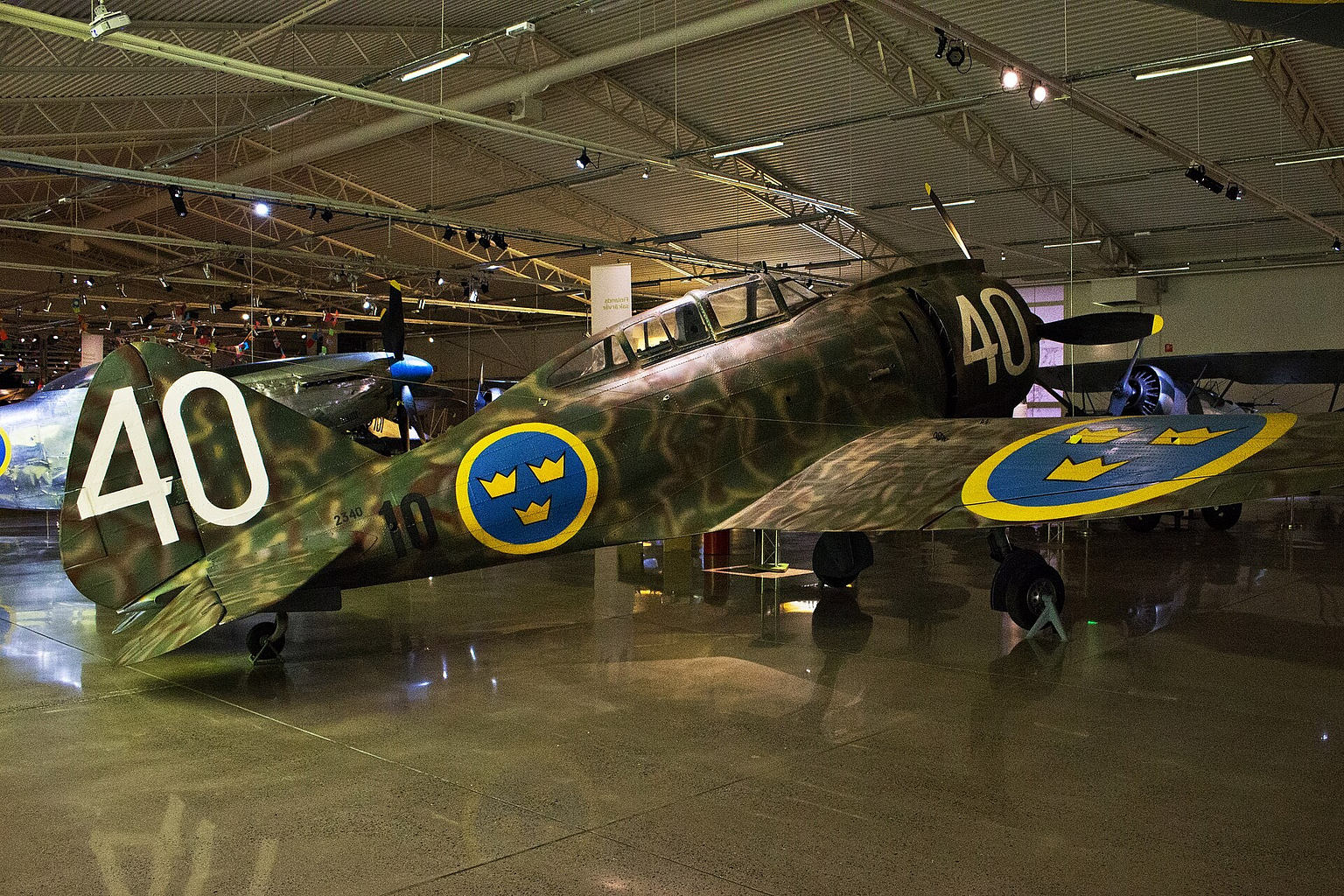
Reggiane Re.2000 Falco
An elegant, American-influenced Italian fighter that reportedly out-turned the Bf 109 in mock combat — yet was largely spurned at home and found its real career abroad, as the Hungarian Héja and the Swedish J 20.
The Reggiane Re.2000 Falco: Italy’s overlooked thoroughbred
By the late 1930s the Italian aircraft industry was crowded with clever designers and starved of good engines. Into that world came the Reggiane Re.2000 Falco — a sleek, all-metal fighter that looked more like something rolled out of an American factory than a product of Reggio Emilia, and that flew, by most accounts, beautifully.
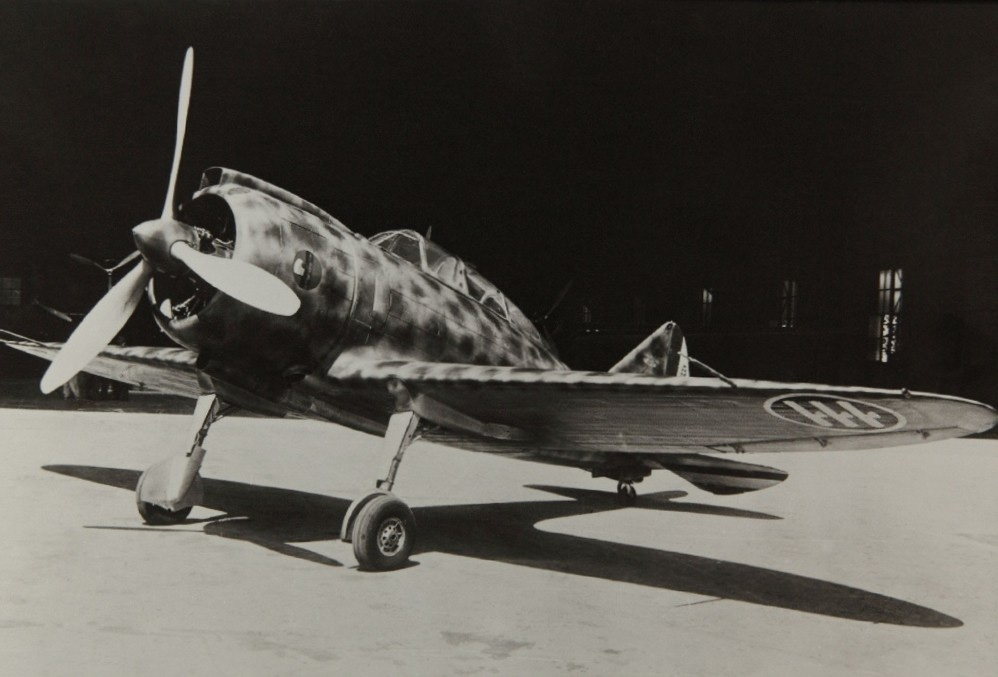
The Falco (“Falcon”, and also marketed as the “Serie 2000”) was the work of Officine Meccaniche Reggiane, an engineering firm within Giovanni Battista Caproni’s industrial group. Its designers, Roberto Longhi and Antonio Alessio, had absorbed lessons from American practice — Longhi in particular had worked in the United States — and the resulting aircraft was widely described at the time as showing strong American influence. Contemporaries and later historians alike noted how closely it resembled the Seversky P-35, the barrel-bodied radial-engined fighter then serving with the US Army Air Corps. That resemblance is best treated as a family likeness of design philosophy rather than a copy: stressed-skin construction, a broad radial cowling and a roomy, all-round-vision canopy.
Under the skin the Re.2000 hid its cleverest and most controversial idea. Its elegant elliptical wing was built around a multi-spar, multi-cell structure — commonly described as a five-spar arrangement — that doubled as the fuel tankage: the fuel lived inside the sealed cells of the wing itself. It was light, strong and aerodynamically clean, and it gave the little fighter genuinely long legs. It also meant that the fuel sat unprotected, without self-sealing liners, spread through the primary structure — a feature Italian officials would fix on as a fire hazard.
First flown on 24 May 1939 by the celebrated pilot Mario De Bernardi, the prototype impressed almost everyone who flew it. Test pilots reported that it was fast for its power, and above all astonishingly manoeuvrable; the persistent, oft-repeated claim is that in mock dogfights Italian pilots found the Falco could out-turn both the home-grown Macchi C.200 and even the German Messerschmitt Bf 109E. Those stories should be read as the enthusiastic trial reports they are, but they point at something real: the Re.2000 was a natural dogfighter.
And yet the Regia Aeronautica — the Italian air force — never warmed to it. Officialdom worried about the vulnerability of those integral wing tanks, and there was little appetite to disrupt the tooling and priority already committed to the competing Macchi C.200. The result is one of the odder careers in fighter history: a home air force that bought only a handful for front-line use, converted a small number into catapult-launched fighters for the navy’s battleships, and otherwise let the type go abroad. It was foreign buyers — Hungary, which licence-built it as the MÁVAG Héja and flew it on the Eastern Front, and neutral Sweden, which bought sixty as the J 20 to guard its skies — who gave the Falco the operational life its own country declined to.
The Re.2000 was not a dead end, either. It was the first of a family: re-engined with the inline Daimler-Benz DB 601 it became the far more effective Re.2001 Falco II, and the line culminated in the superb Re.2005 Sagittario, one of the finest fighters Italy produced. The radial-engined Falco that started it all remains a what-might-have-been — graceful, promising, and never quite trusted at home.
01The Reggiane Re.2000’s Seversky problem: how “American influence” became a myth and a factWhy the Falco looks like a P-35 — and why that is only half the story+
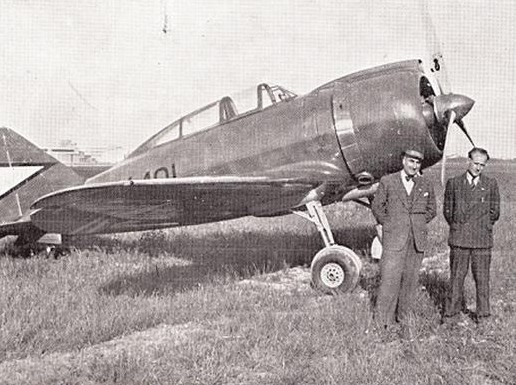
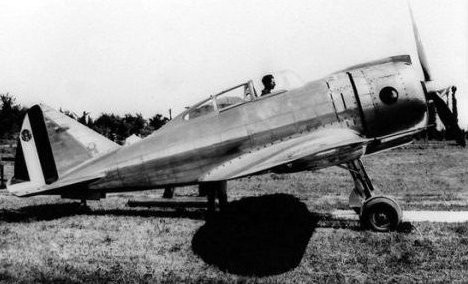
The visual similarity between the Re.2000 and the Seversky P-35 is genuine and was remarked on from the outset. Both were low-wing, all-metal monoplanes with fat air-cooled radials, semi-elliptical wings and generous canopies. Roberto Longhi had spent time working in the American aircraft industry, and the design team openly drew on US structural practice — stressed-skin aluminium construction was still relatively novel in Italy, where fabric and mixed construction lingered.
But “influenced by” is not “copied from.” The Re.2000’s multi-spar integral-tank wing was its own invention and had no direct P-35 equivalent; its aerodynamics, undercarriage geometry (the main wheels rotating to lie flat in the wing) and cowling were Reggiane’s work. The honest summary is the one historians tend to reach: the Falco absorbed the American school of construction and married it to distinctly Italian ideas about the wing. It is a case study in how a national industry learns from abroad without simply imitating.
02Why the Regia Aeronautica said no to the Re.2000 FalcoFuel-tank fire fears, factory politics, and a fatal case of bad timing+
Two things worked against the Falco at home. The first was technical: a directorate report flagged the unprotected integral wing tanks as a fire and battle-damage risk, and self-sealing protection was hard to retrofit into a structure where the fuel was the structure. In an era when opposing fighters increasingly carried self-sealing tanks and armour, that was a real objection — even if the Hungarians and Swedes would fly the type for years regardless.
The second was industrial. Italy’s fighter procurement was already committed to the Macchi C.200 Saetta, and there was reluctance to disrupt that programme by tooling up for a competitor from a different firm. A planned pre-production batch and a much larger production run were curtailed; only a small number entered Italian front-line service. The frequently quoted outcome is that the Falco — arguably the most modern of Italy’s 1939 fighters — was passed over largely for reasons that had little to do with how it flew.
It is worth pausing on how unusual the Falco’s shape really was in an Italian context. In 1939 the Regia Aeronautica still flew open-cockpit biplanes in front-line units; the Fiat CR.42 Falco — confusingly, another “Falcon” — was a fabric-and-strut biplane entering service that very year. Against that backdrop the Reggiane looked like a visitor from a different decade: flush-riveted metal skin, an enclosed sliding canopy, retractable gear folding flat into the wing, and a constant-speed propeller. Italy had the designers to build a thoroughly modern fighter. What it lacked was engines to match, a procurement system willing to gamble on a new firm, and the industrial slack to run two competing fighter lines at once.
The Falco’s story is therefore not really a story about an aeroplane that failed. It is a story about how a good aeroplane can be defeated by everything that surrounds it — a weak engine industry, a cautious bureaucracy, a war that arrived before the bugs were worked out, and rivals with better political footing. Strip those away, as Hungary and Sweden partly did, and the same airframe gave years of useful service. That tension — brilliant on paper, awkward in practice, redeemed abroad — is what makes the Re.2000 one of the most interesting also-rans of the piston-fighter era.
Inside the Reggiane Re.2000 Falco: three ideas that defined it
The Falco was a study in ambition constrained by circumstance — a modern airframe, an innovative wing, and an engine that never quite matched the promise of either.
The integral-tank elliptical wing
The Re.2000’s signature was a beautifully clean, semi-elliptical wing built as a multi-cell, multi-spar box — commonly described as five spars — whose sealed compartments held the fuel. It made the wing light, stiff and roomy, and gave the fighter long range for its class. The catch: the fuel was unprotected and lived inside the primary structure, which Italian officials judged a serious fire risk.
The Piaggio P.XI radial
Power came from a Piaggio P.XI RC.40 — a 14-cylinder, two-row air-cooled radial of roughly 1,000 hp (about 986 hp is the figure usually quoted), turning a three-blade constant-speed propeller. The airframe deserved better: the P.XI was the type’s persistent weak point, with a reputation for unreliability that dogged Italian, Hungarian and Swedish operators alike.
Stressed-skin, all-metal construction
The Falco was among the first Reggiane designs to use American-style stressed-skin aluminium construction, with a metal-skinned fuselage and tail and fabric-covered control surfaces. A large rearward-sliding canopy gave near-unrestricted visibility, and the main undercarriage rotated to lie flat in the wing — hallmarks of a genuinely modern late-1930s fighter.
03The Reggiane Re.2000’s long legs: range as its quiet superpowerWhy a light dogfighter could also fly further than its rivals+
Because the wing itself was the fuel tank, the Re.2000 carried a generous internal fuel load — figures around 460 kg (roughly 640 litres) are commonly cited — giving endurance and range that comfortably exceeded contemporary Macchi and Fiat fighters. Normal range is often quoted at around 545 km, but with full internal fuel the type could reach far greater distances, which is precisely why a dedicated long-range reconnaissance-fighter variant (the Serie III / GA, with additional tankage) was developed for missions toward East Africa. That range advantage is also what made the naval catapult role plausible: a shipboard fighter needs endurance to be useful once launched.
The trade was structural vulnerability for reach — a bargain the Hungarians partially unwound in the Héja II by replacing the big integral cells with many small tanks, which both reduced fire risk and, by cutting fuel sloshing, actually improved handling.
Reggiane Re.2000 Falco I: specifications and cost
Representative figures for the Re.2000 Serie I. Wartime Italian, Hungarian and Swedish sources differ; where they do, the value is flagged as an estimate.
| צוות | 1 (pilot) |
|---|---|
| מֶשֶׁך | 7.99 m (26 ft 3 in) |
| מוּטַת כְּנָפַים | 11.0 m (36 ft 1 in) |
| גוֹבַה | 3.2 m (10 ft 6 in) |
| אזור הכנף | 20.4 m² (220 sq ft) |
| משקל ריק | ~2,090 kg (4,608 lb, est.) |
| Loaded weight | ~2,839 kg (6,259 lb, est.) |
| מהירות מקסימלית | ~530 km/h at ~5,300 m (est.; trials often recorded ~518–520 km/h) |
| מהירות שיוט | ~440 km/h (est.) |
| לָנוּעַ | ~545 km normal; far greater on full internal fuel (est.) |
| תקרת השירות | ~11,200 m (36,700 ft, est.) |
| Climb to 4,000 m | ~4 minutes (trials figure) |
| מָנוֹעַ | Piaggio P.XI RC.40, 14-cylinder air-cooled radial |
|---|---|
| Power | ~986 hp (735 kW) — commonly rounded to ~1,000 hp |
| Propeller | 3-blade Piaggio constant-speed, variable pitch |
| הְתחַמְשׁוּת | 2 × 12.7 mm Breda-SAFAT machine guns (~300 rounds each) |
| Ordnance | Light bomblet (spezzoni) provision on some aircraft |
| Fuel | ~460 kg / ~640 L in integral wing tanks (est.) |
| First flight | 24 May 1939 |
| Number built | ~180 by Reggiane (prototype + Serie I/II/III); figures vary |
| Unit cost | Not reliably recorded (wartime Italy) |
| Cost per flight hour | Not reliably recorded (WWII-era type) |
| Programme cost | Not reliably recorded (WWII) |
Note: the Re.2000 spawned several sub-series — the standard Serie I land fighter, the Serie II catapult fighter (“Cat.”) for the navy, and the Serie III / GA long-range variant — plus the Hungarian MÁVAG Héja I and Héja II and the Swedish J 20. Weights, speeds and fuel figures differ between them; treat all single figures above as representative rather than definitive.
04What a Reggiane Re.2000 cost — and why we can’t give you a numberOperating costs, production economics and the limits of wartime records+
Unlike modern jets, wartime piston fighters like the Falco have no clean, verifiable “cost per flight hour” figure. Italy’s 1939–43 aircraft accounting was fragmented across firms and the state, currencies and economies were distorted by war, and Reggiane’s numbers are further muddied by the licence deals with Hungary and the export sale to Sweden. What we can say is qualitative: the Re.2000 was a relatively sophisticated, labour-intensive airframe for its day, and its Piaggio radial made it expensive to keep serviceable — Swedish and Hungarian crews both complained bitterly about the maintenance burden. For that reason every cost row above honestly reads “not reliably recorded.” Any single lira, pengő or krona figure you may see quoted online should be treated with caution.
05The Reggiane Re.2000’s family tree: from Falco to the superb Re.2005 SagittarioHow a spurned radial fighter fathered one of Italy’s best+
The Re.2000’s airframe was too good to waste, and its real legacy is the family it founded. Re-engined with the German inline Daimler-Benz DB 601 (and its Italian licence version), it became the Re.2001 Falco II — a far more capable and widely used fighter. The Re.2002 Ariete was a radial-engined ground-attack development. The line then reached its peak with the Re.2005 Sagittario, powered by the DB 605 and regarded by many as one of the finest fighters any Axis nation fielded — sleek, fast and hard-hitting, though built in tiny numbers as Italy’s war collapsed.
Seen that way, the radial Falco is less a failure than a first draft: the aircraft that taught Reggiane how to build a modern fighter, so that the “Serie 5” could be great.
Reggiane Re.2000 Falco variants and sub-types
The Falco was a small production run that nonetheless splintered into a surprising number of sub-types across three countries. Figures vary between sources and are given as commonly-cited approximations.
| Re.2000 Serie I | Standard land-based fighter; the bulk of Reggiane production |
|---|---|
| Re.2000 Serie II (“Cat.”) | Catapult fighter for Regia Marina battleships; small batch |
| Re.2000 Serie III / GA | Long-range reconnaissance-fighter with extra fuel; ~12 built, largely post-Armistice |
| Re.2000 bis | Small batch with an uprated P.XI variant engine |
| MÁVAG Héja I (Hungary) | Imported/assembled Re.2000s with armour, radio & extra tank; ~70 |
|---|---|
| MÁVAG Héja II (Hungary) | Largely re-engineered: Hungarian engine, better guns, many small tanks; ~200 (range 170–203 cited) |
| J 20 (Sweden) | 60 Re.2000s bought for neutrality patrol, based at F10, Bulltofta |
| (Cancelled) British order | ~300 reportedly ordered late 1939, cancelled 1940 after Italy entered the war |
06The Reggiane Re.2000 as a battleship fighter: Italy’s naval catapult experimentHow the Falco ended up bolted to a catapult on the deck of a battleship+
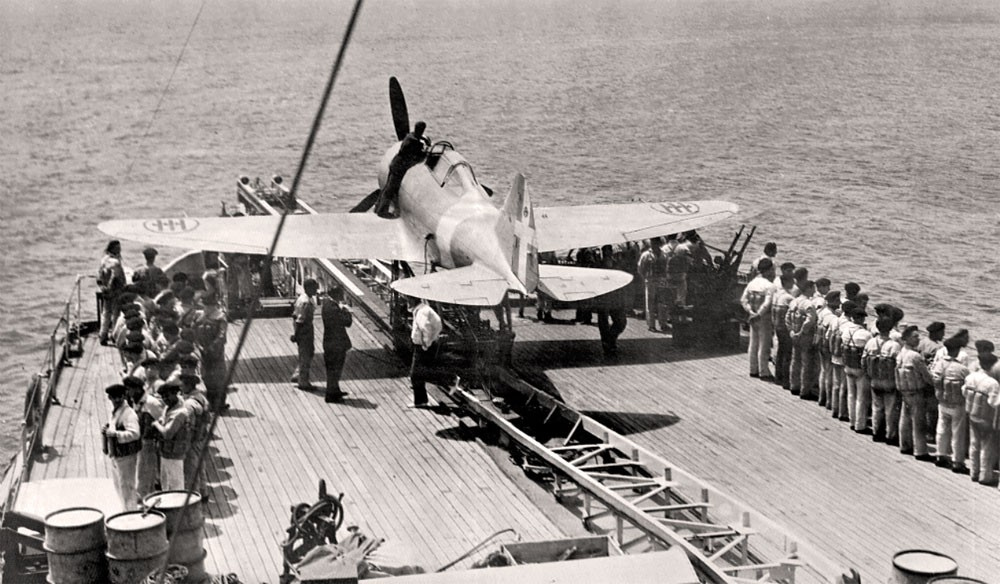
Denied a big land-based order, the Falco found an unlikely niche at sea. The Regia Marina wanted fighters that could be catapult-launched from its capital ships to provide air cover far from land, and the Re.2000’s good range made it a plausible candidate. A small number of Serie II “Cat.” aircraft were modified for the role and embarked on battleships including Littorio, Vittorio Veneto and, later, Roma.
Like many catapult-fighter schemes of the era, it was more elegant in theory than in practice — a launched aircraft could not be recovered aboard and typically had to divert to land or ditch. In the event the concept was barely exercised: by most accounts only a single catapult launch was ever made in anger, during the destruction of the battleship Roma by German Fritz-X guided bombs on 9 September 1943, days after Italy’s Armistice. It is a poignant, almost symbolic end to the idea — the Falco’s one operational catapult sortie coinciding with the sinking of the ship it flew from.
07MÁVAG Héja I vs Héja II: how Hungary rebuilt the Reggiane Re.2000From a licence-built Italian import to an all-Hungarian fighter+
The two Héja marks are almost different aircraft. The Héja I was essentially a Hungarian-finished Re.2000: Italian-pattern airframe, with added armour, a radio, and an extra self-sealing tank to address the fire worry — though the big wing tanks still leaked. The Héja II went much further. Hungarian industry fitted a locally produced engine of greater power, replaced the Italian machine guns with superior Hungarian Gebauer weapons, redesigned the cowling and propeller, and — the cleverest change — ripped out the large integral wing tanks in favour of a couple of dozen small tanks.
That last modification did two things at once. It reduced the catastrophic fire risk that had so worried the Italians, and by eliminating the sloshing of fuel in big cells it noticeably improved the aircraft’s stability and handling. The irony is sharp: the feature that helped kill the Falco’s Italian career was quietly engineered out by a smaller air force that simply needed the aeroplane to work. By the time the Héja II appeared, though, it was outclassed by the newest Soviet fighters and served mostly in home defence and training.
08The Piaggio P.XI: the engine that held the Reggiane Re.2000 backA beautiful airframe let down by its powerplant+
If the Falco has a villain, it is the engine. The Piaggio P.XI RC.40 was a 14-cylinder, two-row air-cooled radial — itself derived from French Gnome-Rhône practice — producing somewhere around 986 hp. On paper that was competitive with contemporaries; in service it was the type’s persistent liability. Reliability was poor, and the maintenance burden was heavy enough that Italian, Hungarian and Swedish crews all recorded frustration with keeping the aircraft serviceable.
The engine problem is precisely why the Reggiane story got better after the Falco. When the airframe was mated to the German inline Daimler-Benz DB 601 to create the Re.2001, and later the DB 605 for the Re.2005, the result was a far more reliable and higher-performing fighter. The lesson of the Re.2000 is an old one in aviation: a superb airframe with a mediocre engine is a mediocre aeroplane, while the reverse is often survivable. The Falco spent its whole career on the wrong side of that equation.
09The Reggiane Re.2000 that almost flew for the RAFBritain’s cancelled 1939 order and the what-if of a Commonwealth Falco+
One of the great what-ifs of the Falco’s history is British. In the tense months around the outbreak of war, Britain — hungry for any modern fighter it could get — is reported to have ordered a substantial batch of Re.2000s, figures around 300 being commonly cited, with the deal firmed up in early 1940. Had it gone through, the RAF or Commonwealth air forces might have flown Italian radial fighters in 1940–41.
It was not to be. Once Italy moved toward joining the Axis war effort, the political ground vanished; German approval for the export was withdrawn, and Italy’s own entry into the war in June 1940 killed the arrangement outright. The episode is a reminder of how fluid the pre-war arms market was, and of how highly the Falco was rated abroad even as its own air force hesitated. A neutral Sweden and a co-belligerent Hungary ended up flying the fighter that Britain briefly wanted.
10Hunting a survivor: what really remains of the Reggiane Re.2000Why survivor claims need careful hedging+
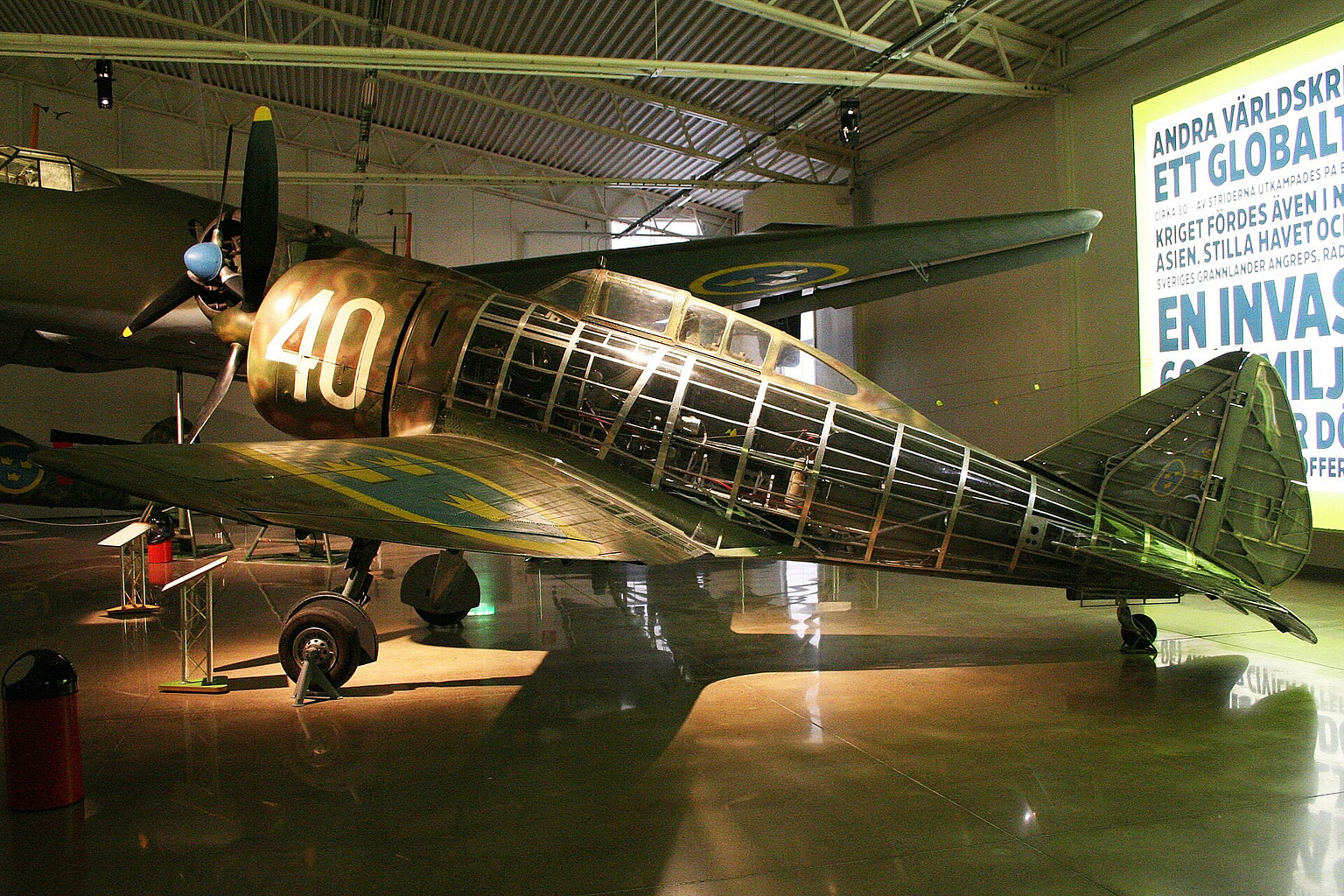
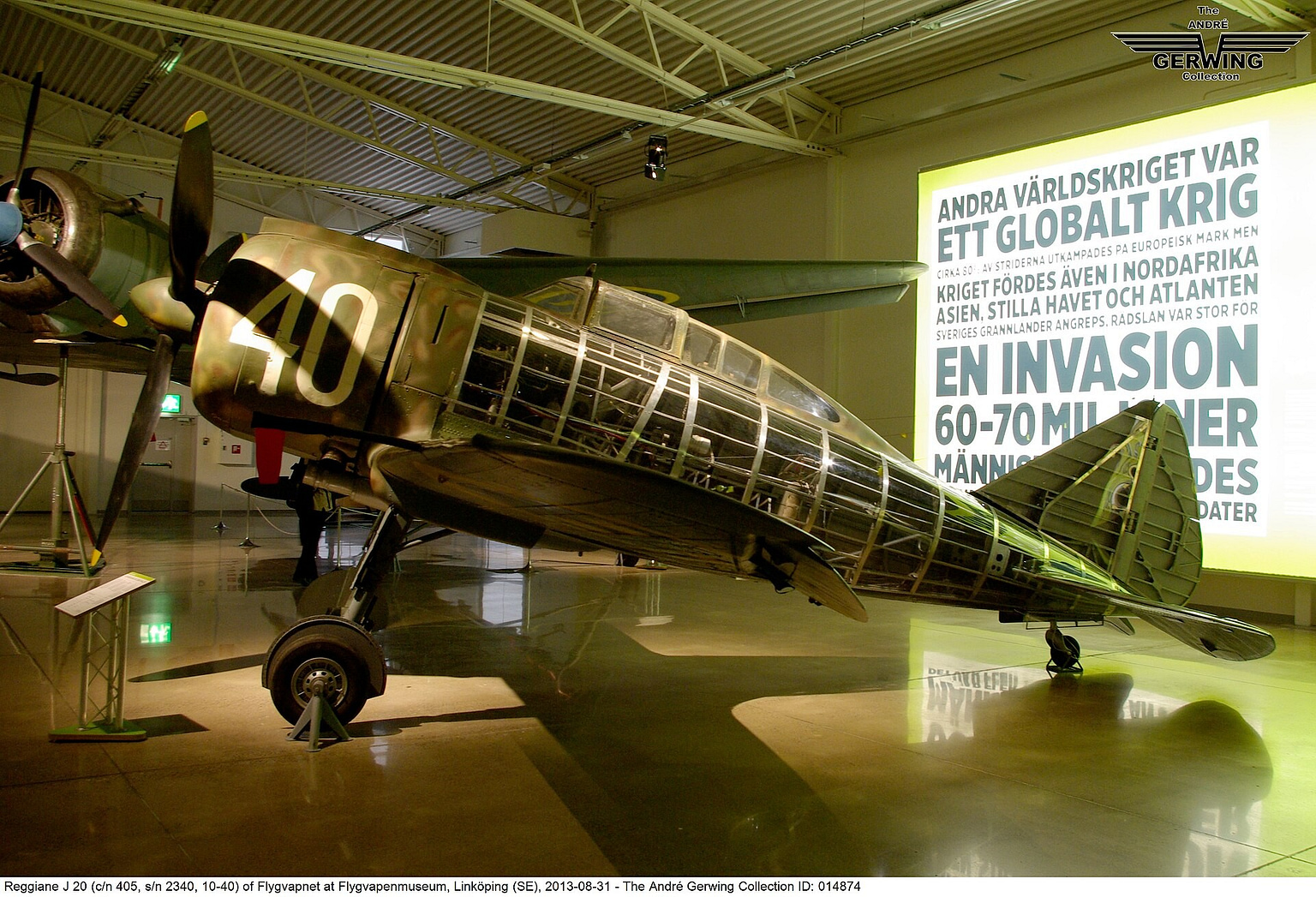
Survivors of the Re.2000 are genuinely rare, and the details deserve care. The best-documented example is a Swedish J 20 preserved at the Swedish Air Force Museum (Flygvapenmuseum) in Linköping — the aircraft most photographs of a “complete” Re.2000 actually show. Beyond that, an Italian catapult-fighter airframe (often cited by serial as MM.8287) is reported to survive, and recovered wreckage of Falcos lost in Italian waters has surfaced in more recent years, of interest to museums and restorers.
Because sources differ on exactly which airframes exist, in what condition, and where, we deliberately hedge these claims rather than assert a precise count. What is not in doubt is the bottom line: there is no airworthy Reggiane Re.2000 anywhere in the world, and there is no prospect of flying in one. The type lives on in a small number of static museum airframes, in recovered relics, and in the photographic record.
The Reggiane Re.2000 Falco: a timeline
Design begins at Reggio Emilia
Roberto Longhi and Antonio Alessio lead a clean-sheet, American-influenced fighter design for Officine Meccaniche Reggiane, with wind-tunnel work at Caproni’s Taliedo facility.
First flight
Mario De Bernardi takes the prototype aloft. Test pilots praise its speed for the power available and its exceptional agility.
Guidonia trials & the tank objection
Official trials confirm strong performance, but a directorate report flags the unprotected integral wing tanks as a fire hazard; the Regia Aeronautica declines large orders.
A near-miss British order
Britain reportedly orders around 300 Re.2000s; the deal collapses in 1940 once Italy enters the war and German approval is withdrawn.
Hungary and Sweden step in
Hungary buys ~70 aircraft and a licence; Sweden buys 60 as the J 20. Export becomes the Falco’s real market.
Italian front-line & naval use
A handful serve with the Regia Aeronautica; a small number of Serie II aircraft are adapted as catapult fighters for the navy’s battleships.
MÁVAG Héja on the Eastern Front
Hungarian Re.2000s and licence-built Héjas fly ground-attack and escort sorties in the USSR, including the 1942 Fall Blau offensive and the much-cited Davidovka action.
Death of István Horthy
Lt István Horthy, son of Hungary’s Regent, is killed in a Héja crash on the Eastern Front — the exact cause (stall or spin) is still debated.
Swedish neutrality patrols
The J 20 serves with F10 wing at Bulltofta near Malmö, intercepting intruding Axis and Allied aircraft over southern Sweden.
Naval catapult fighters aboard the battleships
Serie II Falcos are embarked on ships including Littorio, Vittorio Veneto and Roma; only one is ever launched in action, during Roma’s loss in September 1943.
Héja II, an all-Hungarian fighter
MÁVAG builds a heavily revised Héja II with a Hungarian engine, better guns and many small fuel tanks — obsolete for front-line combat, it soldiers on in home defence and training.
The J 20’s one combat loss
A Swedish J 20 is reportedly lost while intercepting a Luftwaffe aircraft over southern Sweden — among the very few times the type fired in anger for Sweden.
Swedish retirement
Worn out and maintenance-hungry, the surviving J 20s are withdrawn; one is kept for preservation.
A record-breaker at the controls
The prototype’s first flights are entrusted to Mario De Bernardi, a former Schneider Trophy record-holder — a mark of the prestige Reggiane attached to the programme.
First Hungarian ace on type
Flying the Héja on the Eastern Front, 2/Lt Imre Pánczél becomes the first Hungarian fighter ace of the war, underlining that the Falco’s real combat record was written abroad.
Rare survivors
No Re.2000 is airworthy. A Swedish J 20 is preserved at the Swedish Air Force Museum in Linköping, and an Italian catapult airframe is reported to survive.
The Reggiane Re.2000 Falco’s three lives: Italy, Hungary and Sweden
Almost no other fighter of the war had a career this lopsided. The country that created the Falco barely used it; two others — one at war, one neutral — made it their own. Here is how each of the three used the same little Reggiane fighter.
Italy: admired, distrusted, and quietly shelved
The Regia Aeronautica’s relationship with the Re.2000 was ambivalent from the first. Trials at Guidonia confirmed that the aircraft was fast for its power and superbly agile, and pilots who flew it tended to like it. But the institution did not. The directorate responsible for aeronautical construction focused on the integral wing tanks and their vulnerability to fire, and it did not help that adopting the Reggiane in quantity would have meant disrupting the Macchi C.200 line at a moment when Italy could least afford production hiccups. A planned pre-production batch was cancelled and a much larger authorised run was never built.
What Italy did operate, it used in small, almost experimental ways. A handful of Serie I aircraft equipped a specialist section that later became an autonomous fighter squadron, serving in the Sicilian theatre. Crews grumbled about maintenance and about the Piaggio engine’s temperament, and most of the small Italian fleet had drifted back to the factory by late 1942. After the Armistice of September 1943, the survivors were destroyed or fell into German hands. For a design widely regarded as the most modern Italian fighter available in 1939, it was an oddly muted home career — a case of an air force that could not quite bring itself to commit.
The waste is easy to overstate and easy to understate. Italy in 1939–40 was not wrong to worry about unprotected fuel tanks, nor irrational to protect the production of a fighter already in hand. But the cumulative effect — a promising aircraft parcelled out in tiny experimental batches, then handed abroad — meant the Regia Aeronautica never developed the doctrine, spares chain or pilot pool that might have made the Falco a front-line success. By the time Italy might have wanted a nimble, long-ranged fighter, the moment, and most of the airframes, had passed to other flags.
Hungary: the Falco becomes the Héja — and goes to war
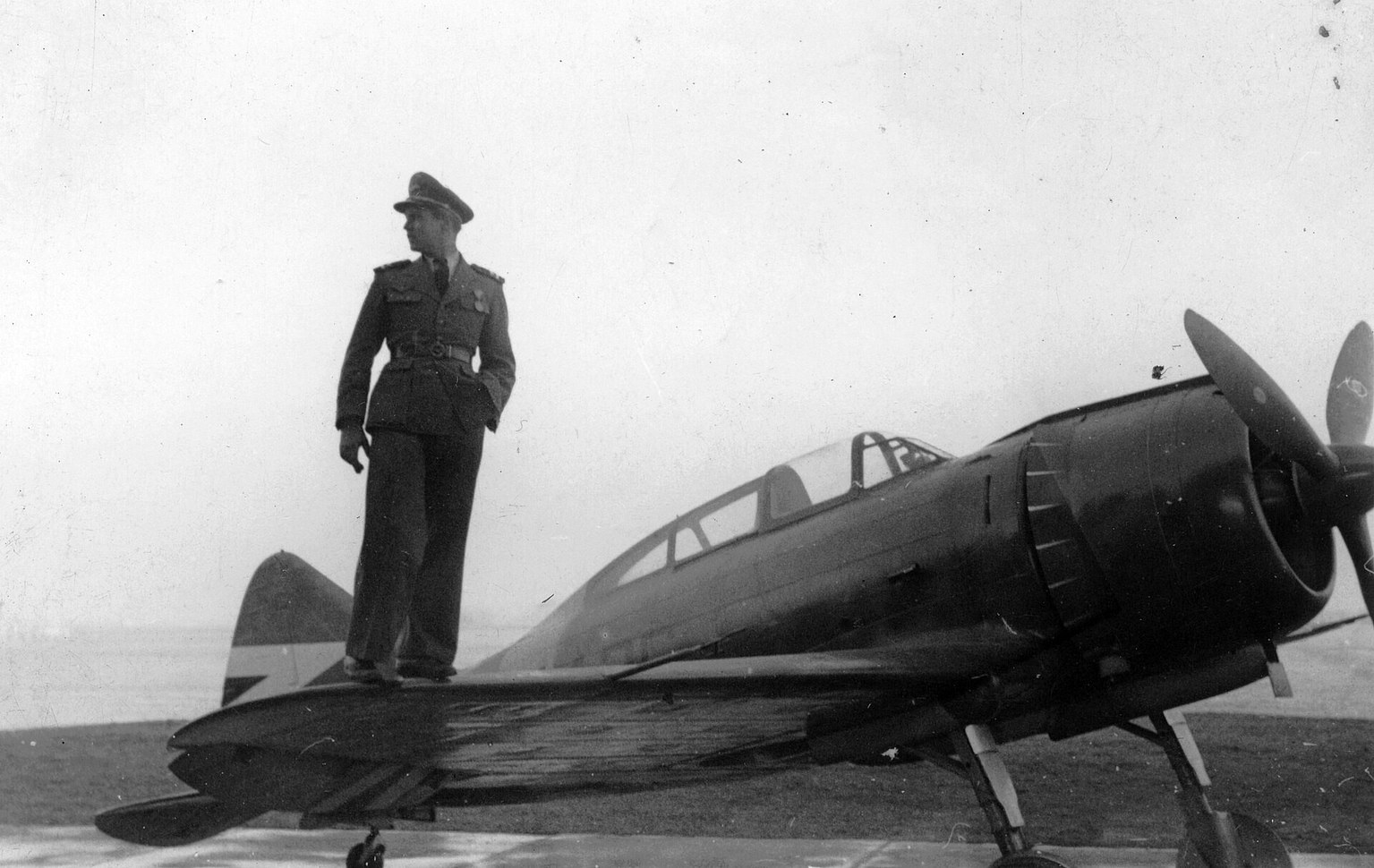
Hungary took the opposite view. Facing German reluctance to supply modern fighters for Hungarian home defence, the Magyar Királyi Honvéd Légierő turned to Italy and bought the Re.2000 in quantity — roughly seventy aircraft — along with a production licence. Built and modified in Hungary, the type became the MÁVAG Héja (“Hawk”). The first Héja I aircraft kept the Falco’s essential shape but added pilot armour, a radio and an extra self-sealing fuel tank; even so, the original large wing tanks remained troublesome and prone to leaking.
The Héja saw its hardest fighting on the Eastern Front. Hungarian fighter units flew it during the 1942 Fall Blau offensive in the southern USSR, escorting bombers and tangling with Soviet fighters and the heavily armoured Il-2 Sturmovik. In the much-quoted action near Davidovka on 9 August 1942, a small formation of Héjas engaged a mixed Soviet force of Il-2s and LaGG-3s, claiming several kills for the loss of one aircraft. The type also produced Hungary’s first fighter ace of the war. But it was hard flying: the Héja’s landing gear was fragile, it could be unforgiving near the stall, and it suffered a string of accidents in its first weeks of combat. The war’s most-remembered Héja moment was a tragedy — the death of Lt István Horthy, son of Hungary’s Regent, in a crash on 20 August 1942.
Hungarian industry then did something remarkable for a small nation: it effectively re-engineered the aircraft. The Héja II swapped the Italian engine for a Hungarian one, fitted better Hungarian machine guns, and — crucially — replaced the big integral wing tanks with a large number of small tanks, which both reduced the fire risk and improved handling by cutting fuel sloshing. By then, however, the design was aging fast against newer Soviet fighters, and the Héja II spent its career largely in home defence and training roles rather than front-line combat.
Even so, the Hungarian chapter is the richest in the whole Re.2000 story. It is where the Falco actually fought sustained battles, where it produced aces and casualties, and where its design flaws were confronted and partly fixed by engineers who could not simply order a replacement fighter from abroad. If the Italian career is a study in hesitation, the Hungarian one is a study in making the best of what you have.
Sweden: the J 20 and the price of neutrality
Sweden’s need was different again. Neutral, surrounded by a war it wanted no part of, and unable to buy fighters from the major powers, Sweden shopped where it could — and Italy was willing to sell. Between 1941 and 1943 the Swedish air force took delivery of sixty Re.2000s, designating them J 20. Concentrated in the F10 wing at Bulltofta near Malmö, in the country’s exposed southern tip, the J 20 was the fastest fighter Sweden had at the time.
Its mission was interception: chasing down the German and Allied aircraft that strayed, deliberately or not, into Swedish airspace as the war churned around the Baltic. Actual combat was rare, but not unknown — on 3 April 1945 a J 20 was reportedly lost while intercepting an intruding Luftwaffe machine over southern Sweden. Swedish pilots praised the aircraft’s speed and performance and, like everyone else who flew the type, cursed the maintenance it demanded. Worn out by war’s end, the surviving J 20s were retired in July 1945; one was set aside for preservation and today anchors the type’s best-known surviving example.
Sweden’s use of the Falco is a quiet reminder that the war’s story is not only about the belligerents. Neutral states had to defend their skies too, often with whatever hardware the arms market would let them buy. In the J 20, Sweden found a fast, agile interceptor that did its unglamorous job well enough that it almost never had to fight — and in doing so gave the Reggiane Re.2000 the steadiest, least dramatic, and arguably most successful career of its three national lives.
The Reggiane Re.2000 Falco: five more things worth knowing
The details that turn a footnote fighter into one of the most quietly fascinating aircraft of the war — the wing, the company, the rivals, the reputation, and the verdict of history.
11The Reggiane Re.2000’s wing: a structural idea ahead of its timeWhy the fuel-in-the-wing concept was brilliant and dangerous at once+
The heart of the Falco’s design was its wing, and it repays a closer look. Rather than bolt fuel tanks into an otherwise conventional structure, Reggiane’s engineers made the wing’s internal cells — formed by a multi-spar, multi-cell layout usually described as five spars — do double duty as sealed fuel containers. This is a genuinely advanced idea; “wet wing” and integral-tank construction became standard on later generations of aircraft precisely because it saves weight and volume. In 1939, on a fighter, it was bold.
The problem was survivability. Combat aircraft of the period increasingly carried self-sealing tank liners that could close small punctures and reduce fire risk. Retrofitting that protection into a structure where the fuel was the wing was awkward at best. Italian evaluators saw a fighter that, if hit in the wing, might burn — and in an era of rifle-calibre and heavy machine-gun fire aimed squarely at wings and tanks, that was a defensible worry. The Hungarians ultimately solved it on the Héja II by abandoning the big cells for many small tanks. The Falco thus embodies a recurring engineering truth: an idea can be simultaneously ahead of its time and wrong for its moment.
12Who built the Falco? Officine Meccaniche Reggiane and the Caproni empireThe engineering firm behind the fighter, and why that mattered+
Officine Meccaniche Reggiane, based at Reggio Emilia, was not primarily a fighter house. It was a broad engineering and manufacturing concern — building railway equipment and other heavy machinery — that had come within the orbit of Giovanni Battista Caproni’s aviation industrial group. Aircraft were a newer venture for the firm, and the Re.2000 was its bid to join the front rank of Italian fighter builders.
That outsider status cut both ways. It gave Reggiane the freedom to design cleanly, borrowing American structural ideas without the institutional habits of the established fighter firms. But it also meant the company lacked the political weight of a Macchi or a Fiat inside the Italian procurement system — a real disadvantage when a cautious air ministry was deciding whose fighter to build in quantity. The Re.2000’s later descendants, the Re.2001 and Re.2005, would finally win Reggiane the reputation the Falco earned in the air but not on paper.
13Re.2000 vs Macchi C.200 vs Fiat G.50: the 1939 Italian fighter contestHow the Falco stacked up against the designs Italy chose instead+
In 1939 Italy had, in effect, three modern monoplane fighters competing for attention: the Fiat G.50 Freccia, the Macchi C.200 Saetta and the Reggiane Re.2000 Falco. All three shared the same fundamental handicap — a radial engine of only around 840 to 1,000 hp, leaving them underpowered and lightly armed by northern-European standards, typically with just two heavy machine guns.
Of the three, the Falco was arguably the most aerodynamically sophisticated and the longest-legged, with a fully enclosed canopy and stressed-skin construction. Yet Italy standardised on the G.50 and, especially, the C.200, whose development path led to the excellent DB 601-powered C.202 Folgore. The Reggiane’s own answer to the C.202 was the parallel DB-engined Re.2001. Comparing the three is really a study in how procurement, not pure merit, shapes which aircraft a nation flies — the Falco was competitive with, and in agility perhaps superior to, the fighters that were chosen over it.
14The Reggiane Re.2000’s reputation, then and nowFrom wartime curiosity to enthusiast’s favourite+
At the time, the Falco was a minor type — too few in Italian service to make headlines, overshadowed on the Eastern Front by German fighters, and quietly efficient in neutral Swedish hands. It left little mark on the war’s grand narrative. Among aviation enthusiasts and historians, though, its reputation has grown, precisely because of the paradox at its core: a beautiful, agile, advanced fighter that its own air force declined to use.
That paradox makes the Re.2000 a favourite subject for “what if” discussion and for modellers and warbird researchers. It also makes it a useful teaching example: a reminder that the aircraft a country flies in wartime are chosen by committees, budgets and factory schedules as much as by test-pilot reports. The Falco flew wonderfully and was still, in the end, mostly left on the ground at home.
15The final verdict: was the Reggiane Re.2000 Falco a good fighter?Weighing agility and range against engine, armament and armour+
On balance, the honest answer is: a very good airframe wrapped around real weaknesses, at a moment that punished those weaknesses. Its strengths were genuine — excellent manoeuvrability, long range for its class, modern construction and fine visibility. Its weaknesses were equally real — an unreliable engine, light armament by 1940s standards (two heavy machine guns), and the vulnerable integral fuel tanks that so alarmed Italian officials.
Judged as a 1939 design, it was among the best-conceived fighters available to Italy. Judged as a weapon that had to survive the air war of 1942–44 against ever-better opposition, it was increasingly outclassed — a fate it shared with almost every early-war lightweight fighter. The fairest verdict is the one this page has kept returning to: the Falco’s greatest achievement was to be the foundation of a better family. As the Re.2000, it was a thoroughbred that never got the race it deserved. As the ancestor of the Re.2001 and Re.2005, it more than justified itself.
The Reggiane Re.2000 Falco in twelve stories
From De Bernardi’s first flight to the Héja over Kursk and the J 20 over Malmö — the moments that made the Falco’s odd, international career. Swipe or use the arrows.
De Bernardi’s verdict
When record-breaking pilot Mario De Bernardi first flew the Falco in May 1939, the aircraft handled well enough to convince Reggiane it had a world-class fighter.
Read the full story
Out-turning the Messerschmitt
The most repeated claim about the Re.2000 is that, in mock dogfights, Italian pilots found it could out-turn the Macchi C.200 and even the Bf 109E.
Read the full story
A report that killed a fighter
A single unfavourable technical assessment — focused on the unprotected wing fuel tanks — is widely credited with derailing large Italian orders.
Read the full story
A handful in Italian service
Only a small number of Re.2000s ever wore Regia Aeronautica colours in front-line units, and pilots’ opinions of them were decidedly mixed.
Read the full story
Fighters off a battleship
In one of its stranger roles, a small batch of Re.2000s was modified as catapult fighters to be flung off Italian battleships.
Read the full story
The Falco becomes the Héja
Hungary embraced the aircraft Italy shrugged off, buying ~70 and licence-building it as the MÁVAG Héja (“Hawk”).
Read the full story
Kursk, Davidovka and the Il-2s
Hungarian Héjas fought over the southern USSR in 1942, escorting and dogfighting against Soviet fighters and the fearsome Il-2 Sturmovik.
Read the full story
The loss of István Horthy
On 20 August 1942 the Héja was at the centre of a national tragedy when Lt István Horthy, son of Hungary’s Regent, was killed flying one.
Read the full story
A hawk with sharp claws
For all its agility, the Héja earned a reputation for tricky handling — a fragile undercarriage and a readiness to stall and spin.
Read the full story
The J 20 guards a neutral sky
Unable to buy fighters elsewhere, neutral Sweden bought 60 Falcos as the J 20 to defend its airspace from both sides.
Read the full story
One shot fired in anger
Sweden’s Falcos rarely fought, but on at least one occasion the J 20 tangled with an intruding Luftwaffe aircraft — and paid a price.
Read the full story
First of a great line
The radial Falco’s most important flights may have been the ones that led somewhere else — to the DB-engined Re.2001, and ultimately the superb Re.2005.
Read the full story
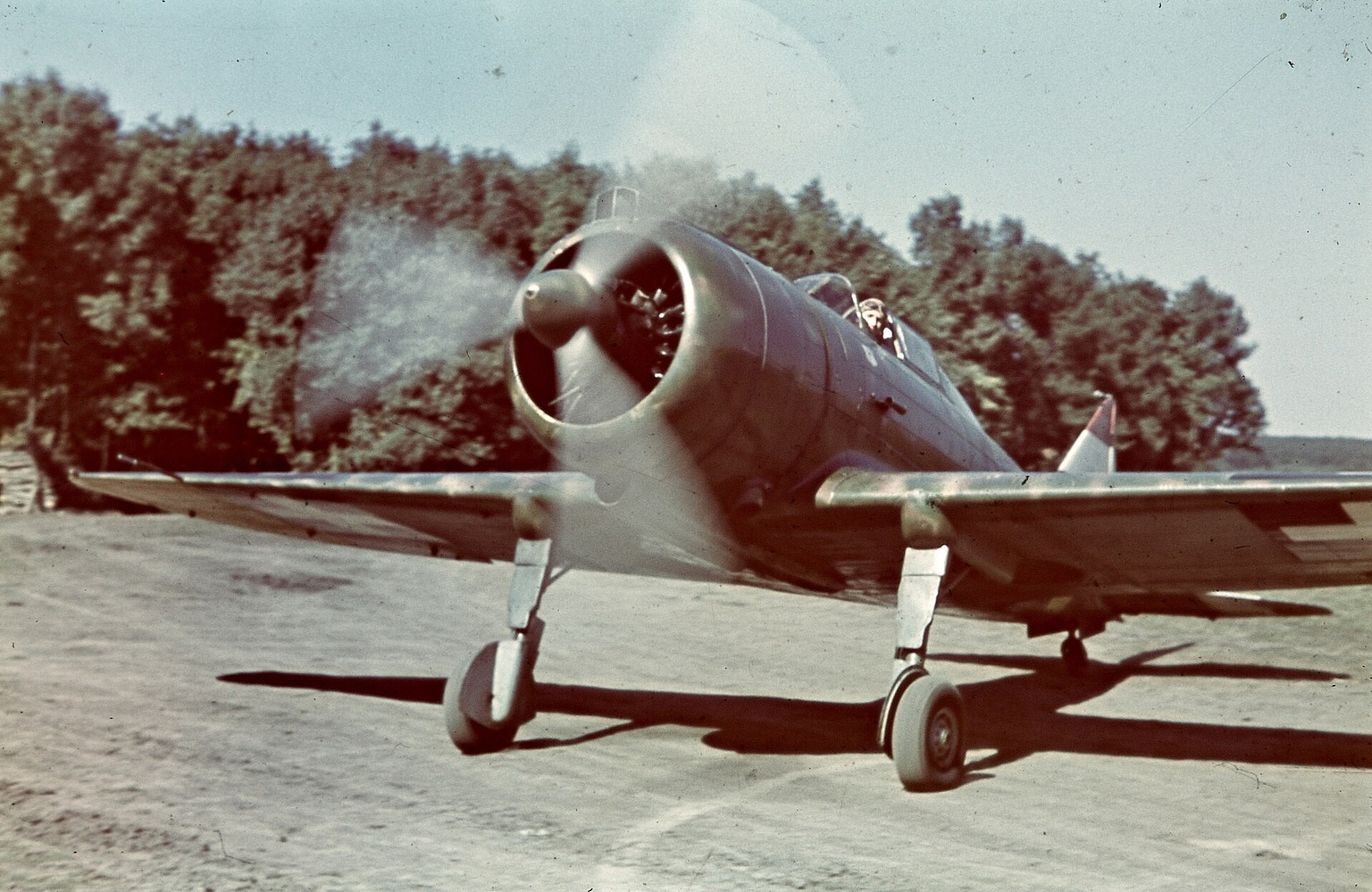
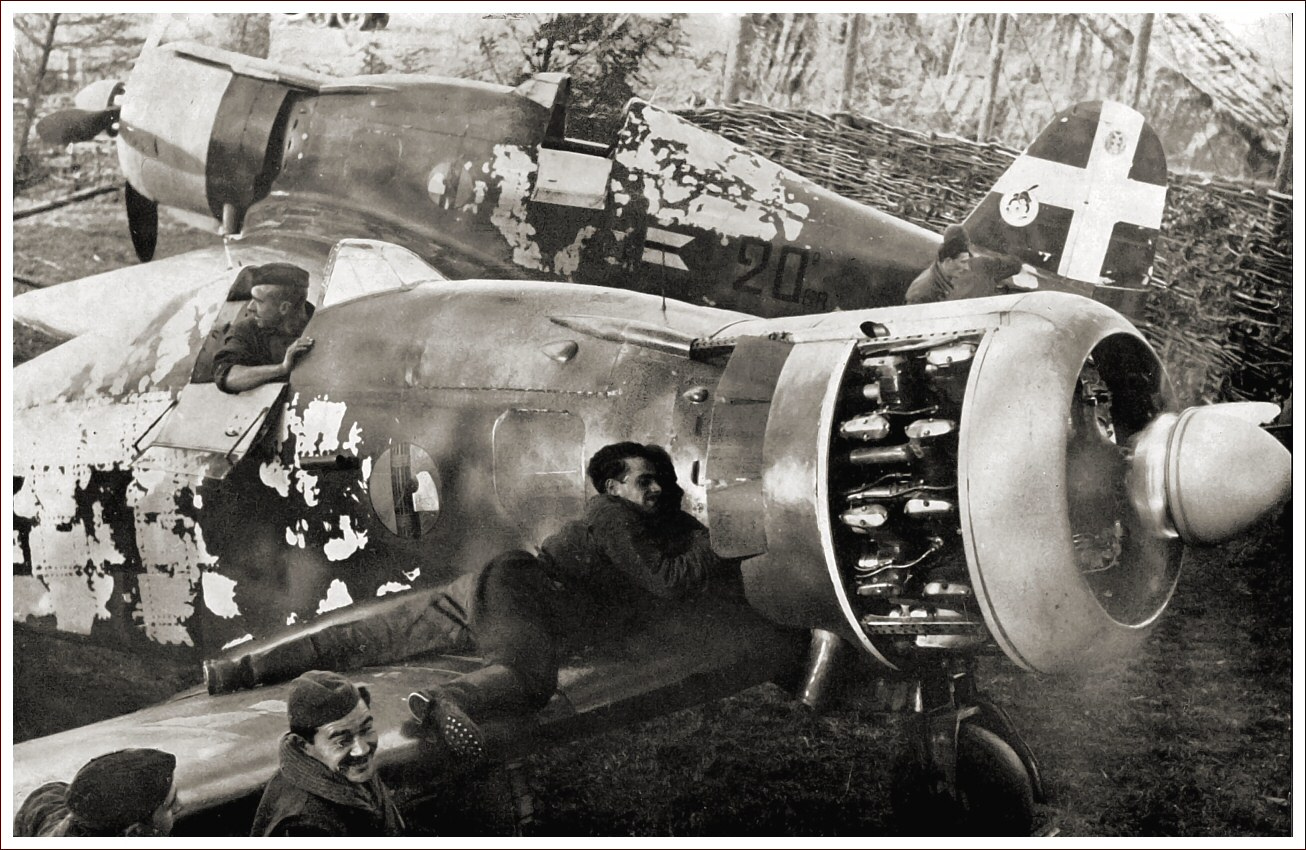
Reggiane Re.2000 Falco: photographs
Real, credited photographs — the preserved Swedish J 20, period Italian Falcos, the naval catapult variant and Hungarian Héjas. Click any image to enlarge.
The Reggiane Re.2000 Falco on video
The Falco is an obscure type with no major-documentary coverage; this dedicated introduction is the most-watched treatment of the aircraft we could verify.
“Reggiane Re.2000 Falco — introduction” (Alessandro Colace researches, 2023). Verified on YouTube: ~417,000 views at time of writing — by a wide margin the most-viewed dedicated video on this niche aircraft. Views and channel figures change over time.
Where the Reggiane Re.2000 Falco served
One nation designed and built it — and two others gave it a career. Toggle the categories to see origin, wartime service and combat theatres, the export operators (Hungary and Sweden), and where airframes survive today. Hover or tap a country for detail.
The Reggiane Re.2000 Falco in combat: by the numbers
Most of the type’s fighting was done in foreign hands. Figures are approximate and drawn from published histories — treat them as indicative, not exact.
Reggiane Re.2000 Falco: your questions answered
Can I fly in a Reggiane Re.2000?+
No. The Reggiane Re.2000 Falco is a rare WWII museum piece — no example is airworthy, and there is no Re.2000 (or Héja or J 20) anywhere in the world that you can book a flight in. The best-known survivor is a static Swedish J 20 preserved at the Swedish Air Force Museum in Linköping.
The good news: you absolutely can fly in a genuine ex-military jet today. MiGFlug arranges real fighter and jet-trainer flights — from the L-39 Albatros and F-104 Starfighter to the MiG-15, T-33, Vampire and more — where you sit up front, take the controls and fly aerobatics with a professional pilot. See the current line-up at migflug.com/flights-prices. (MiGFlug does not operate the Re.2000 — no one does.)
Was the Reggiane Re.2000 a copy of the Seversky P-35?+
No — but the resemblance is real and was noticed from the start. The Re.2000 shared the P-35’s general layout and the American school of stressed-skin construction, and designer Roberto Longhi had worked in the US aircraft industry. It is best described as strongly influenced by American practice rather than copied. Its multi-spar integral-tank wing, undercarriage and aerodynamics were Reggiane’s own.
Why did Italy build so few Re.2000s for itself?+
Two reasons are usually given. First, an official report flagged the unprotected integral fuel tanks in the wing as a fire and battle-damage risk — and self-sealing protection was hard to add to a structure that was also the fuel tank. Second, Italy was already committed to producing the Macchi C.200 and was reluctant to disrupt that programme. So only a handful entered Italian front-line service, plus a small batch of naval catapult fighters — and the type was left to sell abroad instead.
What were the Hungarian Héja and the Swedish J 20?+
They were the Re.2000’s real operational careers. Hungary bought around 70 aircraft and licence-built the type as the MÁVAG Héja (“Hawk”), flying it on the Eastern Front and later producing a heavily revised, all-Hungarian Héja II. Sweden — neutral and unable to buy fighters elsewhere — bought 60 as the J 20 to intercept intruders over its territory. Between them, Hungary and Sweden flew far more Falcos, for far longer, than Italy ever did.
How good was the Re.2000 in a dogfight?+
By reputation, very good. Italian test pilots reportedly found it could out-turn both the Macchi C.200 and the Messerschmitt Bf 109E in mock combat, thanks to its light structure and large, efficient wing. Those claims come from trials and recollections rather than combat statistics, so they carry a note of caution — but agility is the one quality nearly every account of the type agrees on. Its weaknesses were engine reliability and, in some operators’ hands, tricky handling near the stall.
What engine did the Reggiane Re.2000 use?+
A Piaggio P.XI RC.40 — a 14-cylinder, two-row air-cooled radial of roughly 986 hp (about 1,000 hp), driving a three-blade constant-speed propeller. The engine was the type’s Achilles’ heel: it had a reputation for unreliability that frustrated Italian, Hungarian and Swedish crews. The later Re.2001 fixed this by switching to an inline Daimler-Benz DB 601.
Are there any surviving Reggiane Re.2000s?+
Very few. There is no airworthy example anywhere. A Swedish J 20 is preserved at the Swedish Air Force Museum (Flygvapenmuseum) in Linköping — the best-documented survivor. An Italian catapult-fighter airframe is also reported to survive. Beyond those, the Falco exists mostly in photographs and museum records; exact survivor details vary between sources, so we hedge them here.
How is the Re.2000 related to the Re.2001 and Re.2005?+
It is their ancestor. The radial Re.2000 was the first of the Reggiane fighter family. Re-engined with the inline Daimler-Benz DB 601 it became the far more effective Re.2001 Falco II; the Re.2002 Ariete was a ground-attack development; and the line peaked with the DB 605-powered Re.2005 Sagittario, widely rated among the best fighters any Axis nation built. The Falco was the design on which all of that was learned.
What does “Falco” mean, and why are there two Italian “Falco” fighters?+
“Falco” is Italian for “falcon.” Confusingly, two very different Italian fighters carried the name in 1939: the Fiat CR.42 Falco, a fabric-covered biplane, and the modern all-metal Reggiane Re.2000 Falco monoplane described here. They are unrelated designs from rival firms that happened to share a name. The Reggiane line then reused it — the DB-engined Re.2001 was the Falco II.
Did the Reggiane Re.2000 really out-turn the Bf 109?+
That is the claim, and it comes from Italian mock-combat trials rather than wartime dogfight records, so it should be read with that caveat. What is well supported is that the Falco was an exceptionally agile aircraft with a light structure and a large, efficient wing — qualities that make a tight turn plausible against a heavier opponent like the Bf 109E. Turning ability, though, is only one part of air combat; speed, climb, firepower and reliability all mattered too, and there the Falco was more mixed.
You can’t fly the Falco — but these, you can
No Reggiane Re.2000 will ever fly again. But the thrill the Falco’s pilots knew — a light fighter, a hard-turning aircraft, the horizon rolling around the canopy — is still bookable today. With MiGFlug you fly a genuine ex-military jet, hands on the stick, aerobatics and all.

More Italian WWII fighters in the museum
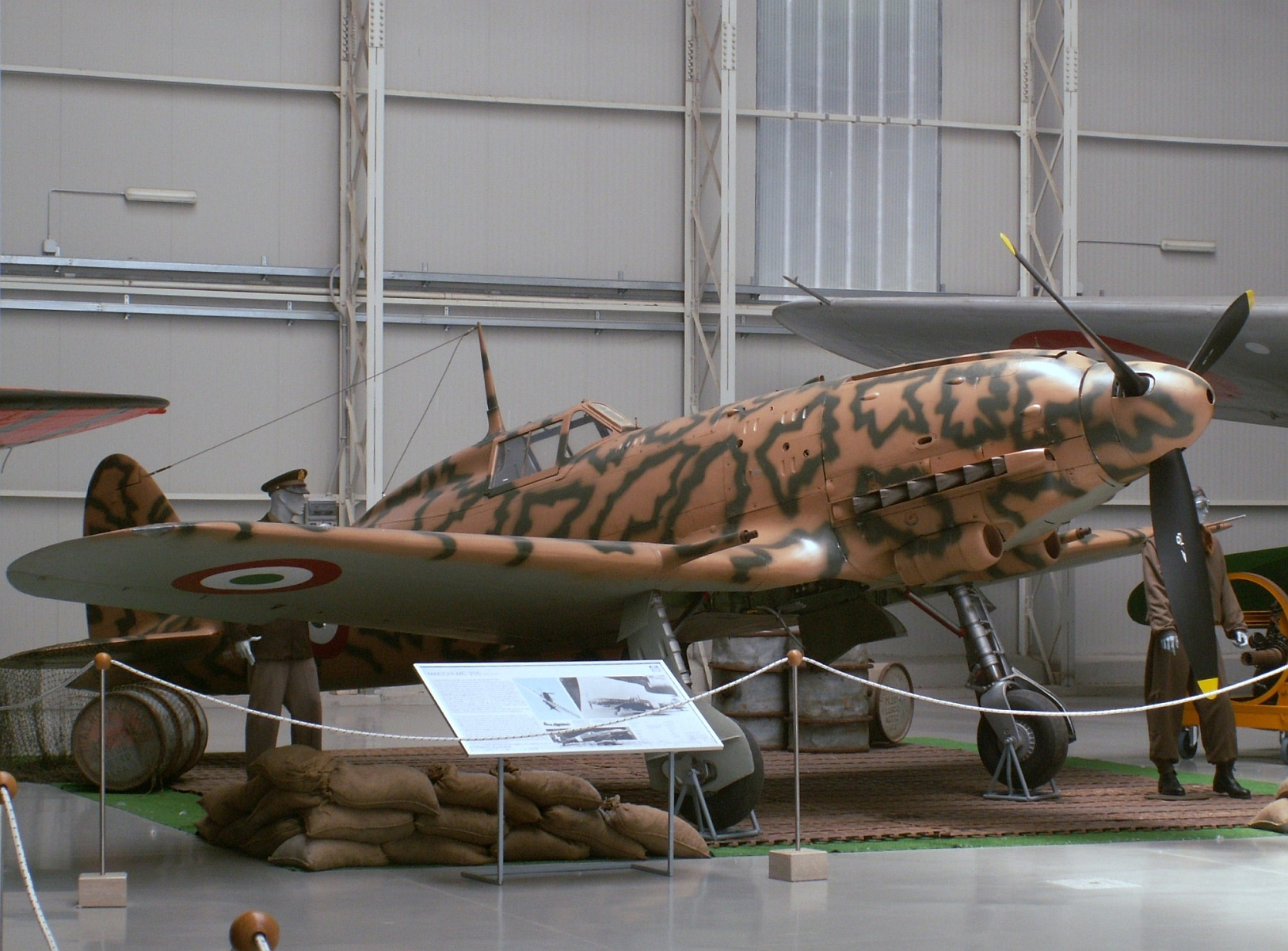 Macchi C.205 VeltroThe DB 605-powered Macchi that many rate the finest Italian fighter of the war — the rival the Falco’s descendants finally matched.View in the museum
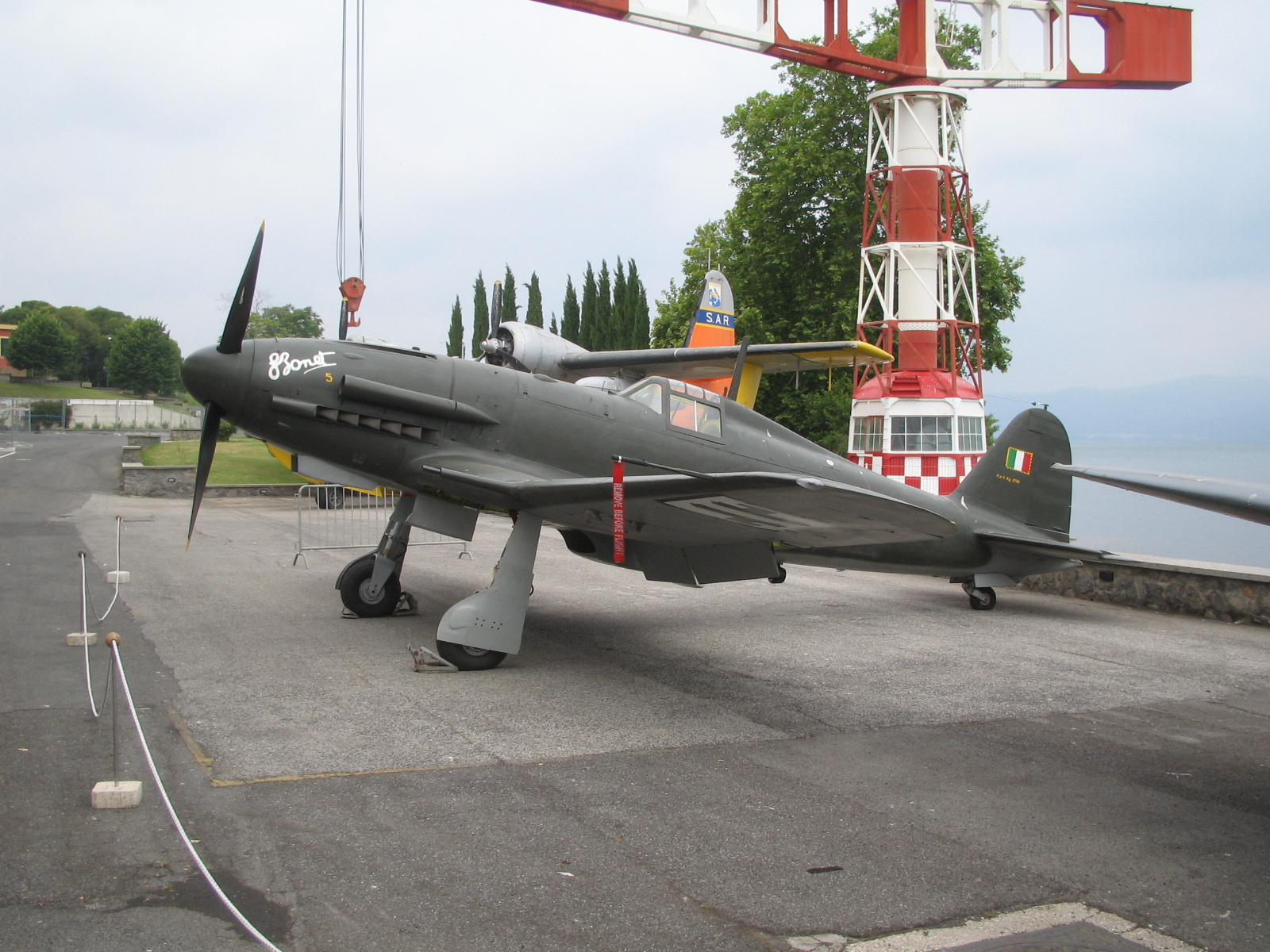 Fiat G.55 CentauroFiat’s superb late-war “Serie 5” fighter — a direct contemporary of the Reggiane Re.2005.View in the museum
 Fiat G.50 FrecciaThe stubby Fiat monoplane whose production Italy prioritised over more modern designs like the Falco.View in the museum
 Sources & further reading