
Grumman OV-1
“Mohawk”
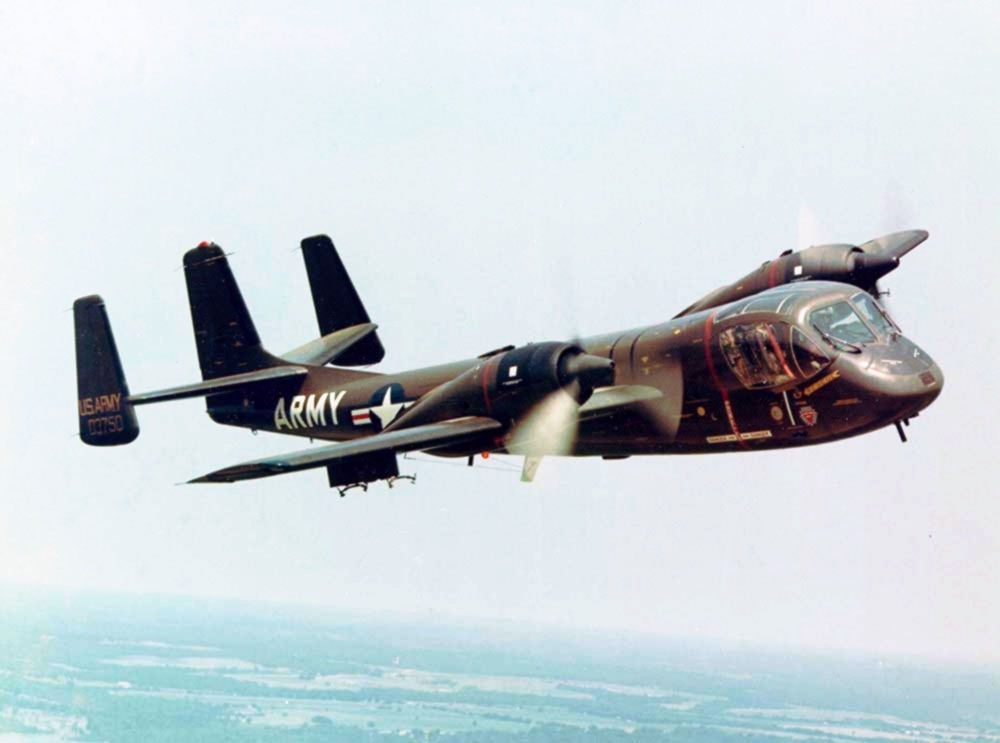
The U.S. Army’s own battlefield spy — a bug-eyed, triple-tailed turboprop with ejection seats, built to find the enemy by radar, infrared and camera from the jungles of Vietnam to the deserts of Iraq.
The OV-1 Mohawk: the U.S. Army’s own eyes over the battlefield
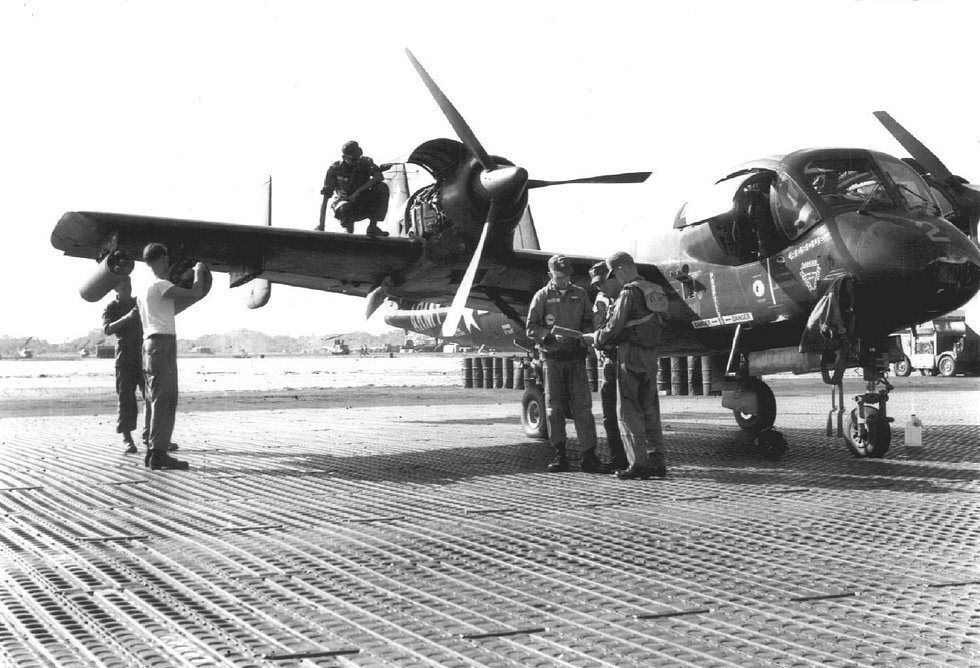
In the late 1950s the U.S. Army and Marine Corps drew up a joint requirement for a rugged battlefield observation aircraft — something that could operate from short, rough forward strips, survive ground fire, and bring back hard intelligence on what the enemy was doing just over the next ridge. Grumman’s answer was the G-134, and it first flew on 14 April 1959. The Marines soon dropped out, but the Army pressed on, and the aircraft entered service in 1961 as the OV-1 Mohawk — first with U.S. Army units based in West Germany.
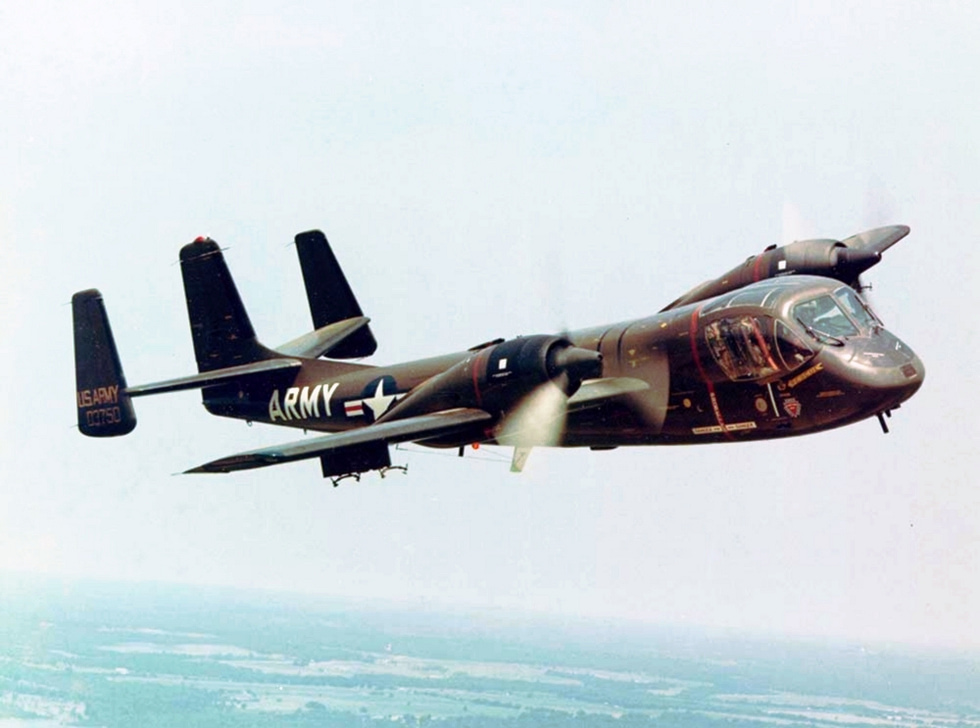
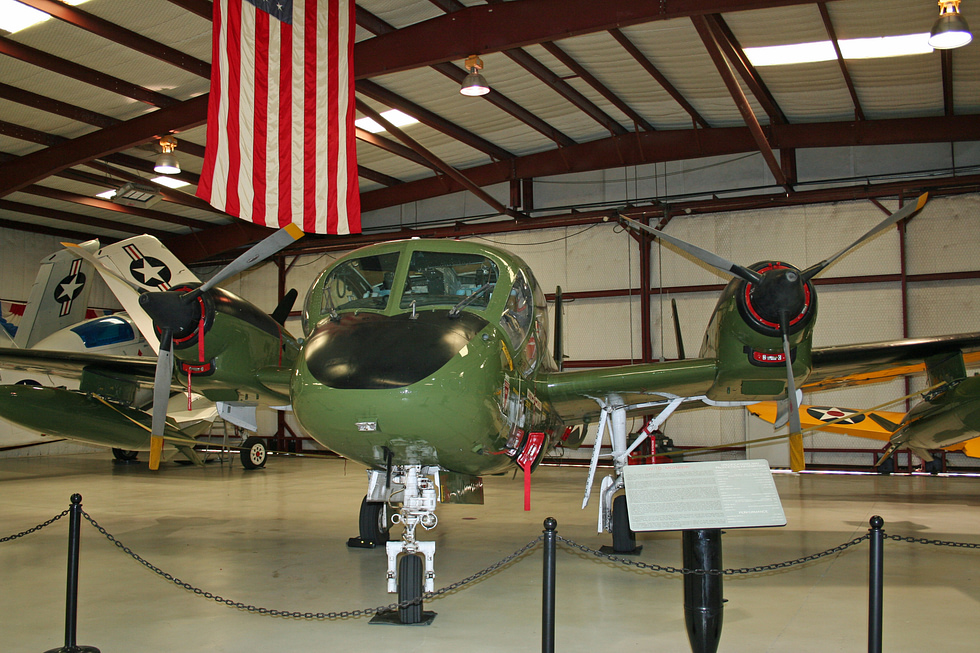
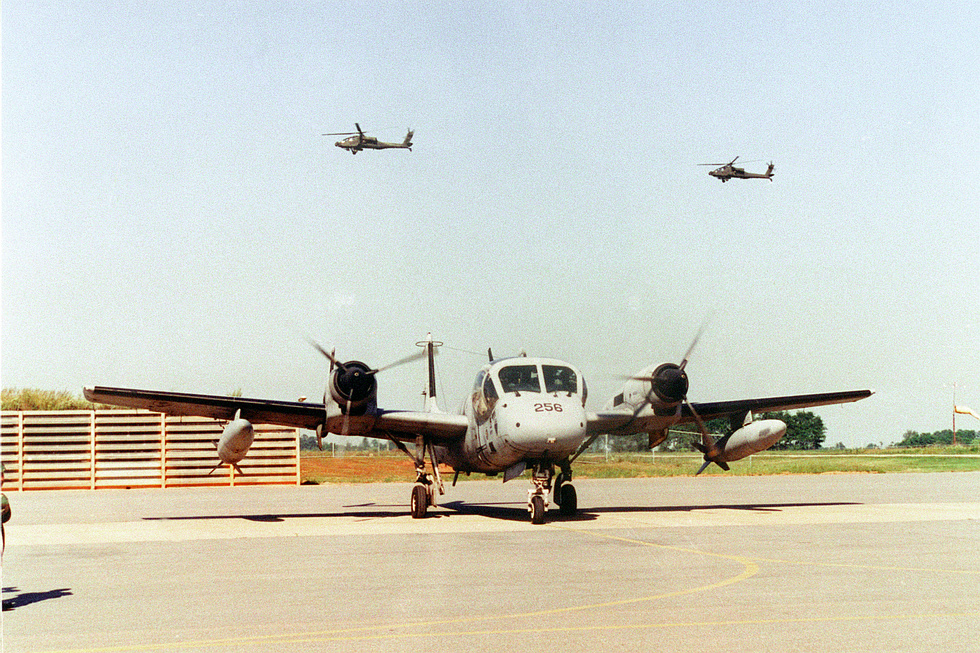
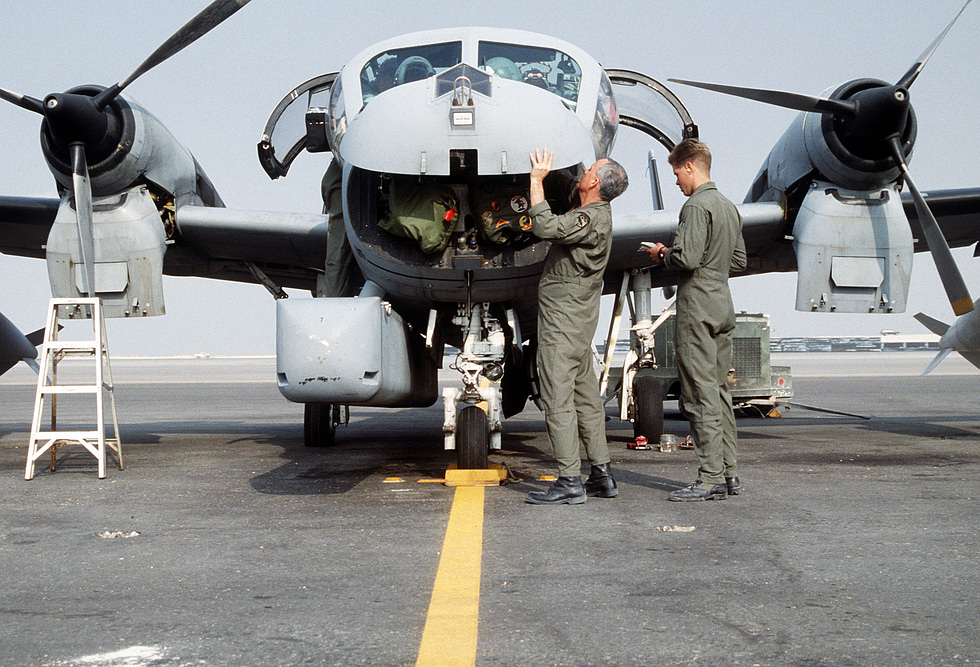
It looked like nothing else in Army service. Two Lycoming T53 turboprops — the same engine family that powered the UH-1 Huey — hung from a stubby wing; three vertical tails rose from the back; and the crew of two sat side-by-side under a huge, bulged “greenhouse” canopy that let them look almost straight down. Most striking of all, it carried Martin-Baker ejection seats, making it one of very few fixed-wing aircraft the Army ever sent into combat that its crews could bang out of.
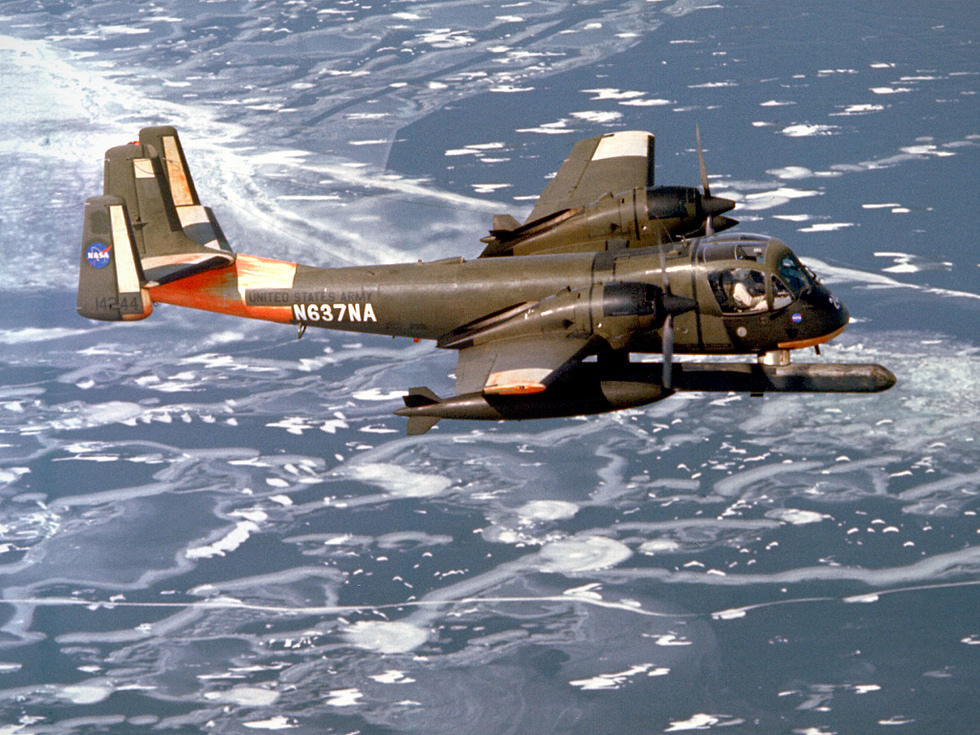
The Mohawk’s real weapon was its sensors. Different versions carried cameras (OV-1A), a side-looking airborne radar in a long belly “canoe” (OV-1B), or infrared scanners (OV-1C), and the definitive OV-1D could swap between radar and infrared pallets. Deployed to Vietnam from 1962, the type flew relentless day-and-night reconnaissance. Armed “JOV-1” Mohawks carrying rockets and gun pods sparked a bitter turf war with the Air Force — settled by the 1966 Johnson-McConnell agreement, which stripped the Army of its armed fixed-wing ambitions. The Mohawk soldiered on as an unarmed sensor platform over Korea, Cold-War Europe and, finally, Desert Storm, before retiring in 1996.
01The Grumman OV-1 Mohawk’s inter-service war: why the Army couldn’t keep its armed Mohawks
From the 1948 Key West Agreement onward, the U.S. Air Force jealously guarded control of fixed-wing combat aircraft. So when the Army sent armed JOV-1 Mohawks — bristling with rocket pods, gun pods and even small bombs — into Vietnam from 1962, the Air Force objected loudly that the Army was building its own private air force. The dispute was formally resolved by the 1966 Johnson-McConnell agreement, in which the Army gave up armed fixed-wing aircraft in exchange for a free hand with armed helicopters. The armed Mohawk was effectively legislated out of existence, and the type spent the rest of its long career as an unarmed reconnaissance aircraft — a rare case of an aircraft’s mission being decided by a memo rather than the enemy.
What makes the OV-1 Mohawk special
A cockpit built to see everything
The Mohawk’s defining feature is its bulged “bug-eyed” canopy. The two crew sat side-by-side with glazing that curved down past their elbows, giving near-vertical downward vision so the observer could spot movement directly beneath the aircraft. Uniquely for an Army fixed-wing type, both sat on Martin-Baker ejection seats in an armored cockpit — survivability designed in from the start.
Three tails and two Huey engines
Power came from two Lycoming T53 turboprops, the same engine family as the UH-1 Huey, driving the Mohawk to around 490 km/h — fast for an observation aircraft. An early T-tail caused handling trouble, so Grumman fitted the distinctive triple vertical tail. Rugged landing gear and short-field performance let it work from crude forward strips close to the front line.
Radar, infrared and cameras
The Mohawk was a flying sensor truck. The OV-1B carried the AN/APS-94 side-looking airborne radar (SLAR) in a long ventral pod that imaged terrain and moving vehicles well off to the side; the OV-1C added the AN/AAS-24 infrared scanner for night work; and all versions could carry cameras. The final OV-1D could swap radar and infrared mission pallets between sorties.
02The Grumman OV-1 Mohawk’s ejection seats: an Army fixed-wing rarity
Ejection seats were standard on jet fighters, but almost unheard-of on a slow, propeller-driven Army observation aircraft. The Mohawk broke that mould with Martin-Baker Mk. J5 seats (later improved to the J5D, with a rocket pack that allowed safe ejection at very low speed, reportedly down to around 60 knots). For crews flying low and slow over hostile jungle — exactly where ground fire was deadliest — that escape system saved lives, and it set the Mohawk apart from every other fixed-wing aircraft in Army green.
03The Grumman OV-1 Mohawk’s sensors: SLAR, infrared and the all-seeing night mission
The Mohawk’s side-looking airborne radar was its signature trick. Flying a straight line parallel to the front, the OV-1B’s AN/APS-94 built up a radar “photograph” of the ground off to one side, and a moving-target mode could pick out vehicles and troops on the move — by day, by night, and through cloud that blinded cameras. The OV-1C’s infrared scanner complemented it, sensing the heat of engines and campfires in darkness. Together they gave Army commanders a near-continuous, all-weather picture of enemy movement that no pair of human eyes could match.
Full OV-1 Mohawk specifications
Airframe & Performance
- クルー
- 2 (pilot + observer, side-by-side)
- 長さ
- ~12.5 m (41 ft)
- 翼幅
- ~14.63 m (48 ft, OV-1D)
- 身長
- ~3.86 m (12 ft 8 in)
- Max takeoff weight
- ~8,214 kg (18,109 lb, OV-1D)
- Max speed
- ~491 km/h (305 mph)
- 巡航速度
- ~330 km/h (205 mph)
- サービス天井
- ~7,600 m (25,000 ft)
- Ferry range
- ~2,400 km (varies by fit)
- Escape system
- 2 × Martin-Baker ejection seats
Propulsion & Systems
- Engines
- 2 × Lycoming T53 turboprop
- Power (each)
- ~1,150–1,400 shp (T53-L-701 on OV-1D)
- Sensors
- SLAR (AN/APS-94), IR (AN/AAS-24), cameras
- Armament (armed JOV-1)
- Rockets, gun pods, bombs (later withdrawn)
- First flight
- 14 April 1959
- Introduced
- 1961 (U.S. Army)
- Built
- ~380 (some sources 375)
- Unit cost
- No reliable public figure
- Cost per flight hour
- No reliable public figure
04The Grumman OV-1 Mohawk’s operating costs: why no reliable dollar figure exists
The Mohawk was a U.S. government aircraft, procured and operated inside Army budgets rather than sold on an open market, so a clean flyaway unit price and a published cost-per-flight-hour simply do not exist in the public record. Figures that circulate online are almost always estimates or back-calculations, not sourced government numbers. We have deliberately left both the unit cost and the cost-per-flight-hour as “no reliable public figure” rather than repeat a number we cannot stand behind — any precise dollar value you see attached to an OV-1 should be treated with caution.
From Cold-War eyes to Desert Storm veteran
A joint requirement
The Army and Marine Corps issue a joint requirement for a rugged battlefield observation aircraft; Grumman’s G-134 design wins.
First flight
The prototype flies on 14 April with its triple tail and glazed nose. The Marines soon withdraw, leaving the Army as the sole customer.
Enters service
The OV-1 Mohawk joins U.S. Army units, first deploying to West Germany for Cold-War battlefield surveillance.
Into Vietnam
Armed JOV-1 Mohawks deploy to South Vietnam, flying armed reconnaissance — and starting a turf war with the Air Force.
Disarmed by memo
The Johnson-McConnell agreement ends the Army’s armed fixed-wing role; the Mohawk becomes a pure sensor platform.
A Mohawk vs a MiG
Capt. Ken Lee is widely reported to have downed a North Vietnamese MiG-17 — the only claimed U.S. Army fixed-wing air-to-air kill of the war.
Desert Storm
Sixteen Mohawks fly long battlefield-surveillance missions over Iraq and Kuwait with no combat losses.
The last Mohawks
The U.S. Army retires the type in September 1996; Argentina flies its ex-Army OV-1Ds on until around 2015.
From the cockpit: twelve OV-1 Mohawk stories
A plane the Marines walked away from
The Mohawk began as a joint Army-Marine project; the Marines dropped out and left it to the Army.
Read the full story
Grumman’s bug-eyed prototype
The prototype flew on 14 April 1959 with its triple tail and deeply glazed cockpit.
Read the full story
An Army plane you could bang out of
Uniquely for an Army fixed-wing type, the Mohawk carried Martin-Baker ejection seats.
Read the full story
The armed JOV-1 experiment
Six armed Mohawks deployed to Vietnam in 1962 carrying rockets and gun pods.
Read the full story
The plane the Air Force wanted grounded
The armed Mohawk triggered a turf war settled by a 1966 agreement.
Read the full story
The Mohawk that reportedly downed a MiG
Capt. Ken Lee is widely reported to have shot down a North Vietnamese MiG-17 in 1968.
Read the full story
Seeing in the dark
Infrared and side-looking radar let the Mohawk map the enemy at night and through cloud.
Read the full story
The canoe under the belly
The OV-1B carried a long side-looking radar pod that imaged movement miles away.
Read the full story
Eyes on the Fulda Gap
From West Germany, Mohawks watched the inner-German border for a Soviet advance.
Read the full story
Thirty years on the DMZ
Mohawks flew border surveillance along the Korean DMZ until the type retired.
Read the full story
The Mohawk’s last war
In 1991, sixteen Mohawks flew long surveillance missions over Iraq with no combat losses.
Read the full story
Mohawks over the Pampas
Argentina flew 23 ex-U.S. Army OV-1Ds until around 2015 — the last military operator.
Read the full story
The OV-1 Mohawk in pictures
The OV-1 Mohawk in motion
AIRBOYD: Grumman OV-1 Mohawk (1961). Genuine period film of the new Army observation aircraft, from AIRBOYD — one of YouTube’s largest aviation archive channels.
Where the OV-1 Mohawk served
The OV-1 Mohawk’s combat record
The Mohawk was a reconnaissance aircraft, not a fighter — but it flew into harm’s way constantly, and paid for it. Its record is one of relentless surveillance under fire, a Vietnam loss list that ran into the dozens, and one famous, disputed brush with a MiG. Its clearest victories were the ones it never fired a shot to win: the enemy movements it revealed.
Compare the combat record of every military aircraft. Figures are best estimates and vary between sources.
Everything people ask about the OV-1 Mohawk
Can I fly in a Grumman OV-1 Mohawk?
What was the OV-1 Mohawk used for?
Why did an Army aircraft have ejection seats?
Did a Mohawk ever shoot down an enemy aircraft?
Which countries flew the OV-1 Mohawk?
How many OV-1 Mohawks were built, and when did it retire?
What engines did the Mohawk use?
You can’t fly the OV-1 Mohawk.
These, you can.
Some legends only live in museums — others are fuelled and waiting. MiGFlug has put civilians in real military jet cockpits since 2004.
 Fly the L-39 AlbatrosThe world’s most-flown jet trainer — aerobatics included
 Fly the F-104 Starfighter“The missile with a man in it”
 Fly the MiG-21The Cold War’s most-produced jet
 T-33シューティングスターを操縦しようAmerica’s first jet trainer
 Fly the DH VampireA piece of early jet history
 Fly the S.211Agile Italian jet trainer
 Fly the MB-326The classic Aermacchi jet
 Fly the MiG-15The Soviet legend of the Korean War
Continue the tour
Every fact, checked
- Smithsonian Air & Space — “The Last of the Mohawks”Design, the triple tail and bulged canopy, sensor variants and service to 1996.
- FAS / IRP — OV-1 intelligence-collection profileEngines, SLAR and infrared variants, ~380 built, 1996 retirement and Desert Storm.
- The War Zone — the Mohawk as light attack aircraftThe armed JOV-1 and the Key West / Johnson-McConnell inter-service dispute.
- HistoryNet — “Silent Warrior: Grumman’s OV-1 Mohawk”Variants, the T53-L-701 engines, and the Argentine and European service histories.
- The Aviation Geek Club — the Mohawk MiG-17 storyThe widely told account of Capt. Ken Lee’s 1968 air-to-air claim.
- Fort Worth Aviation Museum — OV-1 MohawkEngine details and the Israeli EV-1E “Atalef” and Argentine operator histories.
- The Ejection Site — OV-1 Mohawk seatsThe Martin-Baker Mk. J5 ejection-seat detail behind the Army’s rare escape system.
- Vintage Aviation News — Flight Test Files: OV-1CA pilot’s-eye account of flying the multi-sensor Mohawk.