
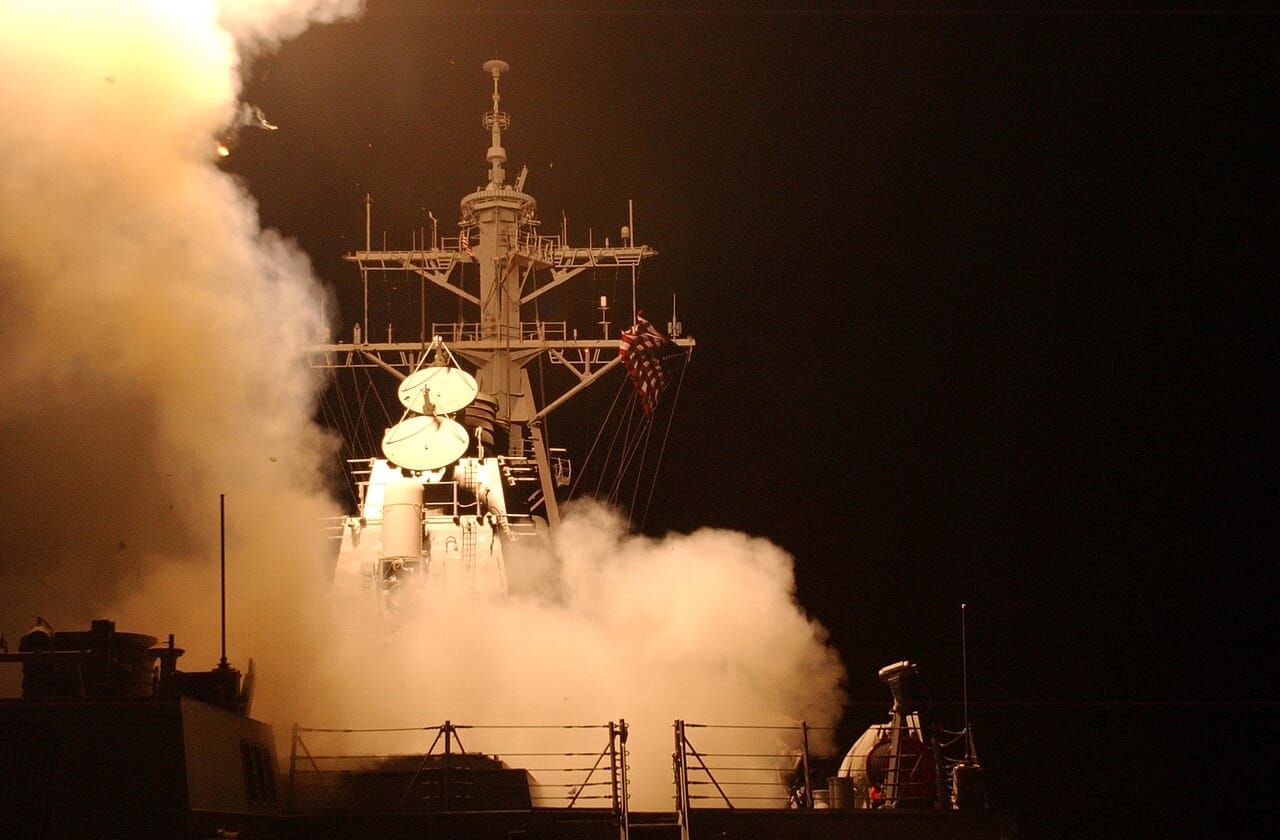
The U.S. military has fired more than 850 Tomahawk cruise missiles at Iran in four weeks of war. That number — buried in a Military Times report on March 27 — has set off alarm bells inside the Pentagon. Not because the campaign isn't working. But because of what happens next.
Related: Mines in the Street: America's Secret Weapon Against Iran's Missiles
The Numbers That Worry Washington
Before Operation Epic Fury began, the U.S. Navy had somewhere between 3,100 and 4,500 Tomahawks in inventory — analysts disagree on the exact figure. What they agree on is this: 850 missiles in four weeks is roughly a quarter of the lower estimate. Mark Cancian of the Center for Strategic and International Studies put it plainly: "It would take several years to replenish."
The production math is brutal. The latest Block V Tomahawk costs up to $3.6 million per missile. The U.S. defence industry can currently produce around 600 per year. At that rate, replacing the missiles already fired in Epic Fury alone would take 17 months of full production — assuming the line makes nothing else.
A New Variant Spotted Over Iran
Adding to the intrigue: Janes has identified what appears to be a new variant of the Tomahawk being used in the Iran campaign — photographed mid-flight and analysed by open-source researchers. The black-painted missile differs visually from the standard grey Block V, and its exact capabilities have not been officially confirmed. It may represent a new maritime strike variant, or an update to the weapon's terminal guidance systems. Either way, Iran is getting hit by something the world hasn't seen before.
The China Problem
The deeper anxiety isn't about Iran at all. It's about what comes after. U.S. military planners have spent years war-gaming a potential conflict over Taiwan, where Tomahawks would be among the primary strike weapons in the opening days. Every missile fired at an Iranian underground bunker is one fewer missile available for that scenario.
"That would be about a quarter of the total inventory," Cancian said, "and would leave a large gap for a conflict in the Western Pacific." The Iran campaign is being won in the air. Whether it is being paid for in strategic currency that will matter far more in the decade ahead is a question Washington is only beginning to reckon with.
Sources: Military Times; Naval News; Center for Strategic and International Studies; Janes
Related Questions
How many Tomahawk missiles has the US fired at Iran?
The U.S. military fired more than 850 Tomahawk cruise missiles at Iran in the first four weeks of Operation Epic Fury, according to a March 27 Military Times report. That is roughly a quarter of the Navy's lower pre-war inventory estimate, raising alarm inside the Pentagon about how fast stocks are depleting.
How many Tomahawk missiles does the US have?
Before Operation Epic Fury, the U.S. Navy held an estimated 3,100 to 4,500 Tomahawks, with analysts disagreeing on the exact figure. Firing 850 in four weeks consumed about a quarter of the lower estimate—a pace that, as CSIS analyst Mark Cancian noted, would take "several years to replenish."
How much does a Tomahawk missile cost?
The latest Block V Tomahawk costs up to $3.6 million per missile. The U.S. defense industry can currently build only around 600 per year, so replacing just the missiles fired in Epic Fury would take roughly 17 months of full production—one reason cheaper strike weapons like the low-cost ERAM cruise missile are in demand.
What launches Tomahawk cruise missiles?
Tomahawk Land Attack Missiles (TLAM) launch from U.S. Navy surface ships and submarines, such as destroyers like the USS Donald Cook. Navy destroyers remain central to American strike power, occasionally appearing with new and unidentified weapon systems on deck.
Is there a new version of the Tomahawk?
Yes. Analysts at Janes identified what appears to be a new Tomahawk variant used over Iran—photographed in flight and painted black rather than the standard grey Block V. Its exact capabilities are unconfirmed, but it may be a new maritime-strike version or an update to the missile's terminal guidance.


0 Comments