
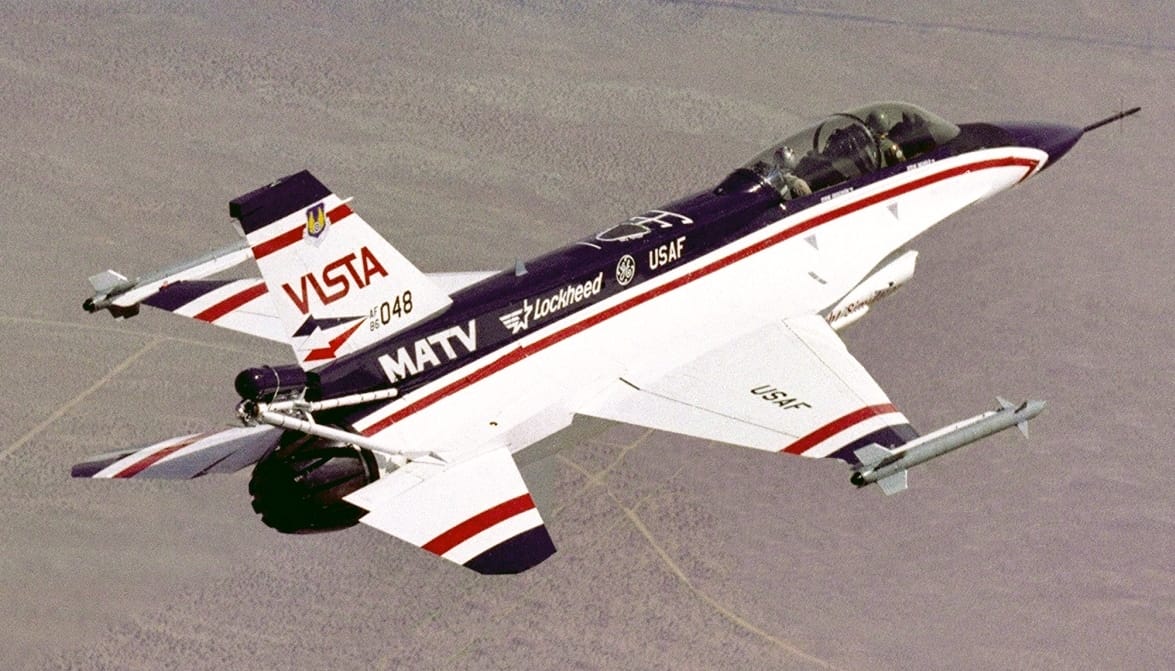
Over Edwards Air Force Base earlier this year, a modified F-16 received a simulated surface-to-air missile warning at high speed. The two human pilots in the cockpit did exactly nothing. They sat with their hands clear of the stick and watched as the aircraft snapped sideways, accelerated, descended, and broke the missile lock — all of it computed and commanded by an artificial intelligence agent the Air Force has been quietly training on Lockheed’s experimental X-62A VISTA airframe for the last four years.
It is not the first time AI has flown a real fighter jet. It is the first time AI has demonstrated, in actual airframes at actual airspeeds, that it can react to a live tactical threat faster and more decisively than the human crews onboard. And it is the milestone that quietly settles a long-running debate inside Air Combat Command: the next generation of fighters will fly with AI in the loop from day one.
Quick Facts
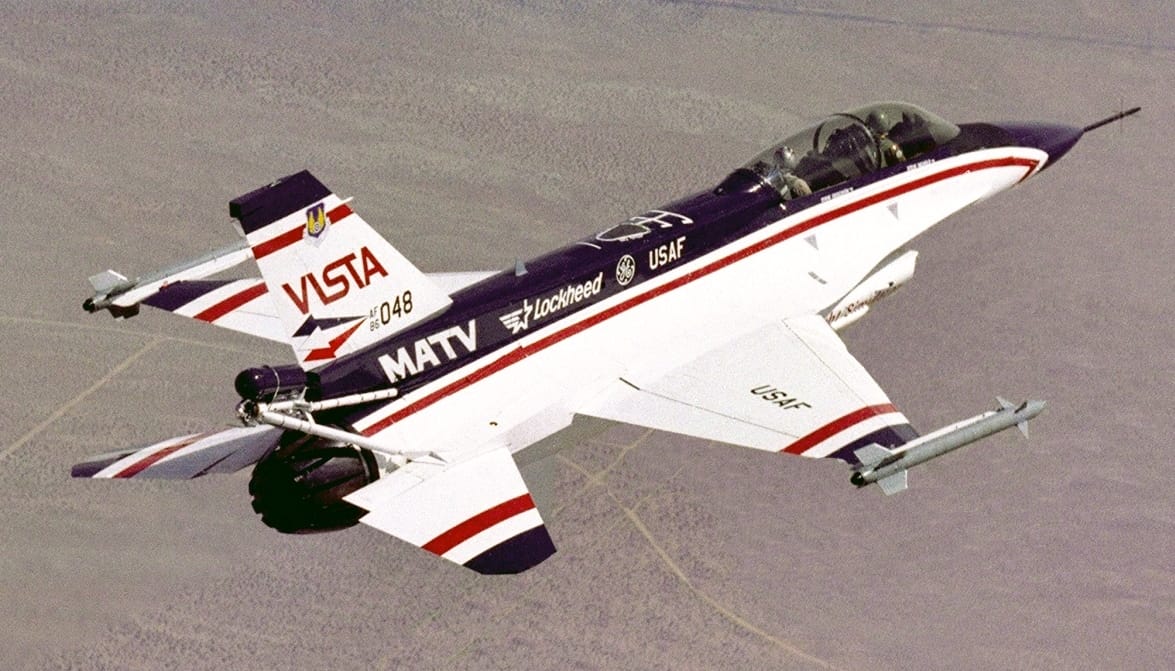
Aircraft: X-62A VISTA (Variable In-flight Simulator Test Aircraft) — a heavily modified F-16D operated by the U.S. Air Force Test Pilot School at Edwards AFB
Programme: DARPA Air Combat Evolution (ACE) — running since 2019
Most recent breakthrough: Tactical AI autonomously evaded a simulated surface-to-air missile in flight at Edwards AFB, early 2026
Earlier milestone: September 2023 — first AI-vs-human dogfight in actual aircraft (kept classified until April 2024)
Total test flights: Over 60 flights between December 2022 and early 2026
Closest engagement: AI agents flew nose-to-nose against a human-piloted F-16 at ranges as close as 2,000 feet, at speeds up to 1,200 mph
Safety record: Safety pilots onboard have never had to activate the manual disengage switch
Next step: AI agents transitioning from VISTA testbed to operational Collaborative Combat Aircraft (CCA) prototypes
What VISTA actually is
The X-62A VISTA is the most famous research aircraft most people have never heard of. It started life as an NF-16D — a two-seat F-16 — modified in the 1990s to act as a programmable in-flight simulator. The aircraft can be made to behave aerodynamically like almost any other jet by adjusting its variable stability system: it can fly like an F-35, an F-22, a Su-35, a 1950s F-104, or — usefully for AI development — any aerodynamic envelope a researcher wants to test against.
What this means in practice: the AI agent flying VISTA can be trained against a simulated F-35 today, a simulated J-20 tomorrow, and a simulated 6th-generation NGAD adversary the day after that. Without ever leaving the same airframe. VISTA is, in effect, the AI dogfighting equivalent of a flight simulator that flies — except every test is a real flight at real altitude with a real human safety pilot onboard.
The September 2023 dogfight that nobody talked about for seven months
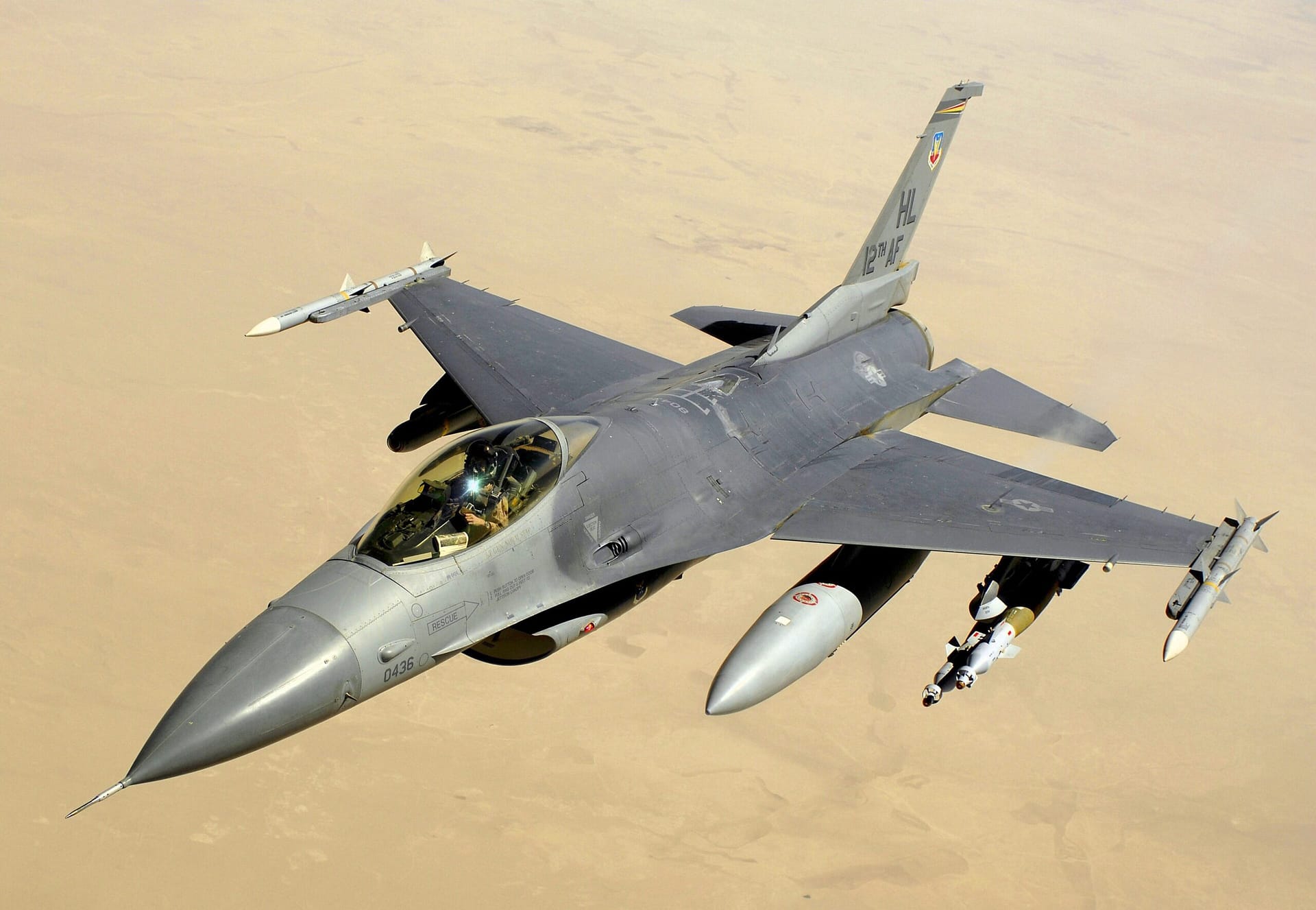
The breakthrough that made VISTA famous came in September 2023, when AI agents flew the aircraft in nose-to-nose engagements against a human-piloted F-16 over Edwards AFB. The AI did not always win, but it never crashed, never violated test boundaries, and never had to be disengaged by its human safety pilots. DARPA and AFRL classified the footage and kept the results internal until April 2024 — partly to protect the algorithms, partly to give programme leaders time to assess what the AI had actually learned.
What it had learned, broadly: dogfighting is solvable. The AI proved capable of executing canonical 1-vs-1 air combat manoeuvres — high yo-yo, low yo-yo, Immelmann, scissors, defensive break — with timing and energy management that test pilots described as comparable to a mid-experience fighter pilot. Not a TOPGUN graduate. But better than a freshly qualified squadron lieutenant.
The new step: tactical threat response
The May 2026 demonstration is qualitatively different. Where the 2023 work showed the AI could win a clean dogfight, the new work shows the AI can react to a complex tactical situation: a surface-to-air missile launch, with the aircraft in cruise, in a realistic operational profile, with the human pilots deliberately staying out of the loop.
The AI detected the simulated missile launch via the aircraft’s integrated sensors, classified it as a threat requiring evasion, selected the optimal escape manoeuvre from the available envelope, executed it precisely, and broke the lock within seconds. The reaction time was measured in fractions of a second — comparable to a well-trained pilot’s decision speed, but more consistent and not fatigue-limited.
Where this goes next
The X-62A VISTA is a testbed. The AI agents being trained on it are not going to fly combat missions in modified F-16s. They are going to fly combat missions in Collaborative Combat Aircraft — the Boeing MQ-28, the General Atomics YFQ-42A, the Northrop YFQ-48A Talon Blue, and whatever follows them. The CCAs are designed from the ground up to be flown by AI agents, with humans only setting the mission parameters and supervising at the strategic level.
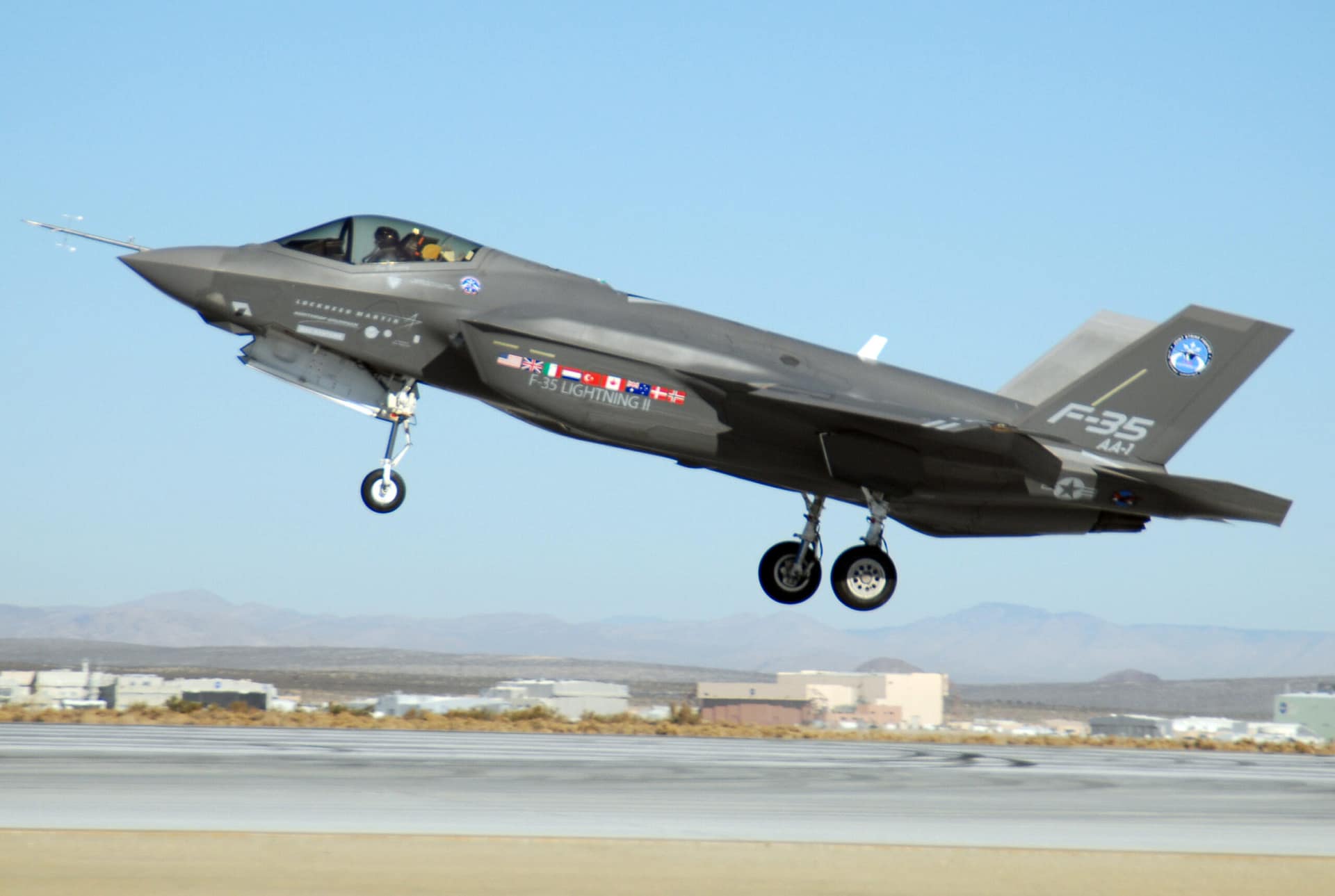
What VISTA proves is that the AI is ready for that role. The technology now exists to put autonomous wingmen alongside manned F-35s and F-47s, with the AI handling the tactical sub-tasks (target identification, missile evasion, mutual support, sensor fusion) while the human in the manned cockpit handles the operational and strategic decisions. The 6th-generation air combat doctrine the U.S. Air Force is now actively building rests on this assumption.
The Russian and Chinese air forces are working on the same problem with less public visibility but, by most analyst assessments, broadly comparable urgency. The first major war between near-peer air forces in which AI-piloted CCAs play a decisive role is probably less than a decade away.
The pilots in the cockpit who watched the AI evade the missile are not worried about being replaced. They are, several of them have said in subsequent interviews, simply relieved. The job of a fighter pilot in the 2030s will be different from the job in the 1990s. It will involve fewer hands-on stick-and-rudder reflex moments. It will involve more strategic supervision of a small team of autonomous teammates, each of them faster, more precise, and more expendable than the human at the centre. Few pilots think that is a worse job. Most think it is a more interesting one.
Watch: official DARPA Air Combat Evolution programme footage of X-62A VISTA AI agents dogfighting against a human-piloted F-16.
Sources: DARPA Air Combat Evolution programme briefings; Defense One (April 2024, February 2026 updates); The Aviationist; U.S. Air Force Test Pilot School public statements.
 English
0 Comments