
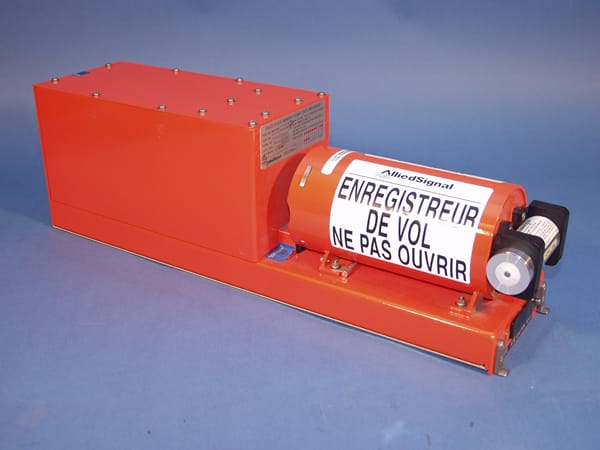
When two aircraft collide in mid-air — as happened recently with an EA-18G Growler at Mountain Home Air Force Base — the debris field can stretch for miles. Pieces of aluminum, wiring, and avionics scatter across terrain in patterns that look random to the untrained eye. But to the investigators who arrive within hours, every fragment tells a story. Their job is to read it.
For civil aviation, the National Transportation Safety Board is the agency tasked with turning wreckage into answers — military crashes like the Growler collision are investigated by the armed services’ own safety boards, using a very similar playbook. Here's how they do it — from the first phone call to the final report.
- Founded: 1967 as an independent federal agency
- Go Team Size: From three or four up to more than a dozen specialists, depending on the accident
- Response Time: Go Team usually on-scene within 24 hours
- FDR Parameters: Modern recorders track 1,000+ data points
- CVR Transcription: A 30-minute recording can take a full week to transcribe
- Investigation Duration: 12-24 months for major accidents
- Authority: Investigative only — the NTSB cannot fine, punish, or regulate
The First Hours: The Go Team

The process begins at the NTSB's Response Operations Center (ROC) in Washington, D.C., which monitors news feeds, FAA reports, and direct notifications around the clock. When a major accident is confirmed, the ROC sends a text alert to a pre-designated "Go Team" of investigators — anywhere from three or four to more than a dozen specialists, depending on the complexity of the crash.
The Go Team is assembled based on the type of accident. A mid-air collision requires specialists in air traffic control, structures, operations, and human factors. An engine failure calls for powerplant experts. Each team member has a specific investigative group to lead — structures, systems, operations, survival factors, weather, air traffic control — and each group operates semi-independently while coordinating through the Investigator-in-Charge (IIC).
The team aims to be on-scene within 24 hours, often sooner. The first priority upon arrival is securing perishable evidence — anything that might degrade, be disturbed by weather, or be inadvertently destroyed during recovery operations. This includes cockpit switch positions, fuel samples, and the flight recorders.
Reading the Wreckage: Debris Field Mapping
In a mid-air collision, the debris field is one of the most important pieces of evidence. Structures specialists document every significant piece of wreckage — its location, orientation, and condition — using GPS coordinates and detailed photography. The distribution pattern tells investigators critical information about the sequence of the breakup.
Lighter pieces like insulation, paper, and fabric travel farther downwind. Heavy components like engines and landing gear fall more directly beneath the point of structural failure. By plotting the location of each piece against the prevailing winds at altitude, investigators can work backward to determine where the aircraft began to come apart — and at what altitude.
Impact angles are calculated from ground scars and structural deformation. A steep, near-vertical impact suggests a dive or spin. A shallow angle indicates the aircraft was still under some aerodynamic control. The pattern of fragmentation — whether pieces separated in flight or on ground impact — tells investigators whether the aircraft broke apart in the air (an in-flight breakup) or remained largely intact until it hit the ground.
The Black Boxes: More Than Just a Recording
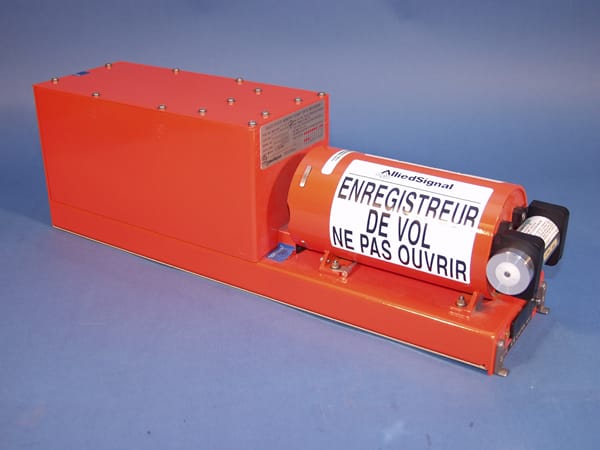
Modern flight data recorders (FDRs) capture over 1,000 parameters — airspeed, altitude, heading, control surface positions, engine performance, even individual switch positions — sampled multiple times per second. This data allows investigators to reconstruct the aircraft's flight path and mechanical state with remarkable precision, often to a resolution of fractions of a second.
The cockpit voice recorder (CVR) captures the last two hours of cockpit audio, including crew conversations, radio transmissions, and ambient sounds. The transcription process is painstaking: a group of accredited representatives — from the airframe manufacturer, airline, pilot union, and engine manufacturer — listens to the recording together, sometimes dozens of times, to agree on every word and sound. A 30-minute recording can take a full week to transcribe accurately.
But the CVR captures more than words. Background sounds can be analyzed to determine engine speed (from the tonal frequency of the turbine), whether specific systems were operating, and even the position of the aircraft's flaps and landing gear — each producing distinctive sounds that specialists can identify.
Radar Tapes and ATC Reconstruction
In a mid-air collision, air traffic control data is central to the investigation. ATC specialists retrieve radar tracks, ADS-B surveillance data, and recorded communications between controllers and pilots. This data shows where each aircraft was, how fast it was moving, and what instructions were given — or not given.
Radar data can reveal the closure rate between two aircraft, how long they were on a collision course, and whether either pilot took evasive action. When combined with the FDR data from both aircraft, investigators can reconstruct the geometry of the collision — the angle of impact, which parts of each aircraft made contact first, and how each aircraft's trajectory changed after the collision.
ATC voice recordings are analyzed for workload indicators: was the controller handling too many aircraft? Were there communication delays? Did the pilot read back instructions correctly? Were traffic advisories issued and acknowledged? Each exchange is timestamped and cross-referenced against radar data to build a second-by-second timeline of the events leading to the collision.
Human Factors: The Hardest Question
In the majority of aviation accidents, human performance is a contributing factor, and human factors specialists investigate everything from crew training and experience to fatigue, workload, and decision-making processes. This often involves interviews with surviving crew members, colleagues, family, and friends.
For mid-air collisions specifically, investigators examine whether the pilots involved were using traffic collision avoidance systems (TCAS), whether they were scanning for traffic visually, and whether any distraction — a head-down moment reviewing a chart, a conversation at a critical time — contributed to a failure to see and avoid.
The human factors group also examines organizational factors: airline scheduling practices, maintenance culture, training adequacy, and regulatory oversight. Modern accident investigation recognizes that crashes rarely have a single cause — they result from a chain of failures, each one individually manageable, that align in exactly the wrong way.
The Final Report: 12 to 24 Months Later
After months of analysis, the NTSB compiles its findings into a final report that is presented at a public board meeting. The report includes a probable cause determination — the NTSB's best assessment of what went wrong — along with safety recommendations directed at the FAA, aircraft manufacturers, airlines, and other stakeholders.
Critically, the NTSB is an investigative body, not a regulatory one. It cannot fine airlines, revoke pilot certificates, or force anyone to implement its recommendations. Its power lies entirely in the quality and credibility of its analysis. The fact that more than 80% of NTSB recommendations are eventually adopted speaks to that credibility — and to the aviation industry's recognition that the alternative to learning from crashes is repeating them.
Related Questions
What does the NTSB do after a plane crash?
The US National Transportation Safety Board investigates civil aviation accidents, reconstructing what happened from wreckage, flight recorders and other evidence to determine the cause and prevent repeats. An independent federal agency since 1967, it dispatches a "Go Team" of specialists, usually on-scene within 24 hours.
How does a mid-air collision investigation work?
Investigators map the debris field — which can stretch for miles — because its pattern reveals how and where the aircraft broke apart. They recover flight recorders, examine each fragment, and reconstruct the sequence of events. Military crashes follow a similar playbook run by the armed services' own safety boards.
What is an NTSB Go Team?
An NTSB Go Team is a group of specialists — from three or four people up to more than a dozen, depending on the accident — dispatched immediately to a crash site. They typically arrive within 24 hours and split the work into areas such as structures, powerplants and human performance.
When was the NTSB founded?
The NTSB was established in 1967 as an independent US federal agency tasked with investigating transportation accidents, including aviation. Its independence lets it issue safety recommendations free of political or commercial pressure, and its findings have driven decades of improvements in air safety.
Can a pilot survive a mid-air collision?
Sometimes, through extraordinary airmanship. While investigators recover the hard evidence, survival often hinges on the crew — as in the 1965 Carmel mid-air collision, where a pilot landed an airliner missing 25 feet of its wing. Thorough probes, like the Lufthansa 787 investigation, show how closely modern incidents are analysed.
0 Comments