
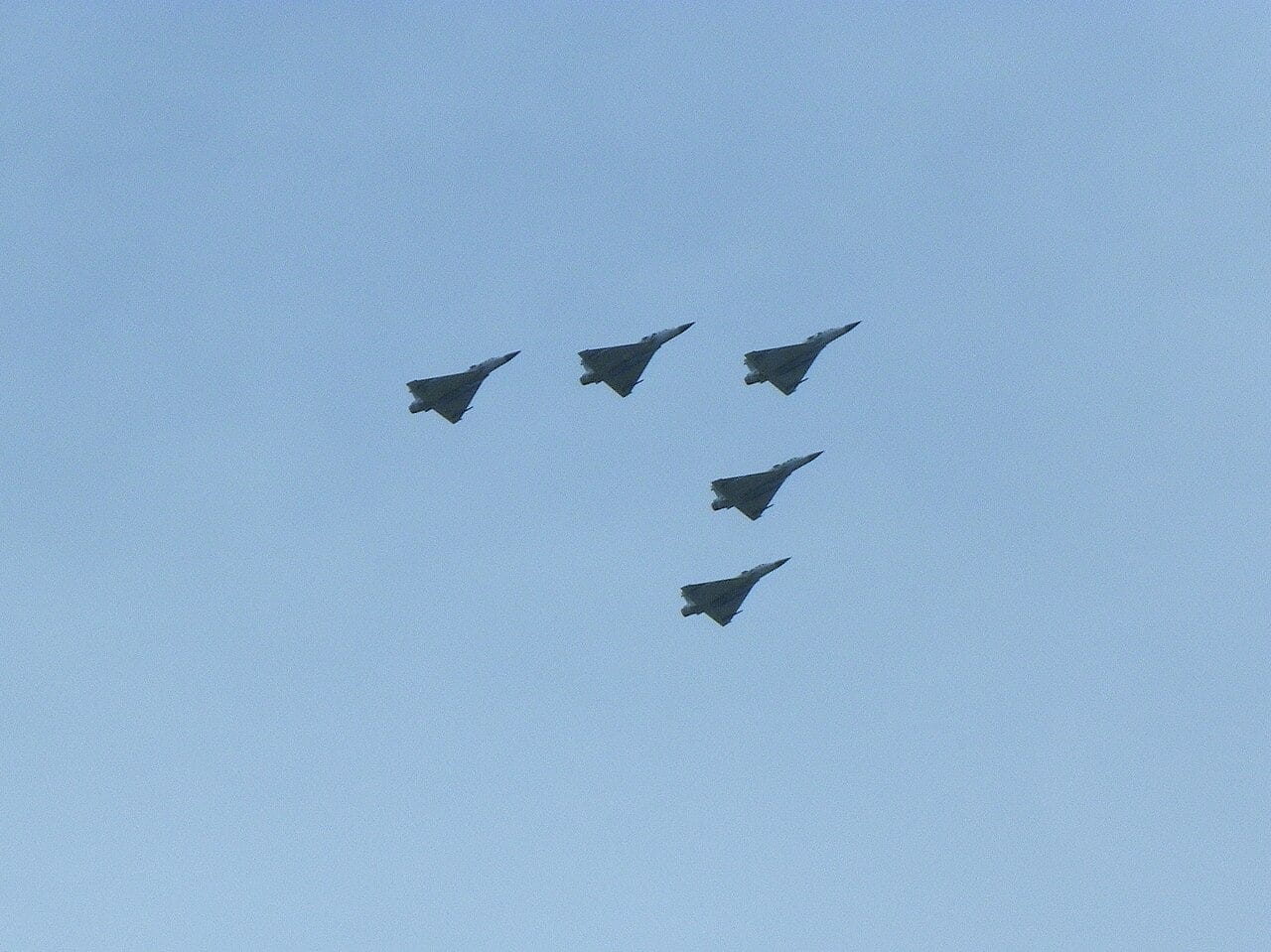
Somewhere under the granite of Taiwan’s Central Mountain Range, a squadron of fighter jets rolled into a cave and the blast doors closed behind them. This was not a movie set. It was this week’s headline act of Han Kuang 42, the island’s largest annual war game, and it is exactly the kind of thing Taiwan wants Beijing to see.
The premise of the drill is grim and simple: if China ever attacks, the first blow will fall on Taiwan’s airfields. Runways can be cratered and parked jets destroyed in minutes. So Taiwan practices vanishing — dispersing its aircraft, hardening what it can, and hiding the rest inside a mountain.
Quick Facts
- Exercise: Han Kuang 42, Taiwan’s largest annual war games
- Running: live-fire phase 5-14 August 2026, 10 days and 9 nights
- The move: six Mirage 2000s and eight Indigenous Defense Fighters flown into the Chiashan mountain base
- Chiashan: carved from a granite mountain in Hualien; room for 200+ aircraft
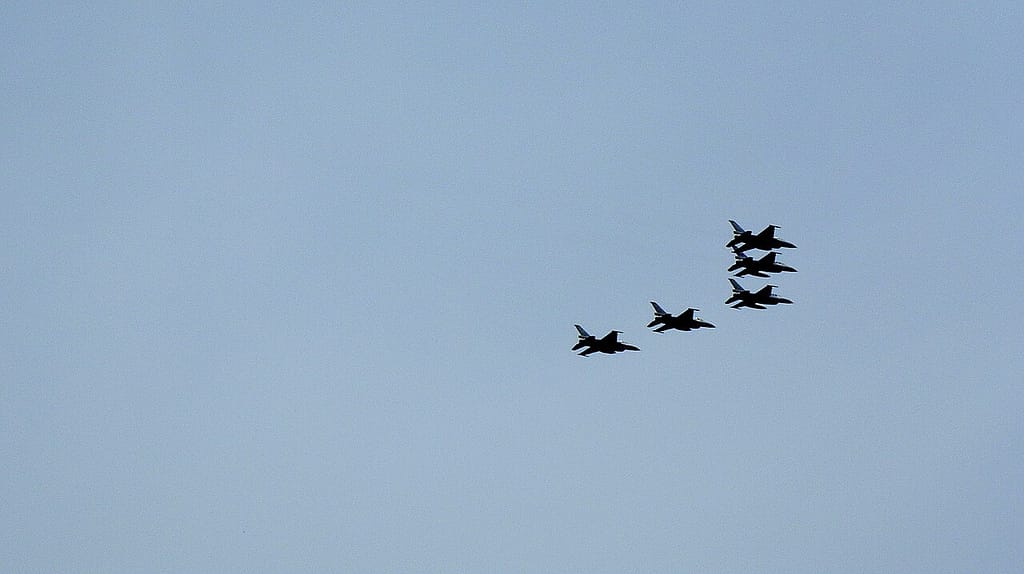
- Escort: F-16s from Hualien covered the redeployment, then swept the seas to the east
- Point of it all: keep the air force alive through a Chinese first strike
Into the mountain
According to Taiwan’s defense ministry, the air force moved six Mirage 2000 fighters and eight Indigenous Defense Fighters into Chiashan Air Force Base, the vast underground complex near Hualien on the island’s east coast. F-16s already based at Hualien flew escort for the redeployment, then ran an aerial sweep over the seas to the east before returning to the same shelter.
Chiashan is one of the most remarkable air bases on earth. It was carved out of a solid granite mountain: construction began in 1984, took about eight years, and cost on the order of a billion dollars. Inside, the tunnel network is said to have room to park, arm and repair more than 200 aircraft, alongside hospitals, command-and-control facilities, and enough food and fuel to hold out for months.
A war game with no script
This year’s Han Kuang ran for 10 days and nine nights of live-fire activity, from 5 to 14 August, testing whether the armed forces can fight around the clock. Roughly 20,000 reservists were mobilized. Taiwanese officials made a point of stripping out the showy firepower displays of years past in favor of unscripted, American-style training meant to mirror a real war.
At Hsinchu Air Base, Mirage 2000 crews rehearsed the full sequence from surviving an enemy airstrike to launching a counterattack, with four-person teams hauling and mounting missiles by hand and engineers drilling emergency runway repair. President Lai Ching-te spent the week inspecting troops in the field, at one point in driving rain.
The message to Beijing
None of this stops a missile. What it does is complicate the arithmetic of a first strike. If Taiwan’s jets can scatter, hide inside a mountain, and come back swinging, then knocking out the island’s airpower in one opening salvo becomes far harder to guarantee — and a war that cannot be won quickly is a war Beijing has every reason to avoid starting.
Sources: Taipei Times; Focus Taiwan; Reuters; NBC News; The War Zone; Taiwan Ministry of National Defense.
0 Comments