
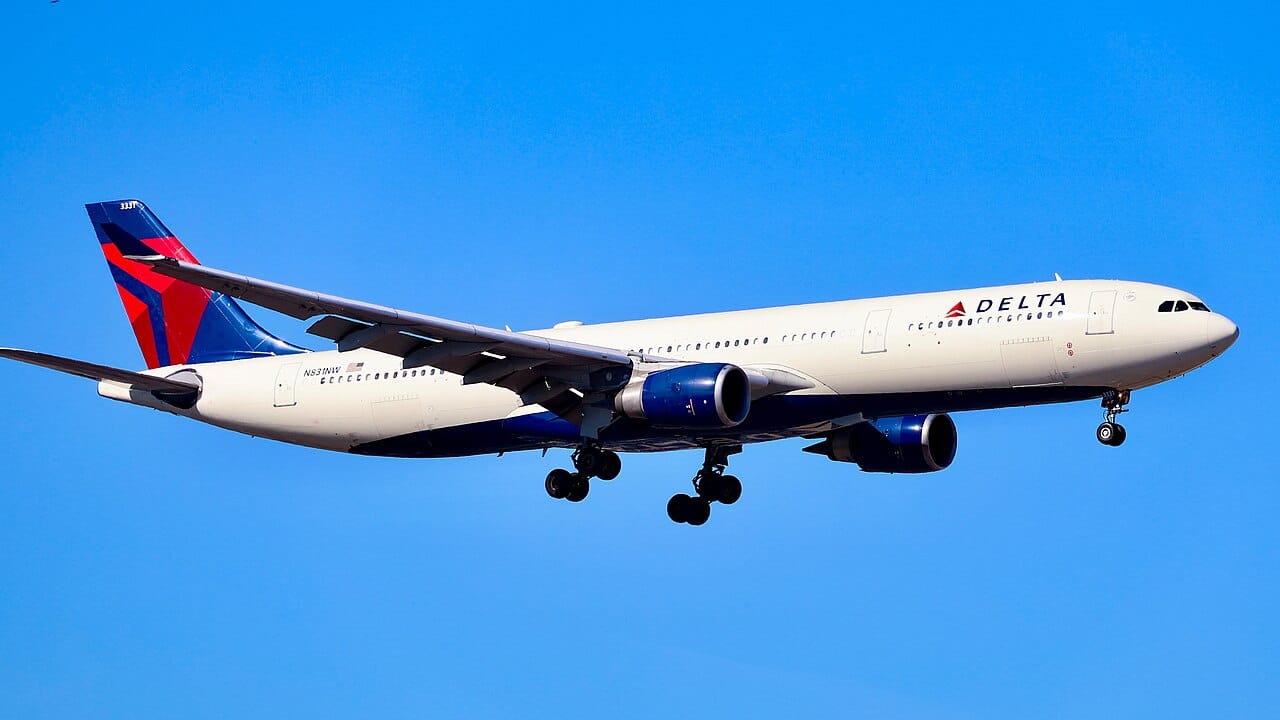
A loud bang, visible flashes from the left wing, and then the cabin went black. Passengers on Delta flight DL126 from Detroit to Paris later described the next ninety seconds as the worst of their lives — an Airbus A330 over the Atlantic with a smoking engine and no cabin lighting, and a flight crew quietly turning every checklist switch they had ever trained for.
Three hours later, the A330 was parked safely on a remote stand at Paris-Charles de Gaulle. Nobody was hurt. The two pilots got home. And the whole event has become a quiet textbook example of why airline crews are so much more boring — and so much better — than the YouTube algorithm wants you to believe.
Quick Facts
- Flight: Delta Air Lines DL126, Detroit (DTW) – Paris-Charles de Gaulle (CDG)
- Aircraft: Airbus A330-323, registration N802NW (a 2003-build airframe)
- Date: May 2026
- Failure: Uncontained-symptom event on the No. 1 engine (PW4168A)
- Cabin “blackout”: Caused by the loss of generator power on the affected engine; emergency lighting picked up within seconds
- Outcome: Safe landing at CDG, no injuries, aircraft towed to maintenance
What the passengers actually saw
The cruise was uneventful until somewhere over the western Atlantic. Then came a loud, percussive bang and a brief tongue of orange flame visible from the left wing-row windows. The cabin lighting died. Reading lights died. The screens went dark. For the next ten to fifteen seconds — long enough that several passengers later reported they thought the aircraft was going down — the cabin operated on emergency battery lights alone before the secondary generators stabilised.
The flight deck immediately ran the standard ECAM-prompted engine-failure procedure: identify the failed engine, confirm thrust loss, secure the affected engine, transmit a Mayday to the controlling ATC sector, and divert. The choice between continuing to Paris or turning back to a nearer Atlantic alternate — Shannon, the Azores, Halifax — was a matter of fuel, weather and runway availability. The crew chose CDG; with 11 tonnes of margin and clear weather, the diversion was a non-event.
Why the cabin went dark
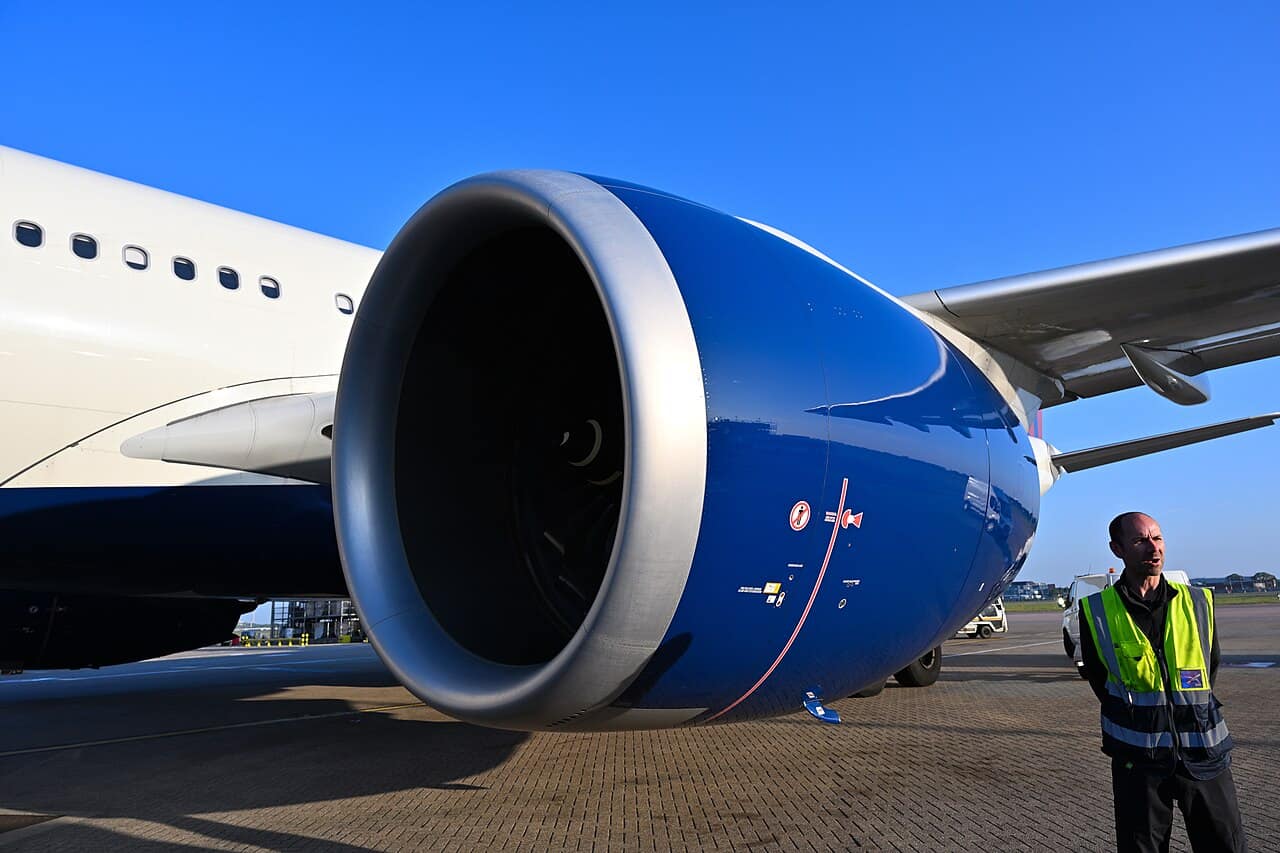
The brief blackout was the most dramatic part of the event for the people inside the aircraft, but it was also the least dangerous part. Each A330 engine drives a generator that supplies AC power to its side of the aircraft. When the No. 1 engine failed, its generator went with it, and the left-hand AC bus dropped offline. The aircraft is built to ride this out: the Auxiliary Power Unit can be started in flight, the right-hand engine continues feeding its bus, and emergency batteries cover the gap. None of that is visible to passengers. What is visible is roughly ten seconds of darkness while the buses re-shuffle.
A textbook ETOPS diversion
Long-range twin-engine operations — ETOPS — exist precisely so that an aircraft can lose an engine over open ocean and continue safely to a planned diversion airport. The A330-300 is certified for ETOPS-180, meaning it can fly up to three hours from a suitable airfield on a single engine. DL126 was inside that envelope when the failure occurred. The crew flew the diversion as briefed: descent to a single-engine optimum altitude, slower cruise to manage fuel, communications with French controllers, and a stable approach into CDG.
For the engineering investigation, the focus will be on what happened inside the Pratt & Whitney PW4000-100 series. PW4000s have been in service since 1994 and have a generally strong reliability record; the FAA mandated additional inspections on a related variant (the PW4000-94, used on Boeing 777s) in late 2025 after a separate incident. Whether the Delta event accelerates inspections on the A330 variant will be the next thing to watch.
For the passengers: a difficult evening, full refunds, and a story to tell at dinner parties for the next decade. For the crew: another normal day at the office.
Sources: Simple Flying, Aviation Herald, BFM TV, Delta Air Lines press statement.


 English
0 Comments