
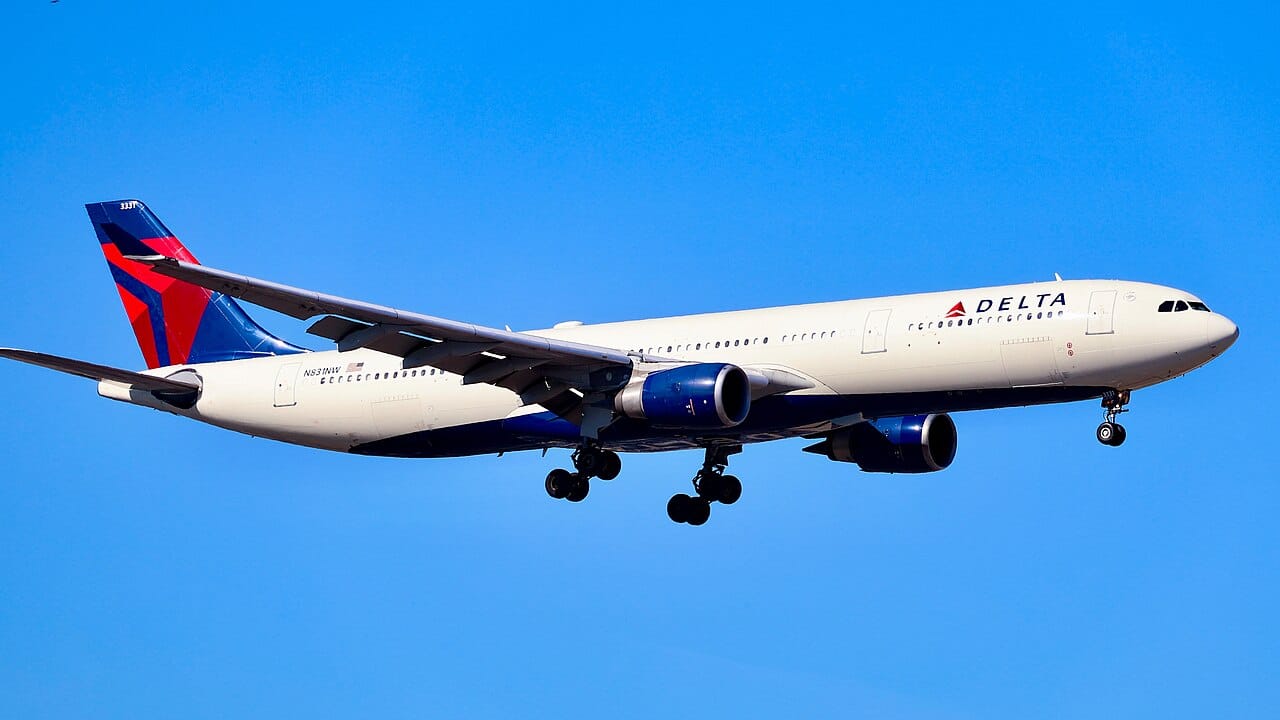
A loud bang, visible flashes from the left wing, and then the cabin went black. Passengers on Delta flight DL286 from New York JFK to Milan later described the moments that followed as the worst of their lives — an Airbus A330 over France with a failing engine and no cabin lighting, and a flight crew quietly turning every checklist switch they had ever trained for.
Soon after, the A330 was parked safely at Paris-Charles de Gaulle, fire crews standing by. Nobody was hurt. And the whole event has become a quiet textbook example of why airline crews are so much more boring — and so much better — than the YouTube algorithm wants you to believe.
Quick Facts
- Flight: Delta Air Lines DL286, New York JFK – Milan Malpensa, diverted to Paris-Charles de Gaulle (CDG)
- Aircraft: Airbus A330-323, registration N818NW (an 18-year-old airframe)
- Date: 19 May 2026
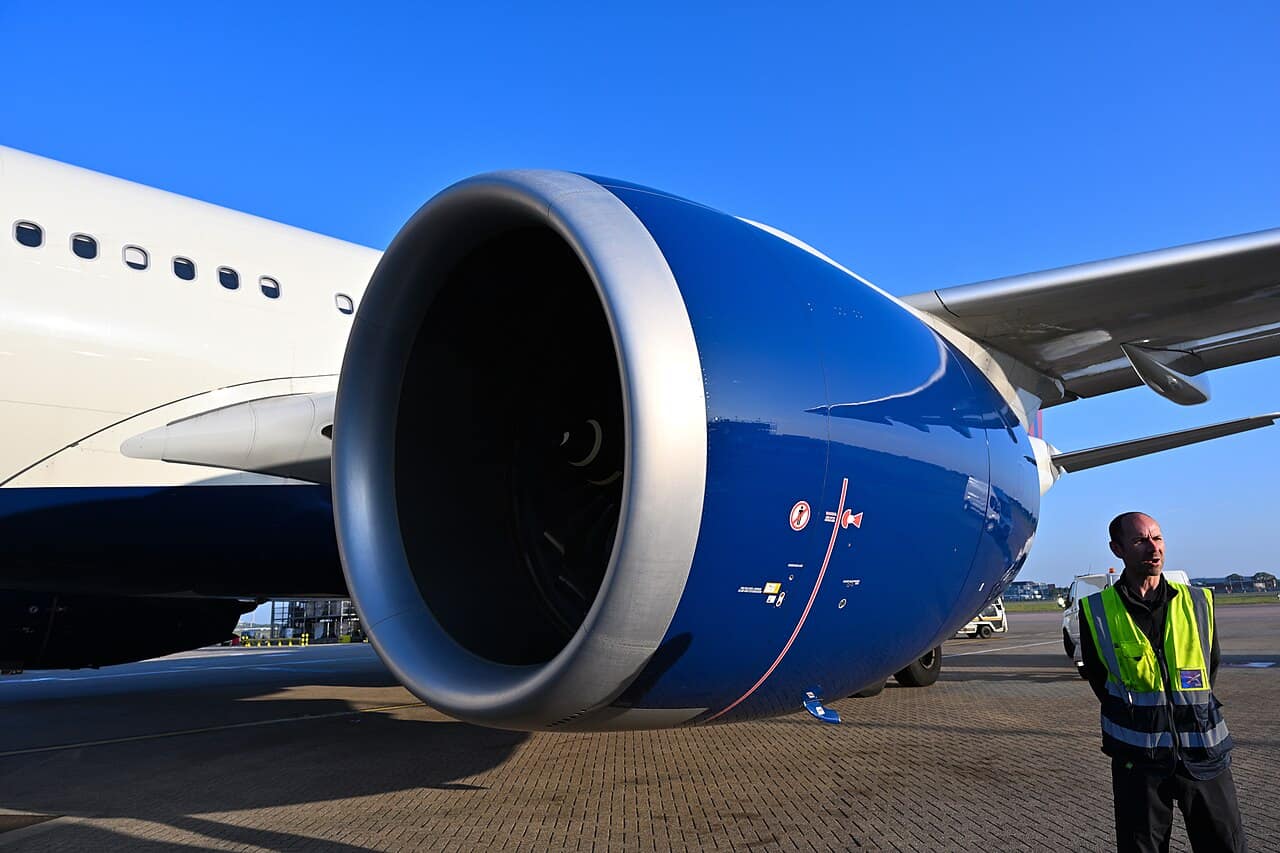
- Failure: Loud bang and visible flashes from the left (No. 1) engine, a Pratt & Whitney PW4168A
- Cabin “blackout”: Caused by the loss of generator power on the affected engine; emergency lighting picked up within seconds
- Outcome: Safe landing at CDG at 06:23 local time, no injuries
What the passengers actually saw
The Atlantic crossing was uneventful; the aircraft was in cruise over France in the early hours of 19 May when it happened. Then came a loud, percussive bang and a brief tongue of orange flame visible from the left wing-row windows. The cabin lighting died. Reading lights died. The screens went dark. For long enough that several passengers later reported they thought the aircraft was going down, parts of the cabin ran on emergency battery lighting alone while the electrical system reconfigured itself.
The flight deck ran the standard engine-failure procedure: identify the failed engine, confirm thrust loss, secure the affected engine, and squawk 7700 — the international emergency transponder code, which flight-tracking data shows the crew did. The choice of where to put the aircraft down was straightforward: Paris-Charles de Gaulle was close, with long runways and heavy rescue and firefighting cover. The crew chose CDG, and DL286 landed safely at 06:23 local time with emergency services standing by.
Why the cabin went dark
The brief blackout was the most dramatic part of the event for the people inside the aircraft, but it was also the least dangerous part. Each A330 engine drives a generator that supplies AC power to its side of the aircraft. When the No. 1 engine failed, its generator went with it, and the left-hand AC bus dropped offline. The aircraft is built to ride this out: the Auxiliary Power Unit can be started in flight, the right-hand engine continues feeding its bus, and emergency batteries cover the gap. None of that is visible to passengers. What is visible is roughly ten seconds of darkness while the buses re-shuffle.
A textbook ETOPS diversion
Long-range twin-engine operations — ETOPS — exist precisely so that an aircraft can lose an engine over open ocean and continue safely to a diversion airport. DL286 had already crossed the Atlantic when the engine let go; as one passenger asked afterwards, what if it had happened two hours earlier, over water? The answer is the same procedure with a longer leg: the A330 is certified to continue for hours to a suitable airfield on one engine. Over France, the crew simply flew the drill: secure the engine, descend, manage the electrics, and fly a stable approach into CDG.
For the engineering investigation, the focus will be on what happened inside the Pratt & Whitney PW4000-series engine. It is the second engine event on a Delta A330-300 in under two months: on 29 March 2026, another Delta A330 suffered a fiery engine failure departing São Paulo-Guarulhos, an event US and Brazilian authorities are still investigating. Whether the Paris incident accelerates inspections across the PW4000-powered A330 fleet will be the next thing to watch.
For the passengers: a frightening morning and a story to tell for the next decade. For the crew: the day the training was for.
Sources: Simple Flying, The Aviation Herald, AIRLIVE.
 English
0 Comments