
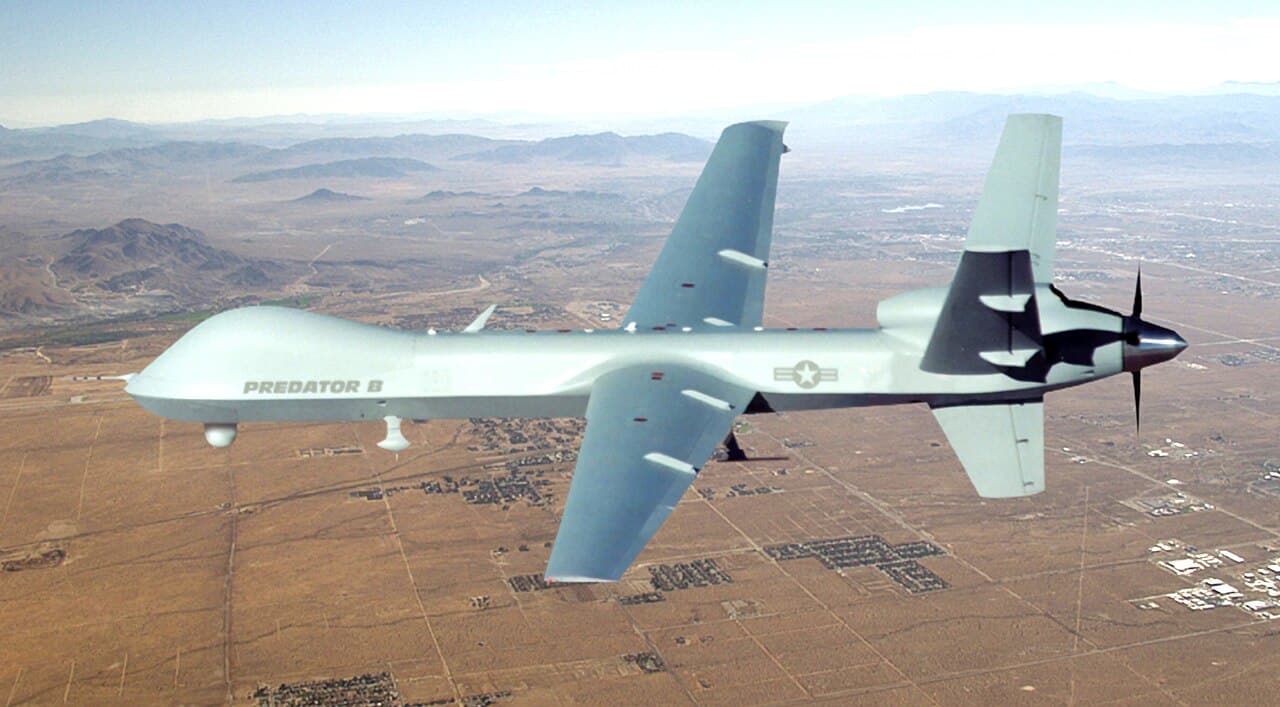
The number landed like a dropped bomb: roughly 45 MQ-9 Reapers gone, about a quarter of the entire fleet, at a cost the Pentagon puts north of $1.3 billion for that one weapon system alone. That is the tally the Washington Post reported on August 13, citing three U.S. officials, for the drone that has quietly done more of America's killing over Iran than any fighter in the inventory.
It is a staggering attrition figure for a machine that never carried a pilot. And it lands in the middle of an awkward argument the Air Force has been having with itself for years: is the slow, faithful Reaper a relic that dies in modern airspace, or the unsung MVP of the whole campaign? Depending on who you ask this week, it is both.
Quick Facts
| Aircraft | General Atomics MQ-9 Reaper |
| Reported losses | ~45 airframes, roughly 25% of the fleet |
| Estimated cost | Over $1.3 billion (Washington Post, Aug 13, 2026) |
| Unit cost | ~$30 million (recent USAF buys ~$16M; MQ-9B ~$30M) |
| Pre-war fleet | About 185; down to ~135 by mid-May 2026 |
| Conflict | Operation Epic Fury vs. Iran, late Feb–early April 2026 |
| Not all shot down | Some lost to data-link failures, per U.S. officials |
A Quarter of the Fleet, Gone
Before the shooting started on February 28, the U.S. military fielded roughly 185 Reapers, about 165 with the Air Force and 20 with the Marine Corps. By mid-May, Lt. Gen. David Tabor told the Senate the Air Force's usable fleet had fallen to around 135. The Post's figure of some 45 lost across the war captures just how fast that number bled.
Not every loss was a clean kill. One official told the paper that a number of Reapers were not downed by hostile fire at all, but crashed after the data link between the aircraft and its distant operators broke. Others were destroyed on the ground when Iran struck U.S. bases across the region. Tehran has claimed a couple dozen; the Houthis in Yemen have claimed a dozen more. The 45 is the American side's own math.
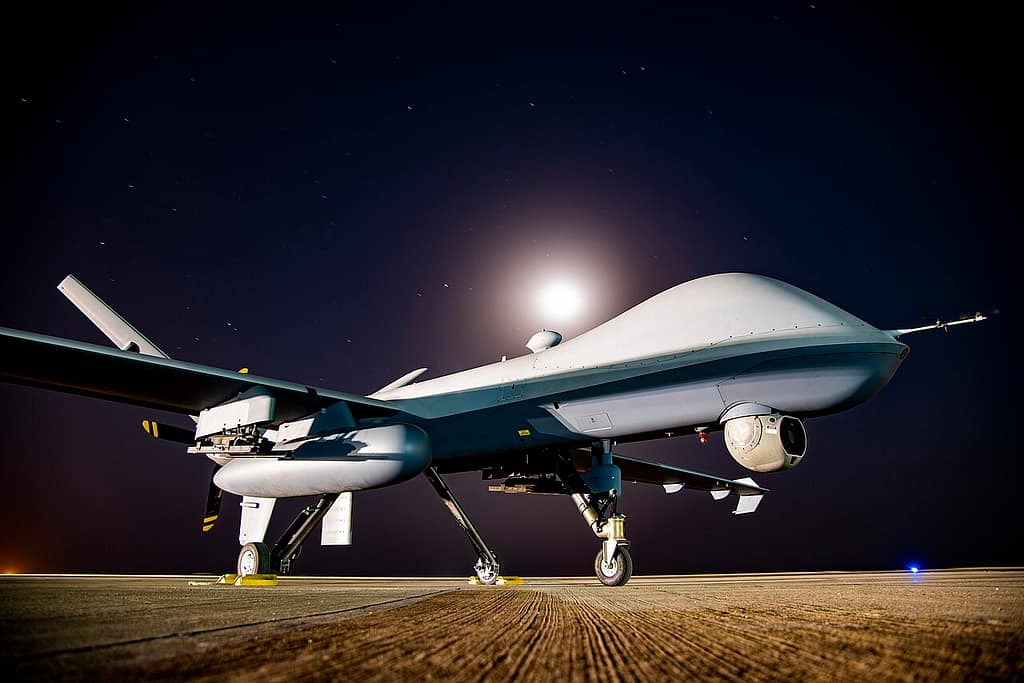
The Reaper's problem is baked into its job description. It is slow, it flies for more than 24 hours at a time, and it loiters low over the exact places the enemy most wants to defend, hunting mobile missile and drone launchers. That makes it a patient hunter and a fat target in the same breath.
Iran, for its part, has proven it can bite back even against manned jets, downing an F-15E Strike Eagle and an A-10 Thunderbolt II, and putting shrapnel into a U.S. Air Force F-35. Against something as slow as a Reaper, its infrared-guided defenses have been especially hard to shake.
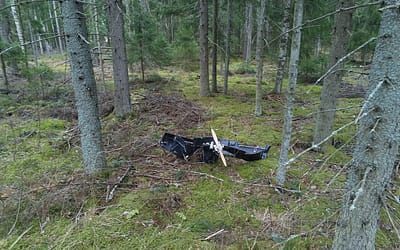
Iranian state media has been only too happy to parade the wreckage, as in the footage above. But the more interesting reaction came from the American side, and it was not the one you would expect.
The Air Force's Unlikely MVP
In May, Air Force Chief of Staff Gen. Kenneth S. Wilsbach, a career fighter pilot, stood in front of the House Armed Services Committee and handed the game ball to a drone. Nearly every jet in the inventory flew against Iran, he noted, the F-16, F-22, F-35, A-10, B-52, and B-2 among them. And yet.
The math behind the praise is brutal but simple: the Reaper does the dangerous, boring, endless work of finding and hitting pop-up targets, and when one is lost, no family gets a phone call. The U.S. hit more than 13,000 targets in Iran during six weeks of heavy fighting, including over 4,000 that appeared and had to be struck on the spot. The Reaper was in the thick of that, and it did it without risking a single aircrew.
General Atomics, which builds the Reaper, was less diplomatic and more triumphant.
Now Buy Them Back
Here is the twist. For years the Air Force wanted to retire the Reaper, arguing it could not survive a fight with a serious enemy. Then it fought one, lost dozens, and promptly decided it needs more. “We are concerned about how they’ve attrited,” Tabor told senators, adding the service is scrambling to “buy back as many of the MQ-9As as we possibly can right now.”
That is easier said than done. General Atomics says it has fewer than 10 new or company-owned MQ-9As left to sell, though decommissioned airframes could be refurbished and more sit in the Boneyard at Davis-Monthan. The last new Reapers cost about $16 million each; the bigger MQ-9B successor runs around $30 million. “We are not divesting the MQ-9,” Secretary of the Air Force Troy Meink insisted, while pointing to a future built from several drones rather than one.
So the humble Reaper ends the Iran war the way it fought it: quietly indispensable, endlessly expendable, and suddenly very hard to replace. Losing a quarter of the fleet was supposed to prove the drone's day was done. Instead it proved the opposite, that America cannot get enough of them.
Sources: Washington Post (Aug 13, 2026); Air & Space Forces Magazine; Jerusalem Post; Middle East Eye; Aerospace Global News. Loss figures are as reported and, where noted, remain contested claims.
0 Comments