
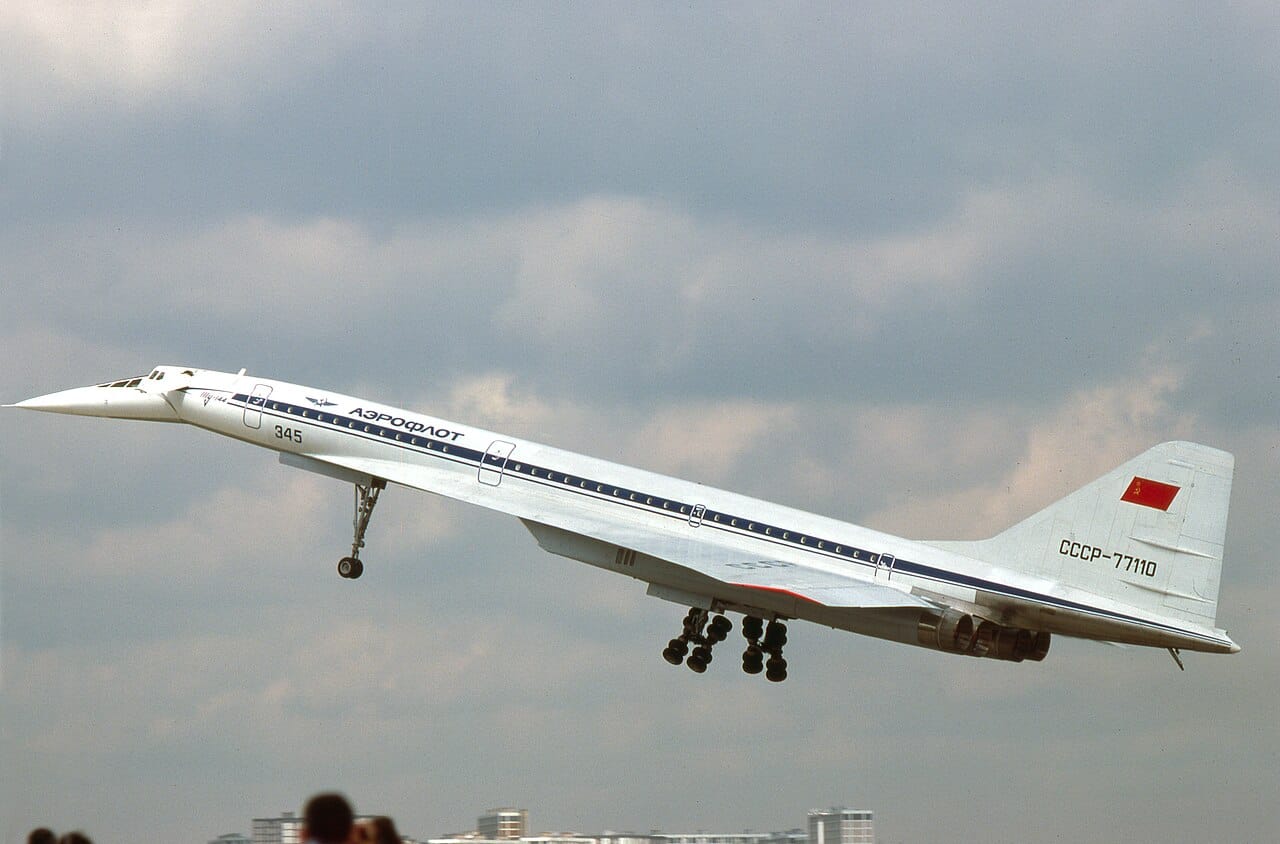
The West called it “Concordski,” half in mockery. It flew two months before Concorde, looked almost identical, and carried the pride of the entire Soviet aerospace industry on its needle nose. On 3 June 1973, in front of a quarter of a million people at the Paris Air Show, it came apart in the sky.
The story of the Tupolev Tu-144 is the story of a race — and of a pilot who could not bear to come second.
The Soviet supersonic dream
The Tu-144 was the world’s first supersonic airliner to fly, lifting off on 31 December 1968, just ahead of the Anglo-French Concorde. It was a genuine technical triumph — a Mach-2 delta with retractable “moustache” canards that popped out for low-speed control. It was also, from the start, a Cold War trophy as much as an aircraft.
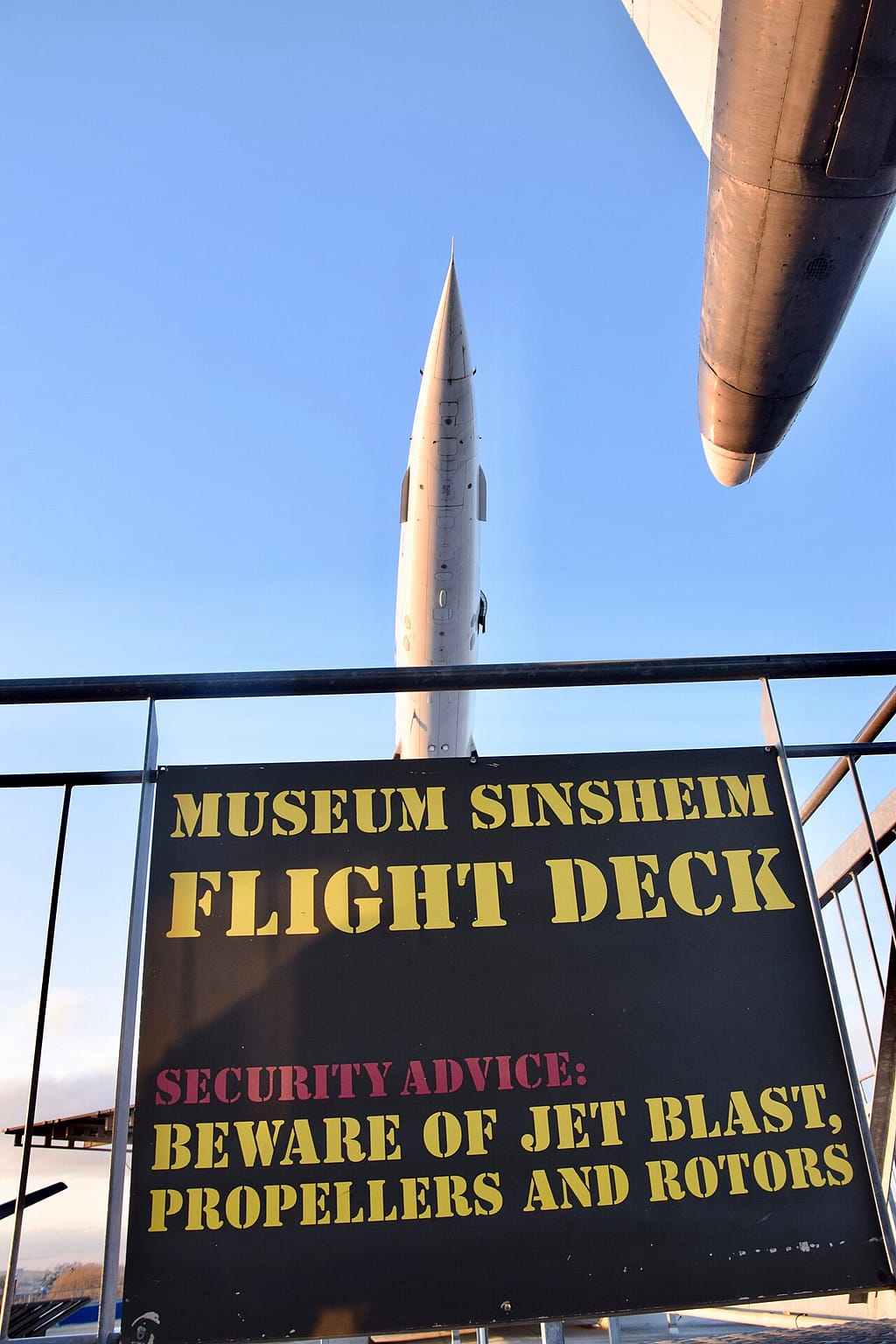
By June 1973 the Tu-144 and Concorde were both starring at Le Bourget, and the rivalry was fierce. The Soviet test pilot, Mikhail Kozlov, made no secret of his confidence.
Quick Facts
- Aircraft: Tupolev Tu-144S, registration CCCP-77102 (2nd production airframe)
- Date: 3 June 1973, Paris Air Show, Le Bourget
- First SST to fly: 31 December 1968, two months before Concorde
- The crash: stalled after a steep climb, broke up while pulling out of the dive
- Toll: all 6 crew and 8 people on the ground killed; 15 houses destroyed
- Cause: never conclusively determined
Six minutes, then silence
Concorde flew its demonstration first that day — a restrained, almost dull routine. Then the Tu-144 took the stage. After a high-speed pass with its gear and canards out, it stood on its tail under full power and climbed hard. Below 2,000 feet it stalled and dropped into a steep dive. As Kozlov fought to pull out near 400 feet, the left wing tore away, the jet snap-rolled inverted, the fuselage broke, and fuel ignited.
The Tu-144 fell in flames on the town of Goussainville, eight kilometres away, destroying homes and killing three children among the eight victims on the ground. Legendary display pilot Bob Hoover, watching from Le Bourget, had seen it coming.
A cause never agreed
The official Franco-Soviet inquiry never pinned down what went wrong — and politics made sure of it. Investigators found “no abnormality” in the aircraft’s design, an outcome convenient to both governments. The theories filled the vacuum instead: a French Mirage III chase plane photographing the secret canards, which the Soviet crew were never told about, forcing a violent evasive pull-up; a crewman with a film camera fouling the controls; a de-restricted flight-control system that snapped the elevons down after the canards retracted.
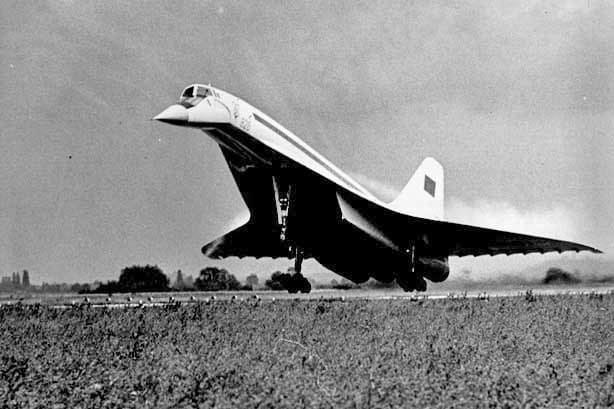
Whatever the trigger, the effect was final. The Tu-144 limped through a brief, troubled service life and was withdrawn in 1978 after another fatal crash. Concorde, its rival, flew on for thirty more years.
“Concordski” had wanted, more than anything, to beat Concorde in front of the world. Instead it gave Le Bourget its darkest afternoon — and became aviation’s most famous cautionary tale about pride at an air show.
Sources: Wikipedia (1973 Paris Air Show Tu-144 crash); TIME; PBS NOVA (“Supersonic Spies”); Howard Moon, “Soviet SST”; Flight International. Kozlov quote via TIME; Hoover quote via TIME Europe.
0 Comments