
QUICK FACTS
| Designation | Boeing 2707 (Model 733-390) |
| Design Speed | Mach 2.7 (approx. 1,800 mph / 2,900 km/h) |
| Capacity | 234–300 passengers |
| Original Design | Swing-wing (Model 733-197) |
| Final Design | Fixed delta wing (Model 2707-300) |
| Orders | 122 from 26 airlines |
| Government Investment | $1 billion (1971 dollars) |
| Cancelled | March 1971 (Congressional vote) |
The Supersonic Race
The story begins with a presidential decision. In June 1963, President John F. Kennedy announced that the United States would develop a commercial supersonic transport. The British and French were already building Concorde. The Soviets had their Tupolev Tu-144. America — the nation that had put jets in every airport and was about to put men on the Moon — could not afford to be left behind in the supersonic race. Boeing won the government contract in December 1966, beating Lockheed's L-2000 design. The Boeing proposal was audaciously ambitious: while Concorde would carry 100 passengers at Mach 2, the Boeing 2707 would carry nearly three times as many passengers at Mach 2.7. It would be bigger, faster, and more American than anything the Europeans could build.The Swing-Wing That Could Not Swing
Boeing's original design, the Model 733-197, featured variable-geometry swing wings — the same concept used on the F-111 and later the F-14 Tomcat. The wings would sweep back for supersonic cruise and extend forward for efficient subsonic flight and landing. On paper, it was brilliant. In practice, the mechanism proved catastrophically heavy. The titanium swing-wing pivot and the hydraulic systems required to move wings large enough for a 300-passenger airliner added so much weight that the aircraft's range and payload became unacceptable. By 1968, Boeing had to abandon the swing-wing concept entirely and redesign the aircraft as a fixed-delta configuration — the Model 2707-300. This was a humbling setback that cost years of development time and eroded confidence in the program.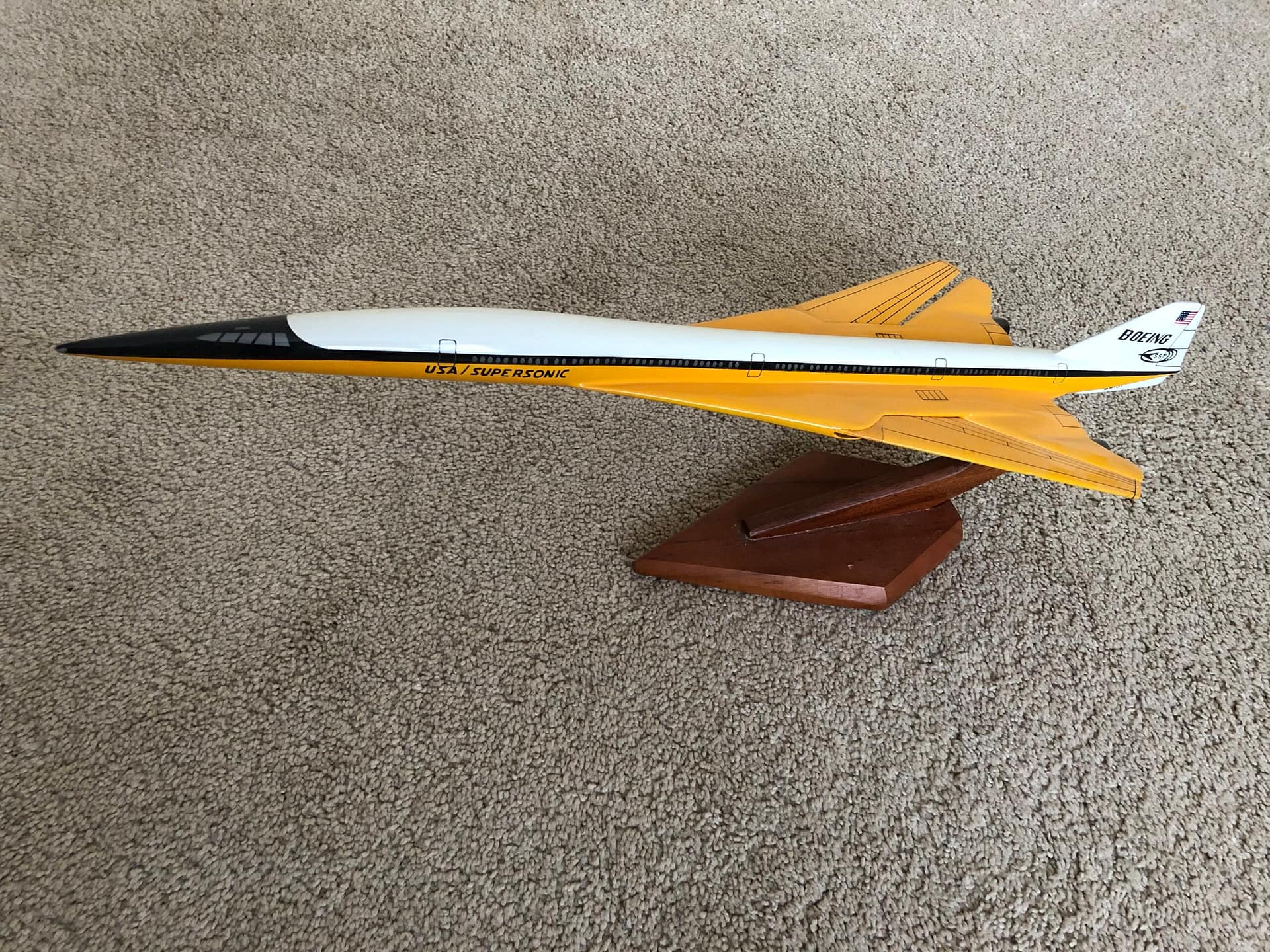
The Senator, the Sonic Boom, and the Ozone
While Boeing's engineers struggled with aerodynamics and metallurgy, opposition to the SST was building on the ground. Senator William Proxmire of Wisconsin had made the SST his personal crusade. A fiscal conservative who would later become famous for his "Golden Fleece Awards" targeting government waste, Proxmire attacked the SST as a boondoggle that would benefit wealthy air travelers at taxpayer expense.The What-If That Haunts Aviation
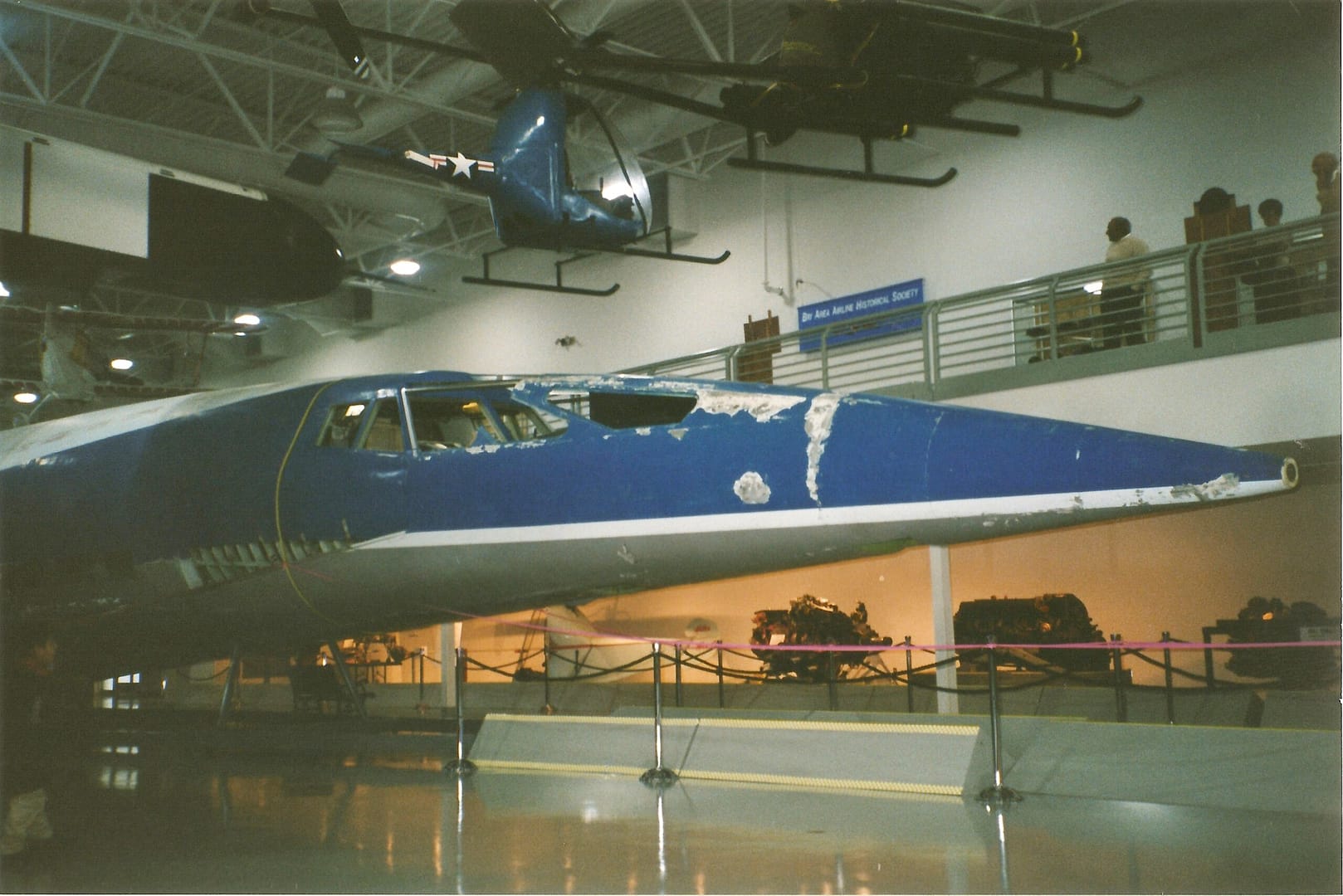
The Boeing 2707 program left behind a full-sized mockup that spent decades in limbo — first stored at Boeing’s facilities, then displayed at an aviation exhibit center in Kissimmee, Florida; later it was dismantled and moved in pieces, and its surviving forward fuselage is now being restored near Seattle. The $1 billion invested by the federal government — equivalent to roughly $7.5 billion in 2026 dollars — produced nothing that flew. Boeing laid off more than 60,000 workers in the aftermath of the cancellation, contributing to a severe economic depression in the Seattle area. A famous billboard appeared near the airport: "Will the last person leaving Seattle — turn out the lights." Was Congress right? Concorde, which did enter service in 1976, proved that supersonic airliners were technically feasible but commercially marginal. Only 14 production Concordes were built, and while British Airways eventually flew Concorde at an operating profit, the program never repaid its development costs. Environmental concerns about supersonic flight persist to this day, and no commercial supersonic airliner has operated since Concorde's retirement in 2003. Yet the question lingers: if Boeing had been allowed to build the 2707, with its larger capacity and longer range, could it have made supersonic travel economically viable? We will never know. The Mach 2.7 future that Kennedy envisioned, that 26 airlines ordered, and that 300 passengers were meant to experience — it remains the grandest "what if" in the history of commercial aviation.Sources: Boeing Historical Archives, FAA, Simple Flying, U.S. Senate Records, HistoryLink.org
Related Questions
What was the Boeing 2707?
The Boeing 2707 was America's planned supersonic transport, a 306-foot airliner designed to carry 234 to 300 passengers at Mach 2.7, faster and larger than Concorde. It attracted 122 orders from 26 airlines but was cancelled by a US Congressional vote in March 1971 before any aircraft was built.
Why was the Boeing 2707 cancelled?
In March 1971 the US Congress voted to end funding, the first time it had killed a major aerospace program by vote. Concerns over cost, the roughly $1 billion government investment, and environmental issues drove the decision. Not a single rivet of the actual aircraft was ever assembled.
How fast was the Boeing 2707 designed to fly?
It was designed to cruise at Mach 2.7, approximately 1,800 mph (2,900 km/h), making it faster than the Mach 2 Concorde. It was also far larger, planned to carry up to 300 passengers in a wide cabin.
Why did Boeing abandon the 2707's swing-wing design?
The original Model 733-197 used variable-geometry swing wings like the F-111 and F-14. But the titanium pivot and the hydraulics needed to move wings large enough for a 300-passenger jet added so much weight that range and payload became unacceptable, forcing Boeing to switch to a fixed delta wing by 1968.
How did the Boeing 2707 compare to Concorde?
The Boeing 2707 was designed to be bigger and faster: cruising at Mach 2.7 versus Concorde's Mach 2, and carrying up to 300 passengers, nearly three times Concorde's capacity. However, Concorde actually flew, while the 2707 was cancelled before construction began.
Why did the US decide to build a supersonic transport?
In June 1963 President John F. Kennedy announced the US would develop a commercial supersonic transport, responding to the Anglo-French Concorde and the Soviet Tupolev Tu-144. Boeing won the government contract in December 1966, beating Lockheed's L-2000 design.
How many orders did the Boeing 2707 receive?
The Boeing 2707 received 122 orders from 26 airlines, all placed before any aircraft existed. When Congress cancelled funding in 1971, none were ever built.
0 Comments