
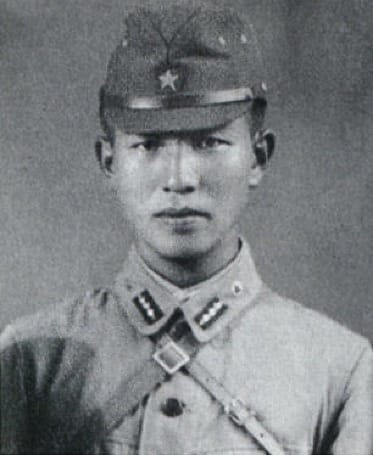
On March 9, 1974, a thin, weathered man in a tattered Imperial Japanese Army uniform stepped out of the Philippine jungle on Lubang Island. He was carrying a rifle, a hand grenade, and a dagger. His uniform was patched with coconut fiber. He had been living in the mountains for twenty-nine years, conducting a one-man guerrilla war against an enemy that had stopped fighting in August 1945.
Second Lieutenant Hiroo Onoda did not believe the war was over. He had been told it was — by leaflets dropped from aircraft, by family photographs left in the jungle, by Japanese search parties who called his name through loudspeakers. He dismissed every attempt as enemy propaganda. He had his orders: never surrender, never take your own life, and fight until relieved by a superior officer. For nearly three decades, no superior officer came.
- Born: March 19, 1922, Kamekawa, Wakayama, Japan
- Deployed to Lubang: December 26, 1944
- Years in the jungle: 29 (1945–1974)
- Formal surrender: March 10, 1974
- Commanding officer who relieved him: Major Yoshimi Taniguchi
- Died: January 16, 2014 (age 91), Tokyo, Japan
The Orders That Would Not Die
Onoda was no ordinary soldier. Trained at the Nakano School — the Imperial Army’s intelligence and covert operations academy — he learned guerrilla warfare, sabotage, propaganda analysis, and survival techniques. In December 1944, he was sent to Lubang Island in the Philippines with a clear mission: destroy the island’s airstrip and harbor pier ahead of the Allied advance, and conduct guerrilla operations indefinitely.
His commanding officer, Major Yoshimi Taniguchi, gave him orders that would shape the next three decades of his life: “You are absolutely forbidden to die by your own hand. It may take three years, it may take five, but whatever happens, we will come back for you. Until then, as long as you have one soldier, you are to continue to lead him. Under no circumstances are you to give up.”
Thirty Years in the Jungle: Survival and Resistance
When American and Philippine forces landed on Lubang on February 28, 1945, most Japanese soldiers on the island were killed or surrendered. But Onoda and three companions — Private Yuichi Akatsu, Corporal Shoichi Shimada, and Private First Class Kinshichi Kozuka — retreated into the mountainous interior and began their guerrilla campaign.
Over the next three decades, the group lived off coconuts, bananas, and stolen cattle. They conducted raids on local farmers, set fire to rice stores, and engaged in occasional skirmishes with Philippine police and military patrols. One by one, Onoda’s companions fell away: Akatsu surrendered in 1950. Shimada was killed in a firefight with Philippine soldiers in 1954. Kozuka was shot and killed by police in October 1972. For the last two years, Onoda was alone.
Throughout this period, the Japanese government made repeated attempts to contact him. Leaflets were dropped from aircraft. Newspapers and magazines were left in the jungle. Family members — his brother, his parents — recorded messages played over loudspeakers. Onoda examined each piece of evidence with the analytical mind of an intelligence officer and concluded it was fabricated. The leaflets had typographical errors. The newspapers contained information that seemed implausible. To a man trained to detect deception, everything looked like deception.
The Adventurer Who Found Him
In February 1974, a young Japanese adventurer named Norio Suzuki traveled to Lubang with an improbable personal quest: find Onoda, a panda, and the Abominable Snowman — “in that order,” he later told reporters. On February 20, Suzuki found Onoda’s camp and made contact. For the first time in decades, Onoda spoke with a Japanese civilian who was not part of a search party.
Suzuki explained that the war had been over for twenty-nine years. Onoda listened, but he could not accept it from a civilian. His orders had been issued by a commanding officer. Only a commanding officer could relieve him. Suzuki understood. He returned to Japan with photographs of Onoda as proof and contacted the Japanese government.
The Orders Rescinded: March 9, 1974
The government located Major Taniguchi, who had become a bookseller after the war. Taniguchi flew to Lubang with Suzuki and, on March 9, 1974, met Onoda in a clearing in the jungle. Standing in his threadbare uniform, Onoda saluted. Taniguchi read him the official orders: every member of the Special Squadron was hereby relieved of all military duties. The war was over.
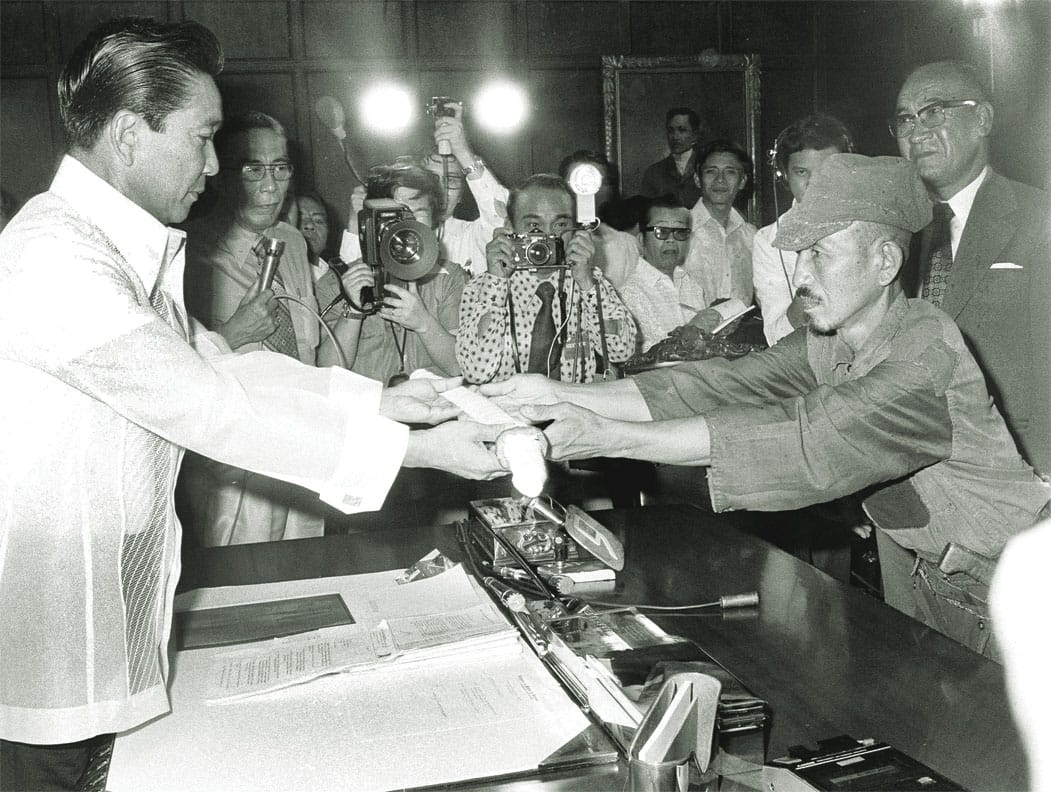
Onoda wept. The next day, March 10, he surrendered to Philippine forces at the Lubang radar station. He turned over his rifle — a Type 99 Arisaka still in functional condition — along with 500 rounds of ammunition, several hand grenades, and the dagger he had carried for thirty years. Philippine President Ferdinand Marcos pardoned him at a ceremony at Malacañan Palace on March 11.
After the War: Brazil, Cattle, and Teaching the Young
Onoda returned to Japan a national hero, but he found the country unrecognizable. The feudal loyalty that had defined his generation was gone, replaced by consumerism and pacifism. Uncomfortable in modern Japan, he emigrated to Brazil in April 1975, following his elder brother, and became a cattle rancher in Terenos, Mato Grosso do Sul. He married in 1976 and assumed a leading role in the Jamic Colony, a Japanese-Brazilian farming community.
But Japan pulled him back. In 1984, after reading about a Japanese teenager who had murdered his parents, Onoda returned home and established the Onoda Nature School in Fukushima Prefecture — an outdoor education camp that taught young people survival skills, self-reliance, and the values he believed modern Japan was losing. He ran the school for years, dividing his time between Japan and Brazil until his death in Tokyo on January 16, 2014, at the age of 91.
Hiroo Onoda’s story is not strictly an aviation story. But it is a story about duty taken to its absolute limit, about the human cost of orders that outlive the wars that issued them, and about the terrifying power of belief. He fought a war that ended three decades before he stopped fighting it — and he was not insane, not lost, not confused. He was simply following orders. That may be the most unsettling part of all.
Hiroo Onoda – Wikipedia
This Japanese Soldier Refused to Believe WWII Was Over – HistoryNet
Hiroo Onoda: The Japanese Soldier Who Refused to Surrender, 1974 – Rare Historical Photos
Hiroo Onoda: The Japanese Soldier Who Refused to Surrender – History Hit
Onoda of the Jungle – National Archives
 English
0 Comments