
Quick Facts
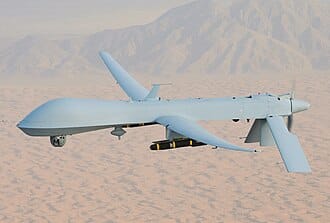
Drone: MQ-1 (likely MQ-1C Gray Eagle, possibly a reactivated MQ-1B Predator)
Incident: Shot down over Persian Gulf, 31 May 2026
Iran's claim: Drone entered Iranian airspace
US claim: Operating over international waters
US retaliation: Strikes on Goruk and Qeshm Island
MQ-9 fleet status: Down from 231 to 135 aircraft since FY2025
Back from the Boneyard?
The USAF officially retired the MQ-1B Predator in March 2018, replacing it with the larger, faster, more capable MQ-9 Reaper. As of September 2024, fifteen MQ-1Bs were still sitting in the Arizona boneyard at AMARG. CENTCOM declined to clarify whether the downed aircraft was an actual MQ-1B Predator pulled from storage or an MQ-1C Gray Eagle — the Army's variant, which remains in active service and is deployed in the Middle East. The distinction matters. If the USAF is pulling mothballed Predators back into service, it suggests the MQ-9 fleet is under severe strain. And it is: Lt. Gen. David Tabor reported that the Air Force's MQ-9 inventory has dwindled from 231 aircraft at the start of FY2025 to just 135 — a decline of nearly 100 aircraft, accelerated by heavy combat losses over Iran this spring. At roughly $30 million per MQ-9, the attrition is unsustainable. A mothballed MQ-1B, by contrast, costs almost nothing to reactivate. If the airframes are structurally sound, the logic writes itself.The Retaliation
The US response was swift and kinetic. Strikes hit Iranian radar sites and drone command facilities, followed by fighter attacks on air defence systems on Qeshm Island — a strategic choke point overlooking the Strait of Hormuz. Two Iranian one-way attack drones assessed as threats to shipping were also destroyed. The exchange reflects the fragility of the April ceasefire. Both sides are still shooting. The only question is how long the pauses between the shooting last. Sources: The War Zone, Washington Times, Gulf Business, CENTCOMRelated Questions
Did Iran shoot down a US drone?
Yes. US Central Command confirmed that on 31 May 2026 an American "MQ-1" drone was engaged and destroyed by Iranian air defences over the Persian Gulf. Iran said the aircraft entered its airspace, while the US stated it was operating over international waters. America retaliated within hours against Iranian radar and drone facilities.
What is the MQ-1 Predator?
The MQ-1 Predator is a remotely piloted aircraft used by the United States for surveillance and strike missions. The US Air Force retired the Predator in 2018, so the drone Iran downed was likely the still-serving Army MQ-1C Gray Eagle rather than an original Predator, as the naming confusion explains.
What is the difference between the MQ-1 Predator and the MQ-1C Gray Eagle?
Both are General Atomics drones, but the MQ-1C Gray Eagle is a larger, more capable Army development of the Air Force’s retired MQ-1 Predator. The Gray Eagle carries more fuel, sensors, and weapons and remains in service, making it the likely aircraft behind CENTCOM’s vague "MQ-1" designation.
How did the US respond to the drone shootdown?
Within hours of losing the drone on 31 May 2026, the US struck Iranian radar installations and drone command facilities at Goruk and on Qeshm Island. Fighter aircraft then destroyed Iranian air defences, a ground control station, and two one-way attack drones.
Why was the MQ-1 still flying after being retired?
The Air Force retired its MQ-1 Predators in 2018, but related airframes such as the Army’s MQ-1C Gray Eagle remain in active service. Older drones are valued for surveillance over contested areas because losing one carries no human cost — part of why drones now dominate modern conflict.
Related Posts


0 Comments