
Lie-Flat Seats on a Narrowbody
United has configured its A321XLR with 150 seats across three classes — including 20 Polaris lie-flat business class suites with privacy doors and direct aisle access — a first on any narrowbody in its fleet — plus wireless charging, large entertainment screens, and personal storage. Behind Polaris sit 12 Premium Plus seats — United's premium economy product — and 118 economy seats, 36 of which are Economy Plus with extra legroom. That builds on the aircraft it replaces. United's transatlantic Boeing 757s, the workhorse of narrowbody Atlantic flying for decades, have carried lie-flat Polaris seats for years — what the XLR adds are the suites' privacy doors and direct aisle access, a narrowbody first for the airline.
Why This Aircraft Matters
The A321XLR is not just another variant. It fundamentally changes which routes are commercially viable. With a range of 4,700 nautical miles — roughly 8,700 km — the XLR can connect secondary European cities to secondary American cities nonstop. Think Edinburgh to Boston. Lisbon to Washington. Barcelona to Miami. Routes that never justified a 250-seat widebody suddenly work with 150 seats and narrowbody economics. For passengers, this means more direct flights to more places. For airlines, it means lower operating costs per seat on thin transatlantic routes that a 787 or A330 would overserve. United has already said it plans to deploy the XLR on routes that would be uneconomical with a widebody — opening new city pairs rather than replacing existing service.A321XLR vs. Boeing 757 — The Generational Leap
- Range: A321XLR: 4,700 nm / 757-200: 3,900 nm
- Passengers: A321XLR: 150–220 / 757: 180–200
- Engines: A321XLR: Pratt & Whitney PW1100G geared turbofan / 757: RB211 or PW2000 (1980s tech)
- Fuel burn: A321XLR: ~30% lower per seat
- Business class: A321XLR: lie-flat suites with doors / 757: lie-flat seats (no doors)
- Cabin width: A321XLR: 3.70 m / 757: 3.54 m (XLR is wider)
- Noise: A321XLR: significantly quieter (latest-generation geared turbofans)
The Comfort Question
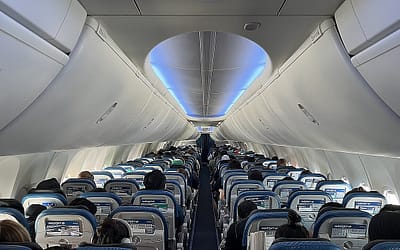
Here is the catch: it is still a narrowbody. In economy, you are sitting six abreast (3-3) in a fuselage that is not dramatically wider than a 737's. The seat width in economy is comparable to any A321 — tight for large passengers on a seven-hour transatlantic crossing. There is no second aisle. The lavatories are narrowbody lavatories. The galley cannot produce the same meal service as a widebody. United's Premium Plus and Economy Plus seats mitigate this somewhat — the extra legroom in those sections makes a meaningful difference on long flights. But for passengers in standard economy on a ten-hour routing, the A321XLR will feel like what it is: a long time in a single-aisle cabin. The airline is betting that passengers will trade fuselage width for a direct flight. History suggests that bet will pay off. When people had the choice between a direct 757 flight and a connecting widebody itinerary, they overwhelmingly chose the 757. The XLR is a better version of the same deal.The 757 Finally Has a Successor
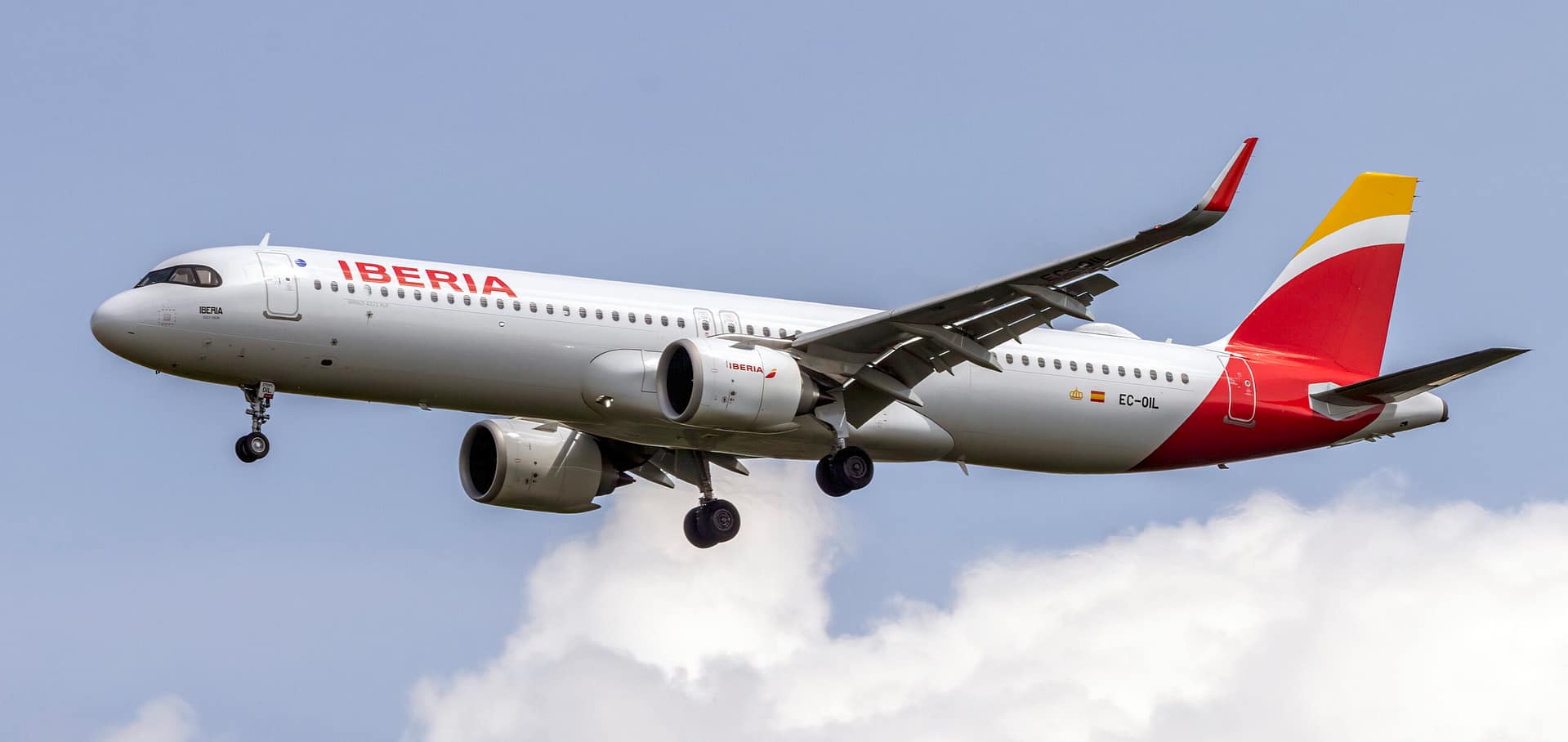
Boeing stopped building the 757 in 2004 and never produced a direct replacement. Airlines loved the aircraft's range-to-size ratio — it could cross the Atlantic with narrowbody operating costs — but the airframe was aging, the engines were thirsty, and the cabin was showing its years. Airbus saw the gap and filled it. The A321XLR is the aircraft Boeing should have built a decade ago. With roughly 30% better fuel efficiency, modern avionics, and a cabin that can compete with widebody comfort in the premium sections, it answers every question the industry has been asking since the 757 line closed. United is not alone. Iberia has already put the A321XLR into service. Aer Lingus already flies the XLR across the Atlantic; JetBlue and several other carriers have orders. The narrowbody transatlantic market is about to explode — and for passengers, that means more routes, more competition, and lower fares. Sources: Airbus, United Airlines, Avio Space, World Airline News, Live and Let's FlyRelated Questions
What is the Airbus A321XLR?
The Airbus A321XLR is the longest-range version of the A321neo single-aisle family, capable of crossing the Atlantic. By carrying extra fuel it can fly roughly 4,700 nautical miles, letting airlines operate transatlantic services with a narrowbody instead of a larger, costlier widebody.
Which airline received the first A321XLR with lie-flat seats?
United Airlines took delivery of its first Airbus A321XLR in 2026, registered N64321, ferrying it from Airbus's Hamburg-Finkenwerder facility across the Atlantic to Tampa in a flight of over ten hours. It is configured with lie-flat business class, a first for a narrowbody in United's fleet.
How is United's A321XLR cabin configured?
United's A321XLR carries 150 seats in three classes: 20 Polaris lie-flat business suites with privacy doors and direct aisle access, 12 Premium Plus premium-economy seats, and 118 economy seats, 36 of them Economy Plus with extra legroom. The lie-flat business cabin is a first on any narrowbody in United's fleet.
Can a single-aisle jet really fly across the Atlantic comfortably?
Yes. With long-range fuel capacity and premium cabins, the A321XLR can cross the Atlantic while offering widebody-style comfort. United's version includes lie-flat business suites, wireless charging and large entertainment screens, showing that narrowbody long-haul need not mean a cramped experience.
Why are airlines buying the A321XLR?
Airlines are buying the A321XLR because it makes thin long-haul routes profitable. A narrowbody seating around 150 can open city-pairs that could never fill a 250-seat widebody, fuelling a wave of new transatlantic routes. It pairs long range with lower operating costs than larger aircraft.
How far can the A321XLR fly?
The A321XLR has a range of about 4,700 nautical miles, the longest of any single-aisle Airbus, achieved partly through a permanent rear centre fuel tank. That is enough to link Europe with much of the eastern United States, or to operate other long, thin intercontinental routes once reserved for widebodies.

0 Comments