
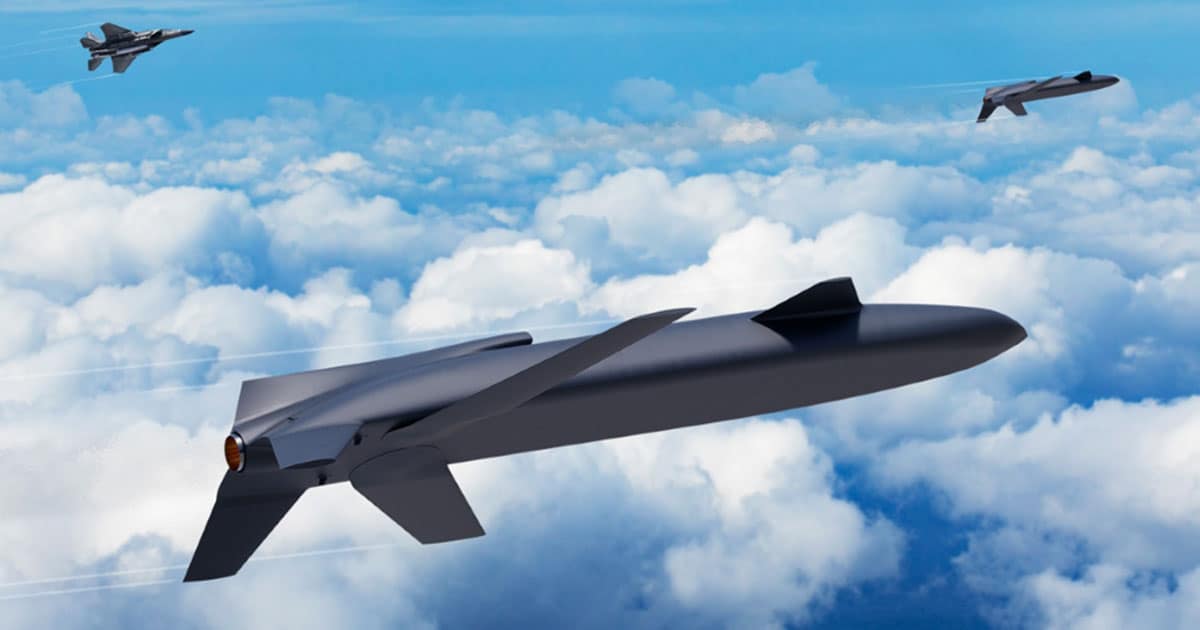
Air combat is, at its core, a question of who shoots first from farthest away. For decades the answer was simple: the fighter with the better radar and the longer-ranged missile. The U.S. military is now building a way to cheat that equation entirely — by throwing the missile-shooter out ahead of the fighter.
Its name is the X-68A, and in February 2026 it became one of the newest members of America’s exclusive club of “X-plane” experimental aircraft.
Quick Facts
- Aircraft: X-68A “LongShot” — an air-launched, uncrewed air-superiority drone
- Builder: General Atomics (GA-ASI) for DARPA; given its U.S. Air Force X-plane designation in February 2026
- Role: launched from an F-15, flies ahead of crewed jets and fires its own air-to-air missiles
- Weapons: the AIM-120 AMRAAM, and potentially the new AIM-260 JATM
- Propulsion: reportedly a single Williams WJ38-15 turbojet, high-subsonic performance
- First flight: targeted for late 2026, released from an F-15 Eagle
An X-Plane Built to Shoot First
Until recently the project was known only by its DARPA codename, LongShot. The concept is deceptively simple: an uncrewed aircraft that launches from a larger jet, races toward the enemy, and engages with its own air-to-air missiles. The crewed fighter that launched it never has to come within range of the threat.
Developed by General Atomics, the platform earned the formal U.S. Air Force designation X-68A on February 17, 2026 — placing it in a lineage that runs back to the X-1, which first broke the sound barrier.

Inside the LongShot
The X-68A is reportedly powered by a single Williams WJ38-15 turbojet, giving it high-subsonic performance, and it carries its missiles internally — the AIM-120 AMRAAM today, with the longer-legged AIM-260 a likely future fit. General Atomics says it has already completed full-scale wind tunnel testing and demonstrated both the parachute-recovery and weapons-release systems.
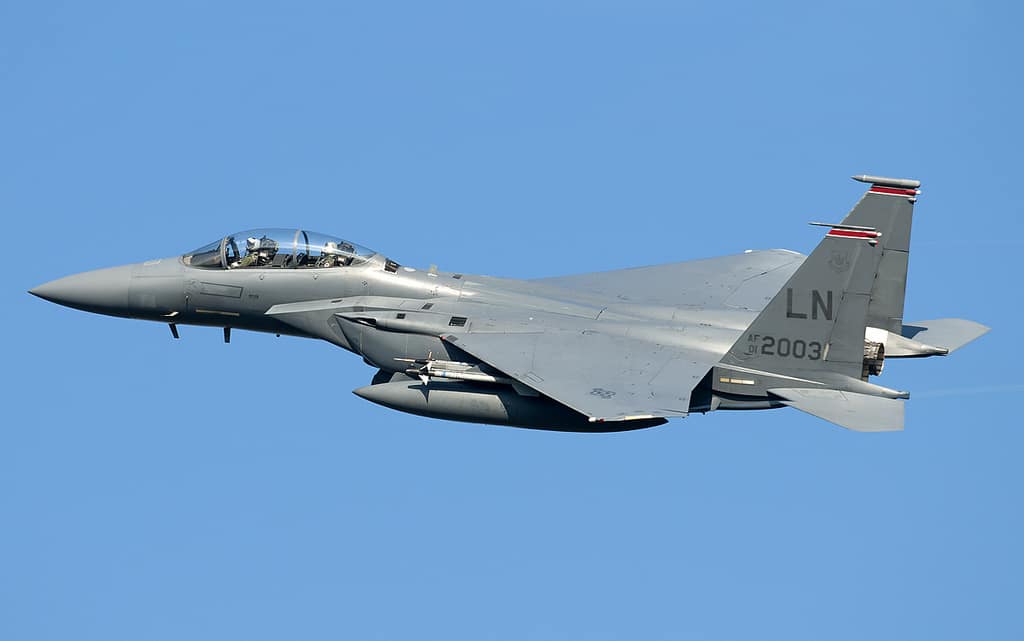
The design is deliberately host-agnostic. The same vehicle could be carried by fighters, slung under bombers, or even rolled out the back of a cargo aircraft as a palletized munition.
Why It Matters
The payoff is reach and survivability. A fighter that can fling a missile-carrying drone forward effectively extends its own engagement range while keeping its pilot well back from danger — turning a single jet into the spearhead of a much deeper threat envelope. It is the same logic driving the Air Force’s Collaborative Combat Aircraft, applied to the precise moment a missile leaves the rail.
The X-68A is GA-ASI’s second X-plane, after the XQ-67A sensing drone. If the schedule holds, it will make its first flight — dropping clear of an F-15 over a test range — before the end of 2026.
Sources: GA-ASI; DARPA; The War Zone; Air & Space Forces Magazine; Aviation Week.


 English
0 Comments