
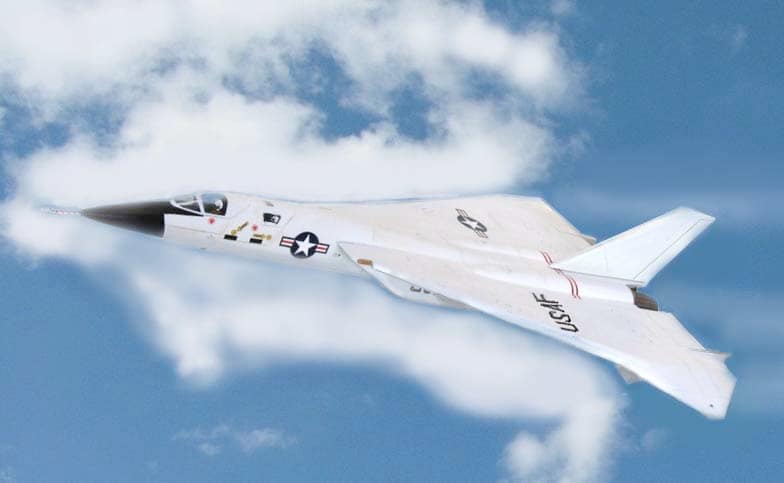
It was designed to cruise at three times the speed of sound, climb to the edge of the stratosphere, and kill Soviet bombers from more than a hundred miles away. On paper, the North American XF-108 Rapier was one of the most formidable interceptors ever conceived. It never flew. It never even got past a wooden mockup.
The Rapier is one of the great “what ifs” of the Cold War — a machine so far ahead of its time that pieces of it ended up flying decades later, on a completely different aircraft.
Quick Facts
- Aircraft: North American XF-108 Rapier — a proposed long-range Mach 3 interceptor
- Era: late 1950s, for the USAF’s long-range interceptor requirement
- Performance: Mach 3 at up to ~80,000 ft, range about 1,150 miles, ~102,000 lb gross, two crew
- Engines: two GE YJ93 afterburning turbojets — the same engines as the XB-70 Valkyrie
- Fate: cancelled September 23, 1959, before a prototype flew — only a wooden mockup was built
Built to Kill Bombers at Mach 3
The threat that drove the Rapier was the prospect of fast, high-flying Soviet bombers streaking toward North America. The U.S. Air Force wanted an interceptor that could meet them far out and fast: cruise at Mach 3, operate near 80,000 feet, carry a two-man crew and a sophisticated fire-control system, and reach out more than a thousand miles. North American Aviation won the contract with a striking design built around a large cranked-delta wing.
The Engines It Shared With a Legend
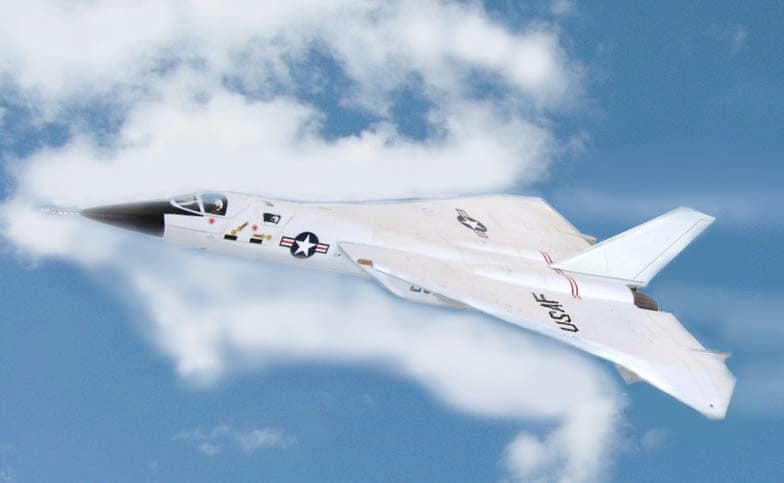
Sustained Mach 3 flight is a materials problem as much as an engine problem — friction heats the airframe enough to weaken ordinary aluminium. The Rapier would have been powered by two General Electric YJ93 afterburning turbojets, the very same engines developed for North American’s gigantic XB-70 Valkyrie bomber. The two programs were closely linked, the Rapier conceived in part as a companion to the Valkyrie.
A Revolver Full of Missiles
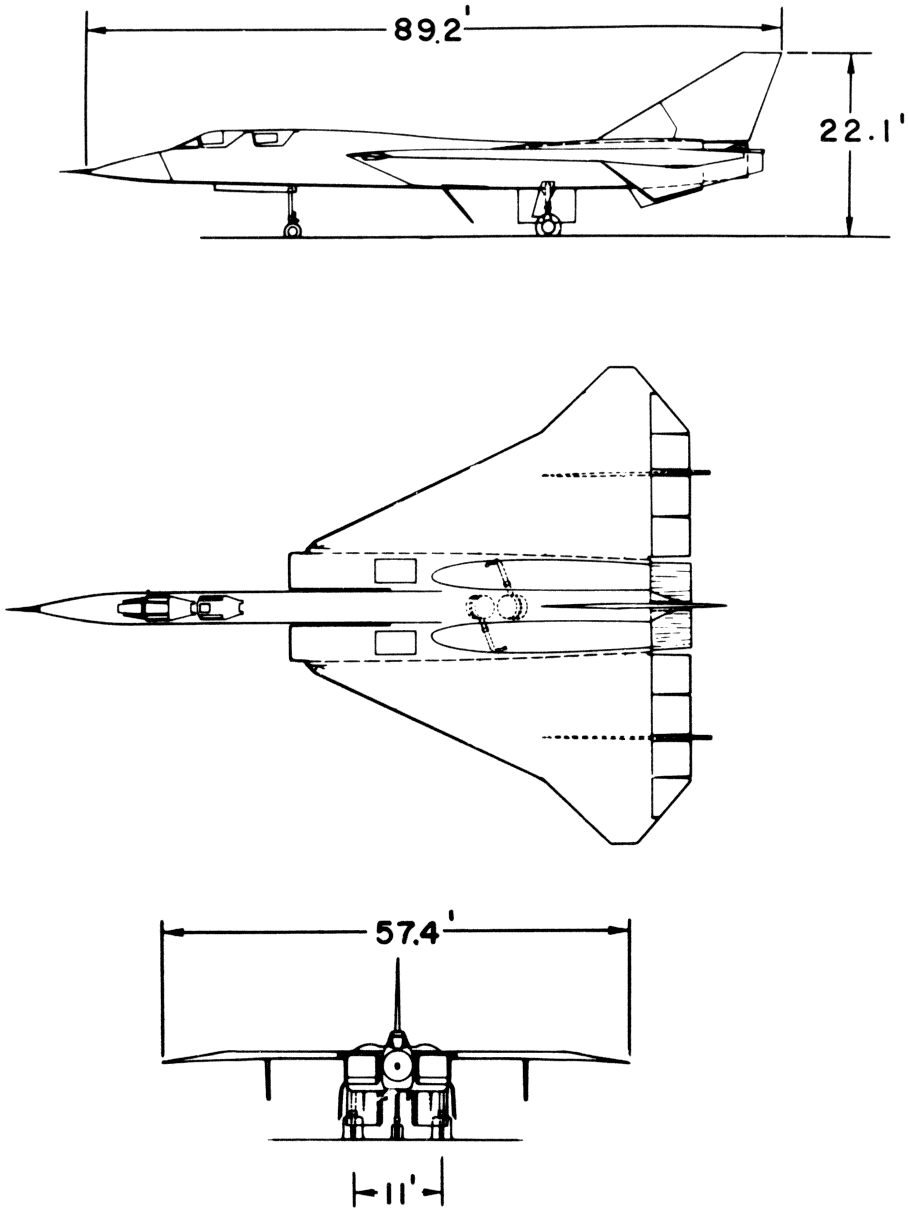
The Rapier’s weapons fit was as advanced as its airframe. It would have carried three large GAR-9 missiles on a rotary launcher inside an internal bay, cued by the Hughes ASG-18 — among the first American pulse-Doppler radars capable of looking down and shooting down a target against ground clutter. The combination promised to let a single Rapier destroy several bombers in a matter of minutes.
Why It Died — and What Survived
By the end of the 1950s, the world had changed faster than the Rapier could be built. The Soviet Union was shifting from bombers to intercontinental ballistic missiles, against which even a Mach 3 interceptor was useless. With costs climbing and the mission evaporating, the Air Force cancelled the F-108 on September 23, 1959, before a single prototype was completed.
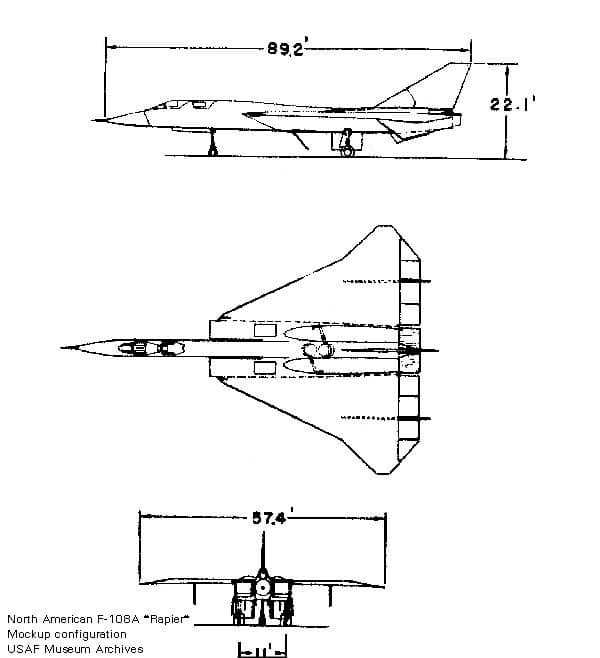
But the Rapier’s most advanced pieces refused to die. Its radar and missile evolved directly into the AWG-9 fire-control system and the AIM-54 Phoenix — the long-range weapon that, fifteen years later, would arm the U.S. Navy’s F-14 Tomcat. The Rapier never flew, but in a sense, it eventually did.
Sources: Wikipedia; The War Zone; 19FortyFive; The National Interest; Military Factory.


 English
0 Comments