
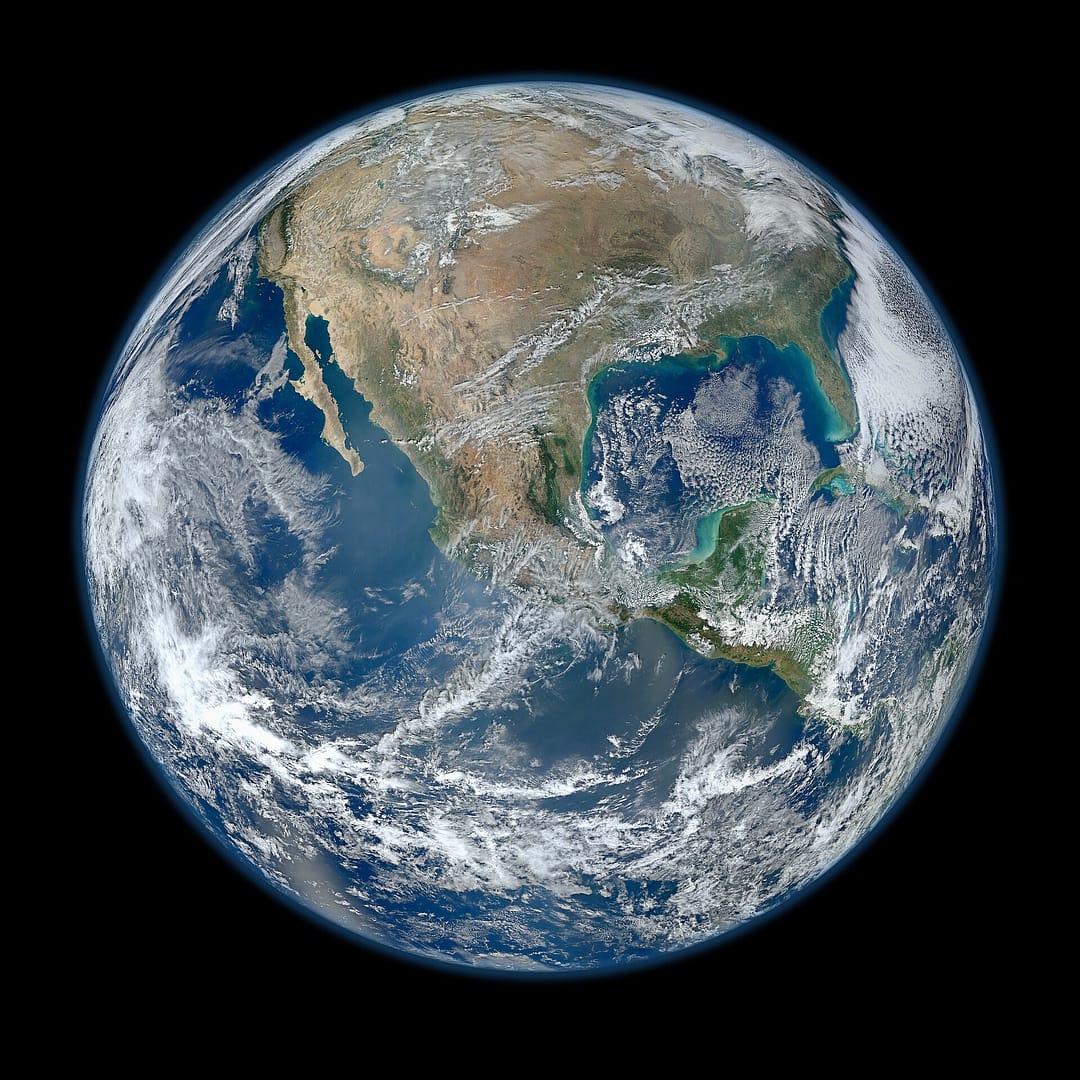
Part of Wings of War — From Zeppelin to Sixth Generation, our series on the great turning points of military aviation.
On 19 August 1960, the crew of a US Air Force transport plane called “Pelican 9” was flying a strange patrol over the empty Pacific, 360 miles south-west of Honolulu, trailing a long loop of cable behind the aircraft. They were not looking for an enemy. They were waiting for something to fall out of space.
It came: a small capsule under a parachute, drifting down from orbit. The C-119 swept in and snagged the parachute in mid-air — the first time anyone had ever caught an object returning from space. Inside the capsule was a roll of photographic film, and on that film were the first satellite images ever taken of the Soviet Union. In a single pass, the satellite had photographed more Soviet territory than every U-2 spy-plane flight ever flown, combined. The highest ground in the history of warfare had just been seized, and it was 100 miles straight up.
QUICK FACTS
| What | The reconnaissance satellite — spying from orbit |
| First success | Corona / Discoverer 14, film recovered 19 August 1960 |
| The trick | Film returned to Earth in capsules, snatched from the air by aircraft |
| The payoff | More coverage in one orbit than all U-2 flights combined |
| The Soviet rival | A near-identical programme called Zenit |
| Today | Imaging, navigation, early warning — and a new arms race in orbit |
The film bucket from space
The problem the satellite solved was the one that had nearly started a war: the U-2. Flying a spy plane over the Soviet Union was provocative and dangerous, as the world learned when one was shot down in 1960. A satellite, by contrast, simply orbits the Earth, passing over any country it likes without ever “trespassing” in the legal sense — because space, by treaty, belongs to no one.
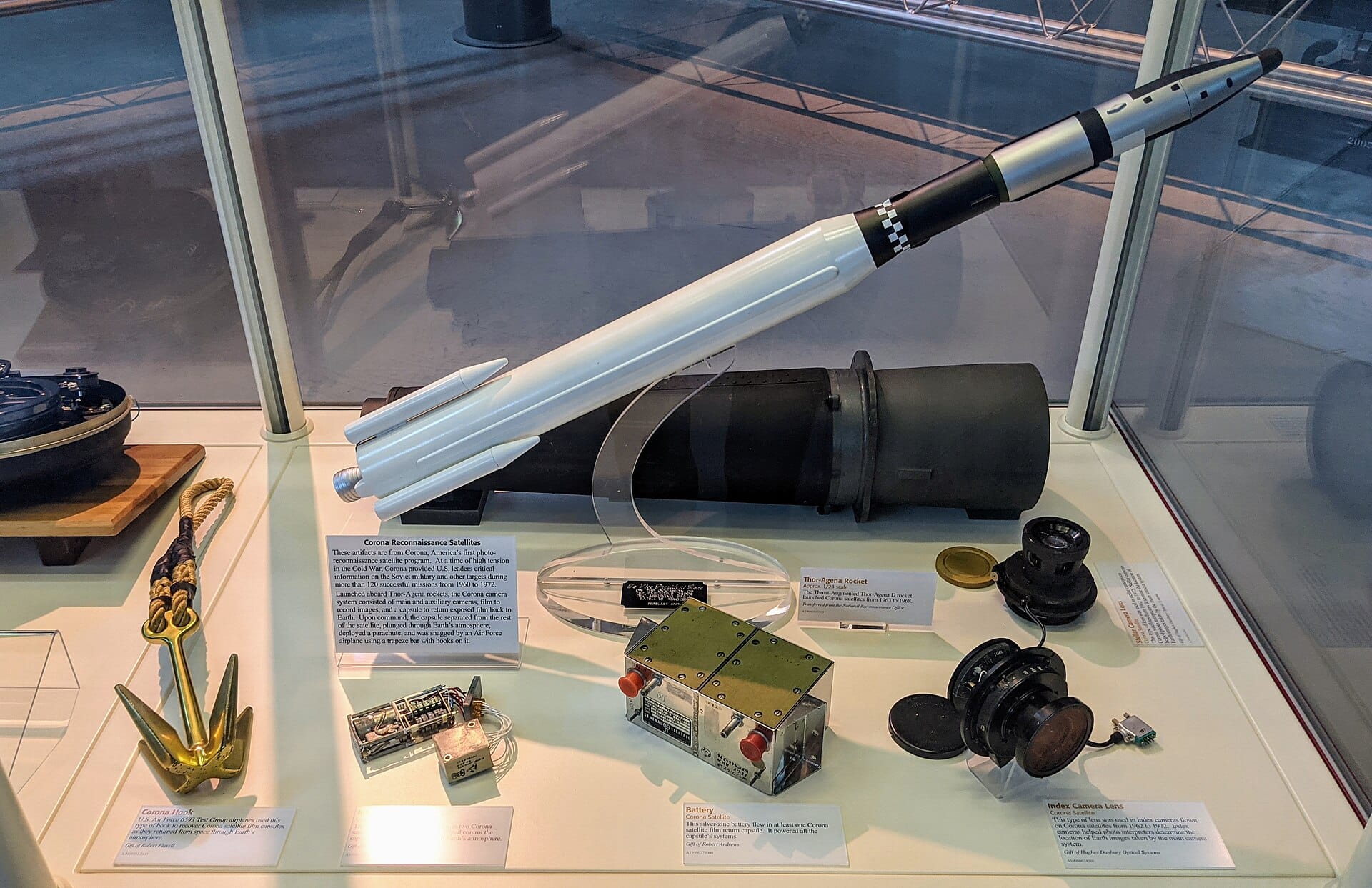
The early Corona satellites were astonishingly crude by modern standards. They had no way to beam images home, so they shot their pictures on ordinary photographic film, wound it into a capsule, and dropped the capsule back through the atmosphere to be caught in mid-air. It sounds impossible. It worked — and the intelligence was transformative. Before Corona, American analysts feared a huge Soviet missile force; the satellite revealed there were only a handful, puncturing the so-called “missile gap” and very possibly preventing a panic-driven arms race.
None of it came easily. The programme hid behind a scientific cover story, and before Discoverer 14 finally worked, more than a dozen earlier missions had failed — rockets that blew up, satellites that tumbled, capsules that sank or were never found. That the United States kept trying, in secret, through failure after failure, is a measure of how badly it needed to see inside its rival. When success came, a single bucket of film rewrote the strategic picture of the Cold War.
Spying without trespassing
The satellite’s great virtue was that it never had to come home. It could pass over the same target every day, unstoppable and, for decades, untouchable. Over time the film bucket gave way to electronics: satellites that scan their images and beam them down instantly, letting analysts see a missile site or a fleet at sea within minutes rather than waiting for a capsule to fall into the ocean.
The satellite that makes everything work
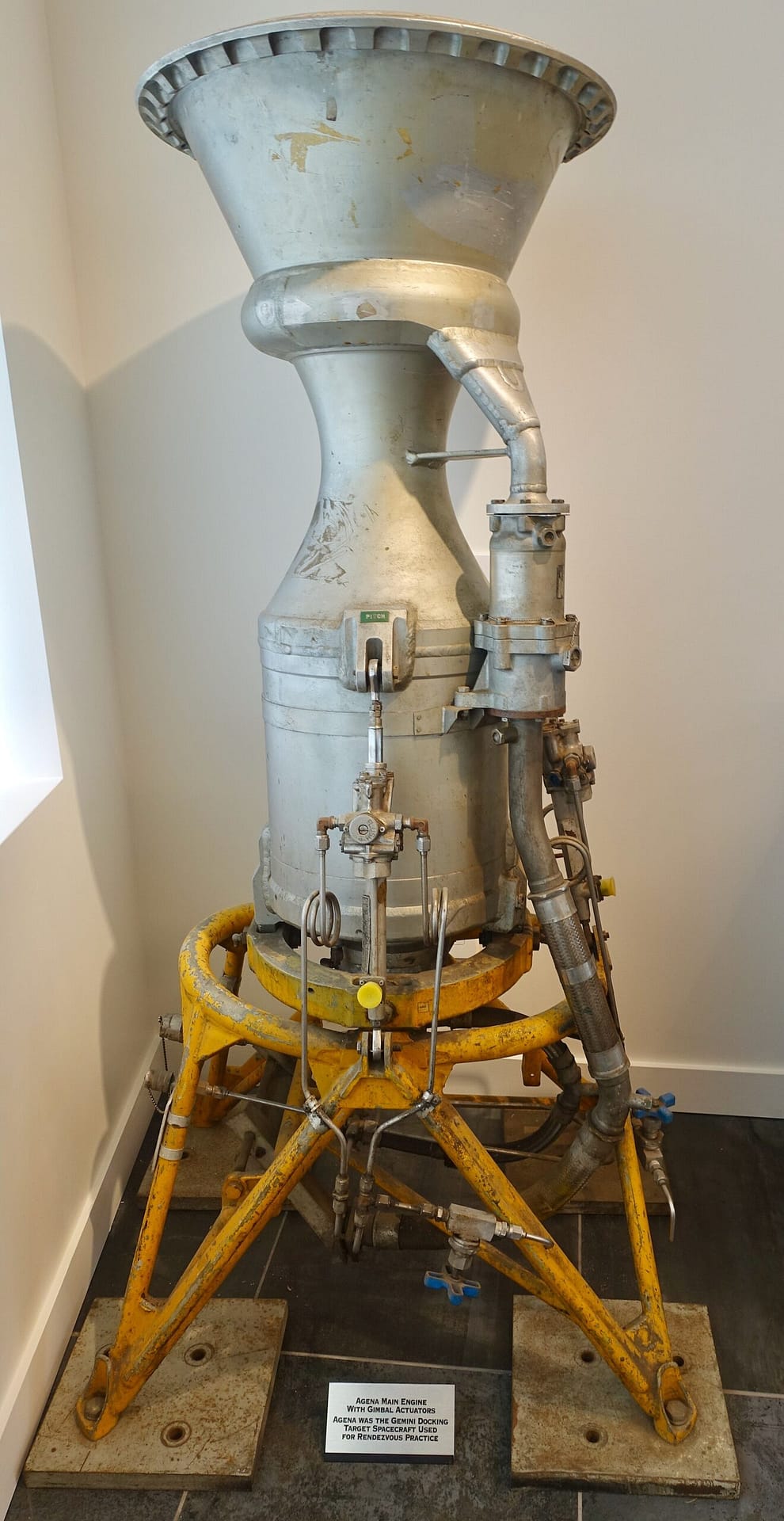
Reconnaissance was only the beginning. Today a constellation of military satellites quietly underpins almost everything an air force does. Navigation satellites — the GPS system and its rivals — tell a bomb exactly where it is, turning a dumb weapon into a precise one. Early-warning satellites watch for the heat plume of a launching missile. Communications satellites tie the whole machine together. Strip them away and a modern military goes deaf, blind and lost.
The navigation satellites are worth dwelling on, because they quietly changed the character of war. Built first for the American military, the GPS network lets any receiver work out its position to within a few metres — and that is what allows a bomb to steer itself precisely onto a target in any weather, the foundation of the precision revolution. The same signal, given away free to the world, now guides ships, airliners, farm tractors and the phone in your pocket; few people realise that this everyday convenience began as a way to drop weapons more accurately.
The new high ground
Which is exactly why space has become a place to fight. If satellites are this important, then destroying or blinding an enemy’s satellites becomes a war-winning move — and the major powers have tested weapons to do just that. China destroyed one of its own ageing satellites in a 2007 missile test, scattering thousands of fragments of debris that still threaten everything in orbit; the United States, Russia and India have all demonstrated similar reach. Each test makes near-Earth space a little more crowded and a little more dangerous. Meanwhile vast new commercial constellations have shown their military value, as when satellite internet kept a nation online under attack. The result is a quiet, high-stakes race in orbit between the United States, China and Russia — one reason the U.S. now funds a dedicated Space Force.
POWERS COMPARED — SPYING FROM ORBIT
| The contenders | The United States and the Soviet Union first; now the US, China and Russia |
| Who got there first | America’s Corona returned film from orbit in 1960; the Soviet Zenit followed |
| The new contest | Anti-satellite weapons and mega-constellations — control of space itself |
| The verdict | Whoever owns the orbital high ground sees, and strikes, everywhere below |
Sources: National Reconnaissance Office; CIA; U.S. Army; NASA; standard histories of Cold War space reconnaissance.
| 1. | The Airship at War | How the Zeppelin first carried war into the sky |
| 2. | The First Job: Reconnaissance | The eyes that won the Marne and climbed to orbit |
| 3. | The Fighter | The hundred-year quest for control of the air |
| 4. | Folkestone, 1917 | The day strategic bombing was born |
| 5. | The Precision Revolution | When bombs and missiles learned to aim themselves |
| 6. | The Wizard War | How electronic warfare learned to blind the enemy |
| 7. | Eyes in Orbit | How spying moved into space |
| 8. | Stealth | How aircraft learned to vanish from radar |
| 9. | The Rise of the Drone | War without a pilot in the cockpit |
| 10. | The Sixth Generation | When the fighter learned to fly itself |
0 Comments