
Part of Wings of War — From Zeppelin to Sixth Generation, our series on the great turning points of military aviation.
It is a warm, sunny Friday afternoon in Folkestone, the 25th of May 1917. It is payday, and the day before a holiday weekend, so the little Kentish seaside town is busy. Housewives are out in crowds, doing their Whitsun shopping. There is a long queue on the pavement outside a greengrocer’s in Tontine Street, women waiting for potatoes. A few miles away, at Shorncliffe Camp, Canadian soldiers are mustering on the parade ground. The mood, in town and camp alike, is almost cheerful.
At about twenty past six, without any warning at all, the street explodes.
The queue outside the greengrocer’s is gone in an instant. A wine merchant who has stepped to the back of his shop returns to find his only customer decapitated. Horses lie dead between the shafts of their carts. Plate-glass windows blow inward as fine, glittering rain. And only after the first blasts do the people of Folkestone understand the strange new sound overhead — the beat of engines. They scream “Zepps! Zepps!”, because until this moment the only attack from the sky anyone has known has come from Zeppelin airships. But these are not airships. A clergyman who runs into the street looks up and sees aeroplanes — “light, bright silver insects” hovering against the blue, so beautiful that, for one held breath, the watching crowd is “charmed with the beauty of the sight.”
QUICK FACTS
| When | Friday 25 May 1917, about 6:20 pm |
| Where | Folkestone, Kent, and nearby Shorncliffe Camp |
| Attackers | Around 23 Gotha bombers of the German “England Squadron” |
| Worst hit | Tontine Street — the deadliest single bomb dropped on Britain in the war |
| Toll | About 95 killed and 195 injured |
| The first | The first major daylight aeroplane raid on Britain — and the dawn of strategic bombing |
IN THIS ARTICLE
The little Guernica
The American historian Richard Rhodes opens his monumental history of the twentieth century not with a laboratory or a battlefield, but here — on this ordinary, sunlit afternoon outside a grocer’s shop.
“At Folkestone on a sunny, warm Friday afternoon, May 25, 1917, housewives came out in crowds to shop for the Whitsun weekend. A few miles away at Shorncliffe camp, Canadian troops mustered on the parade ground. There was bustle and enthusiasm in town and camp alike. It was payday.”— Richard Rhodes, The Making of the Atomic Bomb. Rhodes opens his Pulitzer Prize-winning history with this raid and describes the carnage that followed in unforgettable detail. It is one of the great books of the twentieth century — read it.
He calls it, a few lines later, “the little Guernica of the Great War” — a reference to the Spanish town whose bombing in 1937 would become the century’s symbol of war waged on civilians. Folkestone came twenty years earlier, and it was the moment the idea was born. Around 95 people were killed and 195 injured that day. The single worst blow fell on Tontine Street, where one bomb killed more people than any other single bomb dropped on Britain in the entire war — most of them women and children queuing for the weekend’s groceries.
A raid meant for London
The bombs were never meant for Folkestone at all. They were the work of a specially formed German unit — Kampfgeschwader 3, the bomber wing the British came to call the “England Squadron” — whose entire reason for existing was to carry the war across the Channel to England’s cities. On that afternoon some 23 of its Gotha bombers set out to strike London. It would have been the first time aeroplanes, rather than airships, had bombed the British capital. But inland from Gravesend they ran into a solid wall of cloud and could not find London. Rather than waste the raid, the formation turned south, hunting for an easier, undefended target. Folkestone, packed with shoppers, and the camp at Shorncliffe, full of troops, answered the need.
The Gothas — and the Giants behind them
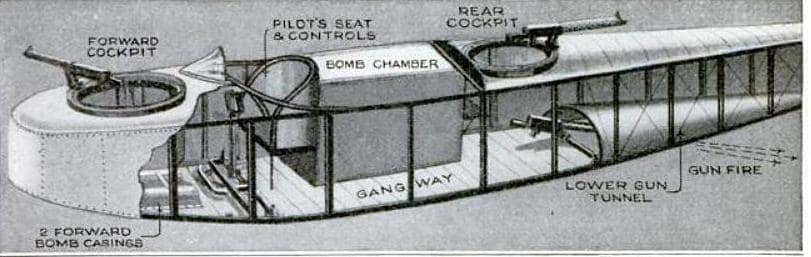
The Gotha was a genuinely new kind of weapon. With a wingspan of nearly 78 feet and two engines, it could climb above 15,000 feet, fly the long round trip to England, and still carry a useful load of bombs. A crew of three — pilot, commander and rear gunner — rode in an open fuselage threaded with fuel tanks, machine guns and the bombs themselves.
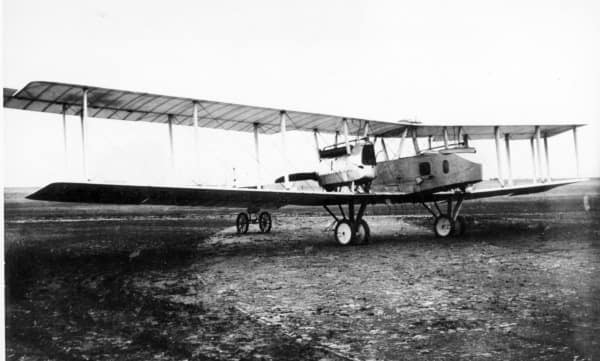
The prototype and the cutaway below show how it was put together — and just how exposed its three crewmen were, perched among the fuel and the bombs.
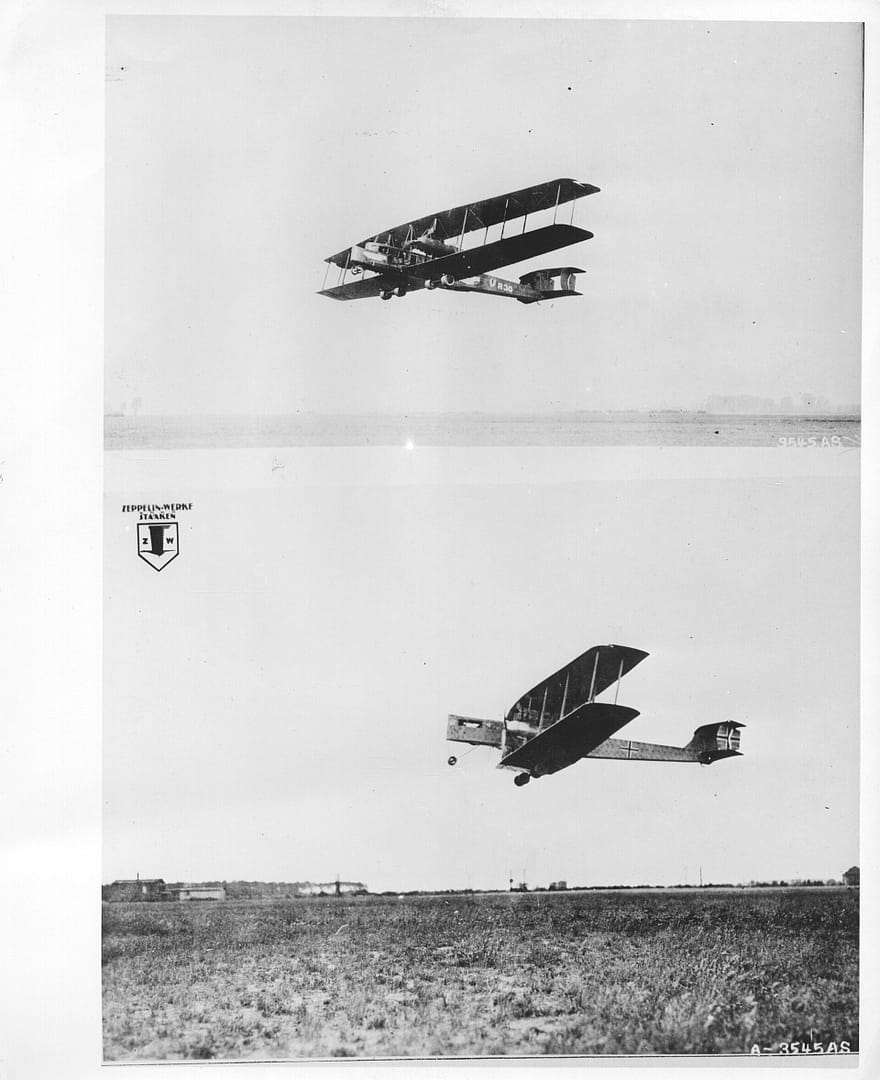
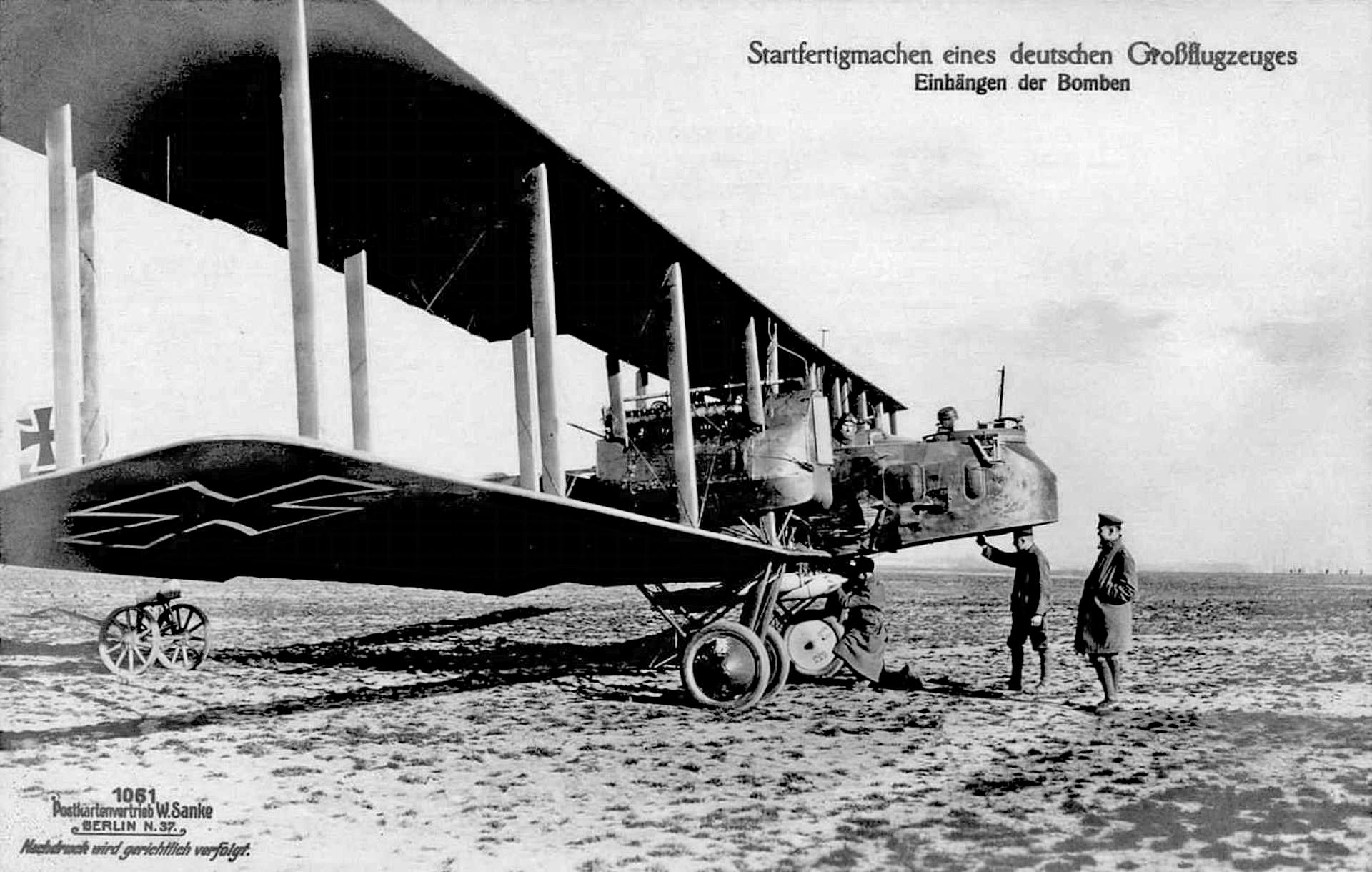
And the Gotha was not even the largest threat. Behind it came something close to monstrous: the Zeppelin-Staaken R.VI, one of a family of aircraft the Germans called Riesenflugzeuge — “Giant aeroplanes,” the type shown at the top of this article. With four engines and a wingspan approaching that of a Second World War B-29 Superfortress, the Giant could carry single bombs weighing up to 1,000 kilograms, heavier than anything dropped on Britain again until the next war. Only a handful were ever built, but they raided London alongside the Gothas, and they were the largest aircraft to bomb Britain in the entire conflict.
Folkestone was utterly unprepared for either. There were no anti-aircraft guns in the town, and the warning system had never registered the German change of plan. British fighters did scramble — dozens of aircraft clawed for height — but the Gothas were already too high, and droned back across the Channel almost untouched. It was a one-sided slaughter, and that was precisely the point.
Carrying fear to the enemy
This was something genuinely new in the history of war. A Zeppelin had bombed Antwerp at the very start of the conflict, and aircraft on both sides had hit targets near the front. But the campaign that opened over Folkestone — and that, three weeks later, struck London itself in broad daylight — was the first effective and sustained attempt to break a nation’s will by bombing its civilians directly. It was the logic of the Prussian strategist Carl von Clausewitz’s “total war,” lifted into the sky.
Germany’s commanders told themselves a comfortable story about it. Such things, a captured Zeppelin officer assured his British interrogators, happen only by accident in war — no German officer, he insisted, would ever set out to kill women and children. It was a rationalisation that would echo down the century, mouthed by every air force that ever burned a city. The Kaiser himself had at first kept London off the target list, thinking of his royal relatives and the city’s historic buildings; his naval staff pressed him, and by stages he relented.
Britain’s furious answer
The raids were designed to terrify Britain into weakness. They did the opposite. When the England Squadron returned on 13 June 1917 and bombed London in daylight — killing more than 160 people, among them eighteen small children when a single bomb fell on the Upper North Street School in Poplar — the public outrage was volcanic. For the first time, the government was forced to take the defence of the home skies seriously: an organised system of guns, searchlights, observers and fighter squadrons, the direct ancestor of the air-defence network that would win the Battle of Britain a generation later.
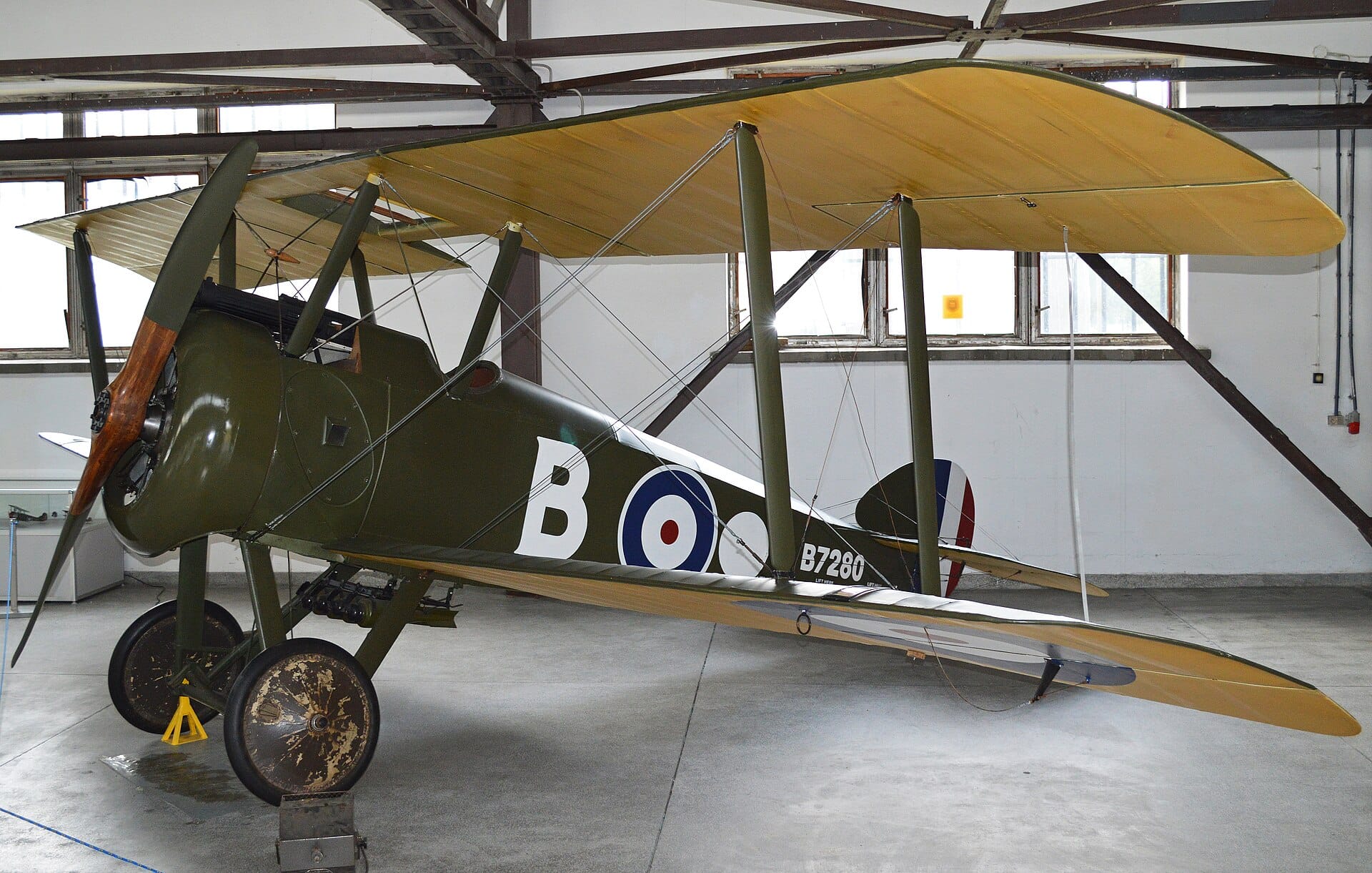
And it went further than guns and fighters. A committee under the South African statesman Jan Smuts recommended pulling the army’s and navy’s air arms together into a single, independent service — and on 1 April 1918, the Royal Flying Corps and the Royal Naval Air Service were merged into the Royal Air Force, the first independent air force anywhere in the world. The bombers that came to break British morale had instead invented British air power.
POWERS COMPARED — STRATEGIC BOMBING IN WORLD WAR I
| The contenders | Imperial Germany vs Britain and its allies |
| Who invented it | Germany — first with Zeppelin airships, then with the Gotha and four-engined “Giant” bombers |
| Who answered best | Britain — building guns, searchlights, a warning network and home-defence squadrons almost overnight |
| The verdict | The raids meant to break British will instead created the world’s first independent air force, the RAF (1 April 1918) |
From Folkestone to Hiroshima
Here is why a historian of the atomic bomb begins his story outside a Kentish greengrocer’s. Folkestone is the first small step onto a road that runs in a single, terrible line through the whole of the twentieth century. The idea born that afternoon — that you can win a war by killing an enemy’s civilians from the air — did not stay small. It grew, step by step, and each step made the next one thinkable.
Between the wars it hardened into doctrine. The Italian theorist Giulio Douhet argued that fleets of bombers would simply fly over the trenches and shatter a nation’s cities and morale; the British coined the grim slogan that “the bomber will always get through.” In 1937, during the Spanish Civil War, the German Condor Legion put the theory into practice and erased the Basque town of Guernica in an afternoon — an atrocity that Picasso turned into the century’s most famous anti-war painting, and that gave Rhodes his comparison for Folkestone.
Then came the Second World War, and the escalation became almost unimaginable. Germany’s bombers did to London in the Blitz what the Gothas had only threatened. The Allies replied with a bomber offensive of staggering scale — the Royal Air Force by night, the American Eighth Air Force by day, in raids so costly they nearly broke, as over Schweinfurt in 1943. And the cities began to burn: Hamburg in 1943, where a man-made firestorm killed some 40,000 people in a few nights; Dresden in February 1945, consumed in another firestorm that killed tens of thousands more.
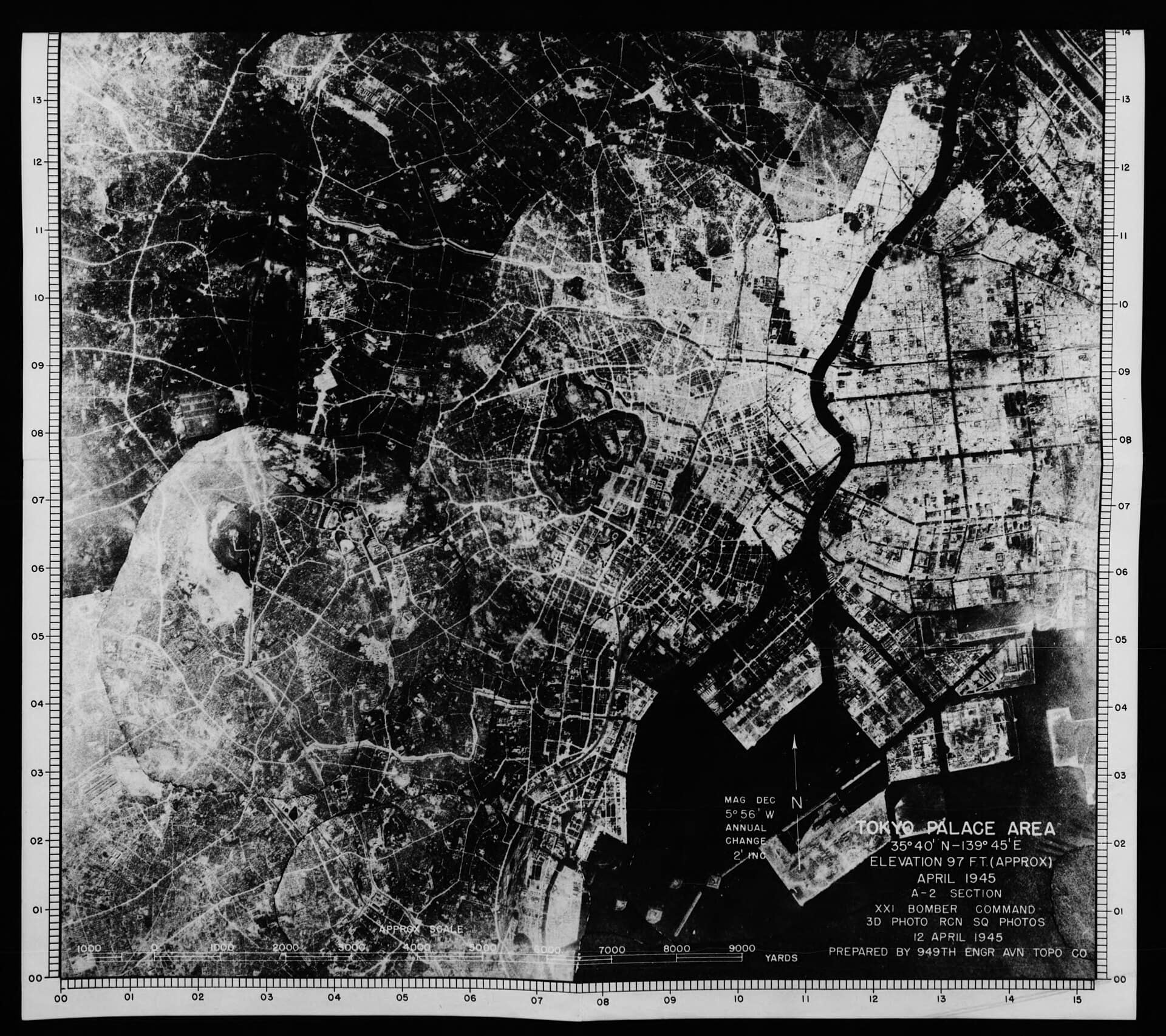
The worst single night of all came not over Germany but over Japan. On 9–10 March 1945, American B-29s firebombed Tokyo and killed around a hundred thousand people in a few hours — the deadliest air raid in human history. And then, on the morning of 6 August 1945, came the end of the line: a single aircraft, a single bomb, and roughly the same number of dead in a few seconds as it had taken whole fleets a whole night to kill at Tokyo.
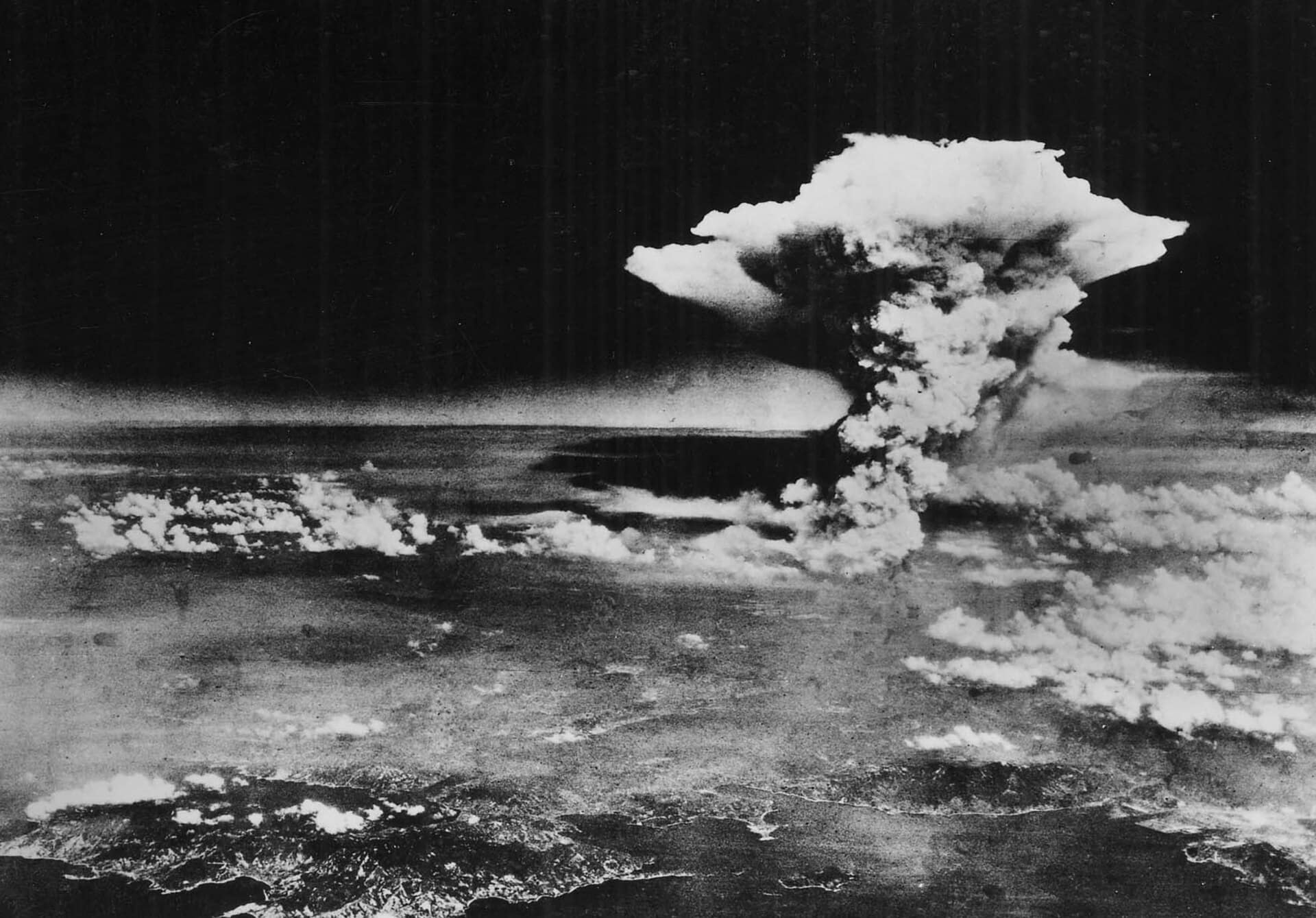
Richard Rhodes understood that the bomb did not come out of nowhere. It was the destination of a journey, and the journey started with men in biplanes throwing explosives at a seaside town. Twenty-eight years separate the queue in Tontine Street from the cloud over Hiroshima — a single human lifetime.
And the bomber kept growing
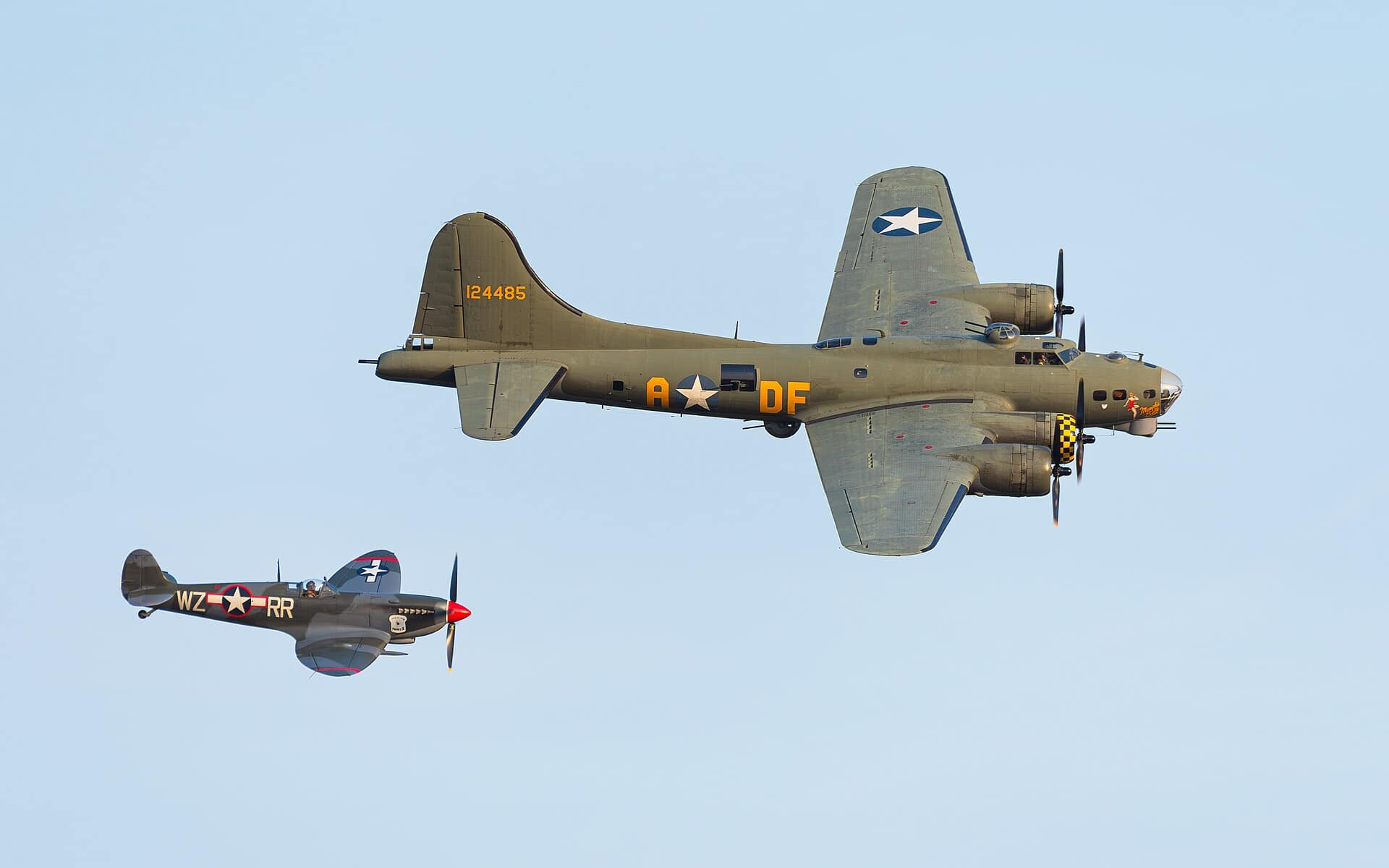
While the moral horror deepened, the machine itself never stopped evolving — and many of its most remarkable descendants have their own stories on this blog. In the Second World War the fragile Gotha gave way to armoured streams of B-17 Flying Fortresses, which flew deep into Germany in daylight and paid a terrible price for it, as over Schweinfurt in 1943.
After the war came the giants of the piston age, like the ten-engined Convair B-36 Peacemaker — big enough to carry the new atomic bombs across whole oceans without ever landing.
Then the jet age made the strategic bomber permanent. The B-52 Stratofortress, first flown in the 1950s, is still in front-line service today and may yet fly to its hundredth birthday — the longest career of any combat aircraft in history.
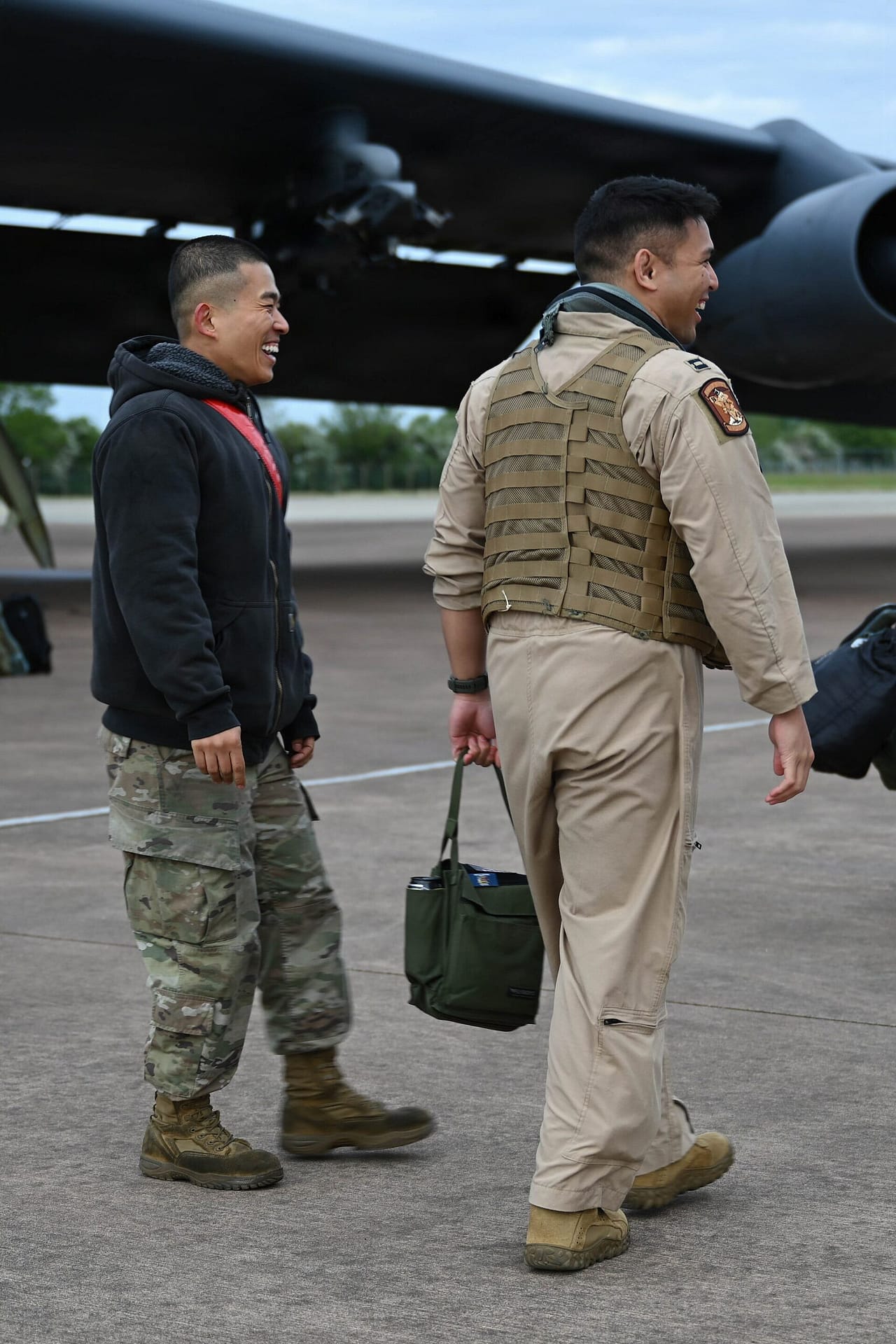
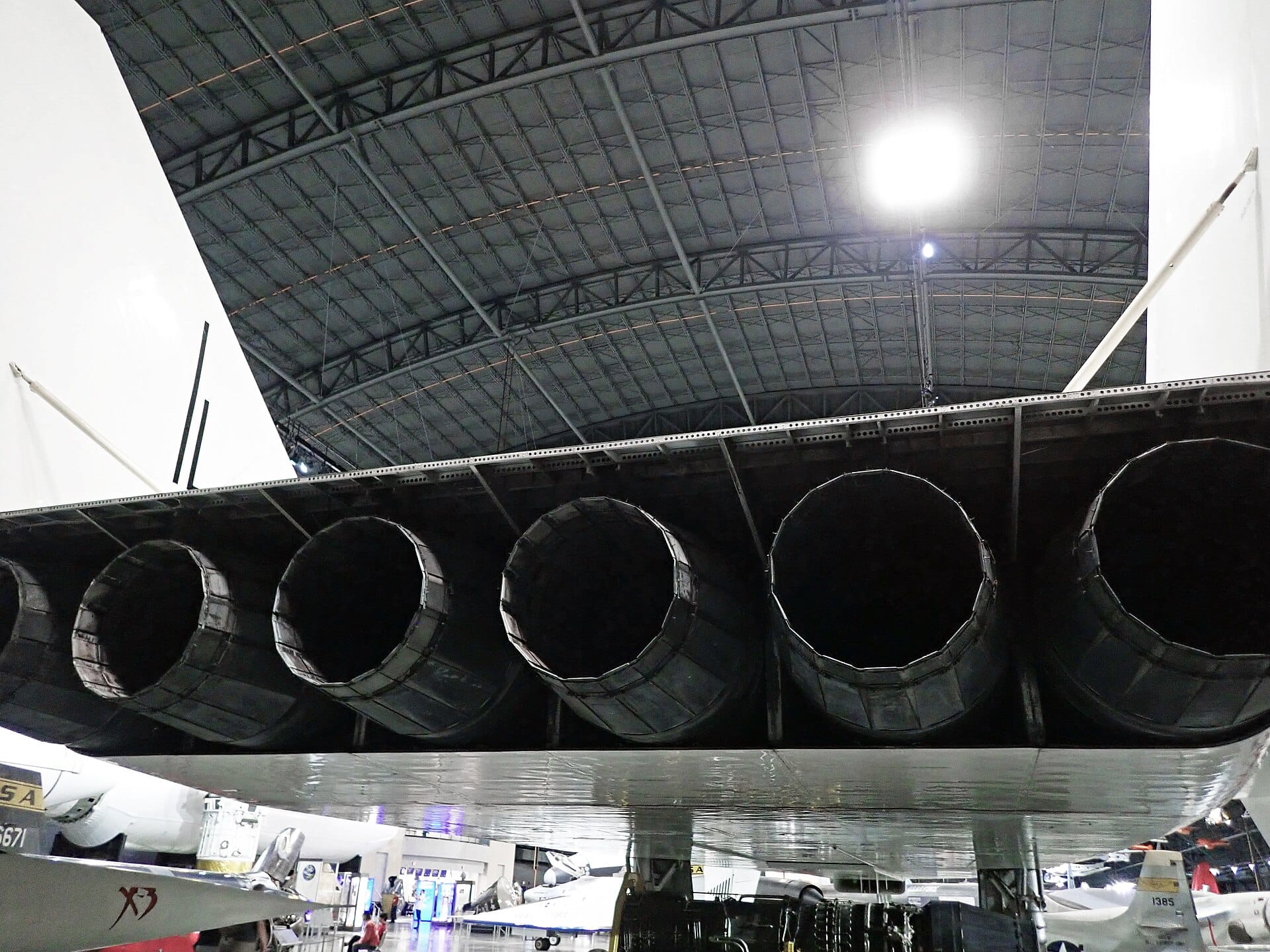
Designers reached for ever more extreme machines. The Mach-3 North American XB-70 Valkyrie and its Soviet rival, the Sukhoi T-4, were among the most spectacular aircraft ever built — and both were cancelled when surface-to-air missiles made flying high and fast a death sentence. The Soviet Union went the other way, with the great turboprop Tu-95 “Bear,” which still shadows NATO airspace today, more than seventy years after its first flight.
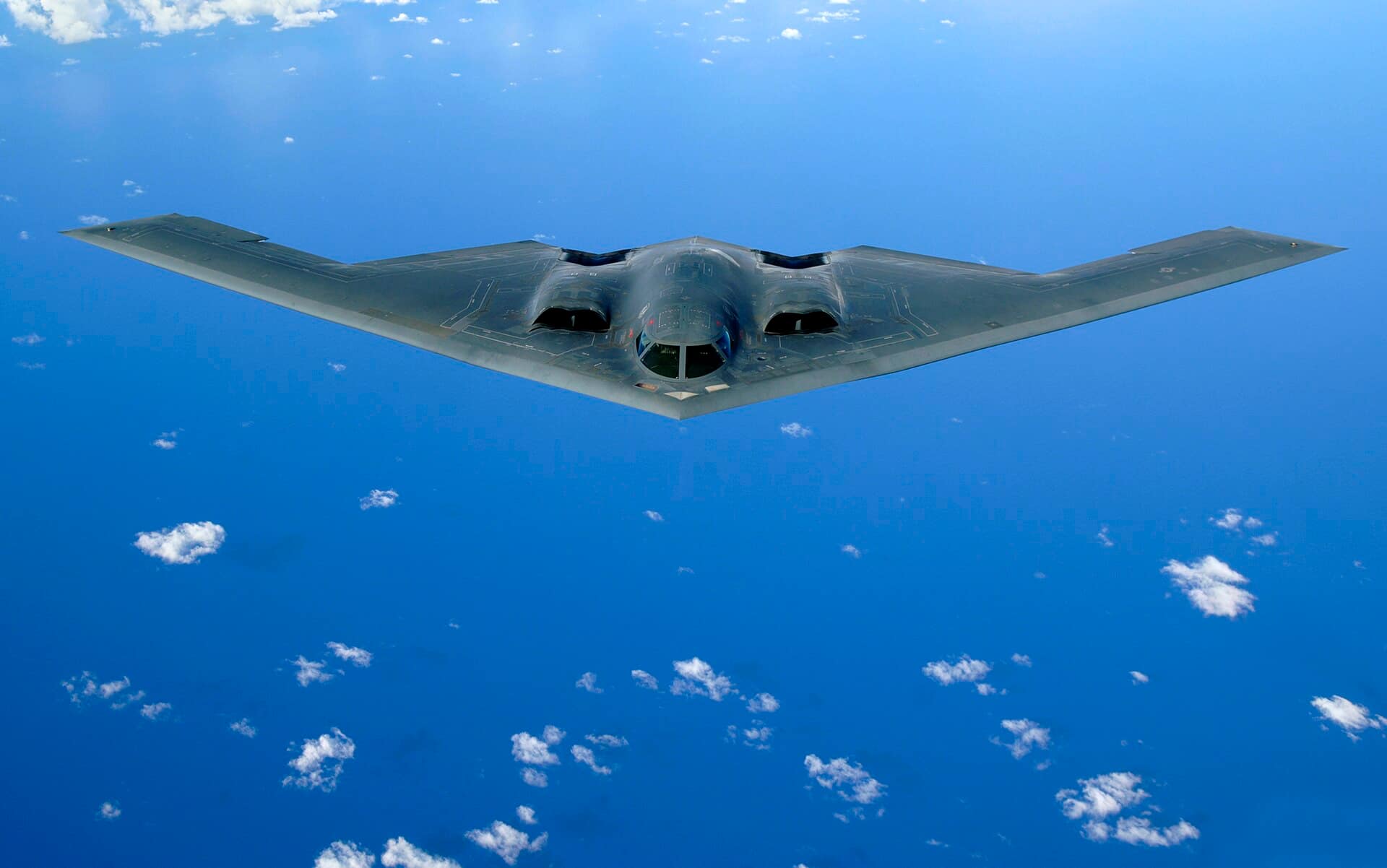
The last act has been the pursuit of invisibility: the swing-wing B-1B Lancer; the flying wing reborn as the Northrop B-2 Spirit (with its curious white patches); and now the B-21 Raider, the newest descendant of all. Every one of them traces its lineage back to a leather pouch of grenades and a queue outside a greengrocer’s shop in Kent.
The people in that queue could not have known any of it. They only looked up, for a moment, and were charmed by the silver insects in the sky.
Sources: Richard Rhodes, The Making of the Atomic Bomb (Simon & Schuster); Imperial War Museum; U.S. National Archives; Ian Castle / the Folkestone & Hythe district archives; contemporary British press accounts.
| 1. | The Airship at War | How the Zeppelin first carried war into the sky |
| 2. | The First Job: Reconnaissance | The eyes that won the Marne and climbed to orbit |
| 3. | The Fighter | The hundred-year quest for control of the air |
| 4. | Folkestone, 1917 | The day strategic bombing was born |
| 5. | The Precision Revolution | When bombs and missiles learned to aim themselves |
| 6. | The Wizard War | How electronic warfare learned to blind the enemy |
| 7. | Eyes in Orbit | How spying moved into space |
| 8. | Stealth | How aircraft learned to vanish from radar |
| 9. | The Rise of the Drone | War without a pilot in the cockpit |
| 10. | The Sixth Generation | When the fighter learned to fly itself |



0 Comments